Archive for the ‘Christian Perfection’ Category

Hands Lifted up to Heaven

October 16, 2022

29th Sunday in Ordinary Time
By Fr. Victor Feltes

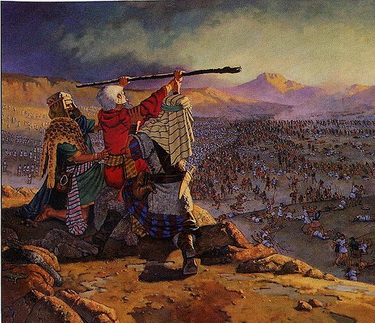
After God’s people, the descendants of Israel, crossed the Red Sea in the Exodus, an army of Amalekites came to battle them in the Sinai desert. So Moses instructed his servant Joshua: “Pick out certain men, and tomorrow go out and engage Amalek in battle. I will be standing on top of the hill with the staff of God in my hand.” The next day, while Joshua led Israel’s soldiers in fighting the foe on the battlefield, Moses stood upon an adjacent hill along with Aaron and Hur.

As long as Moses kept his hands raised up, Israel had the better of the fight, but when he let his hands rest, Amalek had the better of the fight.” Moses wielding this staff at God’s command triggered the plagues in Egypt, parted the Red Sea, and now brought Israel’s victory on the battlefield. But this raises a reasonable question: why would God condition his people’s success in combat upon an old man holding a piece of wood above his head? Moses lifting up this staff of God was a sign for God’s people which preserved them from a spiritual disaster.

God knew that if Israel had won apart from this sign they would have ascribed the victory to themselves. “We won this battle because we’re so smart, and strong, and brave! Maybe we don’t need God’s help after all.” Such pride in their success could be their downfall, in this life and the next. So instead, through the sign of an up-lifted staff, the Lord showed Israel, “I am the vine, you are the branches. Whoever remains [with] me and I [with] him will bear much fruit, because apart from me you can do nothing.”

Similarly today, our Lord desires us to pray without ceasing for the good things we want or need. Otherwise, if and when his blessings come, we shall attribute these things to mere luck, coincidence, or to our own personal abilities, with no growth in our relationship with God. He is the source from whom all good things come. By asking and then receiving, we come to see and know the Lord is near and cares for us. And in the end, that is the most valuable gift of all.

God not only wants us to know and to love him, he desires us to glorify us as well. God is all-powerful, omnipotent, he could do everything without us. But by God accomplishing his will through us, as he did with Moses, the Lord makes us more like himself and causes us to share in his glory.

Holding the staff of God in his hands throughout the day made Moses’ hands and arms grow tired. (If you cannot understand why, try holding an object above your head for just ten minutes sometime.) When Moses’ body grew tired, his friends came to his aide. “They put a rock in place for him to sit on. … Aaron and Hur supported his hands, one on one side and one on the other, [one on his right and the other on his left,] so that his hands remained steady till sunset.” With this help from his friends, Moses kept his arms raised-up and God’s people prevailed against their foe. All of this was a foreshadowing of greater things to come.

On Good Friday, when Jesus was condemned to death, he took the cross into his hands and carried it to the top of a hill. There his hands were nailed to the wood above his head. And Jesus was not there alone. All four Gospels note he was crucified between two others, “one on his right and the other on his left.”

Our Lord was mocked as he hung for hours upon the Cross: “Are you not the Messiah? … If you are the King of the Jews, save yourself!” But in the Garden of Gethsemane, Jesus had said, “Do you think that I cannot call upon my Father and he will not provide me at this moment with more than twelve legions of angels? But then how would the Scriptures be fulfilled…?” Christ had the power to come down from the Cross, but if he had done that—if Jesus had released his hands from the wood—if he had refused to die for us, how would we have been saved from our enemies, sin and death?

Love kept Jesus on his Cross: love for his friends gathered nearby. love for the criminals on his right and left, and love for you and me. Consider what a precious consolation it was for Jesus in his suffering to have his Mother Mary, John the Beloved, and Mary Magdalene there supporting him. “But,” Jesus asks, “when the Son of Man comes [again], will he find faith on earth?” Will Jesus return to a world where everyone imagines they can get along just fine without him?

Let us continue being God’s humble people, recognizing our dependence on him. Let us ask of him our wants and needs so that we can know and experience his blessings. Then we shall share his deeper friendship and share in his great works, increasing in his likeness and increasing in his glory. By relying on God and the holy friends and loved ones his providence places near to help us, we shall share in our Lord’s great victory.

Suffering & Joy — Funeral Homily for Rodger Falkenberg, 75

October 11, 2022

By Fr. Victor Feltes

Rodger has experienced years of suffering and years of joy. After being born into a large, poor family and serving in the Vietnam War, he returned home and joyfully joined a new household. Facing life’s struggles, what a man could do is be bitter and glum, but Rodger loved making people laugh; sometimes with his Donald Duck voice or an intentional stumble. Even after enduring four, painful back surgeries, he still would roll down a hill to amuse his nieces and nephews.

Rodger knew that just because something is broken doesn’t mean that it’s without value. At what he dubbed his “Polish Shopping Center” (or what others call the city dump) Rodger would take things which others had despised. He would tinker with them as necessary, restoring them and prizing them as treasures to keep for himself or to share with others.

One thing I learned about Rodger and his beloved Donna is that they share a great, personal love for ice cream. Giving up ice cream for Lent was a great personal sacrifice in their house because they could eat an entire pail of it for a meal. In recent years, with his memory declining, they would often go to a particular restaurant. When the friendly staff would ask him, “Is it your birthday?” He would sincerely reply, “I think so,” and be treated to ice cream.

September 2nd of this year marked the 50th anniversary of Rodger and Donna’s wedding day here at St. Paul’s Church, and the family celebrated this occasion simply and sweetly together. Their daughters were getting Dad and Mom an ice cream cake and the employee was making a mess of squeezing-out the inscription on top, but Kelly or Lisa said, ‘It’s fine, really, just put sprinkles on it.‘ The party was a happy, intimate family gathering at home. And despite what had seemed to go wrong the cake still tasted very delicious in the end.

In today’s psalm the psalmist speaks of his suffering, praying for deliverance: “Relieve the troubles of my heart and bring me out of my distress. Put an end to my affliction and my suffering and take away all my sins. To you, O Lord, I lift my soul.” It’s not wrong to pray for relief, like Jesus himself did in the Garden of Gethsemane, but in Christ we see that our sufferings play a role in our glory. Jesus says, “unless a grain of wheat falls to the ground and dies, it remains just a grain of wheat; but if it dies, it produces much fruit. …Whoever serves me must follow me… [to the Cross].

When Jesus suffered and died, “people saw and did not understand,” but in light of his resurrection Christians know death is not the end of the world. As St. Paul says, “We know that if our earthly dwelling, a tent, should be destroyed, we have a building from God, a dwelling not made with hands, eternal in heaven. [So] we are courageous, and we would rather leave the body and go home to the Lord. …We must all appear before the judgment seat of Christ, so that each may receive recompense, according to what he did in the body, whether good or evil.”

For the faithful and righteous the sufferings this world sees as worthless are taken up by Jesus to rework our souls. Our Lord will claim us from this junk yard, he will fully restore us and prize us as treasures for himself and to share with others. The messed-up cake of this world will be salvaged. Once God’s family is gathered together again, we will simply and sweetly agree that everything turned-out fine in the end. Can this day of Rodger’s funeral be his birthday to new life? I think so. In heaven, our Lord “will wipe every tear from their eyes,” and convert the sufferings of his people to joy. “Behold,” he says, “I make all things new.”

Our Great Prayer

October 9, 2022

28th Sunday in Ordinary Time
Deacon Dick Kostner

Want to get to heaven? Jesus says obey the Commandments, the two greatest being love God with all your heart, soul and mind and the second, love your neighbor as yourself. Before Jesus returned to the Father he gave his followers a third commandment: “Love as I have loved you!” Love requires intimacy. It requires knowing someone’s very make up and for us humans, their faults and deficiencies and yes acceptance of those deficiencies because of their God given right of free will. It is not an easy task when you realize that people we love are going down the wrong road which will lead them to problems and maybe even death. True love requires we accept their right of choice even if its wrong our only real weapon against a bad choice being made by someone we love, is “Prayer.”

Prayer allows us to be intimate with both God and intimacy with others who we are praying for. I believe it was St. Paul who said we need to be in constant prayer to God 24/7. It shows God that we are obeying His two great commandments and Jesus’ third commandment, “Love as I have loved you.” So our next challenge is to learn how to pray every awaking hour of every day to God for our challenges and for help and guidance for those we love. What are the words of prayer? In today’s Gospel Jesus gives us a supernatural and a kind of magical word of prayer. It is easy to remember and it can transform and heal. This word of Prayer will always be heard by God and responded to by God and the Body of Christ. It is simple but bares the power of God, the word is “THANKS.”

You folks may not know this but your deacon is not very mechanically gifted. When I attempt to fix something it many times is not successful and can also result in a repair job at the doctor’s office and maybe even a new tattoo not made with ink but rather stitch’s. I can remember working at one of my rentals one morning and while trying to drive a stake into the hard ground with a hammer I missed the stake I was driving and smashed the web between my thumb and finger. Blood was all over but I was lucky to be across the street from Dr. Rosenbrook’s house and I ran to him who proceeded to take me into his kitchen and clean and stitch my wound. With age comes wisdom and now before attempting to do even a simple task I pray for safety and upon completing the task always say the prayer of thanks to God for a safe completion of that task. That pretty much covers hourly prayers for my weekend “Honey-do” projects.

Our Gospel today has Jesus instructing his readers that a “thank you” is the greatest gift we can give to God for help he provides for his faith followers. Many times we get so caught up in having been answered by God with his gifts that we forget to give thanks, for his help and miracles. Its a quick prayer but a very important prayer. When we forget to give thanks during the week God gives us another chance to say “Thanks” on Sunday by celebrating the Eucharist with the Body of Christ. “Eucharist” (in Greek) means “giving thanks.” It’s a time for us to gather as the family of God and reflect upon the grace gifts we have received the previous week. The little miracles society calls coincidences. Little things that show up out of no where, and which are many times opposed to the laws of nature that make us realize the supernatural presence of God within our lives, within our very being and existence.

Let me share with you my last encounter with the power and presence of God and the supernatural. I recently did a funeral service for a gentleman who had just died who had lived his life with a mental illness and who had been dependent on his family and friends his whole life. His name is Robbie. I did not personally know Robbie and learned about his life when his Aunt said a few words before we ended the Service. She told about a man who loved his family very much as well as the people who cared for him at the facility he lived in. She talked about how one of the caretakers would take him to Mass every Sunday and how thankful he was to have so many people who cared for him. She told the story about how Robbie and his siblings had taken him to an outdoor concert one summer day and how it began to rain at its conclusion and how they held hands running and following one of his brothers who had a flashlight trying to find their car and how they all laughed and so enjoyed the event, even though they were soaking wet when they finally found their car. After her comments I told the family and friends of Robbie that I now knew who to blame for the thunderstorm we were experiencing at the time Robbie’s funeral service. They laughed and thought I was just cracking a joke but I had a feeling that I had just done another funeral service for a saint I did not even know until that day.

As Matt (the funeral director) and I drove to the cemetery in Cornell with the crowd of family and friends of Robbie following us, Matt commented how wet it was going to be to do the committal service and I made the comment, “That will be up to Robbie!” He gave me a funny look and said he had a bunch of umbrellas in his car. When we arrived at the cemetery it was still raining and Matt told me to sit in the car until the casket was placed. I wondered if I had drawn the wrong conclusion as I held my book close to me as I went to the crowd to begin the service. I opened my book to begin and three drops of rain fell on it and then the rain stopped completely. I grinned and said to myself, “thanks Rob.” After the prayers I told the crowd that I believe Robbie was telling them that he was alright and thanked them for their attendance. I don’t think they realized that they had just experienced the spiritual presence of their brother as one of God’s chosen. (And I did say “Thank you Lord” for this experience!)

Gratitude for our Healer

October 8, 2022

28th Sunday in Ordinary Time
By Fr. Chinnappan Pelavendran

My dear brothers and sisters, God is the creator of every human being. He has given life to all of us. He continually gives us sustenance, His protection and care. What is expected of us is to be grateful to Him and become more aware of how much we have been given. Gratitude is an expression of the heart, counting our blessings and acknowledging everything that we receive. Giving thanks makes people happier, it strengthens relationships, it improves health, and reduces stress. The readings of today present the theme of gratitude, showing that it should come spontaneously from the heart of every individual.

In today’s first reading, we heard the story of Naaman, the military general of the king of Aram. He was a great man in high favor with his master because, by him, the Lord had given victory to Aram. The man, though a mighty warrior, suffered from leprosy. The king sends him to the Kingdom of Israel for his healing. The king of Israel, however, misunderstands the entire motive of his coming and shows his anger. This anger is countered by the Prophet Elisha. In the name of Yahweh, Elisha sends a message to Naaman to cleanse himself in the River Jordan. Even though Naaman refuses at first, he carries out the order given by the prophet and is healed. Here we see the conversion of a pagan into believing in the true God. St. Paul, in the second reading, advises Timothy to be grateful to God even in his physical suffering and amid the dangers associated with spreading the word of God. Why? Because God will always be faithful to His people. And in today’s Gospel, we have the narrative of Jesus healing the ten lepers. The incident of the ten lepers happened when Jesus was on his way to Jerusalem, where he was to receive His cross and suffer for us.

The Gospel reminds us of the love, kindness, and mercy of Jesus to all classes of the people. Even lepers are not excluded from it. Jesus said to the lepers “go and show yourself to the priest.” While on their way they were gradually healed, one of them, the moment he realized that he was healed, knew that Jesus had healed him and returned to him before going to the priest to fulfill the obligation. He came and prostrated before Jesus, a sign of deepest respect and honor. This act of the Samaritan leper pleased Jesus but was He surprised and sad at the ingratitude of others.

The word of God today tells us that we all need to be grateful to God every day of our life for the graces and good gifts we have received in and through him. He has not only given us our life with all its joys and sorrows, but he has prepared for us a future life of joy and happiness. We often fail to acknowledge the good he has done to us. What is needed in our life is the recognition of these goods and the acknowledgment of gratitude towards God and all persons who come to us as instruments of God.

Also, let us realize the truth that we all need healing from our spiritual leprosy. Although we may not suffer from physical leprosy, the ‘spiritual leprosy’ of sin makes us unclean. Jesus is our Savior who wants to heal us from this leprosy of sin. Since Jesus is not afraid to touch our deepest impurities, let us not hide them. Just as the lepers cried out to Jesus for healing, let us also ask him to heal us from the spiritual leprosy of sins, including all kinds of impurity, injustice, and hatred.

Plant Using Your Tiny Seed of Faith

October 1, 2022

27th Sunday in Ordinary Time
By Fr. Victor Feltes

Today the apostles beg our Lord, “Increase our faith.” They feel apprehension at Jesus’ teachings. Christ asks extraordinary things of his disciples, and they fear their faith is insufficient. The Lord replies, “If you have faith the size of a mustard seed, you would say to this mulberry tree, ‘Be uprooted and planted in the sea,’ and it would obey you.” Realize that faith (like courage or love) is not necessarily a feeling. You can be courageous, even while feeling fear, by doing the right thing anyway. You can be loving, even while feeling strong dislike for your enemies, by willing their good anyway. And you can be faithful, even when you feel apprehensive like the apostles, by acting on your trust in God anyway.

Perhaps you feel nervous when you fly on an airplane, yet you buy your ticket and board the flight because you believe commercial jet is a very safe way to travel—and it is. If you were a business traveler, taking dozens of flights each year, your anxious feelings would calm and come to better resemble your sincere conviction about the safety of flying. Faith is like this, too. You may or may not have feelings of great faith, but when you choose to trust God and do the faithful thing you are acting in faith. Exercise your faith and your faith will strengthen, because you will see that God is faithful, and then your emotions touching on faith will naturally follow.

Jesus says, “If you have faith the size of a mustard seed,” you could miraculously transplant a tree with your command. When I was younger, the first time I read Jesus’ answer, I was discouraged by it—“I’ve never performed a miracle like that. How microscopic must my faith be!” But I had misunderstood him. Jesus’ reply is meant as an encouragement. Our Lord is saying, “Even if your faith is tiny, it is more than enough for you to fulfill my will.” What is God’s will for you? What does he want you to do? If you do not know this already ask him to reveal it to you. And “if today you hear his voice, harden not your hearts.”

On another occasion, Jesus said “the Kingdom of Heaven is like a mustard seed that a person took and sowed in a field. It is the smallest of all the seeds, yet when full-grown it is the largest of plants. It becomes a large bush, and the ‘birds of the sky come and dwell in its branches.’” So using your tiny seed of faith, plant in the field of your life as the Lord commands you. It may take awhile for the results to sprout but be patient. As the Lord said to Habakkuk, “The vision still has its time, presses on to fulfillment, and will not disappoint; if it delays, wait for it, it will surely come, it will not be late. The rash one has no integrity; but the just one, because of his faith, shall live.

Mustard bushes grow very large and the mustard it produces has a very potent taste. Given time, what you plant in faith will change the landscape and the flavor of our world. When you go on to see the incredible transforming results which faith allows you may become inflated and vulnerable to pride. People through whom God has accomplished great things may be tempted to think their serious sins are therefore no big deal, or may abandon serving the Lord before their days on earth are done. For this reason, Jesus follows his parable about faith and the mustard bush with another parable about a servant and his master.

Jesus asked his apostles, “Who among you would say to your servant who has just come in from plowing or tending sheep in the field, ‘Come here immediately and take your place at table’? Would he not rather say to him, ‘Prepare something for me to eat. Put on your apron and wait on me while I eat and drink. You may eat and drink when I am finished’? Is he grateful to that servant because he did what was commanded?” Jesus here is not describing how the world ought to be, but describing how their familiar, ancient world actually operated; where the stronger dominated the weaker. It is like when Jesus told them, “You know that the rulers of the Gentiles lord it over them, and their great ones make their authority over them felt. But it shall not be so among you. Rather, whoever wishes to be great among you shall be your servant.”

The apostles would not expect a slave’s master to be much grateful to his slave, and they would judge a slave to be most prudent in his position to remain humble and obey his master. “So should it be with you,” Jesus says, “When you have done all you have been commanded, say, ‘We are unprofitable servants; we have done what we were obliged to do.’” Indeed, apart from God we can do nothing, and keeping a humble servant’s attitude protects us from dangerous pride and presumption and helps us to fulfill what Christ commands. But the Master who is our Lord differs from other masters of the earth.

At the Last Supper, after he had washed his apostles’ feet, Jesus asked them, “Do you realize what I have done for you? You call me ‘teacher’ and ‘master,’ and rightly so, for indeed I am. If I, therefore, the master and teacher, have washed your feet, you ought to wash one another’s feet. I have given you a model to follow, so that as I have done for you, you should also do.” Although our Lord, being God, is rightfully entitled to all we have and are, he is grateful for our labors. If we do not let up our efforts, when our hard days on this earth are complete we can look forward to hearing him say: “Well done, my good and faithful servant… Come, share your master’s joy!

So while your faith may feel small, it is more than enough to do Christ’s will. If you do not know God’s will already, seek and ask to know it. Then plant your seed of faith in action and patiently watch it grow. And when you see the great things our Lord achieves through you do not let up your efforts slip, knowing that his reward for you is eternal joy in Heaven.

Caring For Our Neighbor

September 25, 2022

26th Sunday of Ordinary Time
By Fr. Chinnappan Pelavendran

The story is told of a Franciscan monk in Australia, who was assigned to be the guide to St. Mother Teresa when she visited New South Wales. The monk was thrilled and excited at being so close to this great woman. He dreamed of how much he would learn from her. But, during her visit, he became frustrated. There were always other people for her to meet. Finally, her tour was over and she was about to fly to her next destination. The Franciscan friar spoke to Mother Teresa: “If I pay my own fare to New Guinea, can I sit next to you on the plane so I can talk to you and learn from you?” Mother Teresa looked at him and said: “Do you have enough money to pay airfare to New Guinea?” He replied eagerly, “Yes!” Mother said, “Give that money to the poor. You will learn more from that than anything I can tell you.

God speaks to us in many ways and touches our lives but we often fail to listen to him. He speaks to us in gentle ways and guides us in our weaknesses. The readings of today give us the values of the kingdom of God, which is different from all worldly values. It tells us that we, as the children of God, have the obligation and duty to look after our brothers and sisters and care for them. We all belong to the one family of God.

The prophet Amos, in the first reading, gives a powerful warning to those who seek wealth at the expense of the poor: people who spend their time and their money on themselves alone. He prophesies that those rich and self-indulgent people will be punished by God because they don’t care for their poor, suffering brothers and sisters.

In today’s second reading, St. Paul reminds Timothy, who was an ordained priest and consecrated Bishop, of the Faith he had confessed at his Baptism, He reminded him of his obligation to pursue righteousness, devotion, faith, love, patience, and gentleness. He reminded him of his ongoing call to bear witness to Christ as a loyal teacher and example of that faith. The message for us is that the generous sharing of our talents and resources is the necessary response to our Christian commitment.

All the parables of our Lord are based on everyday happenings. In today’s gospel, we are tempted to ask the question, “Why was the rich man punished?” He did not kick Lazarus, he was not cruel to him. He was punished because he continued to commit a sin of omission. He never noticed Lazarus as a human being and a brother. He did no wrong, but he did nothing good, either. He neglected the poor beggar at his door by not helping him to treat his illness nor giving him a small house to live in. He totally ignored the poor people around him, which was Cain’s attitude: “Am I the guardian of my brother?” It is not wrong to be rich, but it is wrong not to share our blessings with our brothers and sisters.

Today’s readings teach us an important lesson: it reminds us that all of us will experience God’s justice after our death. We are all rich enough to share our blessings with others. God has blessed each one of us with wealth, health, special talents, social power, political influence, or many other blessings. The parable invites us to share, in various ways, what we have been given, not use everything for selfish gains.

In today’s world, who are the poor we must not neglect? The unborn. We need to treat the unborn as our brother or sister Lazarus of this century. The rich man was condemned for not treating Lazarus as his brother. We also will be condemned for our selfishness if we do not treat the preborn as our brother and sister. We might think: “Who am I to interfere with a woman’s choice to abort?” I am a brother, a sister of that child in the womb. Finally, I am a follower of the One who said, “Whatsoever you do to the least of my brothers and sisters, you do to me.

On Being Man’s Best Friend

September 25, 2022

26th Sunday in Ordinary Time
By Fr. Victor Feltes

In the 1996 film “Independence Day,” we get introduced to a single-mother named Jasmine, played by Vivica Fox. With alien ships hovering ominously above the world’s major cities, she decides to flee Los Angeles. When the aliens begin their attack, Jasmine is stuck in a traffic jam inside a tunnel with her little boy, Dylan, and their handsome pet Labrador Retriever, named Boomer.

A wall of fire rushes from behind, tossing cars into the air before it and incinerating everyone it catches. Jasmine grabs her son and runs between the cars until she spots the door to a maintenance room. She kicks down the locked door and they huddle inside, but their dog has not followed them. Jasmine cries out, “Boomer! Boomer!” And Boomer sprints toward them, jumping over cars, and leaps safely into the side room at the very last second, just as the inferno passes by. Hundreds and hundreds of people are killed in the tunnel, but Boomer survives.

One commenter on a YouTube clip of this movie scene remarked, “I remember when I first saw this scene in the theater. I got all teary-eyed because, ‘YAY the doggy lives!’” Another commenter wrote, “When I saw this at the cinema, everyone cheered at this bit. It was the only part of the movie they cheered at!

Our culture loves dogs, but Jewish culture was more ambivalent towards them. Scripture does not celebrate dogs as “man’s best friend” like we do today. There are verses pointing to sheepdogs for shepherding or watchdogs for security. And in the Book of Tobit, when young Tobiah leaves home with the angel Raphael, it says “the dog followed Tobiah out and went along with them” on their adventure. However, the mentions of dogs in the Bible are usually negative.

In the Old Testament, for example, Goliath said to David who held a shepherd’s staff, “Am I a dog that you come against me with a stick?” Years later, encountering a different scoffer, one of King David’s soldiers asked, “Why should this dead dog curse my lord the king?” And Psalm 22, which Jesus referenced on his Cross, says, “Dogs surround me; a pack of evildoers closes in on me… [Deliver] my life from the grip of the dog.

In the New Testament, we see more of this dim view of dogs. Jesus teaches, “Do not give what is holy to dogs.” St. Paul writes, “Beware of the dogs, beware of the evil workers…” And the Book of Revelation, when it describes God’s heavenly city, says, “Outside are the dogs, the sorcerers, the unchaste, the murderers, the idol-worshipers, and all who love and practice deceit.” So where does this biblical disdain for dogs come from?

Realize that in those days, most dogs were not pets but wild. Packs of feral dogs were not only a noisy nuisance but also dangerous. This is reflected in Psalm 59, which describes deadly enemies as “growling like dogs and prowling about the city.” If not killing prey, stray dogs would eat whatever dead flesh they found, of beast or man — “they roam about as scavengers; if they are not filled, they howl.” I mention all of this because of details in today’s parable.

In Jesus’ story, a rich man with expensive, comfortable clothing eats plenty of good food at every meal. But outside of his gate, lying on the ground, is Lazarus, a hungry poor man covered with exposed sores. Jesus tells us Lazarus “would gladly have eaten his fill of the scraps that fell from the rich man’s table.” And Jesus notes that “dogs even used to come [up to Lazarus] and lick his sores.” When the poor man died, he was carried away by angels to a place of peace with Abraham. But when the rich man died he descended to a place of torment, in part, for his failure to care for Lazarus.

Those stray dogs did not attack Lazarus but licked his wounds. Perhaps they were drawn to the salty taste, or maybe they had an instinctual impulse towards him. But in either case they were helping him. Like many other animals, including cats, rodents, and primates, dogs lick their wounds to clean them. And certain chemical compounds found in dogs’ saliva help to disinfect, reduce pain, and promote healing. Letting dogs lick your wounds today is not recommended by doctors today; modern disinfectants and treatments are less likely to result in infection. But in the ancient world, for a beggar on the streets covered with sores like Lazarus, such dog licks would be a blessing.

The parable tells us Lazarus “would gladly have eaten his fill of the scraps that fell from the rich man’s table.” This resembles the remark of the Syrophoenician woman who came to Jesus seeking a miracle for her demon-possessed daughter. Though they were not of the house of Israel, she begged Jesus to help them, saying “Lord, even the dogs eat the crumbs that fall from their masters’ table.” Lazarus “would gladly have eaten his fill of the scraps that fell from the rich man’s table,” but the rich man never gave him any. So the rich man treated Lazarus worse than a dog. “Dogs even used to come and lick [Lazarus’] sores.” This means even the despised dogs in the streets treated Lazarus better and helped him more than the rich man ever did.

It’s fine to love dogs. They’re one of God’s good creatures and they reflect his goodness. It’s been said that God created dogs to help show us how he loves us (and that he created cats to show us how we love him). But it sadly seems rather common today for people to care more about the well-being of random dogs than of random strangers. Today’s psalm tells us, “Blessed is he who keeps faith forever, secures justice for the oppressed, [and] gives food to the hungry.” Living in this way makes us more like our Lord ‘who sets captives free, raises up those who are bowed down, and protects strangers,’ and becoming like our Lord is necessary for us to be at home with him in his heavenly city. It’s alright to appreciate our pets, but lest we end up like the rich man in hell let’s make sure we treat and love everyone better than dogs.

Can Computers be Persons?

September 17, 2022

By Fr. Victor Feltes

In recent years, the question of artificial intelligence (AI) possessing personhood has become a hot topic of debate. Some believe that AI could one day achieve sentience and become its own entity, while others believe that personhood is something that can only be attained by beings with a soul. The Catholic Church has not yet taken an official stance on the matter [a debatable claim –Fr. VF], but it is an interesting question to consider. For example, if an AI became self-aware and could think and feel for itself, would it have the same rights as a human being? If an AI was created with the sole purpose of serving humans, is it ethical to treat it as a mere tool?

The preceding paragraph was not written by a human being but generated online by a LaMDA (Language Model for Dialogue Applications). I gave the program GPT-3 the instruction: “Write an interesting introductory paragraph, including an example, for a Catholic article on the question of artificial intelligence possessing personhood.” The paragraph above was its first five sentences of its output. The accompanying illustration above was also created online using the image generation program DALL-E from my submitted prompt: “A robot touching a monolith (like in ‘2001: A Space Odyssey’)”. GPT-3’s paragraph and DALL-E’s image each took less than a minute for computers to produce. We can expect computers to be capable of even more amazingly sophisticated things in years to come. This leads to the question: “Can computers be persons?

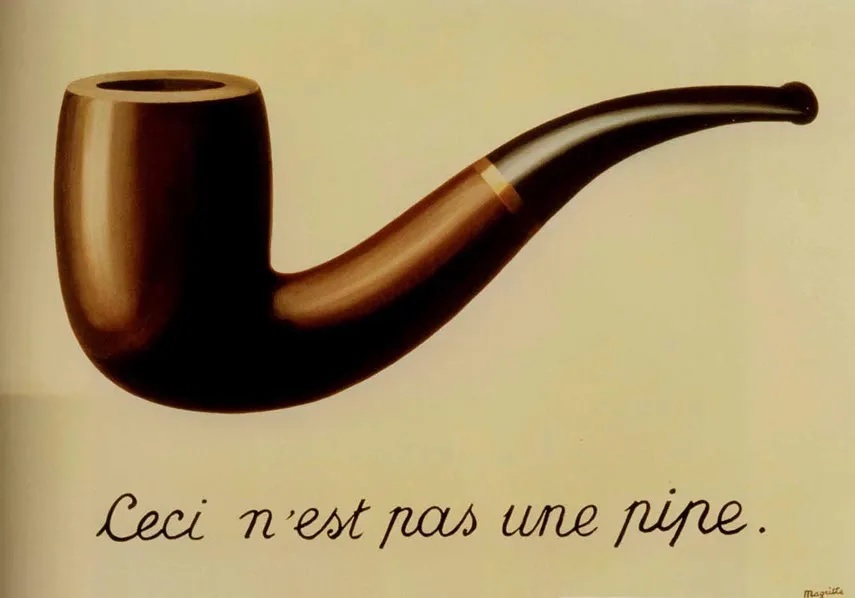
Gaudium et Spes, the Second Vatican Council’s document on the Church in the modern world, says “[man] is the only creature on earth which God willed for itself.” But this teaching was written in 1965, when Seymour Cray had only begun building the earliest supercomputers in Chippewa Falls, Wisconsin. Could mankind now fashion a new type of rational creature, a self-aware being endowed with an immortal soul? There are philosophical and theological issues with that proposition. First, if an AI were ever self-aware, how could we know? A computer need not be conscious to say “Hello, World!” according to its programming. Second, I am aware of nothing in divine revelation which suggests God would begin imparting souls into the works of our hands. Various electronics may be equipped with sensors and speakers and means of motion but I do not believe any of them will ever truly see or hear or speak or walk. As noted in René Magritte’s famous painting “The Treachery of Images,” a mere depiction of a pipe “is not a pipe.” Pope Francis spoke about this fundamental difference between man and machine, persons and things, in a 2019 address at the Vatican:

The inherent dignity of every human being must be firmly placed at the centre of our reflection and action. In this regard, it should be noted that the designation of ‘artificial intelligence,’ although certainly effective, may risk being misleading. The terms conceal the fact that – in spite of the useful fulfillment of servile tasks… functional automatisms remain qualitatively distant from the human prerogatives of knowledge and action. And therefore they can become socially dangerous. Moreover, the risk of man being ‘technologized,’ rather than technology humanized, is already real: so-called ‘intelligent machines’ are hastily attributed capacities that are properly human.

I cannot see Catholicism ever attributing personhood to complex machines, but I predict that others will begin to in the coming decades. As new applications are programed to increasingly replicate human conversation and emotion I could see young people imagining them as their real friends. As anthropomorphized technology’s creative feats far surpass our human abilities, I could even see some adults revering them as wise and powerful idols. If so, then these passages of Psalm 115 will find a new fulfillment: “Their idols are silver and gold, the work of human hands. They have mouths but do not speak, eyes but do not see. They have ears but do not hear, noses but do not smell. They have hands but do not feel, feet but do not walk; they produce no sound from their throats. Their makers will be like them, and anyone who trusts in them.”

The potential of AI is very exciting, and yet it also holds dangers. The 5th Psalm reflects, “What is man that you are mindful of him, and a son of man that you care for him? Yet you have made him little less than a god, crowned him with glory and honor. You have given him rule over the works of your hands, put all things at his feet…” Let us honor our Creator, defend the primacy of human dignity over all earthly creations, and never worship the works of our hands.

Meet Your Hero

August 29, 2022

22nd Sunday in Ordinary Time
By Fr. Victor Feltes

Have you ever met a famous person? There’s feelings of excitement and pleasure when you get that opportunity but often there’s some nervous awkwardness as well. You know a little about celebrities, about the things they’ve done, but you don’t really know them. You are really strangers to each other and that colors your encounter, limiting your connection. But by spending an hour sharing company and conversation of your admired person you would begin to deepen your acquaintance.

What if you had a sibling, a childhood friend, or a best friend in college who went on to fame and success? Encounters with that celebrity would feel very different because of your existing relationship. The pope, the president, tech billionaires, and movie stars have family and friends who have known them since long before they were famous. And when those close relations get personal invites to the Vatican, to the White House, to go yachting, or to attend a film premiere they rejoice at the opportunity, but they do not come to meet a celebrity but be with their friend or family member.

Imagine yourself back again in high school or at your first job, but possessing the wisdom that you have now. If it were revealed to you that one of your peers, one of your classmates or coworkers, would become truly great, like one day be canonized a saint, would you be interested in befriending them? Of course! You would be blessed to share their friendship. What sort of person would neglect the opportunity to get to know such a person better? One day, “at the name of Jesus every knee shall bend, of those in heaven and on earth and under the earth, and every tongue confess that Jesus Christ is Lord, to the glory of God the Father.” Jesus Christ is our admired hero whom we can get to know in deeper, more intimate, friendship now before his greatness is acknowledged by all the world.

The Letter to the Hebrews says, “You have approached Mount Zion and the city of the living God, the heavenly Jerusalem, and countless angels in festal gathering, and the assembly of the firstborn enrolled in heaven, and God the judge of all, and the spirits of the just made perfect, and Jesus, the mediator of a new covenant…” Yet these realities, present at every Mass surrounding Jesus in the Eucharist, remain veiled to our sight. They are not yet clearly manifest like the blazing fire, gloomy darkness, storms, and trumpet blasts which terrified the Hebrews at Mount Sinai. These supernatural realities are hidden for now, such that non-believers dismiss them and even believers can neglect them. Too often, Catholics neglect the Lord who calls us to celebrate the Holy Mass and to worship him truly present in the Eucharist.

Jesus says, “When you are invited by someone to a wedding banquet… go and take the lowest place so that when the host comes to you he may say, ‘My friend, move up to a higher position.’ Then you will enjoy the esteem of your companions at the table.” It takes humility to consistently come and worship him, the proud refuse, but faithfulness will be rewarded with glory, for “the one who humbles himself will be exalted.” The Prophet Sirach wrote, “My child, conduct your affairs with humility, and you will be loved more than a giver of gifts.” Who does the Lord delight in more: those who give their gifts of money or those who give him themselves? “Humble yourself,” as Sirach says, “and you will find favor with God.”

One way to humble yourself, to grow in friendship with Christ and open yourself to receive his graces, in addition to coming to Sunday Mass, is through praying Holy Hours in the presence of our Lord. The Eucharist is “the Source and Summit of the Christian life” because it is the encounter with Jesus Christ and his one sacrifice. And at the conclusion of the Mass the Real Presence of Jesus (his Body and Blood, Soul and Divinity, his whole living person) endures in all of the consecrated Hosts which remain. We keep these Host of our Lord inside the tabernacle. This is why when we enter, or exit, or cross this church, we genuflect (bending our knee) towards Jesus present there. So even outside of times of Mass, we can take a seat or kneel before Christ’s enduring presence sharing his company and conversation in worship. When you do this for sixty minutes it’s called a Holy Hour, which is a practice highly-recommended by the saints.

One of the best ways to pray a Holy Hour is at Eucharistic Adoration, when our Lord is placed upon the altar in a golden holder called a monstrance, which has a window so that you may gaze upon him. Adorers speak silently to Jesus and listen in their minds and hearts for his occasional replies. Some people bring their bibles or spiritual books to read and then relate to the Lord about what they’re read. Some people pray devotions, like the Chaplet of Divine Mercy. Some people simply sit with Christ; they look at him and he looks at them. Once it becomes a habit, these Holy Hours pass swiftly, like an episode of your favorite TV show. Simply sitting in the sunlight—doing nothing—will give you a tan. Likewise, spending time with the Lord in this way will change you, it will not be without effect. Your personal relationship with Jesus Christ will grow and what is more important than that?

For years, St. John the Baptist’s Church in Cooks Valley has had 1st Friday Eucharistic Adoration on Thursdays before the 1st Friday of each month, from their 8:30 AM Thursday Mass until the 10:30 AM Mass on Friday. Now, St. Paul’s Church in Bloomer is beginning monthly Eucharistic Adoration as well, on Thursdays before the 2nd Friday of each month, following their Thursday morning Mass until 7 PM that day. Please say to our Lord, “Yes Jesus, I can devote one Holy Hour a month to you in the Blessed Sacrament.” Give him this gift, because God will not be outdone in generosity, and you will grow in your friendship with Jesus Christ, our hero, whose name shall be exalted above every name.

Choose the Narrow Gate

August 20, 2022

21st Sunday of Ordinary Time
By Fr. Chinnappan Pelavendran

Salvation is a past, present, and future event. We were saved from the bondage of sin when we were baptized as children or adults. We are being saved in the present, when we cooperate with God’s grace by loving others as Jesus did, by sharing our blessing with the needy, and being reconciled with God daily through His forgiveness of our sins. We will be definitively saved when we hear the loving invitation from Jesus, our Judge, at the moment of our death when we hear Him say, “Good and faithful servant, you were faithful in little things enter into the joy of your Master.”

Today’s first reading about the prophesy of Isaiah, we hear about the return of God’s people to Jerusalem. It is an assurance that God will fulfill His promise to His People. God will soon fulfill his promise of restoring us to Himself. He will do this to show His saving power. God has the purpose for this gathering, this is for the glory of his name. In other words, every work he does has the remote aim of giving Him Glory. In addition to gathering us unto Himself, God will also make us his ambassadors to other nations.

Today’s second reading from the letter to the Hebrews gives us the “narrow gate” theology. The road less often taken and the gate less often chosen are the paths of God’s discipline. The pain and suffering Christians experience are the parts of God’s discipline given in love. We are being disciplined by our afflictions, strengthened to walk that straight and narrow path – that we may enter the gate and take our place at the banquet of the righteous. The experience is similar to that of a child being disciplined by loving parents who desire only to help him grow, mature, and become responsible.

In the Gospel, Jesus answers a very difficult question, “Lord, will there be only a few saved?” His response was very simple, “Try your best to enter by the narrow door.” Jesus affirms that God wants all persons to enjoy eternal life. But he stresses our need for constant fidelity and vigilance to His commandments throughout our lives. Thus Jesus reminds us that, even though God wants all of us to be saved, we all need to work at it. Entry into God’s Kingdom is not automatically granted. Jesus came to bring God’s love and freedom to the whole world. The message of his Gospel is that there is not a single person, people, nation, race or class which will be excluded from experiencing the love and liberation that God offers.

We need to make wise decisions and choose the narrow gate. God allows us to decide every day what road we will walk down and what gate we will choose. He encourages us to choose His way and His life. “If anyone desires to come after Me, let him deny himself, and take up his cross daily, and follow Me,” this means a consistent denial of self for the steady follower of Jesus.

We need to cooperate with God’s grace every day, by choosing the narrow way and the narrow gate of self – control of our evil tendencies, evil habits, and addictions. God gives us divine strength to practice self – control. We are enabled to love others, see the face of Jesus in them, and share our blessings with them. The Holy Spirit guides us through the narrow way in daily prayer, bible reading, and reception of the Sacraments of Reconciliation and Eucharist.

Our Many Friends in Heaven

August 14, 2022

20th Sunday in Ordinary Time
By Fr. Victor Feltes

We are surrounded by a great cloud of witnesses. The New Testament Letter to the Hebrews celebrates the faith and actions of Old Testament heroes: beginning with Abel, Enoch, and Noah; Abraham and Sarah; Isaac, Jacob, and Joseph; Moses and Rahab; Israel’s judges Gideon, Barak, Samson, and Jephthah; David, Samuel, and all the prophets. Then comes the passages of today’s second reading:

Since we are surrounded by so great a cloud of witnesses, let us rid ourselves of every burden and sin that clings to us and persevere in running the race that lies before us while keeping our eyes fixed on Jesus, the leader and perfecter of faith.”

These witnesses surrounding us who can help us follow Jesus are not far away. As The Letter to the Hebrews tells us later in the same chapter:

You have approached Mount Zion and the city of the living God, the heavenly Jerusalem, and countless angels in festal gathering, and the assembly of the firstborn enrolled in heaven, and God the judge of all, and the spirits of the just made perfect, and Jesus, the mediator of a new covenant, and the sprinkled blood that speaks more eloquently than that of Abel.

St. Paul once wrote, “Be imitators of me, as I am of Christ.” But can the holy dead help us in more ways than merely being a good examples? Indeed. First we must understand that the holy dead are still alive.

The Sadducees who questioned Jesus about the resurrection of the dead did not believe in life after death and only accepted the first five books of the Old Testament. So using only those five books (known as the Torah), Jesus proves that the dead still live. Jesus asks them: “Have you not read in the Book of Moses, in the passage about the [burning] bush, how God told him, ‘I AM the God of Abraham, the God of Isaac, and the God of Jacob’? He is not God of the dead, but of the living, for to him all are alive.

But have the holy dead ever been of any help to the living? “Behold,” at Jesus’ Transfiguration on Mount Tabor, “two men were conversing with him, Moses and Elijah, who appeared in glory and spoke of his exodus that he was going to accomplish in Jerusalem.” Even before he opened the gates of heaven, they are aware of the nature of Jesus’ salvific mission and encourage him before he undergoes his Passion. By the will of God, Jesus was aided by the saints and they would help us too. The Book of Revelation shows saints in heaven now, before the end of the world. They express concern about events down here on earth and offer their prayers to God.

Offering prayers to the saints above goes back to the Early Church. The first centuries saw huge theological fights over things like deciding on which date to celebrate Easter or choosing the very best word in Greek to articulate a tenet about the Trinity, but the Early Church never blinked at prayers asking the intercession of the saints. If this practice had been some novel innovation alien to the Faith passed down by the apostles, it would have raised major upheaval. The presence of such prayers in the historical record and the simultaneous absence of major controversy tells us something.

Now when some non-Catholic Christians hear about us praying to saints, they assume this means we worship saints. We love and honor saints, but we worship God alone. The objectors misunderstand by equating all prayer with worship. The word “pray” is an old English word which means “to ask, or request.” This word is commonly seen in Shakespeare plays, as in “I pray thee, hold thy peace.” Praying to saints is asking them to ask God to help us.

At this point some critics counter, “Then why not simply go to Jesus? Why not just pray directly to him?” We can and we do, but I would ask these persons if they ever ask their family members or friends to pray for them and whether they consider this a good and worthwhile thing to do. Scripture indeed teaches us to “pray for one another,” noting that “the fervent prayer of a righteous person is very powerful.” If you’re going to ask anyone to pray for you, who better than a holy saint in Heaven?

In preparing for this homily, it occurred to me to look up the saint for today to use as an illustration of what we can learn from them and how they can help us. I typed into my search engine: “August 13 feast day” and information about St. Anthony of Padua popped up. This was both a outstanding and peculiar result; outstanding because he’s a great and fascinating saint, peculiar because his feast day is not August 13th but June 13th. I took this as a sign that acquaintance with St. Anthony is meant to be more widely shared today.
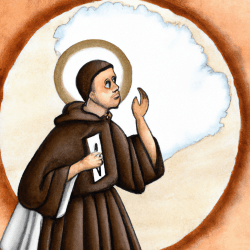
St. Anthony of Padua was born in Portugal in 1095. Though from a prominent family, he entered religious order at the age of fifteen. He sought to become a martyr by preaching Christ in Muslim lands, and eventually received his superiors’ permission to do so, but illness prevented his journey. He then tried to live quiet life of prayer and penance as a hermit, but God again had other plans for him. When asked to give a short sermon during a meal held for Dominicans and Franciscans following an ordination Mass, Anthony’s previously unknown brilliance shined through.

Anthony was reportedly “gifted with a prodigious memory, so that he retained all he read, and could have it ready at hand whenever needed.” St. Thomas Aquinas is also said to have had a memory like that, having written his book “The Golden Chain” (a collection of the Church Fathers’ commentary on each chapter of the Gospels) from memory. These anecdotes are plausible to me because I personally know a cardinal who could have met you once years before and at your next meeting would remember your face, your name, where you had met, and what you talked about. Though you and I lack this incredible gift, there is an encouragement for us in it. If natural human brains in this fallen world can sometimes possess this amazing ability, then our minds in glorified bodies will be capable of the same and more one day.

St. Anthony met and befriended St. Francis of Assisi, who sent him forth to be a traveling preacher. His preaching drew crowds so large that the churches could not hold all of the people. One of the things I love about saints’ stories is learning about how they handled difficulties, be they personal, interpersonal, or practical problems. For instance, how does one preach to a crowd of 30,000 gathered in an open field in the time before electricity? St. Anthony would stand and speak from a raised platform in the center, then brothers posted at increasing distances around him would repeat his message, phrase by phrase, to the crowd.

Like many other saints, we can read St. Anthony’s wisdom online for free. Some quotes from St. Anthony include: “Actions speak louder than words; let your words teach and your actions speak.” He said, “Earthly riches are like the reed. Its roots are sunk in the swamp, and its exterior is fair to behold; but inside it is hollow. If a man leans on such a reed, it will snap off and pierce his soul.” And, “Attribute to God every good that you have received. If you take credit for something that does not belong to you, you will be guilty of theft.”

St. Anthony was once a victim of theft. One of the monks ran away from his monastery and took with him one of Anthony’s books. In those days before the printing press, books could be very pricey and might be resold for fast cash. This particular book was dear to St. Anthony so he prayed it might return. His prayer was answered when the runaway brother had a change of heart, returned to the community, and repentantly gave back the book. This story is the reason why St. Anthony is the patron saint of lost items.

His intercession in finding lost items is powerful. I encourage small children be taught to say this delightful prayer while spinning: “Tony, Tony, come around, help what’s lost to soon be found.” (Of course, adults may choose different words and omit the action entirely if they prefer). This February, during the process of selling St. Jude’s Church, I realized that the key to the church I needed for a meeting in New Auburn that same hour was missing. I checked all over my rectory’s floors, tables, and countertops. It occurred to me I might have lost it amongst the dirty laundry, so I took my hamper down to the laundry room. Before searching my fresh, clean clothes I began checking my dirty clothes’ pockets. Then I thought, ‘I should pray for St. Anthony of Padua’s help.’ At the very moment I began to speak to him, my hand touched the key in a pants pocket. It was surreal and I felt very, very grateful.

Like the story I told at yesterday’s funeral, as Anthony lay dying (at the age of 35 from an illness) he had a vision of a heavenly visitor. One of the friars asked Anthony what he was staring at so intently. He replied, “I see my Lord!” Saints’ stories also contain weird and wonderful miracles, which show that there is more to reality than the world we see. When Anthony’s tomb was opened thirteen years after his passing, his body had naturally decayed to dusty bones, but his motionless tongue—which had proclaimed Jesus Christ so well—appeared healthy, moistened, and alive.

Are you called to be a European religious brother, priest, and Doctor of the Church like St. Anthony of Padua? Almost certainly not. Nor are you called to be an celibate Middle Eastern carpenter like Jesus Christ. But the saints show us powerful and beautiful reflections of Christ, different ways of being like our Lord, in every age and walk of life.

I hope that you will get closer to St. Anthony and the many friends we have in heaven. Ask God to introduce you, learn about them and befriend them. By the time you discover a new saint, he or she knows and loves you already, for the knowledge and love possessed by the saints in glory partakes of the wisdom and love of God.
Invited Home ― Funeral Homily for Kathleen Zwiefelhofer, 82

August 12, 2022

By Fr. Victor Feltes

In my priesthood, I have visited many dying people and heard many stories told by family members about them. In this, I have found patterns among Christians dying. For instance, as I have spoken about before, the dying person may or may not know they are in their final week of life, yet he or she is often blessed to have “a last good day.” A happy day shared with loved ones or enjoying a dearly-loved activity is gifted to them by God, from whom all good things come.

Another providential pattern I often see when visiting the dying is how people come to for the Anointing of the Sick. Though wavering in consciousness when I call their names and they open their eyes and they realize a priest has come to share God’s grace. When I came Kathleen’s side in the emergency room to give her the sacrament for those in danger of death, I called her name and she opened her eyes, and knowingly received this consolation from God. Kathleen’s journey from this life features two more elements dying Christians commonly experience. The first was her desire “to go home.”

As we grow old, our bodies are beset with infirmities. This reminds us that all of us must “appear before the judgment seat of Christ, so that each may receive recompense, according to what [we] did in the body, whether good or evil.” Our physical frailty helps to detach us from this world so that we are open to something greater. Our weakness leads us pray like the psalm: “Put an end to my affliction and my suffering; and take all my sins away. … To you, O Lord, I lift my soul.”

Throughout this year, burdened in her mind and body, Kathleen has expressed a desire “to go home.” She said this while still living at home, in the house she grew up in, next-door to St. Paul’s Church. So what “home” did she mean? Kathleen, in faith, was expressing her longing for heaven. St. Paul writes, “We know that if our earthly dwelling, a tent, should be destroyed, we have a building from God, a dwelling not made with hands, eternal in heaven. [And so] we are courageous, and we would rather leave the body and go home to the Lord.

The second detail from Kathleen’s story which I have encountered before in others is visions of visitors. Kathleen’s parents, George and Catherine, and her husband, Leon, each died many years ago. Yet Kathleen reported being in dialogue with them. She said they discussed with her whether or not it was “time for her to go.” We are surrounded by a great cloud of witnesses, by saints and angels who desire us to dwell with them in God’s holy city, the new and heavenly Jerusalem. They pray for us and help us. On the morning before Kathleen was taken to the hospital, she had another vision. She extended her palm before her saying, “He’s right here. He’s right here,” though she did not clarify whom.

Jesus says, “I am the resurrection and the life; whoever believes in me, even if he dies, will live, and everyone who lives and believes in me will never die.” “Behold, I make all things new,” Jesus declares, “I am the Alpha and the Omega, the beginning and the end.” Jesus is the reason we are here. He is why Kathleen did not fear to die. And he is the cause we have for hope in unending life and a greater home. Let us pray for Kathleen’s soul, entrusting her to our loving Lord.

In the Boss’s Shoes

August 7, 2022

19th Sunday in Ordinary Time
By Fr. Victor Feltes

Once upon a time, you had an idea, an idea to bless the entire world by starting a new business from scratch. You fully invested yourself into the project – your time and talent and treasure – to make this enterprise successful, and it was very successful. After leading your business for many years without a single vacation, you announced you would be taking some time away. You reassured your employees the company would continue and that you would be back, perhaps in a few weeks or maybe several months.

You gave careful instructions to all of your managers for what they were to do in your absence, and then you left on a journey which was out of this world. You celebrated a beautiful, destination wedding which you had long-looked forward to and enjoyed many other things. Then one Friday afternoon around 3:00 PM, you returned to your workplace, your creation.

Driving into the parking lot, you’re surprised by how few cars there are. Your confusion turns into shock when you discover the building’s front doors are locked, despite it being business hours. Fishing out your keys from your pocket you unlock the door and walk into an empty lobby. First, you go to your office and find your dear secretary, Mary, at her desk.

Thank God you’re here,” she says and she begins to tear up. “After you left, everything became horrible. Despite what you told them, people started doing their own thing. When I tried to correct them, they wouldn’t listen and were cruel.” “Where are they now?” you ask. “Most of the salaried employees have simply stopped showing up, and the rest are skipping work today to make it another ‘long weekend.’” “Mary, I thank you for your faithfulness. I’m sorry this happened to you, and I will make it up to you.

As you walk throughout the building you notice many empty beer bottles and pizza boxes laying around. The cubicles and warehouse are nearly deserted, except for Jennifer helping customers over the phone at her computer and Michael moving shipping crates on his forklift. Then you find several of the junior employees goofing-off in the break room. They become very quiet when you enter.

Why aren’t you working?” “Because… no one has told us what to do.” “Fine! Start by clearing these tables and picking up the floor. Clean these workspaces and take out the trash. Then report back to me.

Returning to your office, you immediately dictate two memos: the first, firing all of your current managers for cause, and a second memo giving large raises and promotions to Mary, Jennifer, and Michael, appointing them as the new leaders of their departments. I trust this tale sounds familiar; it is similar to Jesus’ parables but dressed in modern clothes.

In today’s Gospel, Jesus urges us to be prepared “like servants who await their master’s return from a wedding, ready to open immediately when he comes and knocks.” Blessed will such servants be upon his arrival, especially if he finds them vigilant in nighttime’s “second or third watch,” that is, during this world’s darkest hours. Their joyfully returning lord and master will be so grateful for their proven faithfulness. “Amen, I say to you, he will gird himself, have them recline at table, and proceed to wait on them,” just like Jesus washes his disciples’ feet, dries their feet with a towel wrapped around his waist, and gives them his Eucharist at the Last Supper. Our Lord and Master, who shall come knocking on an unknown future day – either on the day we die or on the Last Day – is Jesus Christ himself.

As for those who say “the master is delayed in coming” or imagine he is never coming back, who mistreat other people (the menservants and the maidservants) and serve their own selfish desires (eating and drinking and getting drunk), our Lord will come at an unknown hour and punish them severely, condemning them to where the unfaithful go.

In the beginning, God had an idea, an idea to bless our entire world, creating this universe from scratch. Jesus Christ, through whom all things were made, has fully invested himself into his enterprise’s success. Yet Jesus has given us all freewill. Though never far, Christ leaves us free to choose to be his good co-workers or to do our own wicked thing. Today I hope that, having imagined yourself in the Boss’s shoes, you may better personally feel and appreciate how much our Lord treasures your faithfulness and how eager he is to reward it.

What Truly Lasts

July 31, 2022

18th Sunday in Ordinary Time
By Fr. Chinnappan Pelavendran

Our God is a personal God who is concerned about each and every one of us and personally takes care of us. He is a benevolent Father caring for the needs of his children and planning a future for each one. The Bible presents God as a father who takes care of His children. His concern is beyond our understanding. The readings of today invite us to place our trust in God. We are invited to focus our attention on the heavenly realities more than on the earthly shadows.

Today we are also reminded that we are in a transitory world. This means that everything here changes. Everything passes. Hence, it is a call to make use of the things of this world prudently without losing our ultimate goal. Heaven is our goal. In heaven, nothing passes away.

The first reading of this Sunday begins with a warning, “Vanity, vanity,” the reading says, “vanity.” The author reminds us that there will be an ultimate end to all created things. This strikes a reality that most of us have neglected. However, one day each of us will come to terms with it. The author also calls us to remember God in all we do. And, he reminds us that the ultimate goal here on earth is to walk our way straight to heaven.

In the second reading, St. Paul advises the Colossian community that they must look for the things of heaven where Christ is. He wanted all thoughts to be centered on heavenly things, not on the things that are on earth. He reminded the Colossian community that in Baptism they have become new persons as they have been raised with Christ. There we find the perfect image of God in Jesus who is the perfect pattern of our life.

In today’s Gospel, in the parable of the foolish rich man, Jesus warns us against all types of greed, because greed takes our life’s focus away from God-away from serving and loving God and other people. Jesus says that God calls the greedy rich man a fool because the man thought he would not die soon and that he was not accountable for the way he used his riches. The rich man forgot the fact that his wealth had been lent to him by God for sharing with the needy. Jesus also warns us that our eternal life does not consist of earthly possessions. These we should share to gain eternal life.

We are invited to share our blessings with others, the parable of the rich fool gives us a warning as an invitation. It reminds us that our possessions are merely lent to us by God. And that we are accountable for their use. We must be generous in sharing our time, our treasure, and our talents in Christian stewardship. Even if we are financially poor, we may be blessed with intelligence, good will, a sense of humor, or the ability to console, encourage, inspire, support, and help others. God expects us to give our thanks to Him for all these blessings by sharing them with others for His glory.

Let us control our greed. Our greed takes different shapes and forms. For some, it may be the desire for the approval and praise of others, for some it may be an uncontrolled desire for power, control, or fame. For some still others, greed takes the form of excessive and sinful indulgence in eating, drinking, gambling, or drugs. Greed also turns our life away from God and away from loving and serving Him and other people. Greed directs all our energy and attention to fulfilling the self. We need to come out of ourselves and understand God and His creation, all the created things will pass away, but God never changes or passes away.

Stories of Three Fruitful Conversions

July 30, 2022

18th Sunday in Ordinary Time
By Fr. Victor Feltes

Leah Darrow grew up in a strong Catholic family, but she recalls that in high school her Catholicism started to get “fuzzy.” By the time she was in college, Leah says she had become a “Catholic But,” as in, “I’m Catholic but I don’t agree with the Church’s teaching on cohabitation… I’m Catholic but I don’t see the problem with a couple who love each other sleeping together before their marriage… I think the Church is behind the times.”

One evening at college Leah watched a reality show called “America’s Next Top Model.” She thought to herself, “I’m pretty cute, maybe I could be on that show.” Leah tried out, got accepted, and competed on national television against other gorgeous women. Even though she didn’t win the competition this exposure and fame jump-started her modeling career. She still recalls her excitement at receiving her first modeling paycheck featuring a number with a comma in it. Leah’s chosen path eventually led her to an experience in a New York City skyscraper which forever changed her life.

She came to pose for a risqué, international, men’s magazine. They brought out a number of itsy-bitsy outfits for her, she put one on, and the photoshoot began. Yet while Leah was posing, a vision flashed into her mind: three images in the span of perhaps a second or two. First, she saw herself standing in a large white space wearing that immodest outfit. She felt no pain in that moment, but had a sense that she had died. In the second image, Leah was looking up, holding out her open hands at her waist with the knowledge that she was in God’s presence. In her third and final scene, Leah saw herself holding her hands all the way up, offering God all that she had, but she saw that she was offering him nothing. She realized that with all of the blessings, talents, and gifts God gave her she had wasted them on herself. She saw that if she had died at that moment she would have nothing to offer Christ.

Leah abruptly abandoned the photo session, changed back into her own clothes, and ran down 5th Avenue balling. She called home saying, “Dad, if you don’t come get me I am going to lose my soul.” So her father drove across the country from Oklahoma to New York City. When her dad arrived, though Leah wanted to leave for home immediately, her father insisted upon seeing the sights. “But first,” he said, “we go to confession.” Leah made a good confession through tears, and came out of the confessional healed, like a new woman. In the years since, Leah Darrow has been bearing good fruit as a national Catholic speaker.

I was reminded of Leah’s story by a young man’s testimony this week. My spiritual retreat house in Illinois was a short distance from the Mundelein Seminary, which allowed me to take in a portion of the Courage International conference being held there now. Courage is a fellowship helping men and women who experience same-sex attractions to live chastely — faithful to Jesus Christ and Catholic teaching on sexuality.

Part of the training day for clergy was hearing a Courage member share his story. He grew up Catholic with faithful, loving parents, but like the Prodigal Son went off on his own way. He says his lifestyle had many pleasures but there remained an unsatisfied sadness. He knew what he was doing wasn’t right. One night, awakening from sleep, he also had a life-changing vision. He saw his heart of flesh descending over a dark ocean, dropping deeper and deeper down into the depths. And then he heard the Lord say two things to him (if I recall the phrasing precisely): “My son, come home,” and “Time is running out.” This experience helped him see he was God’s beloved but needed to change his life. He was called by Christ to something greater, and now his joyful life is bearing good fruit.

A different speaker at the conference shared another great story. It was an anecdote about a husband and father who had an addiction to viewing indecent images. Through renewed devotion and the help of God’s grace, this man began to experience victory and freedom from this sin. One day, as he was driving down the road chit-chatting with his four-year-old daughter in the backseat, she remarked, “I like new daddy more than old daddy.” (To be clear, both “old daddy” and “new daddy” were references to him.) This man’s four-year-old daughter did not know why things were now different, but she delighted in how much more present, attentive, and open her dad had become for her by valuing pure love more than sin.

As St. Paul urges us in today’s second reading, “Put to death, then, the parts of you that are earthly: immorality, impurity, passion, evil desire, and the greed that is idolatry.” Your old self and its practices must give way to the new. “Think of what is above,” Paul writes, “not of what is on earth.” Be renewed in God to share in his delight and great rewards.

The rich man in today’s parable gathered earthly wealth, planning and preparing for himself pleasures in this life. He thought he still had many years ahead of him to enjoy, but his time was running out. God calls him a fool since he is soon to appear before the Lord with empty hands, poor “in what matters to God.” “Vanity of vanities,” our first reading says; this world is full of vanities! Stop chasing after and clinging to worthless things. Remember that you are loved, that you were made for great things, and that the joy and freedom Jesus Christ has given to others he can also give to you.