Trinity Sunday
By Fr. Victor Feltes
A Muslim man once accused me of what he called an “unforgivable sin.” My supposed offense was espousing a core truth of our faith, the foundation of all reality: Trinitarianism — that God is one being in three persons. (That man’s charge struck me as a rather poor conversion strategy. I mean, if proclaiming the Trinity were really an unforgivable sin, why would I bother converting to Islam?) I was dialoguing on that occasion with generally friendly and thoughtful Muslims, Jews, and Unitarians in a website’s comments section, responding to something a man who believes in God but rejects the Trinity had posted. This is what he wrote:
“The Jews had no idea of the Trinity. Their faith was centred in the Shema: a unitary monotheistic confession. Jesus clearly affirmed that very same unitary monotheism in Mark 12:29″ where Jesus says, “Hear, O Israel! The LORD our God, the LORD is one!” This fellow concluded by chiding, “How is it that Christians today have abandoned their rabbi on this point?”
Both that online poster and Jesus Christ referenced the Shema, which faithful Jews would recite every morning and evening. “Shema” is the Hebrew word meaning “hear” or “listen,” and the Shema prayer quotes Deuteronomy 6:4: “Hear, O Israel: The Lord our God, the Lord is one.” Does this oneness proclaimed by God’s Word refute our Trinitarian Christian Faith? Should we reject our belief in the Trinity because Jews in the Old Testament did not profess it? No, and here’s why.
This famous scripture verse declaring, “the Lord is one,” uses the Hebrew word “echad” for “one.” Now echad can mean singularity, solitary oneness, but this same word sometimes points to a unified oneness. For instance, when Genesis recounts the creation of the two sexes it says, “For this reason a man will leave his father and mother and be united to his wife, and the two shall become one (echad) flesh.” Later in Genesis, in the story of the Tower of Babel, God laments, “If now, while they are one (echad) people and all have the same language, they have started to do this, nothing they presume to do will be out of their reach.” God, by selecting the word “echad” to proclaim “the Lord is one,” inspired a passage with providential flexibility. Echad allows for the unified oneness of the Persons of the Trinity without requiring that interpretation from the Jewish generations who came before Christ.
In the Bible, we see God gradually leading humanity along from darkness to light, from error to truth. For example, from unchecked blood vendettas, to “an eye for an eye” taught in the Mosaic Laws, to the Gospel teaching of loving our enemies. Or from polygamy, to monogamy, to sacramental marriage. Or in this case, from polytheism (belief in many gods), to monotheism (belief in one God), to Trinitarianism (our belief in one God in three divine Persons).
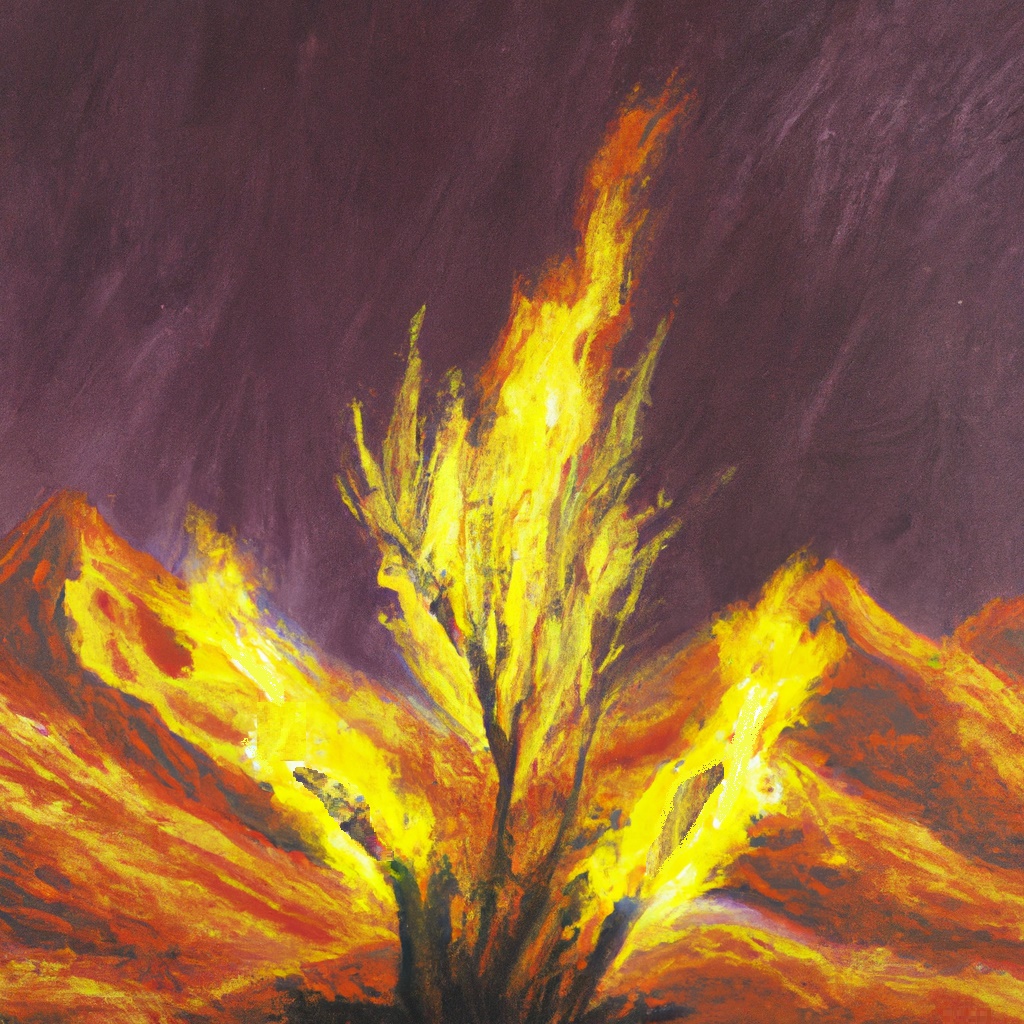
We see God’s progressive revelation occurring at the Burning Bush, where Moses must ask God to clarify for him, “If I go to the Israelites and say to them, ‘The God of your ancestors has sent me to you,’ and they ask me, ‘What is his name?’ what do I tell them?” The Lord replies, “I AM (the God) WHO AM.” That the Lord was not just another god among many pagan gods — that the Lord is, in fact, the only God — was a revelation God’s people were taught and accepted over time.
So who reveals to us that God is a Trinity; that the one divine being is three distinct Persons? This is revealed to us through Jesus Christ himself. Jesus claims authority to forgive sins, declares himself Lord of the Sabbath, demands an absolute and total commitment to himself, and presents himself as the one way of salvation. He accepts peoples’ worship, which would be idolatrous if he were not divine. And Jesus says “the Father and I are one” and “whoever has seen me has seen the Father,” yet he speaks to God his Father as another Person.
You and I are single-person beings, so we would naturally assume a personal God would be a singular-person like us. But through Jesus Christ we discover that God as a solitary one would be less perfect, less complete, less great than our God is. Our triune God, Father, Son, and Holy Spirit, is a loving communion of Persons. God the Father entirely gifts himself to his Son. God the Son entirely gifts himself back to his Father. And God the Holy Spirit proceeds from this eternal, self-gifting exchange. Indeed, as St. John writes, “God is love,” and we are made in and called to the image and likeness of God.
What does this teach us for our lives? The Holy Trinity teaches us our personal perfection will not come in isolation. God the Son calls us to be God’s children with himself, while God the Holy Spirit calls us to be animated with himself, while God the Father calls us to offer all things to himself, so that he — the source of all good things — may give us all good things in return. Loving personal relationships are the meaning of life. Our lives come from a loving communion of persons, and we are called to a loving communion of persons, the Trinity and their Church. We will only become Christian saints through self-gifting and receiving in the oneness of a holy, loving communion of persons.
 Parishable Items
June 5, 2023 at 8:34 am |
Muslims have no case. They accept Jesus words by relying on human understanding. And this fails because they will not bother or avoid the other words of Jesus. On top of this Islam’s beliefs rest on its very weak understanding of the Tradition that brought the Bible. They need to learn how to listen to the teachings passed down from the Apostles.