14th Sunday in Ordinary Time
By Fr. Victor Feltes
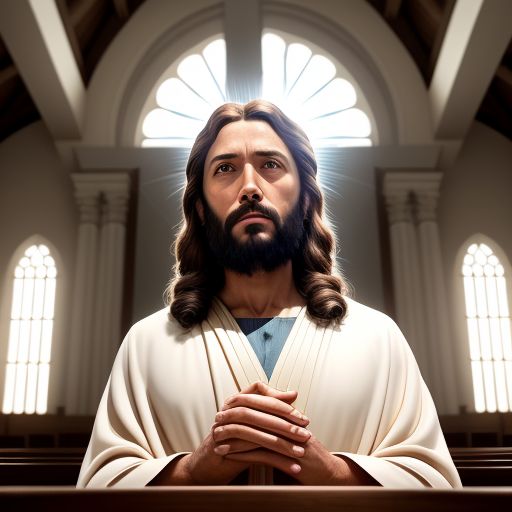
Jesus commanded the wind and waves of a storm and proved himself more powerful than nature. He told a twelve-year-old girl to arise and proved himself stronger than death. But when Jesus returned to his hometown he was not able to perform many mighty deeds. He did no mighty deeds in Nazareth “apart from curing a few sick people by laying his hands on them.” St. Matthew writes that Jesus “did not work many mighty deeds there because of their lack of faith.” They had listened to Jesus teach in their synagogue. He declared to them during his homily on a messianic passage in Isaiah, “Today this scripture passage is fulfilled in your hearing.” And “many who heard him were astonished,” yet this astonishment became outpaced by outrage.
‘Where did this guy get all this,’ they wondered. ‘Isn’t he just a carpenter? Don’t we know his mom and relatives, who all live around here?’ And “they took offense at him.” St. Luke records “they rose up, drove him out of the town, and led him to the brow of the hill on which their town had been built, to hurl him down headlong. But he passed through the midst of them and went away.” St. Mark tells us that Jesus “was amazed at their lack of faith.” Jesus’ neighbors at Nazareth had more personal knowledge of him in those early days than nearly anybody else on earth, yet they treated him very poorly. They were familiar with him and he was doing good things yet they treated him with contempt. If the boy Jesus had grown up here, if that young man had lived in our community or household, how would we have treated him? Well, how do we treat the people who live around us now?
In his great novel The Brothers Karamazov, Dostoevsky has one of his characters remark, “The more I love humanity in general the less I love man in particular. In my dreams, I often make plans for the service of humanity…. Yet I am incapable of living in the same room with anyone….” Dostoevsky observes it can be very easy to love “humanity,” because “humanity” is an abstract idea. Escapist daydreams are easy and pleasant, but the actual human beings around us require things of us. Not only at Mass and prayer with God but also in daily life with them, we must exercise our love and grow it, in good times, in bad times, and in ordinary times.
St. John writes in his first New Testament letter, “If anyone says, ‘I love God,’ but hates his brother, he is a liar; for whoever does not love a brother whom he has seen cannot love God whom he has not seen. This is the commandment we have from him: whoever loves God must also love his brother.” How do we treat our brothers and sisters, our neighbors and family members, at work, at home, at church? That’s our best clue for how we would treat Christ, for he tells us, “whatever you did [or did not do] for one of these least brothers of mine, you did [or did not do] for me.” So ask for Jesus’ powerful help, for his transforming grace which changes people and relationships, and remember him in how you treat others.
 Parishable Items
Leave a comment