5th Sunday of Lent
By Fr. Victor Feltes
God does not do bad things, for “God is not subject to temptation to evil” and “what he hates he does not do.” However, God is all-knowing and all-powerful. There is nothing knowable that God does not know, and nothing good and doable that he cannot do. Therefore, when a bad thing happens, God has allowed that to happen. Yet we also “know that God causes all things to work together for the good of those who love him.” We see these truths reflected in today’s Gospel reading.
God clearly permitted Lazarus to fall ill. And when Jesus received the urgent message from Martha and Mary that their brother was sick, he remained in the place where he was and allowed Lazarus to die. “Now Jesus loved Martha and her sister and Lazarus.” So why did Jesus not come earlier, when he was told “the one you love is ill.” Or why did Jesus not heal his friend Lazarus’ sickness from a distance, like he cured the centurion’s servant or the royal official’s son? Jesus says the dying and rising of Lazarus was “for the glory of God, that the Son of God may be glorified through it,” and “that you may believe.”
Earlier in his public ministry, Jesus had raised Jairus’ daughter from the dead, having told mourners that the little girl was “asleep.” But that resurrection miracle was performed privately, shortly after death, and with strict orders to its witnesses that no one should know of it. By publicly raising Lazarus from the tomb in the presence of a crowd, Jesus manifests his power not only to heal the sick but to restore the dead to life.
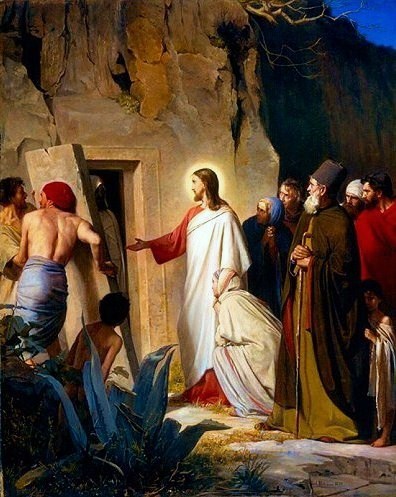 Picture this: One moment, Lazarus was ailing and fading out of consciousness on his deathbed. The next thing he knows, he wakes up wrapped in bandages inside of a cave, and comes out toward the light at the sound of his friend Jesus’ call. His sisters would have filled him in on what he missed when he was dead.
The Gospels tell us Lazarus later attended a dinner with Jesus the day before Palm Sunday at the house of Simon the Leper. Martha served the meal while Mary took costly perfumed oil and poured it on Jesus’ head as he reclining at table. “A large crowd of the Jews found out that he was there and came, not only because of Jesus, but also to see Lazarus… And the chief priests plotted to kill Lazarus too, because many of the Jews were turning away and believing in Jesus because of him.” After Holy Week, the New Testament tells us no more of what happened to Lazarus. But we can imagine what it was like, years after Easter Sunday, when Lazarus died again.
Knowing that Jesus died and was risen, and having personally experienced death and resurrection himself, must have given Lazarus great peace even during his final passion. Consider Martha or Mary watching their brother die once more; having to burying him again. There would naturally still be sadness and ache in that parting, but I imagine the sisters would feel different this time: ‘We know he will rise in the Resurrection on the Last Day. Jesus Christ is the resurrection and the life who has come into the world, and whoever believes in him, even if they die, will live.’ Our brother Jesus died and has risen from the dead “for the glory of God” and “that you may believe.” Knowing and embracing this reality changes our life and how we face death. Do you believe this?
Last week, April 2nd, marked the twentieth anniversary of the passing of Pope St. John Paul the Great. And if you are like me, having witnessed how he lived and died, is inspiring. Pope John Paul’s famous motto was “Be not afraid!” In this, of course, he was quoting Christ who frequently said, “Be not afraid!” “Be not afraid,” Jesus tells us, “If you believe you will see the glory of God.”
 Parishable Items
Leave a comment