Divine Mercy Sunday
By Fr. Victor Feltes
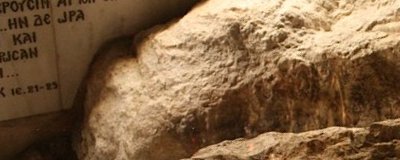
The Roman pagans believed it was impious to kill someone inside of their city walls yet their leaders wanted the public to witness their executions. So on Good Friday, Christ was led out to a location near Jerusalem’s gates close enough to the road and city such that many passersby would read the sign above the head of “Jesus the Nazarene, the King of the Jews.”
That place was situated inside a long-exhausted quarry from which limestone blocks had once been cut to build the Holy City’s white walls and buildings. Many years before Good Friday, the laborers discovered a certain outcropping there where the stone was fissured and pocked and judged unfit. So they quarried out all the stone around the spot, leaving behind a mound of rock behind.
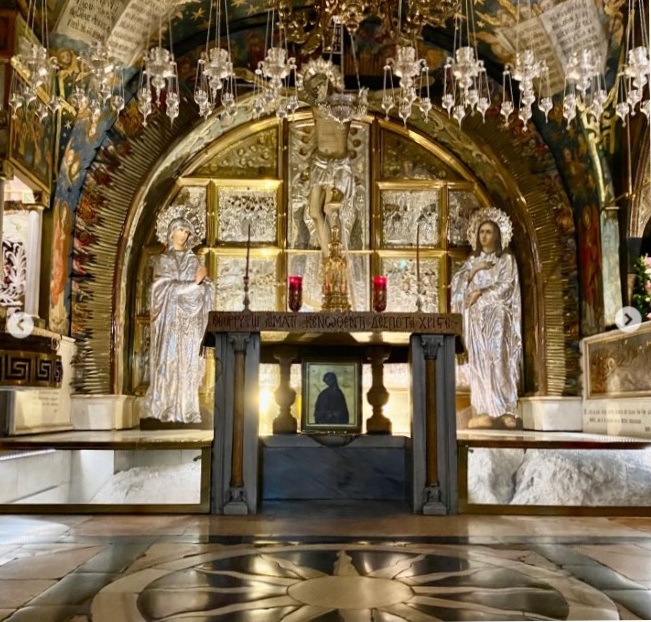
That small hill came to be called “Golgotha” in Greek and “Calvary” in Latin, meaning “The Place of the Skull.” That rock became the site of Jesus’ crucifixion and death. It was a secondary fulfillment of this passage from today’s 118th Psalm: “The stone which the builders rejected has become the cornerstone.” So what was the primary fulfillment of that prophecy? Who is the stone and who are the builders?
St. Peter while being questioned by the Jewish priests and scribes in the Book of the Acts told them, “Jesus Christ the Nazorean whom you crucified, whom God raised from the dead… He is the stone rejected by you, the builders, which has become the cornerstone.” The Jewish religious leaders were the builders who rejected Jesus unfit to be their Savior. Governor Pilate and King Herod were builders too, political leaders who sought to promote their power, who judged Jesus to be useless for their purposes. You and me are builders too, building our lives through our choices, and when we knowingly, freely choose to sin we are denying Jesus in that aspect of our lives.
Now we do not earn salvation by our works, any more than we could earn the Sacrament of Baptism. Baptism and salvation are gracious gifts because God has loved us first. St. Paul writes, “God proves his love for us in that while we were still sinners Christ died for us.” But it is important that we respond to Christ and love him back. Jesus does not force us to embrace him and his Kingdom; we can spurn him and his gifts through unrepentant grave sins. Jesus cautions us, “Not everyone who says to me, ‘Lord, Lord,’ will enter the Kingdom of heaven, but only the one who does the will of my Father in heaven.” So if we reject Christ as our Rock through serious sin, how can he be restored as our cornerstone?
On Easter Sunday evening, Jesus bodily appeared in the Upper Room saying “Peace be with you.” He reassured his disciples and proved that he was truly risen by showing them his wounds. Then Jesus breathed on them and said to them, “Receive the Holy Spirit. Whose sins you forgive are forgiven them, and whose sins you retain are retained.” Jesus does not empower them in this way to no purpose. The Sacrament of Baptism forgives all sins preceding our baptism. But for the forgiveness of grave sins committed after our baptism, we see Jesus entrusts his priests with authority to forgive sins through the Sacrament of Reconciliation (also known as Confession or Penance).
Even if you have no grave sins to confess, regular confession and forgiveness of your minor sins is just good spiritual hygiene. It’s an encounter with Jesus Christ in which we receive healing, good counsel, and renewed grace for growing in our faithful, fruitful Christian love. In the Sacrament of Reconciliation, the stone rejected by the builders becomes our cornerstone anew. By the Lord is this done and it is wonderful in our eyes. The Lord has made this day of Divine Mercy; let us be glad and rejoice in it!
 Parishable Items
Leave a comment