21st Sunday in Ordinary Time
By Fr. Chinnappan Pelavendran
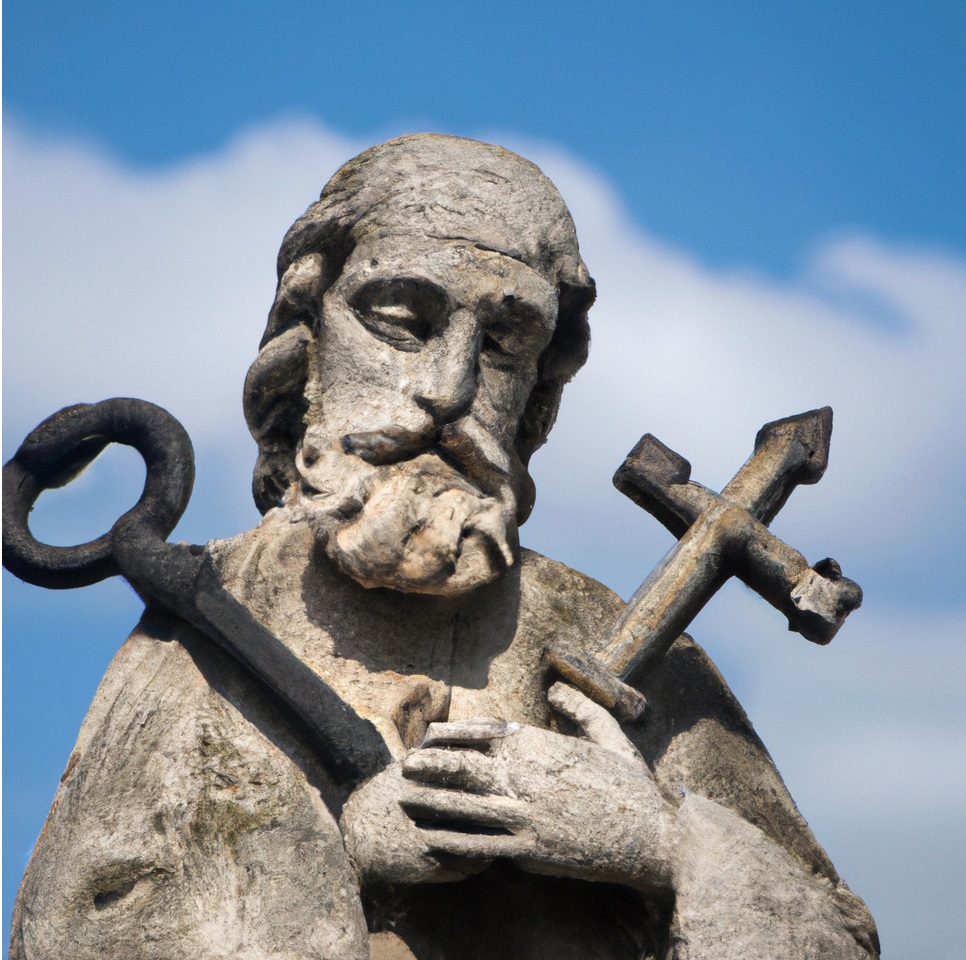
God has all power and authority over earth and heaven. He is the source of all that lives and moves in this world and the next world. Authority for civil and religious leaders comes from God, so that they might govern His people and take care of the spiritual and material welfare of His children. The Lord could have found many different ways to establish His church. He could have entrusted it to the angels. Instead, the Lord puts the church in the hands of the faithful. Though He is all-powerful and has authority over everything, He needs to appoint a faithful person to work in His name.
In the first reading, God sent the prophet Isaiah to tell Shebna that the keys of authority would be taken away from him because he was not faithful to the Lord and His teaching. In his place, God exalted the humble and faithful Eliakim. The Lord demands faithfulness to His ways and His word.
In the responsorial Psalm, King David thanks God for having raised him from lowly origins and given him authority as a King over the people of Israel. In the second reading, St. Paul points out that God is the Source of all authority on earth and in Heaven. Again, St. Paul invites us to discipline ourselves because bad things still happen to good people.
In today’s Gospel, we have Peter’s confession about Jesus. “You are the Christ, the Son of the living God.” Peter was the first one to recognize Jesus as the Messiah, the Christ who came to save all his people. Jesus was pleased with Peter’s answer and said to Peter, “Blessed are you, Simon son of John.” Again, Jesus explained to His disciples that He was not a political Messiah. Rather, He is a Messiah who must suffer, die, and be raised to life again.
St. Peter was a man who grew in his faith. He was a fisherman. He was neither wealthy nor educated. When Jesus called Peter and his brother Andrew, they left everything and followed Him. Throughout Peter’s three-year journey with Jesus, He had moments of faith and doubts. When Jesus appeared to the disciples, walking on the water, Peter had enough faith to get out of the boat and come to Jesus. However, once he started having doubts, his faith began to shake and he began to sink. Immediately, Jesus stretched out his hand and saved him.
On the night of Jesus’ crucifixion, Peter denied Jesus not once but three times. Prior to this denial, Peter claimed that he would never deny Jesus and that he would even die for him. Even during Christ’s darkest hour, when he was dying on the cross, Peter was nowhere to be seen. He and most of the apostles had abandoned Jesus when he needed them the most.
Despite all of Peter’s shortcomings and failures, Jesus saw the best in him. Jesus saw so much potential in Peter that He made him the first leader and ‘Rock of His Church.’ If God used a man like him, it causes us to think that God can use our lives for greatness, too.
Eliakim in the first reading and St. Peter in the Gospel reading are prime examples of someone who was considered inadequate or not worthy enough to serve God. Jesus did not look at Peter’s inadequacy, he looked at His heart. When we feel inadequate or unworthy of Christ’s love, we can look at St. Peter. God looks at our hearts and invites us to be faithful to Him.
 Parishable Items
Leave a comment