Archive for October, 2016

On Our Separated Brethren

October 30, 2016

At the end of this month, four hundred ninety-nine years ago, a German Augustinian Catholic priest and theology professor sent the archbishop of Mainz a letter and a list of ninety-five statements disputing the Church’s teachings on indulgences. The friar later may have also posted his “ninety-five theses” as an invitation for debate on his university’s chapel door in Wittenberg. Events would snowball from there, with examinations and public debate, and ultimately an excommunication. That monk’s name was Martin Luther.

martin-luther-portriat-by-lucas-cranach-the-elder-1528

Martin Luther (1483-1546)

Luther rebelled in the belief that he was calling the Church to holy reform, back to its original purity, freed from all false additions. But unlike St. Francis, whose radical devotion to the Gospel and the Church strengthened Christendom, Luther’s efforts brought about division which remains to our day. The “Protestant Reformation” gave rise to Lutheranism, Calvinism, Anglicanism, and their many denominational breakoffs, including Baptists, Presbyterians, Methodists,  Evangelicals, Pentecostals, and others.

What do we as Catholics believe about the Christians in these non-Catholic communities and what does the Catholic Church believe about herself? The following excerpts on this subject are drawn from The Catechism of the Catholic Church (paragraphs #816-822):

The sole Church of Christ is that which our Savior, after his Resurrection, entrusted to Peter’s pastoral care, commissioning him and the other apostles to extend and rule it…. This Church, constituted and organized as a society in the present world, subsists in the Catholic Church, which is governed by the successor of Peter and by the bishops in communion with him.

The Second Vatican Council’s Decree on Ecumenism explains: “For it is through Christ’s Catholic Church alone, which is the universal help toward salvation, that the fullness of the means of salvation can be obtained. It was to the apostolic college alone, of which Peter is the head, that we believe that our Lord entrusted all the blessings of the New Covenant, in order to establish on earth the one Body of Christ into which all those should be fully incorporated who belong in any way to the People of God.”

In fact, in this one and only Church of God from its very beginnings there arose certain rifts, which the Apostle strongly censures as damnable. But in subsequent centuries much more serious dissensions appeared and large communities became separated from full communion with the Catholic Church – for which, often enough, men of both sides were to blame. The ruptures that wound the unity of Christ’s Body – here we must distinguish heresy, apostasy, and schism – do not occur without human sin: As Origen wrote, “Where there are sins, there are also divisions, schisms, heresies, and disputes. Where there is virtue, however, there also are harmony and unity, from which arise the one heart and one soul of all believers.”

However, one cannot charge with the sin of the separation those who at present are born into these communities that resulted from such separation and in them are brought up in the faith of Christ, and the Catholic Church accepts them with respect and affection as brothers…. All who have been justified by faith in Baptism are incorporated into Christ; they therefore have a right to be called Christians, and with good reason are accepted as brothers in the Lord by the children of the Catholic Church.

Furthermore, many elements of sanctification and of truth are found outside the visible confines of the Catholic Church: the written Word of God; the life of grace; faith, hope, and charity, with the other interior gifts of the Holy Spirit, as well as visible elements. Christ’s Spirit uses these Churches and ecclesial communities as means of salvation, whose power derives from the fullness of grace and truth that Christ has entrusted to the Catholic Church. All these blessings come from Christ and lead to him, and are in themselves calls to “Catholic unity.”

Christ bestowed unity on his Church from the beginning. This unity, we believe, subsists in the Catholic Church as something she can never lose, and we hope that it will continue to increase until the end of time. Christ always gives his Church the gift of unity, but the Church must always pray and work to maintain, reinforce, and perfect the unity that Christ wills for her. This is why Jesus himself prayed at the hour of his Passion, and does not cease praying to his Father, for the unity of his disciples: “That they may all be one. As you, Father, are in me and I am in you, may they also be one in us, … so that the world may know that you have sent me.” (John 17:21) The desire to recover the unity of all Christians is a gift of Christ and a call of the Holy Spirit.

Certain things are required in order to respond adequately to this call:

– a permanent renewal of the Church in greater fidelity to her vocation; such renewal is the driving-force of the movement toward unity;

– conversion of heart as the faithful try to live holier lives according to the Gospel; for it is the unfaithfulness of the members to Christ’s gift which causes divisions;

– prayer in common, because change of heart and holiness of life, along with public and private prayer for the unity of Christians, should be regarded as the soul of the whole ecumenical movement, and merits the name “spiritual ecumenism”

– fraternal knowledge of each other;

– ecumenical formation of the faithful and especially of priests;

– dialogue among theologians and meetings among Christians of the different churches and communities;

– collaboration among Christians in various areas of service to mankind. “Human service” is the idiomatic phrase.

Concern for achieving unity involves the whole Church, faithful and clergy alike. But we must realize that this holy objective – the reconciliation of all Christians in the unity of the one and only Church of Christ – transcends human powers and gifts. That is why we place all our hope in the prayer of Christ for the Church, in the love of the Father for us, and in the power of the Holy Spirit.
Prayers of the Faithful / Petitions / Intercessions (Year C)

October 29, 2016

1st Sunday of Advent, Year C (November 29, 2015)
2nd Sunday of Advent, Year C (December 6, 2015)
Immaculate Conception (December 8, 2015)
3rd Sunday of Advent, Year C (December 13, 2015)
4th Sunday of Advent, Year C (December 20, 2015)
Christmas (December 25, 2015)
Holy Family (December 27, 2015)
Mary, Mother of God (January 1, 2016)
Epiphany (January 3, 2016)
Baptism of the Lord (January 10, 2016)
2nd Sunday in Ordinary Time, Year C (January 17, 2016)
3rd Sunday in Ordinary Time, Year C (January 24, 2016)
4th Sunday in Ordinary Time, Year C (January 31, 2016)
5th Sunday in Ordinary Time, Year C (February 7, 2016)
Ash Wednesday (February 10, 2016)
1st Sunday of Lent, Year C (February 14, 2016)
2nd Sunday of Lent, Year C (February 21, 2016)
3rd Sunday of Lent, Year C (February 28, 2016)
4th Sunday of Lent, Year C (March 6, 2016)
5th Sunday of Lent, Year C (March 13, 2016)
Palm Sunday of Lent, Year C (March 20, 2016)
Holy Thursday (March 24, 2016)
Easter (March 26-27, 2016)
Divine Mercy Sunday (April 3, 2016)
3rd Sunday of Easter (April 10, 2016)
4th Sunday of Easter (April 17, 2016)
5th Sunday of Easter (April 24, 2016)
6th Sunday of Easter (May 1, 2016)
Ascension / 7th Sunday of Easter (May 8, 2016)
Pentecost Sunday (May 15, 2016)
Holy Trinity Sunday (May 22, 2016)
Corpus Christi Sunday (May 29, 2016)
10th Sunday in Ordinary Time, Year C (June 5, 2016)
11th Sunday in Ordinary Time, Year C (June 12, 2016)
12th Sunday in Ordinary Time, Year C (June 19, 2016)
13th Sunday in Ordinary Time, Year C (June 26, 2016)
14th Sunday in Ordinary Time, Year C (July 3, 2016)
15th Sunday in Ordinary Time, Year C (July 10, 2016)
16th Sunday in Ordinary Time, Year C (July 17, 2016)
17th Sunday in Ordinary Time, Year C (July 24, 2016)
18th Sunday in Ordinary Time, Year C (July 31, 2016)
19th Sunday in Ordinary Time, Year C (August 7, 2016)
20th Sunday in Ordinary Time, Year C (August 14, 2016)
Assumption of Mary (August 15, 2016)
21st Sunday in Ordinary Time, Year C (August 21, 2016)
22nd Sunday in Ordinary Time, Year C (August 28, 2016)
23rd Sunday in Ordinary Time, Year C (September 4, 2016)
24th Sunday in Ordinary Time, Year C (September 11, 2016)
25th Sunday in Ordinary Time, Year C (September 18, 2016)
26th Sunday in Ordinary Time, Year C (September 25, 2016)
27th Sunday in Ordinary Time, Year C (October 2, 2016)
28th Sunday in Ordinary Time, Year C (October 9, 2016)
29th Sunday in Ordinary Time, Year C (October 16, 2016)
30th Sunday in Ordinary Time, Year C (October 23, 2016)
31st Sunday in Ordinary Time, Year C (October 30, 2016)
All Saints (November 1, 2016)


Click to view additional Year C petitions (from 2013)

October 30th Parish Bulletin

October 28, 2016

The St. Wenceslaus parish bulletin (PDF) for the 31st Sunday in Ordinary Time on October 30th, 2016.

The Battle of Lepanto

October 21, 2016

One of the most important sea battles in world history was fought on October 7th, 1571. From the East sailed a great superpower, the Muslim Ottoman Empire, intent on extending their territories across the Mediterranean. From the West responded an alliance of Christian states named the Holy League. These two great armadas, totaling at least 484 row-powered vessels and around 150,000 men, clashed off the southwestern coast of Greece.

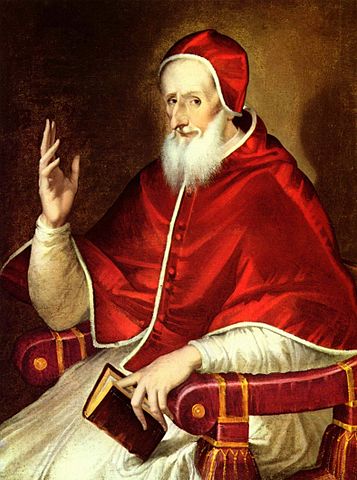
pope-st-pius-v-1504-1572The Holy League was called and assembled through the leadership of Pope St. Pius V, who clearly perceived the Turkish threat. Pope Pius  rallied not only material might but also spiritual strength to oppose the aggressors, ordering the Rome’s churches to remain open day and night for prayer and urging the faithful to ask the intercession of the Blessed Virgin Mary through the recitation of the Rosary.

In the afternoon of October 7th, Pope Pius was walking about his room, being briefed on various matters by his treasurer, Msgr. Busotti de Bibiana. The pope suddenly stopped in the middle of the room and, making a sign for Busotti to be silent, put out his head as one listening. He then threw open the window and leaned out, in the same silent and listening posture. On seeing the pope’s face suddenly transfigured, his tearful blue eyes turned up to heaven with an ineffable expression, and his raised,  joined, and trembling hands, Busotti’s hair stood on end as he realized that something supernatural was occurring. The pope thus remained for more than three minutes, and then said to Busotti with a joyful, radiant face, “This is not the time for business. Let us return thanks to God for victory over the Turks.” The pope withdrew stumbling into his chapel with beautiful lights coming from his forehead.

The treasurer hastened to report what had happened to the Vatican Cardinals and bishops, and these ordered that a record should be made at once, noting all the circumstances of time and place, and that it should be sealed and deposited at a notary’s office. (This account, affirmed by Busotti under oath, would be later presented as part of Pius V’s canonization process.) Weeks later, the news finally reached Rome by human means making known the victory at Lepanto. Though the numbers and winds had favored the Turks the morning of the conflict, first-hand witnesses write that the winds shifted to the Christians forces’ favor at the hour of battle.

St. Pope Pius V, recognizing and celebrating this providential deliverance, added a new feast day to the Roman Liturgical Calendar. October 7th was made the Feast of Our Lady of Victory. Pope Pius’ successor, Gregory XIII (after whom our Gregorian Calendar is named) would change the name of this day to the Feast of the Holy Rosary, as it is known and celebrated in the Church today.

the-1571-battle-of-lepanto

“The Rosary Is…”

October 21, 2016

    “My favorite prayer.” ~ Pope St. John Paul II

     “The Bible on a string.” ~ Fr. Ronan Murphy

     “A school for learning true Christian perfection.” ~ Pope St. John XXIII

     “A prayer both so humble and simple and theologically rich in Biblical content.” ~ Pope St. John Paul II

     “A treasure of graces.” ~ Pope Paul V

     “A priceless treasure inspired by God.” ~ St. Louis De Monfort

     “A powerful weapon.” ~ St. Josemaria Escriva

     “The weapon for these times.” ~ St. Padre Pio

     “The scourge [against] the devil.” ~ Pope Adrian VI

     “A powerful weapon to put the demons to flight and to keep oneself from sin.” ~ Pope Pius XI

     “The most excellent form of prayer and the most efficacious means of attaining eternal life.” ~ Pope St. Leo XIII

     “A magnificent and universal prayer for the needs of the Church, the nations and the entire world.” ~ Pope St. John XXIII

     “The most beautiful and the most rich in graces of all prayers; it is the prayer that touches most the Heart of the Mother of God.” ~ Pope St. Saint Pius X

    “Of the greatest value, not only according to the words of Our Lady of Fatima, but according to the effects of the Rosary one sees throughout history.” ~ Sister Lucia, one of the seers of Fatima

     “The book of the blind, where souls see and there enact the greatest drama of love the world has ever known; it is the book of the simple, which initiates them into mysteries and knowledge more satisfying than the education of other men; it is the book of the aged, whose eyes close upon the shadow of this world, and open on the substance of the next.” ~ Venerable Fulton Sheen

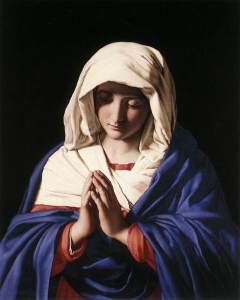
The Blessed Virgin Mary at Prayer

October 23rd Parish Bulletin

October 21, 2016

The St. Wenceslaus parish bulletin (PDF) for the 30th Sunday in Ordinary Time on October 23rd, 2016.

October 16th Parish Bulletin

October 14, 2016

The St. Wenceslaus parish bulletin (PDF) for the 29th Sunday in Ordinary Time on October 16th, 2016.

October 9th Parish Bulletin

October 6, 2016

The St. Wenceslaus parish bulletin (PDF) for the 28th Sunday in Ordinary Time on October 9th, 2016.