Archive for September, 2017

Three Common Catholic Misconceptions

September 27, 2017

Sometimes even the faithful can get things wrong (perhaps that’s why we’re called “practicing” Catholics.) I believe the following rank among Catholics’ most common misconceptions about our own Faith:

Myth #1: “The Immaculate Conception was Jesus Becoming Man”

Although Jesus’ conception is also a holy miracle, the Immaculate Conception refers to the creation of his mother, Mary. The Church has believed in Mary’s perfect sinlessness from ancient times. Consider that the loaded Greek word with which the Archangel Gabriel hails her at the Annunciation identifies her as ‘one having been graced by God in the past with the result continuing in full effect to the present.’ (Luke 1:28)

On December 8, 1854, Pope Pius IX infallibly defined the Dogma of the Immaculate Conception in these words: “We declare, pronounce and define that the doctrine which holds that the Blessed Virgin Mary, at the first instant of her conception, by a singular privilege and grace of the Omnipotent God, in virtue of the merits of Jesus Christ, the Savior of mankind, was preserved immaculate from all stain of original sin, has been revealed by God, and therefore should firmly and constantly be believed by all the faithful.

Myth #2: “The Anointing of the Sick is Only for One’s Deathbed”

Among the seven sacraments, Anointing of the Sick is the one especially intended to strengthen those who, having reached the age of reason, begin to be in danger due to sickness or old age. As the Second Vatican Council teaches, this “is not a sacrament only for those who are at the point of death. Hence, as soon as any one of the faithful begins to be in danger of death from sickness or old age, the fitting time for that person to receive this sacrament has certainly already arrived.”

Catholics on their deathbeds should certainly ask a priest for “the Last Rites,” that is, Anointing of the Sick with special prayers for the dying. But Catholics facing major surgery (such as ones involving general anesthetic) or those feeling elderly frailty should request this sacrament as well. Anointing may be repeated if the sick person’s condition becomes more grave during the same illness, or if they recover and then become seriously ill again.

Myth #3: “Divorced People Cannot Receive Holy Communion”

Faithful to Christ, the Catholic Church teaches that a consummated sacramental marriage endures for as long as the bride and groom both live. However, being divorced does not, in and of itself, bar someone from worthily receiving Holy Communion. (For instance, an abandoned spouse may bear no fault for his or her divorce, and in some cases—like domestic abuse or a gambling addiction—it can be appropriate for a spouse to procure a legal separation.) Merely being divorced is not necessarily a sin; it is divorce followed by remarriage outside of the Church that is the issue. Jesus said, “Whoever divorces his wife and marries another commits adultery against her; and if she divorces her husband and marries another, she commits adultery.” (Mark 10:11-12)

So what should a person who is divorced and remarried outside the Church do? The first step is to approach your pastor. Together, you can begin exploring seeking an annulment. A sacramental marriage cannot be undone by any power on earth, but if something essential to marriage was absent or withheld from the very beginning then such a marriage is invalid (not sacramental) and may be annulled. After obtaining the needed annulment(s), a person is free to be married in the Church. But what should remarried persons do if an annulment is not possible? Even these may receive Holy Communion following a good confession if they are resolved to begin living chastely, “as brother and sister,” in their present relationship.
Some Recommended Catholic Websites

September 22, 2017

If the Internet had been around during the first century AD, I’m fairly confident that St. Peter would’ve tweeted, St. Paul would’ve podcast, and the secular Roman press would’ve misreported Catholic news far and wide. Times may change, but the Church and the world both use new advancements in communication technology to promote their often competing messages in the marketplace of ideas. As Pope St. John Paul II wrote in 2002:

“The Internet is certainly a new ‘forum’ understood in the ancient Roman sense… a crowded and bustling urban space which both reflected the surrounding culture and created a culture of its own. …Like the new frontiers of other times, this one too is full of the interplay of danger and promise, and not without the sense of adventure which marked other great periods of change. For the Church the new world of cyberspace is a summons to the great adventure of using its potential to proclaim the Gospel message.”

In the years since the beginning of this third Christian millennium, the Church’s online presence has blossomed. The pope tweets (@pontifex), most parishes have websites (including both St. Paul’s and St. John’s), and many faithful sites provide Catholic news and commentary and resources for evangelization and personal growth. Here are some of my most recommended, helpful Catholic websites:

NewAdvent.com
I check New Advent daily for aggregated links to Catholic news and articles. This site also has online versions of the Catholic Encyclopedia, Aquinas’ Summa, Early Church Fathers’ writings, and papal documents.

Formed.org
This rich Catholic site presents feature films, documentaries, ebooks, audio books, video-based study programs, and more. This quality content is free for the families, youths, and adults of St. John’s and St. Paul’s parishes using our special code in the bulletin.

USCCB.org
That acronym stands for the United States Conference of Catholic Bishops. Their site is especially useful for viewing upcoming Mass readings (via the front-page calendar) and reading the complete New American Bible.

ParishableItems.wordpress.com
I have posted hundreds of my homilies and reflections here on this blog since 2009. Use the main-page’s “Categories” menu or the search box to find something by Fr. Feltes you’re interested in.

An American Martyr

September 13, 2017

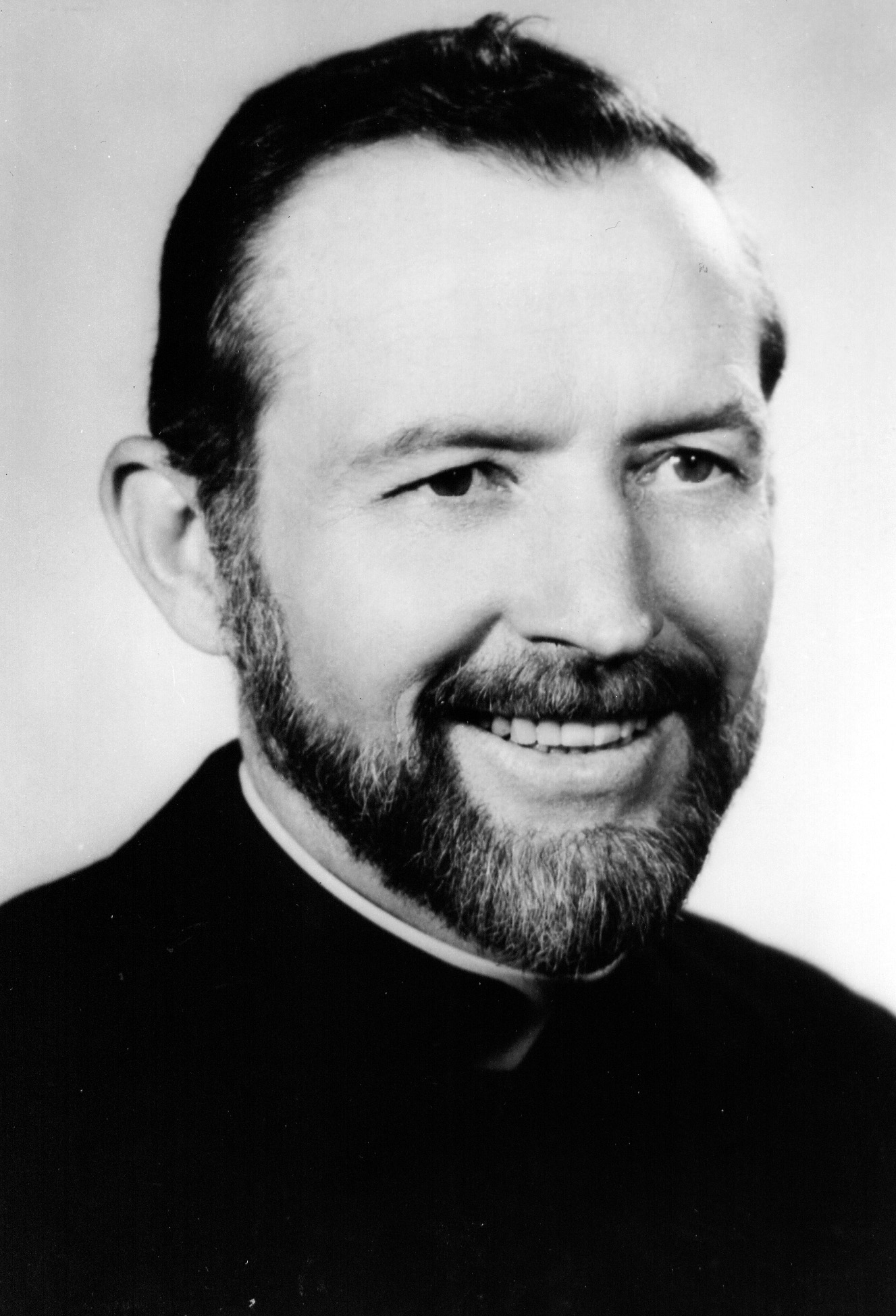
Saturday, September 23rd, a U.S. priest-martyr will be beatified in Oklahoma City, OK, the first so honored by the Church in our country. Fr. Stanley Rother was born in 1935 and grew up on an Oklahoma farm. He served in several Oklahoma parishes after his 1963 priestly ordination before volunteering for mission service in Guatemala in June of 1968. While there he helped build a small hospital, a school, and a Catholic radio station. He also translated the New Testament into Tz’utujil, a local language of that region.

Political turmoil and violence escalated Guatemala during the late 1970’s and early 1980’s. The government aimed to suppress Marxist revolution by targeting rebels and hundreds of their alleged sympathizers for death. In early 1981, Fr. Rother learned that his name was on a death list. It was determined that he should leave Guatemala and he reluctantly returned to Oklahoma in January 1981. However, he soon asked his archbishop for permission to go back: “My people need me. I can’t stay away from them any longer.” Fr. Rother’s brother Tom questioned him, “Why do you want to go back? They’re waiting on you and they’re gonna kill you.” He replied: “Well, a shepherd cannot run from his flock.” The pastor returned to his people that April.

On July 28, 1981, just after midnight, Fr. Rother was shot and killed in his rectory. His remains were flown back to Oklahoma and buried in his hometown. At the request of his Guatemalan parishioners, his heart was removed and buried under the altar of the church where he had served. He was one of ten Catholic priests murdered in Guatemala that year.

Last December, Pope Francis issued a decree affirming that Fr. Stanley Rother was indeed martyred in odium fidei (“in hatred of the faith,”) permitting him to be beatified without the usual confirming miracle. As St. Augustine once preached, “At the Lord’s table we do not commemorate martyrs in the same way that we do others who rest in peace so as to pray for them, but rather that they may pray for us that we may follow in their footsteps.” Let us ask the prayers of this new American blessed that we may be courageously faithful and loving like himself in Christ.

A Wonderful Vacation

September 7, 2017

How was my vacation? It was a wonderful adventure! Missouri’s solar eclipse was beautiful; a black circle with white wisps extending over a surprisingly blue background. In the first seconds when the Sun began reemerging from the Moon there was a bright speck and then an expanding light so intense that it could not be looked at. It was like seeing the large stone rolled away from the mouth of the tomb on Easter morning at the moment of the Resurrection.

We touched the St. Louis Arch, a structure whose geometric simplicity belies the amazing landmark that it is. Ask yourself, how would you build such a thing sixty-three stories in the air?

In Arizona, I was pleased to providentially cross paths with Clare Shakal from Cooks Valley. I was surprised to learn she happens to work at the parish where a friend from seminary I was visiting is now pastor.

In  Southern California I saw the last line of light from a red Sun be swallowed by the ocean. Pedestrians paused on the pier to watch the Earth eclipse of the Sun (what we call a sunset) but there was nothing like the numbers who gathered for the much rarer eclipse the week before.

One morning, I body-surfed in the Pacific Ocean, and went to bed in Wisconsin that night. While flying home (over a distance it would have taken me months to travel on foot) I gazed down upon the Grand Canyon for the first time. Our pilot never mentioned it.

My trip had many highlights but the part I enjoyed the most and what seasoned all the rest was the good friends I was blessed to share my adventure with.

What makes something wondrous? Things we encounter often feel less precious and usually go unnoticed. If solar eclipses happened daily at noon they would be no less beautiful but they never make the news. Our world is filled with wonders but even when we live in appreciative gratitude we still long for more. This is a sign to us that we were made to live forever; in a loving communion of persons with an infinitely interesting and beautiful God.

Mary, the New Ark of the Covenant

September 4, 2017

Did you ever see Indiana Jones and The Raiders of the Lost Ark? You may recall seeing the movie’s replica of the Ark of the Covenant featured as the McGuffin artifact everyone was seeking out. This movie has been very helpful to preachers in providing a visual aid to everyone of what the Ark of the Covenant looked like.

Like Noah’s Ark, the Ark of the Covenant was a box constructed according to God’s design and command. It served as a portable throne bearing the presence of God on earth. The Ark held inside of it three important things: the two tablets of the Ten Commandments, the wooden staff of Moses’ brother Aaron the High Priest, and a gold jar containing some of the Manna God provided his people to eat in the desert. The reason I mention these things today is because the Ark of the Covenant in the Old Testament foreshadows the Blessed Virgin Mary in the New Testament.

The old Ark held the Ten Commandments, the word of God in stone; the Virgin Mary bears the Word of God in flesh. The old Ark held the priestly staff which on one occasion miraculously blossomed despite being dead; Mary conceives by the power of the Holy Spirit despite her perfect virginity. The old Ark contained Manna bread in a golden vessel; Mary’s holy womb contains the true Bread from Heaven, provided to us for our journey to Promised Land — Jesus Christ, our Prophet, Priest, and King.

At God’s command, the old Ark was made of natural wood overlaid with pure gold inside and out. Mary is a human woman who is made “full of grace.” King David once joyfully leaped and danced before the Ark of the Lord. At the Visitation, when Mary visits Elizabeth her relative, John the Baptist likewise leaps with joy within his mother’s womb. David once asked, “How can the Ark of the Lord come to me?” Elizabeth likewise asks, “And how does this happen to me, that the mother of my Lord should come to me?” On one occasion, the old covenant ark was kept for three months in the house of a man named Obed-edom outside Jerusalem, and Scripture records that God blessed his whole household. Mary likewise dwelt three months in the home of Zechariah and Elizabeth near Jerusalem and was surely a blessing to them.

No man was to touch the Old Covenant Ark, lest they be struck down dead. (God instructed his ministers to move that holy Ark only by means of two gilded poles which slid through rings on the sides of the Ark.) Joseph of Nazareth held a similar reverence towards Mary, his ever-virgin wife. In the Old Testament, the Lord was to be found wherever the old Ark dwelt, from the Sinai wilderness to the Temple in Jerusalem. In the New Testament, “on entering the house, [the Magi] saw the child with Mary his mother,” and, “standing by the cross of Jesus [was] his mother.”

In the movie, Indiana Jones and the Nazis were looking for the “lost” Ark because Scripture reports that the Old Covenant Ark was hidden soon before the Jewish Temple was destroyed by the Babylonians in 587 BC. Jeremiah the Prophet took the Ark and placed it in a secret cave. Unlike in the 1981 movie, the Lost Ark has never been recovered. Yet, in his revelations recorded at the end of the New Testament, John the Apostle sees the new Ark revealed. John writes: “God’s temple in Heaven was opened, and the ark of his covenant could be seen in the temple.” The next thing John describes is a glorious woman pregnant with the Christ child, “A great sign appeared in the sky, a woman clothed with the sun, with the moon under her feet, and on her head a crown of twelve stars.” This is Mary, the New Ark of the Covenant, whom at the end of her time on earth God lifted up body and soul into Heaven.

The old Ark was of central, though secondary, importance in the Old Covenant. Drawing physically nearer to it brought one closer to the presence of God on earth. Likewise, God gives the Blessed Virgin Mary, the new Ark, a central role in his New Covenant. If you draw closer in your relationship with her, you will surely draw closer to our Lord Jesus Christ.