Archive for April, 2018

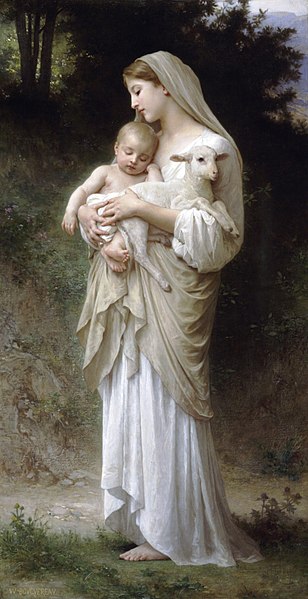
Mary, the Mother of All Christians

April 26, 2018

Earlier this year, the Vatican announced that the Monday after Pentecost Sunday shall henceforth be celebrated as a new feast day: the Memorial of the “Blessed Virgin Mary, Mother of the Church.” Its worldwide inaugural celebration will be on May 21st this year. The Holy Catholic Church has defined four dogmas about Mary: that she is ever-virginal and the Mother of God, that she was immaculately conceived and assumed body and soul into Heaven. What Pope Francis has decreed is not on the level of defining a fifth Marian dogma, but he is highlighting a precious truth about Our Lady for us to treasure and valuable for us to share with our Protestant brothers and sisters.

Mary is both poetically and actively the Mother of the Church. St. Augustine says of her, “She is clearly the Mother of His members; that is, of ourselves, because she cooperated by her charity, so that faithful Christians, members of the Head, might be born in the Church.” And as Blessed Pope Paul VI professes in his Credo of the People of God: “we believe that the Blessed Mother of God, the New Eve, Mother of the Church, continues in Heaven her maternal role with regard to Christ’s members, cooperating with the birth and growth of divine life in the souls of the redeemed.” How many Christians are unaware that they have a spiritual Mother who loves them?

That Mary is the Mother of all Christians is evident from Scripture. At the Cross, “when Jesus saw his mother and the disciple there whom he loved, he said to his mother, ‘Woman, behold, your son.’ Then he said to the disciple, ‘Behold, your mother.’ And from that hour the disciple took her into his home.” This scene was not included in John’s Gospel to satisfy some idle curiosity about Mary’s living arrangements in her later years. Understanding this scene according to its spiritual significance, every Christian is ‘the disciple who Jesus loved.’ Every Christian is entrusted to Mary as her child and she is given to each one of them as their mother.

Further proof of this is found in the Book of Revelation. There we see a huge dragon (explicitly called “the Devil and Satan”) attempt to destroy “a male child, destined to rule all the nations with an iron rod,” along with his mother who wears “a crown of twelve stars.” This is Jesus the Messianic King and his Queen Mother, Mary. Note what happens after the “ancient serpent” fails to conquer this man and woman: “Then the dragon became angry with the woman and went off to wage war against the rest of her offspring, those who keep God’s commandments and bear witness to Jesus.” Who are Mary’s children? They are Christians — “those who keep God’s commandments and bear witness to Jesus.”

Christ’s Church is meant to be gathered around Mother Mary. Before his Ascension, Jesus told the first Christians to “stay in the city until you are clothed with power from on high.” And so, “when the time for Pentecost was fulfilled, they were all in one place together” beside Mary his Mother and the reconstituted Twelve Apostles in the room where the First Eucharist was celebrated. It was through Mary that the Holy Spirit had first begun to bring mankind into communion with Jesus Christ. So likewise (the Catechism of the Catholic Church observes) “she was present with the Twelve, who with one accord devoted themselves to prayer, at the dawn of the end time which the Spirit was to inaugurate on the morning of Pentecost with the manifestation of the Church.”

This is why the Monday after Pentecost is a very fitting day for us to celebrate Mary as Mother of the Church and why all Christians should come together as her spiritual children. Let Catholics be rejoice and Christians be reunited as one!

Mary, Mother of all Christians, pray for us!

Lingering Wounds — Divine Mercy Sunday—2nd Sunday of Easter

April 15, 2018

Of all the apostles, it could be said that St. Thomas’ faith took him the farthest. Likely tradition says Thomas traveled more than 2,000 miles from Israel to evangelize India. From the seeds of his ministry and martyrdom there, tens of millions of Indians are Christians today. Yet, he’s not known as “Traveling Thomas” or “Faithful, Fruitful Thomas,” but famously as “Doubting Thomas” because of these passages:

Thomas, called Didymus, one of the Twelve, was not with them when Jesus came. So the other disciples said to him, “We have seen the Lord.” But he said to them, “Unless I see the mark of the nails in his hands and put my finger into the nailmarks and put my hand into his side, I will not believe.”

So why was Thomas so slow to believe? I would suggest three theories:

The first explanation would be that Thomas didn’t want it to be true. Many peoples’ lack of belief is due to an unwilling heart. They see no evidence for God because they have closed their eyes. If they were honest they would say, “I don’t want it to be true, because if it is then I’d have to change how I live my life.” Jesus says if we ask, we’ll receive; if we seek, we’ll find; and if we knock, the door will be opened to us. But this sort of person doesn’t ask because they don’t want good answers, they don’t seek because they’re afraid of what they’ll find, and they don’t knock because they don’t want to go in.

In the Book of Revelation, Jesus says, “Behold, I stand at the door and knock.” He knocks on the door of every human soul. But we can lock and block our door; with a big-screen TV of entertainment, or a bookshelf of learning, a trophy case of accomplishments, a heavy safe of accumulated wealth, or with several large-leafy plants so that a person may enjoy the beauty of creation while ignoring the Creator. If we insist upon self-centered ingratitude, the Lord will respect our freedom but we’ll be woefully unsatisfied forever.

But this is was not St. Thomas. He had sacrificed a lot to be Jesus’ apostle and had aspired to give him his all. On one occasion Jesus said, “Let us go back to Judea,” but the disciples replied, “Rabbi, the Jews were just trying to stone you, and you want to go back there?” When Jesus insisted on going, “Thomas, called Didymus, said to his fellow disciples, ‘Let us also go to die with him.’” At the Last Supper, when Jesus said, “Where I am going you know the way,” Thomas replied, “Master, we do not know where you are going; how can we know the way?” He was distressed because he loved Jesus and wanted to follow him anywhere. Thomas wanted the Resurrection to be true, but there was some other reason he wouldn’t or couldn’t believe.

A second theory for why Thomas was so slow to believe is that he was skeptically-minded. St. Thomas’ nickname, as you’ve heard it now a couple of times, was “Didymus.” In Greek, Didymus means “twin.” How was Thomas a twin? Scripture doesn’t say. Perhaps Thomas had a twin brother he had been mistaken for many times. In some icons of Jesus with his apostles, one of the apostles looks just like Jesus. Such art imagines that Thomas shared a twin likeness to the Lord. In either case, one could understand his initial skepticism about people seeing Jesus resurrected. “Nah. You guys saw somebody else.”

But Thomas has sufficient evidence to believe his friends. They are not claiming to have seen Jesus across the marketplace or walking through a field at dusk. (Neither Thomas nor we are expected to have blind faith, but to trust in trustworthy persons and things.) The other apostles are saying, “It’s true Thomas! He knew us, we saw his wounds!” Yet Thomas replies, “Unless I see the mark of the nails in his hands and put my finger into the nailmarks and put my hand into his side, I will not believe.” Why is Thomas so being obstinate?

The third (and I think most likely) explanation for why Thomas was so slow to believe in the Resurrection was that he hurt too much trust again. Who was Jesus to Thomas? He was Thomas’ hero, his admired teacher, his dearly beloved friend. Thomas thought Jesus would be the savior and messianic king of Israel, but Thomas’ great hope was murdered on Good Friday. Imagine Thomas’ prayer after experiencing that. “My God, how could you let this happen? He was innocent, he was so good! He was the best man I’ve ever known, and you let Him die! Why? How could do that to him? How could you do this to me?”

Jesus’ unexpected death broke Thomas’ heart, and perhaps having been so wounded once, he was resolved not to let his heart be taken-in again: ‘Unless I see the mark… put my finger in the nailmarks… put my hand in his side, I will not believe.’ Yet, though he doubts, notice where Thomas is one week after Easter. He’s with the other apostles in the upper room in Jerusalem, gathered behind locked doors for fear of those who killed Jesus. Now there are lots of other, safer places Thomas could have chosen to be. He could have returned to his hometown, back to the family and friends he left behind to follow Jesus a few years before. Though Thomas doubts, he does not leave this house of faith. He struggles with his questions, but he does not fully abandon Jesus. He seeks him here and because of it Thomas finds truth for his mind, healing for his heart, and peace for his soul.

The risen Lord appears in the upper room and how does Jesus respond to Thomas’ resistant unbelief? Not with anger. Not with condemnation. But with the same Divine Mercy we celebrate today. Jesus appears in their midst and says, “Peace be with you.” Then he says to Thomas, “Put your finger here and see my hands, and bring your hand and put it into my side, and do not be unbelieving, but believe.”

Curiously, Jesus still bears some of the wounds from his Passion: in his hands, feet and side. The cuts and swollen bruises are gone from his face, for the disciples respond to him with rejoicing rather than pity or horror, but he retains some marks from the evils that afflicted him. Jesus could heal or cover them—he’s God—but he choose not to. They are his trophies, the means of his glory, how he saved the world.

Our wounds, our losses, the sins and evils we suffer, they can scandalize us like Thomas was after the Passion. But through these things Jesus would glorify us, help to save others, and transform us into his more perfect twin. Jesus, having experienced wounds of his own, can relate and heal you.

Like St. Thomas, this Divine Mercy Sunday, you are gathered in this upper room with Jesus’ disciples. If there is any great wound or uncertainly in you, I invite you to be open to encounter Jesus anew like St. Thomas. Dare to ask, dare to seek, dare to knock. Jesus is not only your Lord and your God, he’s good and his love is everlasting.

Our Lady of Zeitoun

April 3, 2018

A Fascinating Marian Apparition from Egypt

Fifty years ago this week, on the evening of April 2, 1968, a group of Muslim mechanics and drivers working across the street from Virgin Mary’s Coptic Church in Zeitoun, Egypt, saw a woman atop a dome of the church. Two other men also noticed the white figure on the top of the church and the matter was reported to the police. A crowd gathered on the site and interpreted the sighting as an apparition of the Blessed Virgin Mary. After a few minutes, the event ended. According to tradition, Zeitoun is on the route that the Holy Family took when fleeing King Herod’s efforts to murder the infant Jesus.

Our Lady of Zeitoun

One week later, on April 9, 1968, the phenomenon reoccurred, again lasting for only a few minutes. After that time apparitions became more frequent, sometimes two or three times a week, for several years, ending in 1971. The woman spoke no words, but moved about the church’s mysteriously illuminated domes. She would also face the people in the streets below and gesture warmly with her head or hands. Sometimes she was accompanied by luminous, dove-shaped bodies which moved about at high speeds. Muslims hold Mary in very high regard even though they deem Jesus to be merely a prophet of Islam. She was seen to kneel down before a cross on the church roof; significant, since Muslims deny Jesus’ crucifixion.

Pope (or Patriarch) Kyrillos VI, the head of the Coptic Orthodox Church of Alexandria, appointed a committee of high-ranking priests and bishops to investigate. On May 4, 1968, Kyrillos VI issued an official statement confirming and approving the apparition. These apparitions were witnessed by perhaps a million people, including President Gamal Abdel Nasser, and were documented by newspaper photographers and Egyptian television. Egyptian government officials concluded in 1968: “Official investigations have been carried out with the result that it has been considered an undeniable fact that the Blessed Virgin Mary has been appearing on Zeitoun Church in a clear and bright luminous body seen by all present in front of the church, whether Christians or Muslims.”