Archive for April, 2019

True Witnesses to the Resurrection

April 23, 2019

“[S]ome of the [tomb] guard went into the city and told the chief priests all that had happened. The chief priests assembled with the elders and took counsel; then they gave a large sum of money to the soldiers, telling them, ‘You are to say, “His disciples came by night and stole him while we were asleep.” And if this gets to the ears of the governor, we will satisfy him and keep you out of trouble.’ The soldiers took the money and did as they were instructed. And this story has circulated among the Jews to the present day.”

—The Gospel according to St. Matthew 28:11-15

When I was a grade-schooler, a classmate told me, “Did you know, if you dream that you’re falling and you hit the ground in your dream, you’ll die in real life?” I was astounded and the idea stuck with me. But upon later reflection, I realized the suggestion was nonsense. If someone had died in their sleep because they fell to the ground in a dream, how would anyone find out what they had been dreaming about? The tomb guards’ cover story likewise makes no sense. If they had been sound asleep, how could they identify who (if anyone) had stolen the body?

For the sake of argument, let’s suppose Jesus’ disciples stole his dead body from the tomb. Then the Apostles would know for a fact that the stories they told of interacting with the resurrected Jesus were lies. Church history reports that ten out of the eleven faithful Apostles would go on to die bloody, martyrs’ deaths. Now someone might die for what they mistakenly believe to be true, but who would knowingly die for a lie?

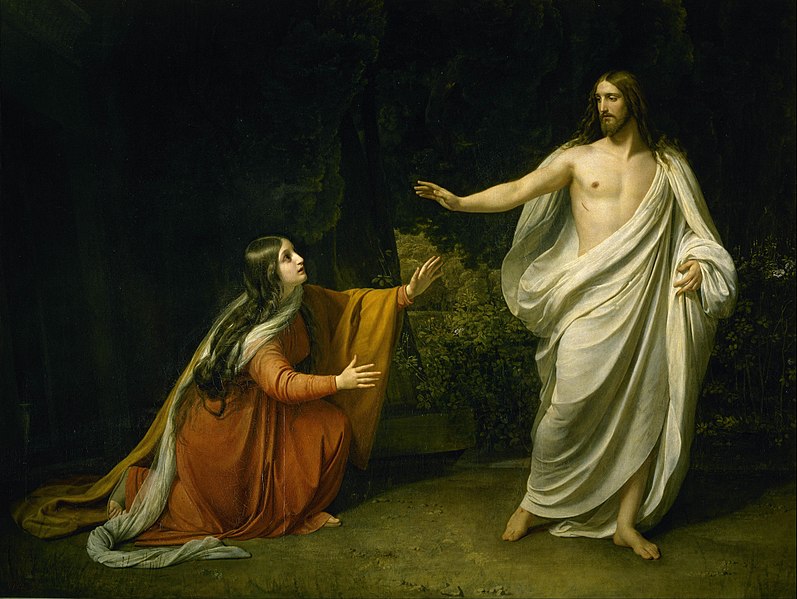
So let’s suppose instead – again for the sake of argument – that the early Christians lied about the Apostles. But if the Gospel writers had been liars they would have spun their tales differently. The Apostles, the founding father-leaders of this new Christian Church, are not presented flatteringly but with their warts and all. They repeatedly misunderstand Jesus’ teachings, squabble for place and prestige, fall asleep in the garden and then desert their Lord when trouble arrives, and even after the Resurrection they are slow to accept it. A liar would neither invent nor include the story of St. Peter repeatedly denying Christ, but all four Gospel writers did. And who is presented as the first eyewitnesses to Easter morning’s miracle? Various women — in an era where neither Roman nor Jewish courts accepted the testimony of females. Liars would have fabricated more culturally acceptable witnesses, but the Gospels record the story of the Resurrection this way because that is how it really happened.

The Apostles were willing to boldly preach across an empire that had murdered their master, for no notable earthly benefit, until they got killed for it. We might have expected them to lay low, leave town, and go back to full-time fishing, yet these self-admittedly imperfect men were transformed after Easter. They became unafraid of death because they had truly witnessed, seen and touched, Jesus Christ alive from the dead. Christ is risen. He is risen indeed! And this eyewitness testimony has circulated among the nations to this present day.
A Testing By Fire

April 17, 2019

Jesus teaches, “There will be more joy in Heaven over one sinner who repents than over ninety-nine righteous people who have no need of repentance. … I tell you, there will be rejoicing among the angels of God over one sinner who repents.” I suspect the world’s heartbroken reaction to seeing Paris’ Notre Dame Cathedral ablaze resembles how the angels in Heaven mourn the loss of one soul.

On the day of the fire, many feared that this 12th century church honoring “Our Lady,” which took 182 years to build, was no more. But thankfully, the destruction appears limited to its massive oak beam roof. Its tall limestone walls and celebrated stained-glass windows reportedly survived with minor damage. The great cathedral will be resurrected, yet this event should be a wake-up call, a reminder that the most precious of things can be neglected and lost forever.

It is right and good that buildings for the worship of God should be strikingly beautiful. John’s Gospel recalls how less than a week before Jesus’ Passion, Judas Iscariot criticized Mary of Bethany for wasting wealth; using an expensive, fragrant ointment to adore Jesus rather than help the poor. But Christians are called to both – with our worship inspiring and guiding our charity – and no time in history has been wealthier to do both than ours. Notre Dame Cathedral, even now amid ashes and debris, draws souls to closer God. In this is its true value.

In itself, though great in age or size, a church is a less precious thing than its visitors. As C.S. Lewis wrote, “Nations, cultures, arts, civilization — these are mortal, and their life is to ours as the life of a gnat. But it is immortals whom we joke with, work with, marry, snub, and exploit — immortal horrors or everlasting splendors.” The famous author of The Lion, the Witch and the Wardrobe adds, “All day long we are, in some degree, helping each other to one or other of these destinations.” Our own choices help lead ourselves in one direction or the other, too.

Many will come to church for Easter this Sunday and that is well, but we must do more. Our faith in Jesus Christ must be our life’s foundation and, as St. Paul says, “each one must be careful how he builds upon it… If anyone builds on this foundation with gold, silver, precious stones, wood, hay, or straw, the work of each will come to light, for the Day [of Judgment] will disclose it. It will be revealed with fire, and the fire will test the quality of each one’s work.” As the Letter to the Hebrews tells us, “our God is a consuming fire.” A trial by fire came to France’s great cathedral and, by the grace of God worthy of our praise, it survived. “In just the same way,” Jesus says of souls, “it is not the will of your heavenly Father that one of these little ones be lost.” So let us carefully consider what is truly precious and what we value, what we have been choosing and what we will choose now beyond this Easter morning.

Lessons from the Sins of Simon Peter & Judas

April 9, 2019

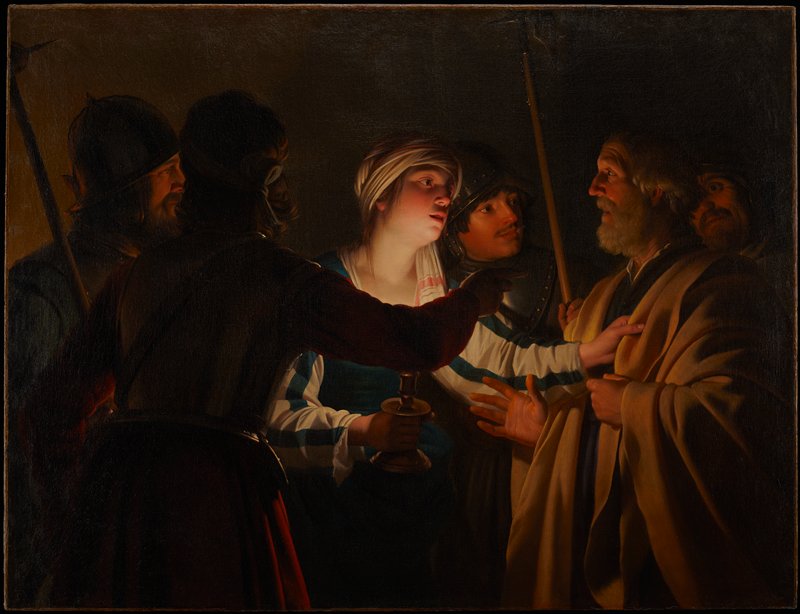
After arresting [Jesus] they led him away and took him into the house of the high priest; Peter was following at a distance. They lit a fire in the middle of the courtyard and sat around it, and Peter sat down with them. … About an hour later, still another insisted, “Assuredly, this man too was with him, for he also is a Galilean.” But Peter said, “My friend, I do not know what you are talking about.” Just as he was saying this, the cock crowed, and the Lord turned and looked at Peter, and Peter remembered the word of the Lord, how he had said to him, “Before the cock crows today, you will deny me three times.” He went out and began to weep bitterly.

– Luke 22:54-55,59-62

This threefold denial by Simon Peter was perhaps the most regretted moment of his life. He denied even knowing Jesus Christ, his teacher, friend, Lord, and God. How humble Peter was to share this story with the Early Church and how wonderful that the Holy Spirit inspired its inclusion in the Gospels! He shows us the fallen can get back up, wanderers can return, sinners can be forgiven, and even those who gravely sin can go on to become the greatest saints.

Jesus would go on to rehabilitate Peter after the Resurrection, alongside another charcoal fire by the Sea of Galilee. Mirroring the three denials, Jesus asks three times, “Simon, son of John, do you love me?” Simon Peter replies, “Yes, Lord, you know that I love you,” and Jesus reinstates him as shepherd of his sheep and lambs. The Sacrament of Reconciliation (or Confession) is likewise a personal encounter with Jesus Christ where we re-profess our love for God and receive his restoring forgiveness through the ministry of his ordained priest.

Though Simon Peter’s sins were forgiven they were not without loss and opportunities squandered. During the Passion, as they led Jesus away, “they took hold of a certain Simon, a Cyrenian, who was coming in from the country; and after laying the cross on him, they made him carry it behind Jesus.” If Simon Peter had not sinned in denying Christ the night before he could have been there, ready and willing to get behind his Lord, pick up Jesus’ cross and follow him. How beautiful that would have been! But this opportunity fell to another Simon.

Thanks be to God, St. Peter went on to repent. He did not give up to despair like Judas Iscariot. When Judas saw Jesus condemned and on his way to execution he deeply regretted what he had done. (One theory for why Judas had sold Jesus out is he wanted to trigger a confrontation with the leaders of Israel which would force Jesus to wield his mighty powers and take the throne.) Judas tried to return the thirty silver coins to the chief priests and elders saying, “I have sinned in betraying innocent blood.” They answered, “What is that to us? Look to it yourself.” Flinging the money into the temple, Judas departed and went off and hanged himself.

What if instead, on Good Friday afternoon, Judas had immediately ran to Calvary Hill? What if he had thrown himself down before Christ hanging on the Cross and begged his forgiveness? What would Jesus have said? What would Jesus have done? I think we already know the answer, or could pretty closely guess. Jesus would have forgiven Judas.

So come to Jesus in sacramental Confession. Come sooner rather than later and more than just once or twice a year. And, once wonderfully absolved, resolve and strive to sin no more. Though sins can be forgiven, we see that every sin or delayed conversion entails some loss, an opportunity missed.