Archive for August, 2019

How Many Will Be Saved? — 21st Sunday of Ordinary Time—Year C

August 25, 2019

Someone asks Jesus from the crowd, “Lord, will only a few people be saved?” And Jesus replies, “Strive to enter through the narrow gate, for many, I tell you, will attempt to enter but will not be strong enough.” Instead of quoting some particular figure, like ten thousand or ten billion souls, Jesus says, “Strive to enter through the narrow gate…” Jesus dodges the question. So we are left wondering: in the end, will the number of people saved be small or large?

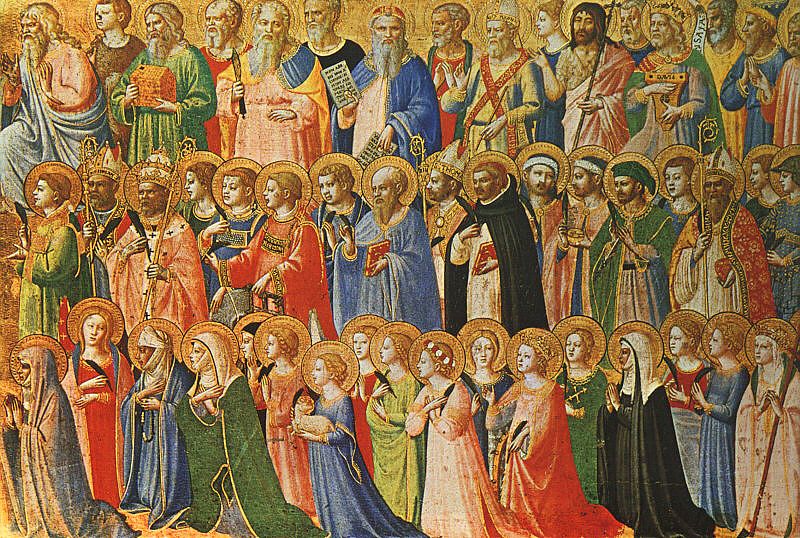
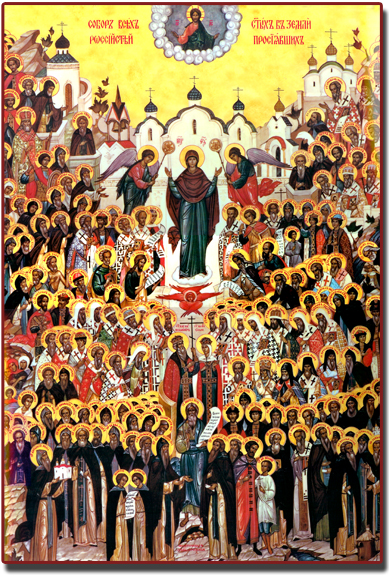
In the Book of Revelation, St. John witnesses a vast number of saints worshiping God in heaven. He beholds “a vision of a great multitude, which no one could count, from every nation, race, people, and tongue.” Note that this ‘countless multitude’ is different and much larger than the “144,000 marked from every tribe of the Israelites” that John observes several verses before. Jesus came to save people not only from the twelve tribes of Israel, but from the whole world. As the Lord declares through the Prophet Isaiah in our first reading, “I come to gather nations of every language; they shall come and see my glory.” Based on this, we can confidently say that a very large number will be saved.

On the other hand, in our gospel’s parallel passage from St. Matthew’s Gospel, Jesus says, “Enter through the narrow gate; for the gate is wide and the road broad that leads to destruction, and those who enter through it are many. How narrow the gate and constricted the road that leads to life. And those who find it are few.” The ‘few’ who enter the narrow gate to life sounds like less than the ‘many’ who do not. From this, it would seem that the number saved will be comparatively small.

However, the words “few” and “many” are relative terms which depend upon the context. For example, nearly 19,000 medals have been awarded in the modern Summer and Winter Olympic Games, and that is indeed many. But how many Olympic gold, silver, or bronze medalists have you personally met? If any at all, probably only a few. In a more tragic example, around 130,000 Americans die each year in accidents, and that’s awfully many. But at the same time, roughly 99.96% of Americans do not die in accidents each year, making the 0.04% who do relatively few. The word “many” sometimes refers to a majority of people, but not always.

Jesus suffered, died, and rose to redeem all of mankind. Even if there had been only one sinner on earth in all of human history, it seems that Jesus would have become man in order to offer himself to save him or her, me or you. Suppose that the number of human souls condemned to Hell on Judgment Day turns out to be only a dozen. Knowing how much our Lord loves each and every person, will not those lost twelve feel like many in the heart of Jesus and those saved billions feel like few? In any case, Jesus never tells us whether the majority of the human race will be saved or lost. Either outcome is possible.

Why isn’t Jesus more clear about exactly how many people will be saved? Because Jesus knows how such knowledge would be harmful for us. If we were told that most people will be saved in the end, we would fall into dangerous presumption. We’d say to ourselves, “I haven’t robbed any banks or murdered anybody; I sure I’m good enough.” And if we were told that most people will be lost in the end, we would fall into poisonous despair. We’d say to ourselves, “With my sins, what’s the use in me even trying?” St. John’s Gospel tells us that Jesus “did not need anyone to testify to him about human nature. He himself understood it well.” So, instead of giving us some precise statistic, some number or percentage about how many will be saved, Jesus gives us this much more beneficial advice: ‘Strive to enter through the narrow gate (for whether you are saved or not depends, in part, on you.)’

Almighty God “wills everyone to be saved and to come to knowledge of the truth,” in the words of St. Paul, but upon coming to know that truth, the Lord requires our personal response. He respects our freedom, and we are free to ignore him, to our own harm. As Jesus tells us, after the master of the house has arisen and locked the door, you may stand outside knocking and saying, “Lord, open the door for us.” He will say to you in reply, “I do not know where you are from.” (In other words, “You’re a stranger to me.”) And you will say, “We ate and drank in your company and you taught in our streets” (as happens at every Holy Mass.) Then he will say to you, “I do not know where you are from. Depart from me, all you evildoers!” In Matthew’s Gospel, Jesus declares, “Not everyone who says to me, ‘Lord, Lord,’ will enter the Kingdom of Heaven, but only the one who does the will of my Father in Heaven.

For adults like you and me, entering through Jesus’ narrow door requires more than merely wishing or have vague aspirations about going to Heaven someday. Striving to enter through the narrow gate entails sacrifices and discipline. As our second reading tells us, to those who are trained by it, discipline brings the peaceful fruit of righteousness. “So strengthen your drooping hands and your weak knees. Make straight paths for your feet.” Consider:

What sacrifice does Jesus ask of you?
What is Jesus asking you to remove from your life?
What is Jesus asking you to add to your life?
What sin does he want you to cease?
What gift does he want you to give?
Think about it. Pray about it.
Jesus has answers for you.

Let us intentionally cooperate with God and his grace. Let us accept the Lordship of Jesus Christ in our lives, so that we may be numbered among ‘the few‘ who are saved in the end.
Your Special Day: August 24th — The Aaron & Ciera Logslett Wedding

August 24, 2019

Aaron and Ciera, this date, August 24th, August 24th 2019, is a date you will remember (or else you will be reminded of) every year for the rest of your lives together. Today marks the beginning of your marriage covenant. This will henceforth be your special day. But are you aware of the past history of this date? Momentous things have occurred on August 24th.

1,940 years ago today, on August 24th, 79 A.D., an Italian volcano, Mount Vesuvius, famously erupted, killing thousands of people in the Roman city of Pompeii a moment. That’s why you picked today for your wedding date, right?

On August 24th, 1814, 205 years ago today, during the War of 1812, the British army invaded Washington D.C. and set fire to the White House. The President and First Lady, James and Dolly Madison escaped, but they lost their home and many personal possessions. But, it’s not only unfortunate historical events that mark this day. Positive things have happened as well.

110 years ago today, In 1909, the first of some 2 million cubic yards of concrete began to pour to create the Panama Canal. This project, connecting two oceans through Central America, is one of our country’s greatest engineering feats.

And 70 years ago today, on August 24th, 1949, the North Atlantic Treaty Organization went into effect. The United States led Western nations in forming this mutual defense pact (called NATO) against the evil and hostile Soviet Union. Through this alliance, the U.S. and her allies would go on to win the Cold War.

Besides being interesting trivia, I mention these events from the past because they carry lessons for your future together.

This is a happy day, a day for great joy, but it is my duty to tell you, and my desire to help you, to enter the years ahead with open eyes. There will be enemies to your marriage. Hostile forces will attack your house that would burn it down. I speak of temptations and dangers from this broken world around us, your own weak flesh, and the very real devil. All of us must fight these battles. And there will be days in your marriage when unexpected disasters fall from the sky, crises and trials will erupt in your lives in ways you cannot now predict. I know this because the Cross comes to every person’s life.

But today, the two of you are entering into a new alliance, to stand and endure against these evils. It’s an alliance sealed with God and with each other; to be a good wife and mother like Sirach praises in our first reading, and a kind and merciful husband and father like our Psalm celebrates. Together, you can and will prevail. Today the cement of your marriage covenant will be poured and hardened. Today you have found your life’s calling, your vocation. Rather than taking a longer way around to this world to Heaven, your marriage is to be your straight path to holiness. Your marriage is to be your channel of God’s grace.

As St. Paul’s prayed for the Romans in our second reading, so we pray for you:

“May the God of endurance and encouragement
grant you to think in harmony with one another,
in keeping with Christ Jesus,
that with one accord you may with one voice
glorify the God and Father of our Lord Jesus Christ.”

Today, Jesus preaches his Gospel message to you

“As the Father loves me, so I also love you.
Remain in my love.
If you keep my commandments,
you will remain in my love…
I have told you this so that my joy may be in you
and your joy may be complete.
This is my commandment:
love one another as I love you.”

Aaron and Ciera, remember these things in the marriage you are about to enter so that you may be blessed in this life and forever. Now, let’s make history.

A Preview of our Future Glory – The Assumption of the Blessed Virgin Mary – August 15th

August 15, 2019

In the year 1950, with the world past beyond the deaths of World World II and rejoicing in the victory against evil, Pope Pius XII promulgated this joyful message:

“…For the glory of Almighty God who has lavished his special affection upon the Virgin Mary, for the honor of her Son – the immortal King of the Ages and the Victor over sin and death, for the increase of the glory of that same august Mother, and for the joy and exultation of the entire Church; by the authority of our Lord Jesus Christ, of the Blessed Apostles Peter and Paul, and by our own authority, we pronounce, declare, and define it to be a divinely revealed dogma: that the Immaculate Mother of God, the ever Virgin Mary, having completed the course of her earthly life, was assumed body and soul into heavenly glory.”

As Pope Pius detailed in the decree in which he proclaimed this dogma, the Church’s belief in Mary’s Assumption into Heaven is not something new. This is evidenced by the fact that no Church in East or West claims to have her body. You can find purported (and quite probable) relics of St. Peter or St. Paul, but you will encounter no bones of St. Mary. This is because Christians everywhere believed that her body no longer remained to be found anywhere on earth.

Some people say Catholics honor Mary too much, but this is an unfounded concern. Whatever we celebrate about Mary at the same time points to and glorifies her Son. The Lord’s Ark of the Covenant, his throne, and his mother are celebrated and glorious; but the One whom the ark, the throne, and the mother bear is greater still. While the mysteries of Mary point to and glorify Jesus, the mystery of Mary’s Assumption particularly points to our future glory in Christ.

For example, as I mentioned before, Mary’s body is no longer to be found on earth. In times past and present, some have doubted whether the bodily resurrection of the dead extends beyond Jesus from his tomb. Mary in her glory is not a disembodied spirit, but united in her body and soul. This is the future destined for our bodies as well. That is why we do not treat dead bodies as trash, like dirt swept up from the floor to be thrown outside to the wind. We reverence the bodies of the dead because those bodies will rise again.

We know more about Mary after her Assumption through the Church-approved apparitions of her; such as Our Lady of Guadalupe, Our Lady of Lourdes, Our Lady of Fatima, and other appearances. While we are not bound to believe in these apparitions, the Church – having investigated them thoroughly – has judged them to be true and worthy of belief. These apparitions indicate that Mary has been globe-traveling for nearly two thousand years.

The dogma of Mary’s Assumption leaves open the question of whether Mary ever actually died. There are traditions on both sides of the question, and Pope Pius XII merely proclaimed that she assumed after “having completed the course of her earthly life.” But in either case, whether she died or not, Mary now clearly shares in her Son’s victory over death. Death no longer has any power over her, and this will be true for all of us who rise in Christ.

A detail that seers of Mary’s apparitions agree on is that she is now exceedingly beautiful. During the years of her life on earth, Mary might not have been the most beautiful woman alive. We do not imagine that Jesus had to be the tallest or most muscular man who has ever lived, so likewise Mary need not have lived as history’s most beautiful woman either. If she had been that physically beautiful, I can easily imagine it impeding her God-given mission. But regardless, now there is no mismatch between Mary’s inner and outer beauty. This inner beauty is called holiness. Sometimes in this world the holy can look quite plain or even ugly, while the wicked can look very attractive. But after the resurrection, the abundance (or lack) of holiness we have cultivated within will be seen in our endless beauty (or ugliness) forever.

It seems that Mary, in her now-glorified body, can change aspects of her appearance. For instance, in her apparition to St. Juan Diego as Our Lady of Guadalupe in Mexico in 1531 she had darker skin and black hair, like the Native Americans. But at her first Church-approved apparition in the United States, to the Belgian-immigrant Adele Brise in 1859 here in Wisconsin near Green Bay, Mary had white skin and blonde hair. And on these occasions she did not speak to them in her own original language, in Hebrew or Aramaic, but in the familiar languages of those she was speaking to. She chose to look and speak this way to them because she is their spiritual mother. And she is our mother, too.

Mary may change her hair color, skin color, and age because these are relatively unimportant details of our person; but interestingly, she never appears as a different sex. She has never appeared as a bearded man declaring, “I am the Virgin Mary, who gave birth to Jesus.” God has created Mary as a female, just as the body he created for Jesus is forever male. God made them male and female, and what God has created is very good.

In none of her apparitions has Mary ever said, “I appreciate the sentiment, I really do, but could you please let up on all the prayers? I can’t keep up with all your Hail Marys!” Just imagine having an email account with an inbox receiving a billion new messages every day. For us this would be overwhelming, but Mary’s capacity to hear, and know, and act has been heightened in her glorified state. She hears you, she knows you, and she loves you personally. This foreshadows our life in the Kingdom to come. How many close friends can a person have? Five, ten, maybe twenty? But in Heaven we will have more than a billion such friends, and the capacity to profoundly know them all and to intensely love them all will be within our ability. The practice of love in this life is a preparation for that endless day.

What is Mary’s mission after her Assumption? It’s not that different from the Visitation we hear about in today’s Gospel. Mary encounters her extended family member, Elizabeth, and comes to serve her in love, for Elizabeth is up in age and pregnant with her first child. And Mary does not come alone, but with Jesus within her, and she helps to make him known. And then Mary and Elizabeth praise and rejoice in God together: “the Almighty has done great things for me and holy is his Name!” That is what she’s doing in her apparitions. And even after the Resurrection, that will continue to be her mission and ours; to encounter and love and serve our family in Christ, to praise and glorify God, and to rejoice with Christ and each other forever.

In conclusion, Mary’s Assumption points to our own bodily resurrection. Her beauty encourages us to pursue the beauty of holiness. She is our mother, and as long as we have God as our Father we will be their son or daughter forever. Mary knows and loves each one of us, helping us to grow in love. And her mission is our mission; to encounter and serve others, to walk with Jesus Christ, and to praise and rejoice in God. All of the mysteries of Mary point to and glorify Jesus, but the mystery of Mary’s Assumption particularly points to our future glory in Christ.

Really Present — 19th Sunday of Ordinary Time—Year C

August 12, 2019

The Pew Research Center, which conducts surveys on religious belief in America, published a poll this week which asked self-identifying, Catholic adults this question:

Regardless of the official teaching of the Catholic Church, what do you personally believe about the bread and wine used for Communion? During Catholic Mass, the bread and wine…
  1. Actually become the body and blood of Jesus Christ, or
  2. Are symbols of the body and blood of Jesus Christ.

65% of respondents said that the bread and wine are symbols of the body and blood of Jesus while only 30% said the bread and wine actually become the body and blood of Jesus. This is discouraging, but I’m inclined to think that many people are misunderstanding the question.

As you know, when the priest says the words of Consecration at Mass (“This is my body… This is the chalice of my blood”) what we see with our eyes appears unchanged. What the priest holds still looks like bread. What the chalice holds still looks like wine. On well-documented occasions throughout the centuries, Eucharistic miracles have occurred in which Hosts have turned into visible human flesh and the chalice contents have become visible blood. I encourage you to read about and investigate these ancient and modern miracles for yourself. But outside these extraordinary cases, if you looked at the Eucharist under a microscope, or ran a chemical analyses before and after Consecration, the Eucharist would appear unchanged. Catholics who have made their First Communion know the Host doesn’t taste like meat and drinking from the chalice doesn’t taste like blood. So, strictly in this outward sense, when people say “The bread and wine do not actually become the body and blood of Jesus” they are correct. But after the priest’s words of consecration at Mass, are the gifts on the altar just symbols of Jesus’ body and blood? No! Something very real and wonderful occurs.

Now Jesus does give his Eucharistic meal intrinsic symbolic meanings. For example, breaking the bread which is his body and pouring out his blood for us are symbols of his Passion. Separating his body and blood is a symbol of his death. And sharing his meal with us symbolizes our intimate communion with him. Yet, the Eucharist is no a mere symbol, any more than baptism can be called just a washing with water. After the water and words of baptism, a newly baptized person appears unchanged (they have the same height, same weight, same hair and eye color as before) but they have been radically transformed within; the baptized person’s soul is cleansed, they have become a child of the Father, a temple of the Holy Spirit, a new person in Jesus Christ. Likewise, at the Consecration, though appearances remain unchanged, the gifts on the altar undergo a radical transformation; in fact, apart from outward appearances they can no longer truly be called bread and wine at all; for they become the body and blood, soul and divinity, of the living person Jesus Christ. In the Eucharist, Jesus’ real presence is really present, and it is no blasphemy to gaze upon the Host and say, “My Lord and my God!

Our belief in the Real Presence of Jesus in the Eucharist is not something the Church just invented. This teaching goes back to Jesus himself. St. John writes about the Real Presence in his Gospel, St. Paul writes about it to the Corinthians, and the Church Fathers write about it throughout the first centuries AD. God has confirmed this mystery with Eucharistic miracles, as I mentioned before (miracles which occur in no Protestant denomination.) The Real Presence of Jesus Christ in the Eucharist her been our Catholic Church’s teaching from her beginnings to this day.

I am somewhat encouraged that when other polls ask Catholics adults about their belief in the Real Presence in a different way, using different words than in the recent Pew poll, their responses are different as well. When given a choice between saying: “Jesus Christ is really present in the bread and wine of the Eucharist,” or “The bread and wine are symbols of Jesus, but Jesus is not really present,” about 60% of Catholics give the first and correct answer. However, we should be only somewhat encouraged by this. Four out of ten Catholics not believing in the Real Presence of Jesus is a tragic and terrible thing.

This week, I visited an old college roommate friend and his wife and children in Oregon. He is a very faithful Evangelical Christian; following Jesus is the most important thing in his life. But he and his family haven’t attended a church on Sundays for some time. It’s partly because he has two very young children, but he also confided over dinner that it’s because he has difficulty seeing the point of going just for a message and some songs. My friend studied in a Protestant seminary and could probably give a better sermon than most preachers. He plays guitar and has a great voice; why can’t he just sing and worship with his family at home? Discussing the recent Pew poll and my plans for this homily with him, he asked me — not to challenge me, but to better understand — “What difference does it make whether Catholics believe in the Real Presence or not? What is the harm in them receiving Communion without holding this belief?” I answered that, without the Real Presence, the Holy Mass becomes optional. And when we skip the Mass we miss out on the source and summit of the Christian life, the most intimate sacramental encounter we can have with Jesus on earth, the Holy Eucharist. And if we do go to Mass and receive Communion without believing it’s really Jesus, we do not receive the fullness of graces he wants to give us, and perhaps — by receiving him unworthily — we are offending him and doing ourselves actual harm.

In a chapter of Luke’s Gospel different from the one we heard today, Jesus asks, “Who among you would say to your servant who has just come in from plowing or tending sheep in the field, ‘Come here immediately and take your place at table’? Would he not rather say to him, ‘Prepare something for me to eat. Put on your apron and wait on me while I eat and drink. You may eat and drink when I am finished’?” This is the attitude of a very earthly master. Yet notice what the master does in one of today’s parables. Jesus tells us, “Gird your loins and light your lamps and be like servants who await their master’s return from a wedding, ready to open immediately when he comes and knocks. Blessed are those servants whom the master finds vigilant on his arrival. Amen, I say to you, [the master] will gird himself, have them recline at table, and proceed to wait on them.” This is a parable about the coming of our Lord. We are to be diligent, vigilant, and ready for his Second Coming, or for the unknown day and unknown hour of our death. But Jesus, our Lord and Master, wishes to come to us more than just once at the end of our lives. He would come to us at every Mass. Blessed are those servants whom our master finds vigilant on his arrival on Sundays and Holy Days of Obligation. They open the doors of their lips and hearts to him receive him. He has returned from the wedding of Heaven and earth and desires to feast with us. Amen, I say to you, he girds himself, gathers us at his table, and proceed to wait on us. And he does not serve us mere things, dead foods, but the greatest gift and nourishment conceivable, his very living self.

Jesus says, “That servant who knew his master’s will but did not make preparations nor act in accord with his will shall be beaten severely; and the servant who was ignorant of his master’s will but acted in a way deserving of a severe beating shall be beaten only lightly. Much will be required of the person entrusted with much, and still more will be demanded of the person entrusted with more.” What greater thing could be entrusted to us than Jesus in the Holy Eucharist? Let us not spurn but cherish this precious gift of Jesus Christ; let us nor hesitate but dare to share with others this good news of Jesus’ Real Presence here. “Blessed is that servant whom his master on arrival finds doing so.”

“The Prince” or the Christ? — 18th Sunday of Ordinary Time—Year C

August 3, 2019

In the 6th century B.C., the Romans had a king named Tarquin the Proud who declared war on a city eleven miles east of Rome called Gabii. When the king was unable to take the city by force, he plotted to take it by deception. His son, Sextus, pretending to be ill-treated by his father and bearing fresh wounds from being flogged, fled to Gabii. The infatuated inhabitants entrusted him with the command of their troops, and when he had obtained the full confidence of the citizens, he sent a messenger to his father to learn what he should do next. The king, who was walking in his garden when the messenger arrived, spoke no words, but kept striking off the heads of the tallest poppy plants with his stick. His son understood the unspoken reply, and put to death or banished on false charges all the leading men of Gabii, after which he had no difficulty in compelling the city to submit to his father.

I was reminded of this story of political power and deceitful scheming this week while listening to Niccolò Machiavelli’s 16th century Italian book, “The Prince.” In this pragmatic, cynical treatise, Machiavelli discusses how a ruler can most effectively rule his realm. For example, upon conquering another king or noble’s territories, Machiavelli recommends exterminating that ruler’s family members to prevent future revolts. Machiavelli also encourages leaders to always appear merciful, faithful, humane, sincere, and religious to appear so but not always be so, because he holds that no ruler can be successful without, at times, deliberately doing evil as circumstances require.

Machiavelli provides numerous historical illustrations, like the story of an Italian ruler whose newly acquired territory was full of corruption, robbery, and violence. He appointed a cruel and efficient man as their governor, entrusting him with full authority to act. This governor quickly restored order with his iron fist, but then his lord had less use for him and saw him as a possible threat. Machiavelli writes that the ruler, “to clear himself [of guilt] in the minds of the people and make them entirely loyal to him, … desired to show that if any cruelty had been practiced it had not originated from him but came from the personal cruelty of the governor. Under this pretense [he arrested the governor] and one morning had him killed and left in [the city square] with the block and a bloody knife at his side. This terrible sight,” writes Machiavelli, “caused the people to be at the same time satisfied and worried.”

Listening to his stories, hearing his advice, I wondered what sort of person would ever want to be such a prince or ruler. Besides the iniquity, Machiavelli himself acknowledges that the prudent leader, when not fighting wars, should constantly focus on preparing for wars. But like King Solomon asks in our first reading, ‘what profit comes to [a ruler] from all the toil and anxiety of heart with which he has labored under the sun? Even at night his mind is not at rest. This is vanity.’ And furthermore, like Jesus says, ‘What does it profit a man to gain the whole world and lose his soul?’

Machiavelli’s advice and methods for maintaining power by any means might work in one sense here in this world, but in the long term all these things are futile. The rich fool says to himself, “Now as for you, you have so many good things stored up for many years, rest, eat, drink, be merry!” But God says to him, “You fool, this night your life will be demanded of you; and the things you have prepared, to whom will they belong?” Thus will it be for all who store up treasure for themselves but are not rich in what matters to God.

Jesus once asked, “What king marching into battle would not first sit down and decide whether with 10,000 troops he can successfully oppose another king advancing upon him with 20,000 troops? But if not, while he is still far away, he will send a delegation to ask for peace terms.” That’s simply basic strategy, yet how many people march towards the inevitable end of their lives — when they will approach the all-powerful King of kings and the Lord of hosts — without consideration of how ill-prepared they are to face him?

Who and what are we loving? And are we loving them as we should?

St. Paul is often quoted from his 1st Letter to Timothy as saying, “The love of money is the root of all evils, and some people in their desire for it have strayed from the faith and have pierced themselves with many pains.” But something about this passage never made sense to me. Does the root of all evil really reside in the love of money? For instance, does every act of adultery stem from a love of money? I don’t think so. But while studying Greek in seminary I discovered that this passage can be justifiably translated a different way: “The love of money is a root of all evils,” and that is very true.

Money, wealth, is a tool, like fire. It’s a neutral thing; good when used rightly but potentially destructive and deadly when mishandled. The love of money, that is to say greed, is rightly called “idolatry” by St. Paul in our second reading, because the greedy person serves and trusts in wealth as their god, their savior and source of blessings. While urging us never to worry, our Lord does call us work, to make material provision for ourselves and our households. St. Paul taught the Thessalonians that “if anyone was unwilling to work neither should that one eat.” And on another occasion he wrote, “whoever does not provide for relatives and especially family members [of his household] has denied the faith and is worse than an unbeliever.” Yet Jesus does not wish us to make work and wealth our idol: “Take care to guard against all greed, for though one may be rich, one’s life does not consist of possessions.”

One day, perhaps sooner than we imagine, our lives will be demanded of us and all the property and possessions we leave behind will be left to others. It is a good thing for us to have a will prepared for this foreseeable event, and I would ask you to remember St. Paul’s Parish and our endowment in your estate. But as praiseworthy as it is to prepare inheritances for that day, it is not as meritorious as giving during your lifetime. How much generosity is there in giving away what you cannot possibly take with you or keep? How generous is it to give away what is no longer of any use to you? Unavoidable giving is a small sacrifice and exercises small trust in God.

And so I recommend to you the practice of tithing, to the Church and to charities. Chose some percentage to tithe to the mission of Jesus Christ in our parish, for needs in our community, and to help people far beyond. In the Old Testament, God commanded his people to tithe 10% of everything, and they were much poorer than us. I urge you to prayerfully discern a number for yourself. Giving in this way practices trusting in the Lord and allows him to show you his providence and his power to provide. Though we do not believe in a “prosperity gospel” which claims believers will never experience trials, Jesus does promise a prize for our every given gift: “Give and gifts will be given to you; a good measure, packed together, shaken down, and overflowing, will be poured into your lap. For the measure with which you measure will in return be measured out to you. … And whoever gives only a cup of cold water to one of these little ones to drink because he is a disciple—amen, I say to you, he will surely not lose his reward.”

Our short life here on earth is an audition and a training ground for life in the Kingdom of Heaven. Through his gracious, saving work, Jesus Christ has extended an invitation to everyone to become a citizen of his Kingdom, now and in the age to come. Presently here on earth, his Kingdom, the City of God and her citizens, exist alongside and amidst the City of Man with its Machiavellian-minded members. But in the coming age, there will be no place for those sinners who live for themselves, and the virtuous meek who are generous to God and their neighbor shall inherit the earth. The choice before us all is for “The Prince” or for the Christ.

The Master-Weaver — Funeral for Goldean Gehring, 93

August 1, 2019

This morning, our parish is honored to be offering our greatest offering, praying our greatest prayer, the Holy Mass, for our own Goldean. May it help her soul to Heaven, and console and strengthen you and me who are called to follow Jesus on the same journey. The full fabric of a person’s life is not reducible to a single thread, be it a job, a pastime, or a hobby. But the threads of a Christian life each lead back to our master-weaver. This homily will follow one such thread.

As you know, beginning at a very young age, Goldean sewed (and later knit and crocheted) throughout her entire life. At one point, her husband Ernie said ‘you should start a list to keep track of how many things you make.‘ That was about 275 sweaters ago. She and close friends would knit and sew together, with their club rotating from house to house, sharing their precious patterns and their congenial company. Goldean was pleased to create and to freely give. She made stocking hats for servicemen deployed to the Middle East for Operation Desert Storm, where nights can be cold and helmets uncomfortable. She made shawls, scarves, and mittens. She also made clothes for her family. Kathy says mom made her dresses and sewed her clothes. Goldean made clothes for her sons, Tom, Pete, and Steve as well. Everything was made in triplicate –whatever one got they all did.

This is like what our Father, our Creator, does for us in Christ. At the beginning of this Mass, Goldean’s casket was draped with the pall, a symbol of her having been clothed in Christ at her baptism. As St. Paul’s wrote to the Galatians: “Through faith you are all children of God in Christ Jesus. For all of you who were baptized into Christ have clothed yourselves with Christ. There is neither Jew nor Greek, there is neither slave nor free person, there is not male and female; for you are all one in Christ Jesus.

God is the master-weaver, who would clothe us all in Christ. Without destroying our precious and unique individuality, our Father desires each one of us to strikingly resemble our brother, Jesus Christ. This resemblance is not merely an external thing, like clothes or a costume that goes on and off. Jesus would transform us within. In our Gospel, Jesus says, “Whoever eats my Flesh and drinks my Blood remains in me and I in him… The one who feeds on me will have life because of me… And whoever eats this bread will live forever.” Goldean rejoiced to receive Him in the Holy Eucharist, and so we rejoice with hope today.

I want to thank Ann Bowe for reading the funeral readings for us today. Ten minutes before the Mass began, I learned that the person who was going to read today, through a misunderstanding or miscommunication, mistakenly thought this funeral was tomorrow. When my server, Donnie Stoik, found and asked Ann to read, she remembered that Goldean had once asked her to read at her funeral. It appears that Goldean is receiving special favors this day.

But pray for her. When I die I want the people who love me to pray for me. Pray that Jesus may tailor any alterations that remain necessary for her soul so that she may fit perfectly into Heaven. And let us be conformed to Jesus Christ; through our daily prayer to him, through frequenting his sacraments, through his holy word, and through a life-long friendship with him, so that we may not be found naked at our judgment on the last day, but gloriously clothed in Christ for ever.