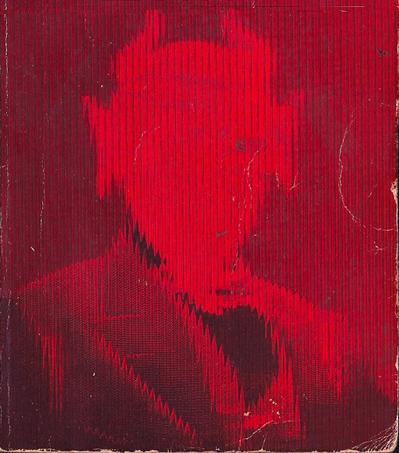
 I was introduced to the Christian writing of C.S. Lewis years ago during a time of temptation. Alone at my uncle and aunt’s home, I prayed to God for some kind of diversion. “Lord, give me something (to change where I see things are headed).” The next moment, scanning the living room shelves, I saw a book cover with the image you see here. That paperback preserved me that evening and would go one to become one of my all-time favorite books: The Screwtape Letters.
In these letters, a senior demon named Screwtape instructs a junior demon, his “nephew” Wormwood, in the tactics of misleading humans. Screwtape describes how to draw the soul of one’s “patient” away from God (“the Enemy“) toward the devil (“Our Father Below“). The book is not only often seasoned with ironic, dry humor, but also contains great insights into human nature and spiritual realities.
At the time of Screwtape’s fifth letter to Wormwood, Britain had just recently entered the Second World War. However, as Lewis observes in his preface, “The history of the European War, except in so far as it happens now and then to impinge upon the spiritual condition of one human being, is obviously of no interest to Screwtape.” What the demon has to say about the influence of war in the greater battle for souls contains spiritual reflections that apply to our current time of pandemic as well.
Below is the text of that letter refashioned with pandemic being substituted for war.
My dear Wormwood,
It is a little bit disappointing to expect a detailed report on your work and to receive instead such a vague rhapsody as your last letter. You say you arc “delirious with joy” because [of this new pandemic.](1) I see very well what has happened to you. You are not delirious; you are only drunk. Reading between the lines in your very unbalanced account of the patient’s sleepless night, I can reconstruct your state of mind fairly accurately. For the first time in your career you have tasted that wine which is the reward of all our labours — the anguish and bewilderment of a human soul — and it has gone to your head. I can hardly blame you. I do not expect old heads on young shoulders. Did the patient respond to some of your terror-pictures of the future? Did you work in some good self-pitying glances at the happy past? — some fine thrills in the pit of his stomach, were there? You played your violin prettily did you? Well, well, it’s all very natural. But do remember. Wormwood, that duty comes before pleasure. If any present self-indulgence on your part leads to the ultimate loss of the prey, you will be left eternally thirsting for that draught of which you are now so much enjoying your first sip. If, on the other hand, by steady and cool-headed application here and now you can finally secure his soul, he will then be yours forever — a brim-full living chalice of despair and horror and astonishment which you can raise to your lips as often as you please. So do not allow any temporary excitement to distract you from the real business of undermining faith and preventing the formation of virtues. Give me without fail in your next letter a full account of the patient’s reactions to the war, so that we can consider whether you are likely to do more good by making him [a reactionary extremist of one kind or the other.](2) There are all sorts of possibilities. In the meantime, I must warn you not to hope too much from a [pandemic.](3)
Of course a [plague](3) is entertaining. The immediate fear and suffering of the humans is a legitimate and pleasing refreshment for our myriads of toiling workers. But what permanent good does it do us unless we make use of it for bringing souls to Our Father Below? When I see the temporal suffering of humans who finally escape us, I feel as if I had been allowed to taste the first course of a rich banquet and then denied the rest. It is worse than not to have tasted it at all. The Enemy; true to His barbarous methods of warfare, allows us to see the short misery of His favourites only to tantalise and torment us — to mock the incessant hunger which, during this present phase of the great conflict, His blockade is admittedly imposing. Let us therefore think rather how to use, than how to enjoy, this [worldwide pandemic.](4) For it has certain tendencies inherent in it which are, in themselves, by no means in our favour. We may hope for a good deal of cruelty and [greed.](5) But, if we are not careful, we shall see thousands turning in this tribulation to the Enemy, while tens of thousands who do not go so far as that will nevertheless have their attention diverted from themselves to values and causes which they believe to be higher than the self. I know that the Enemy disapproves many of these causes. But that is where He is so unfair. He often makes prizes of humans who have given their lives for causes He thinks bad on the monstrously sophistical ground that the humans thought them good and were following the best they knew. Consider too what undesirable deaths occur [in plagues.](6) Men [die](7) in places where they knew they might [die](8) and to which they go, if they are at all of the Enemy’s party, prepared. How much better for us if all humans died [of old age](9) in costly nursing homes amid doctors who lie, nurses who lie, friends who lie, as we have trained them, promising life to the dying, encouraging the belief that sickness excuses every indulgence, and even, if our workers know their job, withholding all suggestion of a priest lest it should betray to the sick man his true condition! And how disastrous for us is the continual remembrance of death which [pandemic](3) enforces. One of our best weapons, contented worldliness, is rendered useless. [During a plague](6) not even a human can believe that he is going to live forever.
I know that Scabtree and others have seen in [plagues](10) a great opportunity for attacks on faith, but I think that view was exaggerated. The Enemy’s human partisans have all been plainly told by Him that suffering is an essential part of what He calls Redemption; so that a faith which is destroyed by a war or a pestilence cannot really have been worth the trouble of destroying. I am speaking now of diffused suffering over a long period such as the [pandemic](3) will produce. Of course, at the precise moment of terror, bereavement, or physical pain, you may catch your man when his reason is temporarily suspended. But even then, if he applies to Enemy headquarters, I have found that the post is nearly always defended.
Your affectionate uncle
SCREWTAPE
Endnotes:
(1) – Originally, “the European humans have started another of their wars.”
(2) – “an extreme patriot or an ardent pacifist.”
(3) – “war”
(4) – “European war”
(5) – The original word here was “unchastity,” but the levels of that sin during this pandemic appear either decreased or the same as before. An intense and selfish attachment to material goods and wealth seems the more tempting vice at this time.
(6) – “in wartime”
(7) – “are killed”
(8) – “be killed”
(9) – These words are my insertion as a contrast to those dying in nursing homes from the Coronavirus.
(10) – “wars”

 Parishable Items