Archive for October, 2020

Our Glorious Friends

October 31, 2020

Solemnity of All Saints

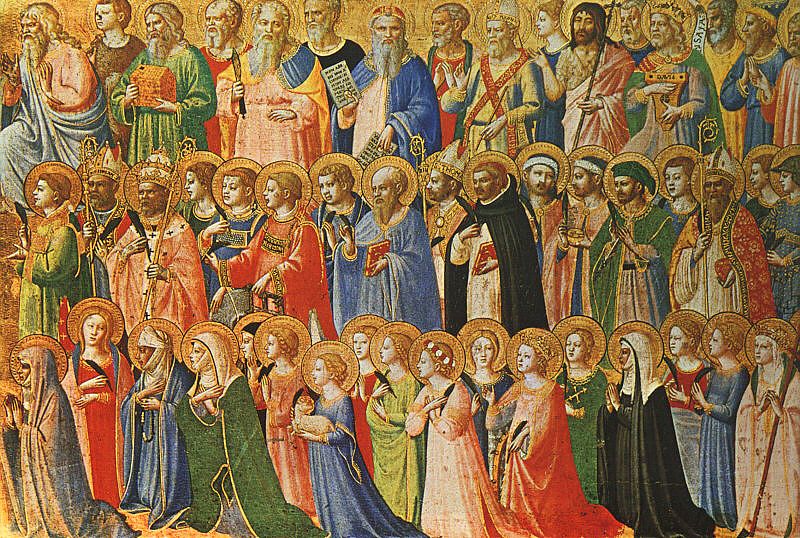
The saints who have died are not dead – they are more alive than we are now. The human saints in Heaven lived in times past, but they were made of the same stuff and faced similar struggles then as you and I today. Though the Catholic Church has canonized thousands of saints, when you consider the billions of Christians throughout history canonizations are relatively rare, yet there are more saints in Heaven than we can count. We know this because of St. John’s Revelation of Heaven: “I had a vision of a great multitude, which no one could count, from every nation, race, people, and tongue.” The Lord Jesus Christ wants you to be in that number. Unfortunately, common misconceptions about saints can keep us further from them. So, in this homily, I would like to help you to grow closer to them in friendship and in likeness.

First realize that the saints are not dead and gone but still living. This is why whenever I preach about the deceased I try to speak of them using the present tense whenever some fact about them remains true. For instance, if a kind and generous Christian father of three dies he is still a kind and generous father of three. Rather than saying “his name was David,” faithfully witness that “his name is David” even after he has died. Though deprived of their bodies for the moment, those who are in Heaven are more alive than we are here. There they experience God opening himself to them an inexhaustible way. This is called the beatific vision, an ever-flowing well-spring of happiness, peace, and mutual communion. The saints in Heaven see God face to face, and they have become like him for they see him as he is.

What is a glorified human being or exulted human nature like? Let’s consider the Blessed Virgin Mary. How much does she know us? How much does she love us? Does she hear each one of our prayers addressed to her? It is our sense of the Faith that our spiritual mother does indeed know us and loves us individually as her children. But consider this: if every Catholic in the world offers one Hail Mary a day, this means an average of more than fifteen thousand new prayers come her way each second. Therefore, if Mary hears all our prayers, her experience of time and/or the capacity of her glorified consciousness must far surpass our own.

The other glorified saints in Heaven, our brothers and sisters in Christ, know and care about you too. They understand you because they’ve walked in our shoes. Governments and borders and technologies change over time, but human nature is constant. The saints began with the same humanity as you and I, experienced challenges like our own, and prevailed. Lots of canonized saints have been priests, nuns, bishops, popes, or martyrs, but Heaven is certainly not limited to these backgrounds. Saints come from varied walks of life. Some canonized saints did extraordinary miracles or had visions here on earth, but even for these most of their days were ordinary, spent faithfully doing very ordinary things like us.

The saints in Heaven are our friends who lend us constant aid even if we do not know their names yet. In response, I encourage you to befriend them back. Which ones? Try doing this holy experiment: ask Jesus to introduce you to a saint and then keep your eyes open. Watch for a saint to providentially present him or herself to you, perhaps through an icon, a painting, or a photograph, a book or a film, or mentioned in a conversation thereafter. I look forward to hearing whom you’ll meet. Take these saints as teachers you learn from, role models you imitate, heroes to inspire you, and holy intercessors whose prayers before God for you are very powerful. I urge you to follow the saints, because those who follow them will embody the beatitudes, become more like Jesus, and become saints themselves.

Though it is unlikely any of us here will be officially canonized by the Church, we are all called to be saints. You are called to be a saint. St. Catherine of Siena said, “If you are what you should be, you will set the world on fire.” Do not say, “I have too sinful of a past to become a saint.” Recall that St. Paul had once persecuted Christians. There is no saint without a past and no sinner without a future. And do not say, “I’m too imperfect to become a saint.” Realize that even while St. Peter was serving as the first pope he sometimes made personal mistakes in his ministry. And do not say, “I’m too late in my life to become a saint.” Remember how the Good Thief on his cross next to Jesus made the most of the time he had left. As St. John Paul the Great preached, “Become a saint, and do so quickly.” Jesus is calling you to be a saint, so befriend the saints and they will help you on the way to Heaven.

God’s Desire for an Intimate Relationship with Humanity

October 24, 2020

30th Sunday in Ordinary Time
By Deacon Dick Kostner

Today we learn of God’s desire for us to form an intimate relationship with him for all eternity. When questioned as to the greatest commandment contained in the Torah Jesus answers that it is for us to love God with all of our heart, soul, and mind. So the question for us to answer is how does this occur? Well the answer is simple it requires we build a relationship with God. When I think back on how this occurred for me when I met my wife it started with an attraction to this person who would ultimately become my wife. It was something about her looks and mannerisms that made me want to know more about her. So I guess it began with my mind. My mind kept telling me to take a closer look at this gal. So communication began which told me that this person thinks and acts as I do. I witnessed her relationship with her family and friends and it was complimentary to the relationship I had with my family. With time and interaction with her my mind moved from a head thing to a heart thing. The heart has an appetite that can only be satisfied by spending more time with a person. And I found out that I was happy and satisfied with myself mostly when I was with her.

Everything else of importance in my life began to take a back seat to my hearts desire to be with and learn more about this special person. I knew my heart was taking over my mind when even during deer hunting season I longed for and looked forward to seeing her even while on my deer stand and doing things that previously had been the number one priority in my life.

With spending more time with this person and understanding her better sometimes than she understood herself, the soul aspect of the relationship came into play. The two started to become one. Communication included and occurred between us that no longer required words. The minds of two people no longer were independent of each other but had joined to form a new entity. I was no longer thought of by others as “Dick Kostner” but rather Barb and Dick. Even when planning meals the minds of two began to think as one and the stomachs of two also began to hunger and feed as one. We loved each other with all of our heart, soul and mind, and thus became a new entity bigger and stronger than ever existed before we met each other. This love relationship grew with the birth of a child and a new family relationship with its joys and trials expanded through love.

This is the relationship that God desires with his human creations. This type of relationship requires complete freedom of choice and that is why we all have a God given right to choose who we will listen to and who we will associate with. When we choose God to be our best friend and advisor, we enter into a new existence and the ultimate spiritual level our Church scholars have named the “Unitive State of Spirituality” a divine state where we are one in spirit with the Father in the way that we love not only God but we love our neighbors as ourselves as did Jesus . We become to others a visible new entity that causes some people to fear us, while others look up to us for answers and opinions. I witnessed this first hand when I was ordained a Deacon. I moved from being viewed by the public as Dick Kostner or Attorney Kostner to Deacon Dick or Deacon Kostner which was a real rebirth for me not only in name but also in personal objectives and desires monitored by a family friend named Jesus.

It all begins with something within our mind that says “I want to get to know this person named ‘I Am‘ — better.” I want to become better friends with this Deity, my creator, who understands me better than I understand myself. This is God’s first and foremost commandment or desire for us. He desires that we join him in becoming one in Spirit with Him, and to display our love for him through our love for our neighbors whether they love us or even hate us. Jesus died for us he asks us to die to “self” for others so as to become one in Spirit with him for all eternity as a member and part of His Holy Family.

Glimpses of Heaven — Funeral Homily for Ione Ellis, 90

October 21, 2020

I wish to offer my sympathies and condolences on behalf of St. Paul’s Parish to you who love Ione. I’ve learned some beautiful things about Ione from her family. And the family has chosen beautiful readings for her funeral. The things of Earth partially reflect the things of Heaven. And the events of a life with Christ foreshadow—give a glimpse—of the life to come with Christ. Heed these words, “For,” as St. Paul told us in our second reading, “if we believe that Jesus died and rose, so too will God, through Jesus, bring with him those who have fallen asleep.”

Ione grew up on a farm with many creatures in the countryside. After marrying Perry at the age of seventeen they made a home together on Bloomer’s 5th Avenue (which is a really nice sounding address). She never worked outside the home, but she worked hard at home, busy serving and not being served. Her devoted focus was upon her spouse and children. She and her husband were wedded through 50 years, through good times and in bad – as when she helped him endure his sufferings, first due to stroke and then finally from cancer. Ione has loved her family, and she has loved our God. She made rosaries and prayed rosaries. I’m told she had a prayer cove for years in her living room; with a kneeler and a candle. There she prayed for her children and worshipped God, as she likewise did here at St. Paul’s Church, where she sang in the choir for ten years, and participated in Christ’s Holy Sacrifice, the Mass.

Today we offer the Holy Mass for her soul and for all of you who love her. Though her passing is mourned, in the words of St. Paul, we “not grieve like the rest, who have no hope.” In John’s Gospel Jesus speaks of his Father’s house; that he is going to prepare a place for us, we who are God’s the Father’s children, who are the brothers and sisters of Christ. He will take us from among the many creatures of this earth, and move us to a new home for our spiritual adulthood and marriage, a home in the city… of God. In our first reading from the Book of Revelation, we heard St. John’s vision describe it: “the holy city, a new Jerusalem, coming down out of heaven from God, prepared as a bride adorned for her husband.” The Church is the bride of Christ, and her members the family of God. Then St. John relates how a loud voice declared from the throne:

Behold, God’s dwelling is with the human race.
He will dwell with them and they will be his people
and God himself will always be with them as their God.

And St. John observes these interesting details about Heaven:

I saw no temple in the city,
for its temple is the Lord God almighty and the Lamb.
The city had no need of sun or moon to shine on it,
for the glory of God gave it light,
and its lamp was the Lamb.

The intimacy we share with God now on earth, through prayer and sacrament and Christian living, through words and signs, seen as moments of lights peaking out amid darkness, in Heaven becomes an unmediated brightness that, like a shining city on a hill, cannot be ignored or hard to see. Heaven is the family of God together in the Father’s house, our hard toil and trials behind us, enjoying the joyful company of one another forever.

How shall we get there? Jesus says, “I am the way and the truth and the life. No one comes to the Father except through me.” So let us be faithful in our love toward him, honoring his passion, death, and resurrection in our worship and by our lives, and then he, the Good Shepherd, will help and lead through the dark valley of our own passion and death to the next life and the resurrection of these physical bodies of ours one day. We pray today for Ione’s soul, as is right and just, but “do not let your hearts be troubled.” Have faith in God and have faith also in Jesus, as faithful Ione would have you do.

“Whose Image is This?”

October 18, 2020

29th Sunday in Ordinary Time

The Pharisees hated Jesus and were plotting how to entrap him in his speech, to cancel him though a politically incorrect gaffe. So they devised a cunning scheme in hopes of getting rid of him for good. In those days, Israel was under the pagan rule of the Roman Empire. The Jews resented this foreign occupation of their Promised Land and many favored a religious rebellion. The Romans’ chosen puppet-ruler and vassal in that region was King Herod Antipas, the son of Herod the Great who had slaughtered the infant boys of Bethlehem. King Herod’s supporters were called Herodians and, being the Romans’ collaborators, it was in their interest that the Roman taxes kept being paid. So the Pharisees sent their disciples along with some Herodians to ask Jesus a gotcha question about taxation.

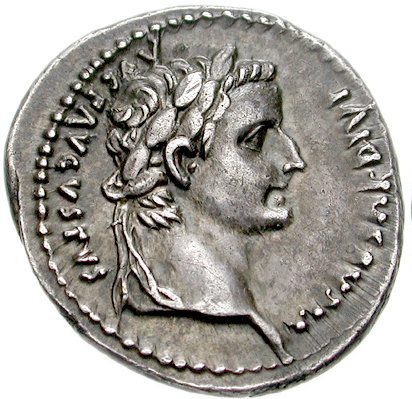
They prepare their trap for Jesus beginning with flattery, hoping to disarm him: “Teacher, we know that you are a truthful man and that you teach the way of God in accordance with the truth. And you are not concerned with anyone’s opinion, for you do not regard a person’s status. Tell us, then, what is your opinion: Is it lawful to pay the census tax to Caesar or not?” Now if Jesus answers that the Roman tax should not be paid, the Herodians will have him arrested, and Jesus will end up imprisoned or executed by Herod like his friend and relative, St. John the Baptist, was. But Jesus, knowing their malice and ill will, said, “Why are you testing me, you hypocrites? Show me the coin that pays the census tax.” They handed him the Roman coin. “Whose image is this and whose inscription?” “Caesar’s,” they replied. “Then repay to Caesar what belongs to Caesar and to God what belongs to God.” In other words, since Caesar creates the coins and the coins bear Caesar’s image, each coin is somewhat his already, they al belong to him, and one denies Caesar’s rightful claims on them at one’s own peril. Of course, Caesar’s authority is not unlimited; God’s authority is higher. And where Caesar’s rule conflicts with God’s, the earthly government should bow to the Kingdom of God.

Unlike people who lived in the past under the Roman emperor, we as American citizens have the right to vote to elect our leaders. In fact, voting is our moral duty. As the Catechism of the Catholic Church teaches, our “co-responsibility for the common good make[s] it morally obligatory… to exercise the right to vote”. (CCC 2240) Perhaps because of the Covid pandemic you are hesitant to visit a polling place on Election Day this November 3rd. If so, realize that you can request a Wisconsin absentee ballot from your local election office for any reason by Thursday, October 29th, eleven days from now. So there’s no reason we cannot safely vote.

But you might still be questioning, why should I bother? With the millions of votes to be cast in our state, what difference does my one vote really make one way or the other? It’s true, your single vote is unlikely to decide an election. But imagine if we all lived in together a forest, and one night a blazing wildfire surrounded our village on every side. When the cry went up for everyone to grab a water bucket and help fight the flames in the pivotal hour, would you? It’s true that your individual effort would be unlikely to decide the fate of our village, whether many lives were lost or saved, but how could you not be ashamed if you failed to answer the call? Or, picture a raincloud consisting of water droplets. A downpour is made of many such drops, and if any one single drop refused to fall it would probably make little difference below, but what happens if every drop has that attitude? The land would stay in deadly drought and the heavens would not renew the face of the earth with new life. Millions of us voting would transform our society for the better — provided of course that we not only vote but vote well.

There are many issues in this and every election, but which issue is the most important? Recall Caesar’s coin. He makes them and they bear his image, so they belong to him. Likewise, God makes human beings, we bear his image, so every life belongs to him, and we deny God’s rightful claim that we respect human life to our own peril. Psalm 139 praises God in these words: “You formed my inmost being; you knit me in my mother’s womb. I praise you, because I am wonderfully made.” Each new human life is created by God and precious to him. But since 1973, when the U.S. Supreme Court legalized abortion, an estimated sixty-one million little ones in our country have been killed in their mother’s womb. (That’s an average of more than one million a year.) These killings continue now, and it’s horrific. Sixty-one million deaths is like killing every person in every city in the State of Wisconsin… ten times over. If that happened would that be a big deal? Would it matter? How evil would that be?

In January of this year, when fifteen bishops from Iowa, Kansas, Missouri, and Nebraska visited Pope Francis at the Vatican for their once-every-five-years ad limina audiences with him, the Holy Father affirmed our U.S. bishops’ teaching that the protection of the unborn is the preeminent issue and priority of our time. “Of course, it is,” Pope Francis said. “[Life is] the most fundamental right… This is not first a religious issue; it’s a human rights issue.” In 2016, Pope Francis wrote: “I wish to restate as firmly as I can that abortion is a grave sin, since it puts an end to an innocent life. In the same way, however, I can and must state that there is no sin that God’s mercy cannot reach and wipe away when it finds a repentant heart seeking to be reconciled with the Father.” Our Holy Father is right. The intentional killing of unborn children is an ongoing grave evil that the Lord wants us to help end.

If we had been alive in America back when slavery was still legal would we have opposed slavery and worked to free slaves? If we had been living in Germany during the Holocaust would we have helped to protect Jews? We would all like to think so, but how much are we doing today? In one hundred years’ time, when school children learn about our present day, will they wonder scandalized at how we could be so indifferent, so blinded, to such cruelty in our midst?

In this election we are called to vote to protect life, but realize that voting is only a small sacrifice. It costs you nothing more than some minutes of your time. We are called to do more. Pray, fast, offer penances for the end of abortion, for in the words of St. Paul, “our struggle is not with flesh and blood but… with the evil spirits…” Donate, contribute your wealth, time, and helpful goods, to organizations that help new parents to choose life. Together with our personal witness, our pro-life words and loving example, God will change hearts and minds. By our work of faith, our labor of love, and our endurance in hope, many lives and many souls will be saved, and together we will rejoice in the victory of life for the Kingdom of God.

You’re Invited to the Wedding Feast

October 11, 2020

28th Sunday in Ordinary Time

Jesus speaks again today in parables. “The Kingdom of Heaven,” he says, “may be likened to a king who gave a wedding feast for his son. He dispatched his servants to summon the invited guests to the feast, but (the guests) refused to come.” So the king invited his people to his son’s wedding feast anew. “Behold, I have prepared my banquet, my calves and fattened cattle are killed, and everything is ready; come to the feast!”’

Some people responded with indifference; they had other things they preferred to do instead. Other people responded with hostility; ‘Don’t tell us what to do!‘ Who wouldn’t want to attend a king’s feast? Maybe they thought the food wouldn’t be that great or special. Maybe they didn’t love the king or his son very much. Maybe they thought that insulting or openly rebelling against their king and his son would hold no consequences for them.

The king would go on to invite others to his feast, anyone his servants could find, and his hall was filled with guests. But when the king came in to meet the guests, he saw a man there not dressed in a wedding garment. Some scripture commentary says owning such a garment in those days was as common as owning a winter coat is around here. Others suggest a wealthy party host like the king might provide such festal garments to his guests at the door. The king asked him, “My friend, how is it that you came in here without a wedding garment?” But he was reduced to silence. He was unprepared not due to inability, poverty, or some misunderstanding, which could have been forgiven. The man had no good reason to offer. So the king had him bound, by his hands and his feet, and thrown into the unhappy darkness outside.

What are we to make of all this? In this parable of Jesus about the Kingdom of Heaven, who is the king and who is his son? Where is this wedding feast and what does it consist of? And when invited to this feast, who ignores it, who rebels against it, and who comes unprepared for it?

The King in this parable is like God the Father. And the Son is Jesus Christ; who, elsewhere in the Scriptures, calls himself the bridegroom. Where and what is the wedding feast? Where is the holy mountain of the Lord of which Isaiah speaks in our first reading, where God’s people are gathered to rejoice and feast, with ‘rich food and choice wine, juicy, rich food, and pure, choice wine‘? The Old Testament Jews probably envisioned the city of Jerusalem and its temple. Today a Christian’s first thought might be to place this feast someday in Heaven. But our temple and our foretaste of Heaven is here and now. The Holy Mass is Christ’s Wedding Feast, where Jesus gives us his very self to eat. What richer or more choice food could exist than this?

In this time of pandemic, we are dispensed from attending Mass, yet we must still obey the Third Commandment: to keep holy the Lord’s Day. If your child were getting married this weekend and you could not attend due to illness, wouldn’t you still want to watch it live-streamed, even from home or a hospital bed? If remote participation at Holy Mass is unworkable, then connect with Christ through reading the Scriptures, through praying the Rosary, or other spiritual activities on Sundays. But under normal circumstances, when personal safety is no longer a concern, why would someone spurn their personal invitation to this feast? Maybe they believe this food isn’t that special or great. Maybe they do not love our King or the Son very much. Maybe they think that disobeying the Third Commandment carries no serious consequences for them. But all of you have come here today, and that is good. Please continue to do so, as conditions and sound prudence allow. And please invite your family members and friends here as well. It’s important that they come before the Lord.

And when you come, come properly dressed. In one sense, this is literally true – we should dress up for Sunday Mass since it’s a very special occasion. But in a more important and spiritual sense we must come in our wedding garment. At your baptism, you were dressed in a special white garment. In the Book of Revelation, the saints in Heaven are seen wearing white graments washed clean in the blood of the Lamb. Through grave sin we can cast off that garment, and receiving our Lord unworthily is a serious offense, so go to Confession first when needed to be reclothed. How will we answer our King someday if we neglect to do so?

You are invited to our King’s feast. And, if you are properly prepared, he wants you to receive our Lord with very happy hearts. So let us turn to the Eucharist, and rejoice as Isaiah foretold:

Behold our God, to whom we looked to save us!
This is the LORD for whom we looked;
let us rejoice and be glad that he has saved us!

The King declares, “Everything is ready; come to the feast!

Behold the Lamb of God,
behold Him who takes away the sins of the world.
Blessed are those called to the Supper of the Lamb.”

Have No Anxiety At All

October 4, 2020

27th Sunday in Ordinary Time

Do we believe in the power of prayer? To speak more precisely, we believe in the power of God, and that is why we pray for things. In today’s second reading, St. Paul tells the Christians of Phillipi, Greece, “Have no anxiety at all.” Why? Because of what he says immediately preceding (which is cut off by the beginning of our reading): “The Lord is near. Have no anxiety at all…”

Have no anxiety at all? One might ask whether that’s possible, or whether that’s even good? “Am I supposed to stop caring about anything?” Well, we must distinguish between two different things, one that’s good and healthy, and one that’s not: to have concern versus to worry. If I had not been concerned about preparing for this homily, I would have nothing to say to you right now. But when I worry about my homily, the task is a much more stressful burden for me, even though the Lord has never yet left me without something to say worth preaching in my entire eleven years of priesthood. Concern is necessary and important. Concern is good, but worry is worthless.

In his Sermon on the Mount, Jesus puts his finger on why we worry: we doubt that God is near for us, we fear that we’re on our own. But Jesus asks,

If God so clothes the grass of the field (with beautiful wild flowers), which grows today and is thrown into the oven tomorrow, will he not much more provide for you, O you of little faith?

Jesus tells us,

“Do not worry and say, ‘What are we to eat?’ or ‘What are we to drink?’ or ‘What are we to wear?’ …. Your heavenly Father knows that you need (all these things). Instead, seek first the kingdom of God and his righteousness, and all these things will be given you besides.”

God our Father knows us, and loves us, and cares for us, but both Jesus and St. Paul encourage us to pray. Presenting our requests in prayer deepens our relationship with God and offers us his supernatural peace. St. Paul writes:

Have no anxiety at all, but in everything,by prayer and petition, with thanksgiving, make your requests known to God.Then the peace of God that surpasses all understandingwill guard your hearts and minds in Christ Jesus.

Note how St. Paul’s says we are not just to ask for things but to give thanks to God at the same time. This helps us to be grounded in reality, which is much lighter than the darkness can appear, since even during our hardest times our lives’ blessings are more than we could possibly count – blessings past, present, and still to come.

And St. Paul notes how after offering our prayer requests, even if we do not see the world immediately transformed around us, a peace from God we cannot entirely explain, helps keep our hearts and minds — that is, our feelings and thoughts — rooted in Christ.

This year has been a challenging one for all of us. Many things now feel out of our control, but this was always the case for us. God is in control, and works all things in the end for the good of those who love him. The Lord Jesus, who is true and honorable, just and pure, lovely and gracious, excellent and praiseworthy, is with you; not just in the distant past, not just once this pandemic has passed, but here and now. So have no anxiety at all.