Solemnity of the Most Holy Trinity
By Deacon Matthew Bowe

Today we celebrate the Solemnity of the Most Holy Trinity, one of the Church’s most profound and deepest mystery. One thing to know about the Trinity, even if it is the only thing that you remember today about the Trinity, is this – the Trinity is a communion of Love. The Trinity is Love, for God is Love. As St. Augustine said long ago in the fourth century, the Father is the Lover, the Son is the Beloved, and the Holy Spirit is the shared Love between the Father and the Son. That is the mystery that dwells deeply within our prayers and meditations.
Throughout the centuries, many great theologians, mystics, and spiritual masters have meditated and contemplated upon the mystery of the Holy Trinity. They wrote treaties titled On the Trinity, of which there are many, and the reason for this desire to understand this mystery is that this is one of the mysteries that a person must believe in order to be a Christian.
Now the word “mystery” comes from the Greek word “mysterios,” meaning secret. “Mystery” does not mean something to be solved by following clues nor does it mean “secret” as in it is not meant to be known, for the mystery of the Holy Trinity is inexhaustible, and cannot be fully known or explained, and is therefore unsolvable, but it has been revealed to us, something to be known through faith. God wants us to know who He is in his infinite mysteriousness and greatness.
So what do we know about the Holy Trinity? I would like to use a lesser-known source. It is a Creed, like the Nicene or Apostle’s Creed that we profess during the Mass. It is attributed to St. Athanasius, who is known as the Doctor of Orthodoxy. The first part of this creed explains who the Trinity is.
The first truth is that we worship one God in Trinity, or Three Persons, and the Trinity in unity. There is one God, who is a Trinity, Three Persons who are in unity, hence the name, and we know the Three Persons are the Father, the Son, and the Holy Spirit.
The second truth is that God is one substance, or one Being. There are not three gods, only one, but a Being in Three Persons. The Father, the Son, and the Holy Spirit are God, but they are not each other. The Father is neither the Son nor the Holy Spirit, the Son is neither the Father nor the Holy Spirit, and the Holy Spirit is neither the Father and the Son, yet God is a Trinity of Three Persons who are in unity. Within the Godhead, there are what are called two processions. The Father begets the Son who is begotten, and the Holy Spirit proceeds from the Father and the Son.
The third truth is that each Person is equal, in majesty and glory. Each Person is uncreated, incomprehensible, eternal, and almighty. Each Person is God and Lord, yet we do not say that there are three gods and three lords. What we say about the Godhead can be said about each Person of the Trinity, again, not as three separate gods but each Person sharing in the attribute infinitely. This is the truth of the Catholic faith about the Trinity. As this part of the Athanasius Creed finishes, the belief of “the Unity in Trinity and the Trinity in Unity is to be worshipped. He therefore that will be saved must thus think of the Trinity.”
In fact, St. Caesarius of Arles stated that “the faith of all Christians rests on the Trinity” (CCC #232). The Trinity is the most real thing. Yet, the mystery of the Trinity cannot be known by reason. God needed to reveal this truth about Himself for us to know Him as a Trinity. It cannot be known by reason that the Godhead is a Trinity and that each Person is in relation to each other, of which there are four relations. The Father relates to the Son, and vice versa, and the Father and the Son to the Holy Spirit, and vice versa. The Three Persons are in an intimate communion with each other, and this communion of Persons is an archetype of the communion God desires with His people.
This is why Jesus commands His disciples to “Go, therefore, and make disciples of all nations, baptizing them in the name of the Father, and of the Son, and of the Holy Spirit.” God, Who is a communion of Three Persons, desires also to commune with His people and for His people to commune with Him. According to the Catechism, “Baptism signifies and actually brings about death to sin and entry into the life of the Most Holy Trinity through configuration to the Paschal mystery of Christ” (CCC #1239). This is why Baptism is so important and why the Church seeks newborns to be baptized within a short time after birth.
Next, the Holy Trinity, as a communion of Three Persons, is also an archetype of the family. The Catechism states that “the Christian family is a communion of persons, a sign and image of the communion of the Father and the Son in the Holy Spirit” (CCC #2205). Families are called to be missionaries and to evangelize to others. They are called to be witnesses to the Gospel message to other families and people who need Jesus in their lives. As members of the Mystical Body of Christ, of the Church, of the People of God, we should desire that other people come into communion with God and His Church, to experience His love. God is a Trinity because God is love.
How does someone pray to the Holy Trinity? First, simply sit in His presence. Have you ever sat with someone who is dear to you and you did not have to say anything? You simply enjoyed each other’s presence. This is good way to pray to God, especially when our words fail us. Simply sit silently in God’s love. Second, learn about the Holy Trinity (as I said, there are many treatises on it). In order to love something or someone, you must first know about it. The more you learn about the Holy Trinity the more that you will be capable of loving the Trinity. Third, pray to each Person of the Trinity, to the Father, Jesus the Son, or the Holy Spirit as persons, as you would speak to your friends and family.
The Trinity, although inexhaustible in mystery, is something that can be known and is accessible to us. The Trinity is near us. We remember both the Trinity and our Baptism when we sign ourselves with holy water. Just as the Trinity lives in intimate communion and relation with each other, the Trinity desires for us to do the same, for us to live in communion and unity with each other, and more importantly, for us to dwell in communion, relationship, and unity with the Most Holy Trinity. And if you remember nothing else from this homily, remember this: the Trinity is a communion of Love.


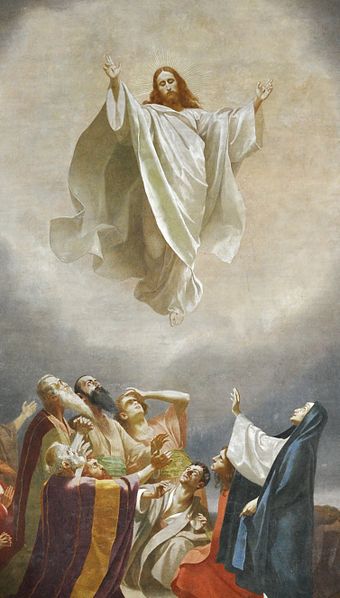 Where are we now in the Easter season? Let’s recap. Jesus resurrects and first appeared to his disciples on Easter Sunday. And for forty days, he is with them off and on, appearing and disappearing, teaching them about the Kingdom of God and preparing them for their important work ahead: that of sharing the Good News and shepherding his Church. On the last of those forty days, Jesus ascends to his Father in heaven. And for the next nine days, his disciples (as per Christ’s instructions) remain in Jerusalem praying for and awaiting the promise of the Father about which they had heard Jesus speak. Finally, on the fiftieth day, on the Jewish feast of Pentecost, the disciples are intensely filled with the Holy Spirit. They become empowered to begin sharing their stories about who Jesus is and what he has done, inviting others to know him, love him, serve him, and be saved through him. Today we celebrate the Feast of the Ascension, looking forward to the Feast of Pentecost next Sunday.
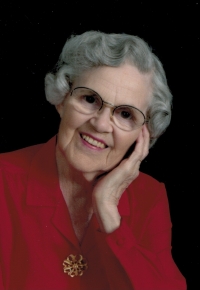 I know Marcy from celebrating Masses at Dove nursing home. I was blessed to give her the Last Rites (consisting of Holy Anointing, the Apostolic Pardon, and her final Holy Communion – which is called Viaticum) two days before she passed. Today, her own St. John the Baptist Parish is honored to offer our greatest prayer, the Holy Mass, for her soul. I found her to be a faithful and pleasant person, as did the staff and residents at Dove, who I am told cherished her as a sweet and motherly lady. Her family has told me a number of interesting stories about her and I would like to share some of these various stories with you.
 As much as a baby receives from his or her mother, the Son of God receives still more so from his Father. How does God the Father give life to his Son? The Son is eternally begotten of the Father; “God from God, Light from Light, true God from true God.” The Father gives his whole being to the Son, and his Son, so loved, receives everything with joy. In today’s Gospel, Jesus says, “As the Father loves me, so I also love you.” How does God love you and me like the Father loves the Son?
 Our Gospel from John has Jesus telling his disciples, telling us, how we can survive and be happy not only in this life but gain for us everlasting life if we but realize our dependence for success and life depends on our acceptance of the fact that we cannot succeed without help from the “Vine,” without Jesus. In preparing for this homily, I went to Formed to get their take on today’s gospel. The minister who reflected upon the Gospel said that we need “HABITS” to allow us to produce fruits from the vine of God, who is Jesus, in order to deal with the challenges that we will face if we wish to be followers of Christ and find peace and experience a successful life as we journey to the Father’s house.
