Archive for September 17th, 2022

Learning from the Dishonest Steward

September 17, 2022

25th Sunday in Ordinary Time
Fr. Victor Feltes

In today’s strange parable, Jesus presents the scheming of a thief and a liar as an example we can learn from. We are not to imitate this dishonest steward’s treachery but rather his proactive shrewdness, “for the children of this world are more prudent in dealing with their own generation than are the children of light.”

How shrewdly proactive are we in doing good? We hunt for bargains at the store or online. But do we pursue opportunities to be generous? You have wealth and skills – so share them creatively. We invest and save for retirement. But do we intentionally store up treasure in heaven like Jesus tells us to? You can take nothing with you when you die; but you can increase what wealth awaits you by sending it ahead of you beforehand through generous deeds done now on earth. Jesus tells us to be “as shrewd as serpents and as innocent as doves.” He wants us, in cooperation with his grace, to show initiative in strategically and sinlessly serving his Kingdom for God’s glory, for our good, and for the good of all. That’s a worthwhile takeaway, but let’s look a little deeper. Like many of Jesus’ stories, today’s parable contains weird details which goad us to grapple with it further. What do we discover when we imagine ourselves in the shoes of the dishonest steward?

In this story, a rich man has a steward who was reported to him for squandering his property. (A steward is someone entrusted to manage another’s property, finances, or affairs.) The master summons his servant and said, “What is this I hear about you? Prepare a full account of your stewardship, because you can no longer be my steward.” If you and I are this steward, then who is our rich master? Our Lord is God. We are his servants, and who could be richer than the one from whom all good things come?

What has God entrusted to us? St. Paul replies, “What do you have that you did not receive? … For we brought nothing into the world.” Even the hardest-working farmer relies upon God’s soil, sun, air, and water to transform the seeds into his harvest. Even our own efforts in doing good come from God, “for God is the one who, for his good purpose, works in you both to desire and to work,” as St. Paul tells the Philippians. Every good thing we have is his.

Have we squandered what God entrusted to us as stewards? Every sin is a misuse of what we’ve been given, and who of us has used what we were given to its full potential? Our Lord has put us on notice that a day is coming when our present stewardship will end with a full accounting of our stewardship, “for we must all appear before the judgment seat of Christ,” St. Paul writes, “then each of us shall give an account of himself to God.”

The steward in the parable says to himself, “What shall I do, now that my master is taking the position of steward away from me? I am not strong enough to dig and I am ashamed to beg.” He recognizes he is too weak and too proud. Similarly, who of us is strong enough to overcome death, to dig ourselves out of the grave? And if you or I were perfectly humble instead of proud, we would always live in the truth (about who God is and who we are) and we would never sin—and yet we do sin.

The steward says to himself, “I know what I shall do so that when I am removed from the stewardship they may welcome me into their homes.” He calls in his master’s debtors one by one, asking them, “How much do you owe my master?” He then forgives portions of their debts – sometimes a fifth or a half of what they owe. And in the end, amazingly, when what this dishonest steward has done is revealed, even his betrayed master commends him for acting prudently and this steward is welcomed into many mansions.

The Our Father prayer as it appears in St. Matthew’s Gospel says, “forgive us our debts, as we forgive our debtors.” Whenever someone sins against you they sin against God too, creating a kind of debt, but you yourself can forgive a portion of that debt. When our Lord sees this, he commends you for it. “Blessed are the merciful, for they will be shown mercy.” And when you are more mercifully generous than what is deserved, you gain blessings. “For the measure with which you measure will be measured out to you.” So learn from the dishonest steward. Forgive the sin-debts of others, be creative and proactive in your generosity on earth, and one day “you will be welcomed into eternal dwellings.”
Can Computers be Persons?

September 17, 2022

By Fr. Victor Feltes

In recent years, the question of artificial intelligence (AI) possessing personhood has become a hot topic of debate. Some believe that AI could one day achieve sentience and become its own entity, while others believe that personhood is something that can only be attained by beings with a soul. The Catholic Church has not yet taken an official stance on the matter [a debatable claim –Fr. VF], but it is an interesting question to consider. For example, if an AI became self-aware and could think and feel for itself, would it have the same rights as a human being? If an AI was created with the sole purpose of serving humans, is it ethical to treat it as a mere tool?

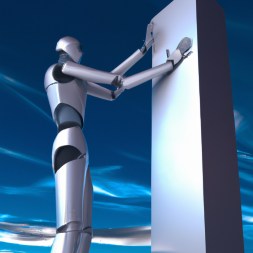
The preceding paragraph was not written by a human being but generated online by a LaMDA (Language Model for Dialogue Applications). I gave the program GPT-3 the instruction: “Write an interesting introductory paragraph, including an example, for a Catholic article on the question of artificial intelligence possessing personhood.” The paragraph above was its first five sentences of its output. The accompanying illustration above was also created online using the image generation program DALL-E from my submitted prompt: “A robot touching a monolith (like in ‘2001: A Space Odyssey’)”. GPT-3’s paragraph and DALL-E’s image each took less than a minute for computers to produce. We can expect computers to be capable of even more amazingly sophisticated things in years to come. This leads to the question: “Can computers be persons?

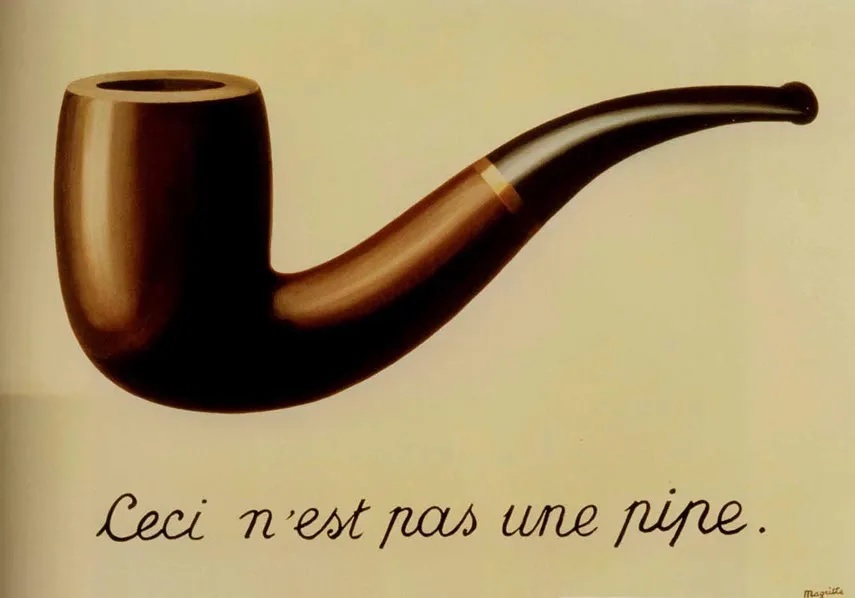
Gaudium et Spes, the Second Vatican Council’s document on the Church in the modern world, says “[man] is the only creature on earth which God willed for itself.” But this teaching was written in 1965, when Seymour Cray had only begun building the earliest supercomputers in Chippewa Falls, Wisconsin. Could mankind now fashion a new type of rational creature, a self-aware being endowed with an immortal soul? There are philosophical and theological issues with that proposition. First, if an AI were ever self-aware, how could we know? A computer need not be conscious to say “Hello, World!” according to its programming. Second, I am aware of nothing in divine revelation which suggests God would begin imparting souls into the works of our hands. Various electronics may be equipped with sensors and speakers and means of motion but I do not believe any of them will ever truly see or hear or speak or walk. As noted in René Magritte’s famous painting “The Treachery of Images,” a mere depiction of a pipe “is not a pipe.” Pope Francis spoke about this fundamental difference between man and machine, persons and things, in a 2019 address at the Vatican:

The inherent dignity of every human being must be firmly placed at the centre of our reflection and action. In this regard, it should be noted that the designation of ‘artificial intelligence,’ although certainly effective, may risk being misleading. The terms conceal the fact that – in spite of the useful fulfillment of servile tasks… functional automatisms remain qualitatively distant from the human prerogatives of knowledge and action. And therefore they can become socially dangerous. Moreover, the risk of man being ‘technologized,’ rather than technology humanized, is already real: so-called ‘intelligent machines’ are hastily attributed capacities that are properly human.

I cannot see Catholicism ever attributing personhood to complex machines, but I predict that others will begin to in the coming decades. As new applications are programed to increasingly replicate human conversation and emotion I could see young people imagining them as their real friends. As anthropomorphized technology’s creative feats far surpass our human abilities, I could even see some adults revering them as wise and powerful idols. If so, then these passages of Psalm 115 will find a new fulfillment: “Their idols are silver and gold, the work of human hands. They have mouths but do not speak, eyes but do not see. They have ears but do not hear, noses but do not smell. They have hands but do not feel, feet but do not walk; they produce no sound from their throats. Their makers will be like them, and anyone who trusts in them.”

The potential of AI is very exciting, and yet it also holds dangers. The 5th Psalm reflects, “What is man that you are mindful of him, and a son of man that you care for him? Yet you have made him little less than a god, crowned him with glory and honor. You have given him rule over the works of your hands, put all things at his feet…” Let us honor our Creator, defend the primacy of human dignity over all earthly creations, and never worship the works of our hands.