Archive for March, 2023

The People at the Passion (Part 2 of 3)

March 30, 2023

By Fr. Victor Feltes

Hopeful for the help of the Holy Spirit, I will share with you meditations about people personally present for Jesus’ Passion. In particular, I will reflect on those persons featured in the Fifth, Sixth, and Eighth Stations of the Cross; Simon of Cyrene, who helped carry Jesus’ Cross; Veronica, who wiped Jesus’ face with her veil; and the women of Jerusalem, who followed and openly wept for Jesus along the Way of the Cross. While considering these reflections, I encourage you to look for two or three golden nuggets that sparkle for you. Tuck them into the pocket of your mind or into your notes and later bring them to prayer for meditation.

Prologue – Pontius Pilate and the Roman Soldiers

Good Friday morning, the hostile crowd cried out for Jesus’ blood. Like Joseph’s brothers in the Old Testament, this crowd intended evil for Jesus, but God intended this for good, in hopes of achieving the salvation of these sinners and the whole world. Governor Pontius Pilate, even after having Jesus gruesomely whipped, was unable to placate the mob. So Pilate washed his hands and sentenced Jesus to death despite admitting that he had committed no crime. Much evil in the world is not only from active hatred like the crowds but from the callous indifference of people like Pilate. “Blessed are those who hunger and thirst for righteous, for they shall be satisfied.”

Then, St. John records in his Gospel, the soldiers “took Jesus, and carrying the Cross himself he went out to what is called the Place of the Skull, in Hebrew, Golgotha.” The Romans would compel men condemned to death to bear the instrument of their own torture, a cross. This was an added psychological punishment and humiliation. It is like having to tie your own noose before they use it to hang you. It is like being forced to dig your own grave before they kill and bury you. It is akin to modern totalitarian states that have executed people by a gunshot to the back of the head and then sent the family a bill for the bullet. The correction and punishment of wrongdoing may be necessary both in nations and in households, but we must never do either without respect for others’ dignity.

Jesus was forced to carry his own Cross, a Cross he carried for us sinners. He carried his Cross towards a place called Golgotha, or Calvary. Golgotha was a rock mound within a limestone quarry alongside a road leading to and from Jerusalem. The Romans chose this execution site a short distance outside one of the city gates for its high-visibility to many passersby. The guards with Jesus had orders to crucify him there along with two other condemned men. But after Jesus’ violent scourging, he was in agony, dehydrated, and physically weakened. He had already fallen down at least once under the Cross’s weight.

Perhaps his guards grew impatient because Jesus was progressing so slowly. The soldiers also may have feared that Jesus would collapse from exhaustion and be unable to be made to stand up and continue. And they might get in big trouble with their superiors if Jesus died on the way to Golgotha without receiving the sentence the governor had decreed. We may feel discouraged by the power of wicked people and groups in our world but I think we underestimate their inherent weaknesses, like those reflected in these Roman soldiers. “The foolishness of God is wiser than human wisdom, and the weakness of God is stronger than human strength.” About three hundred fifty years after the mighty pagan Romans executed Christ and began persecuting his peaceful Church, Christ conquered the Roman Empire; Christianity became its official state religion. “Blessed are the meek, for they will inherit the land.”

The 5th Station – Simon of Cyrene

Saints Matthew, Mark, and Luke all note in their Gospels that the Roman guards found a helper for Jesus. As they were going out, they met a passer-by who was coming in from the country. They took hold of him and pressed him into service to carry his Cross. By law, a Roman soldier could compel a man in a conquered land to carry a load for him for as much as one mile. Daring to refuse would bring on a beating, so this traveler to Jerusalem submitted. Laying the Cross on him, they made him carry it behind Jesus. This man’s name was Simon, a Cyrenian from Cyrene. Cyrene was a region in Northern Africa. It had a Roman colony and a sizable population of Jews.

Perhaps Simon the Cyrene, like so many other Jews, was on pilgrimage to Jerusalem for Passover. But however far his previous journeying had been, that day Simon had a place to be and things to do before the feast. Having to carry the Cross that Friday felt like a major inconvenience for Simon, but it was most likely the greatest thing he ever did. Some of the greatest things you have done in your life were probably unpleasant and inconvenient, too. Mentally, let us reframe the interruptions which arise during our days and within our lives as providential opportunities. This way we can make the most of them and engage them at our best.

One can imagine Simon feeling very reluctant to bear a stranger’s cross. Since Simon was a freeman who had not been found guilty of any crime, he may have viewed this forced servitude to be doubly degrading. Simon may have also dreaded that insults, spitting, dirt, and stones would be hurled at him by ignorant bystanders while he made his way through the streets in the procession of the condemned. Yet, even if unwillingly, Simon picked up the Cross and followed Jesus. Simon did not freely choose this burden but, because of it, Simon was probably physically closer to Jesus for most of the journey to Golgotha than Mother Mary, John the Beloved, or Mary Magdalene. We will not choose many of our life’s burdens, especially our illnesses or personal losses, but these can be God’s providential means to bring us closer to the Lord.

I find it interesting that Simon of Cyrene was chosen to carry Jesus’ Cross on the morning after another Simon, Simon Peter, denied Jesus three times and withdrew for a time out of shame. Perhaps this was just a coincidence, another apostle, Simon the Zealot, shared that name as well. But I wonder if Simon of Cyrene was a fill-in substitute for Peter. If Simon Peter had not denied the Lord, or had returned to him more rapidly, would he have been the one to carry Jesus’ Cross? How beautiful and inspiring would that have been! I do not mention this possibility to encourage you ruminate, to lament the unchangeable past and any good things left unrealized on account of your sins. I mention this so that in a moment of testing you might consider how taking the next good step makes many good paths possible.

God providentially allowed Simon to take part in Jesus’ glorious work for the salvation of the world on Good Friday. The Lord likewise invites you and me to play a role in salvation and entrusts a share in his saving work to us today. St. Pope John Paul the Great noted this in 2001 during his meditation on the Fifth Station of the Cross at the Coliseum in Rome:

Jesus could bear his Cross alone, did he so will; but he permits Simon to help him, in order to remind us that we must take part in his sufferings, and have a fellowship in his work. His merit is infinite, yet he condescends to let his people add their merit to it. The sanctity of the Blessed Virgin, the blood of the martyrs, the prayers and penances of the saints, the good deeds of all the faithful, take part in that work which, nevertheless, is perfect without them. He saves us by his blood, but it is through and with ourselves that he saves us.”

If Simon did not know or believe in Jesus before, it appears that this experience of carrying his cross helped lead to Simon’s Christian conversion and the conversion of his family as well. Amongst the four Gospels, only St. Mark notes that Simon of Cyrene was “the father of Alexander and Rufus.” Scripture scholars believe that the names of Simon’s sons were mentioned here because the first audience Mark’s Gospel was written for knew who Alexander and Rufus were. Church tradition reports that St. Mark the Gospel writer was the scribe for St. Peter the Apostle, the first bishop of Rome. And St. Paul in his Letter to the Romans writes, “Greet Rufus, chosen in the Lord, and his mother, who has been a mother to me, too.” Simon’s endurance through a trial with Christ grew his faith in Christ. Simon shared this testimony with his family. And by his faithful example, they became faithful Christians too. Your non-practicing children already know that you believe, but have they heard you say why you believe and the difference that religious faith has made in your life? Be sure to tell them.

The 6th Station – Veronica

The Sixth Station of the Cross recounts an event unrecorded in the Gospels. Despite the crowd and the soldiers, a woman approaches Jesus. His face is covered with blood, sweat, dust, and spit. Moved with compassion, she removes the veil covering her head, and offers it for Jesus to wipe his face. We know this woman as St. Veronica. The Western Church calls her Veronica, while the Eastern Church calls her Berenike. Providence may have arranged that this reflects her proper name, but it seems more likely that we know her by a title which the Church has given her. We see this with other people at the Passion. The name of St. Longinus, the soldier who pierced Jesus’ side, means “Long, Extended,” suggesting “Spearman.” And the name of the Good Thief crucified with Jesus, St. Dismas, means “Sunset” or “Death.” For her part, the name Veronica is Latin for “True Image,” while the name Berenike is Greek for “Bearer of Victory.” May the good deeds we do be so impactful on earth as hers, so that long after the world forgets our names our fruits will still be seen.

Veronica is a female counterpart to Simon of Cyrene in the Stations of the Cross. They both helped Jesus along the way according to their feminine and masculine traits. Simon served Jesus with his physical strength, while Veronica served him with her beautiful tenderness. St. Pope John Paul the Great shared this meditation on Veronica and the Sixth Station of the Cross on Good Friday in 2003:

As a woman, she could not physically carry the Cross or even be called upon to do so, yet in fact she did carry the Cross with Jesus: she carried it in the only way possible to her at the moment and in obedience to the dictates of her heart: she wiped his Face.

Though our traits may differ, both men and women have valuable gifts to offer. Consider sometime what are your unique gifts as a woman or a man.

When Veronica held out her veil to Jesus, he pressed it to his face. The blood, sweat, dust, and spit on Jesus’ face wiped off on her cloth, leaving a likeness of his face, a self-portrait of Jesus. Today several places claim to possess this relic, or else an early copy of the Holy Face. Veronica’s gift of her veil to the Lord resulted in a greater gift in return. Veronica got back what she had given and received still more besides, for God will not be outdone in generosity. As Jesus says:

Give and gifts will be given to you; a good measure, packed together, shaken down, and overflowing, will be poured into your lap. For the measure with which you measure will in return be measured out to you.”

With this in mind, how generous should we be?

The holy veil is a memento of Veronica’s good deed which reveals Jesus Christ. All of our good deeds in Christ leave behind an impression of our Lord. In the words of St. Pope John Paul the Great meditation on Veronica from the year 2000’s Good Friday Stations:

[E]very act of goodness, every gesture of true love towards one’s neighbor, strengthens the likeness of the Redeemer of the world in the one who acts that way. Acts of love do not pass away. Every act of goodness, of understanding, of service leaves on people’s hearts an indelible imprint and makes us ever more like the One who ‘emptied himself, taking the form of a servant.’ This is what shapes our identity and gives us our true name.

The 8th Station –  The Women of Jerusalem

Finally, we come to the Eighth Station. St. Luke’s Gospel records how a large crowd of people followed Jesus, including many women who mourned and lamented him. Jesus turned to them and said:

Daughters of Jerusalem, do not weep for me; weep instead for yourselves and for your children, for indeed, the days are coming when people will say, ‘Blessed are the barren, the wombs that never bore and the breasts that never nursed.’ At that time people will say to the mountains, ‘Fall upon us!’ and to the hills, ‘Cover us!’ for if these things are done when the wood is green what will happen when it is dry?’”

(This is to say, ‘The evil you see now occurs while I am with you; what terrible evils will come later when I am no longer visibly here?’) Jesus prophetically speaks of how, forty years after the beginning of his public ministry, Jerusalem would be destroyed. The Romans conquered the rebellious city in 70 A.D., destroyed its temple, and put her people to the sword. Before Jesus entered Jerusalem on Palm Sunday, Jesus had wept over the city, saying:

If this day you only knew what makes for peace—but now it is hidden from your eyes. For the days are coming upon you when your enemies will raise a palisade against you; they will encircle you and hem you in on all sides. They will smash you to the ground and your children within you, and they will not leave one stone upon another within you because you did not recognize the time of your visitation.”

People rejecting Christ naturally leads to personal and national consequences.

Jesus had been falsely condemned as a religious heretic, he had been falsely condemned as a political rebel, but these women did not fear to publicly mourn for him. Some of these women had accompanied him during his public ministry. As Jesus “journeyed from one town and village to another, preaching and proclaiming the good news of the Kingdom of God… some women who had been cured of evil spirits and infirmities (accompanied him. For instance), Mary, called Magdalene, from whom seven demons had gone out, Joanna, the wife of Herod’s steward Chuza, Susanna, and many others who provided for [Jesus and his apostles] out of their resources.

An interesting observation is that throughout the Gospels Jesus has no female enemies. Surely, there were some women in Nazareth or Jerusalem who despised Jesus, but the Gospels do not introduce us to any of them. Even the wife of Pilate advocates for Jesus, calling him a “righteous man!” This reflects that both men and women are called to be close to Christ. Though Jesus reserved the Sacrament of Ordination for men alone, without the prayers and works of holy women the mission of Christ and his Church would be hobbled, if not impossible. Just try to imagine the Gospels or the Catholic Church without them.

On Good Friday, the women of Jerusalem now saw Jesus struggling. They watched him fall down more than once. They openly wept for him and wished they could do more. Though grateful for and encouraged by the women’s outpouring of loving support, Jesus expressed his concern for them instead:

Daughters of Jerusalem, do not weep for me; weep instead for yourselves and for your children…

The openness of a woman’s heart for others is beautiful, but Jesus reminds them that it is not selfish to attend to the wellbeing of yourself and your own. Even Jesus took naps. Even Jesus accepted help. Even Jesus took time away, to commune with the Father. Wives and husbands are called to prioritize the salvation their spouses and their children before the world’s affairs. And if you do not take care for yourself, you cannot care for others very well.

In the days ahead into Holy Week, I invite you to meditate on these reflections that stick with you. Contemplate the lessons of Simon of Cyrene, Veronica, and the women of Jerusalem on the way of the Golgotha.

The People at the Passion (Part 1 of 3)

March 30, 2023

By Fr. Chinnappan Pelavendran

For God so loved the world, that He gave His only begotten Son, so everyone who believes in Him might not perish but might have eternal life.” (John 3:16) God loves everyone with everlasting love. He is our Father. We are His Children. He loves each one of us individually and wants us to know and love Him.

Jesus came to the world with a mission, to serve, redeem by being the sacrifice for our sins, and to establish the church through His apostles. The Church began with Jesus and spread with by His many disciples including the apostles.
Let us now begin, with courage, as we begin meditating on the people that were present during the Passion and Death of Jesus Christ. I came upon a book titled Pieta, which listed the sufferings, indignities, and wounds that Jesus received during His passion and death. The number of armed soldiers were 150. The followers of Jesus, 23. Those in charge of putting Jesus to death were 83. The blows received on His head were 150, and on His stomach were 108, and kicks on His shoulders were 80. He was led, bound with cords by the hair, 24 times; spit in the face, 180. He was beaten on the body 6,666 times; beaten on the head, 110 times, He was pushed and lifted up by His hair; pricked with thorns and pulled by the beard 23 times; 20 wounds on the head; wounds from thorns in the head were 110; mortal wounds in the forehead were 3. He was whipped and mocked as a king and received 1000 wounds in the body. There were 608 soldiers who led Jesus to Calvary. Those who mocked Him were 1008. The drops of blood He lost were 28,430. Jesus Christ endured this for all of us.

Let us look more closely at some of the people that were there during the passion and death of Jesus Christ. After the Last Supper, Jesus took three of His closest Apostles to the garden of Gethsemane. Jesus prayed alone to do the will of His father. While they were there, the betrayer, Judas came with the soldiers to arrest Jesus.

Judas Iscariot

Who was Judas? He was one of the twelve apostles. He was the treasurer and trustworthy with the moneybag. After a time, he began to steal money. He betrayed Jesus with a kiss for thirty pieces of silver. After Jesus was condemned to die, he went out and hung himself.

Judas was greedy. Judas was possessed by the devil. Judas had to fulfill the prophecy. Judas had a political motive, he thought Jesus would become a King. We can learn from Judas, it does not matter to God how bad we are; He loves us and wants us to come back to him. Don’t judge yourself by what you have done, don’t think that you are unforgivable, and come back to the Lord like Peter did.

King Herod

Herod was a rich and important man. He had been hearing stories about Jesus. He knows the tax collectors and others of ill–repute are drawn to Jesus and repent for their sins. Jesus draws crowds of people where ever He goes, and he knows that when Jesus was 12 years old He amazed the rabbis with His knowledge of the scriptures. He is excited to meet Jesus and hopes to see a miracle.

Herod is the one who beheaded St. John the Baptist. He was captivated by St. John the Baptist and did not want to kill him, but he had no choice. He had a party, and his new stepdaughter, Salome. danced for him. Her dancing pleased him very much and he promised to give her anything she wanted. Her mother told her to ask for St. John the Baptist’s head.

His father was also named Herod. It was he who had all of the boy babies under the age of two killed when he heard about the birth of Jesus. Herod continued to question Jesus, but Jesus did not answer. Herod had hoped that Jesus would answer some of the difficult questions that his wise men could not. He was frustrated with Jesus because he had been so hopeful to see miracles performed, but it didn’t happen. The Jewish leaders were hoping that Jesus would not perform any miracles, so they were pleased.

Herod sent Jesus back to Pilate, and he and Pilate became friends. Both the king and the Governor consider Jesus to be a criminal. Oh, how wrong they are! For He is the innocent One. Like them, we also twist reality, making the guilt innocent and the innocent guilt. Every time we blame others for what is wrong with us, we are at fault, blaming others for our sins.

Oh, how tragic, except we are not our own! God calls us by the Gospel and gives us faith. The Spirit works in our lives, bringing us to seek Jesus. Unlike Herod, we want to be in his presence for the right reason, to receive His Salvation!

Pontius Pilate

He was a Roman citizen and he ruled over all non-Roman citizens in Judea and Samaria. He lived in Caesarea. Pilate did not want to pass judgment on Jesus. He did not think that Jesus was guilty of anything and wanted to release Him. His wife also wanted him to release Jesus because of a dream she had. It was customary at Passover to release a prisoner to the people. There was a murderer named Barabbas in jail at the time. Pilate asked the people whom they wanted to be released, and they shouted Barabbas. He asked them what he should do with Jesus, and they shouted, crucify Him. Pilate again said, “I see no wrong in this man,” and they shouted again, “Crucify Him!” When he saw that his attempts to free Jesus only provoked the crowd to call his crucifixion louder, he washed his hands and said, “I am innocent of this man’s blood; see to it yourself.” (Matthew 27:24)

Pilate released Jesus because he wanted to please the crowd. Pilate was a people-pleaser more than a God-pleaser. How often do we want to please people, so they like us? Our human respect goes beyond our respect for God.

Pharisees, Scribes, and Sadducees

The Pharisees, Scribes, and Sadducees were the ones who brought Jesus to Pilate. They were highly educated and knowledgeable of the scriptures. Jesus was humble and a carpenter from Nazareth. He was like a magnet, drawing many people to Him by His words and deeds. The Pharisees, Scribes, and Sadducees were jealous and envious of Jesus, and that blinded them from being able to see and accept Jesus as their Lord and Savior. How many people today are blinded from knowing and accepting the truth because of their pride?

The Mocking of Jesus

The Mocking of Jesus involved not only the soldiers but crowds of people. They shouted: Hail, king of the Jews, as they made fun of Jesus. They put a purple robe on Him, the type worn by the soldiers. They put a crown of thorns on His head causing wounds and much bleeding. They spit at Him, His body, and in his face. They struck Him on his body and on the crown of thorns, driving it deeper into his scalp. Who of us would be able to endure what Jesus suffered for us? The brutality, the mocking? Jesus did this for us, to redeem the world by taking our sins upon himself on the cross. He died for you and me.

The Passion of Christ

After Jesus has been severely beaten, and crowned with thorns, he is ordered to carry the cross to Calvary. Jesus picks up His cross and begins His journey through the streets of Jerusalem to the hill of Golgotha. On His Journey, He falls three times. Each time he falls, he is beaten and pulled up by his hair or arms and also beaten and spit upon. He has lost a lot of blood and is very tired. When they finally reach Golgotha, he is brutally nailed to the cross, where he will soon die.

The hour has finally come. The Son of God whom we call Jesus Christ and believed as the savior of the world is arrested, and crucified as a criminal. At about three in the afternoon of Good Friday, God the Son died and was buried.
Jesus gave His whole life to serve the people. At the last supper, He gave away His body and blood as food for His disciples. His last breath while hanging on the cross was offered to His Father. Is there any better example of a life dedicated to service and the prize for doing it is utter humiliation, condemnation, and crucifixion?

Jesus lived His life in total surrender to the will of God. The plan of salvation is to be fulfilled in Him and through Him. How does this divine plan be carried out without the participation of Judas Iscariot, Pontius Pilate, Caiaphas, Herod, and the countless nameless Jews who arrested, mocked, slapped, kicked, and beat Him? These people did the worst things to Jesus and their names and actions are remembered by generations after generations of Christians. Yet they are part of the divine plan although they were unaware of it.

We are all disciples of Jesus. Jesus is not the victim in this account. He willingly lays down his life for our sins.
Peter has the courage to use his sword at Jesus’ arrest and to be in the high priest’s inner court where there are people who may have seen him in the garden. But his courage fails and he denies Jesus. I think the lesson for disciples is to realize our own weakness, and rely on our own strength, but in humility rely on the Lord.

Jesus presents himself as the king of truth, with a mission to testify to the truth. We also must testify to the truth, some people will listen. Jesus is scourged brutally and then mocked mercilessly as king of the Jews, which he actually is! Jesus put up with this because he had a higher mission, to endure the Cross.

Pilate wants to avoid crucifying Jesus and tries several times to release him because he believes Jesus is innocent.
The Jewish leaders try to manipulate Pilate with fear, fear of punishing the son of God, Pilate is also afraid of losing his job. We as disciples need to make sure that fear is not controlling us rather than faith.

From Earthly to Divine — Funeral Homily for John Boehm, 85

March 27, 2023

By Fr. Victor Feltes

John’s family has told me about his many loves. How he has loved Sharon, to whom he was married for twenty-two years until her passing in 1981. How he has loved Maria, his wife these last twenty-six years. And how he has loved his family as a good Christian father who “always told you he loved ya.”

He loved any kind of music and any opportunity to sing. He commonly sang at funerals, and his fellow parishioners in church liked to sit near him to help make themselves sound better. He used to work all week and then proudly lead “Johnny’s Family Affair” every weekend. Then, each Sunday morning he would shepherd his family to St. Jude’s for Mass, followed by Sunday fun with the kids. John loved being a mechanic through six decades; taking things apart and putting them back together right. He also loved his motorcycles and (like his natural children) he would name them; including Grey Dog, Happy, Jolly, King, Silver Hawk, and others.

When he turned eighty, his family gifted him a bike. Since John’s balance had become rather poor, they bought him a three-wheeler. He loved riding it as much as he could, being outside enjoying the weather, touring around New Auburn and the surrounding countryside. Even a week before his death, he was talking about his desire to go riding again. He hoped to experience that familiar good anew and more deeply.

Now these various examples of John’s loves reflect the ambiguity of that word. “Love” is an equivocal term — not meaning the same exact thing every time it is used. John, of course, did not love music or his motorcycles in the same way that he loves his family or loves our God, and yet he loves them all. Similarly, the words we use to speak of God are true and yet remain mysterious.

The Holy Trinity gives us images and terms to reveal what the divine Persons are like; such as Father, Lord, King, Son, Shepherd, Lamb, Rock, Light, Judge, Advocate, Creator, and Savior. God’s inspired word identifies him as truly and perfectly Good, Loving, Holy, Just, and Merciful. At the same time, divine Fatherhood transcends earthly fatherhood, and God’s goodness far surpasses in quantity and quality, our human understanding and experiences of goodness.

These images and terms are analogies, likening the earthly to the divine. And in every instance, where some similarity is noted between God and his creatures there remains an even greater dissimilarity. We know something of goodness, but God is truly good and even better than we know.

Created things, the people and good things we know and love, all do reflect something of the divine. Our Triune God reveals himself to us as our Father, as the Church’s Spouse, and as our Brother in Christ, who will always tell us that he loves us. God is a mechanic, too; repairing things and putting them back together right. God delights in his children, and invites his family to join in his eternal song. And he leads us to worship, to fellowship, and to rest with him, calling each of us by name.

As St. John writes, “See what love the Father has bestowed on us that we may be called the children of God. Yet so we are. Beloved, we are God’s children now…” So even though there is sadness in life’s partings, we approach John’s death and our own deaths one day with consolation and hopeful expectation. For all created things, the people and things we know and love, reflect something true and good of our Creator and Savior. And if we cooperate with our Lord in grace and love and goodness, on the day of Resurrection, “we shall be like him, for we shall see him as he is.”

Jesus says “Come to Me” — Funeral Homily for Clarence “Clancy” Mikl, 66

March 25, 2023

By Fr. Chinnappan Pelavendran

On behalf of St. Paul’s and St. John the Baptist Parishes, I would like to extend our sympathy to the members of Clarence’s family. We will continue to remember him in our thoughts, prayers, and masses in the coming future. Whenever we gather as a community of faith to celebrate the Eucharist, whether it is a simple liturgy during the week or a more solemn celebration on Sunday, one thing we always do is to remember in a very special way, our faithfully departed and their families.

Clarence and Janice were married on December 3, 1977, and they had five children and ten wonderful grandchildren. He came from a large family and is also survived by his brothers and sisters. Clarence was a friend to everyone he met. He retired in 2019 after twenty years of working at Spectrum Industries in Chippewa Falls. He enjoyed hunting and fishing year around. He established “Da Famous Mikl Deer Camp” near New Auburn. He built himself a bunkhouse which he enjoyed in his retirement. He shared his love for the outdoors with his grandchildren, including hunting, camping, and showing them how maple syrup is harvested and made. He was a true American patriot, and a Packers, Brewers, and Badgers fan.

He was a member of St. Paul’s Catholic Church in Bloomer and the Knights of Columbus, and for many years was a Boy Scout leader. He was a handyman and taught his kids to fix their own cars and trucks, and to do other things as well. He loved being helpful, and was always willing to lend a hand in whatever was needed.

In the Gospel today, Jesus offers words of comfort. Anyone who is tired, disappointed or depressed can be lifted up by the comforting promise that Jesus will give you rest. We all have problems in life. These problems can be big or small, and make us sad and tired.

Whenever we lose a person who is dear to us, we are overcome with emotion. We are sad and confused. Here is the Good News. To all those who are alone and in need of someone to talk to, those who have no one, those who feel lost and lonely, Jesus can help. He says, come to me. Jesus is always there to help us, we are never alone.

While we are truly saddened over the passing from this life of Clarence, our faith reassures us that the sadness we are now experiencing will be transformed into joy because Clarence, like Jesus, has died, but he has died into Resurrection. Even now as we continue to celebrate his funeral liturgy, he is enjoying the fullness of God’s presence and will continue to enjoy that fullness forever.

In Jesus, we find total comfort.

Lessons for the Raising of Lazarus

March 25, 2023

5th Sunday of Lent
By Fr. Chinnappan Pelavendran

Eternal life begins now for those in a relationship with Jesus. Jesus is telling us that eternal life begins now for those who believe in Him. He tells us, “I am the resurrection and the life; whoever believes in me, even if he dies, will live, and everyone who lives and believes in me will never die.” (John 11:25–26)

The first reading today is from the book of Ezekiel, which tells us of God’s promise to put his Spirit within the people so they may live. Before this promise, the prophet Ezekiel, led by the Spirit, was taken into the plain where his mission was revealed to him. The passage is a prediction of the renewed life of the people of Israel after their exile from Jerusalem. The people seemed dead, their temple was destroyed, their land wasted, and their leaders gone. Ezekiel was told that through his gift of prophesying, God’s chosen people that had been exiled in Babylon for some time would receive a new Spirit that would give them new hope. They would be led to a new life in the land of Israel. God promises to put a new spirit in His people, which is a promise to give new life to them.

In the second reading of today, St. Paul continues talking about the resurrection. The life of the flesh is dominated by our human way of thinking, which has no future, it is the way to death. People who are living according to the Spirit have a life of grace. They have God as their center and are spiritually alive. Their faith gives them a future and a new life path. Therefore, St. Paul says that those who live according to the flesh set their minds on things of the flesh, but those who live according to the spirit set their minds on the things of the spirit.

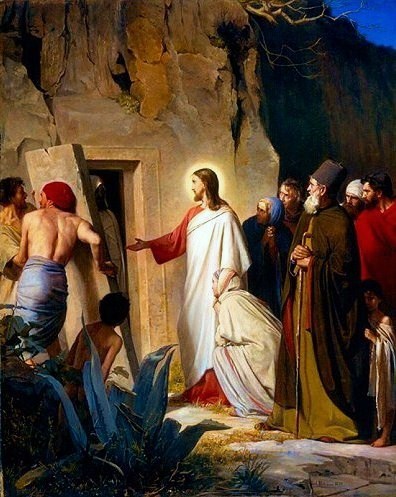
Today’s gospel reading gives us two messages. First, it tells us that our living faith in Jesus will raise all our bodies in the final resurrection. Secondly, with the approach of Easter Sunday, we are called symbolically to resurrect ourselves from sin to grace by partaking in the sacrament of reconciliation. In raising Lazarus, Jesus showed His authority as the Son and showed His divine power. By raising him on the fourth day, Jesus proved that He is master over life and death, and he is able to bring all the dead back to life, the holy Patriarchs, the Jews, and even the righteous Gentiles from centuries before. To be raised from the dead means to be in a living, loving relationship with Jesus, who teaches us that resurrection and life are a call to be united with Him

There are a few lessons we can learn from today’s gospel. First, this miracle is an expression of love. Second, our faith is very important in any miracle God does for us. The third lesson is that everything is possible with Christ through the power of the Holy Spirit. Finally, Jesus is willing to help us no matter what it will cost Him. It does not matter how long we have been spiritually dead or away from Him. If we hear and obey His voice, He will restore life to our weak and mortal bodies through the power of the Holy Spirit. This is because Jesus has authority over life and death.

Why Did Jesus Delay?

March 25, 2023

5th Sunday of Lent
By Fr. Victor Feltes

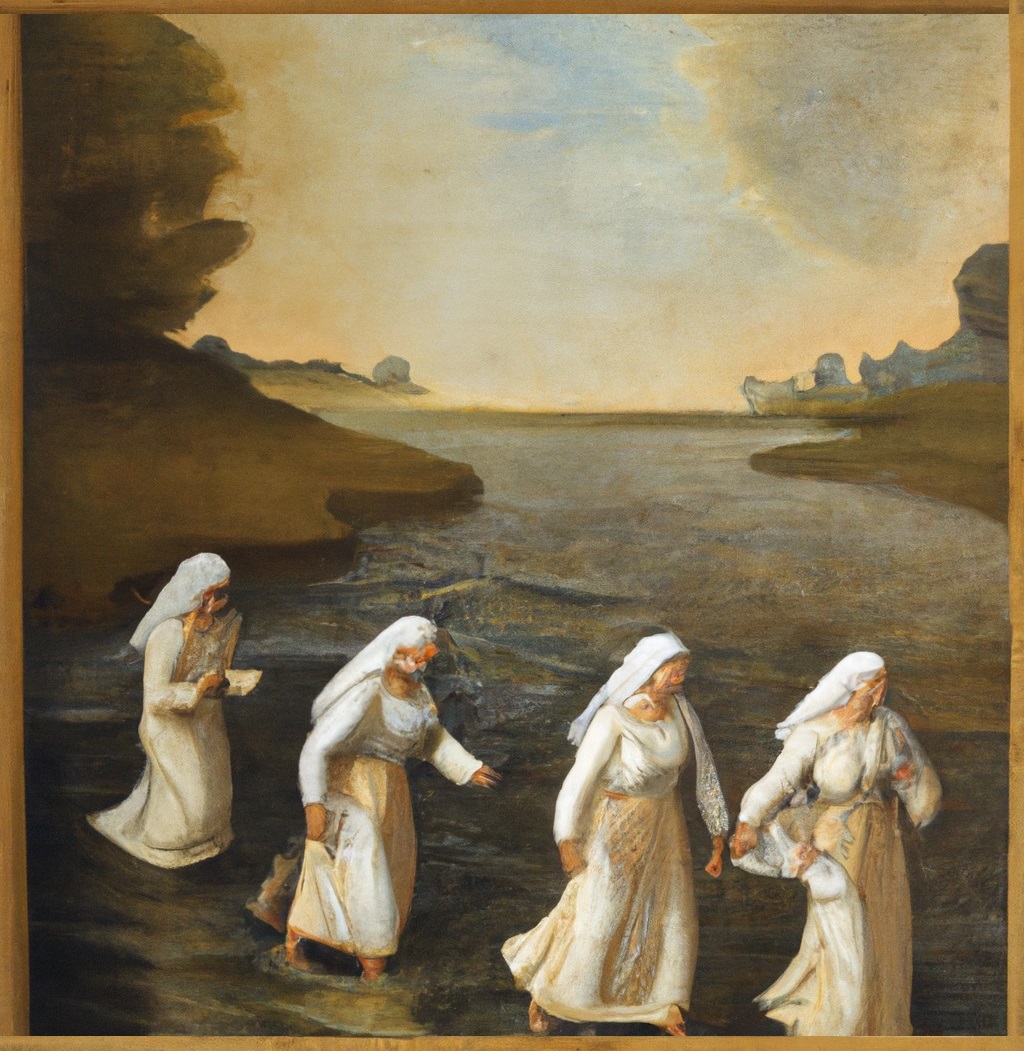
In 1582, St. Teresa of Ávila was journeying across Spain to establish new Carmelite convents. The rivers that season were so high that in some places the entire road was covered and obscured by water. It was clearly too dangerous to continue through those waters aboard the carriage, so Teresa and her companions advanced cautiously on foot, with Teresa leading the way. At one point, she lost her footing and fell down into the muddy water. Upon securing herself against the flowing current she exclaimed, “Oh, my Lord, when will you cease from scattering obstacles in our path?” Jesus replied to the mystical nun, “Do not complain, Daughter, for it is ever thus that I treat my friends.” And Teresa famously and dryly replied, “Ah, Lord, it is also on that account that you have so few!

In today’s Gospel, Martha and Mary send word to Jesus about their ailing brother, Lazarus: “Master, the one you love is ill.” “Now,” St. John records in his Gospel, “Jesus loved Martha and her sister and Lazarus. So when he heard that he was ill, he remained for two days in the place where he was.” Is not this a surprising twist? Because Jesus loved Lazarus and his sisters he delayed departing for their village for two additional days. And by the time Jesus arrives in Bethany with his disciples, Lazarus has been four days dead in the tomb.

Martha and Mary each say to Jesus what they had likely already lamented to each other: “Lord, if you had been here, my brother would not have died!” You can imagine their unspoken, anguished question: ‘You’ve healed others, you’ve helped strangers, so why didn’t you come to help us, your dear friends, when we needed you?’ When Jesus saw Mary weeping and those with her weeping, he became perturbed and deeply troubled, and Jesus wept. So the Judeans remarked, “See how he loved him.” But some of them said, “Could not the one who opened the eyes of the blind man have done something so that this man would not have died?” And Jesus, perturbed again, went to Lazarus’ tomb to resurrect him.

Jesus had told his disciples days before, “Our friend Lazarus is asleep, but I am going to awaken him.” And when they mistook him as saying Lazarus was merely napping, Jesus clarified, “Lazarus has died.” So Jesus came to Bethany fully-intending to raise Lazarus from the dead. But what troubled Jesus and why did Jesus weep? Was he mourning for Lazarus? Imagine if you learned one of your friends had died this morning but you were also certain that you friend would be alive and well again just fifteen minutes from now. How much would you mourn? As much as Jesus was crying for Lazarus, I believe Jesus wept more so for Mary and Martha and those in the crowd. He weeps for them and for all humanity in all of history who mourn and struggle with fear, doubt, and pain because of the scandal of suffering and death in our world.

We naturally desire to live easy lives; to be untouched by hardship or losses. But Jesus desires far greater things for us than mere ease. Before they left for Bethany, Jesus told his disciples, “This illness is not to end in death, but is for the glory of God, that the Son of God may be glorified through it.” These events were divinely permitted and intended for the greater glory of Lazarus and his sisters, too. Imagine if Lazarus had never gotten sick and died and been raised by Jesus — would we even know his name today? Instead, his story with Christ, his life because of Christ, has blessed the world, including us. Martha and Mary, through enduring this trial, were also blessed. Imagine the intensity of their faith in Christ and their courage in facing death after this experience. Jesus made these sisters a blessing for every generation to come.

Because Jesus loved Lazarus, Martha, and Mary, and St. Teresa of Ávila, he allowed all of them to experience trials. It is ever thus that he treats his friends. So be open to walking, to accepting, to trusting, Christ’s providential path for your life. Even if this journey may be harder than we would choose for ourselves, his path leads to better blessings and greater glory with Christ.

God Calls Unlikely People

March 19, 2023

4th Sunday of Lent
By Fr. Chinnappan Pelavendran

Today is the fourth Sunday of Lent, also known as Laetare Sunday, which means “rejoice.” The Church is joyful in anticipation of the Resurrection of our Lord. Today’s readings remind us that it is God who gives us proper vision in the body as well as in the soul. We need to be constantly on guard against spiritual blindness. God has a plan for each of us. He can call any of us to the vocation He has chosen for us. Being a priest, nun, or religious are not the only vocations. God has called some to married life or to be single. Prayer is very important to us in discerning our vocation.

When God called Moses, he was tending the sheep of his father–in–law, Jethro. God called him from the burning bush, but Moses had many excuses. If I say to the sons of Israel, the God of your father sent me, and they ask me what is His name? what shall I say to them? God said to Moses, “I am Who am.” I don’t think they will listen to me, I am not eloquent, I am afraid, I don’t want to go alone. God told him to take his brother Aaron with him and God would also be with him. Because God was with him, Moses was able to fulfill God’s request. He went to Pharaoh and led the Israelites out of Egypt. They were in the desert for forty years, and God provided everything they needed. Moses was able, with God’s help, to deliver His people to the land flowing with milk and honey.

In the New Testament, we have the call of Matthew. When Jesus called him, Matthew was a tax collector. Tax collectors were not upstanding citizens, they worked for the Romans, they kept some of the tax money for themselves, and they went after people to get the tax money from them. They did whatever it took to get the money. When Jesus said, “Follow me,” He followed Jesus leaving his work, money, and everything behind. He was completely changed. He became one of the Apostles and wrote the Gospel of Matthew in the Bible. He is the one who wrote the genealogy of Jesus.

In the first reading today, God sent the Prophet Samuel to the house of Jesse to anoint a king for Israel. Jesse had seven sons with him and presented each one to the Prophet Samuel. Samuel thought each one would be acceptable, but God said No. Jesse had one other son, David, who was tending the sheep. They sent for him and the Lord said, “Arise, anoint him, for this is he.” (1 Samuel 15:12) God chose the most unlikely candidate, the shepherd boy to be king of Israel. God told Samuel, Not as man sees does God see, because man sees the appearance, but the Lord looks into the heart.

Our Gospel today tells us about the healing of the blind man. After receiving his sight, he believed in Jesus and followed Him. Let us not be blind to Jesus, we need to believe and follow him as this man did. We are all called by God to be faithful to our vocation, whatever it is in life. Moses, Matthew, and David were faithful to God. As a religious, married, or single we also need to be faithful to God.

Those of you who are parents, bring your children to God. You presented them to God for baptism, don’t stop there. Pray with them. Bring them to church, and teach them to love God as you love them. Be a good example to them. Let them see you praying on your knees at home and in church. Teach them to be faithful to God by your example. God is calling us today to follow Him.

Meeting & Believing

March 18, 2023

4th Sunday of Lent
By Fr. Victor Feltes

Last week, Jesus met a Samaritan woman at a well. This week, he heals a man who was blind from birth. Through these personal encounters with Christ they came not only to know him but believe in him.

At the start, the woman at the well only perceived a Jewish stranger, a presumed enemy, a seemingly crazy or arrogant fool who offered her water without even having a bucket. But over the course of their encounter she realizes that this intriguing figure is a prophet, the Messiah, the Savior of the world.

Similarly, right after his healing, the man born blind simply refers to Jesus as ‘a man.’ He informs his amazed neighbors, “The man called Jesus made clay and anointed my eyes and told me, ‘Go to Siloam and wash.’ So I went there and washed and was able to see.” Next, when he’s brought to the Pharisees, they ask him his opinion of Jesus: “What do you have to say about him, since he opened your eyes?” Now, after some reflection, he suggests that Jesus “is a prophet.”

The Pharisees, unwilling to believe, question the man’s parents about his being born blind. Then they put him under oath (invoking a traditional formula): “Give God the praise! We know that this man is a sinner!” But the honest man replies, “If he is a sinner, I do not know. One thing I do know is that I was blind and now I see.”

In the face of their ongoing hostility towards Jesus, the man born blind observes, “This is what is so amazing, that you do not know where he is from, yet he opened my eyes. We know that God does not listen to sinners, but if one is devout and does his will, he listens to him. It is unheard of that anyone ever opened the eyes of a person born blind. (Indeed, nowhere in the entire Old Testament is there recorded a healing of someone born blind.) Therefore, the man with new sight concludes: “If this man were not from God, he would not be able to do anything.

The Pharisees insult the cured man and toss him out, but when Jesus hears that they threw him out, he finds him and asks, “Do you believe in the Son of Man?” The man answers with openness, “Who is he, sir, that I may believe in him?” And Jesus says, “You have seen him, the one speaking with you is he.” The man with clear vision replies, “I do believe, Lord,” and worships Jesus Christ.

A recurring theme throughout St. John’s Gospel is how peoples’ encounters with Jesus reveal to them who Christ really is and deepen their faith in him. In addition to the man born blind and the woman at the well, Nicodemus, Peter, John, and others have their relationships with Jesus develop over time through encountering him and appreciating the deeper meaning of these encounters.

The woman at the well and the man born blind both came to know Jesus as the Messiah. We today are further blessed with the knowledge that Jesus is God. Yet Jesus not only desires that you and I know things about him; he wants us to believe in him. Many people today relegate Jesus to merely being “a wise teacher” or “a good man” while simultaneously denying that he is Lord. But if Jesus is not Lord, then he was neither good nor wise to claim to be the Christ and demand our full devotion. To be consistent, we must be for him or against him. We cannot safely cover our bets by going just halfway. As Jesus warns in the Book of Revelation, “because you are lukewarm, neither hot nor cold, I will spit you out of my mouth.” So how do we move from Jesus being a mere notion to a personal reality?

First, realize that the Risen Jesus, though ascended into heaven, is alive and active in our world and in your daily life already. He would draw you into a deeper personal relationship with himself through encounters like he had with the people in the Gospels. I suggest to you (just as I did at last Sunday’s Masses) five places of personal encounter with Christ: the Scriptures, daily prayer, the Sacraments, the stories of others, and your lived experiences.

  • Encounter Jesus Christ, the eternal Word of God, through Sacred Scripture, the inspired word of God. St. Jerome said ‘ignorance of Scripture is ignorance of Christ.’ So meet him in the Scriptures, especially the four Gospels.
  • Encounter Jesus in daily prayer. Jesus says in the Book of Revelation, “Behold, I stand at the door and knock. If anyone hears my voice and opens the door, I will enter his house and dine with him, and he with me.” He knocks on the door of our soul, and daily prayer opens our door to meet him.
  • Encounter Jesus in his Sacraments. In the Eucharist, Confession, Marriage, Anointing of the Sick, in every Sacrament, Jesus meets us in a personal, mystical, and grace-giving way.
  • Encounter Jesus in the stories of others; the stories of the saints (whose lives are reflections and icons of Christ) and stories told by other Christians who have personally experienced Jesus’ goodness and power. Meet Jesus through their stories, like those neighbors who came to know Jesus through the blind man’s and Samaritan woman’s testimonies.
  • And encounter Jesus in your own lived experiences. The Lord who guides the galaxies likewise attends to the small things as well. Jesus would meet us in the many moments of our days using our experiences of work and leisure, of nature and other people, to share revelatory signs of himself.

So encounter Jesus Christ in the Scriptures, in daily prayer, in the Sacraments, in others’ stories, and in your own experiences, so that our living Lord may lead you into a deeper relationship with himself.

In conclusion, I wish to speak on a different but related topic. One year ago, St. Paul’s Church Renovation Subcommittee began exploring options to renew and beautify St. Paul’s Church — our first, major, interior renovation in three decades. This spring, enjoying the consensus support of our parish councils, we are excited to unveil our renovation plan and a capital campaign to fund it. Stay tuned for comprehensive details to be shared through talks and materials in the next few months. Until then, I ask for your patience and your prayers for the success of this effort, for the greater glory of God and the salvation of souls through many people encountering him here, in a renewed and beautified church.

5 Deep Wells of Encounter with Christ

March 12, 2023

3rd Sunday of Lent
By Fr. Victor Feltes

Jesus Christ desires every person to know him better. Today we watch him draw a Samaritan woman into a deeper relationship with himself. He meets her at a well outside of her town in the middle of the day. People in that era typically fetched water in the cooler morning or evening, but she comes to draw water around noon apparently to avoid her neighbors. When she comes to the well, Jesus initiates an encounter: “Give me a drink.”

She replies, “How can you, a Jew, ask me, a Samaritan woman, for a drink?” Jesus is stranger to her and she is wary of him as a presumed enemy, for Jews and Samaritans often felt mutual hostility. How many people today keep God at a distance like a stranger, fearing he does not really love them or truly will their good?

When Jesus suggests he could give the woman “living water,” she skeptically replies, “Sir, you do not even have a bucket and the cistern is deep; where then can you get this living water? Are you greater than our father Jacob, who gave us this cistern and drank from it himself with his children and his flocks?” She seems to wonder, ‘Is this man a fool, incredibly arrogant, or delusional?’ Indeed, in light of other claims Jesus makes about his own authority and himself he is either a liar, or a lunatic, or our Lord.

Many today relegate Jesus to merely being “a wise teacher” or “a good man” while simultaneously denying he is Lord. However, if Jesus is not Lord, then he was neither good nor wise in claiming to be the Christ and to demand our full devotion. To be consistent we must be for him or against him, either hot or cold. We cannot safely cover our bets by going just halfway. As Jesus warns in the Book of Revelation, “because you are lukewarm, neither hot nor cold, I will spit you out of my mouth.”

When Jesus describes to her the water he will give, which shall satisfy all thirst and well up to eternal life she says, “Sir, give me this water, so that I may not be thirsty or have to keep coming here to draw water.” Though not yet convinced, the woman is intrigued by Jesus’ words and manner. Many people today, though only vaguely familiar with Jesus, are interested in his person.

Then, even though this is their very first meeting, Jesus gently alludes to the moral irregularities of her life. The Lord is not out to shame us, but our hidden sins do matter and he calls us to conversion. The amazed woman replies, “Sir, I can see that you are a prophet,” and understandably redirects the conversation to a less personal topic.

Now convinced Jesus is a man of God, she believes and seeks and finds. She says, “I know that the Messiah is coming, the one called the Christ; when he comes, he will tell us everything.” Jesus answers, “I am he, the one speaking with you.”

Full of joyful faith, the woman runs off to town leaving her water jar behind. She shares good news with her neighbors saying, “Come see a man who told me everything I have done! Could he possibly be the Christ?” From this, many of the Samaritans in that town began to believe in Jesus because of her personal witness to him.

The woman at the well began by regarding Jesus as a stranger, a presumed enemy, a crazy or arrogant fool, but she goes on to recognize him as an intriguing figure, then a holy man, a prophet, the Messiah, and the Savior of the world. Today, you and I are further blessed with the knowledge that Jesus Christ is God. However, Jesus not only desires that we know things about him, he wants us to believe in him. How do we move from the one to the other?

The Risen Jesus, though ascended into heaven, is alive and active in our world and in your life already. He would draw you into a deeper relationship with himself through personal encounters like he had with the woman at the well. I suggest to you five deep wells of personal encounter with Christ: Scripture, prayer, Sacraments, the stories of others, and your lived experiences.

  • Encounter Jesus Christ, the eternal Word of God, through Sacred Scripture, the inspired word of God. St. Jerome said ‘ignorance of Scripture is ignorance of Christ.’ So meet him in the Scriptures, especially the four Gospels.
  • Encounter Jesus in daily prayer. Jesus says in the Book of Revelation, “Behold, I stand at the door and knock. If anyone hears my voice and opens the door, I will enter his house and dine with him, and he with me.” He knocks on the door of our soul, and daily prayer opens our door to meet him.
  • Encounter Jesus in his Sacraments. In the Eucharist, Confession, Marriage, Anointing of the Sick, in every Sacrament, Jesus meets us in a personal, mystical, and grace-giving way.
  • Encounter Jesus in the stories of others; the stories of the saints whose lives are reflections of Christ and those told by other Christians who have personally experienced Jesus’ goodness and power. Meet Jesus through stories like those townspeople came to meet Jesus through the Samaritan woman’s report.
  • And encounter Jesus in your own lived experiences. The Lord who guides the galaxies likewise attends to the small things as well. Jesus would meet us in many moments of our days using our experiences of work or leisure, of nature or other people, to share revelatory signs of himself.

So encounter Jesus Christ in Scripture, prayer, Sacraments, in others’ stories, and your own experiences, that the living Lord may lead you into a deeper relationship with himself.

In conclusion, I wish to speak on a different but related topic. One year ago last week, St. Paul’s Church Renovation Subcommittee began exploring options to renew and beautify St. Paul’s Church — our first, major, interior renovation in three decades. This spring, enjoying the consensus support of our parish councils, we are excited to unveil our renovation plan and a capital campaign to fund it. Stay tuned for comprehensive details to be shared through talks and materials in the next few months. Until then, I ask for your patience and your prayers for the success of this effort for the greater glory of God and the salvation of souls through many people encountering him here in a renewed and beautified church.

All Need Water for Life

March 11, 2023

3rd Sunday of Lent
By Fr. Chinnappan Pelavendran

Many years ago, when kings still lived in palaces and castles, they had servants who would bring water to the palace every day. They would bring the water in earthen pots. One of the servants had two pots; one was cracked but the other was not cracked. The other servants told him to throw away the cracked pot, He said, “No. Where the cracked pot leaks, there are beautiful flowers growing for the king’s pleasure.” Everything needs water to have life.

On this Third Sunday of Lent, the Church invites us to accept the love of God. God gives us the gift of the Holy Spirit. In the Gospel today, Jesus meets the Samaritan woman at the well and gives her the living water. She and the other people of this place are able to recognize Jesus as the Messiah, the Savior of the world.

In our first reading, God enabled Moses to provide water for the Israelites who were thirsting. This was life-giving water. Without it, they would have died. Water is as important to life as air, without either, there is no life. St. Paul tells us in our second reading that Jesus poured the living water, the gift of the Holy Spirit into our hearts. We need the Holy Spirit to sustain us spiritually, just as we need water to sustain us physically. The Jews thought that they only needed to keep God’s law, but St. Paul told them they also needed the Holy Spirit to nourish them. According to St. Paul, redemption is a gift from God manifested in Jesus’ death on the cross. Through the Holy Spirit, we have received the gift of Faith.

The Samaritan woman understood that Jesus was the Messiah when He told her about the living water. He speaks about the living water, which gives eternal life. The living water represents divine grace, which is God’s life within the soul. The woman craves this type of water because she wants to have eternal life. She now realizes what it means to take freely of the water of life, which is the spiritual refreshment that comes into her soul after her confession with Jesus.

She is impressed that Jesus knew all of her sins, and she had the opportunity to have her sins forgiven. She believes that He is truly the Messiah. She is sorry for all of her sins and goes to tell her family and friends about Jesus. Large numbers of people came to hear Jesus. Jesus was honest with the woman about what was right morally and wrong in her life. The gift of truth helped to set her free. It is important to remember that Jesus wants to share the Good News of the Gospel with everyone, including us.

We need to allow Jesus into our personal lives. We need to be open to accepting others, as Jesus did. Let us turn to Jesus with all of our hopes and dreams. His love is always non-judgmental, and unconditional. Let us rest, assured that Jesus accepts us warmly, and helps us to see that he will give us strength, In Him, we have the power we need to overcome any problems.

She gratefully said “Yes” — Funeral Homily for Janet Sikora, 83

March 10, 2023

By Fr. Chinnappan Pelavendran

On behalf of St. Paul’s Parish and myself, I would like to extend our sincere sympathy to Janet’s family, her sons and daughters, her grandchildren, great-grandchildren, and her siblings. She was born September 16th, 1939, in Cooks Valley. She was the daughter of John and Alvina Zwiefelhofer. She married Alfred Sikora on October 29th, 1960.

In her younger years, she worked at the Bloomer Canning Factory and later at the Renegade Truck Stop as a cashier. While working at the truck stop, she got to know most of the police officers in the area. She was like a mother to a lot of people. Christmas was her favorite holiday and she enjoyed watching the Hallmark Channel on TV. She loved to play cards whenever she had a chance. Janet really enjoyed Dave’s Bloody Marys. She had a love for life, if it was cooking, traveling, or family. Her grandchildren and great-grandchildren were very special to her.

Janet was a long-time member of St. Paul’s and was active in the PCCW. She loved to pray the Rosary and, in later years, watch Mass on TV. While she was living at Dove Healthcare, she was very faithful in attending Mass. Last week, she was dozing at Communion time, I approached her and quietly asked if she would like to receive Communion, and she gratefully said “yes.”

Our readings today remind us that God will wipe away all of our tears. Christ died for us and destroyed death so that we can be with Him in eternity. For if we live, we live for the Lord; and if we die, we die for the Lord. Each of us shall give an accounting of himself to God. For this is the will of my Father, that everyone who sees the Son and believes in Him may have eternal life, and I shall raise him on the last day. The responsorial psalm reminds us that the Lord is our Shepherd. He will take care of all our needs. If we truly believe this, God will answer all our prayers.

Every good gift and every perfect gift from above, comes down from the Father. So, when you think of the good times and the good things about Janet, know that these came from God. Every good in our lives is a gift from God.

Jesus Christ became man and came to heal the brokenhearted. One day, God will wipe away all sickness, evil, and pain. Life can be difficult, but if we trust in the Lord, everything will be ok. God loves us.

Let us remember that this earthly life is temporary and that all of us have been created to live in eternity with God. Let us remember, that God has a plan. We don’t have to know what His plan is, but it will be perfect. We trust Him, He is faithful, He is good, and He Loves us.

Eternal Rest grant unto her, O Lord. And let perpetual light shine upon her. May her soul and the souls of all the faithful departed, through the mercy of God rest in peace. Amen.

Every Human Person is Special — Funeral Homily for Lynda Sykora, 58

March 6, 2023

By Chinnappan Pelavendran

On behalf of St. John the Baptist parish and I, I want to extend our sympathy to the family, her husband Roger, and children Rachel, Alex, and Hannah. Also, I extend our sympathy to the friends of Lynda. She will be missed by many for a very long time. We are pleased that she no longer has to suffer. I had the privilege of Anointing Lynda before she died. When I asked how she was, she said she was well. She was very calm and eager to receive Jesus. She was at peace.

Lynda grew up in Alabama and moved to Cooks Valley in 1994. She and Roger have been members of St. John the Baptist Catholic church since they were married in 1995. Lynda worked on the farm, was a great cook, and enjoyed gardening, flowers, and canning. She was also a 9-1-1 dispatcher for a while. She enjoyed spending time with her family. Attending her kids’ sporting events was a happy time for her.

Our readings this morning give us great consolation. In our first reading, we were told the Lord will wipe away tears from every cheek. We know that everything we do makes sense only if it is leading us to peace in God. We know there are many distractions and temptations in life, all pretending to offer us peace and happiness, but none of them do because we know that we will find this peace and happiness only in God. When we find our peace in God, we become friends of God, when we live with God’s love in our hearts, then we have peace. That is why our first reading said the Lord will wipe away the tears from every cheek. When we hope in the Lord for salvation, how blessed we are.

There is a truth that is good for us to reflect on at the time of death. The truth is that:

Every human person is special.
Everyone is unique.
Nobody ever takes anybody else’s place.

It is very clear in the gospel reading that being blessed does not always mean being materially blessed. The beatitudes which Jesus offers us are a sign of contradiction to the world’s understanding of happiness and joy. How can one possibly find happiness in poverty, hunger, mourning, and persecution?

Poverty of spirit finds ample room and joy in possessing God as the greatest treasure possible. Hunger of the spirit seeks nourishment and strength in God’s word and Spirit. Sorrow and mourning over wasted life and sin leads to joyful freedom from the burden of guilt and spiritual oppression. God reveals to the humble of heart the true source of abundant life and happiness. Jesus promises his disciples that the joys of heaven will more than compensate for the troubles and hardships they can expect in this world.

We are gathered here today to remember Lynda and pray for her. Let us also pray for Roger and their children during this difficult time. Let us also pray that we also will find peace in God.

May her Soul Rest in Peace.

Encounter Him & Return

March 4, 2023

2nd Sunday of Lent
Fr. Victor Feltes

What a grace for Peter, James, and John to see the Transfiguration of Jesus. Can you imagine? It was like a preview of the glory we all hope to share in heaven. Jesus shared other special times with Peter, James, and John. Earlier in the gospel, we read that Jesus only allowed Peter, James, and John to be with Him in the house of a synagogue official whose daughter he raised from the dead. These three apostles were also with Jesus in the Garden of Gethsemane.

Before the Transfiguration, Jesus told His disciples that He must suffer greatly, be rejected by the elders, the chief priest, and the scribes, be killed, and be raised from the dead in three days. They did not want to believe Him because they thought they could protect Him. Jesus responded, “Get behind me, Satan! You are thinking not as God does but as human beings.” The disciples had to learn that Jesus was not an earthly king, as they were expecting. They needed the special graces from Jesus so they could continue to follow Him and believe in Him. During the Transfiguration, God the Father said, “Listen to Him.” He revealed His glory to the disciples in order to strengthen them for the passion and death of Jesus Christ.

Let us review the events of Jesus’ Passion and Death, Peter denied Jesus three times. James, like the rest of the disciples, ran away. John was the only one who continued to follow Jesus during His Passion and Death on the Cross. He stayed with the women who followed Jesus. After the Resurrection and Pentecost, Peter, James, and John became great witnesses to Jesus. Peter became the first pope and was later martyred. James was killed by King Herod for witnessing Jesus. John wrote the fourth gospel in the bible, the Gospel of St. John.

How many times in your life have you let Jesus down or disappointed Him? We do this many times because we meet Jesus every day in our lives. The most intimate way we meet Jesus is when we receive Him in the Eucharist. It is the time when we are the closest to Jesus. We meet Jesus in the readings from the Bible as they touch our hearts. The Bible is not just about reading the life of Jesus, it is also about listening to His words. He is speaking to us about our lives. We meet Jesus in a very special way in all the sacraments.

Baptism makes us sons and daughters of God and heirs of heaven. Confirmation makes us the temples of the Holy Spirit. By the Sacrament of Reconciliation, God brings us, sinners, back to the path of holiness. By receiving the Sacrament of the Anointing of the Sick in Faith, we are spiritually, and, if God wills it, physically, healed but most importantly our sins are forgiven. The Sacrament of Marriage unites a man and a woman together for life according to His laws. In the Eucharist, we receive Christ’s Soul and Divinity into our body. With Holy Orders, a man becomes a Priest, an altar of Christ, and by the Power of the Holy Spirit, offers the Sacrifice of the Mass and serves as a shepherd of Jesus’ sheep.

We can share experiences like those of Peter, James, and John when we spend some extra time with Jesus in prayer during Lent. Maybe, we may want to fast for one day, taking only water, thus releasing spiritual energy, which in turn, can lift our thoughts to a higher level.

Our Mountaintops & Valleys

March 4, 2023

2nd Sunday of Lent
By Fr. Victor Feltes

Jesus went up a mountain to preach his Sermon on the Mount. Later, after feeding more than five thousand people using five loaves and two fish, he withdrew up a mountain alone for prayerful solitude. Today, Jesus leads Peter, James, and John up a high mountain by themselves to witness his Transfiguration. So why mountains? What is it about mountain heights which make them the preferred setting for so many biblical events?

Three themes occur to me: First, mountains remove people from the ordinary. They are remote places removed from everyday life. Second, mountains offer a greater perspective. A mountaintop can allow someone to see for many miles. And third, mountains elevate us. Mountaintops are not only literally higher but symbolically closer to heaven as well. Jesus takes Peter, James, and John to the top of Mount Tabor to give them an extraordinary experience, to give them a deeper vision into himself, and to give them strength for their trials ahead.

The Mass prefaces celebrating Jesus’ Transfiguration say:

“After he had told the disciples of his coming Death, on the holy mountain he manifested to them his glory, to show, even by the testimony of the law and the prophets, that the Passion leads to the glory of the Resurrection.”

“He revealed his glory in the presence of chosen witnesses… that the scandal of the Cross might be removed from the hearts of his disciples.”

The disciples had not imagined that the Jewish Messiah, God’s Holy Anointed One, would be gruesomely murdered. The Transfiguration helped prepare them to understand that Christ’s suffering was a part of God’s salvific plan. They also came to realize that Jesus’ teaching, “If anyone would come after me, let him deny himself and take up his cross and follow me,” would involve sufferings of their own. The apostles’ memories of beholding Christ’s miracles and glory and their ongoing relationship with their Risen and Ascended Lord strengthened them through their trials.

You and I will face trials as well. As St. Paul tells Timothy in today’s second reading: “Beloved: Bear your share of hardship for the Gospel with the strength that comes from God.” What have been the spiritual mountaintop experiences of consolation in your life? Remembering these moments gives us spiritual strength in hard times, and Jesus Christ walks alongside us through all our dark valleys.

Yesterday, I encountered the story of a man about my age named Mike. Not long ago, Mike was diagnosed with a cancer so advanced that he had back operation which removed one of his vertebrae. Mike is married and has two sons around middle school age. Though previously a somewhat lukewarm Christian, he began “searching for the understanding of the LOVE of Jesus.” Here is the amazing thing: Mike writes, “This last several months, with a few nudges from God, I have been overwhelmed with Jesus’ love. It’s been so powerful that the pain and uncertainty of the cancer have taken a back seat to it.” If he continues to carry this cross with Christ, no matter what happens, Mike is going to be OK.

Our spiritual mountaintop moments are extraordinary experiences that give us a greater perspective and draw us closer to God. But also remember the great consolation that Jesus Christ, our good and loving Lord, remains with us in our dark valleys as well.