Archive for July, 2023

Spread the Good Seed

July 16, 2023

15th Sunday in Ordinary Time
By Fr. Chinnappan Pelavendran

Jesus’s favorite way of teaching was by using stories and parables. The story makes it more approachable and leads us to discover it for ourselves. We recall stories much more than abstract things; today’s gospel narrates the familiar parable of the sower and the different kinds of soil on which the seed falls. This story encourages us to reflect on our own lives and our response to the good news of God’s loving reign. It invites each of us to ask, what kind of soil am I?

Today Jesus speaks about four types of land, path, stones, thorns, and the last is good ground. The seed fallen on the path stands for those who hear the message of the kingdom of God but do not understand it, thus the evil one comes and snatches it away. The evil one does not want the seed of the Gospel to sprout in the heart of man.

The second is that of the seed fallen among the stones, this represents the people who hear the word of God and understand it immediately, but when trials and tribulations arise, these people give up immediately.

The third is that of the seed fallen among the bushes with thorns; Jesus explains that this refers to the people who hear the word but care about the world and the temptation of riches, being choked. Finally, the seed that fell on the fertile soil represents those who hear the word, accept it, cherish it, and understand it.

The enemy of our life here is ignorance, trials, tribulations, focus on money, possessions, pleasure, comfort, and indifference. All these may lead to the seed of God’s word to wither and die, or be carried away by the winds of the world.

Jesus invites us to have good dispositions be docile to His word, grow, and bear fruit in us. Today we must ask ourselves how our heart is. Which soil does it resemble? That of the path, the rocks, the thorns? It is up to us to become good soil and bear good fruit for us and for our brothers and sisters.

Today we must examine ourselves, Am I a catholic who actively practices my faith and love of God? or am I simply someone who attends church on Sundays and just identify as a catholic without truly living out my beliefs? Do I truly understand and put into action the teaching of Jesus as found in the Gospel?

Let’s remember that for a plant to grow, it needs to be watered, cared for, and protected from bugs or diseases. To practice our faith, we must nurture it by reading scripture and continually deepen our prayer, the sacraments, and ongoing education, in order to live our faith well. As St. Jerome says ignorance of Scripture is ignorance of Christ.

At the same time, we are also sowers for people who rely on us. Do we make an effort to teach others about the faith through our prayers, actions, and words? Our words and actions have the power to do both good and harm, they can build up or cause scandal, they can inspire or discourage, can bring souls closer to Christ, or push them away. So try to be good soil and sower of the word of God to His people.

Seed, Soil, & Fruit: Parish Transformation

July 16, 2023

15th Sunday in Ordinary Time
By Fr. Victor Feltes
(As preached at St. Paul’s Parish)

Imagine if St. Paul’s Parish had turned out very differently than what we see today. Imagine if we had not only failed to reach our capital campaign pledge goal for renovating this church — imagine we had never even attempted it. Imagine unmet maintenance needs all around our campus: Our church roofs in desperate need of re-shingling. Our church attic lacking proper insulation. Our undercroft walls in clear need of refreshing. Our crumbling parking lot in need of repaving. No digital sign promoting our parish on our front lawn. Imagine there was never a new extension added between our church and the school. The gym, library, computer lab, and other rooms were never built. They would not be needed now anyway, since our school closed down years ago. All our grade school children enrolled in the secular public school.

A lack of sufficient volunteers ended our CCD/religious education program, teen youth ministries, and Vacation Bible Schools. Sunday Masses’ Children’s Liturgies never even began. Our Thrift Sale pavilion building, likewise deprived of sufficient volunteers, became used for nothing more than storage. At parish funerals, no resurrection singers in the balcony, nor ladies providing luncheons for the mourners after. No Family Life Committee meals marking each year’s marriage anniversaries and dearly departed souls. No Sojourner House evenings, no KC or PCCW events, no Fall Festival. No Eucharistic Adoration, no prayer chain, no prayer shawls, and few Communions being brought to the homebound. Not only no associate priest coming to our parish, but also no priestly vocations coming out of our parish. And many more lost things than this. Imagine all these things gone and the resulting missing goodness.

The good things we enjoy in our parish are the result of the seed Jesus speaks of in our Gospel. He is the Sower who goes out to sow, but some seed falls on hardened hearts and quickly gets gobbled up. Some seed falls on weedy hearts and gets choked by the worldly fears or earthly desires living there. Some seed falls on shallow hearts and is betrayed as soon as trials or difficulties come. But the Sower’s seed has found rich soil in some, in the hearts of those who listen to his word and understand it, bearing fruit a hundred or sixty or thirtyfold in our parish.

Now ordinary soulless soil cannot choose to change, but you can! Make a decision of your will and invite the Sower to cultivate you. Ask Jesus to help you to believe and understand him. Ask him to calm your fears and disordered desires. Ask him to deepen the personal connection between you. With Jesus Christ, you can change the sort of soil you are in order to bear more fruit with him. The Sower sows the seed in hopes it will produce much fruit, and along with it, more seed. Together with the Sower, we should scatter seed too.

Imagine a St. Paul’s Parish of tomorrow greater than we see now: Each pew of our renovated and beautified church filled on Sundays. More families worshipping here with their children. A full set of altar servers and a choir for every Sunday Mass. Our great Catholic school, enrolled to its full capacity. New parishioner initiatives and efforts to bless our community. And scores of your relatives, friends, and neighbors returning to the Church or joining her for the first time.

Is this not what the Sower of the seeds wills for our parish? He desires each of us to play a part in his mission, and our role is simple. Pray to God and offer sacrifices for these good things to come be. Pray earnestly to those around you and boldly invite them to join us. (Remember how the Sower casts the seed all around him on every ground.) And be living saints, whose lives, devotion, words, and deeds, bear good and lasting fruit for yourself and others, thirty, sixty, or a hundredfold.

“Take My Yoke Upon You & Learn From Me”

July 9, 2023

14th Sunday in Ordinary Time
By Fr. Chinnappan Pelavendran

When we are tested with trials and overburdened with pain and suffering, we ask, “God, Why me?” and we fail to count the innumerable blessing that we received. Arthur Robert Ashe was an American professional tennis player. He is considered the best African – American male tennis player of all time. He won three Grand Slam titles. Ashe was the first black player selected to the unites States David Cup team and the only black man ever to win the singles title at Wimbledon, the U.S. Open, and the Australian Open. At the end of his life, Ashe was dying of AIDS, which he got due to infected blood received during heart surgery in 1983. From the world over, he received letters from his fans. One of them asked, ‘Why does God have to select you for such a bad disease?’ To this Arthur Ashe replied, “The world over fifty million children start learning tennis, five million of them learn to play tennis, 50,000 come to the circuit, 5,000 reach the grand slam, fifty reach the Wimbledon, four to semi–finals, two to finals. When I was the one holding the cup, I never asked God why me. And today in pain, I should not be asking, ‘God, Why Me?’

All of us have problems in life. Big or small, these problems burden us and make us sad, tired, and distressed. When these problems go unsolved for a long time, we feel disappointed and become depressed. One of the most comforting words of Jesus in the gospel is, “Take my yoke… and you will find rest.” Anyone who feels tired, disappointed, abandoned, or depressed can easily be uplifted by the comforting promise of Jesus that He will give rest.

Here is the Good News. To all those who are alone and in need of someone to talk to, those who have no one to ask for help, and those who feel lost, lonely, and hopeless, worry no more. There is someone to turn to, someone who can listen to our endless complaints, a shoulder to cry on. He is Jesus who says, “Come to me, all you who labor and are burdened, and I will give you rest. Take my yoke upon you and learn from me, for I am meek and humble of heart, and you will find rest for yourself. For my yoke is easy, and my burden light.

Today’s readings give the same message in a more powerful way. In the first reading, the Prophet Zechariah consoles the Jews living in Palestine under Greek rule, promising them a meek Messianic King of peace riding on a donkey, who will give them rest and liberty. The Responsorial Psalm praises and thanks a kind and compassionate God who raises up those who are bowed down. In the second reading, St. Paul tells the Christian community in Rome about two yokes, namely, the flesh and the Spirit. He challenges them to reject the heavy yoke of flesh and to accept the light of the yoke of the Holy Spirit. In the gospel, Jesus offers rest to those “who labor and are burdened.”

We need to unload our burdens before the Lord. That may be our worries, anxieties, problems in the family, suffering, health, security, and a thousand other things. Give everything to Jesus. Our Lord will transform our lives. Try to count on your blessing, not your worries.

Fruitful Love Despite Our Flaws — The Justin Wachtendonk & Brenna Werner Wedding

July 8, 2023

By Fr. Victor Feltes

Justin and Brenna, you have chosen beautiful readings for your wedding Mass. Including your second reading, the most popular of all wedding reading options: St. Paul’s famous poetic hymn about love. In the 13th chapter of his 1st Letter to the Corinthians, St. Paul teaches what love does and does not do. These words contain blessed lessons for us all. Today, I wish to highlight the rarely-considered context of those passages to help married couples and people within Christ’s Church of our day.

When we think of the early Church, we tend to picture it as a golden age. The apostles were still alive on earth preaching the Gospel, performing miracles, and founding Christian communities. Divinely inspired books were still being written for what would become the New Testament of the Bible. The Church’s membership was growing widely and rapidly, while producing great saints and martyrs. But this does not mean that everything was perfect. Far from it!

You can see this in St. Paul’s 1st Letter to the Corinthians. He writes them to address the many things that were going wrong at the Church in Corinth. For instance, Paul corrects the Corinthian Christians’ bitter internal rivalries and factionalism. He notes the external scandal caused by them suing each other in secular courts. He critiques the Corinthians’ inflated pride. He excommunicates a certain man for his unrepentant sexual sins. He condemns the Church at Corinth’s liturgical abuses (against the Real Presence of Jesus and one another) at their celebrations of the Holy Eucharist. And St. Paul cites still more controversies than these. So things in the early Church were not so idyllic as we might imagine. And that can be a great encouragement for us today!

The early Church, despite the many flaws of her members, produced good, much good, world-transforming good and the salvation of many souls, in those days and thereafter. The Church today, despite the many flaws of her members, still produces much good, world-transforming good and the salvation of many souls. His Church build upon a rock is, as Jesus says in our Gospel, “a city set on a mountain which cannot be hidden.” She remains, “the salt of the earth” and “the light of the world” — purifying, enlightening, enhancing, and saving.

Whatever goodness is found in Christ’s Bride, the Church, is like the worthy wife the Book of Proverbs describes in our first reading. As the pearl of great price, “her value is far beyond pearls.” “Her husband, entrusting his heart to her, has an unfailing prize. She brings him good, and not evil, all the days of her life.” She labors alongside him, “reaches out her hands to the poor,” and he will “give her a reward of her labors, and let her works praise her.” This is a great encouragement for us in his Church, but also a great encouragement for all Christian married couples here.

Justin and Brenna, you are about to enter a new covenant with Christ. In your sacramental marriage, you will encounter each other’s flaws and experience trials, as every married couple will. Do not be surprised when not everything is perfect and do not be alarmed. Maintain your peace. With a love that is patient, a love that is kind, a love that most importantly has its origin and strength in Christ, you will ‘bear all things and endure all things.’ His “love never fails.” Like his Church, which despite the imperfections of her members produces much good fruit, your marriage — if united to Christ — will never fail.

Marriage & the Eucharist — The Jonathan Lynch & Abigail Butek Wedding

July 5, 2023

By Fr. Victor Feltes

Johnathan and Abigail, the three readings you chose for your wedding are each about divine love. The First Letter of St. John says “in this is love: not that we have loved God, but that he has loved us and sent his Son as expiation for our sins.” Jesus tells us in St. John’s Gospel, “As the Father loves me, so I love you. …Love one another as I love you.” And the third reading you chose (the first we heard today) comes from The Song of Songs. This Old Testament book is curious in the canon.

The Song of Songs is a collection of sometimes graphic love poetry. Though traditionally attributed to King Solomon, and so sometimes called The Song of Solomon, scholars’ estimates for the year it was written range between 1,000 and 100 BC. And most extraordinarily, the book contains no explicit references to God, or religion, or spirituality. So why is it in the Bible and a fitting source for a Catholic wedding reading?

For starters, The Song of Songs it is not an ode to fornication, for at the center of the book we find a royal wedding procession; the man and woman are husband and wife. And just as Jewish writers saw it as an allegory of God’s love, early Christian saints see it depicting Jesus Christ’s love for us, his Bride, the Church. All four Gospels, two Pauline epistles, and The Book of Revelation call Christ a bridegroom or husband, and Jesus describes himself as such. Therefore, the saints’ view of The Song of Songs is not an outrageous reading but a natural interpretation.

Johnathan and Abigail, you have fittingly chosen to enter marriage today in a wedding Mass. Though getting married in a simple Catholic ceremony is an option, being married at a Holy Mass is best. Like the titles “King of Kings” or “Lord of Lords,” the title of The Song of Songs proclaims it as the most excellent or greatest of songs. In the same way, the Holy Mass may be called the meal of meals, our prayer of prayers, the sacrifice of sacrifices, the covenant of covenants. “Blessed are those called to the supper of the Lamb.

Today, I wish to highlight for you a few parallels found in the sacraments of marriage and the Eucharist. First, both sacraments establish covenants. The covenantal nature of the Eucharist is made clear at the Last Supper when Jesus offers us his Blood in the chalice. “Take this, all of you, and drink from it,” this is “the Blood of the new and eternal covenant, which will be poured out for you…” Marriage is likewise a covenantal union between bridegroom and bride.

Second, both marriage and the Eucharist are effected by words and action. With the priest’s words of consecration, you have the Real Presence of Jesus on the altar at Mass. With your exchange of vows, you will be married before God’s altar. But that is not the consummation of these sacraments. If neither priest nor people consumed Communion after the consecration, an aspect of the sacrament would remain unfulfilled. Both of these holy sacraments are effected by words and action.

Third, these covenantal unions are ongoingly renewed. Much is made of the day of First Communion and one’s wedding day. These firsts are worthy of celebration, but they are just the beginnings. Through the mutual gifting of one’s whole self to the other, these sacraments are renewed through repetition. Jesus tells us at every Mass, “Take this… this is my Body,” and we are called to offer our whole selves to him in return. Many Catholic couples have placed a crucifix above their headboard reflecting the sacrificial self-giving each spouse is called to. These two sacraments reflect and reveal each other; husband and wife, Christ and his Church. “Love one another as I love you… Do this in memory of me.”

Before receiving Jesus in the Eucharist, we proclaim: “Lord, I am not worthy that you should enter under my roof…” Jonathan, Abigail, and all married spouses, maintain your reverence towards each other. Like approaching Jesus in the Eucharist, do not take each other for granted.

Before receiving him in the Eucharist, we also declare to Jesus: “Only say the word and my soul shall be healed.” Jonathan and Abigail, realize the power of your words for each other. They can wound and they can heal; you too can strengthen and transform each other through the power of your words.

And finally, Jonathan and Abigail, always remain close to Jesus and do his will. He tells us, “If you keep my commandments, you will remain in my love, just as I have kept my Father’s commandments and remain in his love.” As the Song of Song tells us, “As stern as death is [his] love, relentless as the nether-world is [his] devotion; its flames are a blazing [divine] fire. Deep waters cannot quench [his] love, nor floods sweep it away.” Remain in his mighty love and your love will fruitfully endure.

Great Rewards From Small Deeds

July 2, 2023

13th Sunday in Ordinary Time
By Fr. Victor Feltes

The Old Testament Prophet Elisha was the immediate successor to the Prophet Elijah, ministering as a traveling prophet and wonderworker in the 800’s BC. One day, he came to a town of northern Israel called Shunem in which lived a “woman of influence.” Other Bible translations of this same text describe her as “prominent, influential, and wealthy”—“a great lady.” Curiously, she along with her husband go unnamed in the text. Perhaps, as with “the beloved disciple” in the Gospel of John, this is intended by providence to encourage us to envision ourselves in her place.

This great lady urges the prophet to dine with her. He accepts, and thereafter, whenever passing through that town, he would visit to eat there. So she says to her husband, “I know that Elisha is a holy man of God. Since he visits us often, let’s arrange a little room on the roof and furnish it for him with a bed, table, chair, and lamp, so that when he comes to us he can stay there.” Her husband apparently agreed, because sometime later Elisha lodges in that new room overnight. They may have been simple accommodations but Elisha really appreciated them.

While staying there, Elisha asks his servant to call the woman. Once she stands before him Elisha asks his servant to say to her (apparently in her own language): “You have troubled yourself greatly for us; what can we do for you? Can we say a good word for you to the king or to the commander of the army?’” She replies, “I am living among my own people.” By this response, she is expressing that she lives contently and secure, far removed from the royal court and its concerns. Her needs are satisfied. She has not shown Elisha hospitality to win favors from him. She receives him because he is a prophet. She receives him because he is a righteous man. She serves him because she knows he is a holy man of God.

Later Elisha asks, “Can something be done for her?” His servant, with great confidence in the prophet, replies, “Yes! She has no son, and her husband is getting on in years.” So Elisha has her called again and once she stands at the door, Elisha promises, “This time next year, you will be fondling a baby son.” She replies, “My lord, you are a man of God; do not deceive your servant.” Yet, the woman would conceive, and by that time the following year she had joyfully given birth to a son as promised. From God, she receives the prophet’s great reward.

Jesus says, “Whoever receives a prophet because he is a prophet will receive a prophet’s reward, and whoever receives a righteous man because he is a righteous man will receive a righteous man’s reward.” And what of goodness shown toward those of lesser stature? “Whoever gives but a cup of cold water to one of these little ones to drink because the little one is my disciple—amen, I say to you, he will surely not lose his reward.”

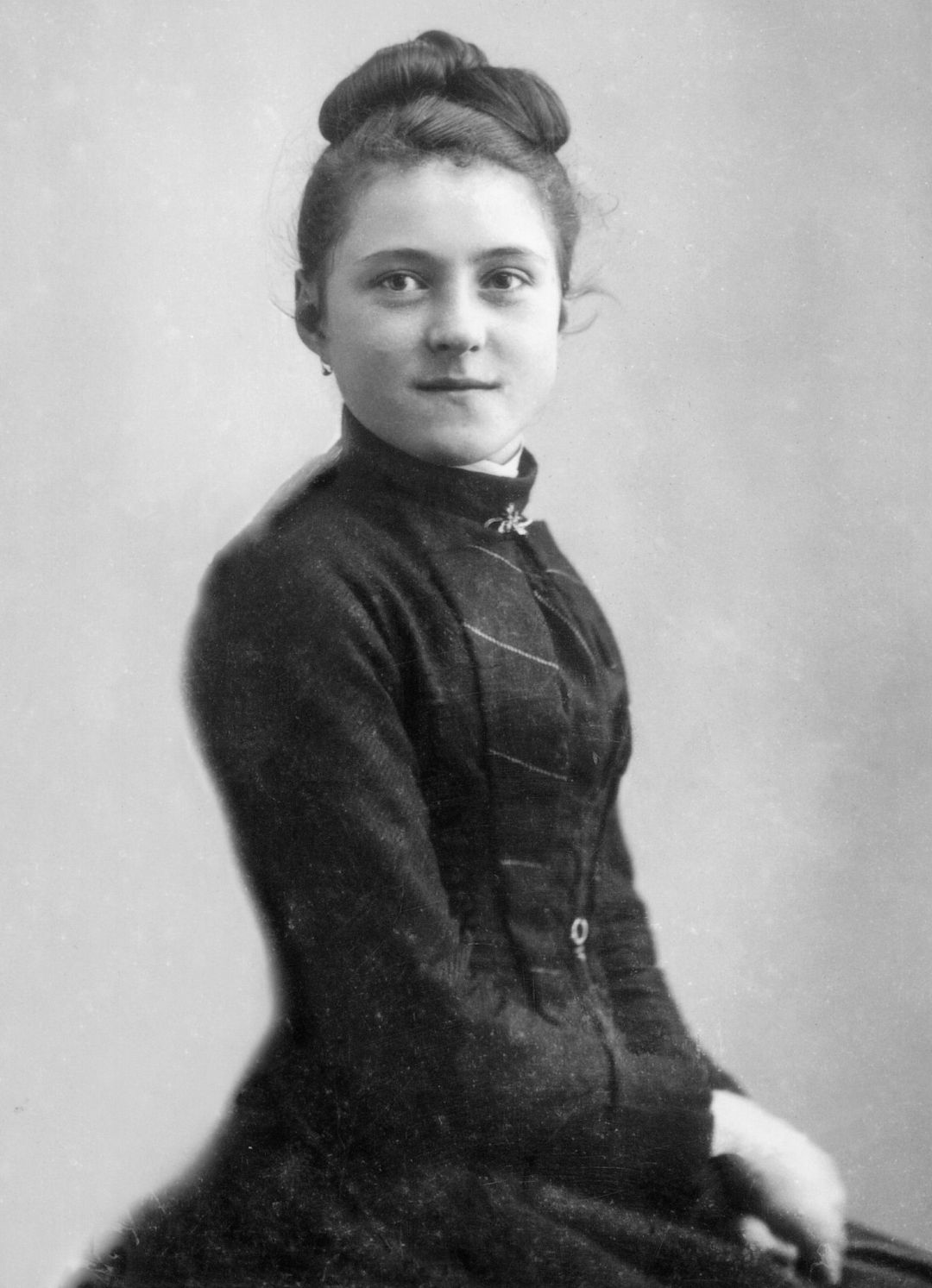
Sometimes, Catholics look at our great saints and imagine we must do extraordinary things to be holy and greatly blessed. Thinking that such great deeds are beyond them, they despair of ever becoming saints themselves. In the late 1800’s, young St. Therese of Lisieux felt that way too, but then she found her “Little Way” to holiness. Her little way to great holiness was to do many little things for the right reason, with the right heart, that is, with great love.

In her highly recommended autobiography “Story of a Soul”, she writes:

Miss no single opportunity of making some small sacrifice, here by a smiling look, there by a kindly word; always doing the smallest right and doing it all for love.” “You know well enough that our Lord does not look so much at the greatness of our actions, nor even at their difficulty, but at the love with which we do them.” “Without love, deeds, even the most brilliant, count as nothing.” “To pick up a pin for love can convert a soul.

Like the great lady of Shunem and St. Therese of Lisieux, realize and remember that doing many little things for the right reason, with the right heart, out of love, will surely not lose its reward.