Archive for September, 2023

The Parable of Two Sons, Jesus Christ & Us

September 30, 2023

26th Sunday in Ordinary Time
By Fr. Victor Feltes
The father in Jesus’ parable has two sons. He tells the first, “Son, go out and work in the vineyard today.” That son refuses but later changes his mind and goes. The father comes to the other son and gives the same command. That son replies, “Yes, sir,” but does not go. When Jesus asks the chief priests and elders which son did the father’s will, they answer, “The first.” Were those Jewish leaders correct? Yes and no.

Yes, it is true that it is better to do the right thing than to merely say the right thing. Nevertheless, it is a father’s will that all his children would do both, obeying in word and deed. In Jesus’ parable, neither son did the father’s will perfectly. Jesus Christ, on the other hand, is perfectly faithful to our Father. “However many are the promises of God,” the Letter to the Hebrews tells us, “their ‘Yes’ is in him.

Jesus enters our world saying, “Behold, I come to do your will, O God.” Though he was in the form of God, he emptied himself and humbly took the form of a servant, assuming our human nature to his Divine Person. He was perfectly obedient to the point of death, even a death by crucifixion. Through Jesus’ obedient, faithful, loving response to his Father’s will, God has exulted him highest among us. We too have said yes to God’s will and given him our word, but we have not been obedient to that same degree.

Many here have vowed before God, ‘I, take you, to be my spouse. I promise to be true to you in good times and in bad, in sickness and in health. I will love you and honor you all the days of my life.’ I pledged a similar self-gift on my deaconate and priestly ordination days. And any Catholics who are not in either of these sacramental vocations promise and pledge a gift of themselves when receiving Jesus in the Eucharist. At the turn of the fifth century, St. Augustine noted that when you approach to receive the Holy Eucharist at Mass “you hear the words, ‘The body of Christ’ and you reply ‘Amen’. Be then a member of Christ’s body, so that your ‘Amen’ may accord with the truth… Be then what you see, and receive what you are.” Our Heavenly Father has called to do works of love in our various states of life and we have said, “Yes, sir,” but we have not always done it. Yet there is encouragement for us in today’s gospel.

Jesus notes how tax collectors and prostitutes had not done the will of God preceding the preaching St. John the Baptist. They had disobeyed God’s commands but, through believing, changed their ways and were now entering the Kingdom. Through believing in Christ we also can change. We cannot do it alone, but we were never expected to. Consistently invite Jesus Christ to live his perfect obedience, his intense love, his holy life in you. Then, becoming more like him, you will share more greatly in his exulted glory.

God is Just & Generous

September 25, 2023

25th Sunday in Ordinary Time
Fr. Chinnappan Pelavendran


Generosity is the attitude of sharing whatever we have. God is Just as well as generous. When God created the world, He created everything by His words. When He created human beings, “God created man in His image, in the divine image He created him, male and female He created them.” (Gen 1: 27) God so loved the world, that he gave His only son to redeem the world. God expresses Justice and generosity, through His creation and redemption of the world.

In the first reading, we see another generous act of God: He invites His people to forsake their wicked ways and return to Him. They should not have any fear because God is very generous and forgiving, and he will forgive the sins of repentant sinners. God is always near His people as a loving Father.

Today’s parable of the landowner is also a good reminder of God’s generosity. The landowner hired laborers for his vineyard at different times of the day. However, at the end of the day, everyone received the same, daily wage. Those who were hired first complained, but the landowner proved himself just and generous. From the beginning, the landowner was clear: he agreed with those who were hired first regarding the wages. At the end of the day, he gave them the promised wage. While the first ones worked longer hours compared to the others, they were given a just wage. To the others, the landowner chose to be generous.

The context of today’s gospel is that St. Matthew was writing to the Jewish Christian community, who saw Jesus as the fulfillment of the Jewish prophecies. Some of them thought that salvation was only for the Jewish people. The truth Jesus gives to the Jewish community is this: God’s gift of salvation is offered to everyone. God will give all his children the same gift of salvation. Jesus said the prostitutes, murderers, and other sinners would be saved ahead of the religious leaders because they repented while the Pharisees and scribes continued to be hypocrites. One who repents would receive the fullness of salvation.

God has a perfect plan for your life. If others have more than you, it does not mean that God loves you less. God loves each one of us equally. In the parable, the landowner (representing God) says, “My Friend, I am not being unjust to you.” Jesus is our friend and He is not unjust to us. Think of parents and their children, parents have a different relationship with each child and special love and concern for the physically or mentally challenged. God is greater than any parent and shares His love and concern with His people, especially sinners. It is our task to listen to Him when He invites us to the vineyard.

It is never too late. It is never too late to turn to the Lord. It is never too late to be welcomed by the Lord. It is never too late to leave sin and be welcomed by the mercy of Jesus. Jesus told the parable of the Laborers in the Vineyard that we have just heard. The Lord continues to go out to the marketplace every hour to invite people to His vineyard.

Learn the simple lesson in today’s scripture readings. Allow God to be God in all things that happen in our lives. When things are not working as we planned, let God be God in that situation. Trust in God, and let Him do the rest. God is compassionate and generous to us. May we also learn to share our time, talent, and treasure in His vineyard.

Controversial Mercy in the Vineyard

September 23, 2023

25th Sunday in Ordinary Time
By Fr. Victor Feltes

The landowner in Jesus’ parable recruits workers throughout the day. He goes to the marketplace at dawn, at nine, at noon, at three, and at five, hiring laborers each time and sending them to work in his vineyard. At the end of the day, he pays his longest laborers one silver denarius coin (the wage to which they had previously agreed) but he surprisingly also pays even his briefest employees the same amount. When some grumble at this, the boss replies, “My friend, I am not cheating you. Did you not agree with me for the usual daily wage? …Am I not free to do as I wish with my own money? Are you envious because I am generous?” Why did the employer risk this HR controversy? Why did he wish to pay the later workers so generously? The Old Covenant gives us insight into his motivation.

God commanded in the Book of Leviticus, “Do not hold back the wages of a hired worker overnight.” Then the Book of Deuteronomy explains why: “On each day you shall pay the servant’s wages before the sun goes down, since the servant is poor and is counting on them.” Now, if this vineyard owner had promptly paid his one-hour workers proportionally less than his full-day workers, that’s equal pay for equal work. But he pays all of them the same full wage because he is acting mercifully. He understands that his servants are poor, that their families are poor, and that they depend upon this pay for their daily bread. Rather than letting them go hungry, he generously provides. We see expressed throughout the Scriptures God’s special care and concern for the poor and the vulnerable, and our God calls us to be like himself.

Still, we can feel the grumblers’ grievance when they complain: “These last ones worked only one hour, and you have made them equal to us, who bore the day’s burden and the heat!” And yet, those last-hired laborers were trying their best. They report that they were standing idle in the marketplace all day simply because nobody had hired them. Assuming they aren’t lying, these workers were not lazy, just unlucky. They came when they were called and received an equal reward.

In this parable, our Lord is the landowner, we are his laborers, and our payment is heaven. This parable presents hope for the unconverted. Though your days may have been wasted up to now, you can still heed our Lord’s calling and receive his merciful generosity as your reward. It may be your final hour, but do not despair and walk away forever. Answer Christ’s call. Believe, repent, and be saved.

For Christians who feel that they have labored hard and long for the Lord, I wish to address a bitter temptation you might be feeling: “If those who repent on their deathbeds get to go to heaven too, why shouldn’t I sin and just repent later?” For starters, this attitude is dangerously presumptuous. You do not know the final hour when the sun will set on your life. You may never get around to repenting before facing your eternal judgment. Furthermore, your repentance must be sincere, and God cannot be fooled.

And finally, do not imagine that the grass is greener away from Jesus. Yes, laborers in Christ’s vineyard must bear burdens and heat, yet those outside the vineyard are not at rest. They stand all day in the uncomfortable marketplace, spiritually impoverished, without true purpose, and anxious about their future. Remember that living a life apart from Christ is no paradise.

Jesus’ challenging parable about the generous landowner and his vineyard workers reminds us of God’s special concern for the poor and of our calling to practice the same. It reminds us of God’s incredible mercy and the need for all of us to answer his call to repentance. And it reminds us of God’s loving generosity, that he is all-good, and deserving of all our love.

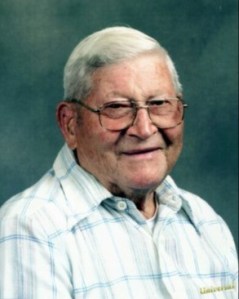
Transformer of the Earth — Funeral Homily for Richard Zwiefelhofer, 92

September 19, 2023

By Fr. Victor Feltes

Richie’s family has told me a number of stories about him as a hardworking transformer of the earth. He would take places as they were naturally and improve them. He served in the U.S. Army in wartime Korea (1951-52) building roads, “engineering the land.” He made it home safely, married Margie, and labored on his farmstead. He worked hard on that farm, meticulously picking rocks day and night as if they were weeds in his fields, improving the soil. You have passed his verdant pastures on your way out of town beside Kwik Trip, where he gave his beef cattle peaceful rest. He could harvest his fields to yield four hay crops each summer for feeding his hungry herd. He did not raise dairy cows but he had a side-job hauling milk, and also gravel, dirt, corn, and or grain. His work aided in the shaping of this earth and in the sharing its blessings. Despite his short stature, he possessed great strength. He reportedly could carry a milk can in each hand, weighing one hundred pounds apiece. And his strength endured. Even into his nineties, he would shovel manure out of the pens.

He loved that farm and loved having fun. He loves his family and loves our God. Every weekend, he brought his family members to our Lord in the Eucharist. And when Riche could no longer attend himself, he watched the Holy Mass on TV. Though he was in and out of consciousness during his final weeks, when I visited Richie and gave him the Last Rites he thanked me for these precious gifts. And I am told that as the hour of his death drew near, he was heard praying the Hail Mary.

Richie worked hard to bless his family and help lead them to the Lord. Jesus Christ, meanwhile, always labors to bring us closer to himself and bless us. He engineers creation to build us a road so that his allies can conquer overwhelmingly in fighting the good fight and reach heaven triumphant. He meticulously picks out the useless rocks—the sins in our souls, to make us more fruitful. He would make us maximally fruitful; four, or thirty, or sixty, or one hundred fold. He utilizes us to help nourish his herd, shape this earth, share its blessings, and in verdant pastures give us repose.

Looking at Jesus during his public ministry, some people thought him to be a mere man. But his words and deeds reveal the divine strength he possesses, strong enough to bear the Cross for our sins and overturn death for our salvation. And Jesus Christ has not giving up laboring on this earth. He would shovel out the muck of sin from our lives if only we would welcome him and allow him to do so.

God loves us. He loves us powerfully. The Book of Wisdom says the Lord would purify and perfect us like gold in a furnace. And Jesus tells us in John’s Gospel that we would be wise to let him. Christ notes a lesson from the fields: “Unless a grain of wheat falls to the ground and dies, it remains just a grain of wheat; but if it dies, it produces much fruit… for eternal life. … The Father will honor whoever serves me.

The gospel reminds us that Jesus felt natural human distress as he faced his approaching Passion and death: “I am troubled now,” Jesus said, “Yet what should I say? ‘Father, save me from this hour’? But it was for this purpose that I came to this hour.” Today, we may feel natural sadness at Richie’s passing, and that’s a beautiful thing, as it reflects our love. Yet what shall we say? It was for this purpose—a holy passage from this life into new life—for which Jesus and Riche worked hard together for so long.

Our Lord is the great hardworking transformer of the earth, who takes us as we are naturally and labors to improve us. Let any goodness you see in Riche reflect for you its source and perfection in Christ. And let Jesus work with you to bring you to holy perfection.

Forgiveness 77 Times?

September 18, 2023

24th Sunday in Ordinary Time
By Deacon Dick Kostner

Today’s gospel lesson has Peter questioning his friend Jesus as to how forgiving he must be with others. The answer Jesus gives him is the answer our heavenly Father gives to each and every one of us and that is “always.” We are to forgive others just as many times that we would ask God to forgive us for our failings in life. Peter, the first Pope of our faith, seems to think that he is without fault or at least he feels that “seven” would be a reasonable number of times that humans should be allowed to be forgiven. But Peter will soon learn that God will always forgive us for our human weakness if we approach him with a contrite heart when we stumble and disappoint our creator.

Jesus answers Peter with a parable story to help him mature into a worthy disciple. He uses a king to represent his Father in heaven to display what is required to receive forgiveness from God for our failings. We must be sincere and contrite when we ask God and others for forgiveness. Is that not what is required for us to receive forgiveness through the Sacrament of Reconciliation? But the king and God expects more of us than that as the parable continues. The servant in today’s story is forgiven by the king and his debt is erased, at least so he thinks. But now comes the kicker, when he is asked for forgiveness from a debt a fellow servant owes him, his answer is “no” and he has the man arrested and put in prison.

The forgiven servant soon finds out that the king requires of him and of us that when we receive forgiveness of our failings from God that we are to extend the act of forgiveness to all who approach us and ask to be forgiven if they approach us with a contrite heart. If we do not do this we can expect to be corrected by the king, by God, when we meet him in person at the conclusion of our life here in this world.

Recently, I presided over the marriage of a young couple and I told them things that I had learned from my fifty-plus years of marriage to Barb. One of the first things I shared with them was the fact that although they might think that their new spouse is perfect in every way, that this is a myth for we are all humans and as Father Tom would always say, “We have feet of clay.” Humans by their nature, have weaknesses and all of us will display our weaknesses during our lives here on earth. God knows this, and that is why he forgives us seventy times seven. When this happens, we will realize that we are not perfect and that we will need to ask for forgiveness. This holds true especially in married life. What makes this especially beneficial in a marriage is that our spouse has the obligation to try their hardest to prepare their spouse for the heavenly kingdom. That means to tell them and show their spouse that they are not perfect and that sometimes they will need to realize this and approach forgiveness with a contrite heart. Marriage helps us learn to be a forgiven person so that we can extend that forgiveness to not only our spouse, but also to our children, friends, and even strangers who have offended not only us but our heavenly Father.

I want to thank my wife, Barb for being a good wife and for all the times that she has pointed out to me that I am not perfect. My only concern is why she always grins when she corrects me. I guess that it must just be what a good wife of fifty-plus years is called to do.

Forgiveness is a Gift we must Share

September 16, 2023

24th Sunday in Ordinary Time
By Fr. Victor Feltes

In Jesus’ parable today, a servant owes his king an astronomically large debt, literally (in the original Greek) “ten thousand talents.” A talent was an ancient measurement of weight equaling something like seventy-five pounds. If these talents were owed to the king in silver, in the ancient world that amount would equal roughly 150,000 years’ worth of day labor. That’s something akin to several billion dollars today. It represents an unpayable personal debt.

The deeply indebted servant is brought in before the king and about to lose absolutely everything. But then he bows down, pleading. And his master, the king, moved with compassion, amazingly lets that servant go and forgives him the entire loan. How many people have ever been in a position to be personally owed billions of dollars? And who on earth would ever forgive a multibillion dollar debt owed to them? Who is this incredibly merciful king? Who is his indebted servant? This is a parable about God and us.

Our sins against the supremely good and all-holy God represent a personal debt we could never pay back on our own. Yet God is so merciful and so generous as to offer to forgive our debt of sin through Jesus’ perfect self-sacrifice. However, the Lord expects and demands we forgive others as well.

The servant in Jesus’ parable departs and finds a fellow servant who owes him “one hundred silver denarii coins,” or one hundred days’ wages back then. Now that’s not nothing, it’s something on the order of thousands of dollars today, but compared to the debt forgiveness the first servant was offered by the king it is a very small amount. Yet he seizes the man and starts choking his neighbor, saying, “Pay back what you owe!” The man pleads but is shown no mercy as he’s thrown into debtors’ prison.

Now other servants witness this and feel greatly disturbed. Attitudes of unforgiveness cause harmful ripples which negatively impact others. Those witnesses report the whole matter to their master, who then summons the first servant once again. “You wicked servant,” he says. “I forgave you your entire debt because you begged me to. Should you not have had pity on your fellow servant, as I had pity on you?” Then his king and master angrily hands the unforgiving servant over to be tortured until he should pay back the whole debt.

So will my heavenly Father do to you,” Jesus declares, “unless each of you forgives his brother from his heart.” Elsewhere in Gospels, Jesus teaches, “If you do not forgive others, neither will your Father forgive your transgressions.” He will “forgive us our trespasses as we forgive those who trespass against us.”

Now many Christians find this teaching deeply disconcerting. They are troubled because they think that they just can’t forgive. I often find this is due to them imagining that forgiveness means things that it does not. Forgiving is not the same thing as forgetting. People say “forgive and forget,” but can’t force yourself to have amnesia. It’s possible you may remember another’s forgiven offense for the rest of your life. And forgiveness doesn’t mean saying what the offender did was OK. Their sin may have been a grave one, and saying otherwise would be a lie. Forgiveness doesn’t mean the offense no longer hurts. Only time and grace can heal some wounds, yet not even lingering pain precludes forgiveness. Forgiveness does not necessarily mean pretending nothing happened. Even with forgiveness, it may be wrong for everything to go back the way it was before. Forgiveness may lead to reconciliation and full restoration, but not always.

You can forgive anyone. You can forgive people even if they can’t be trusted. You can forgive someone even before they feel sorry for what they did. Why is this so? Because forgiveness simply means loving someone despite the wrongs that they have done. Forgiveness is a decision to love someone despite their sins. Is there anyone you’re worried that you haven’t forgiven? Then pray for them, because no one can simultaneously hate someone and pray for their greatest good at the same time.

Is there anyone you find it hard to pray for? Then that’s someone to pray for, for their sake and yours. The Holy Spirit may call you to further steps in reconciliation later, but begin with prayer. Forgiveness is a decision to love the wrongdoer like God loves us. As even the Prophet Sirach said, “Forgive your neighbor’s injustice; then when you pray, your own sins will be forgiven. …Hate not your neighbor; remember the Most High’s covenant, and overlook faults.”

Reconciling with Another

September 11, 2023

23rd Sunday in Ordinary Time
By Fr. Chinnappan Pelavendran

Groups of priests were on the way to the bishop’s house, for a meeting. On their way, they stopped for a quick meal and then continued their trip. After traveling for an hour, one of the priests realized that he had left his glasses in the restaurant. When the senior priest came to know this, he was very angry. However, they had no choice. They had to return to the restaurant to get his glasses. All the way back, the senior priest complained. When they arrived at the restaurant, the priest got out of the car and hurried inside, the senior priest called out to him and said, “You might as well get my wallet and my credit card.” Nobody is perfect. We are all human and have our own weaknesses and mistakes. We are sinners. This is the reality of our human nature. Even so, we are called to help one another on the road to salvation. Why? Because God wants everyone to be saved.

God wants everyone to be saved. He does not desire the death of a sinner; as He says in the book of the Prophet Ezekiel: “Do I find pleasure in the death of the wicked? Or do I not rejoice when they turn from their evil way and live?” (Ez 18:23) That is why today’s readings invite us to fraternal correction. Fraternal correction is how to correct our brothers and sisters and bring them back to the path of salvation.

We know that God is love. Every act that he does is an act of love. He cannot do other than love. We only know this wonderful truth because the Second Person of the Blessed Trinity became incarnate in Jesus Christ to show us what love really is. Love himself walked among us as a man, a real presence in the world, eating and drinking, speaking and listening, laughing and crying, teaching and healing, and ultimately suffering, dying, and rising to reconcile the world to the Father. This is how we know the depth of God’s love.

The first reading and the gospel give us insights into what it means for us to love our brothers and sisters. God openly tells Ezekiel that he has made him a “watchman.” God knows that most of the people are not listening to His voice. Therefore, He sent Ezekiel to carry His word to them. If the Prophet Ezekiel does not do it, the people will suffer for their own sins. In the gospel, Jesus gives us a similar instruction. If a brother sins against one of them, the disciple must take steps to tell the one who wronged him, and try to bring him back.

Listening is the key to healing and reconciliation. Listening works both ways. God listens to our prayers but we need also to listen to Him. The flock listens to the shepherd, and the shepherd listens to the flock. In the area of fraternal correction, we need to listen to each other first. Each one has a different background and each of us has a story to tell. The best part of our reading is that when we come together to solve a problem with our brothers or sisters, we must feel the presence of God in our midst. Before Jesus was born, He was given the name “Emmanuel,” which means, “God is with us.” In today’s reading, He says “Where two or three are gathered together in my name, there I am in the midst of them.” Before He ascended into heaven, He promised to be with His people until the end of time. So, we are always assured of His constant presence.

Correcting the mistakes of one another means helping one another to grow in faith, hope, and love. It is our responsibility to make sure that each brother and sister lives in harmony with one another. We must always remember that our community, our church, is a manifestation of God’s Kingdom on earth.

‘Keep My Commandments & Love as I Love You’ — The Riley Henneman & Emily Holloway Wedding

September 11, 2023

By Deacon Dick Kostner

These words of Jesus in today’s gospel spell out a wedding gift to Riley and Emily that enables them to live out a life together of happiness not only in this life but also an eternal life with Jesus and the children of the creator of happiness, in the kingdom of God. To Riley and Emily, your Father in heaven tells you today, to listen to His Son and you will find eternal happiness.

These words of Jesus will not eliminate for you pain and suffering in this life but it will allow you endure the misfortunes that all human beings will encounter in an imperfect world. I have spent in my life many hours of prayer asking the Father to share with me his gift of wisdom, so today I will share my thoughts on what it means to follow the Eleventh Commandment Jesus gave us to “Love as I have loved you.”

Oh, it may seem like an easy task when you face each other today for you love one another and feel that you have found the “perfect” spouse to spend a lifetime with, but I must burst that bubble and share with you some wisdom and the fact is that there exists no human being that is “perfect.” To be human is to be imperfect. You might try and fool yourself into thinking you’re perfect, but time will prove you wrong. Trust me when I tell you that God programmed spouses to remind you that you are not perfect. All we have to do is look at our Bible readings and we will find that our first pope, St. Peter, thought he was perfect and would never turn against his friend, Jesus, but guess what happened; he was put to the test and failed not once but three times in saying he did not know Jesus.

We all have fears that we will encounter in life, such as job failures; broken friendships; illnesses; and yes that big one, deaths that we must experience and live through. How in the world can we love someone who hates us? Answer—Ask Jesus. How can we overcome the feeling we get when someone we love, does something to us that causes us to wonder if they really care about my feelings? Ask Jesus. How do we have love for a God that allows his only son to go through pain and suffering and yes even death without offering help? Ask Jesus. And how about the big one why would anyone be willing to surrender their life for someone that is not a friend or for someone who not only dislikes you but hates you? Ask Jesus.

Riley and Emily, I know you really enjoy hunting as I do. But I will share with you some wisdom that I discovered recently that made me appreciate animals more to the point that I enjoy watching them teach me how to love, more than I enjoy pursuing them in the field. Recently, I watched a program on Paramount entitled “1883” about early settlers making there way to Oregon to find a new life. On their way, they were confronted with a shortage of food and one of the travelers set out with his young son who was about ten years of age to hunt for some food. They came upon some deer and the father allowed and taught his son how to aim his rifle and acquire his first kill which was a nice buck. After the kill the father took some of the blood of the deer and smeared it on his sons face and told him that this deer gave up its life so that they might live so its important that hunters express their thanks to animals killed for providing us with food, by saying “thanks.” He then told his son to say “thanks” to the deer, which he did.

This stuck in my mind and I thought about how Jesus gave up his earthly life and his friends whom he loved, so that we might live and how that mirrors our directive from him to “Love as he has loved us.” It also opened my eyes to how all of God’s creation has that same vocation, to give of oneself so that someone or something else can live even if it means giving up your life. Some times this isn’t easy but its worth it to know that God has blessed you with a spouse. Riley and Emily, God has given you another set of hands, feet, heart, and mind to consult with and care for you when something breaks on you and you are hurting and who will lovingly remind you that you are not perfect when we get out of hand. I learned this first hand when I had my knees replaced and Barb babysat me.

I also would recommend that, as that young man in the episode did, to give thanks to your spouse for their gift to you of their lives. I would also encourage that you, as a couple, at least once each week to give thanks to Jesus by attending his Mass, receiving the Living Bread, and thanking him for giving up his life so that you two may live a life of happiness not only in this world but also Everlasting Life in the Kingdom of God. Giving thanks acknowledges are pledge to Jesus to love as he has loved us. Now let’s celebrate the “Love as I have loved you” Sacrament of Marriage, where Riley and Emily will pledge their love for one another and become one in being through the love of the Father.

Like Gentiles or Tax Collectors

September 9, 2023

23rd Sunday in Ordinary Time
By Fr. Victor Feltes

Jesus teaches us today about how to practice fraternal correction. In short, if a brother or sister in the Church sins against you, approach him or her privately. If that fails to persuade, come again with one or two others. If that does not work, bring the matter to the Church. And “if he refuses to listen even to the Church,” Jesus says, “then treat him as you would a Gentile or a tax collector.” Jesus says to treat an obstinately unrepentant Christian like “a Gentile or a tax collector.” What are we to make of this?

How would the Jewish crowds hearing Jesus’ preaching treat Gentiles or tax collectors? The Old Covenant kept Jews and Gentiles (that is, non-Jews) separate. For example, archeologists have found stone signs from the Jewish temple dating to the Gospel era which warned Gentiles or foreigners not to enter its inner courts. Those signs’ chiseled, red letters declared in Greek: “No foreigner is to enter within the stone railing [balustrade] around the sanctuary and the enclosure. Whoever is caught will himself be responsible for his ensuing death.” Without full conversion to Judaism, Gentiles in those days could not enjoy full communion with God’s people. Meanwhile, Jewish tax collectors were viewed as collaborators with Israel’s enemies, traitors harming their own people, and shunned. So how would the early Church respond in the case of a persistently unrepentant Christian?

In the First Letter to the Corinthians, St. Paul addresses a scandalous matter brought to him concerning the Church in Corinth. He writes, “It is widely reported that there is immorality among you, and immorality of a kind not found even among pagans — a man living with his father’s wife,” that is, his stepmother. I imagine if you had asked this romantic couple why they were together, they might have answered, with sincerity, “We love each other!” They might have said what they were doing made them happy. They might have even said, “All love is love.” How would St. Paul answer? In today’s second reading from God’s inspired word, he says, “Love does no evil to the neighbor; hence, love is the fulfillment of the law.” But not all things called “love” are loving in accord with Christ’s commands. Not all pleasures lead to true and lasting happiness. Not all paths lead to God.

In the case of that scandal at Corinth, St. Paul the Apostle declares to the Church:

“The one who did this deed should be expelled from your midst. I, for my part, although absent in body but present in spirit, have already, as if present, pronounced judgment on the one who has committed this deed, in the name of our Lord Jesus: when you have gathered together and I am with you in spirit with the power of the Lord Jesus, you are to deliver this man to Satan for the destruction of his flesh, so that his spirit may be saved on the day of the Lord.”

St. Paul excommunicates the man. It is a strong response because grave sin is serious business. (The man’s partner who goes unmentioned was apparently not a member of the Church.) The goal of an excommunication, beyond the spiritual welfare of the community, is the sinner’s conversion and salvation. St. Paul’s loving hope was that this offender’s sufferings would eventually lead to the salvation of his soul. For better or worse, formal excommunications are uncommon today. Nevertheless, just because one’s body remains inside the church building does not mean his or her soul remains with Christ. If we are living in grave sin, we need to repent and go to confession. And if someone else gravely sins, we could be called, with discernment and prayer, to share the truth in love.

When Jesus says to treat the unrepentant like “a Gentile or a tax collector,” recall how he himself treated Gentiles and tax collectors. Though not yet converted, he loved them. He cared about them and wanted to draw them to himself. He wished for them to change their ways and eventually come into full communion with him in his Church. If we are prayerful and loving, Jesus will enable us to correct the errant in a Christ-like way, and perhaps they will be saved.

Like our Lord appointed the Prophet Ezekiel in today’s first reading to be a watchman for the house of Israel, the Lord may call on you to invite sinners to change their way. As a watchman who loves God’s holy city and wishes the blessed number within her to grow, without abandoning your post on the walls of truth, encourage those who are spiritually outside of her walls to pass through the gate of mercy.

Jesus’ Praising & Rebuking of Simon Peter

September 3, 2023

22nd Sunday in Ordinary Time
By Fr. Victor Feltes

When Jesus asked his disciples, “Who do you say that I am,” Simon answered, “You are the Christ, the Son of the living God.” And Jesus replied, “Blessed are you, Simon son of Jonah. For flesh and blood has not revealed this to you, but my heavenly Father. And so I say to you, you are Peter, and upon this rock I will build my Church.” Jesus changed Simon son of Jonah’s name to “Rock,” or “Petros” in Greek, which we render as “Peter.” In the entire Old Testament, God changed the names of only three people: Abram to Abraham, Abram’s wife Sarai to Sarah, and Jacob to Israel, so the changing of Simon’s name is a big deal in salvation history. Jesus then declared to Peter, “I will give you the keys to the Kingdom of Heaven. Whatever you bind on earth shall be bound in Heaven; and whatever you loose on earth shall be loosed in Heaven.”

In last Sunday’s readings we heard of how in the days of the Prophet Isaiah the Lord chose “Eliakim son of Hilkiah” to become chief steward of the royal house, that is, prime minister for the reigning Davidic king. The Lord declared, “I will place the key of the House of David on Eliakim’s shoulder; when he opens, no one shall shut, when he shuts, no one shall open.” The holder of that office possessed plenary power under the king throughout the kingdom and reportedly carried a visible key indicating this authority that he would pass on to his successors.

The great Doctor of the Church, St. Augustine of Hippo, taught that the New Testament is concealed in the Old and that the Old Testament is revealed in the New. In the Old Testament, the Lord gave Eliakim “the key of the House of David” and authority to open and close. Likewise, Jesus Christ the new Davidic king gave Peter “the keys to the Kingdom of Heaven” and authority to bind and loose. Eliakim’s authority extended throughout an earthly kingdom, but Jesus promised Peter that his earthly decrees for the Church would also be confirmed in Heaven. Eliakim would become, in the words of the Lord through Isaiah, “a father to the inhabitants of Jerusalem and to the house of Judah.” St. Peter became the Church’s first “pope,” a title which comes from the Greek word for a “papa” and an office held today by Peter’s successor, our Holy Father Pope Francis. Jesus foresaw that without a visible shepherd his Christian flock would inevitably scatter. Like Moses for the Hebrews in the desert, or like King David for God’s people in Israel, Christ established a chief shepherd for his Church on earth through his popes, beginning with St. Peter.

That highlight moment for Simon Peter is followed this Sunday in St. Matthew’s Gospel by a very humbling event. Jesus begins revealing to his disciples that he must suffer greatly from the Jewish leaders, be killed, and be raised on the third day. So Peter takes Jesus aside and starts rebuking him, “God forbid, Lord! No such thing shall ever happen to you!” Jesus turns and says to Peter, “Get behind me, Satan! (That is, “Get behind me, Adversary!”) You are (being) an obstacle to me. You are thinking not as God does but as human beings do.” Notice how Jesus here reproaches Peter differently than how he once rebuked Satan in the desert, to whom he said, “Get away, Satan!” Jesus does not cast Peter away but tells him to “get behind me,” that is, “Follow me again.” Whenever you or I go wrong, Jesus calls us to follow him anew. Satan wants you to fall and stay down, but Jesus wants you to rise again.

Why was Simon Peter praised last week and why was he corrected today? First, Jesus tells him, “Blessed are you, Simon…. Flesh and blood has not revealed this to you but my heavenly Father.” Now, Jesus reproves him, “You are thinking not as God does but as human beings do.” Peter was praised for accepting the truth God had revealed and rebuked for trying to substitute his own ideas for God’s will. In today’s second reading, St. Paul urges us:

Do not conform yourselves to this age
but be transformed by the renewal of your mind,
that you may discern what is the will of God,
what is good and pleasing and perfect.”

Who in this age could correctly discover these things in our world apart from Christ’s one Church built on rock? Our Catholic Faith is a religion revealed by God with infallible teachings about what is true and how we are to live. Being faithful can be a cross, but our Lord always sees us, and he will repay each person according to our deeds with punishments or rewards. Jesus tells us, “Whoever wishes to come after me must deny himself, take up his cross, and follow me.” To get fully behind Christ and receive his endless blessings, receive everything that God has revealed to us through his Holy Catholic Church.

“Deny Yourself, Take Up Your Cross, & Follow Me”

September 2, 2023

22nd Sunday in Ordinary Time
By Fr. Chinnappan Pelavendran

In the lives of each one of us, there is a cross. The cross can be caused by someone else or brought upon ourselves due to our own decisions. Sometimes the cross is neither the fault of others nor ourselves. We are human and are not perfect like God? Whatever the cause, Jesus said, “Whoever wishes to come after me, must deny himself, take up his cross, and follow me.” To be the true disciple of Christ we must take up our own cross and follow Him. Today’s readings encourage us to overcome all obstacles and to surrender ourselves completely to God.

In the first reading, the prophet Jeremiah lamented, “Lord you have seduced me, and you have overpowered me.” He complained about his mission. “Lord God, you did not tell me it was this difficult.” Of course, at the beginning of his call, he resisted God, saying, “Lord truly I do not know how to speak, I am only a boy.” However, God chose him even from his mother’s womb. (Jer 1: 4) Faithfulness to God sometimes brings us pain, trials, and disappointment. Despite all this suffering, God shields and blesses us.

In the second reading, St. Paul invites us to “offer yourselves as a living sacrifice, holy and acceptable to God.” Submit yourself to God without resistance; this total submission is essential to a life of righteousness, joy, peace, and victory in Christ. We have to live as true Christians. Our daily lives must conform to the will of God. All our actions must be for the honor and glory of God.

In today’s gospel, we see the irony of life. Last week, St. Peter proclaimed that Christ was the Messiah but today Jesus said, “Get behind me, Satan.” Christ rebuked Peter for being an obstacle to His mission. Jesus explained to his apostles, that even though he is the Messiah, He has to undergo humiliation, suffering, and violent death at the hands of the Jewish authorities in Jerusalem. After correcting Peter, Jesus announces the three conditions of Christian discipleship: (1) deny yourself, (2) take up your cross, and (3) follow me.

First, denying oneself means, at every moment of our life, we must say no to self and yes to God. We must give first place to God whatever we do or say. Secondly, Jesus tells the disciples to take up their cross; this means our Christian life is a sacrificial service. We must abandon our personal ambition in order to serve God. We have to sacrifice our time and talent for Him. We must be constantly aware of the demands of God and the needs of others. We must accept the pains and difficulties of Christ and others. Finally, Our Christian life is a constant following of our Lord. Constant obedience in thought, word, and action to Jesus.

As true disciples of Christ, we need to ask ourselves every day, “Did I sacrifice a part of my time, and talents for Christ and others? Did I practice self-control over my thoughts, words, deeds, and use of mass media? Did I train my children in the faith?” Encourage them to spend some time together as a family praying and reading the Bible. Try to teach your children and others by your example of forgiving others and asking pardon for your own sins and failures. We must follow Christ by denying ourselves, taking up our crosses, and following Him in this way.