Archive for December 6th, 2023

The Angels & The Shepherds

December 6, 2023

By Fr. Chinnappan Pelavendran

(Luke 2:8) Now there were in the same country shepherds living out in the fields, keeping watch over their flock by night. These shepherds were watching Passover lambs, which would be sacrificed later that year. So it is appropriate that they are about to go look at another Passover Lamb who will also be sacrificed later in His life.

(Luke 2:9) And behold, an angel of the Lord stood before them, the glory of the Lord shone around them, and they were greatly afraid. (Luke 2:10-12) Then the angel said to them, “Do not be afraid, for behold, I bring you good tidings of great joy which will be to all people. For there is born to you this day in the city of David a Savior, who is Christ the Lord. And this will be the sign to you: You will find a Babe wrapped in swaddling clothes, lying in a manger.

The angel tells the shepherds about the birth of Christ, that He will be the Savior of the world. “Glory to God in the highest, and on earth peace, goodwill toward men!” The angels proclaim Christ will bring peace. Peace does not come through money and power of the Emperor, but through humility and service. Moreover, the all-important peace with God comes only to those who believe in Jesus for eternal life. Only through Christ can you have true and lasting peace. That is the message the angels proclaim. You see, in Isaiah 48:22, God says that there is no peace for the wicked. We live in a wicked, sinful world. Those who live in wickedness and sin will never have peace. If, however, you are one of those who have come to know Jesus Christ as your Savior by believing in Him alone for eternal life, then you can know this peace the angels proclaim. Romans 5:1 states, “Therefore, being justified by faith, we have peace with God through our Lord Jesus Christ.”

Peace is available to you today if you are a person of God’s will. What is God’s will? To believe in Jesus Christ for eternal life. In John chapter 6, some people come to Jesus and ask him, “What must we do to do the works of God? What is His will?” Moreover, Jesus said, “This is the will of my Father, that you believe on Him whom the Father has sent.” (John 6:28-29) That is it. Believe in Jesus for eternal life. Do you want to have the peace the angels proclaim here? You need to be a man or a woman of God’s will; you need to do God’s will, which is to believe in Jesus for eternal life. However, if you reject Him, you also reject peace. There can be no peace in this world without Him.

(Luke 2:15-16) So it was when the angels had gone away from them into heaven that the shepherds said to one another, “Let us now go to Bethlehem and see this thing that has come to pass, which the Lord has made known to us.” And they came with haste and found Mary and Joseph, and the Babe lying in a manger.

It says they came with haste. This was the first Christmas rush, but certainly different from the Christmas rush we are familiar with. They were rushing to see Jesus. I wish we all were more like these shepherds. They heard the Word of God spoken here by angels, and they immediately acted upon it. They did not wait around until it was morning. They did not ask for better directions. They received by faith the message God sent to them and then responded with immediate obedience. I am sure they knew where all the stables were, so they just checked around until they found the one Mary, Joseph and Jesus were in.

We should also note that the angels did not appear to kings. They did not appear to the mayor of Bethlehem. They did not appear to the religious leaders in Bethlehem. They appeared to be shepherds. Just humble shepherds out in the field. Shepherds were outcasts in Israel. Mary’s song pointed out back in Luke 1:51-53 that this would be a pattern in the life of Christ, and it has already begun here. (1 Cor. 1:26-29) It seems that the poor and the people who are nobodies are often the ones whom God gives special attention to.

(Luke 2:17) Now when they had seen Him, they made widely known the saying which was told them concerning this Child. The shepherds became the first Christian evangelists. The first witnesses to spread the good news of the Messiah. When they saw Jesus Christ, they could not help but keep silent about Him. They told everyone they met. Again, they are a lesson for us. Not only did they obey God’s Word immediately, but they also went beyond that and told others about Jesus. Once you have seen Jesus, it is a privilege, it is an honor, it is a necessity to tell others about Him. Once you have seen Jesus, you can’t keep from talking about Him even if you tried. The shepherds were so excited about what they had seen and heard, they just had to tell everybody.

(Luke 2:18) And all those who heard it marveled at those things which were told them by the shepherds. This is a key idea after all that we have seen today. Things did not go as planned for Mary and Joseph. They had experienced more trouble than they should have. And rather than complain, rather than criticize, they quietly accepted what God was doing. Joseph could have blown his own horn and demanded he get what he deserved as a descendant of King David. But he didn’t. Mary could have gone around bragging that she was carrying the promised Messiah and as a result, she could have demanded that she be given the best room in the inn – for free, and the innkeeper should kick out whoever was there. But she didn’t.

Mary and Joseph chose to humbly accept the trials and troubles that God sent their way, and as a result, God lifted them up. He raised them up. He sent angels to blow the trumpet for them, and shepherds to pass the word for them about who they were, and what kind of child they had been blessed with. Mary and Joseph chose not to blow their own horn. Instead, they let God do it for them. When credit comes to you for the ministry and talents and abilities you have, let it be God and others who bring it rather than yourself.

(Luke 2:19-20) But Mary kept all these things and pondered them in her heart. Then the shepherds returned, glorifying and praising God for all the things that they had heard and seen, as it was told them. Mary was not the one to go around and tell people about how great she was, and how much God had blessed her. Instead, she just kept all these things and pondered them in her heart. God used the shepherds to tell the world about Mary and her newborn baby. Instead, like Mary and Joseph, quietly and humbly accept whatever position and privilege God has placed you in, and as you prove yourself faithful with a little, He will give you more. Don’t blow your own horn. Let God blow it for you in his perfect timing.

All of us need to learn from Mary and Joseph that our sufferings, our troubles, and our trials in life are tools in the hand of God to mold us shape us, and make us into something beyond our imagination. When trials and troubles come into your life, God is making you into something great. In whatever trials you are facing, ask God these kinds of questions: Say, “Father, what are you trying to teach me in this situation? How can this trial make me more like Jesus Christ?” God wants to change your troubles into trumpets if you will only let him perform His work in you.

God brought the first message of the birth of Jesus to ordinary people rather than to princes and kings. God spoke through His holy angel to the shepherds who were keeping sheep in the fields. This was a lowly occupation, so shepherds were not well educated. But Mary tells us the true story: “He has put down the mighty from their thrones; and exalted the lowly. He has filled the hungry with good things, and the rich He has sent away, empty.” (Luke 1:52–53)

What was the message of the angel to the shepherds? First, he told them not to be afraid. Repeatedly, the presence of angels was frightening to those to whom they came. However, unless they came in judgment, the angels spoke a word of reassurance. They calmed the people to whom they came.

Behold, I bring you good tidings of great joy which will be to all people. For there is born to you this day in the city of David a Savior, who is Christ the Lord.” (Luke 2:10-11) The good tidings were that the Savior had come. The people needed somebody who could bring them back into fellowship with God because the blood sacrifices could not do this in any permanent way. The Lord had visited His people with salvation.

Another lesson we can learn from the shepherds at Jesus’ birth is that ordinary people can tell others about the Savior. Once the shepherds made it to Bethlehem and saw the Savior, “they spread the word concerning what had been told them this child. And all who heard it were amazed at what the shepherds said to them.” In their joy and praise, they could not refrain from telling others about their experience.

These ordinary shepherds, who were outcasts among their people, were the first to hear of Jesus’ birth and to spread that news. They did not wait until they had extensive theological training to tell others. Instead, they went out and told people about their experience of hearing the message of the angel and seeing the Savior. We can do the same.

Many of us will think that we need more effective in sharing the gospel once we have read a book or the Holy bible or taken a course on the bible. Books and courses are helpful resources, but all believers can tell others about how Jesus saved them. We do not have to wait until we feel qualified enough, because we can all testify about Christ’s saving work in our lives.

If the shepherds, who were outcasts in society, could spread the good news about Jesus’ birth, then we can certainly tell others about how Jesus saved us. The shepherds also remind us of the need to listen to the Lord and obey Him, that ordinary people can spread the good news of Jesus, and that worship should be our response to Jesus’ saving work.
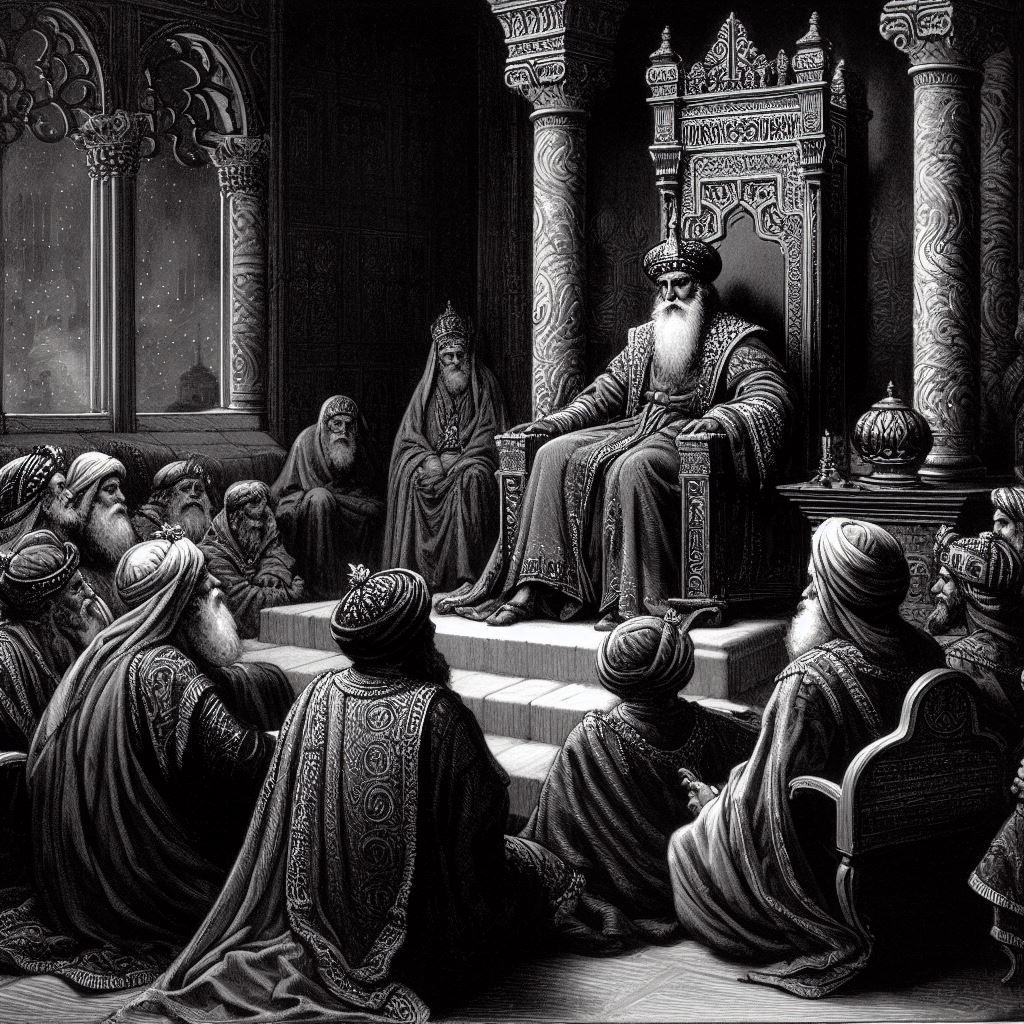
The Magi & King Herod

December 6, 2023

By Fr. Victor Feltes

When Jesus was born in Bethlehem of Judea, in the days of King Herod, behold, Magi from the east arrived in Jerusalem, saying, “Where is the newborn king of the Jews? We saw his star at its rising and have come to do him homage.”

This is how the second chapter of St. Matthew’s Gospel introduces us to the noble Magi and the infamous King Herod. Their good and bad examples in the story of Christmas present much for us to learn from and reflect on.

The gospel tells us the Magi were astrologers from the East who saw a celestial sign which firmly convinced them the heir to the Jewish throne was born. The Magi were so convinced by this sign that they packed up valuable gifts and traveled far from their home to honor this newborn king. What are magi? “Magus” is the title which ancient civilizations east of Israel, such as the Persians and the Babylonians (or Chaldeans), bestowed upon their individual men of wisdom. These experts, their various teachers, priests, physicians, astrologers, soothsayers, Magicians, or interpreters of dreams, were collectively called magi.

How did the Magi who journeyed to Herod know how to recognize Heaven’s sign? In the 6th century before Christ., King Nebuchadnezzar of Babylon came and laid siege to Jerusalem. In response to his people’s unfaithfulness, God permitted them to be conquered and many Jews were taken east into Babylonian Captivity. The Babylonians reasoned that conquered peoples were more productive alive than dead and less likely to stage a successful rebellion when resettled outside of their homeland. Thus the Jews’ relocation deeper into the Babylonian Empire.

At that time, King Nebuchadnezzar told his chief chamberlain to bring in some of the Israelites of the royal line and of the nobility. He said, “They should be young men without any defect, handsome, proficient in wisdom, well informed, and insightful, such as could take their place in the king’s palace.” He was to teach them the language and literature of the Chaldeans. Among these chosen young men was the Prophet Daniel, who would go on to give prophesies about the coming of Christ recorded in the Old Testament book which bears his name.

Impressed by Daniel’s wisdom, Babylonian King Nebuchadnezzar “advanced Daniel to a high post… made him ruler of the whole province of Babylon and chief prefect over all the wise men of Babylon.” Perhaps Daniel’s prophetic wisdom, handed down for centuries, enabled these wise Magi from the East to recognize the significance of the starry sign and inspired them to journey to Jerusalem. The Bible does not record the Magi’s names, but a tradition hands down their names to us as Caspar, Melchior, and Balthasar.

Behold, Magi from the east arrived in Jerusalem, saying, “Where is the newborn king of the Jews? We saw his star at its rising and have come to do him homage.” When King Herod heard this, he was greatly troubled, and all Jerusalem with him.

More than thirty years prior to the arrival of the Magi, the pagan Roman Senate had appointed Herod as the region’s king. He is known as “Herod the Great” because of his vast territories and many building projects, including new cities, massive fortresses, and a complete renovation of the Jewish temple in Jerusalem. Herod heightened the architectural beauty of the temple to such greatness like it had in the days of King Solomon. However, Herod was not greatly loved.

He imposed extremely harsh taxes for the ancient world and ruled ruthlessly, executing many of his political opponents and family relatives, including three of his sons and at least one of his ten wives. No one ever mistook him for being the Messiah; besides being more of a pagan king than a Jewish one, Herod was not a descendant of Kind David like Scripture said the Christ would be. So when foreign Magi came to Jerusalem seeking the Messiah, word got around and King Herod became greatly troubled and all Jerusalem with him.

Why were the whole of Jerusalem troubled (that is, “stirred or agitated as in roiling water”) along with King Herod by this news of Christ’s possible coming? Because they knew Herod better than the foreign Magi did. The Magi had swooped in as innocent doves, but Herod was a cunning serpent. The Jews of Jerusalem realized King Herod was not eager to freely hand over power. Even if the Messiah had indeed been born, violence or a civil war would likely follow.

Assembling all the chief priests and the scribes of the people, [King Herod] inquired of them where the Messiah was to be born. They said to him, “In Bethlehem of Judea, for thus it has been written through the prophet: ‘And you, Bethlehem, land of Judah, are by no means least among the rulers of Judah; since from you shall come a ruler, who is to shepherd my people Israel.’”

There is a Jewish joke that two rabbis together produces three opinions, but here all of the priests and scribes assembled by King Herod cite the Old Testament Prophet Micah to identify Bethlehem as the promised Messiah’s birthplace. Maybe Herod asked them subtly amongst many other questions, inquiring about the Messiah’s birth in such a way that they did not suspect his motives. But if they grasped what Herod was after and why, then this was the first time Jewish religious leaders betrayed the Christ. Perhaps they reasoned that if God’s Anointed One had indeed been born in Bethlehem, then God would protect him, “For if the righteous one is the son of God, God will help him and deliver him from the hand of his foes.” God did protect the Infant Jesus, but Herod ended the precious lives of innocents in the little town of Bethlehem.

Our God will win in the end, all evil will ultimately be defeated, but we must not go along to get along in this world by cravenly cooperating with evil. Imagine if those religious leaders had refused to tell wicked Herod where the Messiah would be born; then they might now be celebrated throughout Heaven and earth as men who defended and died for Christ, instead of Bethlehem’s baby boys. We are all called to practice courage as Catholic Christians. Remember that it is better to innocently suffer or even die for Christ than to die as one of his enemies or betrayers.

I do not know whether the chief priests and scribes of the people knowingly betrayed the infant Christ, but there is no record in the Gospels of any of them going in search of the child. The Magi traveled hundreds of miles to find him, but it appears the priests and scribes never went the six miles from Jerusalem to Bethlehem in search of him. Beware of practicing your faith so feebly that you forego making the simplest sacrifices in service of Christ.

Then Herod called the Magi secretly and ascertained from them the time of the star’s appearance.

What was the star which the Magi saw? There are several interesting theories. It may have been one of the planets in a meaningful position, or perhaps a pair of planets combining their light. This is a possibility since the ancients deemed the other planets in our Solar System to be ‘wandering stars.’ Our word “planet” comes from the Greek word for “wanderer,” because the planets wander across the constellations. Some have suggested the Christmas star was a comet or a star’s supernova, but whatever the star was it was something too subtle for Herod to recall. In the ancient world, comets were regarded as foreboding omens and some supernovas have been notably bright to eye at night in recorded human history; however, the star which arose at Jesus’ birth was not of particular note to Herod and his royal counselors. This is why Herod must ascertain from the Magi the time of the star’s appearance.

As God once said, “As the heavens are higher than the earth, so are my ways higher than your ways and my thoughts than your thoughts.” This world and worldly people miss what is important, and what the world pays attention to are often fleeting things. So many things talked about today will be forgotten by next week, discarded like last week’s newspaper. Sports, movies, music, TV, social media, advertising, celebrities, politicians, and even much of the 24-hour news cycle will not show you what really matters. God tells us through St. Paul, “Do not conform yourselves to this age, but be transformed by the renewal of your mind, that you may discern what is the will of God, what is good and pleasing and perfect.” If you follow the nightly news you might naturally conclude that nothing good is happening anywhere, but remember that God is always quietly at work. I believe that many of the most important things which happened in the world today are good things, and things which the world will not notice, like the appearance of the star which announced our Savior’s birth, or a caravan of Magi beginning a journey west to meet God.

Herod called the Magi secretly and ascertained from them the time of the star’s appearance. He sent them to Bethlehem and said, “Go and search diligently for the child. When you have found him, bring me word, that I too may go and do him homage.”

Though their meeting was secret, Jesus says “nothing is concealed that will not be revealed, nor secret that will not be known.” Looking back, we can see that the Magi were sincere and faithful and sought to honor the Christ Child, while Herod was a cynical liar who sought to destroy him. No good or bad secret, of yours or mine or others’, will not be revealed in the end. St. Peter writes that “the day of the Lord will come like a thief… and the earth and everything done on it will be found out. Since everything is to be dissolved in this way, what sort of persons ought you to be? Conducting yourselves in holiness and devotion.” At the Presentation in the Temple, Simeon had told Mary that through her Son ‘the thoughts of many hearts would be revealed.’ That was true in the lives of King Herod and the Magi. In your personal response to Jesus Christ, your own heart is revealed, too.

After their audience with the king [the Magi] set out. And behold, the star that they had seen at its rising preceded them, until it came and stopped over the place where the child was. They were overjoyed at seeing the star, and on entering the house they saw the child with Mary his mother.

Notice that the Holy Family is no longer dwelling in a cave or a barn, but inside a house. This was not Christmas night but at least forty days later. We know this because when Joseph and Mary came to present Jesus at the temple, to offer a sacrifice God’s law required following the birth of a firstborn son, they could not afford a yearling lamb, so they offered “a pair of turtledoves or two young pigeons” instead, as the law of God permitted. And their humble gift pleased God. If the Magi had already visited them and provided their gift of gold, the Holy Family would have had the ability to purchase the more expensive lamb instead. The Magi arrived in Bethlehem between forty days and two years after Christmas. We know that upper bound from the cruel command which Herod issues later in hopes of destroying the Christ Child, targeting baby boys “two years old and under, in accordance with the time he had ascertained from the Magi.”

Upon entering the house the Magi unsurprisingly find the child with Mary his mother. She is the Lord’s new ark, his throne, the seat of Wisdom Incarnate. Sadly, some Christians consider her a harmful distraction from Jesus. However, the mother of the Christ is no hindrance to Jesus, for when you meet Mary she will joyfully show her Son to you.

[The Magi] prostrated themselves and did him homage. Then they opened their treasures and offered him gifts of gold, frankincense, and myrrh.

Unlike Herod, who grasps and clutches what he has, the Magi freely give gifts to Jesus. Three gifts of the Magi are mentioned by St. Matthew since they reveal who Jesus is; gold for a king, frankincense for a high priest and the true God, and myrrh resin used for external embalming, for one who has come to die. But the Magi’s best gift was the gift of themselves. What Christmas gift will you prepare for Jesus this Advent?

The Magi prostrated themselves, laying down on the floor with their faces towards the ground before Little Jesus in homage. Did they feel embarrassed to be bowing down to a baby, a child of poor parents in a humble house, far from the trappings of obvious power and glory? The Magi had deep faith in who Jesus was and faith in his future glory so they did not refuse to be seen paying him respect and honor. Do you feel embarrassed to be seen praying or honoring Jesus? Jesus says, “Everyone who acknowledges me before others I will acknowledge before my heavenly Father. But whoever denies me before others, I will deny before my heavenly Father.” Let us not be ashamed to acknowledge Jesus in others’ presence.

Having been warned in a dream not to return to Herod, [the Magi] departed for their country by another way.

These Magi took signs seriously. They previously followed such one sign hundreds of miles from home and it led them to the Christ Child. So they heed this message and bypass Herod on their trip back home. In that dream, the Magi might not have been warned that the Christ Child was in danger. Recall how Bethlehem is only six miles away from Jerusalem, just a two or three hour walk. If the Magi had sensed that Jesus was in danger, wouldn’t they have warned the Holy Family before they departed to caravan back east? Perhaps they did warn the Holy Family of possible danger, but Joseph and Mary simply did not know what to do next. But if this inspired dream told the Magi not to return to Herod without revealing the reason why, the Magi’s obedience provides a beautiful lesson for us.

Jesus and his Church teach us many precepts about what we must or must not do, what we should or should not do. There are good reasons behind these commands, and it is good to explore these teachings and ask questions to better understand them, but there will be times in your life when you are called to be faithfully obedient even before you fully understand. The Magi’s obedience served Jesus and likely saved the Magi’s lives. Your obedience to God will bless you, and more than you may realize.

[The Magi] departed for their country by another way.

They came to Jesus from one direction, but they departed for their country by another way. Servant of God Bishop Fulton Sheen makes a famous observation about this fact. He writes that it is fitting that the Magi left this way, since “no one who ever meets Christ with a good will returns the same way as he came.

When Herod realized that he had been deceived by the Magi, he became furious. He ordered the massacre of all the boys in Bethlehem and its vicinity two years old and under, in accordance with the time he had ascertained from the Magi.

Did Herod actually believe that the Christ Child has been born in Bethlehem? Probably not, but he was afraid that other people would believe it, rally around this child, and attempt to overthrow him. He reasoned that, ‘If all the baby boys in Bethlehem are dead, none of them can rise up against me as a rival.’

His calculation is like that of Pharaoh’s at the start of the Book of Exodus. Pharaoh said to his people in Egypt, “See! The Israelite people have multiplied and become more numerous than we are! Come, let us deal shrewdly with them to stop their increase; otherwise, in time of war they too may join our enemies to fight against us….” After enslaving the Hebrews, Pharaoh commanded all his people to “throw into the Nile every boy that is born, but you may let all the girls live.” Both Herod and Pharaoh aimed to prevent a future rebellion through the murder of baby boys. As ancient Machiavellians, they were willing to do great evils in hope of gaining good outcomes.

To the Romans, St. Paul records that ‘we are accused and some claim we say that we should do evil that good may come of it.’ Denying their false charge, he says, “Their penalty is what they deserve.” Remember that Christians are never allowed to do evil or sin in the hopes that good things will result. Good ends do not justify sinful means. Beware of how readily any evil deed can and will be justified with practical arguments.

When [the Magi] had departed, behold, the angel of the Lord appeared to Joseph in a dream and said, “Rise, take the child and his mother, flee to Egypt, and stay there until I tell you. Herod is going to search for the child to destroy him.” Joseph rose and took the child and his mother by night and departed for Egypt. He stayed there until the death of Herod, that what the Lord had said through the prophets might be fulfilled, “Out of Egypt I called my son.”

The Holy Family remained in Egypt until Herod’s death. Then Herod’s kingdom was divided among three of his sons: Archelaus who ruled Samaria and Judaea, Philip who ruled the Golan Heights, and Herod Antipas who ruled Galilee and the east bank of the Jordan River. This Herod Antipas is the Herod who would go on to murder St. John the Baptist and meet Jesus during the Passion, mocking him, dressing him in a splendid robe, and sending him back to Pilate. Fathers are important. I like to believe the sons of the Magi went on to find saving faith in Jesus Christ, then these sons would have born fruit following the example modeled by their fathers.

In conclusion, I invite you to take one or two of these ideas to contemplate and pray with. “Do not conform yourselves to this age, but be transformed by the renewal of your mind, that you may discern what is the will of God, what is good and pleasing and perfect.” What worldly things do you need to pay less attention to? What heavenly things do you need to pay more attention to? “The day of the Lord will come like a thief… and the earth and everything done on it will be found out.” So “what sort of persons ought you to be? Do not do evils in the hope that goods will follow. Do not justify your sins with rationalizations like Herod. Anyone searching for excuses can easily find them forever. Remember how simple obedience saved and blessed the Magi. We are called to be courageous and go extra miles for Christ. How can you better acknowledge him before others? In your personal response to Jesus, your heart will be revealed. Ask Mary’s help in this, for believers draw closer to her Son with her. What Christmas gift will you prepare for Jesus this Advent? Remember that the greatest gift to him is yourself. Embrace this Advent season with our Lord, for “no one who ever meets Christ with a good will returns the same way as he came.”