Our vestibule’s support beam is two-thirds installed, our new bathroom’s drywall is up, and our stained boards await their installation. (Click Images to Enlarge)


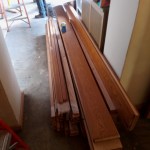
Our vestibule’s support beam is two-thirds installed, our new bathroom’s drywall is up, and our stained boards await their installation. (Click Images to Enlarge)
2nd Sunday of Lent
By Fr. Chinnappan Pelavendran

God’s call is personal; it is an invitation to enter into his holiness with an attitude of faith and total trust in God. As we enter the second week of Lent, our task is to continue to examine our hearts and change ourselves to be worthy of his glorious paschal mystery. As human beings, we do not like to change and we resist any change as much as we can. However, change is a part of our life. We know that we are pilgrims on a journey to a more permanent dwelling place. A place of total union with our God.
In Genesis 12, God tested Abraham to leave his father’s land for an unknown land. Abraham through his obedience demonstrated that he loved God more than his father’s land. In the first reading as we saw today, God tested Abraham again to see how convinced and strong his faith was by asking him to sacrifice the son of promise. Abraham was a man of great faith and his faith led him to the mountaintop, a place of great encounter with God. It took Abraham three days to journey to the mountaintop at Moriah for the sacrifice and within this period Abraham never changed his mind for his faith remained firm.
God wants you to make the first step with determination and he will come and take control. Remember not to entertain distractions and discouragements in your journey to the mountain-top, Abraham had to leave his servants at the foot of the mountain while he climbed with Isaac alone to avoid distractions. When we keep our faith strong in God and we are ready to make enormous sacrifices towards meeting Him at the mountaintop, then we can be sure that God will be on our side and as the second reading says if God is on our side nobody can be against us. Even when we make mistakes as humans, God would still forgive us since Christ has died to spare us and he stands at God’s right hand interceding for us.
In the Gospel reading, Jesus leads his disciples up a high mountain to witness his transfiguration. Elijah and Moses appear and this demonstrates that Jesus is the fulfillment of the prophets and the law. God speaks from heaven and this gives the disciples clarity in their vocations. Peter wants to stay in the moment. Peter wants to build monuments and to stay. Soon after the events at Mount Tabor, however, Jesus begins to lead his disciples to Jerusalem and the cross. You see, Jesus leads his disciples to another mountain, Golgotha, where all of humanity is transfigured through his passion, death, and resurrection. For Abraham, the undiscovered country seems to be a stretch of land that God would give to him and his descendants. For the disciples of Jesus, the undiscovered country is our salvation, the promise of resurrection and everlasting life.
As we make our way with Jesus from our Mount Tabors to our Good Fridays, we are invited to never lose sight of where Jesus is ultimately leading us. Our destination is our Easter hope. To get there, we need to know who we are, and where we are going, and recommit ourselves to following Jesus who is the Lamb of God who takes away the sins of the world.
2nd Sunday of Lent
By Fr. Victor Feltes

How could Abraham do what he did? He fully trusted in God, and through this trust he and us were greatly blessed. God had promised descendants to Abraham through his son, Isaac, declaring, “Through Isaac descendants shall bear your name.” Because of the miraculous birth his son and other experiences with God, Abraham believed the Lord could and would keep all his promises.
So when Abraham reached the mountain of sacrifice, where the Jewish temple would be built about 900 years later in Jerusalem, he told his servants (in a passage omitted from our first reading): “Stay here with the donkey, while the boy and I go on over there. We will worship and then we will come back to you.” The Holy Spirit tells us in the Letter to the Hebrews that Abraham “reasoned that God was able to raise even from the dead, and he received Isaac back as a symbol.”
After Jesus was transfigured and proclaimed by the Eternal Father to be his beloved Son, “as they were coming down from the mountain, [Jesus] charged [Peter, James, and John] not to relate what they had seen to anyone, except when [he] had risen from the dead. So they kept the matter to themselves, questioning what rising from the dead meant.” The sacrifice of Isaac, in which Abraham’s son was spared, foreshadows the sacrifice of Jesus offered by God the Father for us.
Upon staying the hand of Abraham, the Lord’s messenger said, “I know now how devoted you are to God.” After Christ’s sacrifice, we now know how devoted God is to us. St. Alphonsus Liguori agrees with St. Thomas Aquinas in saying, “God loves man just as if man were His god, and as if without man He could not be happy; ‘as if man were the god of God Himself, and without him He could not be happy.’”
Such is God’s devotion to us. And brothers and sisters, as St. Paul writes, “If God is for us, who can be against us? He who did not spare his own Son but handed him over for us all, how will he not also give us everything else along with him?” So let us fully trust God as Abraham did, and through this well-founded trust be greatly blessed and greatly bless others as well.
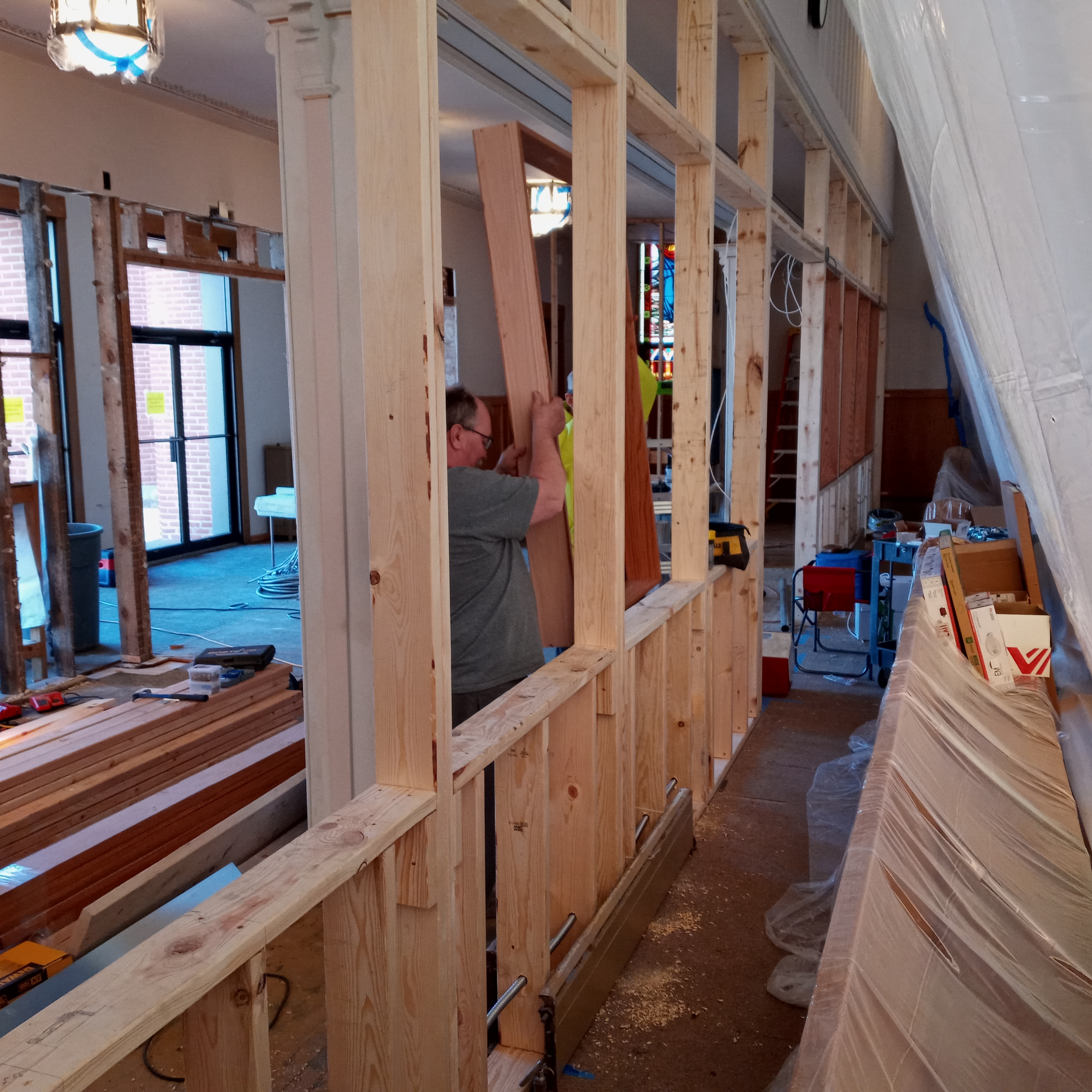
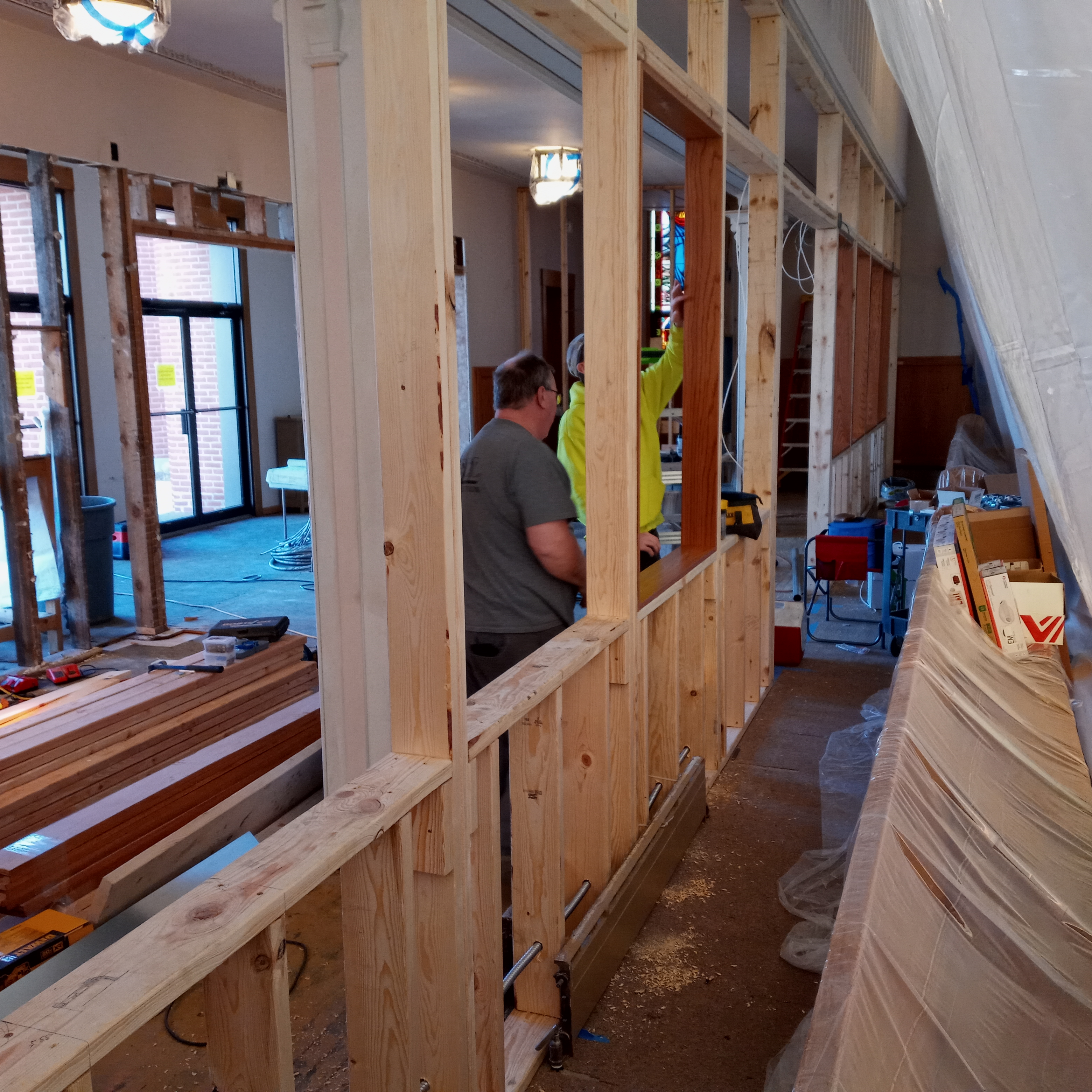
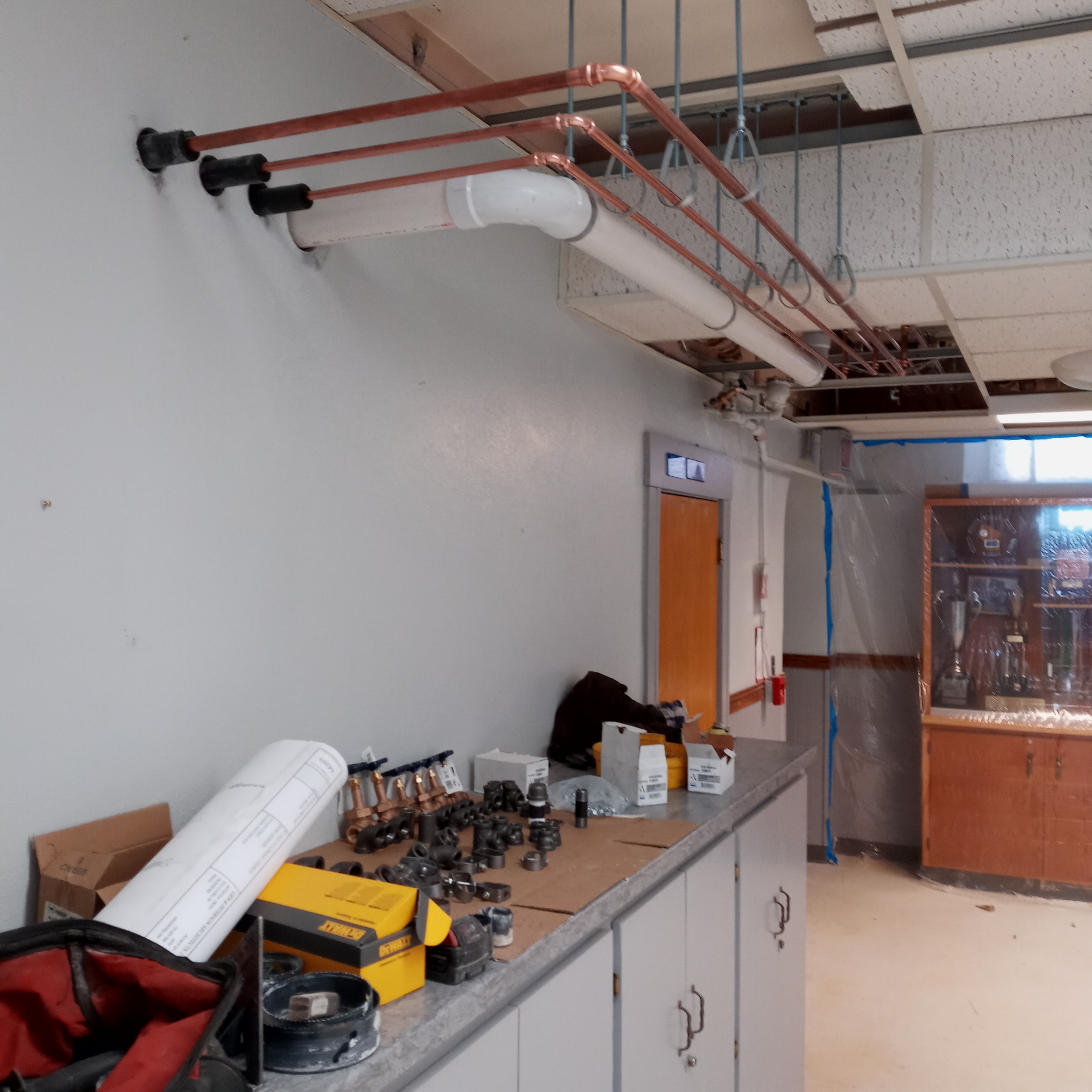
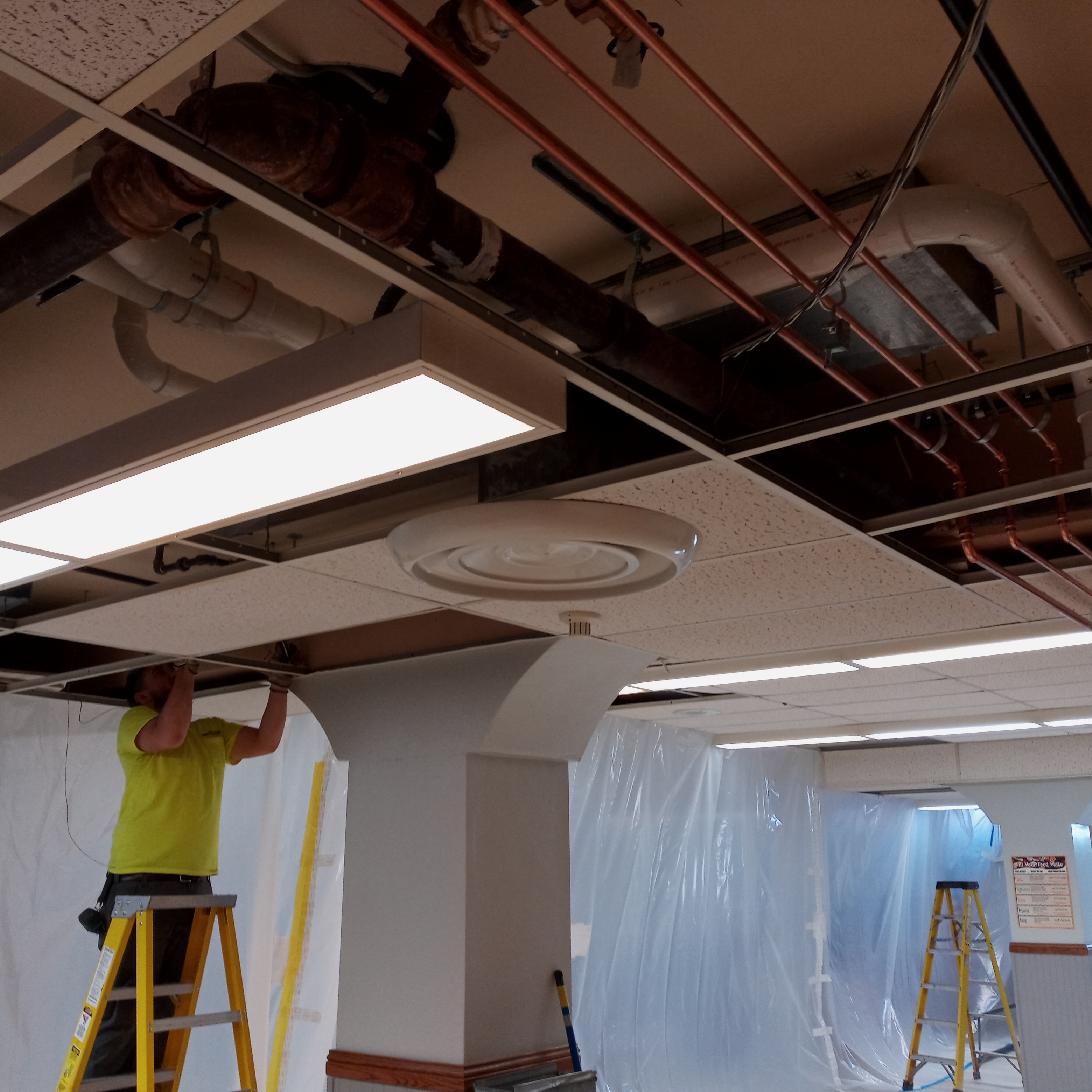
Our plumbing and electrical installation has progressed and the installation of our varnished trim nears. (Click Images to Enlarge)



1st Sunday of Lent
By Fr. Victor Feltes

God loves us despite our sins. Sin divides people from God and one another. So to forgive our sins, to heal our divisions, and to make us saints, God the Father sends his Eternal Son. Jesus Christ, the Son of God and Son of Mary, suffers, dies, and rises again to achieve our reconciliation. Through baptism into Christ and his Church we can be saved from sin and death, similar to the story of Noah whose family is saved through the Flood inside of the ark. As God the Holy Spirit drove Jesus out into the desert so he guides his Church, forming saints in Christ’s likeness.
This is an expression of what today we call the gospel. God loves us and wants to deliver us from sin and death and to bless us in his Church through Christ’s saving sacrifice. This is our Faith. This is the Good News both you and I are called to share with others. Who will you invite to receive the gifts of God you have known and enjoyed? If you are open to it, the Holy Spirit will arrange opportunities for you to do so.
Today we hear St. Mark recount how “Jesus came to Galilee proclaiming the gospel of God: ‘This is the time of fulfillment! The Kingdom of God is at hand! Repent, and believe in the gospel!’” This is how Jesus preached at the beginning of his public ministry years before his Passion, Death, and Resurrection. We have an idea of what “the gospel” means now, but what was “the gospel of God” that Jesus called people to believe in before his saving sacrifice had happened?
All of the New Testament writers wrote in Greek. The word our English bibles translate as “gospel” is the Greek word “euangelion” (εὐαγγέλιον). Euangelion is a compound word which combines eu which means “good” and angelia meaning “announcement.” In the ancient Greco-Roman world, the news of a new ruler coming to power or of some major military victory were proclaimed as euangelion. In that cultural setting, Jesus proclaims the great announcement that God’s Kingdom is near.
A divine victory was imminent. Time had come for fulfillment of God’s Old Covenant promises. The will of God would soon be done more fully on earth as it’s done in heaven. Jesus says, “This is the time of fulfillment! The Kingdom of God is at hand! Repent, and believe in the gospel!” Jesus is calling his hearers to believe that things can get better.
Pessimists imagine this world is forever getting worse. But if that were true, if things were always becoming worse and worse what good would there remain for any of us to see now? How could any of us still be left alive? Things can get worse or they can get better. In days past, at the beginning of his public ministry, and now, at the start of this season of Lent, Jesus calls for repentance and faith in the gospel. He calls us to believe that we can become more perfectly like himself; to believe this world around us, as a result of grace and cooperation with Christ, can be more fully God’s Kingdom come.
When he came to his hometown, the people of Nazareth were unwilling to believe in Jesus and what he preached. They refused to believe that Jesus could change their lives and change their world. “So,” St. Mark records, Jesus “was not able to perform any mighty deed there, apart from curing a few sick people by laying his hands on them. He was amazed at their lack of faith.” Peoples’ trust and openness was a factor in how much they could receive from Christ.
What could Jesus do in us and in our world beginning in this Lent? Jesus calls you to “repent and believe in the gospel!”
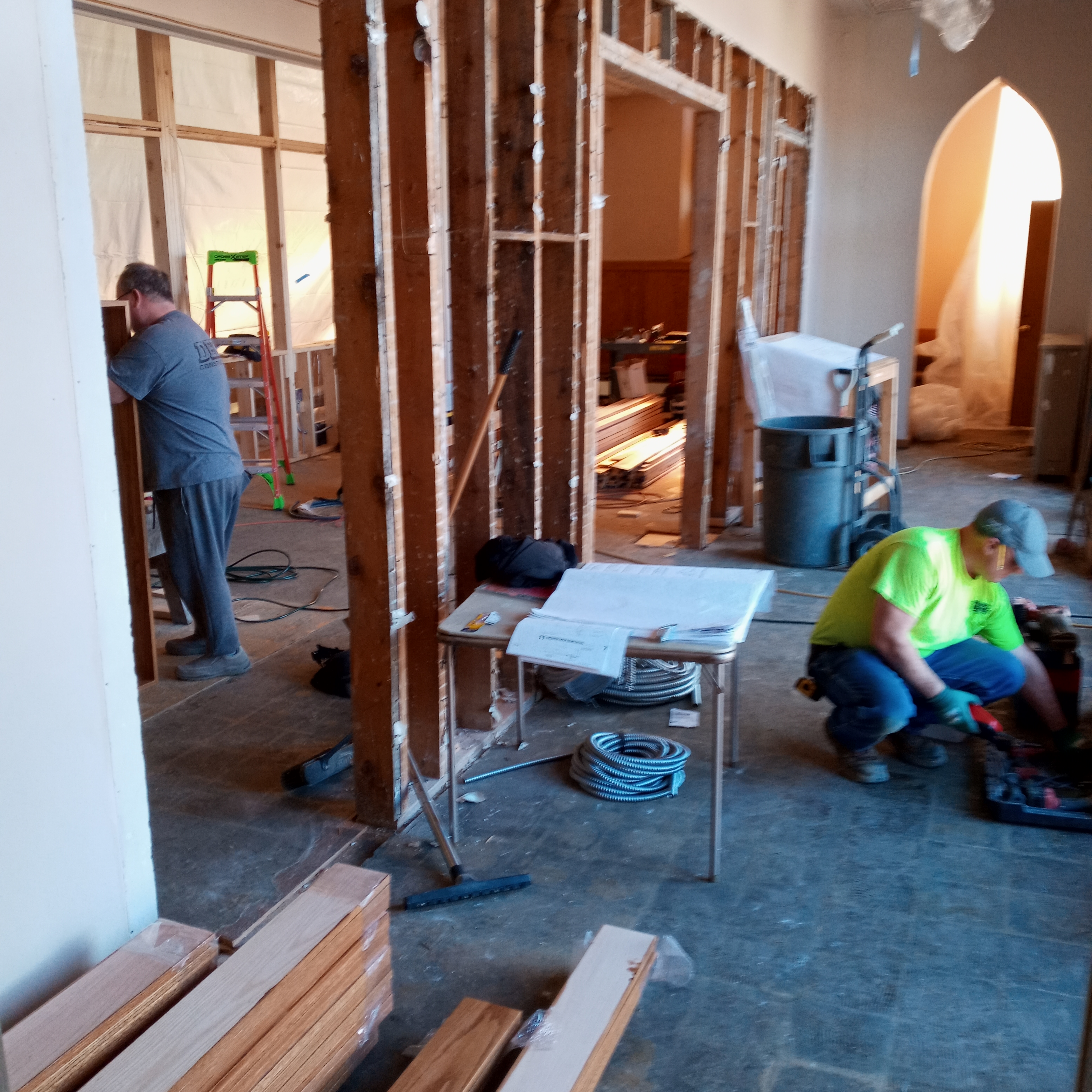
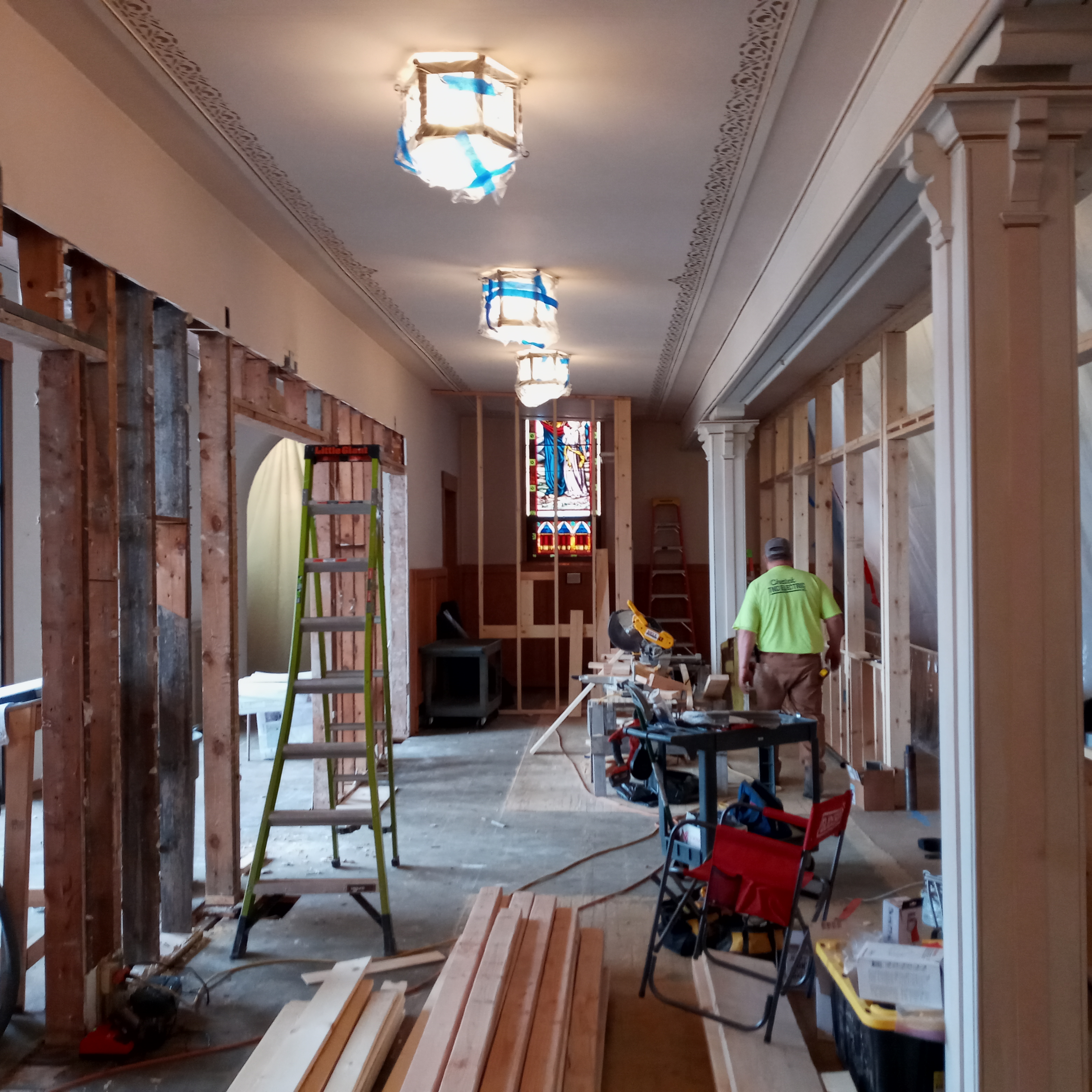
There’s progress in our plumbing and electrical work while Dell Construction is fashioning our wood trim at their shop.
(Click Images to Enlarge)




6th Sunday of Ordinary Time
By Fr. Victor Feltes

The gospels record how a man with some advanced form of skin disease once came to Jesus in one of Israel’s towns. Seeing Jesus, he approaches and kneels and bows beseeching him, “Lord, if you wish, you can make me clean.” Our Lord, who can read human hearts, probably knows how much this particular miracle will cost him, but he is moved with compassion. Jesus reaches out his hand, touches the leprous man and says, “I do will it. Be made clean.” And the leprosy left him immediately.
One can imagine that man’s joy and excitement. He wants to tell everyone about his miracle! However, Jesus warns him sternly, “See that you tell no one anything.” Apparently, at this point in his public ministry, Jesus does not want to attract too much attention too quickly. Instead, Jesus tells the cured man, “Go, show yourself to the priest and offer for your cleansing what Moses prescribed; that will be proof for them.” What did this offering prescribed in the Mosaic Law look like?
We read in the Old Testament Book of Leviticus: “This is the law for the victim of leprosy at the time of his purification. He shall be brought to the priest, who is to go outside the camp to examine him.” This reference to ‘going outside of the camp’ dates back to the days when the Hebrews were still wandering in the Sinai desert. “If the priest finds that the sore of leprosy has healed in the leper, he shall order the man who is to be purified, to get two live, clean birds, as well as some cedar wood, scarlet yarn, and hyssop.” So this offering involves a curious collection of items: two birds, some cedar, scarlet yarn, and at least a branch of hyssop plant.
Then Leviticus says, “The priest shall then order him to slay one of the birds over an earthen vessel with spring water in it. Taking the living bird with the cedar wood, the scarlet yarn and the hyssop, the priest shall dip them all in the blood of the bird that was slain over the spring water, and then sprinkle seven times the man to be purified from his leprosy. When he has thus purified him, he shall let the living bird fly away over the countryside.”
Jesus told the man he cured to perform to this peculiar ritual saying, “that will be proof for them.” But what would it prove? First, it would demonstrate to the Jewish leaders at the Temple that Jesus had not come to transgress God’s Law but to fulfill it. Also, the cured man himself would be living proof of Jesus’ greatness, for the miracle of a leper being suddenly healed is documented only twice in the Old Testament (i.e., the case of Moses’ sister Miriam and that of Naaman the Syrian). Yet ultimately, this ritual provides proof for all people that Jesus Christ’s saving sacrifice had been long-foreseen by God.
The scarlet yarn, the wood, and the hyssop would each have a role in his Passion. The scarlet yarn foreshadows the robe in which they clothed him. That cedar wood points to the Cross connected to his death. And St. John’s Gospel notes how a sprig of hyssop was employed to lift a sponge of sour wine up to Jesus’ lips. The two birds in that purification ritual were of symbolic importance as well. One bird is slain, while the other is spared. That second bird, after being dipped in the water and the blood of its brother, is set free. That spring water, risen from the earth, points to the liberating water of Christian baptism which receives its power from Jesus’ blood.
In addition to its commandments regarding sometimes contagious skin diseases, the Book of Leviticus has rules for evaluating, quarantining, and purifying fungal infections of houses, fabrics, or leather. These commandments were useful in helping protect peoples’ physical health. But these teachings also illustrate, in an allegorical way, lessons about sin in our lives. Mold in your home can harm the health of your whole household. Knowing this, people take black growths on their walls seriously. How seriously do you take diseases in your flesh? How seriously do you take the sins in your soul?
If you had been a leper back then, would you have come to Jesus? Lent begins this week, so decide what you will you do. Go, show yourself to the priest in Confession and faithfully offer the holy Sacrifice of the Mass. Remember and honor the scarlet yarn, the wood, and hyssop of the Innocent One who took your place and through whom you can be cleansed and freed.
By Fr. Victor Feltes
 In Jack’s final months, I regularly encountered him in his room at Dove Nursing Home. I always found his wife, Mary, there at his side. Like our Blessed Mother Mary or St. Mary Magdalene at the Cross, she faithfully supported Jack through his Passion. He was grateful to receive Holy Anointing and Last Rites, grateful for the consolation of prayers and blessings, and most especially grateful for the precious gift of Jesus in the Holy Eucharist I brought him. Jack was peaceful, prayerful, and well-prepared to die, ready to commend his spirit to God.
His wife Mary tells me that on Jack’s final Friday before God took him to himself, they were praying the Rosary together. Jack was too weak by then to speak very much, but he would join in the first words of the Rosary’s greatest prayer: “Our Father… Our Father… Our Father.” The “Our Father” is known as “The Lord’s Prayer” because it is how our Lord Jesus Christ taught his disciples how to pray. Jesus’ prayer models what he wishes us to desire and to ask for.
One Friday afternoon outside Jerusalem, while darkness covered the whole land, Jesus hung dying on his Cross. Before breathing his last breath, Jesus cried out in a loud voice, “Father, into your hands I commend my spirit!” He prays to God his Father, who is now our Father too. Jesus desires that God’s name would be hallowed; that is, known as holy and loved by all.
Though Jesus is both King of the Jews and the King of Kings, he serves and dies to help the reign of God’s Kingdom come. As Jesus sees and suffers the consequences of our sins, he longs that his Father’s will would be done on earth as it is in heaven. Christ offers his Body on the Cross as he did at the Last Supper. He once declared, “the Bread that I will give is my Flesh for the life of the world.” He gives this Bread to his Church daily at every Holy Mass.
Jesus sacrifices himself to forgive us our trespasses hoping and insisting that we would likewise forgive those who trespass against us. Jesus wants us reconciled vertically to God and horizontally to each other, uniting heaven and earth and East and West in the likeness of the Cross. Jesus faces temptation to save us from temptation. He endures this world’s evil deliver us from evil. So you see, the Our Father prayer Jesus urges us to pray, reflects the great blessings the Lord wills for us.
St. Paul proclaims that “we who were baptized into Christ Jesus were baptized into his death.” And “if we have grown into union with him through a death like his, we shall also be united with him in the resurrection.” It is right that we should offer prayers for Jack’s soul, that he may be perfectly pure to stand before our holy God with all the saints and angels in heaven. Yet we have a great and calm confidence for Jack, that he who was united to Jesus and devoted to our Father will share in Christ’s resurrection to glory. Amen.
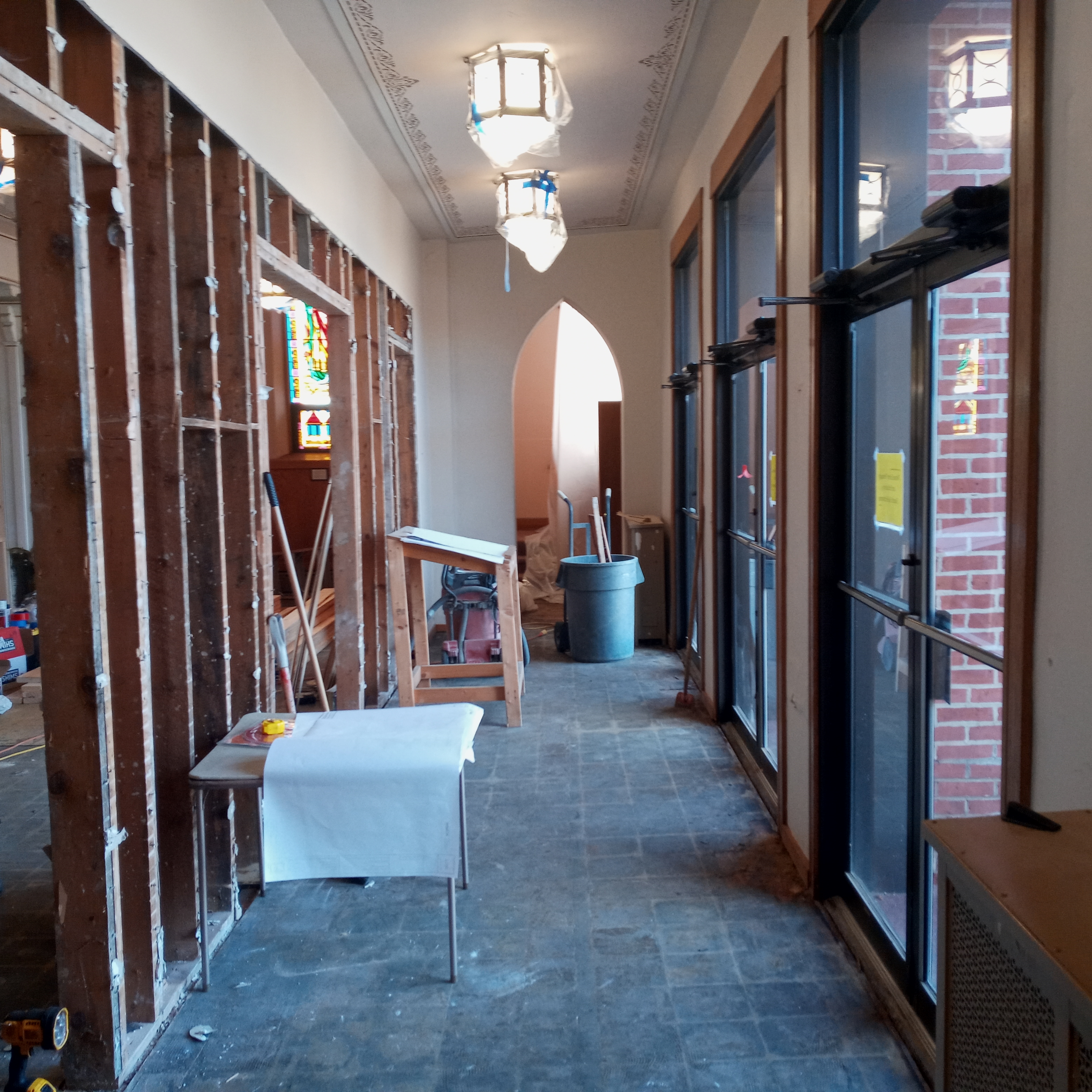
Our back wall’s demolition has begun and wood frames for our vestibule new wall and 1st floor bathroom are installed. Our carpet has been taken-up, revealing the very old tile beneath. Stay tuned for further updates. We plan to have a renewed and expanded vestibule by the Wednesday of Holy Week. (Click Images to Enlarge)


5th Sunday in Ordinary Time
By Fr. Victor Feltes

This Sunday’s readings feature Job, Paul, and the mother-in-law of Simon Peter. What do these three people have in common? Let’s consider each in turn.
In our first reading we hear from Job who, like Jesus Christ and Mother Mary, suffers greatly despite his innocence. “I have been assigned months of misery,” he says, and troubled nights have been allotted to me. My days [swiftly] come to an end without hope.” At one point, Job’s wife even tells him to “curse God and die!” Yet, despite his painful, honest questions, Job never disobeys. He never renounces the Lord.
Next we hear the Apostle Paul telling the Corinthians how and why he preaches the gospel. Paul insists that preachers have a right to payment for their work, just like others who do valuable labor. He asks, “What then is my recompense?” What is his repayment or reward? “That, when I preach, I offer the gospel free of charge so as not to make full use of my right in the gospel.” What is Paul saying? How is he repaid by not getting paid? Paul says he makes himself “a slave to all so as to win over as many as possible… All this I do for the sake of the gospel, so that I too may have a share in it.”
Lastly, we hear the story from Mark’s Gospel about Simon Peter’s sick mother-in-law. She lays in bed in Capernaum enduring a severe fever. Having just cast out a demon at the synagogue, when Jesus enters the nearby house of Simon Peter and Andrew along with James and John, they immediately tell him about her condition. Jesus approaches her, grasps her hand, and helps her up. The fever leaves her immediately and she waits on them. It seems she had been eager to serve, only her illness had prevented her. Something which Job, and Paul, and Simon Peter’s mother-in-law have in common (besides all appearing in today’s readings) is sharing a likeness to Jesus.
We see Jesus in our gospel driving out demons and curing the sick. If he had been charging fees for his healings, Jesus might have soon become the richest man in Capernaum. If he had announced that he was the Messiah and called men in the region to take up arms with him, Jesus could have soon been seated upon a Jerusalem throne. Instead, though everyone is looking for him, Jesus withdraws alone to a deserted place to pray. Jesus Christ was not called to be great in worldly wealth and power (in the pattern of Herod, or Pilate, or Caesar) but to be a suffering servant. He had not come to be served but to serve, giving his life as a ransom for many.
This is the path to Christ’s glory, which he calls others to share. So the innocent victim Job undergoes a “dark night” when his physical and spiritual consolations are stripped away. Would he still love God and goodness when no longer tasting their rewards? Through Job’s trials his love is purified to become more like Christ’s in his Passion. And St. Paul, like Jesus, does not labor for earthly riches but takes the form of a slave. He ministers for the love of souls and to share in heaven’s reward which this world cannot equal. And Simon Peter’s mother-in-law is eager to serve as she is able, agreeing with Jesus that it more blessed to give than to receive.
It’s too late in time for your name or mine to be written in the Bible, but if in the end our names appear in heaven’s Book of Life, our Christian lives will have shared some likeness to the life of Jesus Christ.
 Parishable Items