Archive for March, 2024

Encountering Our Risen Lord

March 31, 2024

Easter Sunday
Fr. Victor Feltes

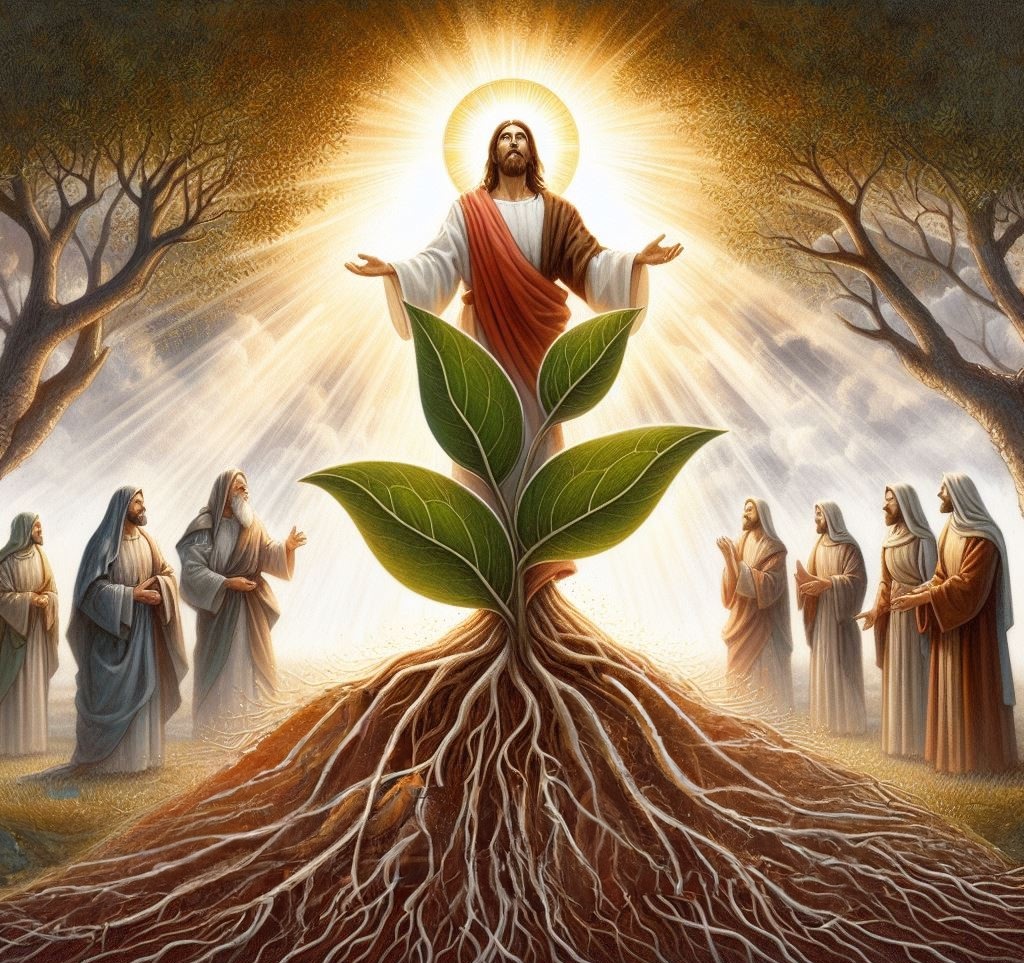
This gospel reading is a curious one to proclaim on Easter Sunday. It’s the one we read on Easter Sunday morning every year: John’s story of Mary Magdalene, Peter, and the Beloved Disciple at the empty tomb. Other gospel reports about Jesus’ resurrection have miracles and appearances of angels or of Christ himself. St. John’s Gospel recounts examples of these on Easter as well; for instance, after where our reading ends, Mary is greeted by Jesus and angels at the tomb, and Peter sees and touches the Risen Lord in the Upper Room. This morning’s gospel reading, however, does not find Jesus and sees no angels or miracles in progress. Mary Magdalene discovers Jesus’ body is missing and runs away distressed. She finds Peter and the Beloved Disciple (traditionally, the Apostle John) and the men run back to the tomb. Both of them go inside but only find burial cloths. They had not yet understood Jesus’ previous remarks nor the Old Testament passages which foretold “that [Christ] had to rise from the dead.” But, when the other disciple went inside the tomb after Peter, “he saw and believed.”

So what convinced him? Was it something about those burial cloths? Was it because the cloth which had covered Jesus’ head was “not with the burial cloths but rolled up in a separate place” with a tender delicacy which a grave robber would not show? Was it because tomb raiders in the ancient world would typically steal fine burial linens and leave the body behind? Was it because a body-snatcher would not peel the dry-blood-caked shroud away from the body to carry away a naked corpse? Perhaps the cloths looked deflated, as though Jesus’ body had vanished or passed through without disturbing them. Or maybe a miraculous image of Jesus’ body had been left behind upon the shroud. Whatever it was, the Beloved Disciple reasoned from what he saw to firm conviction. Was Peter convinced by seeing the same scene? Maybe not. Mary Magdalene was not consoled by her first glances at the tomb. It was later encounters, typically together with other friends of Jesus, which led Christ’s disciples to faith in him as the risen Lord.

Many people come to church on Easter Sunday morning. And this is a good thing. Our Lord is pleased that you are here. On the first Easter Sunday evening, when Jesus Christ appeared in the Upper Room even though he had died for their sins, even though they had previously deserted him, he said to all those gathered: “Peace be with you… Peace be with you.” Many people come to church on Easter Sunday morning. But typically, on the following Sunday, a fewer number attend. Jesus may touch your heart this morning, he may give new insight to your mind, you may “see and believe” in a new way. Or maybe you will encounter Jesus’ empty Easter tomb this morning and walk away unchanged. Remember that it was later encounters, typically together with other friends of Jesus, which led disciples to faith in him as the risen Lord.

Jesus desires a personal relationship with each one of us; a relationship which will bless, console, strengthen, and guide us. A life of daily prayer, weekly worship, and true devotion. Praying to God only when I need something is like talking to a friend only when I want something. If you have been away from Christ, he calling you to return, to draw nearer, so your personal relationship and conviction may deepen. Realize that if Jesus Christ had not been risen, nothing else in life would matter. But since Jesus Christ has been risen, nothing else in life matters as much as this.

Building Community

March 31, 2024

Easter Vigil
By Fr. Victor Feltes

A theme of Easter Sunday was Jesus Christ’s disciples being reunited. When some female disciples find the stone rolled away, an angel announces that Jesus has risen and instructs them to “go and tell his disciples and Peter…” Later, when Jesus himself appears to Mary Magdalene outside the empty tomb, he tells her to “go to my brothers and tell them…” The two disciples on the road to Emmaus would not have returned to Jerusalem if they had not encountered Jesus along the way. And all of the remaining apostles (except for Thomas) were together Easter Sunday evening when Jesus appeared in the Upper Room. Notice that for St. Thomas the Apostle coming to full faith in Christ and accomplishing his Christian calling involved him rejoining the other disciples and sharing in their community. Now Jesus did not need to employ messengers. Post-resurrection, he could have opted to appear to each of his disciples personally, individually. Mary Magdalene, Peter, and Paul each had private first-encounters with the risen Lord. Yet Jesus wants his friends to help share the good news about him with others and he prefers to reveal himself when they are gathered together.

June of last year, our church renovation pledge drive concluded. Since then, your contributions, generously fulfilling those pledges, have been flowing into the parish. This January, we signed the building contract to renovate our vestibule. And tonight we see that project substantially compete, though a few details remain to be finished. In just a nine-month span, St. Paul’s entryway has been transformed, under budget and sooner than we had imagined. I wish to thank God and St. Paul our patron, who helped all of this come together better than we could have planned. And I wish to thank you for your generosity, those of you who served on our committees and all who have contributed to our Inspired by the Spirit campaign. Based upon some back-of-the-envelope calculations I made this afternoon, with the capital campaign monies we have received and at the rate your campaign contributions have been coming in, I estimate we could have all the money needed for our next stage, the renovation of our nave—that is, the front portion of our church—about a year and a half, eighteen months from now, or less.

Our new vestibule is a wonderful thing. The elderly or handicapped who may have stayed away from Mass now have recourse to a first floor bathroom. Parents self-conscious about their babies now have a cry-room space and a first floor changing station. Funeral mourners now have a space for casual visitations onsite, and no longer need to go outside on school days to find a restroom. And now our parish has a natural place to mingle after Mass respecting the prayerful quiet of this sacred space while strengthening bonds of holy friendship between us. The growing and deepening of this community is the greatest reason for our vestibule renovation.

Tonight we are delighted to be initiating through Baptism, Confirmation, and Holy Communion, new Catholic Christians among us. We welcome you and feel great joy that our collective witness has drawn and not repulsed you to full communion with Jesus Christ’s Church on earth. We treasure you and rejoice to share with you the precious gifts of grace and wisdom which we have received from the Lord. But brothers and sisters, we must do more to be inviting and share these gifts.

Jesus wants us, his friends, to help share the good news about him with others and he prefers reveal himself when we are gathered together. An old joke goes, “I don’t know why people say our parish is unfriendly — I always say ‘hello’ to everyone I know.” If you see someone new at Mass, please make them feel welcome. If you would like to organize after-Mass socials for our vestibule, with coffee and doughnuts, or ice cream, or something else to promote community, let me know. Invite a non-practicing Catholic back. Invite a non-Catholic Christian or even a non-believer to come and see. Invite them to come here with you to some weekday or Sunday Mass or to Eucharistic Adoration. Maybe offering to treat them to a coffee or meal after. Pause and ask the Holy Spirit: “Whom are you calling for me to invite here?” Let’s see how many more souls we can help bring into communion with Christ’s Church at next year’s Easter Vigil. If Jesus Christ had not been risen, nothing else would matter. But since Jesus Christ has been risen, nothing else matters so much.

Why Did They Do It?

March 29, 2024

Good Friday
By Fr. Victor Feltes

Why did they do it? Judas, the Jewish leaders, Pilate — why did they send Jesus to his death? Understanding their motives can help us avoid their errors.

Governor Pilate was actually not eager to kill Jesus. He did not want to get involved in that religious squabble. Pilate declared three times that he found no guilt in Jesus, but then people were saying, “If you release him, you are not a Friend of Caesar!” When Pilate’s interests were threatened he acted selfishly rather than doing justice, and condemned to death an innocent man whom he had a duty to protect. We have a responsibility to care for the vulnerable too.

As for the Jewish leaders, Pilate knew that they had handed over Jesus out of envy. Jesus did not belong to their circles but hailed from rural Galilee, and his miracles and teachings were drawing crowds of thousands. He challenged those religious figures’ hypocrisy, their vanity, their neglect of justice, mercy, and faithfulness — the weightier things of the law. And the proud Jewish leaders, instead of despising their sins and repenting, despised and condemned the messenger. We must be humble enough to love Jesus more than our sins.

Why did Judas Iscariot betray him? St. John reveals that Judas carried the apostles’ money bag and used to steal the contributions. In exchange for his betrayal, he accepted thirty pieces of silver, about a month’s wages for a day-laborer, so the greed of Judas was one factor. Yet when he saw that Jesus had been condemned to death Judas tried to return the money, to undo what he had done. It appears that he did not want Jesus to die but wished to force him into a confrontation where he would wield his might and claim King David’s throne. Perhaps he greeted Jesus with a kiss in the garden to conceal his treachery, hoping to soon enjoy power alongside him in luxury. Judas wanted Jesus to be his king but on Judas’ own terms. We need to accept Christ as our Lord according to his will.

So that is why they did it, but why did Jesus do it? Why did Jesus allow himself to be killed? He did it for love. He was obedient unto death because of his love for God the Father and he became our saving sacrifice because of his love for us. The crucifixion is Jesus Christ’s glory because it reveals to everyone for all time his great goodness, holy virtue, and incredible love.

Jesus Our Passover Lamb

March 28, 2024

Good Friday
By Fr. Chinnappan Pelavendran

On Good Friday, Jesus took our place, our shame, our chains, our disfigured personalities, our toils, enslavement, and disgraced. He demonstrated the nature of the human condition through his pains, suffering, and disgrace. By his suffering and death, Jesus took our position. He exchanged our shame with his glory. This is an indescribable love. The passion and death of Jesus is a mystery beyond our comprehension. It is a mystery because it is God’s love for us. We understand bits and pieces, but our minds are too finite to understand the whole thing.

We are also conscious today of the reason Jesus underwent his passion and death for us. The prophecy of Jesus’ passion in our first reading today from the prophet Isaiah tells us:

It was our infirmities that he bore,
our sufferings that he endured. . .
he was pierced for our offenses,
crushed for our sins;
upon him was the chastisement that makes us whole,
by his stripes we were healed.  (Isa 53:4-5)

In the Old Covenant, before an animal was sacrificed in the temple, the priest would put his hand on the animal’s head to signify the sins of the person making the offering being transferred onto that animal which was then offered for his sins. In the New Covenant, our sins went on Jesus during his passion and death. He willingly submitted to the torture of his passion and death to take our sins on himself.

St. John tells us that when Jesus was offered wine on the cross to dull his pain, the sponge was put on a hyssop stick. Hyssop was the plant used by the Hebrews at the first Passover to put the blood around their doors to protect them during the night when the firstborn of the Egyptians died.

When the Passover lamb was killed and prepared for cooking, not one of its bones was to be broken. The soldiers broke the legs of the two crucified criminals next to Jesus to make them suffocate and die, but Jesus had already died so they did not break his legs.

The blood of the first Passover lamb spared the lives of the Hebrews in Egypt; the blood of Jesus our Passover Lamb saves us from the damnation due because of our sins. The Passover lamb had to be consumed and not just killed, and we consume Jesus our Passover Lamb in the Eucharist.

So, let us confidently approach his throne of grace to receive mercy and to find grace when we are in need. Therefore, beloved brothers and sisters, as we celebrate the mystery of the Lord’s passion and death, may God forgive our sins, assist us in our sufferings, and give us the grace to identify with those who suffer.

Eucharist & The Priesthood

March 28, 2024

Holy Thursday
By Fr. Chinnappan Pelavendran

Today we thank Jesus for giving us the Eucharist and the priesthood. Both the Eucharist and the priesthood “were born” during the Last Supper and the two sacraments of the Eucharist and Holy Orders are so closely linked because without the priesthood we would have no Eucharist.

A priest is someone who offers sacrifice. There were many animals sacrificed in the Old Covenant by the Jewish priest, but there is one sacrifice offered in the New Covenant, the sacrifice of Jesus in his priestly offering of himself on the cross. Scripture talked of Christ’s death as a sacrifice because he is the Priest of the New Covenant, “Christ loved us and handed himself over for us as a sacrificial offering to God.”

Jesus gives us priests so that we may have the Eucharist. Jesus does not want our celebration of the Eucharist to be cut off from the rest of our lives. Our celebration of the Eucharist is to affect our entire lives. What kind of an effect does it have on our lives? Jesus washing his disciples’ feet in the context of the last Supper surely teaches us that the Eucharist is linked with service. Our celebration of the Eucharist should lead us to love all our brothers and sisters sacrificially. Our celebration of the Eucharist sends us out from here to love and serve the Lord in others.

Our meeting with the Lord here continues as we love and serve the Lord in others after our celebration here. At the Last Supper Jesus gave his new commandment, “Love one another as I have loved you.” (John 13:34) When you receive Christ in the Eucharist you too are to sacrifice yourself, and in that sense, you become what you eat. Just as Jesus took the bread, blessed it, broke it, and gave it. When we receive the Eucharist we are to allow ourselves to be taken by Jesus, blessed, broken, and given in love for others. In that sense, the words of St. Paul in our second reading become true, “For as often as you eat this bread and drink the cup, you proclaim the death of the Lord until he comes.” (1 Cor 11:26)

Thanks be to God for the Eucharist, the gift of Christ’s Body and Blood. Thanks be to God for priests who continue to make Christ present on our altars in his Body and Blood. And thanks be to God that we can serve others in love.

Let us imitate the self-giving model of Jesus who shares with us his own Body and Blood and who enriches us with his Real Presence in the Holy Eucharist. It is by sharing our blessings – our talents, time, health, and wealth – with others, that we become true Disciples of Christ and obey his new commandment: “Love one another as I have loved you.”

A Thanksgiving Meal With Family

March 28, 2024

Holy Thursday
By Deacon Dick Kostner

Tonight we celebrate the Last Supper a time when Jesus called his disciples together whom he called brothers to share a meal and gift them with the Bread of Life and to commission them as priests and anoint them into the sacred family of the kingdom of God.

As I pondered the significance of this Holy Thursday I came to realize three great spiritual events of that evening. First was the importance of “family” in God’s plan for our salvation and how family is God’s University offering everyone the opportunity to earn a Masters Degree in the Gospel directive of God’s Two Greatest Commandments, “Love of God and Love of Neighbor.” Family teaches us that we need to be humble and wash the feet of not only our children but all we encounter.

Second: Jesus gifted humans with the Bread of Life by offering himself as spiritual food for us to become one in spirit with him through the Sacrament of Eucharist, and commissioned his Disciples to consecrate bread and wine into his own body and blood for distribution to members of his Church, the bride of Christ.

Third: He had such great love for humans that he willingly offered his life up so that the doors to heaven would once more be open so that we could gain everlasting life and live forever with Jesus, in the Kingdom of God. Family takes care of family.

Our culture has downplayed the importance of family, God’s creations of male and female and the importance of children and the parents responsibility to teach them about our creator and the need to mentor them with God’s plan for our salvation. The need to love our neighbor and to help each other through the Good Friday’s we all encounter. We see what happens when humans try to come up with a better plan than God’s plan for our happiness here on earth and everlasting life in the Kingdom of God. Yes, we live in world of suffering but we also live through those sufferings as people of faith in a God who loves us even though we are weak and sinful, and yes not too bright. Why? Because we carry within us the light of Christ, a soul that makes us children of God, made in his image and likeness.

You will notice that I named this reflection “A Thanksgiving Meal with Family.” Holy Thursday Services and the Triduum remind us that we are family and we do give thanks to a God for all the gifts he has bestowed upon us during our lives knowing that through his gift of Jesus, and his Passion and Death, we too can handle rough times knowing that Easter Sunday is coming!

I want to share with you the death story of a lady most of us knew and loved. She was a great mom and wife to Norman and was my first pick to be part of my RCIA program that Father Norm asked me to start back some 20 + years ago. She had been diagnosed with a terminal illness and knew she had little time to live. On one Christmas Day at about Supper time I received a call from her family indicating that she had just passed away, and asking if I could come and say some prayers with the family. I jumped in my car, prayer book in hand and headed for their home. When I got there I was greeted by her family and was surprised to see a smile on their faces. They had just finished their Christmas meal and we all went into the bedroom where she was laying. We said a series of prayers together and then went back into the living room.

It was there that the family shared with me her last few days alive. They told me that she had been dying for a few days but that she was determined to make it to Christmas before she would die. They thought that she was just “hanging on” for their welfare so they kept telling her that it was “OK” to go. Finally she got kind of mad at them and on Christmas Day she told them to quit telling her that “it was OK to go.” Then she said, “I just want to savor this last time here before I go.” The family went back to have their Christmas meal together and when they had finished they went back to her room and found that she had died. Knowing Kathleen, I told her family that I am sure she was thanking God for the life he had given her and praying for God to be with her husband and children.

We are told that after we die God will judge us by how we lived our lives. I looked up the obit on Kathleen to see how she lived. Besides taking care of her children and husband this is what I found: “Parish Council of Catholic Women Secretary; Treasurer of Bloomer Catholic Cemetery Assoc; Deanery Council of Catholic Women; Triniteam, Maturity Matters and 4-H leader for years; High School CCD Teacher; Eucharistic Minister; RCIA Leader; and active member of St. Paul’s School and Church throughout her life.”

I told her family that I thought we had just witnessed the death of a Saint. I believe the people of Bloomer have been blessed to live with many saints many from the parish family of St. Paul’s Catholic Church. Today and everyday let us thank God for allowing us to live out our lives here with this Holy Family and the people of Bloomer. Let us never forget the ashes we received on Ash Wednesday and our directive to: “Repent and believe in the Gospel,” and might I add, “Honor the Saints we have been blessed to pray and live with.”

St. Paul’s Vestibule Renovation’s Before Photos

March 25, 2024

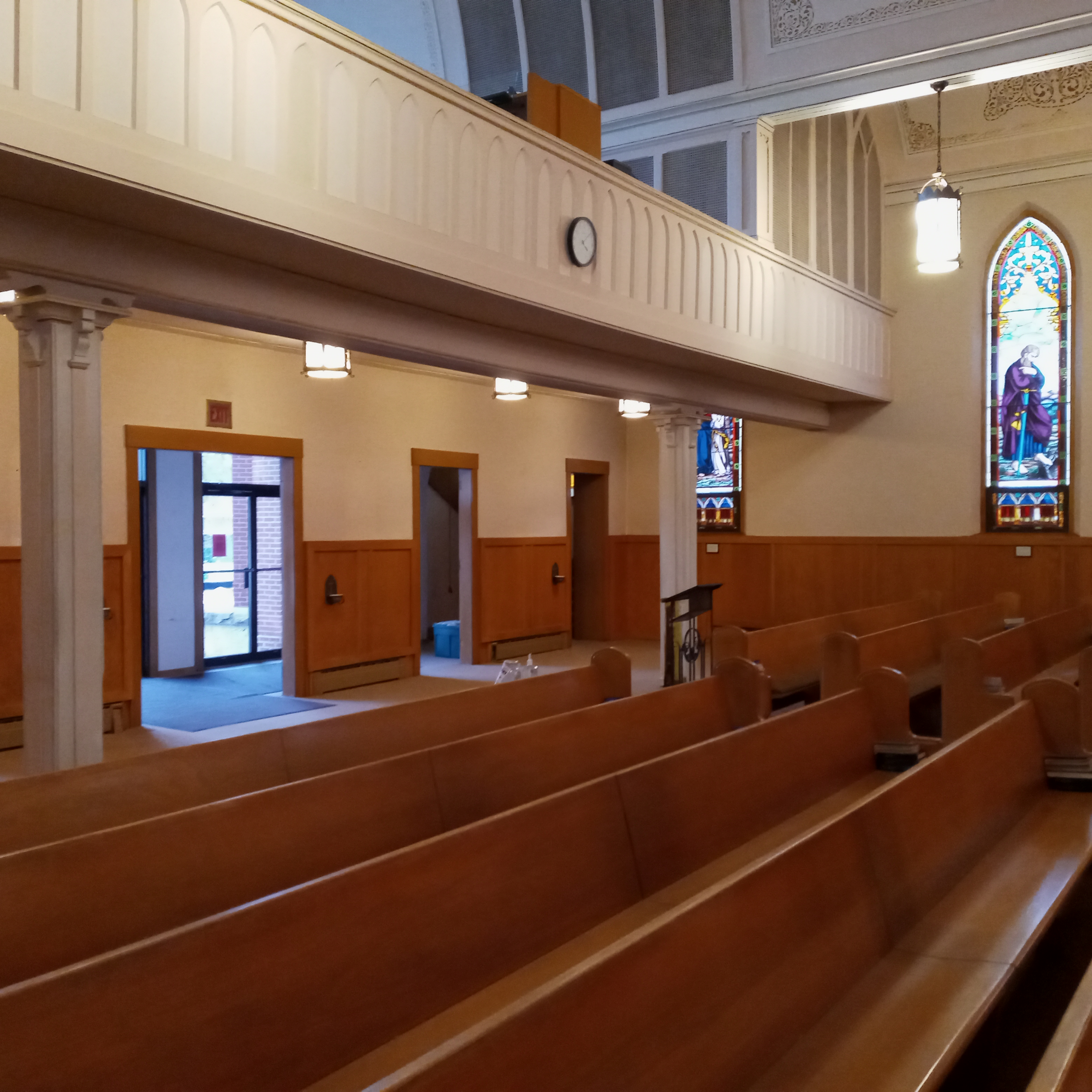
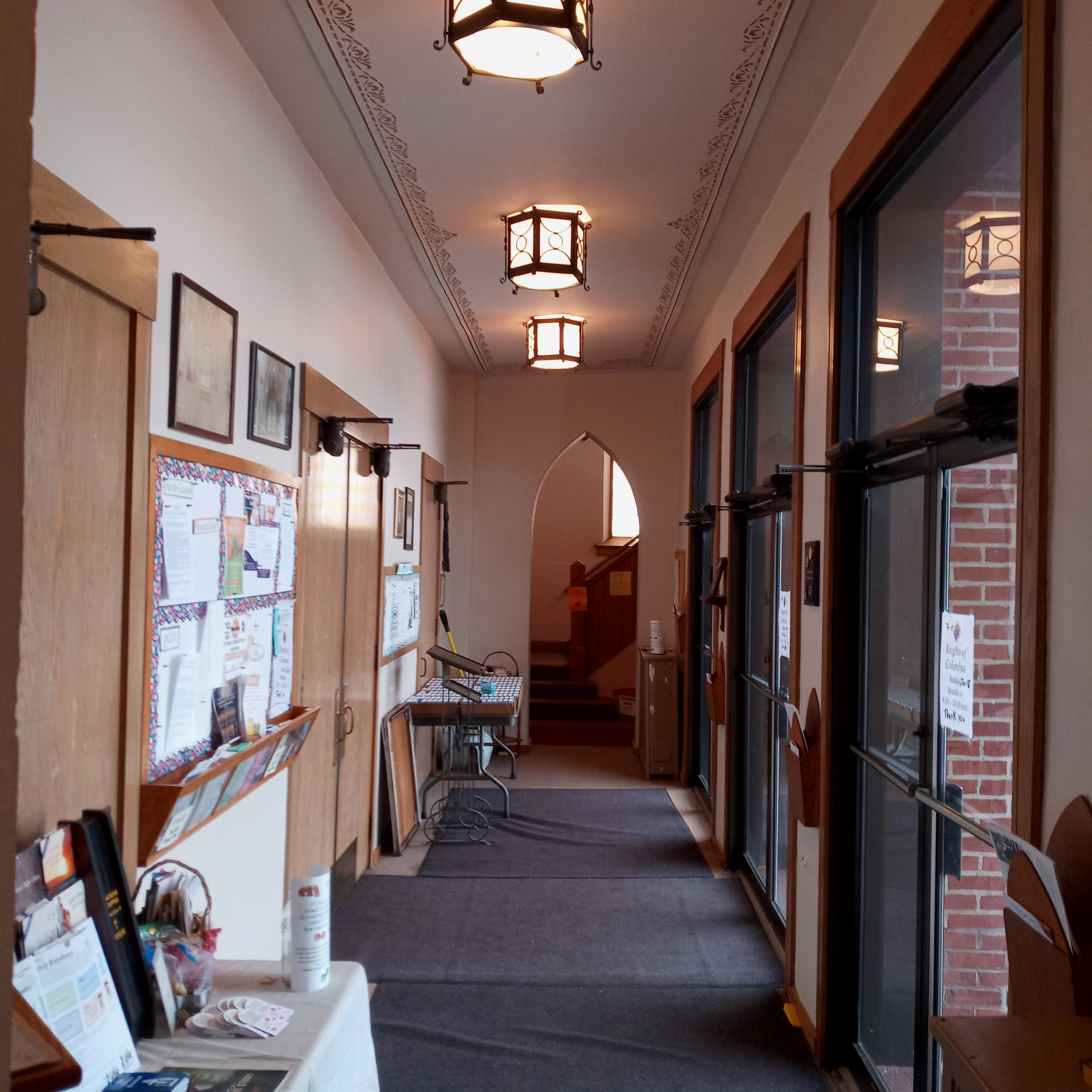
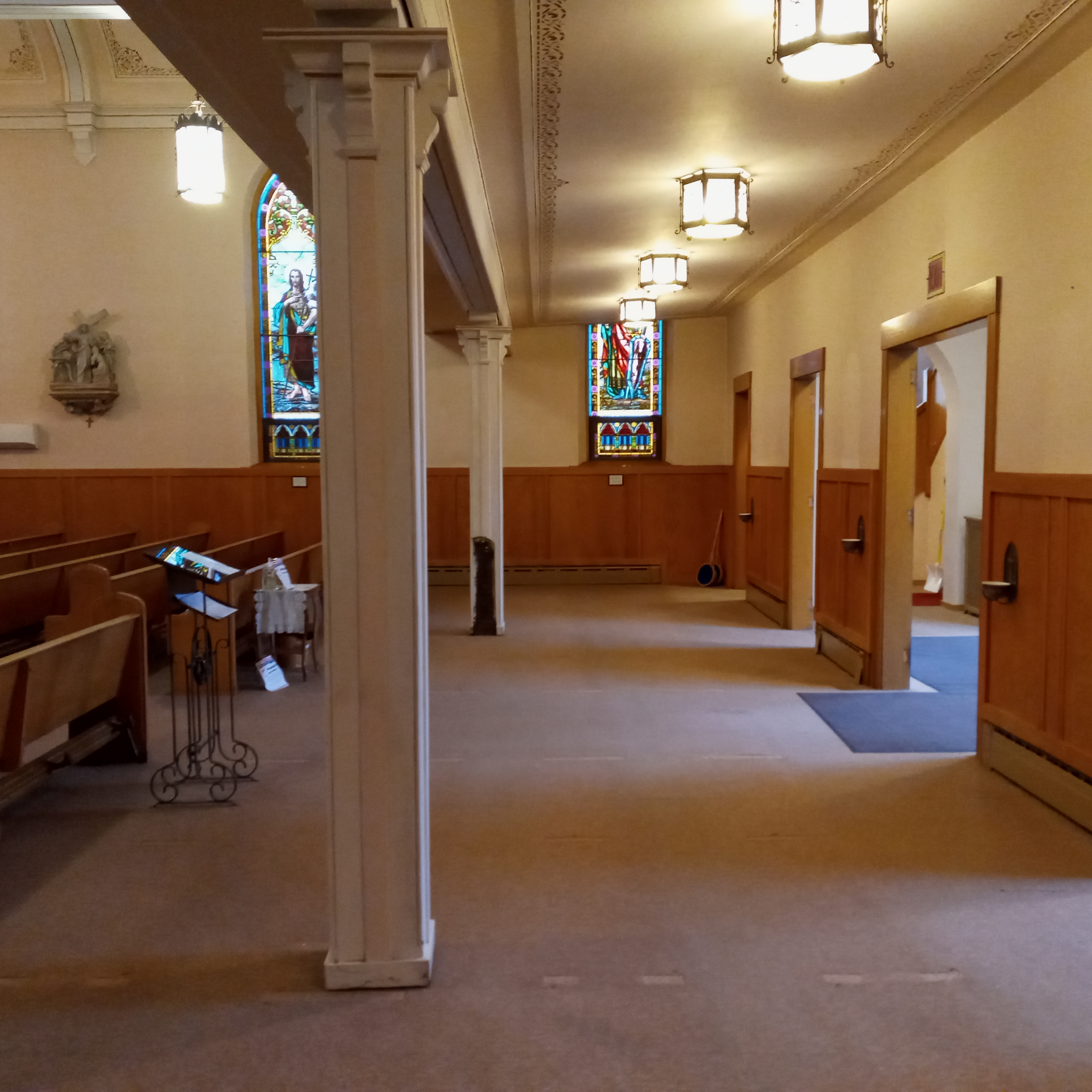
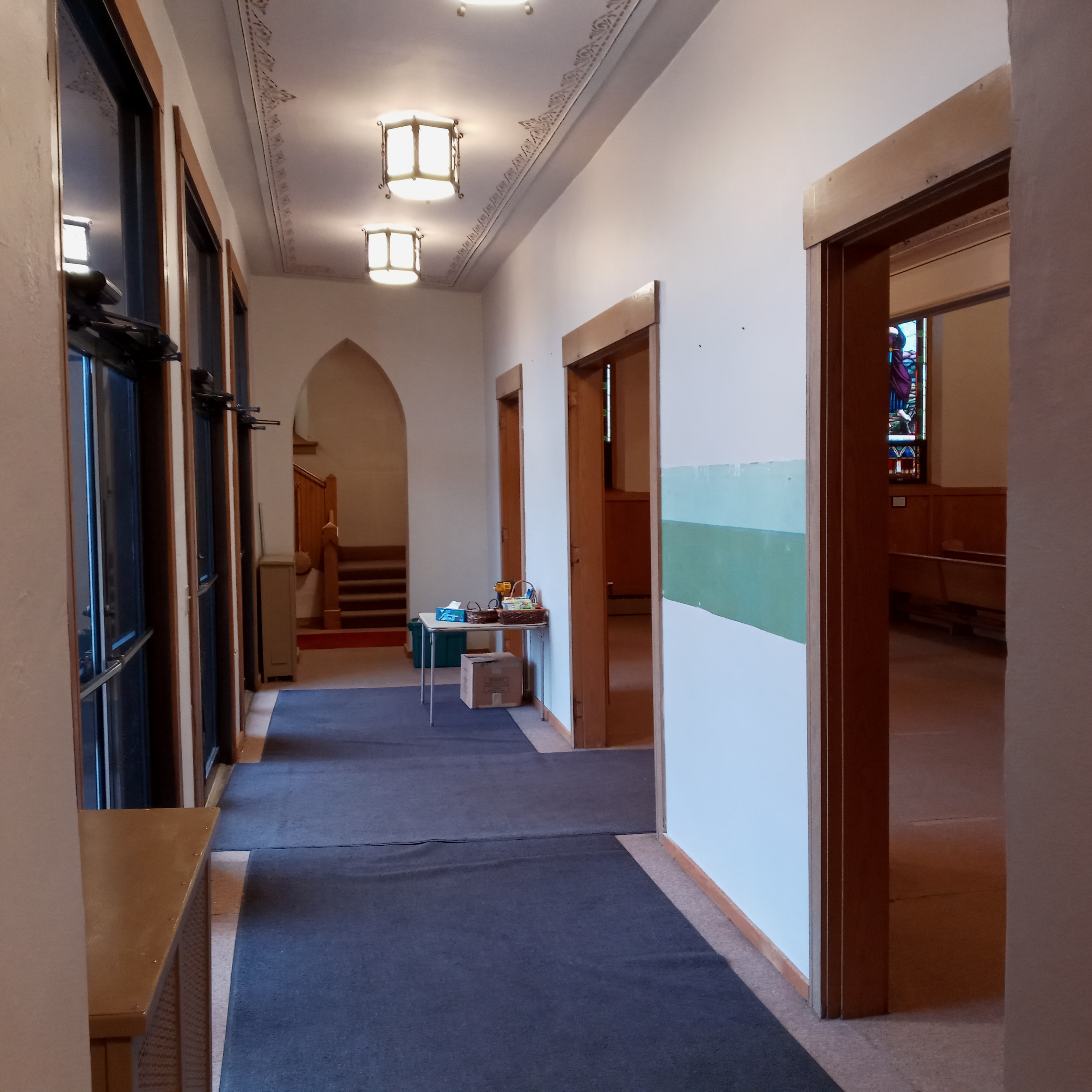
This is what the back of St. Paul’s Church looked like before our renovation began fifty-seven days ago. Attend St. Paul’s Triduum (Holy Thursday, Good Friday, Easter Sunday) this week to experience our new, expanded vestibule.


Labor, Toil, & Rest — Funeral Homily for Barbara “Barb” Hable, 68

March 25, 2024

By Fr. Victor Feltes

Barb grew up across the street from here in the building now known as Baier’s Bar. Forty-seven years ago, she married her husband Larry in this St. Peter’s Church. Today, we are gathered here to mourn, and pray for her eternal blessed rest. Barb’s family speaks about her love as the rock-center of their home. They also tell of her strong-willed determination, her focused level-headedness, and her persistent hard work. Amidst the responsibilities of motherhood, she would work around the house and work around the yard. She volunteered at her St. Paul’s Catholic Parish, where she worshipped our God every Sunday, and maintained employment in the wider workforce. Educated in accounting, working at Chippewa Valley companies, she then transitioned into an information technology career and commuted for more than twenty years between Bloomer and the Twin Cities. When that ended with her retirement in 2019, she still kept busy; faithfully attending the activities of her five granddaughters and staying connected with family and friends from her high school and business days, from Tilden, Bloomer, and beyond. Her family tells me Barb “couldn’t sit still,” that she was always working on something. What are we to make of the reality of human work, to which we devote so much of our lives?

Did you know that human work existed even before the Fall? In the beginning, the Lord God took the man and settled him in the Garden of Eden to cultivate and care for it. Then God gave man a helpmate, to fruitfully love and work alongside. A finite universe, even if sinless, can be endlessly improved with new beauties and delights forever. But with sin came the introduction of human toil and death. God said, “In toil you shall eat [the ground’s] yield all the days of your life. …By the sweat of your brow you shall eat bread, until you return to the ground from which you were taken, for you are dust and to dust you shall return.” This is why our labor is so often satisfying; we enjoy being co-creators with God and take pleasure in the fruits of creation. And this is why our labors are so often a burden; this world has been broken by sin and our lives are plagued by fatigue, pain, and death. If this life were all there is, one could reasonably ask with the Old Testament author of Ecclesiastes: “What profit have we from all the toil which we toil at under the sun? One generation departs and another generation comes… What profit comes to mortals from all the toil and anxiety of heart with which they toil under the sun?” But there is more to our story.

Jesus Christ, the Son of God, enters into our world proclaiming: “Come to me, all you who labor and are burdened, and I will give you rest. Take my yoke upon you and learn from me, for I am meek and humble of heart; and you will find rest for yourselves. For my yoke is easy, and my burden light.” Jesus declares, “I am the Good Shepherd,” He is the Lord about whom the psalmist said: “The Lord is my shepherd; I shall not want. In verdant pastures he gives me repose. Beside restful waters he leads me; he refreshes my soul. He guides me in right paths for his name sake.” Though the Twenty-Third Psalm is most commonly heard at funerals, as Jesus does offer eternal rest in the life to come, he also invites us to share in his peace now. Jesus says to us on earth: “Peace I leave with you; my peace I give to you. Not as the world gives do I give it to you. Do not let your hearts be troubled or afraid.” Because of the hope we have in him, because nothing good will be lost forever, we can be secure in the peace of Christ that our works of love and goodness are not done in vain.

We rightly pray for Barb’s soul today, that she may enter into perfect and unending rest. Yet this does not mean her labors will then be finished. St. Therese of Lisieux, seeing her own death approaching, wrote: “How unhappy I shall be in heaven if I cannot do little favors for those whom I love… I want to spend my heaven in doing good on earth. I’m happy to die… because I shall be much more useful than I am now to the souls who are dear to me…” And since her passing in 1897, St. Therese has proven to be a wondrous intercessor. So pray for Barb, and ask for her prayers. I doubt she will be will sitting still. And look forward to our reunion, our resurrection into the New Creation, where free of toil we will partake in joyful work with God forever.

Psalm 22 Fulfilled

March 24, 2024

Palm Sunday
By Fr. Victor Feltes

A thousand years before Christ’s Passion, King David was inspired by the Holy Spirit to pen the Twenty-Second Psalm. Jesus quotes this psalm’s opening words from the Cross: “My God, my God, why have you abandoned me?” Psalm 22 contains passage after passage prophetically predicting details of Good Friday.

It foretells how Christ’s enemies would deride him: “Scorned by men, despised by the people… they mock me with parted lips, they wag their heads: ‘He relied on the Lord; let him deliver him, let him rescue him, if he loves him.’”

It reveals what Jesus would endure in his chest, mouth, limbs, and back: “My heart has become like wax, it melts away within me. As dry as a potsherd is my throat; my tongue cleaves to my palate… They have pierced my hands and my feet; I can count all my bones.”

It predicts what all four gospels writers record the soldiers did: “They stare at me and gloat; they divide my garments among them, and for my vesture they cast lots.

Despite expressing great anguish at feeling as if God were distant throughout these sufferings, the psalm declares hope in deliverance, a restoration to life: “I will proclaim your name to my brethren; in the midst of the assembly I will praise you. …All the ends of the earth will remember and turn to the Lord; All the families of nations will bow low before him… The poor will eat their fill… And I will live for the Lord; my descendants will serve you. The generation to come will be told of the Lord, that they may proclaim to a people yet unborn the deliverance you have brought.”

These accurate prophesies have been realized in God’s Church, where our Lord is with and in his Eucharistic people proclaiming his resurrection to every land and generation. The Twenty-Second Psalm was fulfilled in Jesus Christ and he continues today to fulfill it in our midst.

He Set His Face Like Flint

March 23, 2024

Palm Sunday
By Fr. Chinnappan Pelavendran

This week, the Holy Week, is a week like no other in the year, a week when we celebrate in our special celebrations on Holy Thursday, Good Friday, and the Easter Vigil, what Jesus did for us. This week is a week to take time out, to stop, to reflect, to spend time with Jesus who gave his life for us, a week to pray.

Today I want to share my thoughts briefly on the words of the Prophet Isaiah: “I gave my back to those who beat me, my cheeks to those who tore out my beard; my face I did not hide from insults and spitting. The Lord God is my help, therefore I am not disgraced; Therefore, I have set my face like flint, knowing that I shall not be put to shame.” (Isaiah 50:6-7) This passage from the prophet Isaiah is very striking and every detail of his prophecy of Isaiah was fulfilled in the passion of Jesus.

The face is very important because, in many ways, the face represents the inner person. “The front part of the human head including the chin, mouth, nose, cheeks, eyes, and the forehead.” Therefore, the expressions of the mouth, such as smiling, tight lips, and shaking lips form part of facial expressions. Emotions of cheerfulness, fearfulness, troubled mind, and anger are often expressed on the face. The eye is called the light of the body and the window of the soul.

The face not only gives an idea of the emotional state of a person but also the mental state. One can imagine the facial expression of Jesus in those moments of his suffering and distress. Jesus also communicated to God with his face. When he went into the Garden of Gethsemane, he fell on his face to pray. Falling to the face was a mark of humility and total surrender to God’s will.

Therefore, it is not surprising that the detractors of Jesus targeted his face. “Then they spat in his face and struck him, while some slapped him. The soldiers weaved a crown of thorns and placed it on his head (his forehead, his face)…They spat upon him took the reed and kept striking him on the head.”

There is something great to learn from Jesus. Even when his body was wounded and his face suffered bashing, He set his face like flint meant he remained positive and strong. In his wounds, he never lost the spirit of fortitude, endurance, patience, and boldness. He carried his cross with dignity without a word of insult to his persecutors. What is more, even in the face of agony he sought the face of God and the will of God.

Therefore, He teaches us the necessity of seeking the face of the Lord when we are in difficulty, even when our detractors try to put our faces to shame. “Seek the Lord and His strength; Seek His face continually.” (1 Chronicles 16:11)

The Meaning of Malchus

March 21, 2024

By Fr. Victor Feltes

Judas Iscariot came to the Garden of Gethsemane with soldiers and guards who carried swords and clubs, lanterns and torches. Jesus’ disciples realized what was about to happen and asked, “Lord, shall we strike with a sword?” When one struck the high priest’s slave, cutting off his right ear, Jesus shouted, “Stop, no more of this!” Jesus then touched the man’s ear and healed him. All four gospels record the event but only St. John reveals it was St. Peter who had wielded the sword. Perhaps there was no longer a need to conceal his role in this violent episode once Peter had been martyred. St. John also tells us the wounded man was named Malchus.

Why did Peter strike at Malchus? It’s hard to imagine Peter attacking him if Malchus were unarmed and posed no immediate threat. That Peter slashed at him suggests Malchus was one of the most aggressive among those threatening to capture Jesus dead or alive. Why do all four gospels note that Malchus’ wound was his ear? Perhaps this is highlighting the truth that it’s harder for people to hear the Good News when the use of violence deafens them. Christ converts through loving persuasion, not force.

Given the apparent zealousness with which this slave served his master, risking life and limb to achieve Jesus’ quick arrest, Malchus may have been the kind of slave described in Deuteronomy 15. A Hebrew could sell himself into slavery but it was not automatically for life. The Old Covenant said: “If your kin, a Hebrew man or woman, sells himself or herself to you, he or she is to serve you for six years, but in the seventh year you shall release him or her as a free person. However, if your slave says to you, ‘I do not wish to leave you,’ because he loves you and your household, since he is well off with you, you shall take an awl and put it through his ear into the door, and he shall be your slave forever.” An awl resembles an icepick, a small pointed tool typically used to pierce holes through leather or wood. A Hebrew slave whose devotion was such that he wished to permanently serve the same household would get his ear pierced in this way. The hole in the servant’s ear and the matching imprint and blood stain on the house’s wooden door would be visible signs of the servant’s permanent commitment.

To whom did Malchus belong? Whether his ear had been awl-pierced or not, Malchus was enslaved to the high priest. “Malchus” comes from the Hebrew word for “King,” with sources saying the name means “My King.” His name providentially pointed to whom he truly belonged. Like everyone, Malchus rightfully belongs to Christ our King. Perhaps Jesus restored the ear of Malchus renewed, healed unpierced as a sign, since Christ through his Passion was setting him free. Jesus Christ is the Suffering Servant foretold of by Isaiah the Prophet. Jesus, because he loves you and your household, freely chose to dedicate himself to us forever. His body still bears the marks where we pierced him. And the wood of his Cross, which bears puncture holes and Christ’s blood stains, is our doorway to salvation—to living together with him forever.

Jesus the Grain of Wheat Died to Harvest Us

March 20, 2024

5th Sunday of Lent
By Fr. Chinnappan Pelavendran

Who are the important people in our world? Who are the great people in our country? It depends on what you mean by “important” and “great.” These are some of the people in our world who receive glory, fame, and publicity: such as pop stars, sports stars, successful businesspeople, and company directors. Other people are not famous—people caring for sick relatives, people suffering crosses without grumbling, those encouraging others, those who bring the love of God to others, those who witness to Jesus in small ways. Are they the greatest people in our world? I think they are.

What about Jesus? At the wedding in Cana Jesus said, his hour had not yet come but in today’s Gospel, he says his hour has come. Now the hour has come for the Son of Man to be glorified. (John 12:23)

What is this hour of glory for Jesus? It is his passion and death. That is the hour of glory for Jesus in John’s Gospel, his passion and death. Why? The first reading, taken from the book of the Prophet Jeremiah, explains how God will replace the Old Covenant of Judgment with a New Covenant of Forgiveness of sins. This New or Renewed Covenant prophesied by Jeremiah has been fulfilled, through Jesus’ life, and death. (John 12:24) “Truly, truly, I say to you, unless a grain of wheat falls into the earth and dies, it remains alone; but if it dies, it bears much fruit. He who loves his life loses it, and he who hates his life in this world will keep it for eternal life.” Here Jesus tells us that this is the price of eternal life. The grain, of course, does not die but is transformed into something completely new: roots, leaves, and fruit. Jesus here speaks about his own life, which he sacrificed to gain new life in the Kingdom. He invites us too to be ready to lose our life for the sake of Jesus to gain eternal life.

The hour of glory for Jesus is his passion and death because when he is lifted from the earth, he will draw all men to himself. (John 12:32) Jesus’ glory is not what the world thinks is glorious because the world does not see as God sees.

Today’s Gospel teaches us that new life and eternal life are made possible only by the death of the self through obedience, suffering, and service. Salt gives its taste by dissolving in water. A candle gives light by having its wick burned and its wax melted. Loving parents sacrifice themselves so that their children can enjoy a better life than they have had. Let us pray that we may acquire this self-sacrificing spirit, especially during Lent.

Only a life spent for others will be glorified, sometimes here in this world, but always in Heaven. We know that the world owes everything to people who have spent their time and talents for God and their fellow human beings. Mother Teresa, for instance, gave up her comfortable teaching career, and with just five rupees in her pocket began her challenging life for the “poorest of the poor” in the crowded slums of Calcutta. The people who spend their lives and talents for others are great and important.

St. Paul’s Vestibule Renovation (Day 51)

March 19, 2024

The tiling and carpeting of our new vestibule continues this week. (Click Images to Enlarge)

“Where I Am, There Also Will My Servant Be”

March 17, 2024

5th Sunday of Lent
By Fr. Victor Feltes

Whoever serves me must follow me, and where I am, there also will my servant be. The Father will honor whoever serves me.” Jesus says, “Where I am, there also will my servant be.” His statement is descriptive, prescriptive, and predictive. He describes what is the case, he prescribes how we should act, and he predicts what will be. His servants can be found where Jesus has been before. They should serve him where Jesus is now on earth. And one day his servants shall be where Jesus is in heaven.

So where has Jesus been? Next Sunday is Palm Sunday when we will remember the way of his sorrowful Passion; how he mentally agonized in the Garden of Gethsemane, how he faced religious and secular trials, criticism and mockery, how he carried and painfully endured his Cross. Jesus notes, “Unless a grain of wheat falls to the ground and dies, it remains just a grain of wheat; but if it dies, it produces much fruit.” Christ’s glory was made complete through his offering-up of his physical and emotional sufferings; and where he has been, his servant will also be. Jesus says, “No servant is greater than his master,” adding that if people persecuted him, they will persecute us also. St. Peter writes, “Beloved, do not be surprised that a trial by fire is occurring among you, as if something strange were happening to you. But rejoice to the extent that you share in the sufferings of Christ, so that when his glory is revealed you may also rejoice exultantly.” It will not always be an extreme burden, like martyrdom, but each of us has a cross to carry. Jesus says, “If anyone would come after me, let him deny himself and take up his cross daily and follow me.”

Jesus Christ has been on Calvary. Where is he present on earth today? He is present in his Church, for he says, “Where two or three are gathered together in my name, I am there among them.” He is present in his Sacraments, most blessedly in the Eucharist, of which he says, “This is my Body” and “This is…my Blood.” He is present in little ones and the least of his brethren, for Jesus says, “Whoever receives one of these little ones in my name receives me,” and declares, “Amen, I say to you, whatever you did for one of these least brethren of mine, you did for me.” Therefore we should not neglect to gather and adore him in his Church, to approach and honor him in his Sacraments, and to love and help him in the small and vulnerable. The servants of Jesus should serve him where he is.

Where else is Christ now, following his Ascension? Jesus declared during his religious trial before the high priest, “From now on the Son of Man shall be seated at the right hand of the power of God.” So St. Paul urges us to “seek the things that are above, where Christ is, seated at the right hand of God.” More than a mere description of Christian life, more than just a call to serve him, Jesus’ words contain a promise of heaven. The Letter to the Hebrews calls Jesus Christ “the source of eternal salvation for all who obey him.” And Jesus says, “Where I am, there also will my servant be. The Father will honor whoever serves me.”

Jesus Christ is present at Calvary, in his Church and in his Sacraments, with the lowly on earth and with the saints in heaven. Remember this, for Jesus says, “Where I am, there also will my servant be.”

St. Paul’s Vestibule Renovation (Day 44)

March 12, 2024

The flooring crew has arrived onsite and tiled our new bathroom. Today, Craig Zwiefelhofer and a few Knights of Columbus volunteers painted the bathroom and some vestibule walls.
(Click Images to Enlarge)