Archive for April 28th, 2024

Who are the Jews?

April 28, 2024

By Fr. Victor Feltes

What’s a Jew,” I asked my dad as a boy. “Where did you hear that,” he countered. I had seen a TV news report about Palestinians in a street slinging rocks at Israeli soldiers. I recalled this memory recently when two parishioners called to ask the same question I once had. So who are the Jews?

We read in the Old Testament about God making covenants with Abraham and his descendants. God changed the name of Abraham’s grandson Jacob to Israel and from his sons come “The Twelve Tribes of Israel.” God used Moses to lead these tribes from Egypt into the land which is now the country of Israel. From one of those twelve tribes, Judah, the Jewish religion (Judaism) and Jewish people (Jews) have their names.

Jesus, Mary his mother, his apostles, and his earliest followers were Jewish. Many Jews believed Jesus was their long-awaited “Anointed One” or Christ. Other Jews, however, rejected him. The Jewish leaders conspired and pushed the Romans to crucify him, yet Jesus died due to the sins of all mankind. After his resurrection, the Jews and non-Jews with faith in Jesus Christ came to be called “Christians.”

In our day, a person could be Jewish in two ways: religiously Jewish, Jewish by descent, or both. Someone now identifying as religiously Jewish believes in the Old Testament and the God of Abraham, Isaac, and Jacob, but does not believe that Jesus was the Christ, God’s eternally-begotten Son, or that he rose again from the dead. Religious Jews are usually of the Jewish race as well, since Judaism draws few converts. On the other hand, a person may be racially Jewish and not practice Judaism. This is how it is possible for someone to be, for example, a Jewish atheist or a Jewish Christian.

All peoples are called to the New Covenant in Christ and his Church. St. Peter preached Jesus as Christ and Lord and risen from the dead to the Jews at Pentecost: “Repent and be baptized, every one of you, in the name of Jesus Christ for the forgiveness of your sins…” The Vatican II document on non-Christian religions, Nostra Aetate, notes, “Jerusalem did not recognize the time of her visitation, nor did the Jews in large number accept the Gospel… Nevertheless, God holds the Jews most dear for the sake of their Fathers…” If the world seems to bear irrational hatred towards Jews, Catholics, and other Christians, perhaps this is because we are God’s people in special ways.
The Fruitful Trials of St. Paul

April 28, 2024

Fifth Sunday of Easter
By Fr. Victor Feltes

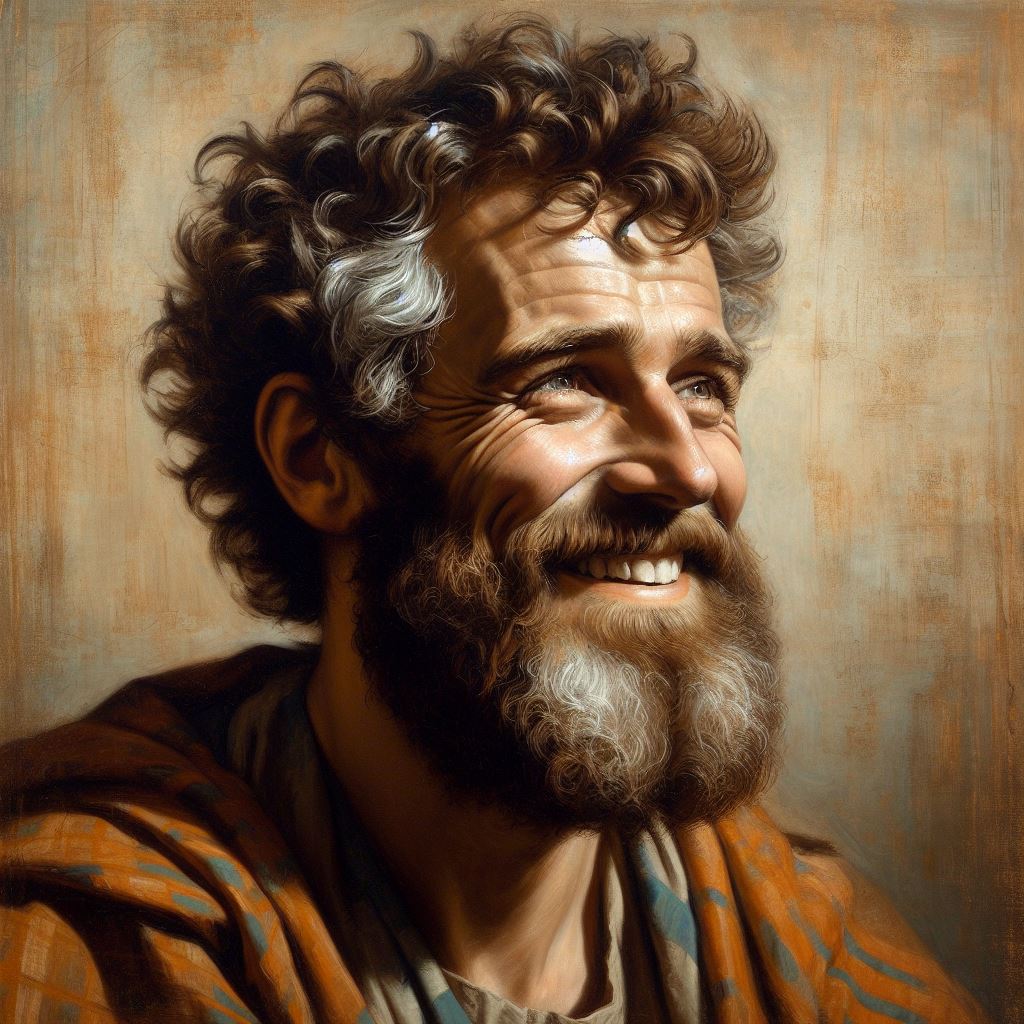
Imagine if Osama bin Laden, after masterminding terrorist attacks, had repented and begun proclaiming Jesus Christ and the Gospel? Christians might understandably still be afraid of him and wary of his claimed Christian conversion. In the first century, prior to his famous conversion, St. Paul had intensely persecuted God’s Church and tried to destroy it. At the stoning of St. Stephen the Martyr he had guarded the cloaks of the murderers. Before encountering Christ on the way to Damascus, he was “breathing out murderous threats against the Lord’s disciples.” He had sought and obtained letters from the high priest empowering him to arrest any Christians he found in that city and take them back to Jerusalem as prisoners. So after his conversion, when “he arrived in Jerusalem, he tried to join the disciples, [but] they were all afraid of him, not believing that he was a disciple.”

Yet it was all real and true. The amazing conversion of St. Paul, that fierce enemy of the early Church, is an authentic miracle in real history which has borne true fruit in Christ. St. Paul founded and fostered early Christian communities, wrote more books of the Bible than any other man, and had a hand in saving many souls. He also discovered good fruits for himself, including Christian peace and joy. St. Paul told the Philippians he had exchanged everything from before as if it were mere rubbish for “the supreme good of knowing Christ Jesus my Lord.” Such are fruits of a life in Christ.

Jesus tells his disciples in today’s gospel, “I am the vine, you are the branches.” He says, “I am the true vine, and my Father is the vine grower. He takes away every branch in me that does not bear fruit, and every one that does he prunes so that it bears more fruit…” Notice how Jesus says God prunes those who are in him. Pruning clips off of a vine branch certain shoots or leaves in order to help the branch to be healthy and grow and produce more and better fruit. If vine branches were conscious, self-aware like us, how would this pruning feel? Painful, I imagine. Even if a branch loved producing fruit and wished to produce much more, how would a vine branch feel about such pruning if it did not understand this pruning’s purpose? There is a danger for a Christian who expects only comforts in this life and is surprised by the coming of any trials.

Consider the life of St. Paul. He suffered and endured many trials. Five times he received thirty-nine lashes from Jewish foes, three times he was beaten with rods, one time he was stoned, three times he survived shipwrecks, and ultimately he was beheaded by the Romans. St. Paul was not always liked, even by fellow Christians. It appears some Christians at Corinth said things like, “His letters are severe and forceful, but his bodily presence is weak and his speech is contemptible.” St. Paul’s letters reflect that the first Christian communities were far from perfect and they gave him many stressful problems to deal with. He writes of having beautiful mystical experiences but also of a “thorn” in his flesh and physical illness. St. Paul’s life was not always comfortable. However, he wrote to the Philippians, “I have learned to be content whatever the circumstances. I know what it is to be in need, and I know what it is to have plenty. I have learned the secret of being content in any and every situation, whether well fed or hungry, whether living in plenty or in want. I can do all this through him who gives me strength.

When St. Paul, now amongst the saints and angels in heaven, looks back on all his troubles and beholds all their good fruits, does he believe that it was worth it? Of course he does. And he cheers us on alongside that “great cloud of witnesses,” prayerfully interceding for us to “persevere in running the race that lies before us while keeping our eyes fixed on Jesus.” In both good times and in bad, Jesus counsels us to remain in him. “Whoever remains in me and I in him will bear much fruit… By this is my Father glorified…” And in this will be our glory too.

Abide in Me & I in You

April 28, 2024

5th Sunday of Easter
By Fr. Chinnappan Pelavendran

Today we are invited to remain in Christ as branches on a vine. We do this by recognizing that God is at work in everyone and by striving to keep His commands and to do what is pleasing to God. The Christian life sounds easy and yet is a challenge for us all.

In the First Reading of today, we heard how Paul and the disciples of Jesus were trying to bear much fruit. When Paul arrived in Jerusalem and tried to join the disciples, the disciples avoided him with great fear. They knew that he had a reputation for persecuting the Christians. They were unable to believe that Paul was now one of them. Barnabas came forward and took Paul to the apostles. On behalf of Paul, he explained to the apostles how Jesus had spoken to Paul on the way to Damascus. Now Barnabas testified his spiritual joy by sharing with the others the Divine intervention of Jesus in the life of Paul. We all know what a difference Paul made to the Church. Jesus pruned St. Paul, and he bore many fruits.

In today’s gospel, Jesus uses the familiar image of the vine and the branches to teach us lessons about our Christian life. First, the image reminds us that God is the real owner of everything that we have. He is the vine grower. He does to us what is good and right. We belong fully to God. We should not allow our selfishness and pride to make us think that we have absolute control over our lives. Rather, we always have to be open to God’s action, confident that he knows fully what is good for us.

He is the vine and we are the branches. A branch cut off from the vine will wither and die. So it is with our life as disciples. We live fully and become fruitful only by remaining in Christ. In the gospel of John, the word “abide” appears several times: “Abiding in God,” “abiding in Christ,” and “abiding in his Word.” We need to abide in Christ because apart from him, we can do nothing.

The image tells us that to stay healthy and fruitful we need pruning. Vine growers know that the act of pruning is good for the branch. If the branch is not pruned for a long time, it becomes wild and produces no good grapes. Sometimes in our lives, God intervenes with the cross to challenge us and make us grow. To take away our pride, sometimes God allows us to fail to make us grow stronger in faith.

We are called to remain in Jesus, to be in communion with him. We are also to be pruned; what is useless in our lives is to be cut off. Our pruning is our self-denial and purification. We have to be open to pruning so that we can be healthy and fruitful for the Lord.

Like Paul, we believe in the name of Jesus Christ, God lives in us, and we live in him. We become branches of the true vine, Jesus Christ. Then with the psalmist, we can confidently sing: “You, Lord, I praise in the great assembly.” Alleluia!