Archive for July, 2024

Faithful Efforts & Divine Increase

July 27, 2024

17th Sunday of Ordinary Time
By Fr. Victor Feltes
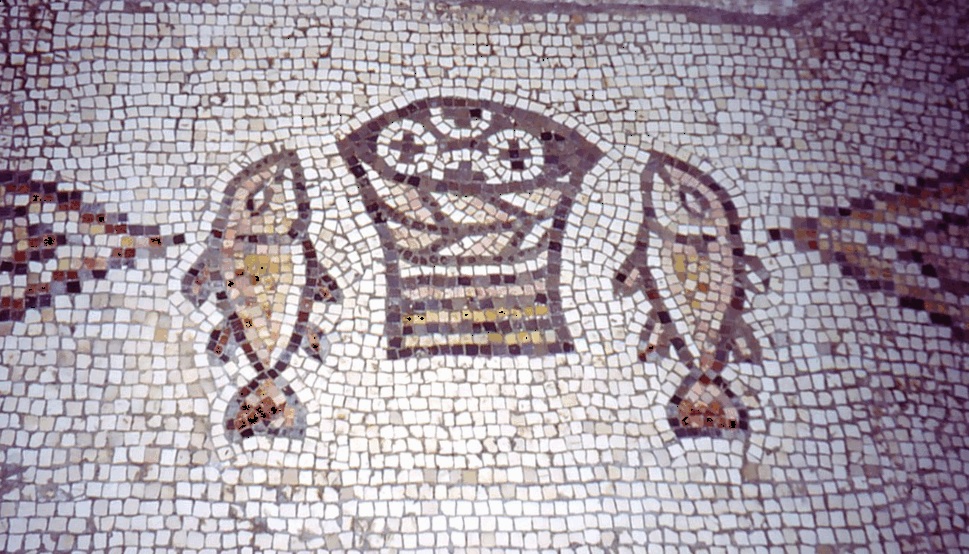
In our first reading from the 2nd Book of Kings, the Prophet Elisha uses twenty barley loaves to feed a hundred people. That suggests a miraculous multiplication of five times. In our Gospel reading, Jesus Christ uses five loaves to feed about 5,000 men – a multiplication of 1,000 times. So Jesus’ miracle was 200 hundred times greater than Elisha’s. That 200 figure is interesting because of something Philip the Apostle says.

When Jesus asked him, “Where can we buy enough food for them to eat,” to see what he would say, Philip remarked, “200 days’ wages worth of food would not be enough for each of them to have a little!” What good could 200 days of work do for so many? One might ask what good are any of our labors or efforts in the face of such great problems in our world today?

Many days passed between the events of the 2nd Book of Kings and the events of the Gospels. Why did the Old Testament people of God have to work and wait, suffer and endure, for days and years, for generations and centuries, before the coming of Christ? Because it was not yet the fullness of time; things were not yet fully prepared for those greater wonders. Our redemption in Christ is preeminently the work of God but God wills that the faithful efforts of faithful people help prepare the way.

While the disciples were still wondering what to do about the problem of the hungry crowd, Andrew the Apostle told Jesus, “There is a boy here who has five barley loaves and two fish, but what good are these for so many?” Jesus would take those loaves, give thanks to God the Father, and distribute the loaves and fishes to the reclining crowd as much as they wanted, and they all ate and had their fill.

Consider this: in the beginning, all things were created through God the Son out of nothing, ex nihilo. Yet Jesus did not conjure food to feed that crowd out of nothing. Like at the Wedding Feast of Cana, he received what was offered to him and transformed it for both our good and God’s glory.

That boy and those five loaves and two fish are remembered to this day, in our Gospel stories on earth and even more gloriously in heaven. Jesus used that entire gift, he multiplied all the loaves and fishes offered, just like how at Cana he transformed the contents of all six of the large stone water jars which the servants had filled for him. And Jesus directed his disciples to “gather the fragments left over, so that nothing will be wasted,” filling a dozen wicker baskets with fragments from the five barley loaves which had been more than they could eat.

Even as Christians we may get discouraged, feel overwhelmed and wonder, “What good are any of my labors or efforts? What good is this for few or many?” Today’s Gospel reading reminds us that Jesus will use everything which we offer him. He will bless it, transform it, multiply it, grow it. He will use it for both our good and God’s glory, and nothing will be wasted. Remember that Jesus promises “whoever gives but a cup of cold water… to drink… [for me] will surely not lose his reward.” (Matthew 10:42)


A Beautiful Death — Funeral Homily for Linda Dachel, 73

July 25, 2024

By Fr. Victor Feltes

The Book of Wisdom declares, “God did not make death… For God formed man to be imperishable; the image of his own nature he made him. But by the envy of the devil, death entered the world…” With an overflowing love, God created us for immortality with him. Satan, jealous of our glorious calling, misled us to misuse our freedom and suffer sin and death. Human death is unnatural. If it were natural for us it would feel normal to us; like eating, or sleeping, or bonding in pairs. Instead, we perceive death as unsettling, uncanny and dreadful. But, thanks be to God, Jesus Christ came to our aid with his divinity to achieve a remedy for us through mortality itself, so our downfall could become the means of our salvation. Jesus tells us to “be not afraid,” to pick up our cross and follow him, through our Passion to his Resurrection.

Linda faced her final trial when more than one doctor told her she had only six weeks to live. Her form of brain cancer was identified as the fasted growing kind. That was a year ago. She had fifteen radiation treatments in Eau Claire and one course of chemotherapy, yet every hospital visit brought more bad news. Each of us have our own personal strengths and weaknesses. Linda was married to Eugene for 50 years and he says she “never got angry, but worried about everything.” In years gone by she used to tell him, “When we retire, we’re not going to have money to buy bird food!” Yet Linda’s prognosis never bothered her. She wished to never go into to a nursing home, and providential opportunities and finances allowed her to have great care at home. God, who even feeds the sparrows, ensured she was provided for. She never lost weight and ate well until her final month. And amazingly, she never suffered. When people would ask, “Do you have any pain?” her response was always, “No.” Many people die suddenly, with no chance to say goodbye. Linda’s prolonged illness allowed her many friends and relatives to visit her and express their love, and for her to see and smile at them. She passed away on an early Sunday morning. Linda knew and trusted in Christ’s promises. She read the entire Bible twice and faithfully communed with Jesus in the Eucharist.

Death remains a sad and ugly thing, but Linda was blessed with a beautiful death. We pray for her soul, but the details of her passing point to the joyful fulfillment of her hopes and ours. She lived far longer than experts predicted and has embarked into life unending. She endured her illness without pain and in heaven there is no pain now. She faced her death without anxiety and in heaven there is perfect peace. She was lovingly cared for at her home and is going to the home of divine love. As her dear ones on earth said goodbye, the saints in heaven waited to greet her. And Linda’s Sunday morning passing is now joined to Our Lord’s Easter rising. So let us be “courageous,” as St. Paul writes, and let us all “aspire to please him, whether we are at home or away.”

Lessons for our Mission’s Journey

July 14, 2024

15th Sunday in Ordinary Time
By Fr. Victor Feltes

Jesus sent his apostles on a journey with a mission for the Kingdom of God. He sent them out two-by-two, to preach repentance, liberate souls, and cure the sick. Jesus ordered the apostles not to carry sacks, nor food, nor money, nor second tunics. He did, however, instruct them to wear sandals and take a walking stick. We as Christians are also on a journey through this world and tasked to do important work for Christ’s Kingdom. So what lessons can we learn today’s gospel reading? Like the apostles, we are not meant to go it alone. We are expected to rely on God and others. And we are to take along only what will help and leave behind whatever will hinder our holy mission’s journey.

Jesus sent his apostles in pairs in part so that they would have one another for support. They gave each other companionship, encouragement, accountability, and the support of prayer. Married spouses are to be such helpmates to each other, but even the unmarried should have spiritual friendships in their lives. Help each other along the way to both holiness and to heaven. Encourage each other, lovingly summoning each other to go further in faith. Pray together, regularly entrusting your prayer intentions to each other. Prioritize Christian partnership in your life. Jesus’ apostles were not expected to journey nor fruitfully labor alone, and neither are you.

Why did Jesus command the apostles to carry “no food, no sack, no money in their belts”? Without these provisions the apostles had to depend on God and the people they would meet. Jesus teaches not to be anxious about material things; about what we will wear, what we will eat, or what we will drink. It is good for us to work to meet these needs, however, our worry is worthless. On their mission, Jesus put his apostles in a place where they needed to trust in God’s providence. One of the great goods from the practice of tithing today, besides the help it provides for Christ’s Kingdom, is that it exercises and deepens our trust in the Lord, giving him the opportunity to prove himself provident towards us. Today’s psalm declares, “The Lord himself will give his benefits; our land shall yield its increase.” Ask him and peacefully trust him to provide, what you need for your body—and more importantly—what you need for your soul.

Why were the apostles forbidden to take along a second tunic? Because traveling without that outer garment, prevented them from sleeping in the chilly outdoors. They needed to find nightly lodging and having sandals and walking sticks help them find it quicker amongst those whom they were sent to serve. Consider what things are helping you and which are hindering you in the holy work of your Christian journey. St. Ignatius of Loyola calls this his “First Principle and Foundation” in his Spiritual Exercises. He writes:

“God created human beings to praise, reverence, and serve God, and by doing this, to save their souls. God created all other things on the face of the earth to help fulfill this purpose. From this it follows that we are to use the things of this world only to the extent that they help us to this end [or goal], and we ought to rid ourselves of the things of this world to the extent that they get in the way of this end [or goal].”

St. Ignatius of Loyola calls us to discernment and holy detachment, If Jesus Christ would urge us to discard our own hand or eye if they were leading to our destruction, how much more should we pick up or put down habits or possessions based upon how they impact our holy mission’s journey!

In conclusion, to review the lessons of today’s gospel reading: seek Christian support from others, peacefully trust and rely on God, and seriously discern what will help you to better do what our loving Lord is calling you to do.

How Would We Treat Jesus?

July 6, 2024

14th Sunday in Ordinary Time
By Fr. Victor Feltes

Jesus commanded the wind and waves of a storm and proved himself more powerful than nature. He told a twelve-year-old girl to arise and proved himself stronger than death. But when Jesus returned to his hometown he was not able to perform many mighty deeds. He did no mighty deeds in Nazareth “apart from curing a few sick people by laying his hands on them.” St. Matthew writes that Jesus “did not work many mighty deeds there because of their lack of faith.” They had listened to Jesus teach in their synagogue. He declared to them during his homily on a messianic passage in Isaiah, “Today this scripture passage is fulfilled in your hearing.” And “many who heard him were astonished,” yet this astonishment became outpaced by outrage.

‘Where did this guy get all this,’ they wondered. ‘Isn’t he just a carpenter? Don’t we know his mom and relatives, who all live around here?’ And “they took offense at him.” St. Luke records “they rose up, drove him out of the town, and led him to the brow of the hill on which their town had been built, to hurl him down headlong. But he passed through the midst of them and went away.” St. Mark tells us that Jesus “was amazed at their lack of faith.” Jesus’ neighbors at Nazareth had more personal knowledge of him in those early days than nearly anybody else on earth, yet they treated him very poorly. They were familiar with him and he was doing good things yet they treated him with contempt. If the boy Jesus had grown up here, if that young man had lived in our community or household, how would we have treated him? Well, how do we treat the people who live around us now?

In his great novel The Brothers Karamazov, Dostoevsky has one of his characters remark, “The more I love humanity in general the less I love man in particular. In my dreams, I often make plans for the service of humanity…. Yet I am incapable of living in the same room with anyone….” Dostoevsky observes it can be very easy to love “humanity,” because “humanity” is an abstract idea. Escapist daydreams are easy and pleasant, but the actual human beings around us require things of us. Not only at Mass and prayer with God but also in daily life with them, we must exercise our love and grow it, in good times, in bad times, and in ordinary times.

St. John writes in his first New Testament letter, “If anyone says, ‘I love God,’ but hates his brother, he is a liar; for whoever does not love a brother whom he has seen cannot love God whom he has not seen. This is the commandment we have from him: whoever loves God must also love his brother.” How do we treat our brothers and sisters, our neighbors and family members, at work, at home, at church? That’s our best clue for how we would treat Christ, for he tells us, “whatever you did [or did not do] for one of these least brothers of mine, you did [or did not do] for me.” So ask for Jesus’ powerful help, for his transforming grace which changes people and relationships, and remember him in how you treat others.