Archive for December, 2024

Life Lessons From A Holy Family

December 29, 2024

Feast of the Holy Family
By Fr. Victor Feltes

The Holy Family went up to Jerusalem each year for the feast of Passover. Once, when Jesus was twelve years old, as they were leaving the city at the end of the festival, the Boy Jesus stayed behind without his parents knowing it. Whole communities would pilgrimage to and from these feasts together, so Joseph and Mary had assumed Jesus was walking with others in the caravan during that first day journeying on the road back to Nazareth. But then, perhaps when it was time to share a meal or set up camp for the evening, his parents could not find him. They would have asked all of their relatives and neighbors about the last place they had seen the boy and realized that he had not been with them for hours. Joseph and Mary would soon return to Jerusalem and find Jesus alive and well on the third day. In this difficult episode for the Holy Family, there are lessons for us today.

Jesus had the best parents in all of human history. His adoptive father was a great saint and his mother was filled with grace. And yet, one time, they lost track of their only child for three days. This shows us that sometimes we can try our hardest and things will still go wrong (at least in our own eyes). We can always choose to put forth our best effort, but we cannot control every outcome. Remember: Just because something goes wrong, even painfully wrong, does not necessarily mean that we have sinned. The Blessed Mother was sinless and yet she lost her Son.

When we are little, our parents might seem perfect. As we grow up, we are disappointed to see their imperfections. But as we advance in wisdom and age becoming adults ourselves, we better understand human weakness and limitations. This does not erase people’s flaws and sometimes grave faults, but it can help us have more mercy for people, including forgiving our parents and ourselves.

After three days, Joseph and Mary found Jesus in the temple, “sitting in the midst of the teachers, listening to them and asking them questions.” Jesus shows us that we can learn things even from imperfect people. Jesus’ parents were astonished when they found him, and his mother said to him, “Son, why have you done this to us? Your father and I have been looking for you with great anxiety.” Like holy figures in the Old Testament before her, Mary questions the Lord about the things she does not understand.

Being twelve years old, Jesus was years beyond the age of reason. He must have known his parents would be concerned after he concealed his plans from them. But the Sinless One does not offer an apology. Instead, he asks them, “Why were you looking for me? Did you not know that I must be in my Father’s house?” It is a mystery why it was God’s will for Jesus to remain in Jerusalem. Even after his reply, his parents did not understand what he said to them. But he returned home with them to Nazareth and was obedient to them as he advanced in wisdom and age and favor before God and man. Blessed Mother Mary kept this episode in her memory, remembering its stressful beginning and joyful end, and pondering its meaning in her heart.

The things which happen in our lives, like the circumstances of our upbringing or the crises that come our way, will not always make sense to us. But we can learn and grow from all these things, and become more holy families because of them, for “God works all things for the good of those who love him.”
3 Things I Didn’t Know About Christmas

December 24, 2024

Christmas Eve
By Fr. Victor Feltes

O holy night! Christmas has come! Jesus Christ is born! Tonight we celebrate and hear the story again of his world-changing birth. And though it is a familiar story, we all still have things to learn from it. For example, do you know what swaddling clothes are? “Mary wrapped her Son in swaddling clothes and laid him in a manger.

When I was younger, I didn’t know what swaddling clothes were. Maybe because “swaddle” sounded like “squalid” and I had seen the inside of messy barns, I imagined they were dirty pajamas. It’s actually an ancient and modern practice to use cloth to wrap up infants’ arms and legs tightly to their bodies. This is called “swaddling,” and babies enjoy it — it reminds them of the warm close comfort of the womb.

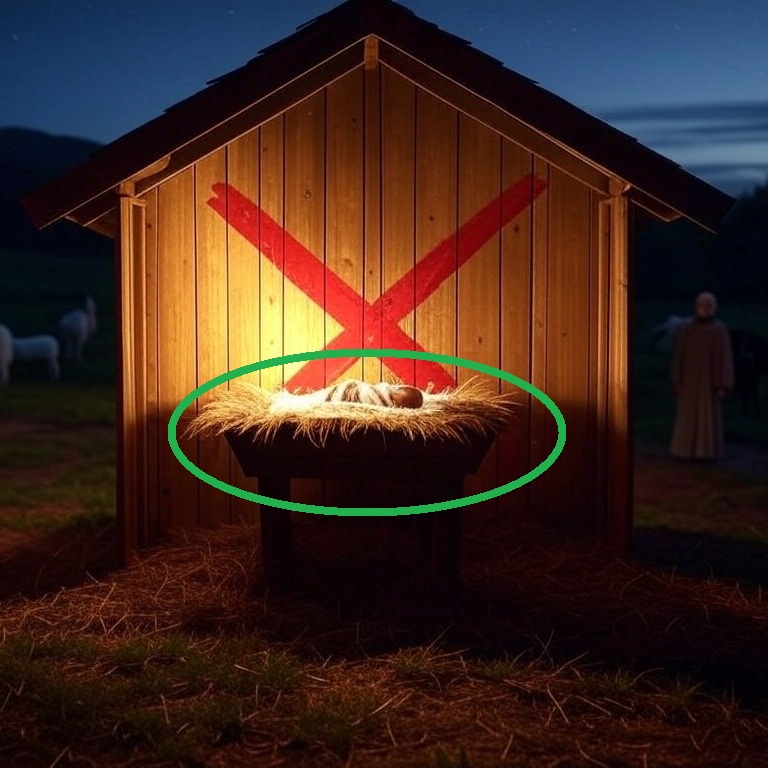
Another thing I didn’t know when I was younger was what a manger is. I assumed the manger was the stable because whenever someone would point out a “manger scene” what I always noticed was the big wooden barn. The shelter in Bethlehem where Jesus was born was actually more like a cave. But regardless, a manger is not a barn; it’s an animal feeding trough that holds dry feeds, like grain. So Mary wrapped up Jesus in swaddling clothes and laid him in a feed box.

These are interesting details, but why does St. Luke mention them? The details do reflect the humility of our Savior and King. Our Lord could have arranged providence instead to have himself born inside a palace with wealth, but he chose to enter into our human poverty and discomfort. But there is another reason why St. Luke notes these things: they foreshadow what would come later.

One day, decades after Christmas, assisted by another Joseph, the Blessed Mother Mary would wrap her Son’s body with cloths and lay him down inside another borrowed cave. And it is fitting that on Christmas night Jesus’ body was placed inside of a feedbox for grain, for he would go on to offer his full self as food for us, as Bread for the life of the world. It’s all connected and the beginning contains the end. Christmas leads to Holy Week, and Holy Week gives us the Faith, the Church, the Holy Eucharist.

A third and final thing I misunderstood when I was younger was when the Magi (or “Wisemen”) really arrived in Bethlehem. Having followed ‘the Christmas Star,’ I assumed they showed up on Christmas night. The Magi actually came later, sometime between forty days and perhaps two years after Christmas. We know this because Joseph and Mary did not yet have the Magi’s gift of gold to buy a sacrificial lamb for the Presentation at the Temple. And King Herod, in his attempt to kill Baby Jesus in Bethlehem, ordered the death of all the baby boys “two-years-old and under.The Magi responded to Christ’s birth and came after Christmas. They entered the house of the Holy Family and they came with gifts.

It is good that we are gathered for this holy night. Jesus has called you here to be with him and to be with us. But like the Magi, we all are also called to respond to his birth by coming after Christmas. This is the house of his Holy Family, and we must honor and adore him, bearing for him the gift of ourselves. Jesus’ wish this Christmas is for you, and each of us need him. Christmas, Easter, the Holy Mass; the Faith, the Church, the Eucharist; the past, the present, eternity; they’re all connected here, in Jesus Christ. Behold, I proclaim to you good news of great joy! A Savior has been born for you who is Christ and Lord. So come, let us adore him!

Imitate The Visitation

December 21, 2024

4th Sunday of Advent
By Fr. Victor Feltes

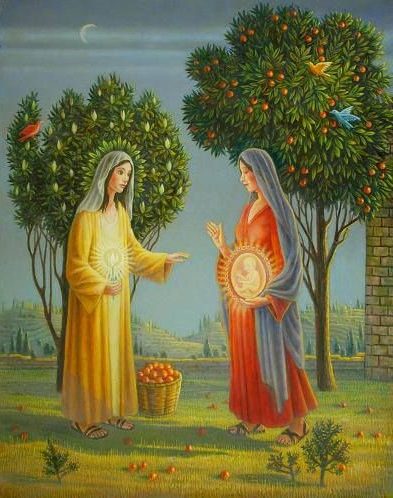
When Archangel Gabriel informed the Virgin Mary that she would conceive the Son of God, the last recorded thing he told her was: “[B]ehold, Elizabeth, your relative, has also conceived a son in her old age, and this is the sixth month for her who was called barren; for nothing will be impossible for God.” Notice how the angel does not tell Mary what to do with this final bit of news. Yet soon after in response, likely encouraged by the Holy Spirit, “Mary set out and traveled to the hill country in haste to a town of Judah, where she entered the house of Zechariah and greeted Elizabeth.”

St. Luke records that “Mary remained with her about three months and then returned to her home.” Luke’s Gospel contains details about the Annunciation, the Visitation, the Nativity, and Jesus’ early years which are not told in the other Gospels, including things upon which Mary “pondered in her heart.” Now how would you know what someone pondered in their heart unless they told you? This suggests that the original source for the stories in the first chapters of Luke was the Blessed Virgin Mary herself.

At the Visitation, at least four persons are brought together: Elizabeth, with John the Baptist at least twenty weeks along, and Mary her kinswoman, with Jesus who was perhaps only days old within her. Although Mary believed in what was spoken to her by the angel, she may not have known how far his words had been fulfilled. If that is the case, then the first person on earth to recognize and herald the presence of Christ Incarnate was another unborn child.

The angel never commanded Mary to make the journey, but she wanted to be there for Elizabeth. For about three months, apparently until the circumcision and naming of John eight days after his birth, Mary was there to help and support Elizabeth around the house and through her first delivery. Elizabeth, in turn, was an encouragement and help to Mary, sharing Spirit-inspired words, like “blessed are you among women and blessed is the fruit of your womb,” and offering wise advice, such as whether and how Mary should reveal the news of her pregnancy to Joseph. Unborn Jesus and unborn John depended upon their mothers for life itself, yet even these little ones were helpful as well. John’s tiny leaping kicks confirmed to Elizabeth what the Holy Spirit was revealing to her, while the grace of the Son of God was mystically supporting them all. They were called to community and to help and accept help from each other. We are called to help and accept help from one another sharing community in this parish as well.

When I was in seminary, we would gather for meals at round tables in the refectory (or cafeteria). We ate from plates and bowls on top of dinner trays. Sometimes at the end of meals, my fellow seminarians would offer to take up others’ trays to the dishwasher racks. I would gladly accept the offer and thank them for it. However, occasionally when I would offer to take up other seminarians’ trays, someone might adamantly refuse. So I would ask, “How come it’s okay for you to take up my tray but not okay for me to take up yours? Come on, allow me to merit with God from doing some good deeds too!” Mary and Jesus, Elizabeth and John, were all together and helpful to each other. Christians are called not only to serve but to be humble enough to accept and even seek out kindness and help from others.

The providence and grace of God led to the beautiful mystery of the Visitation. This week, God will draw many people to our church for the first time in a long time. Joyfully greet our guests, like Elizabeth welcomed Mary. Like little John the Baptist, express excitement that they are here. Invite them to be with us and be present yourself, at Sunday Mass, as part of our Parish Council of Catholic Women or our Knights of Columbus, in the That Man Is You men’s group, at parish meals or at activities, like my next Trivia Night this January. You have nothing to lose from this, while others have much to gain. And please prayerfully consider creating community events for our parish yourself. Would you like to start a Bible study, or a Catholic video series, or a book or movie club, or host an after-Mass social? Talk to me about whatever you have in mind because I desire your rewarding work to bear much good fruit. Blessed are you who believe that the Lord could do great things through you.

Rejoice, The Lord Is Near – Have No Anxiety At All

December 14, 2024

3rd Sunday of Advent
By Fr. Victor Feltes

A story is told of an old American Indian speaking to his young grandchild seated at his feet. “Inside of me there are two wolves,” the grandfather explains. “One of these wolves is virtuous: patient, kind, chaste, generous, forgiving, and loving. But the other wolf is vicious: angry, cruel, lustful, greedy, unforgiving, and hateful. These wolves are battling within me in a fight to the death.” The child asks, “Which wolf is gonna win, Grandpa?” The grandfather replies, “The one that I feed.”

One bit of encouragement I often give in the confessional concerns the ideas, feelings, memories, or temptations which enter people’s minds. When people confess to having had bad thoughts or temptations, I ask, “Did you will them? Did you choose them? Did you welcome them? Did you say ‘Yes’ to them, or did you resist them?” Unhelpful thoughts and feelings can come to us against our will. We only sin or merit when we engage our will to accept or reject them. A saint is not someone who never feels temptation but someone who, even when tempted, choses what is good and true and loving. If we do not realize this, we will believe every temptation we think or feel is a sinful defeat when it is merely a call to battle.

Some people think temptations only attract us to pleasures, to set us up for a fall. However, some temptations draw us downwards, to grumbling, bitterness, unhappiness, and despair. In today’s second reading from the Letter to the Philippians, St. Paul presents an antidote. He says, “Rejoice in the Lord always. I shall say it again: rejoice!” A person rejoices when they have gratitude for the present and the past and have hope for the future.

Our days may be very challenging but even amidst our sufferings we have much to be grateful for. We can always find a reason to complain. (Somebody with nothing to complain about could even choose to complain about that!) But most of our complaints are completely unnecessary. Instead, count your blessings—perhaps literally on your ten fingers—especially in hard times, and remember that you have great cause for hope in good things to come. When I replace pointless complaining with rejoicing my blessing cup is no longer empty but full enough to overflow for others. Because of this, St. Paul says, “Your kindness should be known to all.”

Another of our common unpleasant temptations is to anxiety. One of the things Jesus says most in the Gospels is “be not afraid!” Realize that worry (which is the natural fruit of fear) is worthless; concern is enough. If I were totally unconcerned about this homily then I would have prepared nothing to say. But if I had been worried about this homily there would still be just as much work to do but with added stress besides. What can you do when you are showing proper concern and you are doing your part but still feel the burden of anxiety? St. Paul provides this prescription: Remember that “The Lord is near.” So “have no anxiety at all, but in everything, by prayer and petition, with thanksgiving, make your requests known to God. Then the peace of God that surpasses all understanding will guard your hearts and minds in Christ Jesus.

We are called to zero anxiety, “to have no anxiety at all.” When you’ve done what you can, you can refer the rest to God. Lift up your prayers and petitions with a thankful heart. And then, even if nothing visibly changes in the situation immediately, the peace of God which surpasses our understanding will guard and protect your heart and mind from pointless worry. The Lord is near. Give thanks and rejoice. Have no anxiety at all. For the Lord is with you, fighting on your side in the battle.

The Subtle Spirit

December 9, 2024

Solemnity of the Immaculate Conception
By Fr. Victor Feltes

I would like to highlight certain stories about three people: Mary, Paul, and Caiaphas. First, consider the Blessed Virgin Mary. We celebrate how she was created by God, conceived entirely free from the wounds of original sin. Throughout her existence, she has been filled with God’s grace. She is the holiest woman who has ever lived. And yet, she was shocked that an angel would ever visit her. “Hail, full of grace,” announced the Archangel Gabriel, “The Lord is with you,” but she was greatly troubled at wondered at his greeting.

Next, consider St. Paul the Apostle. No human being has written more books of Sacred Scripture than he. These Pauline texts are usually letters written to particular Christian communities and they contain the particularities one finds in personal letters. For example, in the final chapter of his Letter to the Romans, Paul greets at least twenty-three persons by name. Now St. Paul believed that he was doing the Lord’s work, but if Paul had known the letters he was writing would go on to be as venerated and as widely read as the Old Testament’s books, I doubt he would have written, ‘Say Hi to Prisca and Aquila for me.’

Finally, consider Caiaphas. So many Jews were coming to believe in Jesus that the chief priests and the Pharisees convened and said, “If we leave him alone all will believe in him and the Romans will come and take away both our land and our nation!” Caiaphas, who was the high priest that year, said to them, “You know nothing, nor do you consider that it is better for you that one man should die instead of the people, so that the whole nation may not perish.” John’s Gospel notes, “He did not say this on his own, but since he was high priest for that year, he prophesied that Jesus was going to die for the nation….”

The High Priest Caiaphas was speaking prophesy but did not realize it. St. Paul the Apostle was writing inspired scripture but did not realize it. The Blessed Virgin Mary was living as the holiest of all women but did not realize it. They show us that the Holy Spirit is so agile, intelligent, and subtle that he can act through us without our realizing it.

Now, it is essential for us to remain in Christ, devoted to prayer and his Sacraments. Otherwise, the Holy Spirit will achieve his purposes in spite of us, as with the High Priest Caiaphas. But if you love our Lord, if you strive to please Jesus Christ, if you are open to doing the will of God, be encouraged and take heart. The Holy Spirit is working through you more profoundly than you realize.