Archive for February, 2025

Loving Everyone, Our Enemies & Ourselves

February 23, 2025

7th Sunday in Ordinary Time
By Fr. Victor Feltes

Jesus never promised that we would not have enemies. Jesus says, “You will be hated by all nations because of my name. … No disciple is above his teacher, no slave above his master. … If they persecuted me, they will also persecute you. … Woe to you when all speak well of you,” for false prophets were treated in this way. But “blessed are you when they insult you and persecute you and utter every kind of evil against you falsely because of me. Rejoice and be glad, for your reward will be great in heaven.” Thus were true prophets and servants of God treated. The faithful will encounter enemies in this world, yet Christ commands us to love everyone.

He says to his disciples: “Love your enemies, do good to those who hate you, bless those who curse you, pray for those who mistreat you.” You will have enemies, but you must love them. Love sometimes has warm, fuzzy feelings, but not always. This is because love is choice, a choice to will the good of the other. You will not always like everyone, but you must always love everyone.

Jesus tells us, “To the person who strikes you on one cheek, offer the other one as well, and from the person who takes your cloak, do not withhold even your tunic.” Our love of enemies, however, does not mean we must permit grave harms to be done to ourselves or others. This is reflected in the examples Jesus cites. Losing one’s cloak and outer tunic would not leave someone naked, since people in those days also wore an inner tunic. And a slap on the cheek in those days—unlike a stab in the chest—wounds one’s dignity more than one’s long-term health.

We should oppose and resist grave evil, but we must not be undone by the sins and slights of life. Jesus wants us to be magnanimous, large-souled; merciful and forgiving others’ trespasses and debts, generous and giving to those who ask of us, patiently loving people and doing for them what we would have others do for us. Pray for those who mistreat you, bless those who curse you, and do good to those who hate you. Then you will be loving them like Jesus has loved us.

God proves his love for us in that while we were still sinners Christ died for us.” Be like God, who is generous and kind and merciful towards the ungrateful and the wicked. Then your reward will be great, packed together, shaken down, and overflowing, for you will be godlike, children of the Most High. St. Paul declares, “Just as we have borne the image of the earthly one, we shall also bear the image of the heavenly one.” Then, as St. John writes, “we shall be like [God], for we shall see him as he is.” “God is love,” and to become like God it is important that we love and forgive like him. We must also extend this love and forgiveness to ourselves.

A person who believes that God can love and forgive everyone but themselves is singling themselves out as somebody super-extra special. Remember that our Lord is much more concerned with your future than your past. To Christians who are too hard on themselves, I suggest this thought experiment: Imagine somebody just like you, with the same past, the same strengths and weaknesses, the same loves and desires. What would you think of that person? Could you be friends with that person? How would you treat that person? If kindly, then love yourself like your neighbor. If God loves you, you should also love yourself. If God has forgiven you, you should also forgive yourself. And since God loves everyone, you should love everyone too.

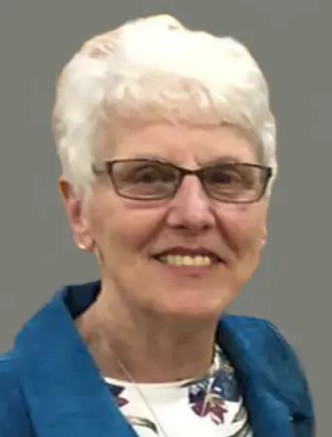
A Happy Death — Wake Homily for Lois Petska, 75

February 17, 2025

By Deacon Dick Kostner

I recently posted on Facebook an article from Dr. Pamela Prince Pyle, “a board-certified doctor of internal medicine, chair of the board of Africa New Life Ministries in Rwanda, Museum of the Bible Woman of Legacy, speaker, and author of the book Anticipating Heaven: Spiritual Comfort and Practical Wisdom for Life’s Final Chapters, which released on January 7th, 2025. She indicated that her vocation centered around comforting people who were on their death bed. She tells the story about an elderly lady who she visited with as she lay on her death bed barely able to speak and how she was questioned by this lady on the condition of her health. She broke down telling her that her death was near. The lady grabbed her hand, smiled and said, ‘Don’t worry I am going to have a happy death, please talk to and prepare my family for it.’ It caught her by surprise because she had never heard anyone refer to death as a ‘Happy event.’ She said the lady had been preparing for and looking forward to seeing Jesus and all of her deceased family and friends again. Upon reflection the doctor came to the conclusion that happiness and death are not in opposition with each other to people who are grounded in their faith.

Tonight, we are celebrating the life of a gal who was full of faith in God and family and left us suddenly without warning. Barb and I grew up with and were friends with this special person and I believe her quick exit from this life could be interpreted as God bestowing upon Lois the gift of a quick entry to God’s world. A place where she can celebrate her faith with her family and friends who also were people of great faith. People who always had their eyes focused on heaven and their Creator knowing that death was but the key to the door of heaven for those who called Jesus their brother while living out their vocation of love of God and neighbor while here on earth.

Barb and I were close friends with Fr. Hugh and many a nights he would swing by and enjoy a drink with us and just talk. I remember one night when he said he was ready to “move on.” He had told us that he was dying and that he was tired of living so long and having to be the one to bury all of his friends and family. It was time to join his friends and family and leave behind earthly pain and suffering.

Our Gospel this evening tells his disciples and us to not spend all of our efforts accomplishing only earthly treasures. If we want the reward of heaven it requires us to live out our lives in love of God and neighbor. A few years ago the deacons had a young priest tell us to be prepared. When we are young we don’t think about death. We feel bullet proof. He said you talk yourself into putting off things of heaven thinking just maybe you will be the first to get a pass from experiencing death. That ain’t going to happen! As Jesus tells us tonight, “You also must be prepared, for at an hour you do not expect, the Son of Man will come.”

I think this was what Lois would have said if she had known she was being called home. And like the dying lady told Dr. Pyle, I believe she is telling us: “Don’t worry, I have had a happy death, please, prepare my family and friends for it.

Why Bread & Wine

February 17, 2025

6th Sunday in Ordinary Time
By Fr. Victor Feltes

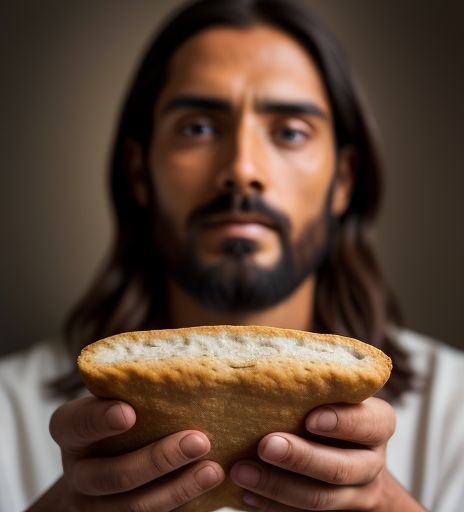
This Sunday, our seven week exploration of the sacraments culminates and concludes with the Most Holy Sacrament, the Most Blessed Sacrament, the Source and Summit of the Christian life. It is called the Breaking of the Bread, the Lord’s Supper, our King’s Heavenly Banquet, the Marriage Supper of the Lamb. It is the Bread from Heaven, the Bread of Angels, the Bread of Life; the antidote for death and the medicine of immortality. This sacrament is the Holy Sacrifice, our Holy Communion, the Most Holy Eucharist. After this homily, following our profession of the Creed and our prayers of the faithful, gift-bearers will carry up bread and wine along with water and our Sunday collection. Why did our Lord in his divine wisdom choose bread and wine for use in a sacrament, for this greatest sacrament? There are many reasons.

One reason is that the Last Supper was a Passover meal, and Passover meals featured unleavened bread and wine with a sacrificed lamb. The Passover celebrated how the angel of death harmlessly passed over the homes marked with the blood of the lamb, freeing God’s people from Egyptian slavery to Pharaoh, and enabling them to journey toward the Promised Land. The Eucharist frees us from slavery to Satan, sin, and death, enabling us to enter heaven and the new Creation, passing over unharmed into freedom and new life.

During the exodus, God’s people ate flakes of Manna in the desert. This Manna resembled and was called bread from heaven strengthening and preserving them on their journey. Jesus proclaims himself the new Bread from Heaven: “I am the living bread that came down from heaven; whoever eats this bread will live forever; and the bread that I will give is my flesh for the life of the world.”

Jesus changing water into wine at Cana reveals Christ can transform one thing into another. And Jesus’ multiplication of loaves shows that he can multiply something so that a multitude can partake of it. These miracles foreshadow how Jesus changes bread and wine into himself so that all of us can receive him in the Eucharist.

Daily bread” and wine were staple foods for Gentiles and Jews in the ancient world. Psalm 104 says God gave “wine to gladden the heart of man,” and “bread to strengthen man’s heart.” Though wine was more commonplace in those days, it was a symbol of special rejoicing as well. Jeremiah noted how people typically tread grapes with “shouts of joy,” and Ecclesiastes observed “wine gives joy to the living.” A feast of bread and wine combines the humblest of common foods with the peak of luxurious royal drinks. Likewise, the Eucharist unites the ordinary and extraordinary, our earthly everyday combines with the height of heavenly celebration.

Wheat and grapes grow on every continent on earth besides Antarctica, making these sacramental ingredients available to people throughout the world. God provides the raw materials, fruits of the earth and vine, to be worked by human hands into the bread and wine we offer the Lord God of all Creation. We are called to serve as his faithful stewards. Christ then takes our works and makes them still more bountiful. He does this in this sacrament and also throughout our lives.

The processes for making bread and wine reflects the Passion of Christ. Wheat is beaten, ground, and pummeled. Grapes are crushed, drained, and outpoured. They suffer along their way to God-honoring sacrificial glory.

The baked bread resembles human skin and red wine resembles human blood. And at the words of Consecration these things really become Jesus Christ through and through—his Body, Blood, Soul, and Divinity; living, whole, and undivided—with only the outward appearances of bread and wine remaining. To symbolically separate the Body of Christ from his Precious Blood is a symbol of death. And their reunion within us is a symbol of resurrection. Christ is truly risen in history and risen in us. As Jesus says, “Whoever eats my flesh and drinks my blood remains in me and I in him.”

This sacred sacrifice is also a communal meal. The Eucharist which unites us to Jesus Christ unites us to one another in him. As St. Paul writes to the Corinthians, “The cup of blessing which we bless, is it not a participation in the blood of Christ? The bread which we break, is it not a participation in the body of Christ? Because there is one bread, we who are many are one body, for we all partake of the one bread.”

Finally, consider how instead of coming to us as a frightening fire, Jesus Christ comes as non-threatening food. He says, “Take this, all of you, and eat of it, for this is my Body… Take this, all of you, and drink from it, for this is the chalice of my Blood…” It is very important that we approach him lovingly and reverently, in a state of grace, but Jesus urges us to partake of him. Christ’s desire is for us and him to live as one, to become the Body of Christ you receive in this Most Blessed Sacrament.

The Gift of Holy Orders

February 9, 2025

5th Sunday of Ordinary Time
By Fr. Victor Feltes

The seven sacraments of the Catholic Church are sensible signs instituted by Christ to gift us his grace. Sometimes the sacraments are powerfully moving experiences but a person can also receive graces and be transformed by them without feeling anything extraordinary. It is possible, for instance, for a baby sleeping in its mother’s arms to be born again through baptism without waking up. It is possible to hold the God of infinite glory upon your tongue in the Eucharist while being totally distracted with a wandering thought. From modern science, lethal amounts of radiation — though invisible — can kill you. From the sacraments, God’s graces can give you life even when you do not feel them. Ministers of the sacraments typically do not feel divine power flowing in or out from them, like Jesus at the healing of the hemorrhaging woman. However, I believe I felt the moment that I was ordained a priest.

Fifteen years ago, I was ordained a priest of Jesus Christ at our cathedral in La Crosse. The Sacrament of Holy Orders, which can ordain a man first a deacon, then a priest, and then a bishop, is celebrated through a bishop’s laying of hands and consecratory prayer. I had not studied the words of the ritual beforehand but I knew going in that my ordination would occur by the end of that consecratory prayer, and I wondered if there would be some moment before the “amen” when I would be ordained.

The prayer’s first ten sentences recount the Old Covenant priesthood, the high priesthood of Jesus Christ, and the priesthood of his apostles. God declares his people to be a priestly people, since all of us are called to offer spiritual sacrifices and help sanctify the world. But from this multitude, God has called certain men to be ministerial priests to serve him and his people.

Then I heard Bishop Listecki say these words: “Grant we pray, Almighty Father, to these, your servants, the dignity of the priesthood; renew deep within them the Spirit of holiness; may they henceforth…” and when he said “henceforth,” I began feeling a pleasant but unsettling wooziness. The words which followed were: “may they henceforth possess this office which comes from you, O God…” I felt the effect of those words.

There is one eternal priest, Jesus Christ, the source of all priesthood. He is the true priest, with all others being merely his ministers Jesus chose apostles to be his first New Covenant priests. These men then appointed and ordained through the laying of hands bishops, priests, and deacons to serve, sanctify, and shepherd the Church—an apostolic line of authority which endures to this day. In Jesus Christ, priest, prophet, and king, these ministers are called to lead worship, teach truth, and pastorally lead. Though history’s greatest and holiest woman who has ever lived was in their midst, Jesus and his apostles never ordained the Virgin Mother Mary nor any other female, and the Church lacks the authority to ordain women today. Men and women are equal in dignity, but a man is not a woman and a mother cannot be a father.

Priests, however faithful or unworthy, act in the person of Christ. Without them, we would not have the Eucharist, or Confirmation, or Anointing of the Sick, or the sacramental forgiveness of sins. Without the successors to St. Peter and the apostles, the pope and the bishops, the Magisterium of the Church whose definitive teachings are protected by the Holy Spirit from error, we could not know our one, holy, catholic, and apostolic Faith with certainty. How lost we would be without shepherds for our flock! Such is the importance of the Sacrament of Holy Orders.

Last week, when I asked different people what I should preach about this sacrament, more than one said to mention the importance of praying for priests. It is important to pray for more vocations to the priesthood, but these folks meant praying for the priests we have, for their holiness, endurance, and fruitfulness. Pray for your bishops, priests, and deacons, both the ones that you like and the ones that you don’t. St. Paul asked that “supplications, prayers, petitions, and thanksgivings” would be offered “for all in authority, that we may lead quiet and tranquil lives in all devotion and dignity.” Pray for your clergy that they may more effectively aid you and many to grow into saints in this world and one day reach heaven.

A man who thinks Jesus may be calling him like he called Simon Peter, James, and John in today’s gospel, should earnestly explore this vocation, since priesthood is likely the greatest mission, duty, and life he could ever pursue. In the words of St. John Vianney, “The priest continues the work of redemption on earth… If we really understood the priest on earth, we would die not of fright but of love… The Priesthood is the love of the heart of Jesus.”

The Gift of Confirmation

February 2, 2025

Feast of the Presentation
By Fr. Victor Feltes

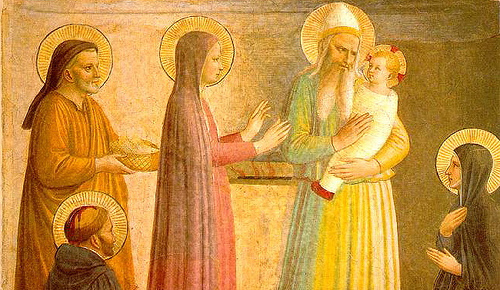
Forty days after Jesus’ birth, Joseph and Mary took him up to Jerusalem to offer the sacrifice required for a firstborn son. Jesus had been conceived through the Holy Spirit, but that was not the Spirit’s only activity in the world. The Holy Spirit revealed to a devout and righteous man named Simeon that he would encounter the Christ during his lifetime. On the day of the Presentation, the Spirit moved Simeon to come into the temple and enabled him to recognize the Christ when he saw him. Then Simeon took Baby Jesus into his arms and spoke words of prophecy which the Spirit inspired in him. There was also a prophetess there, an 84-year-old widow named Anna who never left the temple but worshiped night and day with fasting and prayer. The Spirit enlightened her too, to draw near and meet the Christ, and she spoke about the child to all. Through the Holy Spirit these servants of God, St. Simeon and St. Anna, were witnesses to Christ and filled with knowledge, courage, and joy. The plan of God was not to keep this gift of the Spirit limited to a few, but to grant him to many.

When the Spirit came down on Pentecost Sunday, St. Peter recalled the Old Testament prophesy of Joel: “‘It will come to pass in the last days,’ God says, ‘that I will pour out a portion of my Spirit upon all flesh. … Indeed, upon my servants and my handmaids I will pour out a portion of my Spirit in those days…” The Holy Spirit is poured out in the Sacrament of Confirmation which, together with Baptism and Eucharist, is necessary for the completion of our baptismal grace.

At Jesus’ baptism, the Holy Spirit descended upon him in the form of a dove, and “drove” and “led” him out into the desert for forty days before commencing his public ministry. The Old Testament had foretold that the Spirit of the Lord would rest upon the Christ or Messiah, titles which both mean “Anointed One.” Jesus was quoting the Prophet Isaiah when he declared in the synagogue at Nazareth, “The Spirit of the Lord God is upon me, because the Lord has anointed me.” Old Covenant priests, prophets, and kings were inaugurated through anointing with oil. Jesus was anointed with the Holy Spirit as our New Covenant Priest, Prophet, and King. And Christians are anointed with that same Spirit through Baptism and Confirmation to participate in Christ’s identity and mission.

In our Latin rite, a person celebrates Confirmation typically sometime after the age of reason, but in danger of death it is even given to newborns. The ordinary minister of Confirmation is the bishop, our successor to the apostles, though Catholic priests can be granted the authority to validly confirm when needed. A person is confirmed when the minister laying his hand on his or her head and anoints the forehead with a blessed oil called chrism while saying, “Be sealed with the Gift of the Holy Spirit.” Chrism is made of olive oil plus a fragrant sap called balsam. This gives chrism its perfumed scent, such that the anointed Christian — to use the words of St. Paul — bears “the aroma of Christ.”

One of my memories from the evening following my Confirmation by Bishop Burke in Eau Claire’s Zorn Arena was feeling great joy. When I wondered at its source I thought, “Oh yeah, the Holy Spirit.” Joy, love, peace, patience, kindness, goodness, generosity, gentleness, faithfulness, modesty, self-control, and chastity are among the Spirit’s fruits. And wisdom, understanding, counsel, fortitude, knowledge, piety, and fear of the Lord are numbered among his gifts.

In the ancient world, oil was a sign of abundance and joy, as at harvest time. It was used for cleansing both before and after baths. The injured used oil to heal wounds and soothe bruises Track and field athletes and wrestlers used it to limber their limbs. And it gave radiant beauty to both men and women’s skin. The Holy Spirit, in addition to the generous gifts he gives and fruits he brings, purifies us from sin and vice toward perfection, heals our past wounds and soothes our daily bruises empowers us to prevail over temptation and opponents, and gives us the beautiful glory of a more than natural goodness.

By the sacrament of Confirmation, you are more perfectly bound to the Church and enriched with a special strength. This sacrament is not an ending but a new beginning. After Confirmation you are, as true witnesses of Christ, more obliged to bravely spread and defend our Faith by word and deed in the world. If you were never confirmed within the Catholic Church, do not neglect this sacrament. Ask me about how you can receive this gift. And if you have already received the Holy Spirit in Confirmation, sincerely and lovingly ask him for his greater gifts and fruits. Like the fire passing atop candles, one to the next, God the Holy Spirit is not diminished by being more widely shared and spread. The child Jesus grew and became strong, filled with wisdom, and the favor of God was upon him. By the Holy Spirit, God desires to do greater things with you.