Archive for February 17th, 2025

A Happy Death — Wake Homily for Lois Petska, 75

February 17, 2025

By Deacon Dick Kostner
I recently posted on Facebook an article from Dr. Pamela Prince Pyle, “a board-certified doctor of internal medicine, chair of the board of Africa New Life Ministries in Rwanda, Museum of the Bible Woman of Legacy, speaker, and author of the book Anticipating Heaven: Spiritual Comfort and Practical Wisdom for Life’s Final Chapters, which released on January 7th, 2025. She indicated that her vocation centered around comforting people who were on their death bed. She tells the story about an elderly lady who she visited with as she lay on her death bed barely able to speak and how she was questioned by this lady on the condition of her health. She broke down telling her that her death was near. The lady grabbed her hand, smiled and said, ‘Don’t worry I am going to have a happy death, please talk to and prepare my family for it.’ It caught her by surprise because she had never heard anyone refer to death as a ‘Happy event.’ She said the lady had been preparing for and looking forward to seeing Jesus and all of her deceased family and friends again. Upon reflection the doctor came to the conclusion that happiness and death are not in opposition with each other to people who are grounded in their faith.

Tonight, we are celebrating the life of a gal who was full of faith in God and family and left us suddenly without warning. Barb and I grew up with and were friends with this special person and I believe her quick exit from this life could be interpreted as God bestowing upon Lois the gift of a quick entry to God’s world. A place where she can celebrate her faith with her family and friends who also were people of great faith. People who always had their eyes focused on heaven and their Creator knowing that death was but the key to the door of heaven for those who called Jesus their brother while living out their vocation of love of God and neighbor while here on earth.

Barb and I were close friends with Fr. Hugh and many a nights he would swing by and enjoy a drink with us and just talk. I remember one night when he said he was ready to “move on.” He had told us that he was dying and that he was tired of living so long and having to be the one to bury all of his friends and family. It was time to join his friends and family and leave behind earthly pain and suffering.

Our Gospel this evening tells his disciples and us to not spend all of our efforts accomplishing only earthly treasures. If we want the reward of heaven it requires us to live out our lives in love of God and neighbor. A few years ago the deacons had a young priest tell us to be prepared. When we are young we don’t think about death. We feel bullet proof. He said you talk yourself into putting off things of heaven thinking just maybe you will be the first to get a pass from experiencing death. That ain’t going to happen! As Jesus tells us tonight, “You also must be prepared, for at an hour you do not expect, the Son of Man will come.”

I think this was what Lois would have said if she had known she was being called home. And like the dying lady told Dr. Pyle, I believe she is telling us: “Don’t worry, I have had a happy death, please, prepare my family and friends for it.

Why Bread & Wine

February 17, 2025

6th Sunday in Ordinary Time
By Fr. Victor Feltes

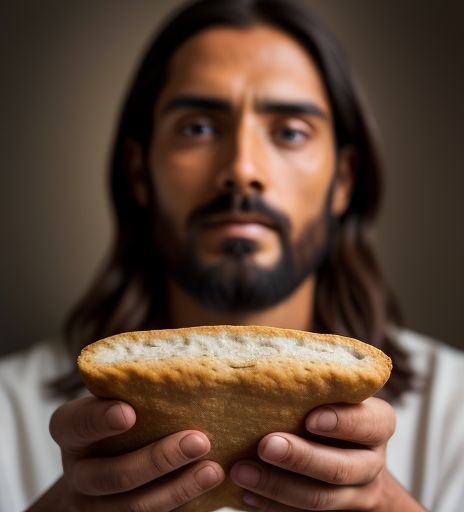
This Sunday, our seven week exploration of the sacraments culminates and concludes with the Most Holy Sacrament, the Most Blessed Sacrament, the Source and Summit of the Christian life. It is called the Breaking of the Bread, the Lord’s Supper, our King’s Heavenly Banquet, the Marriage Supper of the Lamb. It is the Bread from Heaven, the Bread of Angels, the Bread of Life; the antidote for death and the medicine of immortality. This sacrament is the Holy Sacrifice, our Holy Communion, the Most Holy Eucharist. After this homily, following our profession of the Creed and our prayers of the faithful, gift-bearers will carry up bread and wine along with water and our Sunday collection. Why did our Lord in his divine wisdom choose bread and wine for use in a sacrament, for this greatest sacrament? There are many reasons.

One reason is that the Last Supper was a Passover meal, and Passover meals featured unleavened bread and wine with a sacrificed lamb. The Passover celebrated how the angel of death harmlessly passed over the homes marked with the blood of the lamb, freeing God’s people from Egyptian slavery to Pharaoh, and enabling them to journey toward the Promised Land. The Eucharist frees us from slavery to Satan, sin, and death, enabling us to enter heaven and the new Creation, passing over unharmed into freedom and new life.

During the exodus, God’s people ate flakes of Manna in the desert. This Manna resembled and was called bread from heaven strengthening and preserving them on their journey. Jesus proclaims himself the new Bread from Heaven: “I am the living bread that came down from heaven; whoever eats this bread will live forever; and the bread that I will give is my flesh for the life of the world.”

Jesus changing water into wine at Cana reveals Christ can transform one thing into another. And Jesus’ multiplication of loaves shows that he can multiply something so that a multitude can partake of it. These miracles foreshadow how Jesus changes bread and wine into himself so that all of us can receive him in the Eucharist.

Daily bread” and wine were staple foods for Gentiles and Jews in the ancient world. Psalm 104 says God gave “wine to gladden the heart of man,” and “bread to strengthen man’s heart.” Though wine was more commonplace in those days, it was a symbol of special rejoicing as well. Jeremiah noted how people typically tread grapes with “shouts of joy,” and Ecclesiastes observed “wine gives joy to the living.” A feast of bread and wine combines the humblest of common foods with the peak of luxurious royal drinks. Likewise, the Eucharist unites the ordinary and extraordinary, our earthly everyday combines with the height of heavenly celebration.

Wheat and grapes grow on every continent on earth besides Antarctica, making these sacramental ingredients available to people throughout the world. God provides the raw materials, fruits of the earth and vine, to be worked by human hands into the bread and wine we offer the Lord God of all Creation. We are called to serve as his faithful stewards. Christ then takes our works and makes them still more bountiful. He does this in this sacrament and also throughout our lives.

The processes for making bread and wine reflects the Passion of Christ. Wheat is beaten, ground, and pummeled. Grapes are crushed, drained, and outpoured. They suffer along their way to God-honoring sacrificial glory.

The baked bread resembles human skin and red wine resembles human blood. And at the words of Consecration these things really become Jesus Christ through and through—his Body, Blood, Soul, and Divinity; living, whole, and undivided—with only the outward appearances of bread and wine remaining. To symbolically separate the Body of Christ from his Precious Blood is a symbol of death. And their reunion within us is a symbol of resurrection. Christ is truly risen in history and risen in us. As Jesus says, “Whoever eats my flesh and drinks my blood remains in me and I in him.”

This sacred sacrifice is also a communal meal. The Eucharist which unites us to Jesus Christ unites us to one another in him. As St. Paul writes to the Corinthians, “The cup of blessing which we bless, is it not a participation in the blood of Christ? The bread which we break, is it not a participation in the body of Christ? Because there is one bread, we who are many are one body, for we all partake of the one bread.”

Finally, consider how instead of coming to us as a frightening fire, Jesus Christ comes as non-threatening food. He says, “Take this, all of you, and eat of it, for this is my Body… Take this, all of you, and drink from it, for this is the chalice of my Blood…” It is very important that we approach him lovingly and reverently, in a state of grace, but Jesus urges us to partake of him. Christ’s desire is for us and him to live as one, to become the Body of Christ you receive in this Most Blessed Sacrament.