Archive for April, 2025

A Brave Soul — Funeral Homily for Ellen Zwiefelhofer, 102

April 29, 2025

By Fr. Aro (Arockiaraj Paristham)

On behalf of the two parishes of St. Paul’s and St. John’s, I would like to extend our sincere sympathy to the family members and the friends of Ellen. It is true that it is always difficult to lose someone that we dearly love. She will be remembered in our thoughts, prayers, and Masses. Whenever we gather together as a community of faith to celebrate the Eucharist, we always remember our faithfully departed.

Believing in Jesus’ resurrection is the core of Christian belief. It is the basis of our Christian faith. There would not be Gospels without the resurrection. There would be no Christianity, Church, priesthood, or sacraments without the resurrection. There would be no hope without the resurrection.

We would not have the resurrection without the death of Jesus Christ. We do not have flowers, fruits, or trees unless the seed is sown. The seed has to die in order to start a new plant. Therefore, St. Paul preached not only the resurrection but also the crucifixion of Christ.

St. Paul reminds us that death is not the end; it is only the beginning. Life is not over; it is only changed. In the Gospel of St. John, Jesus told us that He is preparing a place for us in heaven. Death is a doorway to a new life with God. Jesus accepted death and has given us the rewards of eternal life.

Our first reading today talks about the souls of the virtuous. “Blessed are the dead who die in the Lord…, let them find rest from their labors.” This reading calms any fears about death for those who trust in God. What better place could we go after death than into the hands of God? What a beautiful way to describe God’s care for us. Do you remember when we were little, our parents held us in their arms? When we die, God will take us in His arms. We believe that God has taken Ellen into His arms. In today’s Gospel, Jesus comforts Ellen by telling her, “Come to me, you who are labor and are burdened, and I will give you rest.” We believe that Ellen is taking an eternal rest in the Lord.

Ellen’s family will remember her as a prayerful, quiet, and gentle woman. She was faithful and a regular to the Mass. Ellen was strong in her faith, a devoted Catholic, a very generous person, happy to give and help people who were in need. It is highly appreciated because, as St Paul says, “It is more blessed to give than to receive.” And “God loves the cheerful giver.”

I admired hearing about her ability and hard work which she put into running her ceramics shop for about 25 years. She was fiercely independent, full of love, and would defend her loved ones. She was a lover of nature and always be found in the garden whenever she was free. She always engaged herself in reading thousands of books over the years. She loved to spend time with her family and her house was always alive with laughter and visits. We must be thankful to her, for her service to this country, as a brave veteran in World War II, a special Truck Driver Light 345 from July 10, 1944 until November 18, 1945. Our nation is proud of her selfless military service.

We thank God for Ellen. We are grateful that she was Catholic. Let us place her in the hands of our Blessed Mother. She understands our pain and suffering. May our God grant Ellen eternal rest in His heavenly kingdom. May her soul rest in peace. Amen.

Jesus’ Love Succeeds

April 18, 2025

Good Friday
By Fr. Victor Feltes

The story of Christ’s Passion is a chronicle of human failures. Simon Peter, chief of his disciples, denies being his friend three times. Caiaphas and Annas, the highest Jewish leaders, reject, condemn, and hand over their Messiah. Pilate and Herod, representing the world’s political powers, tolerate injustice, persecute, and execute the Innocent One. The mob of humanity chooses the violent rebel, Barabbas (whose name means “Son of the Father”) instead of God’s Son, the peaceful Savior.

It is poignant and fitting how our liturgy has us speak the mob’s words, “Crucify him! Crucify him! …Take him away! Crucify him!” since it was our sins too which sent Jesus to the Cross. And yet, even as we are humbled and convicted at Jesus being crucified because of us, remember that Jesus accepted humiliation, pain, and death because of his love of us.

Though we may fail, Jesus’ love succeeds. He said, “When I am lifted up from the earth I will draw everyone to myself.” He stretches out his arms between heaven and earth as the everlasting sign of his New Covenant to invite and embrace us. And from the Cross, he says, “I thirst,” because his love thirsts for you and me.

Half-Measures Or Full Devotion?

April 18, 2025

Easter Sunday
By Fr. Victor Feltes

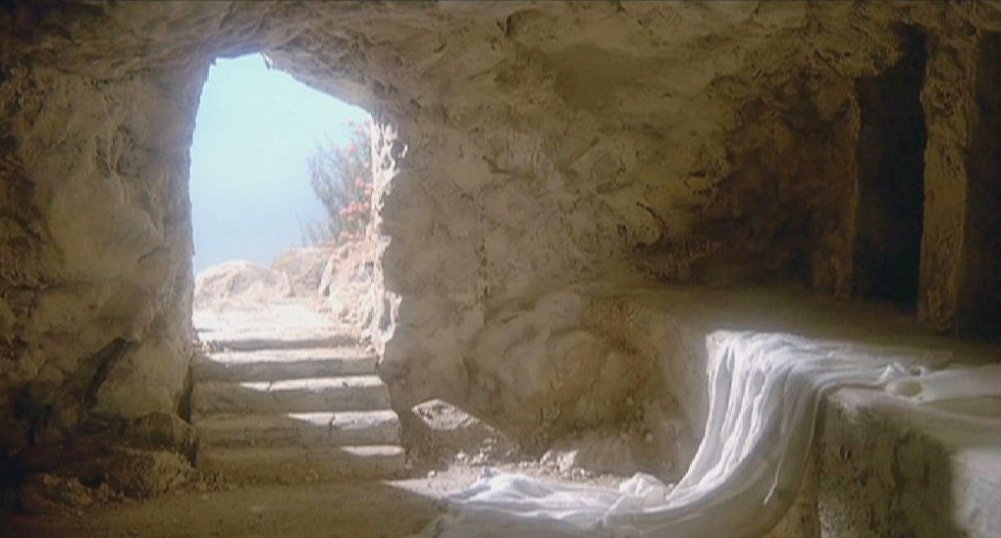
St. Peter the Apostle proclaimed: “We are witnesses of all that [Jesus] did… They put him to death by hanging him on a tree. This man God raised on the third day and granted that he be visible…to us, who ate and drank with him after he rose from the dead.” Jesus went to his Passion and Cross after the Last Supper, and from death and his tomb to the Resurrection. His apostles witnessed these events and were willing to die to testify to them, and nobody ever dies for what he knows to be a lie. The first Christians had full devotion because Christ did not go halfway in his saving mission.

But what if our Lord, instead of enduring pain and death, had chosen to spare and save himself? Jesus had told the apostles he “must suffer many things and be rejected by the elders, the chief priests and the teachers of the law, and that he must be killed and after three days rise again.” He said he had come “to give his life as a ransom for many,” shedding his blood “for the forgiveness of sins.” How could we ever find forgiveness of our sins in Christian faith and the sacraments, like Baptism and Confession, if Jesus never suffered and died?

Or imagine if Jesus had just gone halfway with the Last Supper, which was the first Holy Mass. What if he had taken the bread and given it to his disciples saying, “This is like my Body. Do this with a thought of me”? Jesus said, “Amen, amen, I say to you, unless you eat the flesh of the Son of Man and drink his blood, you do not have life within you. Whoever eats my flesh and drinks my blood has eternal life, and I will raise him on the last day. … Whoever eats my flesh and drinks my blood remains in me and I in him.” What would become of us if we could not receive Jesus in the Eucharist?

Or what if instead of Easter, Jesus Christ had merely suffered and died and never rose again? St. Paul’s answer is emphatic: “If Christ has not been raised, your faith is vain; you are still in your sins. Then those who have fallen asleep in Christ have perished. If for this life only we have hoped in Christ,” Paul says “we are the most pitiable people of all!” Therefore, if Jesus had stopped at half-measures in his mission, we would not be saved!

At the beginning of Easter Sunday Mass we sang “Jesus Christ is risen today!” We celebrate him risen not like some celebrate the Easter Bunny hiding eggs or Santa Claus bringing gifts for Christmas. A savior of merely “once upon a time” cannot save us. We celebrate Jesus Christ who was truly risen on Easter morning in 33 AD, but who is also risen, living and active, in our world today. And in the face of sin of death, he is our only hope.

This is the day the Lord has made; let us rejoice and be glad!” Embrace today’s good news, the joy of the Gospel, firmly resolved to go forward in such a way that you may be saved. Realize that you cannot safely clear a six-foot chasm by only taking three-foot hops. Half-measures are not enough.

In his suffering, in his sacraments, in his dying and his rising, Jesus shows us how far he goes in love to reach and save us. So in your daily prayers and weekly worship, in virtue and noble service, in Christian faith and fellowship, by your gratitude and love, walk with our Lord Jesus Christ with your full measure of devotion.

Consolations In The Passion

April 12, 2025

Palm Sunday
By Fr. Victor Feltes

We rightly recall Christ’s sufferings during his Passion but have you ever meditated upon his consolations?

When Jesus went out to pray and await his betrayal at the Mount of Olives, his disciples followed him. Their flesh was weak but their spirits were willing, and in that dark hour he was glad not to be alone. Jesus also had constant recourse to his Father. Though not all of his prayers were immediately granted, he knew his Father always heard him.

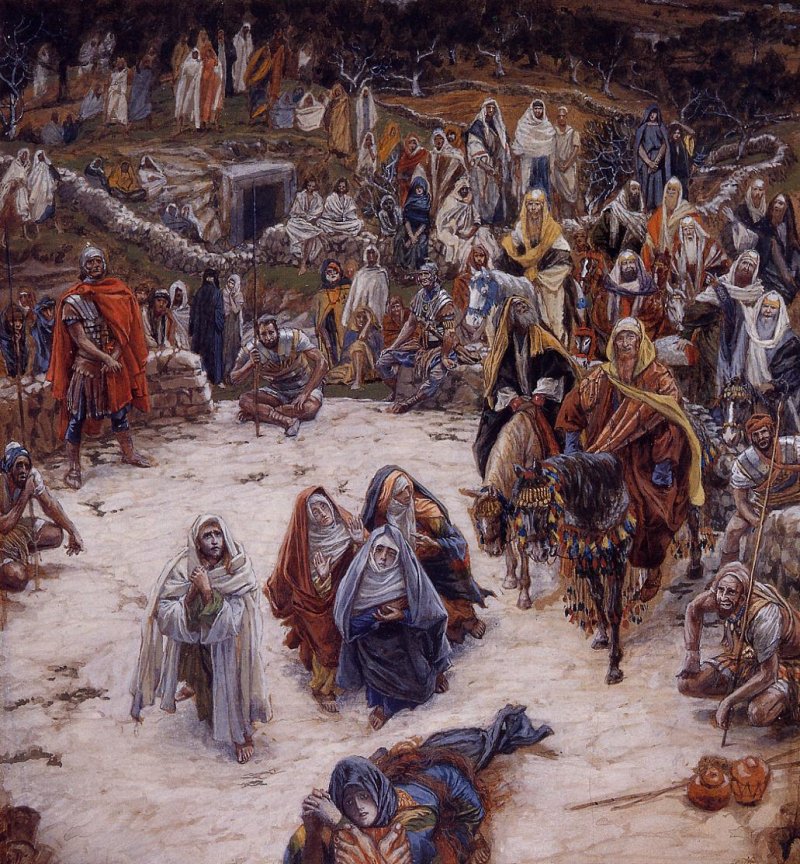
When Pilate condemned Jesus, they led him away but made Simon of Cyrene help carry his Cross. That was a welcome relief in his weakened condition. A large crowd followed Jesus, including many women who mourned and cried for him. Those women felt powerless, but their expressions of devotion strengthened him.

Once they had crucified Jesus, one of the condemned men mocked him but the other honored Christ, expressing saving faith in him. Jesus could behold his sacrifice already bearing fruit. Standing by his Cross were his mother and his beloved disciple, and “all his acquaintances stood at a distance, including the women who had followed him from Galilee” witnessing these events. And he saw them there for love of him, and it consoled him.

Therefore, if Jesus during his greatest suffering received some consolations, then in our trials we should not be ashamed to ask for help and comforts too. Jesus’ disciples were not perfect and they sometimes let him down, but the presence and support of his friends helped him to press on. So pray to God for consolation, invest in your personal relationships, and stay close to your Christian community. If you are going to pick up your cross daily and follow Christ in his sufferings you must also share in his consolations.

The Deaths of Lazarus

April 6, 2025

5th Sunday of Lent
By Fr. Victor Feltes

God does not do bad things, for “God is not subject to temptation to evil” and “what he hates he does not do.” However, God is all-knowing and all-powerful. There is nothing knowable that God does not know, and nothing good and doable that he cannot do. Therefore, when a bad thing happens, God has allowed that to happen. Yet we also “know that God causes all things to work together for the good of those who love him.” We see these truths reflected in today’s Gospel reading.

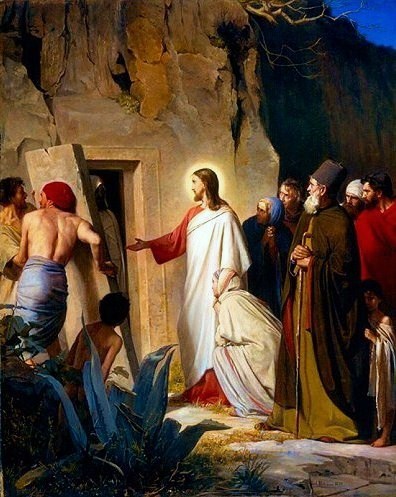
God clearly permitted Lazarus to fall ill. And when Jesus received the urgent message from Martha and Mary that their brother was sick, he remained in the place where he was and allowed Lazarus to die. “Now Jesus loved Martha and her sister and Lazarus.” So why did Jesus not come earlier, when he was told “the one you love is ill.” Or why did Jesus not heal his friend Lazarus’ sickness from a distance, like he cured the centurion’s servant or the royal official’s son? Jesus says the dying and rising of Lazarus was “for the glory of God, that the Son of God may be glorified through it,” and “that you may believe.”

Earlier in his public ministry, Jesus had raised Jairus’ daughter from the dead, having told mourners that the little girl was “asleep.” But that resurrection miracle was performed privately, shortly after death, and with strict orders to its witnesses that no one should know of it. By publicly raising Lazarus from the tomb in the presence of a crowd, Jesus manifests his power not only to heal the sick but to restore the dead to life.

Picture this: One moment, Lazarus was ailing and fading out of consciousness on his deathbed. The next thing he knows, he wakes up wrapped in bandages inside of a cave, and comes out toward the light at the sound of his friend Jesus’ call. His sisters would have filled him in on what he missed when he was dead.

The Gospels tell us Lazarus later attended a dinner with Jesus the day before Palm Sunday at the house of Simon the Leper. Martha served the meal while Mary took costly perfumed oil and poured it on Jesus’ head as he reclining at table. “A large crowd of the Jews found out that he was there and came, not only because of Jesus, but also to see Lazarus… And the chief priests plotted to kill Lazarus too, because many of the Jews were turning away and believing in Jesus because of him.” After Holy Week, the New Testament tells us no more of what happened to Lazarus. But we can imagine what it was like, years after Easter Sunday, when Lazarus died again.

Knowing that Jesus died and was risen, and having personally experienced death and resurrection himself, must have given Lazarus great peace even during his final passion. Consider Martha or Mary watching their brother die once more; having to burying him again. There would naturally still be sadness and ache in that parting, but I imagine the sisters would feel different this time: ‘We know he will rise in the Resurrection on the Last Day. Jesus Christ is the resurrection and the life who has come into the world, and whoever believes in him, even if they die, will live.’ Our brother Jesus died and has risen from the dead “for the glory of God” and “that you may believe.” Knowing and embracing this reality changes our life and how we face death. Do you believe this?

Last week, April 2nd, marked the twentieth anniversary of the passing of Pope St. John Paul the Great. And if you are like me, having witnessed how he lived and died, is inspiring. Pope John Paul’s famous motto was “Be not afraid!” In this, of course, he was quoting Christ who frequently said, “Be not afraid!” “Be not afraid,” Jesus tells us, “If you believe you will see the glory of God.”