Archive for August, 2025

God Was With Them

August 30, 2025

22nd Sunday in Ordinary Time
By Fr. Victor Feltes
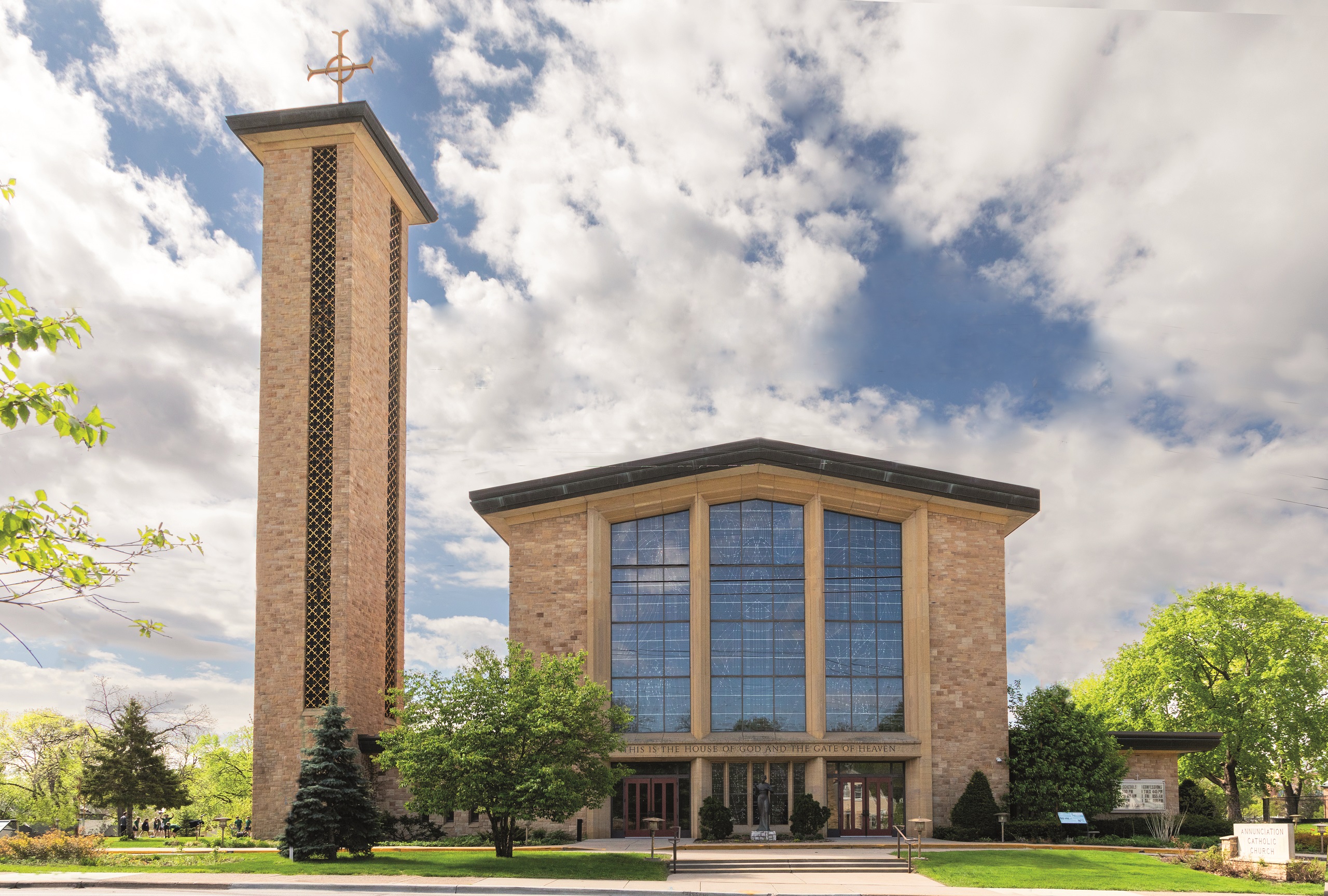
Wednesday’s awful attack at Annunciation Catholic School in Minneapolis is terrible and heart-aching. Such an evil occurring in our region of the country, to a place of Catholic faith and learning like our own, hits extra close to home. And whatever prudent proposals should follow, we are moved to pray fervently for these victims and everyone impacted. This week we witnessed some combination of mental illness, demonic influence, and chosen evil at work. If demons had no role in this atrocity, then their bad fruits are indiscernible in this world. St. Paul wrote to the Ephesians that our true adversaries are not flesh and blood—fixation on the hatred of other humans is a snare for the soul. Our struggle is with “the evil spirits in the heavens” who prowl about the world seeking the ruin of souls.

The tactics of demons are various but perhaps their foremost temptation is a repetition of history’s first temptation. The lie behind Satan’s suggestion to Adam and Eve that they eat from the forbidden tree to become like gods was: “You can’t trust God because he doesn’t really love you.” This is the point I wish to speak to, for this week I saw reactions to the attack on these innocents like this one online: “They were literally praying when they got shot. Praying doesn’t work.” The shooting at the Annunciation School Mass reportedly began during the Responsorial Psalm, which (if they were reading the same psalm we were at our parish that morning) included these lines: “Where can I go from your spirit? From your presence where can I flee? If I go up to the heavens, you are there; if I sink to the nether world, you are present there.” Does their suffering such evil mean that the Lord was not with them and for them at that church?

On Wednesday, my thoughts went to chapter two of the Book of Wisdom. You might not be familiar with its passages, since this Old Testament book is found in Catholic and Orthodox canons of Scripture but not included in most Protestant bibles. I encourage you to read the entire second chapter yourself, but I will excerpt from the text here. It begins by observing how the Wicked, “not thinking rightly, said among themselves: ‘Brief and troubled is our lifetime; there is no remedy for our dying, nor is anyone known to have come back from the underworld. For by mere chance were we born, and hereafter we shall be as though we had not been…”

The Book of Wisdom says the Wicked who think life is pointlessness and hopeless resolve to enjoy pleasures to the fullest and to exploit whomever they wish. They say, “Come, therefore, let us enjoy the good things that are here, and make use of creation with youthful zest. Let us oppress the righteous poor; let us neither spare the widow nor revere the aged for hair grown white with time. But let our strength be our norm of righteousness; for weakness proves itself useless.” Then from here the text goes on, at much more length than I am sharing, describing the Wicked’s hatred towards a holy person:

“‘Let us lie in wait for the righteous one, because he is annoying to us; he opposes our actions, reproaches us for transgressions of the law… He professes to have knowledge of God and styles himself a child of God. Let us see whether his words be true… For if the righteous one is the son of God, God will help him and deliver him from the hand of his foes. With violence and torture let us put him to the test… Let us condemn him to a shameful death; for according to his own words, God will take care of him.’ These were their thoughts, but they erred; for their wickedness blinded them, and they did not know the hidden counsels of God;  neither did they count on a recompense for holiness nor discern the innocent souls’ reward.”

This Old Testament prophecy clearly applies to Jesus, but not merely to him but his martyrs as well. I cannot tell you what specific goods will come from Almighty God permitting particular evils to occur but we know, in the words of St. Paul to the Romans, “God works all things together for the good of those who love him.” On Good Friday, the murder of the Messiah was incomprehensible to his disciples and friends, but just forty hours later, with the resurrection of Jesus, they began to better understand that mystery at the center of our Christian Faith. Like in today’s Gospel parable, Jesus went to the lowest place, but the Lord of Hosts saw and said to him “My friend, move up to a higher position,” and now he enjoys a most-honored seat in heaven and the esteem of all his companions around the Eucharistic table.

Our waiting to behold God’s full reversal of this world’s evils will likely last much longer than just three days, but we will endure in faith, hope, and love, praying and working and worshipping and journeying with Jesus Christ. We approach God’s Kingdom and we will press on to join the countless angels in festal gathering; and God the judge of all; and the spirits of the Just, the saints made perfect; and Jesus, the mediator of our new covenant; and the sprinkled blood that speaks more eloquently than that of history’s first martyr, Abel. God was with them and he will be with us too.

The Smallest Psalm

August 24, 2025

21st Sunday in Ordinary Time
By Fr. Victor Feltes

In the 1993 comedy drama “Groundhog Day,” Bill Murray plays a cynical Pittsburg weatherman assigned to cover the Groundhog Day festivities held in Punxsutawney, Pennsylvania. There he becomes trapped inside a mysterious time loop, reliving the same day over and over. At first he indulges in sensible pleasures, then he darkly despairs, but eventually he starts growing in wisdom and virtue until he becomes a man worthy of his good and beautiful TV producer, played by Andie MacDowell. Each day was the same, but over time they began to change him for the better. The same thing can be true with the formal prayers we say.

Though it is a very good thing for us to speak to our heavenly friends in our own words, offering traditional memorized or pre-written prayers is valuable as well. How do we know? Because God inspired and gave his to people an entire collection of such prayers known as The Book of Psalms. He knew these 150 prayers would be prayed over and over, in both the Old Covenant and the New Covenant, teaching us and transforming us in our relationship with him. And it is important that we strive to learn and grow, so that we may enter through the narrow gate of Jesus Christ and be saved. Daily prayer and weekly Mass are among the God-given disciplines which yield (in the words of the Letter to the Hebrews) “the peaceful fruit of righteousness to those who are trained by [them].

Now imagine if you were Almighty God and you wished to compose a tiny psalm for the human race. What would you write about? Whom would you feature and what themes would you highlight? In the responsorial psalm for today’s Holy Mass we see how God answered. Short prayers can be great prayers. Psalm 117 is just two verses, only four lines long, the shortest psalm in the Bible:

Praise the Lord, all you nations;
glorify him, all you peoples!
For steadfast is his kindness toward us,
and the fidelity of the Lord endures forever. Hallelujah!

In this psalm’s original context, God’s chosen people are calling out to the Gentiles, the nations beyond Israel, urging them to praise the Lord. The psalm begins and ends with appeals to praise the Lord for Hallelujah (or Alleluia) are Hebrew for “Praise the Lord!” Why should the God of Israel be praised, honored, celebrated, and loved? The psalm’s second half provides an answer: “For steadfast is his kindness toward us, and the fidelity of the Lord endures forever.” And God’s goodness, his real and steadfast love, endures for us in this age of the Church. As St. John writes in his first New Testament letter: “We have come to know and to believe in the love God has for us. … We love because he first loved us.”

And here’s a final lesson from this small psalm: Psalm 117 is evangelistic. It calls all everyone from everywhere to enter into full communion with God’s people and himself. Has anyone outside of your household become Catholic through your influence? It helps if we try. If we are called to produce a harvest “a hundred or sixty or thirtyfold,” then we could expect to have at least a handful of such people in our lifetime. Catholics sometimes feel intimidated at making invitations, thinking they lack the right words. But Psalm 117 show that the message can be simple: “You should to worship with us here, because Christ’s mercy and blessings in his Catholic Church have changed my life.” The Sunday morning classes for becoming Catholic called OCIA (formerly known as RCIA) are starting soon. Who could you invite to come along with you? Please help them enter Christ’s house through the narrow gate.

True Christianity Cleaves

August 16, 2025

20th Sunday in Ordinary Time
By Fr. Victor Feltes

Jesus asked his disciples, “Do you think that I have come to establish peace on the earth? No, I tell you, but rather division.” Why does he say this? Is he not the one whom Isaiah called the “Prince of Peace”? The Prophet Zechariah foretold: “Behold: your king is coming to you… humble and riding on a donkey… He shall banish the chariot from Ephraim, and the warhorse from Jerusalem; the warrior’s bow will be banished, and he will proclaim peace to the nations.” But this Kingdom of unending worldwide peace has not yet fully come and will not arrive until Christ’s Second Coming.

Jesus told his apostles, “Peace I leave with you; my peace I give to you,” but he added, “because you do not belong to the world… the world hates you. … In the world you will have tribulation. But take heart; I have overcome the world.” Jesus wished to dispel his followers’ presumptions about immediate peace on earth and warned them of future conflicts. He said, “You will hear of wars and reports of wars; see that you are not alarmed, for these things must happen, but it will not yet be the end.” Jesus also warned his disciples of future religious persecutions because not everyone, even amongst his own people, would accept him as the Christ. “From now on,” Jesus said, “a household of five will be divided, three against two and two against three.” “Brother will hand over brother to death, and the father his child; children will rise up against parents and have them put to death.” “You will be hated by all because of my name,” Jesus said, “but whoever endures to the end will be saved.

You have probably heard both ancient and modern stories about people who suffered and sacrificed a great deal in order to be a Christian or to join his Catholic Church. We are surrounded by great a cloud of such witnesses: like St. Paul the Apostle, St. Edmund Campion St. Kateri Tekakwitha, St. Elizabeth Ann Seton, St. John Henry Newman, and many other saints. When we hear of a household divided—three against two or two against three—on account of Christ, we might imagine a family at odds due to some accepting Jesus and his Church while others remain atheists, pagans, Muslims, Jews, or non-Catholic Christians. This sometimes happens, yet Jesus absolutely insists that we love him most of all and follow him no matter what. He says, “Whoever loves father or mother more than me is not worthy of me, and whoever loves son or daughter more than me is not worthy of me; and whoever does not take up his cross and follow after me is not worthy of me.” If you have been considering becoming a Catholic Christian, I urge you to take the next step and learn more this fall by enrolling in parish OCIA classes (formerly known as RCIA).

Though we typically imagine persecution coming from people outside our faith, resistance can come from our co-religionists as well. The Prophet Jeremiah and those who were persecuting him in today’s first reading were all Old Testament Jews professing to follow the same God and same faith. Yet those who mistreated Jeremiah were opposing God’s will. This can happen inside of a Catholic household as well. What if some family members understand the necessity of worshipping and thanking God every Sunday at Mass while others in the family are unwilling to prioritize him? What if one spouse wants to live in accord with God’s will about the marital embrace, virtue, love, and human life, but the other spouse wants to contracept? What if children want to explore possible priestly or religious vocations but their parents resist what may be God’s will saying, “We want grandchildren”? What if some family members treat our religion like merely “fire insurance,” hoping the Lord won’t mind us doing whatever we prefer, while other members are on fire for the Lord?

Jesus said, “I have come to set the earth on fire, and how I wish it were already blazing!” He wants us to be on fire for him, aflame with the Holy Spirit, shining light with a warm inner peace which this troubled world cannot take away. If that uniquely describes you in your household, pray for your family members, love them, and keep modeling and advocating for what is right and good. If that does not describe you, then pray for a more fervent heart and obey the voice of Christ challenging your conscience. Realize you cannot clear a six foot charism using only three foot hops.

Greet Him At His House

August 9, 2025

19th Sunday in Ordinary Time
By Fr. Victor Feltes

Today’s Gospel is first and foremost about the Second Coming of Christ and our judgment on the Last Day. Jesus Christ, who called himself the Son of Man, said that in the End Times “the sign of the Son of Man will appear in heaven, and all the tribes of the earth will mourn, and they will see the Son of Man coming upon the clouds of heaven with power and great glory.” The Book of Revelation agrees: “Behold, [Jesus Christ] is coming amid the clouds, and every eye will see him, even those who pierced him… ‘Behold, I am coming soon. I bring with me the recompense I will give to each according to his deeds.’” “But of [the timing of] that day and hour,” Jesus says, “no one knows, neither the angels of heaven, nor the Son, but the Father alone.” (The Son of God is divine and therefore knows everything, but in his humanity Jesus apparently did not know the date or was not supposed to reveal it.) Could Jesus Christ return during our lifetime? Of course. But even if Christ returns a thousand years from now we should still heed his warning to be prepared today, for we do not know the day and hour of our deaths when he will judge our souls and deeds.

Jesus’ parable about the returning master and his servants suggests another secondary interpretation. Consider the story’s details. The master has come from a wedding. He comes to his own house. He wants his servants to be there, ready to greet him. And in response he will “have the servants recline at table and proceed to wait on them.” And “should he come in the second or third watch” (when it is darkest and most inconvenient) and find them present, attentive, and well-prepared, those servants will be greatly blessed. So where is the Lord Jesus’ house to which he returns? Where does he want his servants to be present and pleased to see him? Where would he have his faithful servants rest, partake in a meal served by him, and receive his blessed rewards? This church is his house. We are his servants. And Jesus wants us to meet him here for a meal. Our Lord arrives here joyfully from a wedding. He wedded the Church to himself two thousand years ago. And the Holy Mass extends that mystery throughout time and space to here and now. Indeed, ‘blessed are those called to the wedding supper of the Lamb’ and who are here and ready to greet him.

Yet, for too many people, the precious time of Sunday Mass is an hour when they do not expect the Son of Man to come. Despite our many scheduled weekend Masses, they still do not attend. Others show up out of obligation or custom or habit, but fail to be attentive. Perhaps they do not yet believe—despite Scripture, ancient teaching, and centuries of miracles—that Jesus Christ is truly present in the Holy Eucharist. Or perhaps they do not yet realize that they are not mere spectators at Holy Mass but offering a sacrifice with the priest and the whole community, the eternal offering of the Son to the Father, through which everything united to Christ is raised up to heaven and grace and blessings are poured down to earth in return.

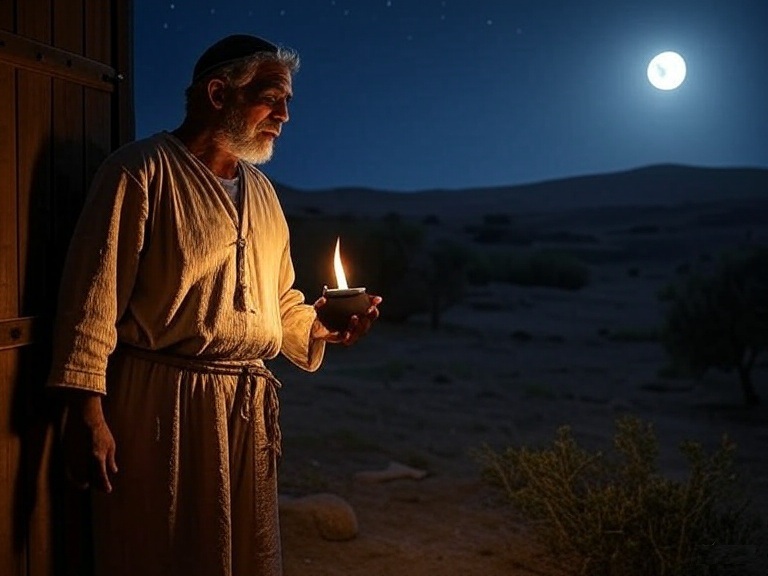
Be present and be vigilant. Distractions will come to anyone who is committed to regular Massgoing and daily prayer, but do not be discouraged by the times your thoughts accidentally wander. Every decision to turn your attention back to the Lord is another act of love and devotion. Sometimes those so-called distractions are actually things the Lord wants you to pray about or offer up to him. Ask the Holy Spirit and he will help you to pray as you ought, to gird your loins with reverence and light your lamps with faith and be like servants who are glad and blessed upon their master’s return from a wedding.

Life Eternal — Funeral Homily for Ronald “Ron” Woolever, 75

August 6, 2025

By Fr. Victor Feltes

We are courageous, and we would rather leave the body and go home to the Lord.” That is what St. Paul writes about himself and the Christians at Corinth in our second reading. But is this true for us today? Would we rather leave the body and go home to the Lord?

Imagine if you could have endless more years of this life on earth. Would you wish for that? Pondering such a wish you would be wise to reflect upon the burdens of bad health. The coming of such crosses in the later years of life makes many people more open to the next life. Ron endured poor health but he is freed from that burden now.

But suppose you could live an endless life on earth free from all illness and pain; the next thing you might consider is the prospect of outliving everybody you know now, as well as everyone you would ever know. Even with our well-founded hope for Heaven, where all friends of God will be reunited, the temporary separation between us and our dearly departed causes sadness in us who remain behind. It is okay to mourn at Ron’s passing, though we do ‘not grieve like those who have no hope,’ for we have hope in him who said “Do not let your hearts be troubled. You have faith in God; have faith also in me.”

But imagine if each person on earth were granted pain-free immortality; the next thing to consider is what life in that world would be like. After Adam and Eve sinned at the tree they were deprived of the fruit of another—the Tree of Life—lest they eat of it and live forever in their unhappy fallen state. Even if scientists were to develop a treatment to eradicate all pain and all death, moral sickness would remain untreated in many human souls. Endless life without Christian conversion would create a hell of moral evils on earth. Ron’s love for Jesus and our Catholic faith led to his deep devotion to the Holy Eucharist and St. Paul’s Parish. He hungered and thirsted for holiness, and our holy religion helped him to go deeper, change, and grow with God in his grace.

Now suppose if everyone on earth were forever freed from pain and death and sin, to live peacefully together on earth forever—what would life in that world be like? Ron delighted in many things in our world. Beyond family and friends, there were monster trucks and parade floats, old cars, new movies, and countless good things more. But after living in our world a few decades, which is far less time than millennia, we can think to ourselves, “These things are nice but is this really all there is?” Every heart contains a God-shaped hole which can only be fully satisfied by the infinite beauty, goodness, and love of the Holy Trinity. Understanding this changes how we see our lives in this world (which we must not cling to) and our future deaths (which we must not grasp at) until the Lord finally calls us home to be with him. Jesus tells his disciples, “I am going to prepare a place for you… [and] take you to myself, so that where I am you also may be.”

Therefore,” St. Paul writes, “we aspire to please him, whether we are at home or away. For we must all appear before the judgment seat of Christ, so that each may receive recompense, according to what he did in the body, whether good or evil.” Pray for Ron’s soul, that he may now enjoy the endless bliss of Heaven. And let Jesus Christ be the good and loving Lord of your life so that you may enter eternal life, for ‘no one comes to the Father except through him.’