23rd Sunday of Ordinary Time
By Fr. Victor Feltes
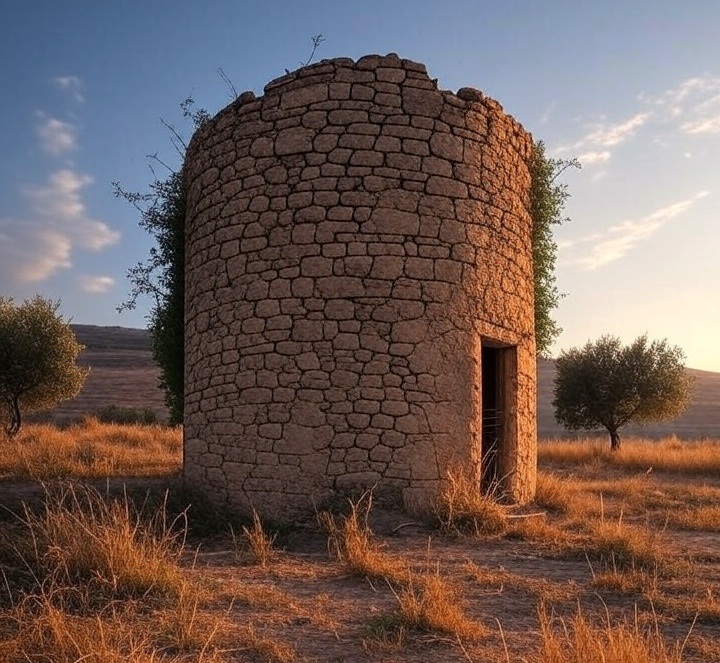
At the Last Supper, when Jesus told his disciples “one of you will betray me,” all of them replied “Surely, it is not I, Lord,” except for Judas. Judas answered, “Surely it is not I, rabbi (or teacher).” Jesus Christ must be more than merely our teacher. He insists on being our supremely-loved Lord. He told the crowds following him: “If anyone comes to me without hating his father and mother, wife and children, brothers and sisters, and even his own life, he cannot be my disciple.” Does Jesus really want us to be hating our loved ones? It would be strange for him to command that we love our enemies yet hate our families. Parallel Gospel passages prove Jesus is actually forbidding us from preferring anyone or anything to him, even our loved ones or our own lives. He must be our number one.
The Lord is like the conquering king in today’s parable; the King of kings and Lord of lords who has a rightful claim on everything. He made everything, sustains everything, and without him nothing finds true fulfillment, for he is Goodness itself. He marches toward our petty kingdoms with vastly greater forces. Can anyone successfully oppose him? No, only to our own destruction. So while his hosts of angels for the Day of Judgment are still far away, we should seek his peace terms, welcoming his offered covenant. The Lord seeks our unconditional surrender. He says “anyone of you who does not renounce all his possessions cannot be my disciple.” We must place everything we have and everything we are at his disposal. But his goal is not to destroy us like enemies or to dominate us like slaves but to have us as his siblings and friends. He says, “I came so that they might have life and have it more abundantly.” Ask yourself and seriously consider, “What am I holding back from him, keeping me from greater faithful love and fruitfulness?”
Entering into Christ’s covenant is only the beginning. A tower (like the one in Jesus’ parable) is not finished by merely laying the foundation. Towers in Old Testament times symbolized security. They allowed you to see your enemies approaching and then to hole up behind high, thick walls safe and secure in an easily defended position. However, a half-finished tower was of little use, except as an object of mockery as onlookers remarked: “This one began to build but did not have the resources to finish!” Some Christian disciples begin following Jesus, laying a foundation, but then abandon the project, like the people mentioned in John 6:66. They say, “This saying is hard; who can accept it” and no longer accompany him, going off to do their own thing. After many of Jesus’ disciples left him after the Bread of Life Discourse at Capernaum, he asked his apostles, “Do you also want to leave?” And Peter answered, “Master, to whom shall we go? You have the words of eternal life.”
We must build brick-by-brick, floor-by-floor, day-by-day, even amidst construction setbacks, until our tower of faithfulness is finished at the end of our lives. But we must not labor all by ourselves, like the builders of the Tower of Babel did, failing to reach heaven. Of ourselves, we do not have enough resources to reach completion. We must receive the Lord’s support. As Psalm 127 says, “Unless the Lord builds the house, in vain do the workmen labor.” Our prayer should be that from Psalm 90 today: “May the gracious care of the Lord our God be ours. Prosper the work of our hands for us! Prosper the work of our hands!” This is your part: let the Lord Jesus Christ be your true Lord, and do not be too proud to call upon our Savior’s constant help.
 Parishable Items