Archive for November, 2025

Two Stories of Conversion

November 29, 2025

1st Sunday of Advent
By Fr. Victor Feltes

At the beginning of this Advent, I would like to tell two stories of conversion. In the spring of 1521, while defending the city of Pamplona, Spain a 30-year-old soldier got his right leg fractured by a French cannonball. He would spend the next several months healing in his family’s castle. Convalescing in bed, day after day, he became extremely bored and asked for some adventure stories to read about knights and ladies. He liked those kinds of stories, but they didn’t have any of those in the house. His sister-in-law provided him a book about the life of Christ and another book of short stories about famous saints.

Sometimes he would read and reflect on what he read. Other times, he would daydream about worldly things. He would pause and consider, “What if I were to do what St. Francis or St. Dominic did?” And other times he would fantasize about being a heroic knight and wooing a certain royal lady in another land who was high above his station.

When he reflected on these worldly fantasies he felt intense pleasure; and whenever he stopped, sometimes hours later from weariness, he felt dry and depressed. Yet whenever he imagined living the rigorous sort of life the saints had lived, he not only experienced pleasure during such thoughts but felt great joy afterwards as well.

Eventually, he noticed this difference and realized how thoughts of one kind left him sad while the others filled him with joy. This was an important moment in his discernment, for he would go on to embrace God’s call to become a saint: St. Ignatius of Loyola.

Sin disappoints us, but goodness (though difficult) yields peace and satisfaction. We are attracted to our sins. Sins would not tempt us if there were no hope for pleasure, relief, or temporary gain from them. But after sinning, if our consciences are well-formed, we feel guilt and regret. What we have done or failed to do harms ourselves and others. And apart from the damages caused, sin squanders opportunities for better things. Yet God continues lovingly calling us back to repentance and conversion.

In the year 386, a 32-year-old man felt very drawn to Christianity but felt enslaved to his sins. It was as if the temptations he loved and despised were whispering, ‘Are you going to part with us? Do you really think you can live without these pleasures forever?’ But another voice had him imagine the smiling multitude of saints who had lived before him. That sweet voice seemed to say, ‘You can do what these men and women did, but none of them did it by themselves. The Lord God gave it to them. Why do you try to stand by your own strength, only to fall over and over again? Cast yourself on Christ and don’t be afraid. He won’t flinch and you won’t fall. Cast yourself on him without fear, for he will accept and heal you.’ Yet he was still torn; desiring chastity, but not yet.

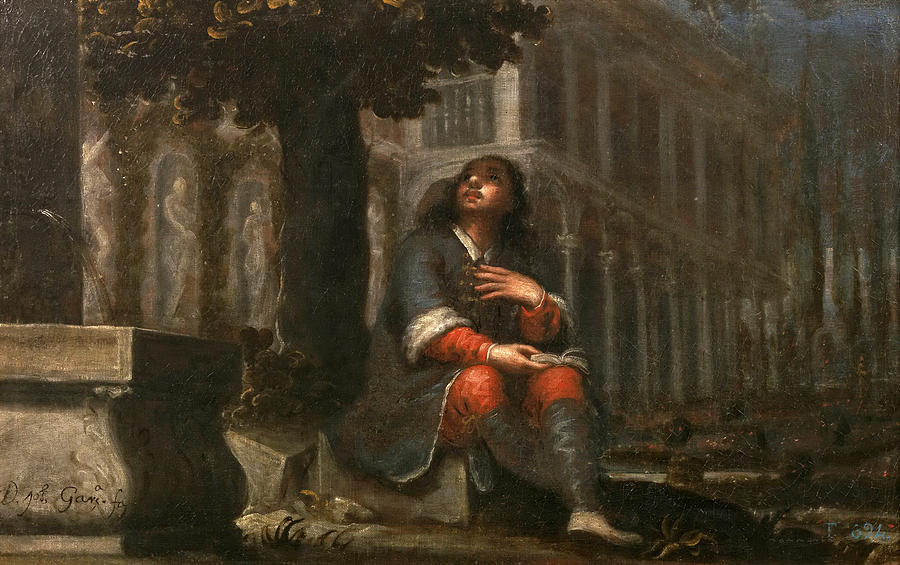
His turning-point moment came sitting in a garden outside his house. With tears he asked, ‘Why do I keep delaying until tomorrow? Why not now? Why not end my uncleanness this very hour?’ Yet he still lacked the strength. Then he heard a child from the house next door, chanting over and over, “Pick it up and read it; pick it up and read it!” He opened the Bible beside him to a random page, finding Romans 13:13-14, part of today’s Second Reading:

Let us conduct ourselves properly as in the day, not in orgies and drunkenness, not in promiscuity and licentiousness, not in rivalry and jealousy. But put on the Lord Jesus Christ, and make no provision for the desires of the flesh.”

Upon reading those words, his heart was infused with a light of certainty and all the gloom of doubt vanished. By this God-given grace, the life of the man we now know as St. Augustine of Hippo began to change.

This Advent, I encourage you to heed Jesus’ warning to “stay awake” and “be prepared,” like the saints before us. Identify your vice and call upon Christ, come to Confession and change your habits, to begin anew in the saintly life he calls you to. Open your arms to receive this gift, his gift, for Christmas.
Our Crucified King

November 23, 2025

Solemnity of Christ the King
By Fr. Victor Feltes

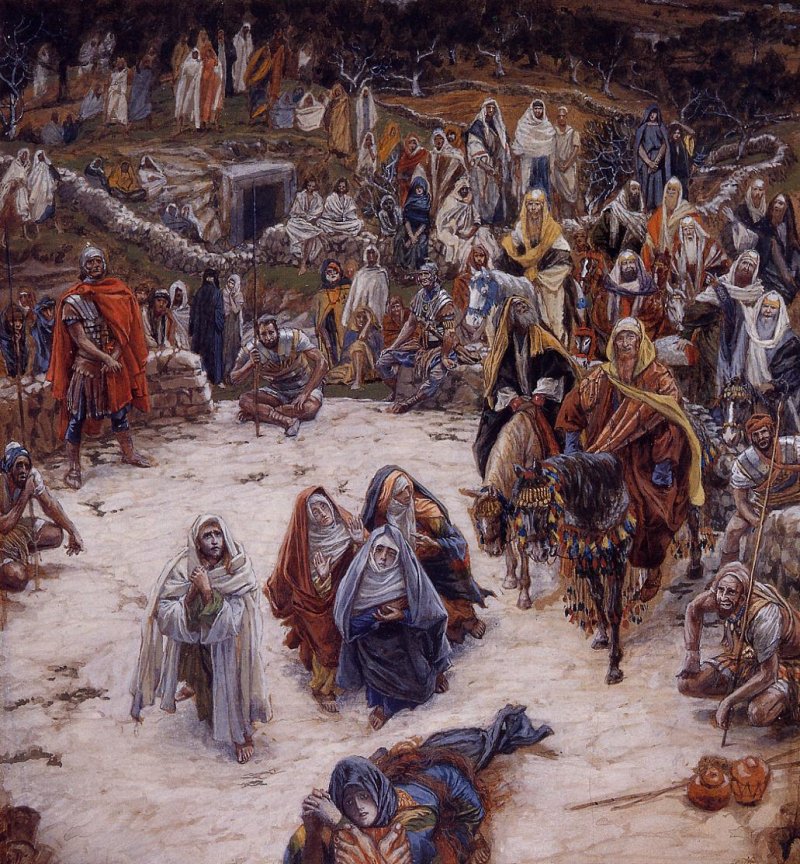
Our English word “Excruciating” comes from the Latin words for “Cross” and “Torment.” The Romans did not invent crucifixion, the Persians and the Greeks practiced it first, but the Romans more widely used the method. It was an easy way to execute people very visibly, horrifically, and slowly as a warning example to others. Typically, when the Romans crucified someone, they would place a sign above the condemned person’s head to indicate why they were being killed. St. John’s Gospel records that Governor Pilate put a sign on Jesus’ Cross written in Hebrew, Latin, and Greek. You sometimes see the initials “INRI” atop crucifixes. This represents the Latin phrase “Iesus Nazarenus Rex Iudaeorum,” the charge against our Lord. That is, “Jesus the Nazorean, the King of the Jews.” He was killed because of who he was and who he is: Jesus the Christ and the King of the universe.

Of course, the people who killed him did not believe this. They thought he was deluded or a fraud. Hence, the triple call for him to save himself and prove them wrong. The Jewish rulers sneered and said, “Let him save himself if he is the chosen one, the Christ of God.” The Roman soldiers jeered and called out, “If you are King of the Jews, save yourself.” And one of the criminals reviled him by saying, “Are you not the Christ? Save yourself and us.” Could Jesus have saved himself from his crucifixion?

St. John’s Gospel quotes Jesus before his Passion saying, “No one takes (my life) from me, but I lay it down on my own. I have power to lay it down, and power to take it up again. This command I have received from my Father.” And St. Matthew quotes Jesus later declaring in the Garden of Gethsemane, “Do you think that I cannot call upon my Father and he will not provide me at this moment with more than twelve legions of angels? But then how would the Scriptures be fulfilled which say that it must come to pass in this way?” So Jesus possessed the power to escape the Cross, but that was not the will or plan of God, which the Eternal Son was party to from the beginning. Jesus assumes “our bone and our flesh” to achieve our reconciliation as a descendant of David, “making peace by the blood of his Cross.” Perhaps the Holy Trinity could have inspired less painful prophecies to achieve our redemption and forgiveness of our sins, but Christ’s crucifixion is what they chose. They chose this path to win our love.

Matthew and Mark’s Gospels suggests that the Penitent Thief (traditionally known as St. Dismas) had derided Jesus, too, at first. But seeing the extraordinary way Jesus acted, hearing the things he said, all while crucified, won over that man’s mind and heart. ‘This man has done nothing criminal and this is how he dies? He truly knows my suffering and this is how he lives. This is the Christ I want to be allied with.’ St. And Luke quotes him saying, “Jesus, remember me when you come into your Kingdom.”

That movement saved the man’s soul, and we enjoy the benefit of understanding Jesus Christ even better than him. St. Paul writes that God “proves his love for us in that while we were still sinners Christ died for us.” Be moved by this manifestation of God’s great love. Submit to Jesus Christ as your King so that he may be your Savior and one day we may all be with him in Paradise.

The River From The Temple

November 9, 2025

Feast of the Dedication of the Lateran Basilica
By Fr. Victor Feltes

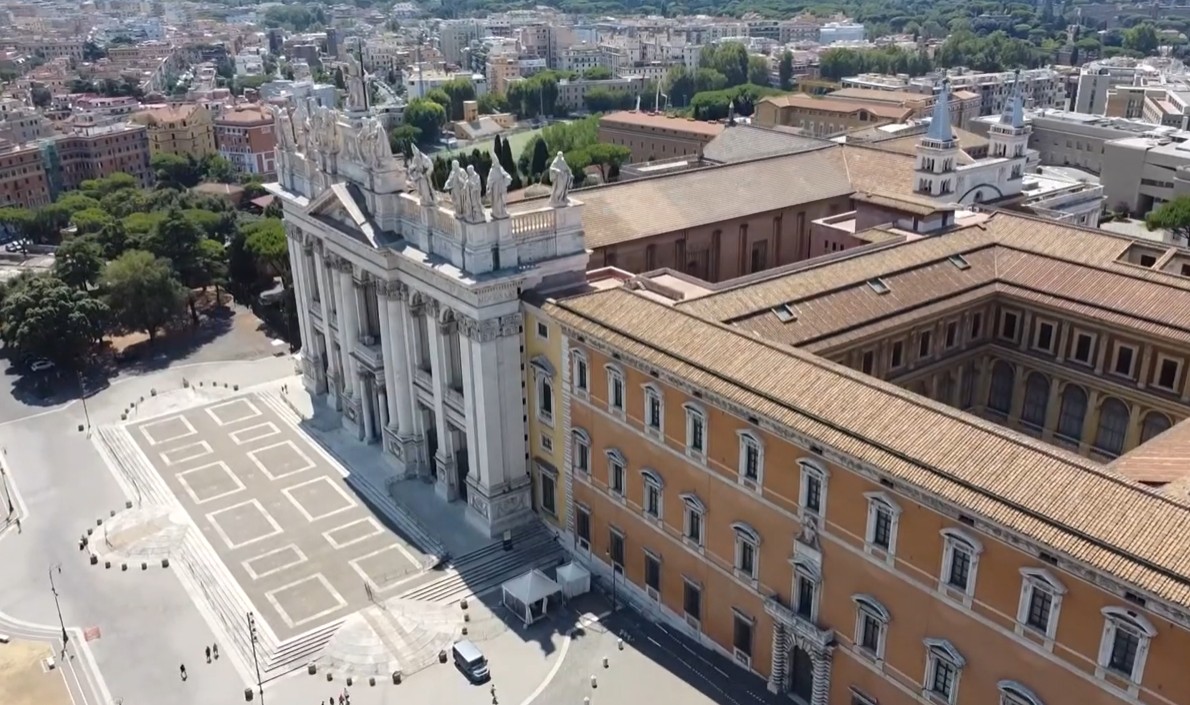
This Sunday, the Church throughout the world celebrates the dedication of the Lateran Basilica in Rome, which turns 1,701 years old this year. While St. Peter’s Basilica in Vatican City is more famous, the Lateran Basilica is the pope’s cathedral, the cathedral of the Archdiocese of Rome. This is why the Lateran Basilica is called “the mother and head” of the hundreds of thousands of Catholic churches around the world. Even if we had to go forward without any of these beautiful buildings, we could still practice our Catholic Faith through celebrating the Sacraments and offering our lives and prayers to God. But for Jews during much of the Old Testament, only one building was their place for sacrificial worship and considered God’s holy dwelling place on earth. In today’s first reading, the Prophet Ezekiel is taken by an angel to that Jewish temple in Jerusalem.

Of this vision, Ezekiel writes: “I saw water flowing out from beneath the threshold of the temple toward the east, for the façade of the temple was toward the east; the water flowed down from the southern side of the temple, south of the altar.” Ezekiel records that trickling water flowing through the gates of the temple and out of the city into the east, somehow becoming a river. The angel declares, “This water flows… and empties into the sea, the salt waters [of the Dead Sea], which it makes fresh. Wherever the river flows, every sort of living creature that can multiply shall live, and there shall be abundant fish, for wherever this water comes the sea shall be made fresh. Along both banks of the river, fruit trees of every kind shall grow; their leaves shall not fade, nor their fruit fail. Every month they shall bear fresh fruit, for they shall be watered by the flow from the sanctuary. Their fruit shall serve for food, and their leaves for medicine.” Ezekiel’s mysterious vision of this miraculous river which purifies and renews, producing abundant life, is a prophesy which finds its fulfillment in Jesus Christ and his Church.

In today’s Gospel, when Jesus forcefully clears out the animal sellers and money-changers from the temple area, the Jews ask him, “What sign can you show us for doing this?” And Jesus answers, “Destroy this temple and in three days I will raise it up.” The Jews were incredulous at hearing this and said, “This temple has been under construction for forty-six years and you will raise it up in three days!?” But, as St. John the Gospel writer notes in the text, Jesus “was speaking about the temple of his Body.” After Jesus had risen from the dead, his disciples remembered that Christ had said this and understood its significance.

On Good Friday, when the soldiers saw that Jesus was already dead on the Cross, one of them “thrust his lance into his side, and immediately blood and water flowed out.” Today, physicians affirm that the traumas of Jesus’ Passion and death could cause red and clear fluids to build up in his chest around his heart, resulting in “blood and water” flowing out when the spear was withdrawn, just as St. John witnessed. Do we know into which side of Jesus’ body the spear entered — was it Jesus’ left side or his right side?

Recall how Ezekiel saw the water flowing out in his vision: “The façade of the temple was toward the east” and “the water flowed down from the southern side of the temple, south of the altar.” If Jesus on the Cross faces “east” like the front-face of the Jewish temple, then water coming down from the “south side of the temple (of his Body)” would be flowing from Christ’s right side. And 2,000-year-old forensic evidence may actually confirm this detail. The Shroud of Turin, which appears more likely than not to be an authentic image of Jesus’ body in the tomb, after accounting for the image’s mirror-reflective nature, shows a wound in Christ’s right side. St. Augustine and other Church Fathers recognize flowing from Christ’s side the water of baptism and the blood of the Eucharist. In the beginning, Adam was put into a deep sleep and God fashioned a bride for him from the rib of his side. Jesus Christ on the Cross, asleep in death, has his Bride the Church fashioned from his side through his Holy Sacraments. And when the nations are one day assembled before Christ the King, for the Final Judgment described in Matthew 25, it is the sheep gathered to his right side who will be saved.

Now that trickle from Christ’s side is become a mighty river of grace; purifying and renewing, generating abundant new life in whomever and wherever it flows. Faithful Christian people and places which grow close to that river and are fed by its waters shall endure and produce good growth, healing, and nourishment. We are blessed to enjoy this beautiful church, but wherever we worship our true temple and center of grace prepared for us by divine providence across millennia is our Lord and Savior, Jesus Christ. So with awe, reverence, gratitude, and love, let us turn to him and draw near to his Eucharistic sacrifice.

A Vision of the Saints in Heaven

November 1, 2025

Solemnity of All Saints
By Fr. Victor Feltes

On this All Saints’ Day, let us consider what we can look forward to living as saints in heaven one day. But first, how does one get to heaven?

At the moment of death, our immortal souls will separate from our mortal bodies and go immediately to our particular judgment. There we will be judged according to our faith and deeds in Christ, based upon our connection to Christ and our love of God and neighbor. Then our personal punishment or reward will begin: either immediate and everlasting damnation, or entrance into the everlasting blessedness of heaven —either immediately or after the purifying process of purgatory. One day, the dead will arise and the saints will experience a new heavens and new earth in their glorified resurrected bodies. But for now, the saints only experience heaven through their souls (with the Blessed Virgin Mary being a notable exception). When someday, by the grace of God, we are saints in heaven, here are some things we will enjoy.

One thing to look forward to is probably having a perfect memory. A colleague of the genius mathematician and physicist John von Neumann writes “one of his remarkable abilities was his power of absolute recall. …Von Neumann was able on once reading a book or article to quote it back verbatim; moreover, he could do it years later without hesitation. …. On one occasion I tested his ability by asking him to tell me how A Tale of Two Cities started. Whereupon, without any pause, he immediately began to recite the first chapter and continued until asked to stop after about ten or fifteen minutes.” If this is possible with a frail human brain, how much more knowledge could our unhindered souls retain?

Another perk of being a saint in heaven is great ease in doing whatever is best. When in the unveiled presence of God, “we shall see him as he is,” and discerning God’s will should be easy. And our perfected virtues will make it easy to do what is good and right, for we shall be “pure, as he is pure.”

Another extraordinary blessing in heaven is having innumerable friends. In St. John’s vision of heaven he beholds “a great multitude which no one could count from every nation, race, people, and tongue.” Every saint in heaven has become an incredible person perfected in Christ’s beatitudes and love. There will be no lack of time to get to know people and with your perfect memory you’ll never forget anyone’s name or stories.

Yet the greatest joy in heaven is the beatific vision of God. Sometimes people worry the restful reward of seeing God and worshipping him forever will be dull. Don’t worry, heaven will never be boring. Every good and beautiful thing in Creation which you have ever delighted in has its origin in God who is supremely good, beautiful, and delightful. You have yet to fully exhaust the joys to be experienced in just one culture in one country in one century of human history, so do not imagine you will exhaust the joys to be found in our infinite God.

These are things to look forward to someday in heaven, but on this All Saints’ Day I wish to remind you that the saints in heaven know us and love us now. Yesterday, an online friend shared with me a beautiful story about the intercession of the saints and he has given me permission to share his story with you.

In January of 2018, his father suffered a massive heart attack at home. In the Emergency Room, they were able to restart his heart, but there was almost 100% arterial blockage and likely serious brain damage from the lack of oxygen. Some of the best doctors in the world could do nothing more to help. So the next day, all the family gathered to share final moments as they withdrew the mechanical life support. My friend writes:

I remember sitting in the room, in the cardiology unit there, praying my brains out for a miracle, as he lay dying. Just focused on nothing else but praying, praying, praying. Eyes closed, focused on nothing else. Praying, praying, praying for some miracle. And then I suddenly wasn’t in the hospital room anymore.

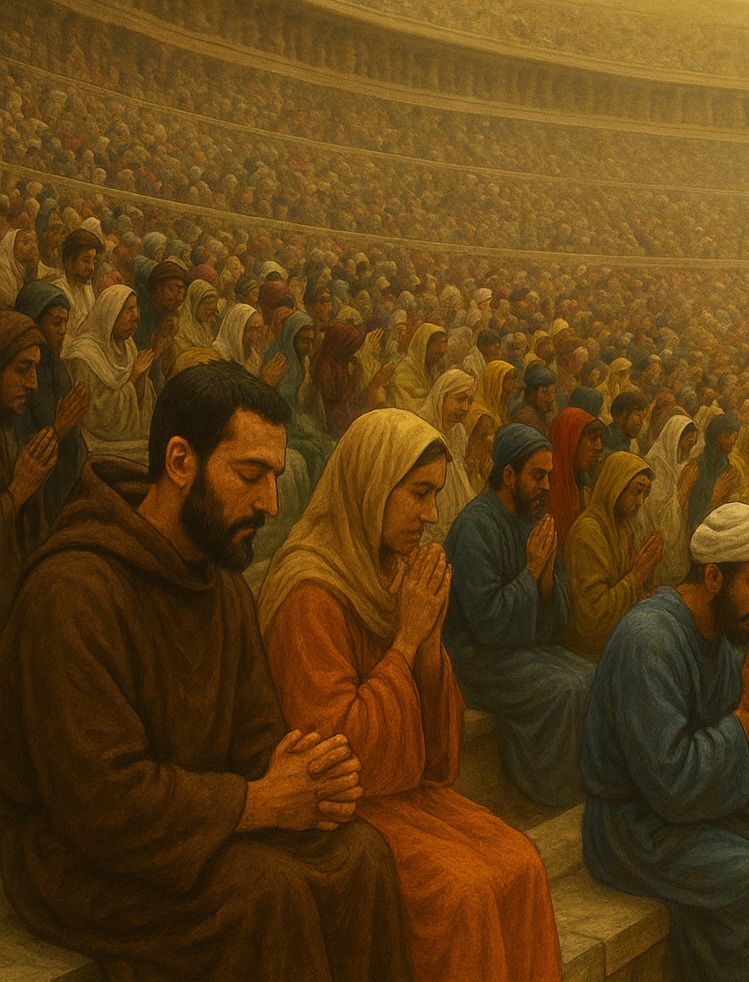
I was sitting on a bench in what to me appeared to be a huge football stadium, or more like a Roman circus (those long chariot tracks), stretching further in each direction than I could see (even the opposite side was so far away I couldn’t see it). And every seat was filled with people, all dressed differently (though most of them were in robes, in the section I was in), and all praying in different languages.

Their prayers collectively seemed like a buzzing, or the sound of a waterfall, because they were individually indistinct—countless voices all praying at once. But it was clear that each one of them were praying, non-stop, for me, my dad, and for everybody in the world.

And it was in that instant that it was told to me that I could stop praying—(“Look, all these Saints have the whole ‘praying for your dad’ thing covered for the moment…”)—and use the few moments my dad had left with us to just be with him, hold his hand, tell him that I love him and say goodbye to him. So that’s what I did. And I’m very grateful to this day that I did.

Why was my friend’s vision of the saints set in a long racetrack stadium? I recognize in this a reference to the Letter to Hebrews, which says, “since we are surrounded by so great a cloud of witnesses, let us rid ourselves of every burden and sin that clings to us and persevere in running the race that lies before us while keeping our eyes fixed on Jesus, the leader and perfecter of faith.” So be sure to befriend the saints and call upon them, because they know you, and they love you, and they eagerly want you to join their number.