Archive for January, 2026

A River of Life

January 12, 2026

Baptism of the Lord
By Fr. Victor Feltes

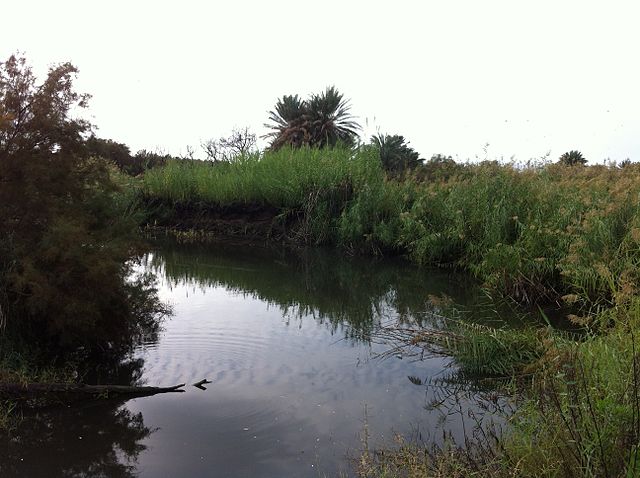
When you think of the Jordan River, you maybe imagine a broad and impressive body of water, but you could toss a rock from one bank of the Jordan River to the other. Yet, unlike the many streams and rivers flowing through our green countryside, the Jordan River is one of very few which pass through that mostly arid land. This is the body of water Jesus chose for his baptism; a humble river of life flowing through a desert. Joshua had led God’s Old Covenant people into the earthly Promised Land through this river. Jesus, the new Joshua, leads God’s New Covenant people into the true Promised Land through his holy baptism.

Jesus did not need John’s baptism for himself. John the Baptist perceived this too and tried to prevent him, saying, “I need to be baptized by you, and yet you are coming to me?” But Jesus insisted, so John relented, “to fulfill all righteousness.” Jesus is baptized not to be made holy by the water but to make the water holy, so that this most plentiful substance upon the face of the earth could be used in Christ’s gateway sacrament all throughout the world. Jesus was baptized to allow us to be united to him through baptism.

The water, the decent of the Spirit, and the voice of the Father all reflect effects of Christian baptism. Jesus’ baptism in the Jordan reflects what occurred for you and me when we were baptized. Through baptism, our souls were cleansed, the grace of the Holy Spirit was imparted to us, and we were acknowledged as a beloved children of God. Perhaps we take these things for granted: that sins can be forgiven, that the divine can dwell within us, that we can be more than mere slaves to the transcendent God of the universe, that we can be treasured sons and daughters of God. We must remember and appreciate these things, for things that go unappreciated can be neglected to our loss.

The Jordan River flows about 150 miles on the eastern border of Israel, south from the Sea of Galilee down into the Dead Sea. These bodies of water present a spiritual allegory. They symbolize a spiritual reality. The Sea of Galilee is a large freshwater lake full of life. Its water pours out into the Jordan River, and this river flows through the desert to bless its shores with life. But these waters ultimately descent 700 vertical feet down into the Dead Sea, to the lowest place on earth, where it has no place else to go. So there the water sits, evaporating away in the heat, leaving behind trace amounts of salt, which overtime causes the Dead Sea be extremely salty, permitting no plants, fish, or other visible life to live. The pure waters from above, received through the holy stream, bear no life in that recipient. Likewise, the sacraments offer grace from above, through a stream of living water, but in the unrepentant soul they bear no life.

If you are in grave sin, for God’s sake, for your sake, and the sake of those around you, repent and be reconciled to God through his Sacrament of Confession. On Saturday, I had the pleasure of celebrating the first Confessions of our second graders. They were a bit nervous beforehand, but afterwards when I asked them how they felt they answered: ‘Good! Great! Awesome!’ Besides the joy of a cleansed soul and conscience, something that Confession gives is a new beginning, the strength and focus to begin anew. Jesus desires for his graces to flow through you as a fruitful blessing in this spiritually-arid world.

The words of Isaiah in our first reading point to Christ, and you are in Christ because of your baptism. So Isaiah’s inspired words are spoken of every soul in a state of grace: Thus says the Lord: “You are my servant whom I uphold, my chosen one with whom I am pleased, upon whom I have put my spirit; I, the LORD, have called you for the victory of justice, I have grasped you by the hand; I formed you… a light for the nations, to open the eyes of the blind, to bring out prisoners from confinement [and darkness.]”

You might not be called to cry out or shout, making your voice heard in the streets, breaking this and crushing that. But Jesus wants to use you as his powerful instrument to work transforming good in this world. The Lord is still quietly saving souls through his faithful ones, who receive his graces and pour them forth. Cooperate with him for this; for him, for yourself, and for the good of many.

The Embarrassments of the Magi

January 3, 2026

Feast of the Epiphany
By Fr. Victor Feltes

How often do you feel awkward or embarrassed? I think the Magi felt that way repeatedly in today’s Gospel story.

Who were the Magi? Ancient civilizations east of Israel (such as the Persians and Babylonians) bestowed upon their men of learning the title “Magus.” The Magi we commemorate this day (traditionally identified as Saints Caspar, Melchior, and Balthasar) apparently studied the heavens—a useful skill for tracking the rainy seasons and deciding when to plant and harvest. The visionary Jewish Prophet Daniel, six centuries before Christ, had served as a wise man in Babylon. Perhaps he left behind instructions about the star to watch for as the signal of the Messiah’s birth.

Some speculate the Star of Bethlehem was a comet, others say it was a supernova, but given the clues in the text and in history the best explanation suggests it was a planet seen in some unique position relative to the other lights of heaven. This is plausible because the ancients regarded the planets as ‘wandering stars’ moving across the fixed constellations. The word “planet” comes from the Greek word for “wanderer.” But whatever sign the Magi beheld, it convinced them a new heir to the Jewish throne was born. So they packed valuable gifts and traveled far from their homeland to honor this newborn king.

St. Matthew records, “When Jesus was born in Bethlehem of Judea, in the days of King Herod, behold, Magi from the east arrived in Jerusalem, saying, ‘Where is the newborn king of the Jews? We saw his star at its rising and have come to do him homage.’” But there was no newborn king be found there; at least, no baby in Herod’s household descended from King David, as the Jewish scripture prophesies required for the Christ. This surprised the Magi and perhaps they doubted themselves. “Did we misread the stars? Was the wisdom we were following merely a myth? Did we come all this way for nothing?” But then there was a new ray of hope.

Herod called the Magi secretly and ascertained from them the time of the star’s appearance. He sent them to Bethlehem and said, ‘Go and search diligently for the child. When you have found him, bring me word, that I too may go and do him homage.’” After their audience with the king, they set out on the short journey from Jerusalem to Bethlehem. “And behold, the star that they had seen at its rising preceded them…” This was a sign reconfirming their mission, and “they were overjoyed at seeing the star…” The star somehow “came and stopped over the place where the child was. …And on entering the house they saw the child with Mary his mother. They prostrated themselves and did him homage. Then they opened their treasures and offered him gifts of gold, frankincense, and myrrh.

This house in Bethlehem was far humbler than Herod’s great palace. And if even the Magi were not embarrassed to lay face down upon that lowly floor, it must have felt awkward for the Magi to present the luxury gifts they had brought to this needy family. Rather than incense or gum resin, the Holy Family could have gotten more use from blankets, baby clothes, or a goat. But this seeming mistake was providential. The Magi’s gift of gold would come in handy later when the Holy Family was hiding away in Egypt. And besides that gold for a King, the other gifts of the Magi were prophetically symbolic: frankincense, used in temple worship, for a High Priest and Deity; and myrrh, used in Jewish embalming, for a Savior born to die and rise.

And [then the Magi,] having been warned in a dream not to return to Herod, …departed for their country by another way.” Did the Magi share this dream with the Holy Family before departing? If not, how did St. Matthew ever learn of this detail? Regardless, if the Magi recognized a warning of danger in this dream, they may have felt mortified again that their visit to Bethlehem may have placed a target on the Holy Family’s backs. The Magi’s mission had announced in Jerusalem the birth of Christ, but it also led to the flight of the Holy Family to Egypt and Herod’s massacre of the innocents. Yet even Herod’s freely-chosen evil was foreseen by God, who received the souls of his Holy Innocents as martyrs for Christ and fulfilled what was foretold through the Prophet Hosea: “Out of Egypt I called my Son.”

We do not know what this new year ahead holds for us. And like the Magi, sometimes our honest efforts will produce experiences of awkwardness and embarrassment, problems and seeming failures. But even if we don’t always know what we are doing, the Lord knows what he is doing. So strive to please and serve him, and never give up on your life journey’s mission. For just as he did with the Magi, the Lord will incorporate all of our faithful efforts into his great providential story.

How Did St. Luke Know?

January 1, 2026

Solemnity of Mary, Mother of God
By Fr. Victor Feltes

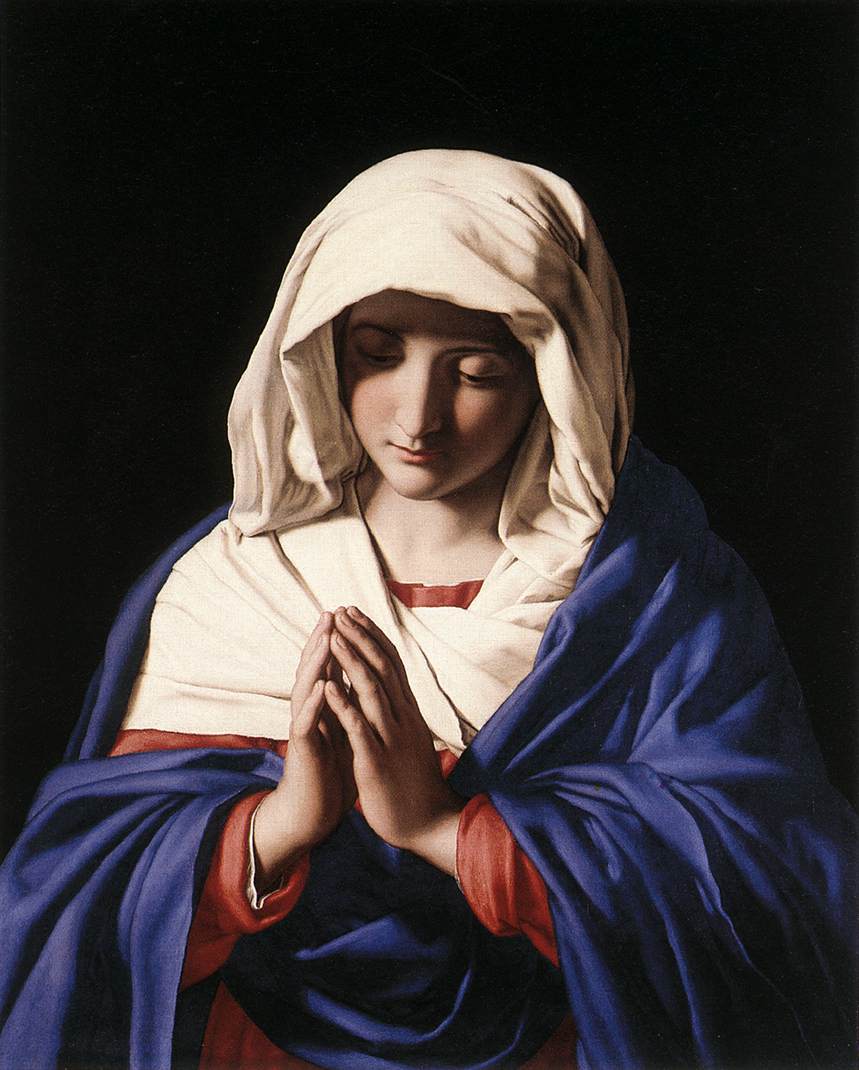
At the Annunciation, when the Archangel Gabriel greeted Mary using an exalted title, saying “Hail, highly favored one! The Lord is with you,” Luke records that the Virgin Mary “was greatly troubled at what was said and pondered what sort of greeting this might be.” Nine months later, after the visit of the shepherds at Christmas, today’s Gospel reading says “Mary kept all these things, reflecting on them in her heart.” And then twelve years after that, when the boy Jesus was found in the temple and he said, “Why were you looking for me? Did you not know that I must be in my Father’s house?” Mary did not understand what Jesus said to them, but Luke records “his mother kept all these things in her heart.” Mary pondered, reflected on, and all kept these things in her heart. That raises a question: how did St. Luke know these facts to include them in his Gospel?

Did Luke have mystical visions? Did God infuse him with hidden knowledge? That is not how St. Luke describes how he wrote his Gospel. He writes: “Since many have undertaken to compile a narrative of the events that have been fulfilled among us, just as those who were eyewitnesses from the beginning and ministers of the word have handed them down to us, I too have decided, after investigating everything accurately anew, to write it down in an orderly sequence for you, most excellent Theophilus, so that you may realize the certainty of the teachings you have received.” So St. Luke investigated, he did research for his Gospel, and probably interviewed first century eyewitnesses to the events he records. How would folks naturally come to know what Mary pondered, reflected upon, and kept within her heart? By her telling people. That is why some call the early chapters of Luke’s Gospel “The Memoirs of Mary.”

When people pick up praying the Holy Rosary for the first time, their focus tends to be on saying the right words and tracking the beads. But as they get more experienced and comfortable, their focus can shift toward each of the mysteries, and contemplate their deeper meanings and implications. Is it any surprise that the Holy Spirit would providentially promote into history’s most popular Marian devotion the pondering, reflecting upon, and holding in our hearts the events of salvation history? The Holy Rosary is a transforming contemplation with Mary upon the great things God has done.

Besides praying more Rosaries this year, I suggest more contemplation at the end of each day. Ask the Holy Spirit to show you the victories and failures from the day, to give thank and praise and ask pardon and new strength. Such daily self-examinations (or examens) are recommended by saints for spiritual growth. And as one year ends and a new year begins, I suggest devoting some time to pondering like Mary. Reflect upon the past year and consider the year ahead, holding in your heart all the good things which are yours in Christ.