Solemnity of Mary, Mother of God
By Fr. Victor Feltes
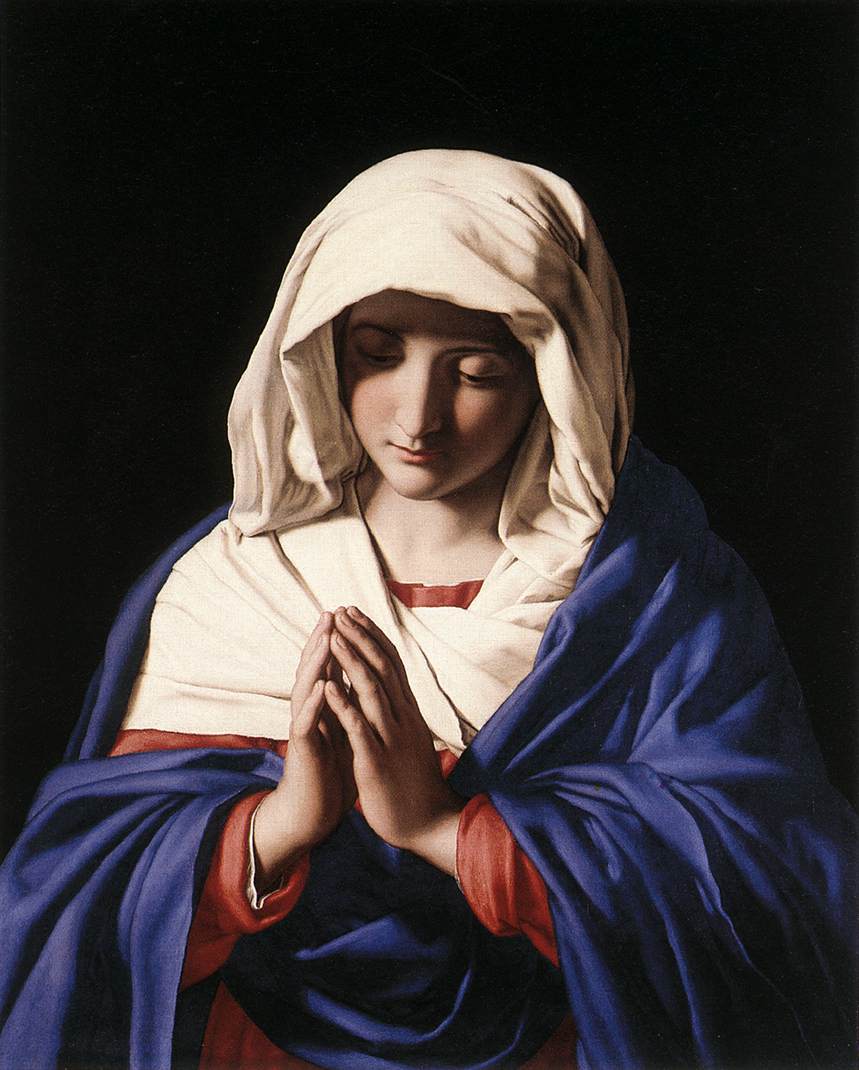
At the Annunciation, when the Archangel Gabriel greeted Mary using an exalted title, saying “Hail, highly favored one! The Lord is with you,” Luke records that the Virgin Mary “was greatly troubled at what was said and pondered what sort of greeting this might be.” Nine months later, after the visit of the shepherds at Christmas, today’s Gospel reading says “Mary kept all these things, reflecting on them in her heart.” And then twelve years after that, when the boy Jesus was found in the temple and he said, “Why were you looking for me? Did you not know that I must be in my Father’s house?” Mary did not understand what Jesus said to them, but Luke records “his mother kept all these things in her heart.” Mary pondered, reflected on, and all kept these things in her heart. That raises a question: how did St. Luke know these facts to include them in his Gospel?
Did Luke have mystical visions? Did God infuse him with hidden knowledge? That is not how St. Luke describes how he wrote his Gospel. He writes: “Since many have undertaken to compile a narrative of the events that have been fulfilled among us, just as those who were eyewitnesses from the beginning and ministers of the word have handed them down to us, I too have decided, after investigating everything accurately anew, to write it down in an orderly sequence for you, most excellent Theophilus, so that you may realize the certainty of the teachings you have received.” So St. Luke investigated, he did research for his Gospel, and probably interviewed first century eyewitnesses to the events he records. How would folks naturally come to know what Mary pondered, reflected upon, and kept within her heart? By her telling people. That is why some call the early chapters of Luke’s Gospel “The Memoirs of Mary.”
When people pick up praying the Holy Rosary for the first time, their focus tends to be on saying the right words and tracking the beads. But as they get more experienced and comfortable, their focus can shift toward each of the mysteries, and contemplate their deeper meanings and implications. Is it any surprise that the Holy Spirit would providentially promote into history’s most popular Marian devotion the pondering, reflecting upon, and holding in our hearts the events of salvation history? The Holy Rosary is a transforming contemplation with Mary upon the great things God has done.
Besides praying more Rosaries this year, I suggest more contemplation at the end of each day. Ask the Holy Spirit to show you the victories and failures from the day, to give thank and praise and ask pardon and new strength. Such daily self-examinations (or examens) are recommended by saints for spiritual growth. And as one year ends and a new year begins, I suggest devoting some time to pondering like Mary. Reflect upon the past year and consider the year ahead, holding in your heart all the good things which are yours in Christ.
 Parishable Items