By Fr. Victor Feltes
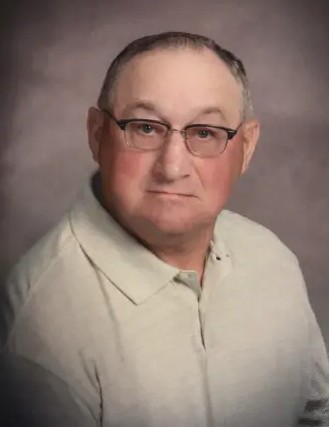 One spring afternoon many years ago, Bill took a nap. Bill always took an afternoon nap and he took this particular nap seated inside of his truck. He was quietly parked at the end of the farm’s driveway as he waited alongside the country road for people to show up. That’s when he felt like, as he would say, “just resting my eyes.” Around a quarter to four, his granddaughter Amanda arrived home from school. Seeing him inside, she knocked on the truck window and kept knocking, at least three different times, but grandpa didn’t move. So Amanda not-unreasonably concluded: “He’s dead.” A call was placed to 9-1-1 and an ambulance was summoned, but before the medics could arrive on scene the truck door was opened from outside and a startled, groggy Bill nearly tumbled out. Bill was not dead. He was only sleeping.
Jesus once remarked the same thing about a 12-year-old girl. The daughter of Jairus had just died from an illness, but when Jesus arrived at the house he said the mourners, “Why all this commotion and weeping? Go, for the child is not dead but sleeping.” They mocked Jesus because they knew she was dead, but once he had them put outside he took the dead girl’s hand and said, “Talitha koum,” which means, “Little girl, I say to you, arise!” The girl rose up immediately and Jesus gave her to her amazed parents.
On a different occasion, Jesus received word that his friend Lazarus was gravely ill, but Jesus stayed put for a couple of days. Then he said to his disciples, “Let us go back to Judea. … Our friend Lazarus is asleep, but I am going to awaken him.” So the disciples replied, “Master, if he is asleep, he will be saved!” But Jesus was referring to death while they thought he meant ordinary sleep, so Jesus told them clearly: “Lazarus has died. And I am glad for you that I was not there that you may believe. Let us go to him.” When Jesus arrived at Lazarus’ tomb, where he had been dead four days, Jesus cried out in a loud voice, “Lazarus, come out!” And the dead man shuffled out resurrected, still wrapped in his burial cloths.
Likening death to natural sleep was not original to Jesus in the Gospels. The Prophet Daniel, for instance, foretold that “many of those who sleep in the dust of the earth shall awake. Some shall live forever, [while] others shall be an everlasting horror and disgrace.” And the 1st Book of Kings records how King David, author of our 23rd Psalm, “rested/slept with his ancestors and was buried in [Jerusalem].” The Book of Acts narrates the death of Stephen the Martyr by saying “he fell asleep,” and the New Testament epistles frequently use “falling asleep” as an image for dying. For example, St. Paul reassures the Thessalonians: “We do not want you to be unaware, brothers and sisters, about those who have fallen asleep, so that you may not grieve like the rest, who have no hope. For if we believe that Jesus died and rose, so too will God, through Jesus, bring with him those who have fallen asleep.”
Why do the Inspired Scriptures and Jesus Christ use falling asleep as an image for death? Because our death is only temporary. Under ordinary circumstances, we do not fear to go to sleep at night because we reawaken every morning. We are not terrified to take a nap because we soon wake again, hopefully, renewed. Dying is like falling asleep because natural death is not the end for us. We are promised resurrection.
Jesus tells us a parable about ten virgins. As they await the arrival of a long-delayed Bridegroom, they all become drowsy and fall asleep. Then at midnight, the darkest hour, a cry goes out that awakens them all: “Behold, the bridegroom! Come out to meet him!” Five are wise and have oil ready for their lamps but five are foolish and have not prepared. While the wise ones rejoice with the Bridegroom inside his wedding feast, the foolish ones are barred outside. This Bridegroom is Jesus, who warns us to be prepared for his return, “for you know neither the day nor the hour.”
Bill’s family describes him as “an amazing husband” of almost sixty years and “a perfect dad.” “He was selfless, hardworking, and steady,” a “good and faithful servant.” A man of Catholic faith and prayer; not one to complain but to instead pray harder. And Bill was well-prepared to die. Daily near the end he said so. “I’m ready to go home.” Pray for Bill’s soul—to aid him wherever needed—but please also learn from his example.
Unless Christ the Bridegroom returns first, each of us is going to die. But before we fall asleep, the wise among us will prepare to meet our Lord. Practicing proper devotion toward God and our neighbors reflects us tending to the oil of our faith and flame of our love. Prioritize this care of your lamp, so that when Jesus Christ appears you will be ready and eager to greet him. Bill has died, but he is only sleeping. And one day we will reawaken with him to the Resurrection. So tend to your life’s precious lamp, the oil of your faith and the flame of your love, so that when Jesus Christ the Bridegroom comes, we may all greet each other with joy.


 Parishable Items