Archive for April, 2026

Encountering Christ, Then & Now

April 19, 2026

3rd Sunday of Easter
By Fr. Victor Feltes
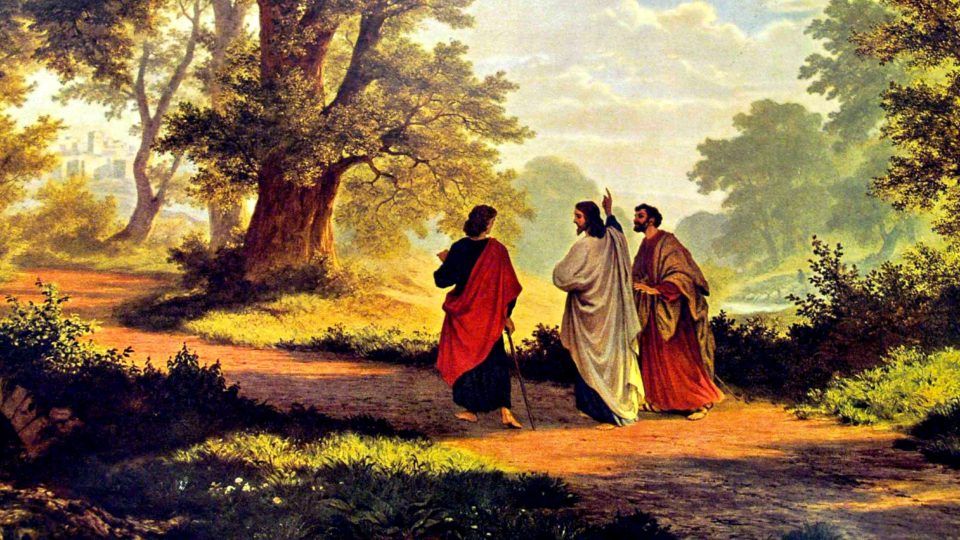
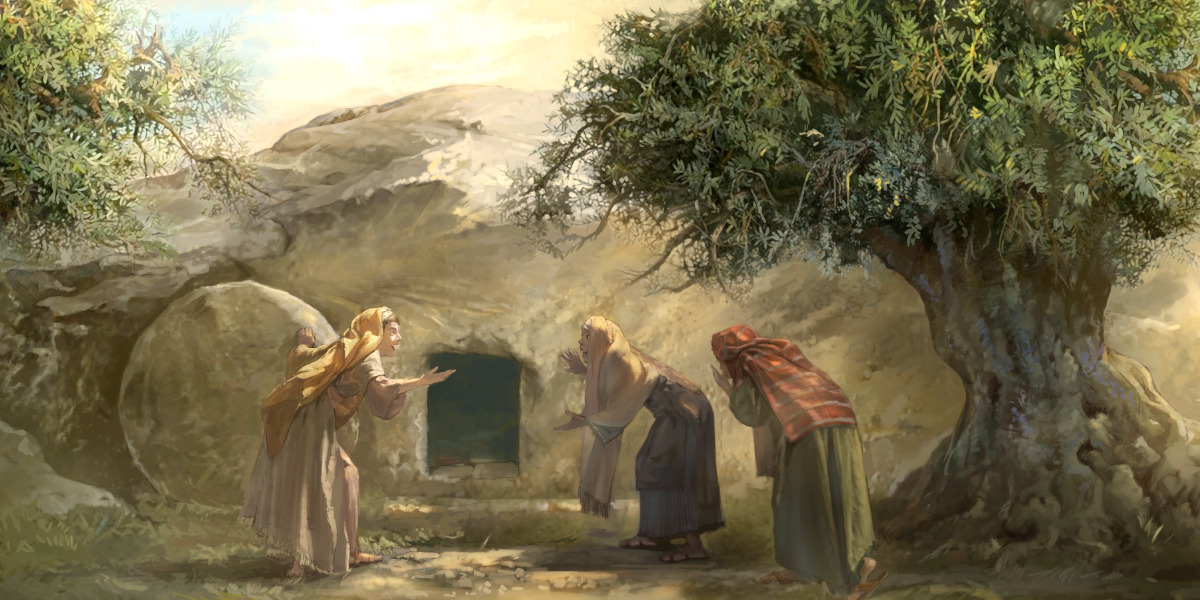
The two Christian disciples walking to Emmaus had had a difficult week. The events of Holy Week, Good Friday, Holy Saturday, and Easter Sunday morning left them wondering and restless, not feeling utterly hopeless, but very discouraged. Jesus whom they thought was the Messiah had been killed yet now there were some reports that he was alive. He was near them, walking with them, though they could not recognize it. Showing interest and concern for them, he sees their emotions and listens to their thoughts. And then he speaks to them, enlightening them, explaining and revealing the meaning of the Scriptures and Christ’s Passion, death, and Resurrection.

With this understanding, the disciples’ faith is renewed. Their hearts burn within them with excitement and joy and they ask the guest to stay with them. Now they turn to rest and share table fellowship together. Jesus had been with them the entire time, but only once “he took bread, said the blessing, broke it, and gave it to them” did their eyes see him. From there his disciples go forth with renewed purpose: witnessing in the world to the Good News of Christ. This story from Easter Sunday reflects what we do here every Sunday.

We come carrying the events of the previous week, with all our thoughts and emotions. Sometimes we are questioning and restless, maybe we feel discouraged yet, because of Jesus Christ, not hopeless. We might not always recognize it, but Jesus is near and walking with us. He’s interested in our lives and concerned for our good, he’s aware of our thoughts and the emotions we have. Through the Scriptures and a homily in the Liturgy of the Word, the meaning of the events in salvation history are revealed and explained for our understanding and edification.

With hearts renewed, we re-proclaim our faith and petition our requests of God. Then we turn to share table fellowship in the Liturgy of the Eucharist. Jesus, who “took bread, said the blessing, broke it, and gave it,” gifts himself to us anew in his Holy Eucharist. And then we go forth in peace to share the Good News as we love and serve our Lord.

Were those two disciples walking on the road to Emmaus in the right place? I can see it both ways. On one hand, they were walking away from Jerusalem and the community of Christians in the Upper Room. On the other hand, walking that road occasioned their famous encounter with Christ. I do not know the road of life which leads you to this church, but Jesus knows. He renews at Holy Mass that encounter with those disciples on the road to Emmaus with us. Every Sunday, this is the place where we are meant to be, encountering him through the revelation of the word and the breaking of the bread.
Lived Beatitudes — Funeral Homily for John Wagner, 87

April 16, 2026

By Fr. Brian Ward

We are united in prayer for John’s soul and for all who mourn his passing. Today, as we remember John, we recall a man who always took pride in his work and in serving his community. John was a skilled mason and a craftsman, building not only with his hands, but with his heart—creating pieces for his family that will be treasured for generations. He gave his time as a reserve police officer, an ambulance driver, and a volunteer fireman, always willing to step forward to help his neighbors. He served on the city council, taught safety to young people, and was always ready to visit with friends or offer a helping hand to children in need, especially because he remembered what it was like to be in foster care himself. John dearly loved his wife Darlene, his daughters Nancy and Cindy, his grandchildren and great-grandchildren, and all his family. He quietly lived out his faith, and was a longtime parishioner here at St. Paul’s, showing by his actions the love and mercy of Christ to those around him. And so, as we gather in sorrow, we also turn to the words of Jesus in today’s Gospel, from Matthew chapter 5—the Beatitudes. Jesus says: “Blessed are the poor in spirit, for theirs is the kingdom of heaven… Blessed are the merciful, for they shall obtain mercy… Blessed are the peacemakers, for they will be called children of God.” These words describe the kind of life John lived: humble, merciful, and always seeking to bring peace and help to others.

Today we remember John’s kindness, his dedication, and his love. We also remember the promise of Christ: that death is not the end. In this Easter season, we celebrate that Christ, by rising from the dead, has triumphed over death forever. Because John believed in Christ, death holds no power over him. Christ’s victory is John’s victory, and we trust that he now shares in the promise of eternal life. And the hope for ourselves is to do the same, by living out our faith by being faithful Catholics and Christians who love Christ.

And how did John believe, trust, and follow Jesus Christ? He lived out the Beatitudes each day—showing mercy in his actions, generosity with his time, and steadfast love for his family and community. May John now rest in the peace of Christ and dwell forever in the house of the Lord.

The Rock of Our Redemption

April 11, 2026

Divine Mercy Sunday
By Fr. Victor Feltes

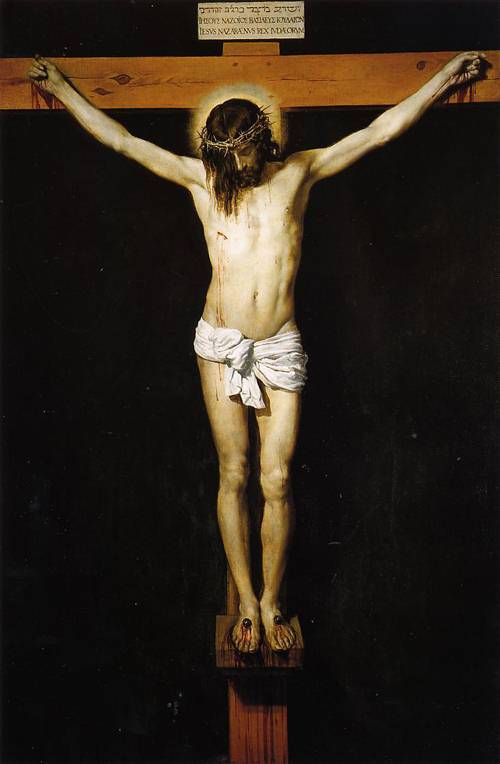
The Roman pagans believed it was impious to kill someone inside of their city walls yet their leaders wanted the public to witness their executions. So on Good Friday, Christ was led out to a location near Jerusalem’s gates close enough to the road and city such that many passersby would read the sign above the head of “Jesus the Nazarene, the King of the Jews.

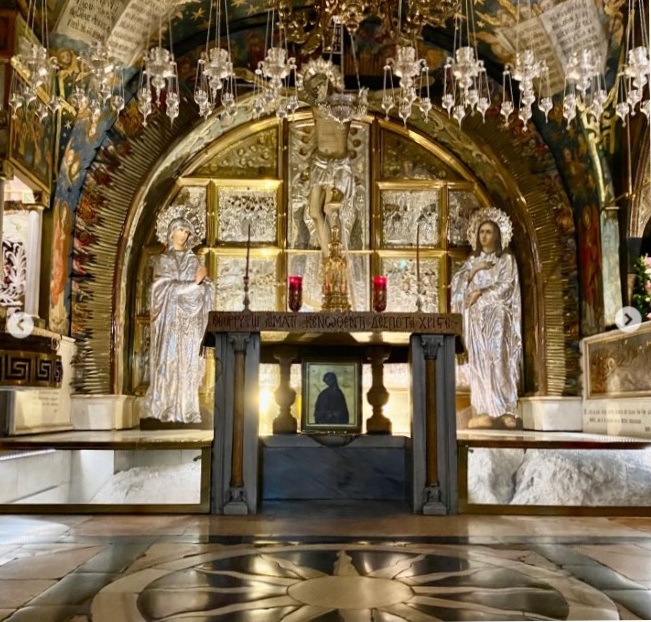
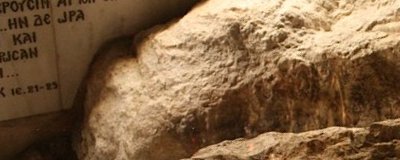
That place was situated inside a long-exhausted quarry from which limestone blocks had once been cut to build the Holy City’s white walls and buildings. Many years before Good Friday, the laborers discovered a certain outcropping there where the stone was fissured and pocked and judged unfit. So they quarried out all the stone around the spot, leaving behind a mound of rock behind.

That small hill came to be called “Golgotha” in Greek and “Calvary” in Latin, meaning “The Place of the Skull.” That rock became the site of Jesus’ crucifixion and death. It was a secondary fulfillment of this passage from today’s 118th Psalm: “The stone which the builders rejected has become the cornerstone.” So what was the primary fulfillment of that prophecy? Who is the stone and who are the builders?

St. Peter while being questioned by the Jewish priests and scribes in the Book of the Acts told them, “Jesus Christ the Nazorean whom you crucified, whom God raised from the dead… He is the stone rejected by you, the builders, which has become the cornerstone.” The Jewish religious leaders were the builders who rejected Jesus unfit to be their Savior. Governor Pilate and King Herod were builders too, political leaders who sought to promote their power, who judged Jesus to be useless for their purposes. You and me are builders too, building our lives through our choices, and when we knowingly, freely choose to sin we are denying Jesus in that aspect of our lives.

Now we do not earn salvation by our works, any more than we could earn the Sacrament of Baptism. Baptism and salvation are gracious gifts because God has loved us first. St. Paul writes, “God proves his love for us in that while we were still sinners Christ died for us.” But it is important that we respond to Christ and love him back. Jesus does not force us to embrace him and his Kingdom; we can spurn him and his gifts through unrepentant grave sins. Jesus cautions us, “Not everyone who says to me, ‘Lord, Lord,’ will enter the Kingdom of heaven, but only the one who does the will of my Father in heaven.” So if we reject Christ as our Rock through serious sin, how can he be restored as our cornerstone?

On Easter Sunday evening, Jesus bodily appeared in the Upper Room saying “Peace be with you.” He reassured his disciples and proved that he was truly risen by showing them his wounds. Then Jesus breathed on them and said to them, “Receive the Holy Spirit. Whose sins you forgive are forgiven them, and whose sins you retain are retained.” Jesus does not empower them in this way to no purpose. The Sacrament of Baptism forgives all sins preceding our baptism. But for the forgiveness of grave sins committed after our baptism, we see Jesus entrusts his priests with authority to forgive sins through the Sacrament of Reconciliation (also known as Confession or Penance).

Even if you have no grave sins to confess, regular confession and forgiveness of your minor sins is just good spiritual hygiene. It’s an encounter with Jesus Christ in which we receive healing, good counsel, and renewed grace for growing in our faithful, fruitful Christian love. In the Sacrament of Reconciliation, the stone rejected by the builders becomes our cornerstone anew. By the Lord is this done and it is wonderful in our eyes. The Lord has made this day of Divine Mercy; let us be glad and rejoice in it!

This is the Day

April 5, 2026

Easter Sunday
By Victor Feltes

The day we celebrate Easter Sunday can fall anywhere between March 22nd and April 25th on the calendar. It floats around year-to-year based on calculations about the first full moon of spring. Easter Sunday lands on April 5th this year, as it did 11 years ago and will twice again this century, 11 and 22 years from now. But do we know the actual historical month, day, and year of Jesus’ Resurrection? Yes — by combining details we find in the Gospels with other known historical facts, we can find this date exactly.

For starters, St. Luke’s Gospel tells us the public ministry of St. John the Baptist began “in the 15th year of the reign of [the Emperor] TiberiusCaesar,” which was 29 AD. And the Gospels indicate Jesus’ public ministry began sometime after that point. We also know that Pontius Pilate, who condemned Jesus to death, ruled as governor of Judea from 26 to 36 AD. So Jesus’ public ministry must have begun after 29 AD at the earliest and ended by 36 AD at the latest, giving us a range of seven years.

The Gospels also record that Jesus was crucified, died, and was buried on a Friday, specifically, a Friday immediately preceding that year’s Jewish feast of Passover. That particular Passover was “a solemn one” for the Jews since it landed on a Saturday, the Jewish Sabbath day, a circumstance which only happens occasionally—like how Christmas Day only sometimes lands on a Sunday. And we know all of the dates and corresponding days of the week when Jews celebrated Passovers in the 1st century. During that seven-year timespan between 29 AD and 36 AD, the Jewish Passover landed on Saturdays only twice: in 30 AD and 33 AD. So which of these two was the year of Christ’s Passion, death, and Resurrection? We can know which through a final Gospel clue.

Within St. John’s Gospel narrative he makes note of three distinct Passovers, which indicates that Jesus’ public ministry lasted at least two years. Since we have already established that Jesus’ multi-year ministry began after St. John the Baptist’s did in 29 AD, 30 AD is ruled out as coming too early to be the first Easter. Therefore, the actual historical date of Jesus Christ’s Resurrection was Sunday, April 5th, 33 AD; the 5th day of April, just like our Easter this year. Indeed, “This is the day the Lord has made!

From knowing the April 5th, 33 AD date of Easter Sunday, we can know that Jesus’ Holy Thursday Last Supper was on April 2nd and that Jesus’ Good Friday crucifixion, death, and burial was on April 3rd. We can also deduce from the date of the first Easter that Jesus’ bodily Ascension into heaven was on May 14th and that the Holy Spirit’s Pentecost Sunday descent from heaven was on May 24th. These are interesting bits of knowledge, but please remember this more important lesson from them: Our Faith is not a fairy tale from “once upon a time.” The events of Christianity actually occurred at real times and real places.

So stop only half-believing the Gospel. Stop only half-hoping in the great promises of Christ. Stop holding off God’s incredible love for you at arm’s length. Fully embrace the Good News. Peacefully rest in Christ’s goodwill toward you. And fully rejoice in our loving God, loving him back with your full obedience and devotion. “This is the day the Lord has made; let us rejoice and be glad!

[PS: The April 5th, 33 AD date of the first Easter corresponds to the Julian calendar which we use to record ancient dates. By 1582, the Julian calendar had drifted ten days out of synch with the solar year, so Pope Gregory XIII skipped ten days forward to introduce the more enduringly accurate Gregorian calendar we use today. Therefore, the calendar date of the first Easter according to our current system would be April 1st, 22 AD.]

Behold Jesus Christ

April 3, 2026

Good Friday
By Fr. Victor Feltes

The four Gospels’ Passion accounts are rich in things for one could preach about. But on Good Friday the Church instructs that “after the reading of the Lord’s Passion, the Priest gives a brief homily.” So here is one short reflection on the Passion.

Pilate goes out and says to the crowd, “[Behold], I am bringing him out to you, so that you may know that I find no guilt in him.” And indeed, Jesus is completely innocent. Having had Jesus whipped, brutally scourged, Pilate tells the crowd, “Behold, the man!” And Jesus, weakened and suffering, indeed shares in our humanity. Then for a third time, Pilate says, “Behold!” Mocking Jesus and the mob, Pilate says “Behold, your king!” And yet Jesus, crowned with thorns, clothed in purple, and seated on the judgement seat, is indeed our Lord.

In the Passion, we finally behold the fulfillment of what St. John the Baptist twice announced at the beginning of Jesus’ public ministry: “Behold, the Lamb of God, who takes away the sin of the world. … Behold, the Lamb of God.” Behold Christ upon his Cross for us; our innocent brother, our saving sacrifice, our loving Lord: “Jesus the Nazorean, the King of the Jews.”

“Do This In Remembrance Of Me”

April 3, 2026

Holy Thursday
By Fr. Victor Feltes

You’ve heard of sermons and you’ve heard of homilies but there is a difference between the two. A sermon is given on whatever topic the preacher chooses, but a homily unpacks some aspect of the liturgy’s readings or prayers. The Church requires that the preaching at Mass be a homily, adding that it “should take into account both the mystery being celebrated and the particular needs of the listeners.” But the Church ordinarily does not specify what particular themes are to be preached. Holy Thursday’s evening Mass, however, is a rare exception. For tonight’s Mass, the Roman Missal instructs that “the Priest gives a homily in which light is shed on the principal mysteries that are commemorated in this Mass, namely, the institution of the Holy Eucharist and of the priestly Order, and the commandment of the Lord concerning fraternal charity.” I see all three of these mysteries reflected in Jesus’ Last Supper command: “Do this in remembrance of me.”

Jesus Christ, in order to never depart from his own, and to leave us a pledge of his love, and to make us sharers in his saving mysteries, instituted the Holy Eucharist. And he commanded his apostles to celebrate it until his visible return, thereby ordaining them priests of his New Covenant. Now I try to celebrate Catholic liturgies how the Church asks us to, because that is an expression of our obedience to Christ. But I saw a norm in the ritual for this Holy Thursday’s Mass which I had somehow never noticed before. The Missal says that at the beginning of tonight’s Mass “the tabernacle should be entirely empty.” That is why—as you likely noticed—our tabernacle is empty, its doors are open, and the vigil light is absent. This sign an excellent reminder that without the Last Supper, without the priesthood, without priests, we would have no Eucharist. Give thanks to God sometime at prayer for all the good things he has given you through the ministry of his priests. And if perhaps you feel a calling to the ordained priesthood yourself, I urge you to earnestly pursue it. If that is your vocation, it is the greatest thing you can do with your life.

Jesus also speaks his command to “do this in remembrance of me” in another sense to his entire Church as well. God’s people have celebrated the Holy Mass throughout all the centuries ever since as the memorial of Christ’s Passion, death, and Resurrection. But this memorial is not merely a ritual of mental recollection. Devout Jews of past and present have celebrated their Passover feast as more than a mere remembrance, but as an actual renewal and a personal reliving of God redeeming them from Egypt. They teach that “in each and every generation every [Jewish] person must regard himself as though he had come forth from Egypt as a slave.” Likewise for us, the memorial of the Holy Eucharist, received from the Lord and handed on to us, is a renewal and authentic personal experience of our deliverance and salvation through Jesus Christ.

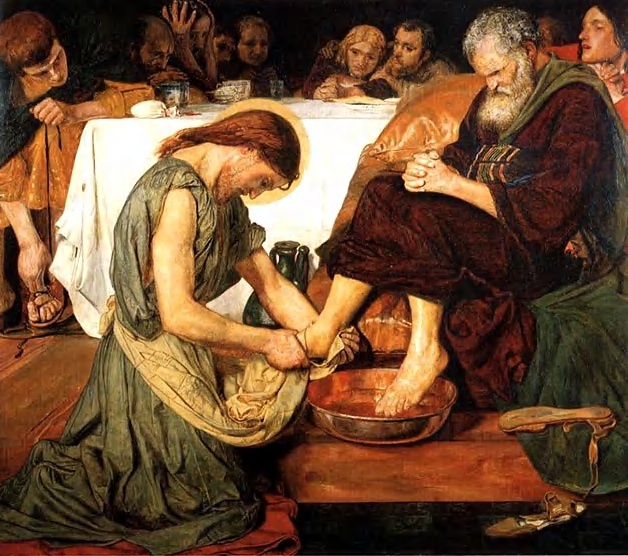
The Priesthood and the Holy Mass are important, but these great things, without love, gain us nothing. When Jesus commands “do this in remembrance of me” he also intends us to must practice the love he models for us. At the Last Supper, when he took his very self—his own Body and Blood—into his hands, he gave these to his disciples and humbly washed their feet. Jesus “loved his own in the world and he loved them to the end.” And he told them, “What I am doing, you do not understand now, but you will understand later… I have given you a model to follow, so that as I have done for you, you should also do.

Therefore, on Holy Thursday we remember how Jesus Christ commands his priests offering the Eucharist to “do this in remembrance of me,” and commands his Church gathering for the Mass to “do this in remembrance of me,” and commands each one of us as he shows us perfect love to “do this in remembrance of me.”

Help Through Our Good Fridays

April 3, 2026

Palm Sunday
By Deacon Dick Kostner

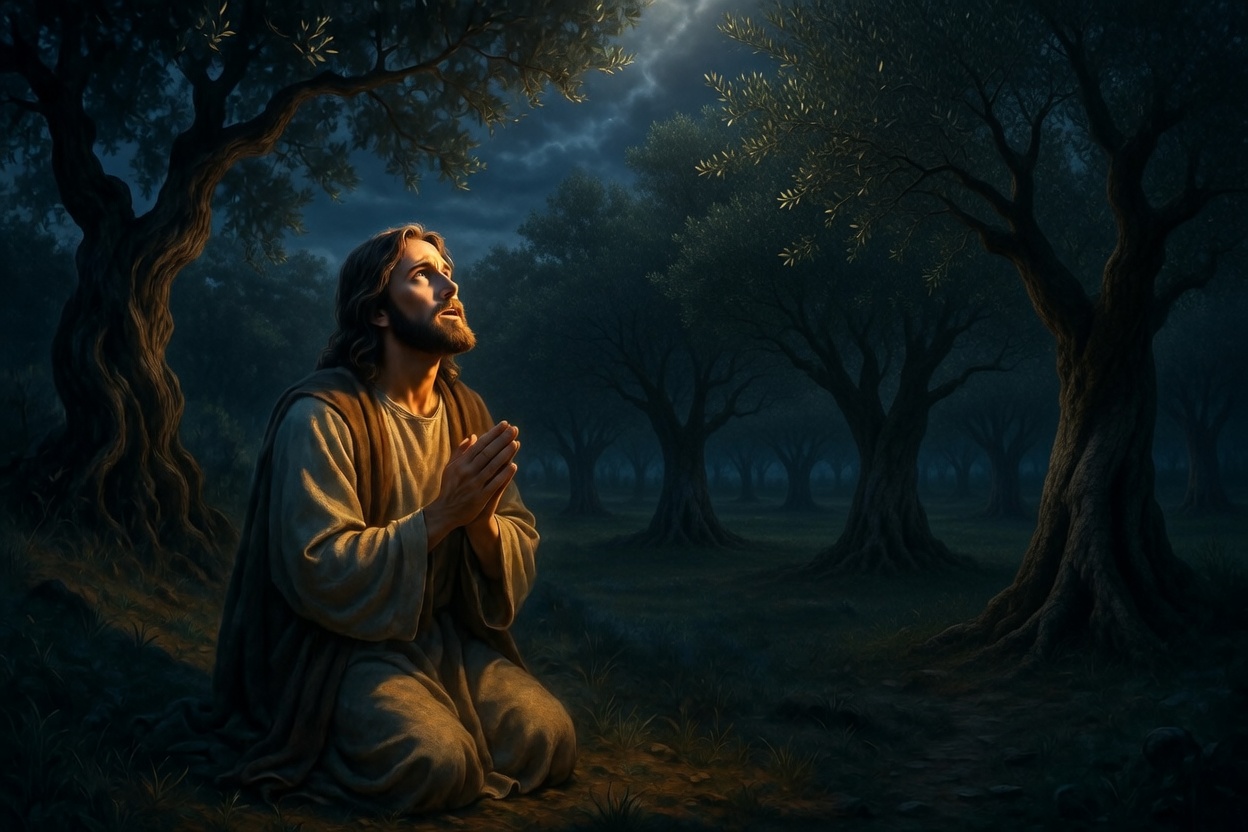
Last Sunday you heard me talk about how the Light of Christ is charged through the Body of Christ which is represented by Christ’s bride he calls his Church, human people baptized and energized with faith. Today we will see “Act Two” of Last Week’s Homily where we see the human side of Jesus as he contemplates the conclusion of his mortal life through the Way of the Cross. It begins with a prayer in the Garden to the Father wondering if maybe the cup might pass from him. With His prayer ending, but “not my will but thy will be done!

The Passion begins on a happy note where Jesus experiences the joy of his presence with the people he loves. It is a happy day, with Jesus feeling good about the relationships he has made with people he loves. But we all know that what goes “up” usually comes “down” in this imperfect world we live in. He is well aware that his time is near to accept human suffering and human death so that people he loves can be cleansed of their sins by and through the sacrifice of the Lamb and his resurrection and victory over death, allowing his people to live in knowing that death is not the end but rather the doorway to their home in heaven.

For those who follow the teaching of Jesus this means that the Passion of Christ is also the crystal ball of our future. Fifty plus years ago I began my journey to become an attorney to join my brother and dad in their practice. My place of study was in Chicago. What I did not know is that the school I was attending had a rule that all students had to maintain a GPA of 80% on the one final exam that was given at the end of each semester. Failure to attain that would put you in the a state of probation. The schools policy was that students would only be allowed to go on probation once in order to continue on with the school. The tests consisted of about ten essay questions on a set of facts which needed to be analyzed to find the issues, the rules of law governing those issues, and then to apply the rules of law to those issues. The tests were timed allowing ninety minutes to complete. In my case I ran out of time and failed to answer two of ten questions posed. This required me to answer the other eight questions without missing any facts, rules, or application of those rules which I failed to do.

Like Jesus, I feared that the odds were against me in being able to complete my required three years of education to become a lawyer. Like Jesus, I prayed for guidance as to whether I could be successful in attaining my goal and vocation of being able to help others solve legal problems they may encounter. Like Jesus I put my choices in the Fathers hands for an answer. I got a response quickly through my dad. I remember quizzing my dad on the same question for his response and his response to me was to “tough it out.” One of my best friends in law school was Bob. Bob and I would sometimes go across the street to a bar to unwind after classes. One day I confessed to Bob that I was on probation and that the odds were against me that I could evade going on probation again with five more semester tests ahead of me as I never had enough time left to complete all the questions that needed to be answered. He agreed with me that the time posed a threat in completing all the questions. He thought for a minute and said “Dick do you outline each question before you try and apply the rules to the facts?” I laughed at him and said how can I do that when I am already running out time in answering the questions? He said look, you need to do that for if you complete outlining all the questions first the instructor will know that you have identified 95% of the issues and laws governing and needed in resolving the issues involved even if you fail to do the final job of applying the facts to the rules of law!

I took Bob’s advice and Bob and I were part of the twelve individuals who graduated from my law school from an original class of over two hundred students. I recently did a Google search in order to see if I could find a way to make contact with Bob who now practices law in Chicago. I was successful and was able to make contact with him last year. I thanked him and told him that I would not of been able to become a lawyer without his help and support, without him having recharged my flashlight so I could see through the darkness of a “Good Friday.”

We all will encounter in this life downers that seem to be insurmountable. We like our Teacher will need to go to the Garden and have a chat with our Heavenly Father on how to proceed during “Good Friday” times. The good news is that the Father is listening and will dispatch the Body of Christ agents, the “Bob’s” in my story, to help us overcome those seemingly “insurmountable events” and lead us to the bright light of His Easter Sunday Resurrection. Let us close with a prayer:

Lord,
may everything we do
begin with your inspiration
and continue with your saving help
Let our work always find its origin in you
And through you reach completion.
We ask this through Christ our Lord.
Amen.

We Are Awaiting — Funeral Homily for Mary Ann Loew, 80

April 2, 2026

By Deacon Daniel Rider

Spring is slow in coming this year. Warm days followed by snowstorms. We are still waiting for spring to arrive. Mary Ann was blessed to have Art. sixty years of marriage, and was blessed with four children. Mary Ann and Art did their best to live out their marriage vows. For better or for worse, in sickness and in health, ’til death do us part. Yet something just doesn’t seem right. Most men expect to die first. They won’t be the one left behind. After Mary Ann’s accident Art became the caregiver, taking care of Mary Ann through all her needs. Letting her know he would be there no matter what. But now it’s over. It seems so final.

When I was in college, in one class we were asked to come up with a definition of God. The one we came with was, “God is the one who has the last word.” In our readings from Psalm 23 and from Revelation we see a vision of the future. God’s vision for us. Even though I walk through that dark valley where no hope lives, you are with me, leading to a better place, into the heavenly banquet. A place where there is no more mourning, or pain, or tears, or death. This is Jesus promise, from the one who has the last word. A word greater than Satan or the world, or death.

From the cross it looked like Satan and the world had won, but three days later God had the last word. We need to see death through God’s eyes. Mary Ann felt she was ready for the end of her life because she knew the answer to the question we hear Jesus asking Martha in our Gospel reading for today. Jesus told her. “I am the resurrection and the life; whoever believes in me, even if he dies, will live, and everyone who lives and believes in me will never die. Do you believe this?”

All of us, sooner or later, will be confronted with this question. All of us will face the reality of death, whether our own or that of someone close to us. Death has a way of confronting our faith by revealing our fears, our doubts, our attachments to this world, and our ultimate powerlessness. Yet, Jesus wants us to face death, in all its mystery , and allow the Holy Spirit to remove its sting. The challenge that death presents to us is whether we will trust in Jesus and his promise of resurrection.

In today’s Gospel we find Martha and Mary struggling with this question as they deal with the death of their brother. We find them find them feeling grief and hopelessness, and they ask the same questions all of us do. “Why” and “If only” We know these doubts and feelings. How often have we said, “Lord, where were you when we needed you?” Yet the Gospel shows us that Jesus is with us in those times of need. The Jesus we see in this Gospel is one who cares, who feels pain and sorrow at the death of his friend. Jesus is troubled. The incarnate Son of God weeps. In Him we see God, not distant and removed from our pain and doubts, but a God who is with us in our sadness and grief. Jesus is the man of sorrows, who knows our pain, and bears it to the point of his own tears.

But Jesus does more than feel our pain; he is there to show us that there is something more. There is hope. Hope in the resurrection and new life. Jesus came to Martha and Mary to bring them hope. Resurrection is God’s future coming to us in our present lives to bring hope to us today. When we are hopeless and surrounded by death, when our future looks dark, God comes to us in Jesus, bringing life and hope out of death. It was Jesus bringing hope that caused Martha, even before Jesus showed his power through Lazarus, to make her confession, “You are the Christ, the Son of God, the One who is coming into the world.” It is Martha’s conversion of heart and confession of faith that all of us are called to. That even in the most difficult circumstances of life we can know that Jesus is there to bring life out of death and hope from despair.

As we go through life Jesus wants to be right there with us, speaking words of comfort and bringing the Gospel of life and hope to us in a new and powerful way. And the greatest gift he wants to give us can be stated in one sentence. “Christ has died, Christ is risen, Christ will come again.” These ten words about Jesus are filled with hope and promise for us because we have been baptized into Jesus’ own death and resurrection. Because Jesus died for all of us, we can be free from sin, both now and when we face judgment. When Jesus rose, he overcame death not just for himself but for everyone.

There can be no spring without the cold of winter, no sunrise without the darkness of night. The pain and suffering of Good Friday must precede the triumph of Easter. Martha experienced this in the death of her brother, as she passed through the dark valley of doubt and grief. That dark valley where no hope lives. And she experienced the hope and promise of Jesus bringing life out of that darkness as she came to see him as the Son of God, the One who is coming into the world.

We are waiting for the arrival of spring, but for Mary Ann, Easter came a little early this year.