Holy Thursday
By Fr. Victor Feltes

You’ve heard of sermons and you’ve heard of homilies but there is a difference between the two. A sermon is given on whatever topic the preacher chooses, but a homily unpacks some aspect of the liturgy’s readings or prayers. The Church requires that the preaching at Mass be a homily, adding that it “should take into account both the mystery being celebrated and the particular needs of the listeners.” But the Church ordinarily does not specify what particular themes are to be preached. Holy Thursday’s evening Mass, however, is a rare exception. For tonight’s Mass, the Roman Missal instructs that “the Priest gives a homily in which light is shed on the principal mysteries that are commemorated in this Mass, namely, the institution of the Holy Eucharist and of the priestly Order, and the commandment of the Lord concerning fraternal charity.” I see all three of these mysteries reflected in Jesus’ Last Supper command: “Do this in remembrance of me.”
Jesus Christ, in order to never depart from his own, and to leave us a pledge of his love, and to make us sharers in his saving mysteries, instituted the Holy Eucharist. And he commanded his apostles to celebrate it until his visible return, thereby ordaining them priests of his New Covenant. Now I try to celebrate Catholic liturgies how the Church asks us to, because that is an expression of our obedience to Christ. But I saw a norm in the ritual for this Holy Thursday’s Mass which I had somehow never noticed before. The Missal says that at the beginning of tonight’s Mass “the tabernacle should be entirely empty.” That is why—as you likely noticed—our tabernacle is empty, its doors are open, and the vigil light is absent. This sign an excellent reminder that without the Last Supper, without the priesthood, without priests, we would have no Eucharist. Give thanks to God sometime at prayer for all the good things he has given you through the ministry of his priests. And if perhaps you feel a calling to the ordained priesthood yourself, I urge you to earnestly pursue it. If that is your vocation, it is the greatest thing you can do with your life.
Jesus also speaks his command to “do this in remembrance of me” in another sense to his entire Church as well. God’s people have celebrated the Holy Mass throughout all the centuries ever since as the memorial of Christ’s Passion, death, and Resurrection. But this memorial is not merely a ritual of mental recollection. Devout Jews of past and present have celebrated their Passover feast as more than a mere remembrance, but as an actual renewal and a personal reliving of God redeeming them from Egypt. They teach that “in each and every generation every [Jewish] person must regard himself as though he had come forth from Egypt as a slave.” Likewise for us, the memorial of the Holy Eucharist, received from the Lord and handed on to us, is a renewal and authentic personal experience of our deliverance and salvation through Jesus Christ.
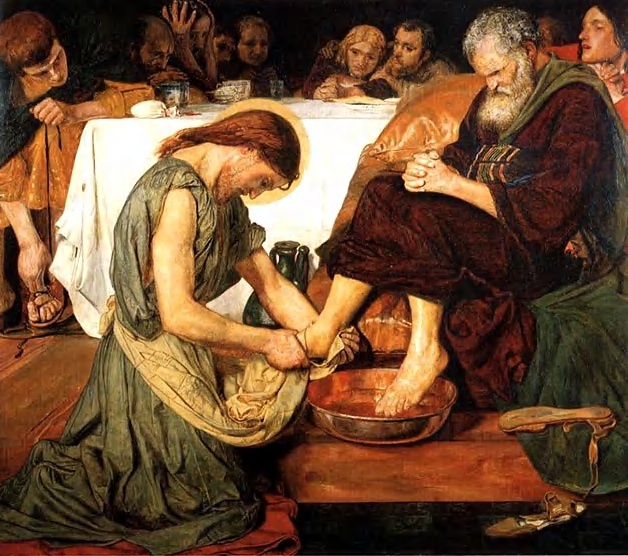
The Priesthood and the Holy Mass are important, but these great things, without love, gain us nothing. When Jesus commands “do this in remembrance of me” he also intends us to must practice the love he models for us. At the Last Supper, when he took his very self—his own Body and Blood—into his hands, he gave these to his disciples and humbly washed their feet. Jesus “loved his own in the world and he loved them to the end.” And he told them, “What I am doing, you do not understand now, but you will understand later… I have given you a model to follow, so that as I have done for you, you should also do.”
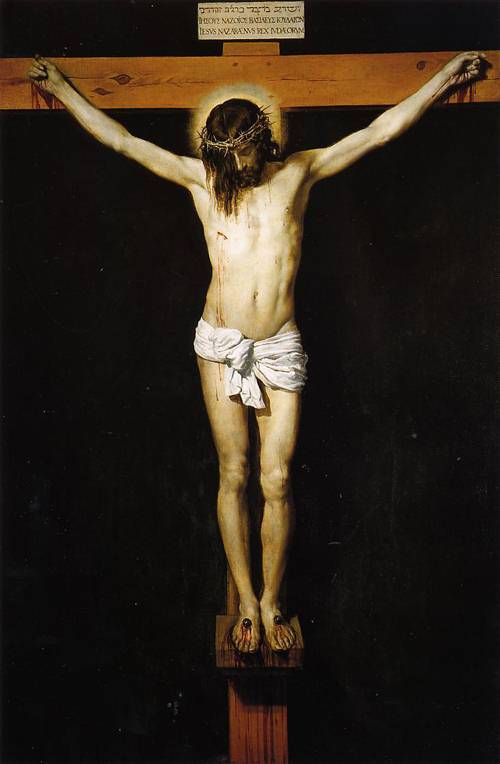
Therefore, on Holy Thursday we remember how Jesus Christ commands his priests offering the Eucharist to “do this in remembrance of me,” and commands his Church gathering for the Mass to “do this in remembrance of me,” and commands each one of us as he shows us perfect love to “do this in remembrance of me.”

 Parishable Items