Archive for the ‘Catholic Church’ Category

Our Seminarians’ Coronavirus Stories

April 6, 2020

God has blessed our parishes with priestly vocations. Of the sixteen seminarians currently enrolled in major seminary for our La Crosse Diocese, three of them (fully 18%) belong to St. Paul’s or to St. John the Baptist’s Parishes. These young men have now returned safely home to us, but what was it like for them to be at seminary as this pandemic arose and what has life been like since? These are their stories.
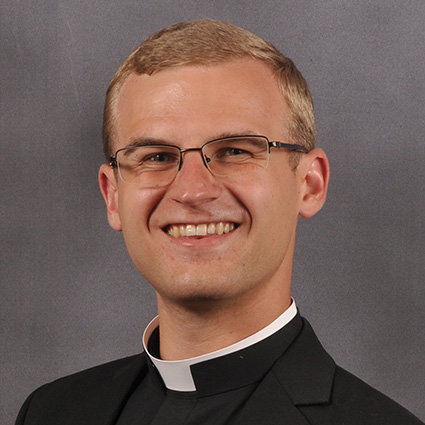
 

Isaac Pecha of St. Paul’s Parish in Bloomer had been studying in 1st Theology at the North American College in Rome. He writes:

My experience of the Coronavirus outbreak has occurred in three stages: the initial outbreak in Italy, the two-week quarantine upon returning to America, and then the statewide stay-at-home order that started right as I left quarantine. Each has come with its own graces, which I share below.

In late February, a few towns in the north of Italy were put on lockdown, but Rome continued as normal. I even remember telling a classmate on March 4th, “I don’t think classes will be cancelled unless someone in the university gets sick.” The next day, the government announced that they were suspending all school activities. Then on March 9th, the lockdown was extended to the whole country. We were called back to America, with a flight out in 11 hours. I said my goodbyes, packed a single suitcase, and we left Rome. An hour after we landed on the 11th, the U.S. suspended travel from Europe. During this stage, my biggest graces were the clear reminder of how little we are in control of things, and having a bishop who acted so wisely as to call us home when he did.

When we got back to America, the four of us La Crosse seminarians had to quarantine together for two weeks before we could go to our families. In the unused rectory where we stayed, we established an horarium and continued to pray, study, and enjoy fraternal time as usual. There was a sliding glass door, and on Sundays a nearby priest would say Mass on the porch outside (with us safely contained in the house). This was the greatest grace of the personal quarantine—a concrete reminder of how lucky we are to have the sacraments, and the lengths to which priests will go to bring them to us.

The day before our release from personal quarantine, Governor Evers issued the statewide stay-at-home order, so as soon as the health department cleared us to leave, we all went straight back to our families. Since then, I have been at home, still taking classes online, spending time with my family. Having little to do besides pray, study, and hang out with my family members has been a great grace.

I am reminded of the words of one of my favorite holy women, Servant of God Chiara Corbella Petrillo. She said, “God does not want to take good things away from you, and if he takes, it is only to give you so much more.” Obviously, I cannot wait to go back to Rome, or receive a parish assignment here in our diocese, but it would be wrong to only long for those things without thanking God also for the good things he has given me in the meantime.
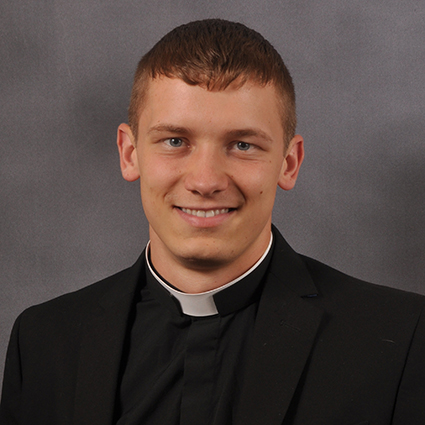
 

To this account, Eric Mashak, the 3rd year theologian from St. John the Baptist Parish in Cooks Valley, simply adds:

For us seminarians who study in Rome, it was very unexpected to be called back to the U.S. by our bishop. We found out that we were coming home around dinner time and were at the airport about 12 hours later. This, for me, was a simple lesson in obedience. There is a necessity for fast acting obedience in the priesthood. Like the Apostle Andrew who dropped his nets and instantly followed Christ, so too the priest needs to be ready to take a new parish assignment at a call from the bishop. Formation never stops! Even when we can’t be in a seminary.
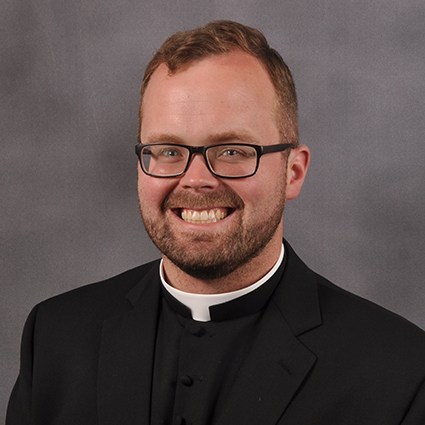
 

Matthew Bowe of St. Paul’s was studying in 2nd Theology at St. Francis de Sales Seminary just outside of Milwaukee. He writes:

Greetings, brothers and sisters in Christ. I pray that everyone is doing well and is staying healthy. If you or your family or your friends have been deeply affected by the Coronavirus, please know that they are being prayed for in a special way.

Like other places, St. Francis de Sales Seminary had to adjust to the Coronavirus situation. After finishing our spring break, we had classes the week of March 9th. On Friday, March 13th, around 11 a.m., we received an email stating that the plan was to continue with classes on the following Monday. Later that evening around suppertime, all that changed when emails were sent about going to online classes until Easter and that formation would be suspended for a couple of weeks. Seminarians would be allowed to St. Francis Seminary under quarantine during that time if they so wished. For the seminarians of the Diocese of La Crosse, we received an email after supper stating that we were to go home as soon as possible. I have been home since March 14th.

Since then, classes will be conducted online through the end of the semester, and seminarians are to remain where they currently are until St. Francis Seminary tells us otherwise. At home, I have found balance in completing my schoolwork while maintaining prayer times and other healthy habits (e.g., eating well, exercise, and leisure activities). I have been catching up on some good movies and enjoying home-cooked meals with my parents. Further, I help out around the house. Other than that, my life is somewhat uneventful and routine, and there is a peace with that. The stress and pressure of a normal seminary life, which does give me life, have been removed, and I have a more comfortable position to reflect on the good that God has given me during my time as a seminarian. God has given me good gifts during this time of trial and tribulation.

I would like to conclude by asking everyone to continue to keep faith. Although this is a difficult time for everyone, let it bring forth good fruit that can only be achieved by uniting oneself to the will of God. Trust God, and He will do good things for you (in ways that you may not expect). While we brave this storm, let us pray for one another. I will continue to pray for the families of the parish, and I ask you to pray for my family and for my brother seminarians. May the merits of Jesus’ Passion enliven our faith during this Holy Week.

An Identity and a Mission

April 1, 2020

2nd Sunday in Ordinary Time—Year A


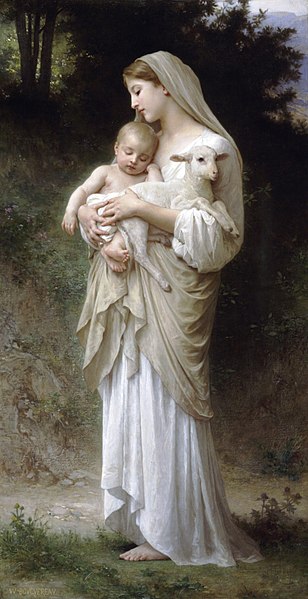
When St. John the Baptist sees Jesus coming toward him he declares, “Behold, the Lamb of God, who takes away the sin of the world!” Why did John say that? How is Jesus like a lamb? Under the Old Covenant, animal sacrifices were offered for sins. The symbolism was that the living animal, often an unblemished male sheep, was dying in place of the sinner who offered it. This prefigured what was to come. Jesus Christ, like a flawless, obedient sheep, hears and follows his master’s voice, He does the Father’s will, and takes our place in the sacrifice which actually forgives sins. This is why Jesus is rightly called the Lamb of God who takes away the sins of the world.

John the Baptist goes on to say, “He is the one of whom I said, ‘A man is coming after me who ranks ahead of me because he existed before me.’” Indeed, Jesus, as the Second Person of the Most Holy Trinity, existed before the universe itself. Through Him all things were made, and the things that came to be pointed to and culminated in Him. For this reason, it is not so much that Jesus resembles the lambs of Old Covenant sacrifices, but rather that God establishes the ritual of lamb sacrifice for sins in order to point to Jesus and his ultimate sacrifice.

The story of the life of Jesus appears in the New Testament, but the Holy Spirit has spoken through the prophets about Him throughout the Old Testament. For example, our first reading from the Book of Isaiah written several centuries before Christ, is one of hundreds of passages which speak of Him. But before we return to that passage again, let’s review a little historical background.

We read in the Book of Genesis that Jacob was Abraham’s grandson. Jacob was renamed “Israel” by God and fathered twelve sons. From these twelve sons the “twelve tribes of Israel” descended. This is why the names “Jacob” and “Israel” are usually interchangeable, and may refer to one person or to many. In Isaiah, the prophet writes, “The Lord said to me: You are my servant, Israel, through whom I show my glory. Now the Lord has spoken who formed me as his servant from the womb…” To whom is God speaking in these lines? Who is the servant whom God formed from their beginning; the prophet himself, God’s faithful people, or Jesus Christ? There is truth in each of these interpretations, but this reading’s relevance to Jesus particularly shines forth. The prophesy continues:

It is too little, the Lord says, for you to be my servant, to raise up the tribes of Jacob, and restore the survivors of Israel; I will make you a light to the nations, that my salvation may reach to the ends of the earth.”

Jesus is the one who brings light and salvation not only for the physical descendants of Abraham, Isaac, and Jacob, but for all the nations on earth, to non-Jewish Gentiles like you and me through His one, holy, catholic, and apostolic Church. Another foreshadowing of Christ is seen in today’s psalm, written by King David one thousand years before Christ. Hear these words as if spoken from Jesus’ lips:

[Mere] sacrifice or offering you wished not, but ears open to obedience you gave me. [More of the former] burnt-offerings or sin-offerings you sought not; then said I, “Behold I come.”

In the written scroll it is prescribed [that is, it is foretold in the Scriptures.] For me to do your will, O my God, is my delight, and your law is within my heart!

I announced your justice in the vast assembly; I did not restrain my lips, as you, O Lord, know. I have waited, waited for the Lord, and he stooped toward me and heard my cry. And he put a new song into my mouth, a hymn to our God.

I fully suspect the 40th Psalm had an original, personal meaning for King David when he authored it, and these words have been prayed by God’s faithful people in a personal way ever since, but these words especially apply to the person and mission of Christ. After preaching God’s word to vast assemblies, obedience to his mission led Jesus to His Passion. After crying out for His Father to save Him, and waiting, waiting three days in the tomb, Jesus’ resurrection has put a new song in his mouth, a new hymn of praise to the Father in which we all have a part.

As I mentioned in my homily last week, by baptism you are baptized into Christ. And by remaining connected to Jesus Christ through his sacraments, He remains in you. The prophecies of Scripture refer not only to the human authors, like Isaiah or David, and they refer not only to Jesus, these passages’ fullest fulfillment, but also to us, His Bride and His Body, the Church in her members, the New Israel which comes to us through the twelve Apostles of Jesus. Hear those words of the Lord from Isaiah again:

You are my servant, Israel, through whom I show my glory. Now the Lord has spoken… that Jacob may be brought back to him and Israel gathered to him.”

Israel had been scattered, whole tribes of Jacob were lost due to sin and its consequences, but God Ever-Faithful used Israel, perfected in his Son, to gather his people Israel back to Himself. He says to us:

You are my servant, O Church of God, through whom I show my glory. Now the Lord has spoken… that the People of God may be brought back to him and the Church gathered to him.

God has purpose for your life. A purpose found in Christ. A mission to be faithful and fruitful in Christ. Jesus is still working to save souls today and he desires to work though each of us in His Body, the Church.

This is His Body Given up to Save Many

March 21, 2020

Laetare Sunday — 4th Sunday of Lent—Year A

This past Wednesday evening, I saw this image online with the caption: “Darkness has fallen: every single U.S. diocese has suspended public celebrations of the Mass.”

Our Laetare Sunday rejoicing is more subdued this Lent. The sad but necessary suspension of public Masses by our nation’s bishops is a painful loss. And for many of the faithful, the greater their love for the Lord the greater the pain they feel. They are like the woman at Simon the Pharisee’s house who could bathe Jesus’ feet with dripping tears ‘because she loved much.’ (Luke 7:47) However, darkness has not overcome us.

Brothers and sisters,” today’s second reading tells us, “you were once darkness, but now you are light in the Lord.” God is still God, Christ is still Lord, and we are still His. Though public liturgies have ended the Holy Mass continues to be privately offered in most every Catholic church. The graces of Jesus’ sacrifice pour forth from these altars into Christian souls throughout the world, for our good and the good of all his holy Church. Priests are celebrating these Masses in obedience to the command of Christ recalled at every Consecration, “Do this in memory of me.” Yet each of us, ordained and lay people alike, is called to keep this commandment of Christ in a deeper way; by personally imitating Jesus in his loving self-sacrifice for others.

Today, and in the critical weeks and months ahead, all of us are called to sacrifice in ways that will seriously limit our activities and impact our finances. Why are we doing this? To stop the spread of a deadly disease not merely to ourselves but to our many neighbors around us. From my research into this grave topic, it appears that hundreds of thousands—potentially millions—of American lives depend upon the extent of our collective and individual actions now. So please respond with a firm resolve from a Christian love for others.

When you ache today because you can neither gather for Mass nor physically receive our Lord, take heart in the reason for your sacrifice. This is his Body given up to save many; we do this in memory of Him. And soon, when you are asked to help people in the community meet their material needs, sacrifice for them knowing whom you are also serving. For whatever you do for the least of your brethren, you do it for Him. Invite Jesus now to enter into your heart and be with you, to console and strengthen you, today and in the trials ahead of us.

A Future Pope on Fasting from the Eucharist

March 18, 2020

In the Latin Rite of the Catholic Church (of which 98.6% of the world’s Catholics are members) there is only one day each year when no Masses are to be celebrated – that is, Good Friday. That day’s liturgy contains a Communion service in which presanctified (previously consecrated) Hosts are received and eaten by the faithful. However, in the early Church, there was no consumption of Holy Communion on Good Fridays by the faithful at all. This tradition was noted by the esteemed theologian Joseph Cardinal Ratzinger (the future Pope Benedict XVI) in his 1986 book “Behold the Pierced One” and again (reprinted) in the 2002 book “Pilgrim Fellowship of Faith: The Church as Communion.”

In passages relevant to our present-day, Lenten reality, Cardinal Ratzinger reflects upon the spiritual value that could be found in the practice of Catholics in full communion with the Church abstaining for a time from consuming Jesus Christ in the Holy Eucharist:

“When Augustine felt his death approaching, he ‘excommunicated’ himself and took upon himself ecclesiastical penitence. In his last days, he set himself alongside, in solidarity, with the public sinners who seek forgiveness and grace through the pain of not receiving the Communion. He wanted to meet his Lord in humility of those who hunger and thirst for righteousness, for Him, the righteous and gracious One. Against the background of his sermons and writings, which describe the mystery of the Church as a communion with the Body of Christ and as the Body of Christ, on the basis of the Eucharist, in a really marvelous way, this gesture is quite shocking. It seems to me more profound and fitting, the more often I ponder it. Do we not often take things too lightly today when we receive the most Holy Sacrament? Could such a spiritual fasting not sometimes be useful, or even necessary, to renew and establish more deeply our relation to the Body of Christ?

In the early Church there was a most expressive exercise of this kind: probably since the time of the apostles, Eucharistic fasting on Good Friday was part of the Church’s spirituality of Communion. Not receiving Communion on one of the most holy days of the Church’s year, which was celebrated with no Mass and without any Communion of the faithful, was a particularly profound way of sharing in the Passion of the Lord: the sorrowing of the bride from whom the bridegroom has been taken away (see Mark 2:20). I think that a Eucharistic fast of this kind, if it were deliberate and experienced as a deprivation, could even today be properly significant, on certain occasions that would have to be carefully considered—such as days of penitence (and why not, for instance, on Good Friday once more?), or also perhaps especially at great public Masses when there are so many people that a dignified distribution of the Sacrament is often not possible, so that by not receiving the Sacrament people could truly show more reverence and love than by doing so in a way that contradicts the sublime nature of this event.

Such fasting—which could not be allowed to become arbitrary, of course, but would have to be consonant with the spiritual guidance of the Church—could help people toward a deepening of their personal relation to the Lord in the Sacrament; it could be an act of solidarity with all those who have a yearning for the Sacrament but cannot receive it. It seems to me that the problem of people who have been divorced and remarried, yet equally the problem of intercommunion (in mixed marriages, for example), would be less of a burden if voluntary spiritual fasting was at the same time undertaken in visible recognition and expression of the fact that we are all dependent upon that ‘healing of love’ which the Lord effected in the ultimate solitude of the Cross. I would not of course wish to suggest by this a return to some kind of Jansenism: in biological life, as in spiritual life, fasting presumes that eating is the normal thing to do. Yet from time to time we need a cure for falling into mere habit and its dullness. Sometimes we need to be hungry—need bodily and spiritual hunger—so as once more to comprehend the Lord’s gifts and to understand the suffering of our brethren who are hungry. Spiritual hunger, like bodily hunger, can be a vehicle of love.”

Concerning Coronavirus

March 12, 2020

Coronavirus is a Serious Concern

The Wuhan Coronavirus is very contagious and estimated by Dr. Anthony S. Fauci, head of the National Institute of Allergy and Infectious Diseases, to be ten times deadlier than the seasonal flu. This new pandemic poses some small danger to the young but puts the elderly and those with underlying health issues at much graver risk. In Italy, where 6% of those confirmed to be infected with Coronavirus have died thus far, the Italian Catholic bishops have suspended all public Masses in their churches until at least April 3rd. And in Washington State, where 31 people have died, the Catholic Archdiocese of Seattle has suspended all public Masses indefinitely.

Due to current limitations in the United States’ ability to test for the Coronavius, it is unclear how pervasively the illness is spreading in this country. For some idea of how bad things could become, according to the Centers for Disease Control and Prevention’s (CDC) figures the less contagious and less lethal Influenza virus has infected between 3% to 14% of Americans per year since 2010, resulting in 12,000 to 61,000 deaths annually. If, hypothetically, 14% of Americans go on to catch this new Coronavirus and its mortality rate proves to be 1% (as Dr. Fauci predicted this Wednesday in his testimony before Congress) it will result in 458,000 U.S. deaths. The Wuhan Coronavirus is clearly a matter for our serious attention.

Signs of Illness & Means of Prevention

What are the symptoms of the Wuhan Caronavirus? The World Health Organization (WHO) reports that among confirmed cases about 90% of patients manifest a high fever and about 70% have a dry cough. Shortness of breath is another noted symptom. If someone believes they are infected, the CDC recommends calling ahead to their personal doctor or hospital for instructions rather than just walking into their local E.R. and possibly infecting others. The sick are urged to stay home and to wear a mask to prevent spreading the disease. There is currently no vaccine to protect against this Coronavirus and a safe vaccine is not expected for at least another year.

The CDC says the virus is thought to spread mainly person-to-person, between people in close contact with one another (6 feet or less,) especially from the coughs or sneezes of an infected person. They recommend frequently washing your entire hands with soap and water for at least 20 seconds or (if soap and water are not available) to use hand sanitizer with at least 60% alcohol content. They also urge no touching of your eyes, nose, or mouth with unwashed hands, disinfecting commonly touched surfaces, avoiding contact with those who are sick, and distancing yourself from other people in general.

Missing Mass & Spiritual Communion

Common, good, and prudent reasons for missing Sunday Mass include being ill, dangerous conditions, or needing to care for another person. Therefore, when someone is sick, or believes that venturing out would be dangerous, or believes that the risk of bringing a sickness back home to someone in their care is too great, they are excused from attending Sunday Mass. However, if someone is avoiding Sunday Mass as a too-risky activity then it seems that person also should not be attending parties, going to the movies, out shopping for non-essential items, and the like, but rather social distancing in a way consistent with one’s concern. And if you will be missing Mass for an extended time, to help ensure the continued health of your parish consider registering for automatic withdrawal (ACH) giving from your checking account. Additionally, even if one has a legitimate reason to skip Mass, our duty to worship God and rest on the Lord’s Day remains.

Jesus Christ’s Catholic Church encourages frequent (even daily) Holy Communion, but if we cannot attend Mass we can still unite ourselves to Our Lord by making a Spiritual Communion. St. Teresa of Ávila wrote, “When you do not receive Communion and you do not attend Mass, you can make a Spiritual Communion, which is a most beneficial practice; by it the love of God will be greatly impressed on you.” Once, in a vision, Jesus showed St. Catherine of Siena two chalices, one gold and one silver. He said her Sacramental Communions were preserved in the gold chalice and her Spiritual Communions in the silver one. A Spiritual Communion with Jesus is the next best thing to physically receiving Him in the Eucharist.

If public Masses are suspended in your diocese, remember that the Holy Mass can be seen on TV or online as a next best alternative. Know that the daily Mass readings can be found at the U.S. Conference of Catholic Bishops (USCCB) website. And realize that Catholic priests, even if standing alone in their churches, will still be offering the Holy Mass daily for the whole world and bringing Confession, Holy Anointing, and Viaticum to the sick for as long as they are able. The Wuhan Coronavirus pandemic is rightfully concerning, but whatever comes we need not fear, for “we know that all things work for good for those who love God,” and “whether we live or die, we are the Lord’s.” (Romans 8:28,14:8) As Jesus often said, “Be not afraid.

Jesus and His Wounded Church

October 27, 2019

On October 15th, her feast day, I heard a story told of St. Teresa of Avila I had never heard before. It may be a pious legend (as I have not found any primary sources for the tale) but it contains a truth all the same. The story goes that Satan once appeared to the 16th century Spanish nun in the glorious guise of Jesus. Satan intended to lead Teresa astray, but she quickly saw he was not Christ. Before departing from her the Devil asked how she was so certain. She replied, “Because you have no wounds.”

In the Book of Acts we read that on the road to Damascus Saul heard a voice say, “Saul, Saul, why are you persecuting me?” “Who are you, sir,” asked the afflictor of the Early Church. “I am Jesus, whom you are persecuting.” Jesus had already, some months or years before, bodily ascended into Heaven, but Our Lord felt all the afflictions of the Church on earth as his own. Saul repented, converted, and became St. Paul.

Jesus hates the grave mistreatment and harming of his members but his Body suffers and bears wounds still; wounds inflicted both from outside and within his Church. Jesus told his disciples, “Things that cause sin [literally “skandala,” scandals or stumbling-blocks] will inevitably occur, but woe to the person through whom they occur.” Yet even as Jesus heals and avenges his innocent, injured sheep he desires the salvation of wrongdoers too – that, justly-chastised, the sinner would ultimately appear before God as a saint.

Pray for our whole Church without despairing, for the victory of our Faithful Bridegroom is assured. St. Teresa of Avila said, “I do not fear Satan half so much as I fear those who fear him,” and she urged her sisters to unshakable confidence in Jesus Christ:

“Let nothing disturb thee; Let nothing dismay thee:
All thing pass; God never changes.
Patience attains all that it strives for.
He who has God finds he lacks nothing:
God alone suffices.”

Catholic Twitter

October 16, 2019

Twitter.com is a social media website where both famous figures and less famous folks share their free thoughts of 280 characters or less. Pope Francis posts there daily (@Pontifex) alongside many other Catholics as well. There is a good deal of Catholic community, evangelization, and defenses of the Faith to be found on Twitter, depending on whom you follow. I recently came across a wonderful reflection by Fr. Dylan Schrader, a Catholic pastor in Missouri with a Ph.D. in systematic theology. @FrDylanSchrader wrote:

If the Catholic Church fulfills the figure of Noah’s Ark, then of course the Church is ridiculed and seems stupid, crazy, or like a waste of time to the world until all of a sudden we realize that it’s our only hope.” Like Jesus says in the Gospels, in the days before the Great Flood people were eating and drinking, marrying and given in marriage, up until the day that Noah entered the ark. They had disbelieved until the flood waters came, and it carried them all away. So it will be with the Second Coming of Christ.

Twitter allows threads of conversation and Fr. Schrader’s tweet was apparently replied to by a Protestant Christian who wrote: “CHRIST JESUS, alone, is the hope of a [C]hristian… if your hope is in a church, then your hope is misplaced.” Does the Church displace or minimize the Lord? To this, Fr. Schrader answered, “That’s like saying that it’s Noah who saves from the flood, not the Ark.” Indeed, Noah built his Ark and Jesus builds his Church. The Ark was God’s means to save a portion of humanity through Noah. Likewise, the Catholic Church is God’s means for saving the human race through Christ.

Consoling the New Jerusalem — 14th Sunday of Ordinary Time—Year C

July 8, 2019

This word of the Lord regarding Jerusalem was spoken through the Prophet Isaiah in our first reading:

“Thus says the LORD: Rejoice with Jerusalem and be glad because of her, all you who love her; exult, exult with her, all you who were mourning over her! For thus says the LORD: Behold, I will spread prosperity over Jerusalem like a river. As a mother comforts her child, so will I comfort you; in Jerusalem you shall find your comfort. When you see this, your heart shall rejoice and your bodies flourish like the grass; the LORD’s power shall be known to his servants.”

When reading Old Testament prophesies, the tone can really widely vary. Depending upon the particular century, the Lord’s message directed towards Jerusalem or the Israelites can be consoling, encouraging, promising good things to come; or denouncing, woeful, declaring punishments to follow. I find it really difficult to place our country and our present time amongst these Old Testament messages. I can imagine the people of our land being pleasing the Lord in many respects and I can see us meriting his correcting chastisement for other reasons. So do the consoling words of Isaiah apply to us? Let me explain how I think that they can.

In Old Testament times, Jerusalem, the holy city, was the place of God’s temple, his dwelling place on earth. But in 70 A.D., the Romans sieged Jerusalem and destroyed the temple leaving not one stone upon another, as Jesus had proselytized and foretold. In New Testament times, Jesus is the Temple. In John’s Gospel, Jesus tells a crowd, “Destroy this temple and in three days I will raise it up,” and John notes Jesus “speaking about the temple of his body.” The Body of Christ is the New Temple. The Christian understanding of Jerusalem changes, too. In the Book of Revelation, St. John beholds “the holy city, a new Jerusalem, coming down out of heaven from God, prepared as a bride adorned for her husband.” John hears a loud voice from the throne say, “Behold, God’s dwelling is with the human race. He will dwell with them and they will be his people and God himself will always be with them as their God.” So the New Temple is the Body of Christ. And the New Jerusalem is the Bride of Christ. Where is the Body of Christ now and where is his Bride? As New Testament Scriptures tell us, they are present on earth and in Heaven, as his Holy Church.

There are wounds and sufferings in the Body of Christ. This was personally true for Jesus on earth, and it is true for his members. In our second reading, St. Paul writes: “From now on, let no one make troubles for me; for I bear the marks of Jesus on my body.” Paul composed his letter in Greek, and here the Greek word for “marks” is literally “stigmata.” In the ancient world, slaves and devotees of pagan deities were often branded by marks called “stigmata” to indicate to whom they belonged, who they served or who was their god. In a Christian context, “stigmata” has come to mean the miraculous sign or gift of receiving the wounds of Christ, in one’s hands, feet, or side. St. Francis of Assisi experienced the stigmata near the end of his life, and St. Padre Pio bore Christ’s wounds in his hands for fifty years. But what St. Paul is describing in this passage is not necessarily that. In 2nd Corinthians, he enumerates the sufferings he had endured: “Five times at the hands of the Jews I received forty lashes minus one. Three times I was beaten with rods, once I was stoned…” St. Paul greatly suffered in Christ, but many wounds are not physical.

I hate that wolves in sheep’s clothing have hurt and scarred members of the Body of Christ, the Church. I hate that the Bride of Christ I love is denounced as something evil. Perhaps it has never been easy to be a Catholic, but it is hard to be a Catholic today. How are we going to respond? In today’s gospel, Jesus says, “Beg the master of the harvest [that is, God his Father] to send laborers into his harvest.” In other words, we should ask God to raise up saints. In the worst and hardest times in Church history, God has supplied holy saints. And he still lifts up saints in our modern times as well.

In the year 2010, a baby boy was born in Illinois with neither breath nor pulse. The parents prayed for the intercession of another native son of Illinois. That man had grown up in El Paso, Illinois, become a priest and eventually an archbishop, was an excellent preacher and author, and even won an Emmy for his highly-rated, prime-time, national TV show called “Life is Worth Living.” Archbishop Fulton J. Sheen died in 1979, but after praying for his help in saving their son’s life, after sixty-one minutes of no signs of life, their boy began to breathe and show a pulse. Today, James Fulton Engstrom is a fully healthy eight-year-old, and yesterday the Vatican officially announced that his inexplicable healing was a miracle, which clears the way for Archbishop’s Sheen’s beatification in the near future.

Fulton Sheen was a twentieth century saint, but God desires to raise up twenty-first century saints as well. And not just among others elsewhere, but among we ourselves. You and I likely never be beatified or canonized, but we are all called to be saints because we are all called to Heaven, and to begin living the life of Heaven here and now.

Notice how in today’s gospel, Jesus does not send out his missionaries one-by-one but in pairs. He told them to stick together, “stay in the same house.” Why? He wanted them to be a help, encouragements to each other, to be faithful and fruitful. Likewise, we have the fellowship of one another to help us become saints. And we have holy friends who know and love us to help us, the saints in Heaven. And we have our greatest friend who provides the means for our sanctification in himself, Jesus Christ. Let us become saints together. Then the words of Isaiah will be fulfilled among us. All who were mourning over Jerusalem will exult and all who love her will rejoice. In holiness the Lord’s power shall be known to his servants. And we will be comforted and flourish, in the New Jerusalem here on earth and in Heaven without end.

Christ the King & His Kingdom Among Us

November 27, 2018

We tend to think of Mexico as one of the most Catholic countries on earth, but for a time in 1920’s it was illegal to publicly celebrate Mass there. Following a revolution, the new, socialist, Mexican government effectively sought to outlaw the Catholic Church. They seized church property, expelled all foreign priests, and closed the monasteries, convents and religious schools.

But this did not stop priests like Blessed Miguel Pro from secretly ministering to the faithful; celebrating the Eucharist, distributing Holy Communion, hearing confessions, and anointing the sick clandestinely. He would often sneak from place to place in disguise, sometimes as a mechanic, or an office worker, or as a beggar. After many close calls, Fr. Pro was arrested by the government and, without trial, condemned to death on false charges that he was connected to a bombing assassination plot.

On November 23, 1927, Fr. Pro was led out for his execution by firing squad. He blessed the soldiers, knelt and quietly prayed for a time. He declined the blindfold and faced his executioners with a crucifix in one hand and a rosary in the other. He held out his arms like the crucified Christ and shouted, “May God have mercy on you! May God bless you! Lord, you know that I am innocent! With all my heart I forgive my enemies!”

Just before the order was given to fire, he proclaimed, “Viva Cristo Rey!” (which means “Long live Christ the King!”) When the initial bullets failed to kill him, a soldier shot him point-blank. The anti-Catholic government had a photographer on hand to capture these moments for propaganda purposes, but soon after these images were published in all the newspapers the possession of these pictures was outlawed. Seeing this Catholic priest dying innocently, bravely, and faithfully was an inspiration to the oppressed people of Mexico, who eventually won back their freedom of religion and freedom for Christ’s Catholic Church.

Today we celebrate “Christ the King,” but where is his Kingdom? During his ministry, Jesus said, “If I cast out devils by the finger of God, [and he did] then the kingdom of God has come upon you.” On another occasion he said, “Behold, the Kingdom of God is among you.” And at the Last Supper he declared, “Amen, I say to you, I shall not drink again the fruit of the vine until the day when I drink it new in the kingdom of God.” The next time he drank the fruit of the vine (that is to say, wine) was the next day, Good Friday, when he drank it from a sponge held to his lips as he hung upon the Cross. So when Jesus tells Pilate, “My kingdom does not belong to this world,” and, “My kingdom is not here,” he is not saying it is entirely absent from this world, that we will only begin to see it in Heaven or at his Second Coming when his Kingdom will come in its fullness. His Kingdom is not here because it is not yet here fully, and his Kingdom does not belong to this world because it is not from this world but from Heaven.

So where is Jesus’ Kingdom on earth? Jesus was called the “Son of David,” that is, the descendant of King David and heir to his throne. It was believed that the Christ would become the new King of Israel. And in fact, when Jesus was put to death on the Cross, the written charge declared above his head was: “This is Jesus the Nazarene, King of the Jews.” The Kingdom of David and his successors (the old, Davidic dynasty) was imperfect but it prefigured Jesus’ Kingdom. As St. Augustine taught, the Old Testament is the New Testament concealed, and the New Testament is the Old Testament revealed. The old foreshadows and points to the new. So, we can draw clues from the old Davidic Kingdom to identify Jesus’ new Kingdom in our midst.

The kings in the Davidic dynasty had many, many wives. From the beginning, God intended marriage to be between one man and one woman, but the kings of Israel – thinking blood is thicker than water – used marriages to seal their peace treaties and alliances with other nations. But this presented a problem: when the king has many wives, who is the queen? You can imagine the rivalry and discord this question could generate. The solution in the Davidic dynasty was to have the mother of the king fulfill that role, as Queen Mother. She had a throne of honor at the king’s right hand and served as an intercessor for the people of the kingdom. If someone had a request, one might bring it to her to present to the king. If the request were pleasing to the king and good for the kingdom he would happily grant it to please his well-loved mother.

The king of Israel had many ministers, but there was one prime minister among them: the king’s chief steward, the master of the royal household. As a sign of that man’s office and authority, the chief steward carried a large wooden key on his shoulders. When he would retire, or die, or be removed from office, another would take his place. His power was that of the king, on whose and with whose authority he acted. But a chief steward acting contrary to the king’s will would soon find himself replaced.

In the courts of ancient kingdoms, including Israel’s, you would find eunuchs. A eunuch is a man born or rendered physically incapable of marrying or having children. Eunuchs were preferred for practical reasons. First, they were safe to be around the king’s wives and harem. Secondly, since they had no wife or children of their own, eunuchs were entirely focused on the king and the kingdom. Their mission, personal success, and legacy were entirely wedded to that of the king’s.

Now we can see how the old conceals the new, and how the new reveals what the old prefigured. Jesus called all those willing and able to be “eunuchs for the sake of the Kingdom of Heaven.” Today, many ministers serve him devotedly in his celibate Priesthood. Jesus told Peter, “I give you the Keys to the Kingdom of Heaven. Whatever you bind on earth shall be bound in Heaven, and whatever you loose on earth shall be loosed in Heaven.” Jesus made Peter the first Pope, the first prime minister, chief steward, and master of his royal household on earth. Jesus has sealed his peace treaty and alliance with peoples of all nations through a single marriage: his marriage to his bride, the Church. But among the Church’s many members, is anyone the queen? As before, she is the mother of the King. The Lord has called Mary to a throne at his right hand where she intercedes for his people. If we have a request, we can ask her to present it to her Son, and if the request is pleasing to the King and good for his Kingdom he will happily grant it because he loves his mother so.

We are called to be good citizens of this country, but we are first and foremost citizens of Christ’s Kingdom. We are to vote and participate in the political process (for good polices and laws do good, while bad laws and policies do great harm) but we are not to put our trust in princes or politicians. We are to obey the law, but we know there is a higher law that supersedes unjust laws, and we know that above every earthly leader there is a higher King. That is why Blessed Miguel Pro was willing to defy the laws and president of Mexico to celebrate the Church’s sacraments and was not too terrified to face death before a firing squad. Let us remain loyal to Christ our King, and remain loyal to his Kingdom, a Kingdom which is among you, in His Holy Catholic Church.

Faithful Citizenship

October 31, 2018

This Tuesday, November 6th, we can promote the good for our society by voting in the midterm elections. Not only is voting our great right as Americans, it is also our duty as Catholics. As the Catechism teaches, “co-responsibility for the common good make[s] it morally obligatory… to exercise the right to vote…” (CCC #2240)

Though the Catholic Church participates in the political process as a moral voice in the public square, she does not institutionally endorse candidates or political parties. Within the Church, clergy and laity have different but complementary roles. The calling of the clergy is to preach the Gospel message so that all may properly form their consciences. The mission of lay people is to transform politics and culture.

As Pope Benedict XVI once said, “The Church is not a political power, it’s not a party, but it’s a moral power. Since politics fundamentally should be a moral enterprise, the Church in this sense has something to say about politics.” In their recent document on “Forming Consciences for Faithful Citizenship” the U.S. bishops highlight these nine fundamental moral issues particularly pressing at this time:

■ The ongoing destruction of over one million innocent human lives each year by abortion.

■ Physician-assisted suicide.

■ The redefinition of marriage – the vital cell of society – by the courts, political bodies, and increasingly by American culture itself.

■ The excessive consumption of material goods and the destruction of natural resources, which harm both the environment and the poor.

■ The deadly attacks on fellow Christians and religious minorities throughout the world.

■ The narrowing redefinition of religious freedom, which threatens both individual conscience and the freedom of the Church to serve.

■ Economic policies that fail to prioritize the poor, at home and abroad.

■ A broken immigration system and a worldwide refugee crisis.

■ Wars, terror, and violence that threaten every aspect of human life and dignity.

As a mighty wave is made of many single drops, please cast a vote this week for the common good.

The Time St. Paul Corrected St. Peter

August 31, 2018

Jesus gave Simon the fisherman the keys to his kingdom and changed his name to “Rock” (that is, “Petros” in Greek, or Peter):

I say to you, you are Peter, and upon this rock I will build my church, and the gates of the netherworld shall not prevail against it. I will give you the keys to the kingdom of heaven.” (Matthew 16:18-19a)

The significance of these things is found in the Old Testament. The Lord changed the names of Abram, Sarai, and Jacob to Abraham, Sarah, and Israel to declare what God would achieve through their lives. (Abraham, for example, means “father of a multitude.”) In the old Davidic dynasty, the king’s chief steward and master of the royal household would carry a key symbolizing his authority. Thus, for Jesus’ Kingdom – the Church – Peter is given the great power and office of prime minister:

Whatever you bind on earth shall be bound in heaven; and whatever you loose on earth shall be loosed in heaven.” (Matthew 16:19b)

Yet, despite his divine calling, St. Peter was not always perfect in his personal example. The New Testament records that on one occasion he had to be fraternally corrected by St. Paul.

In the early years of the Church, as belief in the Gospel began to spread from Jerusalem into pagan lands, the question arose of how much of what God commanded through Moses needed to be observed by the Gentile (that is, non-Jewish) converts to the New Covenent. God gave not only the Ten Commandments in the Old Covenant but some 613 religious rules, touching on many areas of daily life, including food and clothing. These precepts were called the Mosaic law.

St. Peter’s vision at Joppa and his subsequent visit to Cornelius the centurion’s house in Caesarea (recounted in Acts 10) revealed to him God’s will that Gentile converts to Christianity need not be obliged to observe the full Mosaic law. Yet others were teaching, “Unless you are circumcised according to the Mosaic practice, you cannot be saved.” Around the year 50 A.D., the Apostles and other Church leaders gathered for the Council of Jerusalem to settle this question.

There, some from the party of the Pharisees who had become believers in Christ stood up and said to the assembly, “It is necessary to circumcise them and direct them to observe the Mosaic law.” But St. Peter replied, “[Why] are you now putting God to the test by placing on the shoulders of the disciples a yoke that neither our ancestors nor we have been able to bear? On the contrary, we believe that we are saved through the grace of the Lord Jesus, in the same way as they.” (Acts 15:10-11) And the Council decreed that Gentile Christians were free from observing the bulk of Jewish religious rules and customs.

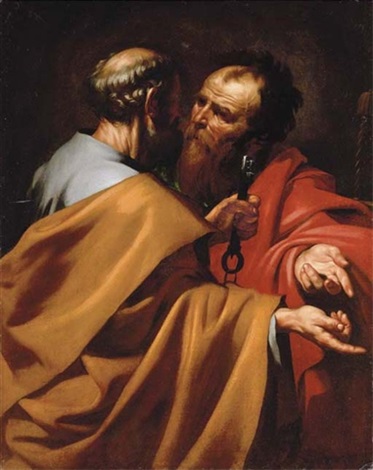
The Dispute at Antioch: Saints Peter & Paul by Jusepe de Ribera

But there was a later episode at Antioch where Peter’s personal example did not match his professed beliefs, and St. Paul was moved to correct him:

[W]hen Cephas (the Aramaic word for “Rock” or “Peter”) came to Antioch, I opposed him to his face because he clearly was wrong. For, until some people came from James, he used to eat with the Gentiles; but when they came, he began to draw back and separated himself, because he was afraid of the circumcised. And the rest of the Jews also acted hypocritically along with him, with the result that even Barnabas was carried away by their hypocrisy. But when I saw that they were not on the right road in line with the truth of the gospel, I said to Cephas in front of all, “If you, though a Jew, are living like a Gentile and not like a Jew, how can you compel the Gentiles to live like Jews?” (Galatians 2:11-14)

Apparently, the “people from James” were Jewish Christians who were disapproving of Peter eating non-kosher meals with the Gentile Christians, leading Peter to withdraw from table fellowship with those non-Jewish converts. St. Peter, the first Pope, was preserved by God from teaching error, but he was not immune to personal faults. Paul publicly corrected Peter because his failure in leadership was leading to scandal within the Church. Spirit-led fraternal correction is a spiritual work of mercy and a duty of Christian love.

The Catholic Church’s Code of Canon Law says:

[The Christian faithful] have the right, indeed at times the duty, in keeping with their knowledge, competence and position, to manifest to the sacred Pastors their views on matters which concern the good of the Church. They have the right also to make their views known to others of Christ’s faithful, but in doing so they must always respect the integrity of faith and morals, show due reverence to the Pastors and take into account both the common good and the dignity of individuals.” (Canon 212, Section 3)

In this present, painful season in the Church, let us remain faithful but not silent. Let us insist of our shepherds that these scandals may lead to cleansing through true leadership and effective reform.

Foreign Words of our Faith

July 12, 2018

Hebrew Words
Alleluia – “Praise the Lord” (literally, “Praise Yah[weh]”)
Amen – “Verily” / “Truly” / “So be it”

Greek Words
Kyrie eleison – “Lord have mercy”
Christe eleison – “Christ have mercy”

Latin Words
Agnus Dei – “Lamb of God”
Ave Maria – “Hail Mary”
Fiat – “Let it be done”
Gloria in excelsis Deo – “Glory to God in the highest”
INRI (Iesus Nazarenus Rex Iudaeorum) – “Jesus the Nazarene, King of the Jews”

French Words
La Croix – “The Cross”
La Crosse – “The Crosier” (a bishop’s shepherd’s crook/staff)
Noel – “Christmas”
Notre Dame – “Our Lady”

Spanish Words
Los Angeles – “The Angels”
San Antonio – “St. Anthony (of Padua)”
San Francisco – “St. Francis (of Assisi)”
Santa Cruz – “Holy Cross”
Santa Fe – “Holy Faith”

Call No Man Father?

June 19, 2018

Was it unchristian for our country to celebrate Father’s Day last Sunday? That’s one implication of a common criticism raised against the Catholic Church. Sometimes Protestants chide us, “Jesus said, ‘Call no one on earth your father; you have but one Father in Heaven,’ so why do you Catholics call priests and popes ‘Father?’” Yet this charge could also be raised against St. Paul who writes in his Letter to the Romans of “our father Abraham” and “our father Isaac.” What’s more, St. Paul is moved by the Holy Spirit in his First Letter to the Corinthians to assert himself as their spiritual father: “Even if you should have countless guides to Christ, yet you do not have many fathers, for I became your father in Christ Jesus through the gospel.”

So what is Jesus saying in his teaching on titles (father, master, rabbi/teacher) in Matthew 23? Judging from the whole of the New Testament, our Lord’s concern is not with labels or hierarchy in themselves (for “he called his disciples to himself, and from them he chose Twelve, whom he also named Apostles.”) Jesus is warning us against the fallen, human attitudes that we can attach to positions and titles of authority and honor. Jesus says, “You have one teacher… you have but one Father in Heaven… you have but one master, the Messiah.” We must not allow anyone (be they a noted thinker, politician, celebrity, employer, or parent) to displace or compromise God’s primacy in our lives. Embracing a teaching or custom against our Faith is to worship an idol instead of God. And Jesus says “you are all brothers…. The greatest among you must be your servant.” So whenever we are called into a position of influence (be it as a parent, pastor, politician, or what have you) we must remain humble and glorify God while serving him and our neighbors.

The Venerable Servant of God Bishop Fulton Sheen once observed, “There are not a hundred people in America who hate the Catholic Church. There are millions of people who hate what they wrongly believe to be the Catholic Church — which is, of course, quite a different thing.” Our Faith has good answers to offer anyone who cares enough about the truth to simply look or listen. So do not fear religious conversations with your family, friends, or peers. You’ll both learn more along the way and you could very well help them into the fullness of Jesus’ Catholic Church.

Mary, the Mother of All Christians

April 26, 2018

Earlier this year, the Vatican announced that the Monday after Pentecost Sunday shall henceforth be celebrated as a new feast day: the Memorial of the “Blessed Virgin Mary, Mother of the Church.” Its worldwide inaugural celebration will be on May 21st this year. The Holy Catholic Church has defined four dogmas about Mary: that she is ever-virginal and the Mother of God, that she was immaculately conceived and assumed body and soul into Heaven. What Pope Francis has decreed is not on the level of defining a fifth Marian dogma, but he is highlighting a precious truth about Our Lady for us to treasure and valuable for us to share with our Protestant brothers and sisters.

Mary is both poetically and actively the Mother of the Church. St. Augustine says of her, “She is clearly the Mother of His members; that is, of ourselves, because she cooperated by her charity, so that faithful Christians, members of the Head, might be born in the Church.” And as Blessed Pope Paul VI professes in his Credo of the People of God: “we believe that the Blessed Mother of God, the New Eve, Mother of the Church, continues in Heaven her maternal role with regard to Christ’s members, cooperating with the birth and growth of divine life in the souls of the redeemed.” How many Christians are unaware that they have a spiritual Mother who loves them?

That Mary is the Mother of all Christians is evident from Scripture. At the Cross, “when Jesus saw his mother and the disciple there whom he loved, he said to his mother, ‘Woman, behold, your son.’ Then he said to the disciple, ‘Behold, your mother.’ And from that hour the disciple took her into his home.” This scene was not included in John’s Gospel to satisfy some idle curiosity about Mary’s living arrangements in her later years. Understanding this scene according to its spiritual significance, every Christian is ‘the disciple who Jesus loved.’ Every Christian is entrusted to Mary as her child and she is given to each one of them as their mother.

Further proof of this is found in the Book of Revelation. There we see a huge dragon (explicitly called “the Devil and Satan”) attempt to destroy “a male child, destined to rule all the nations with an iron rod,” along with his mother who wears “a crown of twelve stars.” This is Jesus the Messianic King and his Queen Mother, Mary. Note what happens after the “ancient serpent” fails to conquer this man and woman: “Then the dragon became angry with the woman and went off to wage war against the rest of her offspring, those who keep God’s commandments and bear witness to Jesus.” Who are Mary’s children? They are Christians — “those who keep God’s commandments and bear witness to Jesus.”

Christ’s Church is meant to be gathered around Mother Mary. Before his Ascension, Jesus told the first Christians to “stay in the city until you are clothed with power from on high.” And so, “when the time for Pentecost was fulfilled, they were all in one place together” beside Mary his Mother and the reconstituted Twelve Apostles in the room where the First Eucharist was celebrated. It was through Mary that the Holy Spirit had first begun to bring mankind into communion with Jesus Christ. So likewise (the Catechism of the Catholic Church observes) “she was present with the Twelve, who with one accord devoted themselves to prayer, at the dawn of the end time which the Spirit was to inaugurate on the morning of Pentecost with the manifestation of the Church.”

This is why the Monday after Pentecost is a very fitting day for us to celebrate Mary as Mother of the Church and why all Christians should come together as her spiritual children. Let Catholics be rejoice and Christians be reunited as one!

Mary, Mother of all Christians, pray for us!

Our Light Amid the Darkness

March 3, 2018

America, shaken and grieving unprecedented violence; divided by animosity and racial tensions; politicians seeking to remove the president through impeachment; these are descriptions of the United States 150 years ago.

While still reeling and mourning from the deaths of more than 600,000 Civil War combatants, there was fierce contention over how harshly the North should treat the vanquished South and what rights should be accorded to former slaves. The political polarization was so great that, this week in 1868, the president was impeached by the U.S. House of Representatives. (Pres. Andrew Johnson would go on to remain in office, being acquitted in the U.S. Senate by a single-vote margin.) They were dark, troubled times in our country. Meanwhile, a new source of light was being lit among us from across the ocean.

On March 3, 1868, a decree of Pope Pius IX established two dioceses within the twenty-year-old state of Wisconsin: La Crosse and Green Bay. For the fifteen decades since, under the stewardship of ten bishops, our diocese has been advancing the Kingdom of Christ. We established churches, schools, and institutions. We proclaimed the Gospel and celebrated our living Faith. Great good was done and many souls were saved.

We can easily get discouraged by the evil we see in current events. But even amid tragedy and trials our great, fruitful, saving work goes on — often quietly and unnoticed. It has always been so. “For behold, the Kingdom of God is among you.” (Luke 17:21)

The Diocese of La Crosse — Founded March 3, 1868