Archive for the ‘Faith’ Category

The Seed of Faith & Bearing Fruit

October 4, 2025

27th Sunday in Ordinary Time
By Fr. Victor Feltes

Once upon a time, a pastor prayed to God, “Lord, please let me win the lottery.” This pastor was not a greedy person—he planned on giving almost all of the winnings away—he just really, really wanted to win the lottery. He prayed for weeks and weeks and when nothing happened he became frustrated with God, “Lord, why haven’t you let me win?” And he heard the voice of God reply, “You have to buy a ticket.” Having Christian faith is like having that ticket, it makes possible the blessings which follow.

Without faith, the complex beauty and order of this universe are dismissed as merely incredible coincidences. Without faith, supernatural miracles can be rationalized away. Without faith, a person will not seek after God for they do not believe he is real and good. As the Letter to the Hebrews says “without faith it is impossible to please God, because anyone who comes to him must believe that he exists and that he rewards those who earnestly seek him.

In today’s Gospel, the apostles ask of the Lord: “Increase our faith.” Jesus replies, “If you have faith the size of a mustard seed, you would say to this [deeply-rooted] tree, ‘Be uprooted and planted in the sea,’ and it would obey you.” When I was a boy and I read this verse I felt discouraged because “My faith is not even the size of a tiny seed!” But Jesus intends this teaching as an encouragement; he’s saying that even a little faith can achieve a lot!

Sometimes people in Confession confess to lacking trust in God. I point out that if a person trusted God perfectly they would be a perfect person, so it’s a common human problem. Trusting God has been our primordial human problem since the Garden of Eden. Yes, faithfulness can be challenging, but you do believe in God.

There was a time in college when I attended Mass without approaching for Communion because I feared that I did not have enough faith to receive the Lord in the Eucharist worthily. After weeks of this worry, it came to me in prayer that “people who don’t believe in God don’t spend time worrying about whether or not they believe in God—that’s something only believers do.” In retrospect, my worry was rather silly, since so much of how I was living my life would not make sense without faith in God. I bet the same is true for you who freely came to Mass today. Why else would you be here?

Realize that having faith is different than having feelings. You can have great faith both when your heart is joyful and when it’s torn with sorrow. Whatever one may be feeling, faith choses to respond faithfully in trusting love. Notice when the apostles ask the Lord to increase their faith how Jesus does not rebuke them for it. They are asking for a good thing. Like greater humility and greater love, increased faith is a gift God is always eager to give.

Although your faith could be strengthened, do not imagine that your faith is too feeble to do anything now. Scripture says faith can uproot trees and move mountains. Faith has worked miracles, changed unjust laws, and converted nations. Jesus wants you to know that even the tiny faith you have can work great good for you and those around you. So pray for more faith and resolve to act in faith more often. There are great jackpots to be won, but you have to buy a ticket.

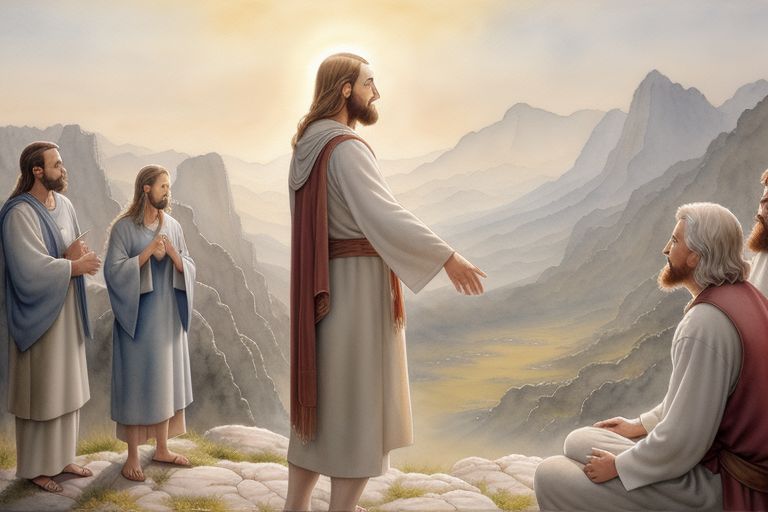
Faith in God – The Cure for Fear

June 23, 2024

12th Sunday in Ordinary Time
By Deacon Dick Kostner

The Gospel story for this Sunday is one of my favorites for life carries and creates many fears. We have Jesus telling his disciples that he wishes to travel to the other side of the sea to preach to gentiles and instruct them on how they too can gain salvation and everlasting life through his teachings.

On their way across they encounter a tremendous storm with waves so high that they threat for their very life. Their friend however is taking a nap and they finally call out for him to wake up for they fear for their life. Jesus wakes up and orders the storm to end which it does and he gives to them the tool to end all fears that they will encounter during their lives and ministry. That tool is faith that he will always be with them even when fear threatens their very life.

The disciples knew that he had powers that were extraordinary but they never dreamed he had the ability to also control mother nature. A power that he would share with them if they but had faith in him. I, as well as many of you folks have witnessed the power of faith in people who have faith in God. I have witnessed people in our community that have lived out their life with a smile even though they had encountered illnesses that cannot be cured by our doctors and medical teams. We have experienced and been taught by priests of faith who had the ability to control the weather when parish events were threatened by storms that disappeared as Father Arthur was able to do. Or how he was able to erase our parish debt to the Diocese because of and through his talents and faith in God.

Fear is a tool of the devil and he uses it to try and destroy our faith and trust in the power of God. We cannot stop evil but God can. How in the world can we possibly get our Country to get along again? How in the world can we overcome those trying to destroy family within our society? How in the world can I ever live out my life with a smile when I have been told by my doctor that I am dying? How in the world can I love again when my wife or husband has left me because of divorce or death? How in the world can I continue to support my family after losing my job? How in the world can I afford to buy groceries and food for my family or pay my bills when costs of everything continue to rise? The list just continues to go on and on.

Jesus, in today’s gospel, tells his disciples, tells us, the answer to all of these human fears we encounter during our earthly lives. The answer is “we can’t!” but “God can!

The world cannot help us but faith in Gods promise that His Holy Spirit will always be able to hear our call for help. Oh He may not answer the way we have asked for, but only God knows what we really need for help with all of the answers to the world fears we will encounter. Fears real or imagined by us are fed to us by a Power who wishes to weaken our faith in God and destroy for us everlasting life that is gifted by God to His faithful.

Jesus gifted us with his Church. The body of Christ, to walk with us and support us in a world full of fears and dangers. He gifted us with his teachings, Holy Scripture and the Gospels to give us the wisdom to trust in God who will walk with us in a fearful world. He gifted us with the Sacraments to provide us with Spiritual food to strengthen our faith and make us fearless to combat the evils and dangers we will encounter in life. He also gives to many of us a spouse or friend to help us.

Fear is sometimes personal and not really prayer material. Let me lighten up a bit and display for you what I mean. One recent Friday evening Barb told me that our cuckoo clock was not showing the correct time. Inspection revealed that the hour hand was no longer working and was limp. I tried to make it work but to no avail. This clock was given as a gift to us many years ago from my son Chad and his wife Amanda. I am a time freak and I panicked for I use it to govern my life throughout the day and need it to tell me if my cat Charlie is ready for me to feed him at 5:00 am every day or if he is fooling. If I don’t hear five cuckoos, I know his clock is not working and I ignore him. In any case I panicked.

I know it is hard to find a clock repair place so I started to search the net. I found one in the Milwaukee who I emailed with my problem and asked for help. Then I found one in La Crosse and I wrote down the number planning to call them on Monday when they opened. I called on Monday and the person who could help me was gone until Tuesday morning. I put it in my calendar to call the next day. When I got home for lunch my beautiful bride told me she had the clock fixed. She had found a fix on You Tube. I had been too embarrassed to pray but God gave me a partner who knew I needed help. The next day I got an email from the Milwaukee clock guy telling me how to fix it which was exactly what Barb had learned and done. I sent the guy a thank you. I guess God sent me a second helper in case Barb failed.

Jesus tells us much through today’s Gospel. How should we handle our fears? The Answer is simple: Have faith in Jesus, asking him to take the wheel, then, take a nap.

We Prove our Discipleship through Obedience & Faith

June 9, 2024

10th Sunday in Ordinary Time
By Fr. Chinnappan Pelavendran

God speaks to us in many ways, particularly through the Word of God. This Word is very active in our lives and helps us to grow in our closeness to God. On this Tenth Sunday of Ordinary Time, the Church reminds us that as humans, we all have to struggle against evil. However, the good news is that we are illuminated through the assurance of victory. It is Christ, who helps us to obtain this victory in our daily and earthly struggle against evil.

The first reading is from the story of the fall of Adam and Eve. Which reminds us of something that we inherited from them. That is Adam’s nature due to Original Sin. Also, it reminds us of the consequences of disobedience. Rather than accepting their fault, they tried to justify themselves by blaming each other. Adam blamed “the woman you (God) gave me.” Of course, he did not blame the woman alone; he also indirectly blamed God who generously and kindly gave him a partner. On the other hand, Eve blamed “the serpent that tempted me.” As it is for some of us, it was hard for them to accept their fault. Neither of them said, I am sorry, I was wrong; it was my fault, or even, please forgive me. What helps is humbly accepting one’s fault and asking for forgiveness.

Today’s gospel narrates Jesus’ encounter with his people and family. They thought he was out of his mind. They accused him of being possessed when he was liberating the possessed. They were ready to restrain him with false charges. They wished to tame his miraculous works and powerful preaching. Despite all this, He remained focused. Every true disciple of Christ is His brother, sister, mother, and a member of his victorious family. He came to save all who were ready to do the will of God. Of course, Mary his Mother is the greatest model of this for all of us. Hence, Christ did not disrespect his faithful mother. Rather, he teaches an important lesson today. That, through faith and obedience to God’s will, we all have the opportunity to become members of his victorious and happy family.

Also, Christ reminds us that it is not status but action in response to God’s call that determines who belongs to his victorious family. To become part of the victorious family of Christ is a dynamic process. It flows from a personal encounter with Christ. It also flows from faithfulness and obedience to God’s will. Hence, if we are Disciples of Christ, we must prove it through our faith and obedience to God’s will.

For us, all of this is a call to follow the Lord, no matter what our families or other religious people think about us. We are challenged to do the works of God and to recognize that the fight between good and evil is still going on in our own time. Adam and Eve enjoyed the status and comfort of God’s divine presence, but they lost it through disobedience. Through them, we equally lost our membership in the victorious family. But through obedience to God’s will, our membership of the victorious family has been restored. We must also recognize that it is God who is at work and so we can trust that we are being remade in the image of God.

Fruits of Faithfulness — Funeral Homily for Beatrice “Bea” Seibel, 91

April 15, 2024

By Fr. Victor Feltes

Jesus begins his Sermon on the Mount by describing to his followers what makes a person truly happy or blessed. What do the blessings promised to those who follow Jesus look like? They are promised the Kingdom of heaven, the reign of God. When we allow the Lord to be our King we can be comforted with peace this world cannot give. Our hunger and thirst can be satisfied, because Jesus gives us our daily bread of meaning and hope. We can be shown mercy, mercy we all need because of our many sins, the divine mercy which is our doorway to go forth and sin no more. We see God whenever we open our eyes to Jesus. In Christ, we become children of God the Father. And when your Father is the king, you receive every good gift upon his earth with gratitude, and you will inherit everything he has as yours in the life to come. When yours is the Kingdom of heaven, you experience life in this imperfect world differently – with an assurance of goodness’s future victory and of goodness’s great reward hereafter. These fruits do not grow naturally, they come from faith in Christ.

Bea and her husband Robert had nine children; six girls, two boys, and one child they lost. Remarkably, her children have nothing negative to say about her (apart from a less than stellar singing voice). They did not grow up wealthy on their farm, they almost never vacationed and for awhile they had an outhouse and showered in the milk house, but they never felt deprived. Now her children look back and ask each other, “Can you imagine having just one brother or one sister?” “No,” they agree, “[That would be] boring!” Beatrice has been close to all her grandchildren and they respect her. They see how Bea loves and how her family loves her, causing one granddaughter to say, “After seeing all this, I want five kids.” It has been asked about Bea, “How can one little lady bring so much warmth?” The answer is the same as how St. Peter proclaims Christ after the Resurrection: “He went about doing good… for God was with him.”

Her children describe Bea as faith-driven. Our Catholic Faith formed her and sustained her. They saw her pray at her bedside, begin mornings with her prayer book, and pray before every meal. She led them to Mass every weekend, helped them receive Christ’s sacraments, and formed them all through St. Paul’s Catholic school. She never skipped encountering Christ at Holy Mass, and would watch on TV when she could not attend. She loved lighting vigil candles at church in response to the joys and trials of others. When she could not light these visible expressions of prayer herself she would ask that candles to be lit at church ‘for this, and this, and this.’ Near the end, she would say, “Light a candle for me.” When I visited to give Bea the Last Rites in her final days, she was no longer speaking much, but she knew what was happening and felt consoled by the sacrament and her loved ones, and we heard her join in the Litany of the Saints being invoked for her. A beautiful Christian life culminating in a beautiful death with hope in the life to come. I encourage you to pray for her, but more importantly, I urge you to emulate these Bea attitudes. Beautiful fruits like hers do not grow everywhere, they come from a living faith in our Lord Jesus Christ.

His Manifest Devotion

February 24, 2024

2nd Sunday of Lent
By Fr. Victor Feltes

How could Abraham do what he did? He fully trusted in God, and through this trust he and us were greatly blessed. God had promised descendants to Abraham through his son, Isaac, declaring, “Through Isaac descendants shall bear your name.” Because of the miraculous birth his son and other experiences with God, Abraham believed the Lord could and would keep all his promises.

So when Abraham reached the mountain of sacrifice, where the Jewish temple would be built about 900 years later in Jerusalem, he told his servants (in a passage omitted from our first reading): “Stay here with the donkey, while the boy and I go on over there. We will worship and then we will come back to you.” The Holy Spirit tells us in the Letter to the Hebrews that Abraham “reasoned that God was able to raise even from the dead, and he received Isaac back as a symbol.”

After Jesus was transfigured and proclaimed by the Eternal Father to be his beloved Son, “as they were coming down from the mountain, [Jesus] charged [Peter, James, and John] not to relate what they had seen to anyone, except when [he] had risen from the dead. So they kept the matter to themselves, questioning what rising from the dead meant.” The sacrifice of Isaac, in which Abraham’s son was spared, foreshadows the sacrifice of Jesus offered by God the Father for us.

Upon staying the hand of Abraham, the Lord’s messenger said, “I know now how devoted you are to God.” After Christ’s sacrifice, we now know how devoted God is to us. St. Alphonsus Liguori agrees with St. Thomas Aquinas in saying, “God loves man just as if man were His god, and as if without man He could not be happy; ‘as if man were the god of God Himself, and without him He could not be happy.’”

Such is God’s devotion to us. And brothers and sisters, as St. Paul writes, “If God is for us, who can be against us? He who did not spare his own Son but handed him over for us all, how will he not also give us everything else along with him?” So let us fully trust God as Abraham did, and through this well-founded trust be greatly blessed and greatly bless others as well.

What Is “The Gospel”?

February 17, 2024

1st Sunday of Lent
By Fr. Victor Feltes

God loves us despite our sins. Sin divides people from God and one another. So to forgive our sins, to heal our divisions, and to make us saints, God the Father sends his Eternal Son. Jesus Christ, the Son of God and Son of Mary, suffers, dies, and rises again to achieve our reconciliation. Through baptism into Christ and his Church we can be saved from sin and death, similar to the story of Noah whose family is saved through the Flood inside of the ark. As God the Holy Spirit drove Jesus out into the desert so he guides his Church, forming saints in Christ’s likeness.

This is an expression of what today we call the gospel. God loves us and wants to deliver us from sin and death and to bless us in his Church through Christ’s saving sacrifice. This is our Faith. This is the Good News both you and I are called to share with others. Who will you invite to receive the gifts of God you have known and enjoyed? If you are open to it, the Holy Spirit will arrange opportunities for you to do so.

Today we hear St. Mark recount how “Jesus came to Galilee proclaiming the gospel of God: ‘This is the time of fulfillment! The Kingdom of God is at hand! Repent, and believe in the gospel!’” This is how Jesus preached at the beginning of his public ministry years before his Passion, Death, and Resurrection. We have an idea of what “the gospel” means now, but what was “the gospel of God” that Jesus called people to believe in before his saving sacrifice had happened?

All of the New Testament writers wrote in Greek. The word our English bibles translate as “gospel” is the Greek word “euangelion” (εὐαγγέλιον). Euangelion is a compound word which combines eu which means “good” and angelia meaning “announcement.” In the ancient Greco-Roman world, the news of a new ruler coming to power or of some major military victory were proclaimed as euangelion. In that cultural setting, Jesus proclaims the great announcement that God’s Kingdom is near.

A divine victory was imminent. Time had come for fulfillment of God’s Old Covenant promises. The will of God would soon be done more fully on earth as it’s done in heaven. Jesus says, “This is the time of fulfillment! The Kingdom of God is at hand! Repent, and believe in the gospel!” Jesus is calling his hearers to believe that things can get better.

Pessimists imagine this world is forever getting worse. But if that were true, if things were always becoming worse and worse what good would there remain for any of us to see now? How could any of us still be left alive? Things can get worse or they can get better. In days past, at the beginning of his public ministry, and now, at the start of this season of Lent, Jesus calls for repentance and faith in the gospel. He calls us to believe that we can become more perfectly like himself; to believe this world around us, as a result of grace and cooperation with Christ, can be more fully God’s Kingdom come.

When he came to his hometown, the people of Nazareth were unwilling to believe in Jesus and what he preached. They refused to believe that Jesus could change their lives and change their world. “So,” St. Mark records, Jesus “was not able to perform any mighty deed there, apart from curing a few sick people by laying his hands on them. He was amazed at their lack of faith.” Peoples’ trust and openness was a factor in how much they could receive from Christ.

What could Jesus do in us and in our world beginning in this Lent? Jesus calls you to “repent and believe in the gospel!

The Fearfulness & Faithfulness of Mary & Joseph

December 8, 2023

Solemnity of the Immaculate Conception
By Fr. Victor Feltes

After our first parents ate the forbidden fruit, when they heard the sound of God walking about in the Garden of Eden, they hid themselves among the trees. The Lord God called to Adam and asked him, “Where are you?” He answered, “I heard you in the garden; but I was afraid, because I was naked, so I hid myself.” Did Blessed Mary the New Eve or St. Joseph her husband ever feel afraid? Indeed, Scripture records several such occasions.

In today’s gospel, at the Annunciation the Archangel Gabriel comes to Mary saying, “Hail, full of grace! The Lord is with you!” “But she was greatly troubled at what was said…” Then the angel said to her, “Do not be afraid, Mary, for you have found favor with God.’”

Later, when Joseph learned of Mary’s unprecedented pregnancy, he either suspected her and feared she was unworthy of him, or he believed her and feared he himself was unworthy of her and this holy child. “Since (Joseph) was a righteous man and not wanting to expose her to shame, (he) decided to divorce her quietly.” Such was his intention when an angel appeared to him in a dream and said, “Joseph, son of David, do not be afraid to take Mary your wife into your home.”

After the birth of Christ and the visit of the magi, Joseph was told by God’s angel in dream to flee with Mary and Jesus into Egypt. Once the murderous King Herod had died, the angel told Joseph in another dream to return to the land of Israel. “But when he heard that Archelaus was ruling over Judea in place of his father Herod, he was afraid to go back there. And because he had been warned in a dream, he departed for the region of Galilee” and resettled his Holy Family in the town of Nazareth.

In another episode from the Gospels, when Jesus was 12 years old Mary and Joseph lost track of him during their family pilgrimage to Jerusalem for Passover. They found him on the third day engaging with the religious teachers at the temple. When his parents saw him, they were astonished, and his mother said to him, “Son, why have you done this to us? Your father and I have been looking for you with great anxiety.

That’s four incidents of fearfulness in Mary, Joseph, or both, which are clearly referenced in the Gospels. What are we to make of this?

Jesus Christ had holy parents on earth. At this Mass we celebrate how Mary was sinless from the moment of her Immaculate Conception and full of grace throughout her life. Joseph her husband was a righteous and virtuous man. However, both Mary and Joseph sometimes experienced fear. This shows us that feeling fear is not the same as sin or lacking in faith.

Realize and remember that faith is not primarily a feeling. Though it is nice when our feelings line up with our beliefs, sometimes they won’t match. You can believe one thing while feeling something else and still choose to act faithfully. For example, you can believe that commercial air travel is safe. Perhaps you have seen the data showing that flying compared to other modes of ground-based travel is, mile-for-mile, safer by far. When the moment comes for you to board your important flight, you might feel natural anxiety. But if you get on that airplane anyway, your faith in flight is on display. You trust in the pilots, in the aircraft, and in what you know, and this trusting faith enables you to reach your good destination.

Mary had such trusting, loving faith in Joseph. One night, her husband woke from sleep and told her he had received another message from God’s angel in a dream; they were in danger from King Herod and must quickly escape to Egypt. Mary had not beheld Joseph’s dream, but whatever she was feeling she trusted him and took the flight with him into Egypt, and her acceptance of this hard thing enabled their salvation.

Mary also had trusting, loving faith in God. St. Elizabeth praises her faith at the Visitation. Filled with the Holy Spirit, Elizabeth cries out, “Most blessed are you among women… Blessed are you who believed that what was spoken to you by the Lord would be fulfilled!” Years later, during Jesus’ public ministry, a woman in a crowd called out to him, “Blessed is the womb that carried you and the breasts at which you nursed!” Jesus replied, “Rather, blessed are those who hear the word of God and observe it.” The Blessed Virgin Mary can be called “most blessed among women” because of her enduring faithfulness — she hears God’s word and keeps it.

It is essential that we not only hear God’s word but also faithfully obey it. Jesus declares, “Not everyone who says to me, ‘Lord, Lord,’ will enter the Kingdom of Heaven, but only the one who does the will of my Father in Heaven.”

Mary and Joseph loved and trusted God and each other, and God loved and trusted them to raise our Lord. Their faithfulness on earth is now rewarded with heavenly glory. God has entrusted them with shares in the spiritual care of his people on earth today. St. Joseph is the patron and protector of the entire Church, and St. Mary is the spiritual mother of every Christian. Ask Mary and Joseph to pray for you and ask Jesus to give you his grace to be always faithful despite whatever you might feel. For faith in Christ is not so much about feelings but about loving and trusting Jesus enough to be faithful to him.

Helplessness and Faith

August 21, 2023

20th Sunday of Ordinary Time
By Fr. Chinnappan Pelavendran

Many situations in life can make us feel broken. But, prayer in hopeless situations will help us to focus on Christ and His promises. God is merciful, when we cry out to the Lord, day and night, He will answer our prayers. What we wish will be done to us according to our faith. We need to turn to Jesus, acknowledging our helplessness even in matters of faith. We admit to Him how bad things really are. Then, again by faith, we leave everything with Him.

An example of this can be seen in the story of Naaman, found in 2nd Kings 5. Naaman was a powerful warrior in the Syrian army who had leprosy. He found out from a little girl that the prophet Elisha could heal him. He went to visit Elisha who told him to go dip in the Jordan River seven times. He was very upset about this instruction and initially refused to do it. But his servant spoke to him and he decided to follow Elisha’s direction. After dipping seven times, he was healed of his leprosy. Though he was a captain of the army and may have spent a lot of money, He was helpless and had faith in God, and came to the Prophet Elisha, who saved him from leprosy.

Then, in the New Testament, we have a wonderful example of a woman who had been bleeding for twelve years. She had suffered a great deal under the care of many doctors and had spent all she had, yet instead of getting better, she grew worse. When she heard about Jesus, she came up behind him in the crowd and touched his cloak, because she thought, “If I just touch his clothes, I will be healed.” Immediately her bleeding stopped and she felt in her body that she was freed from her suffering. She was helpless after spending all her money, but she had great faith in God.

The Canaanite woman in today’s gospel also showed great faith in the power and mercy of Jesus. She loved her daughter very much and desired healing for her. She heard about Jesus. He is the Lord, the Son of David. She knew that He is her only hope. Although there were obstacles on her quest, she would not give up until her request was granted. For example, she did not belong to the chosen people and she was considered a dog! However, she persevered and Jesus was so pleased with her faith that He granted her wishes immediately. She was helpless and her faith saved her daughter. This is the kind of faith Jesus wants from us.

The grace of God cannot be bought with silver and gold or power or position. In fact, power and position, silver and gold, can be a hindrance to coming to Christ. Only faith in God will help us to reach Him.

The woman remained humble even when she was rejected. She remained respectful even when the initial answer was no. She continued to worship because she realized who Jesus was. So, we need to remain humble when we come to God in prayer.

Faith is a quality that Jesus spoke highly of during His earthly ministry. Faith is powerful and without it, it is impossible to please God. Faith looks to God as the center of all things. Whenever we are helpless, our faith helps us to reach God.

Fruitful Love Despite Our Flaws — The Justin Wachtendonk & Brenna Werner Wedding

July 8, 2023

By Fr. Victor Feltes

Justin and Brenna, you have chosen beautiful readings for your wedding Mass. Including your second reading, the most popular of all wedding reading options: St. Paul’s famous poetic hymn about love. In the 13th chapter of his 1st Letter to the Corinthians, St. Paul teaches what love does and does not do. These words contain blessed lessons for us all. Today, I wish to highlight the rarely-considered context of those passages to help married couples and people within Christ’s Church of our day.

When we think of the early Church, we tend to picture it as a golden age. The apostles were still alive on earth preaching the Gospel, performing miracles, and founding Christian communities. Divinely inspired books were still being written for what would become the New Testament of the Bible. The Church’s membership was growing widely and rapidly, while producing great saints and martyrs. But this does not mean that everything was perfect. Far from it!

You can see this in St. Paul’s 1st Letter to the Corinthians. He writes them to address the many things that were going wrong at the Church in Corinth. For instance, Paul corrects the Corinthian Christians’ bitter internal rivalries and factionalism. He notes the external scandal caused by them suing each other in secular courts. He critiques the Corinthians’ inflated pride. He excommunicates a certain man for his unrepentant sexual sins. He condemns the Church at Corinth’s liturgical abuses (against the Real Presence of Jesus and one another) at their celebrations of the Holy Eucharist. And St. Paul cites still more controversies than these. So things in the early Church were not so idyllic as we might imagine. And that can be a great encouragement for us today!

The early Church, despite the many flaws of her members, produced good, much good, world-transforming good and the salvation of many souls, in those days and thereafter. The Church today, despite the many flaws of her members, still produces much good, world-transforming good and the salvation of many souls. His Church build upon a rock is, as Jesus says in our Gospel, “a city set on a mountain which cannot be hidden.” She remains, “the salt of the earth” and “the light of the world” — purifying, enlightening, enhancing, and saving.

Whatever goodness is found in Christ’s Bride, the Church, is like the worthy wife the Book of Proverbs describes in our first reading. As the pearl of great price, “her value is far beyond pearls.” “Her husband, entrusting his heart to her, has an unfailing prize. She brings him good, and not evil, all the days of her life.” She labors alongside him, “reaches out her hands to the poor,” and he will “give her a reward of her labors, and let her works praise her.” This is a great encouragement for us in his Church, but also a great encouragement for all Christian married couples here.

Justin and Brenna, you are about to enter a new covenant with Christ. In your sacramental marriage, you will encounter each other’s flaws and experience trials, as every married couple will. Do not be surprised when not everything is perfect and do not be alarmed. Maintain your peace. With a love that is patient, a love that is kind, a love that most importantly has its origin and strength in Christ, you will ‘bear all things and endure all things.’ His “love never fails.” Like his Church, which despite the imperfections of her members produces much good fruit, your marriage — if united to Christ — will never fail.

Share the Gospel

January 15, 2023

2nd Sunday in Ordinary Time
Fr. Victor Feltes

The message of the Gospel is simple:

1. We are created by an all-good and loving God.
2. But sin separates us from him.
3. So God has sent his Son to be our Savior.
4. Therefore, believe & repent, that he may save you.

St. John the Baptist proclaimed this Good News to sinners. John preached that God’s judgement is at hand (indeed, each of us only lives once, and after this life comes the judgment). And as John warned, “Every tree which does not bear good fruit is cut down and thrown into the fire. … [So] flee from the wrath to come.” After our harvest time, the “chaff” will “burn with unquenchable fire,” he said, but the Savior will safely “gather his wheat into his barn.” The reason why John came baptizing with water was so that this Savior might be made known. Christ is the one of whom John said, “A man is coming after me who ranks ahead of me because he existed before me.” After baptizing Jesus, John proclaimed him the sacrificial “Lamb of God, who takes away the sin of the world,” saying, “Now I have seen and testified that he is the Son of God.” Repent and believe in Jesus Christ, so that his sacrifice may save you.

Who will be saved? How many professed atheists, or Hindus, or Muslims, or Jews, or Protestants, or Orthodox, or Catholics will go to Heaven? Thankfully, perfect, final, Divine Judgement is not my job. My mission and your mission is the Great Commission. After his Resurrection, Jesus said, “Go… and make disciples of all nations, baptizing them in the name of the Father, and of the Son, and of the Holy Spirit, teaching them to observe ALL that I have commanded you.”

Baptism and the other sacraments are the ordinary (that is, normal) means through which Christ offers the grace necessary for salvation. Jesus established his Catholic Church as both the ordinary minister of these seven sacraments and as the one, reliable guardian of Christ’s teachings on faith and morals in a hostile, sinful world through the centuries. Our Lord Jesus Christ and his one, holy, catholic, and apostolic Church are the ordinary means of salvation for the world. Your non-practicing or non-Catholic relatives, friends, and neighbors are called to more with Christ. Like St. John the Baptist, your witness can help others receive this gift.

Your non-Catholic or non-practicing family, friends, and close acquaintances know you, like you, and respect you. They rarely (if ever) see or hear me, but they frequently encounter you. So here are three ways you can draw them closer to Christ and his Church: by sharing your prayers, by sharing your stories, and by sharing your invitations.

Share your Prayers
It is important to pray for the conversion of others, but you can easily pray with them, too. Whenever someone asks you for your prayers, or even when someone entrusts their burdens to you, offer to pray with them then and there. The words of your prayer don’t need to be eloquent, just sincere. People are usually quite receptive to this and very grateful for it.

Share your Stories
Today’s Gospel reading is simply St. John the Baptist sharing the story of what he had experienced with the Lord. And through this testimony, more came to know and follow Jesus. What has the Lord done for you, how have you encountered him, what are your miracles and spirit stories? Don’t hide these highlight experiences of your life under bushel baskets; be humble enough to share them with others for their good.

Share your Invitations
Invite them to accompany you to Holy Mass, Eucharistic Adoration, or our community events. Invite them to share in the life of the Gospel. Even if they decline, you will have planted a seed that may bear fruit someday. You and they were made for the fullness of God in Jesus Christ, and our hearts are restless until they rest in him.

In conclusion, here is your homework for this week: share a prayer, or a story, or an invitation with someone it could help – you may well save a soul.

The Openness, Obedience, & One Word of St. Joseph

December 18, 2022

4th Sunday of Advent
By Fr. Victor Feltes

Our Gospel this final Sunday of Advent centers on St. Joseph. It recounts how St. Joseph received the stunning revelation of Mary’s pregnancy. We can learn from the great saint’s response — from his openness, his obedience, and his one word.

Mary was already Joseph’s wife when she conceived her child. In their Jewish culture, a newlywed couple would live apart for the first year of marriage. Thereafter, the husband would bring his betrothed into his home to live with him. When Mary conceived a child (whom Joseph knew was not his) why did he decide to divorce her? Was Joseph heartbroken because he believed she had betrayed him? Or was Joseph frightened, because he believed her story of the Annunciation and thought himself unworthy of this holy woman and her holy child? Whatever the case, Joseph was a righteous man and unwilling to expose Mary to shame, so he intended to divorce her quietly.

Then an angel of the Lord appeared to him in a dream and said, “Joseph, son of David, do not be afraid to take Mary your wife into your home because it is through the Holy Spirit that this child has been conceived in her. She will bear a son and you are to name him Jesus, because he will save his people from their sins.” Once Joseph awoke, he did as the angel of the Lord had commanded him and took Mary into his home.

I used to fret very much about precisely discerning God’s will. “What if the Lord wants me to do a specific thing but I can’t figure it out?” During my college and seminary years, I thought I had a vocation to the priesthood but how could I be sure? I worried, “What if I get this discernment terribly, terribly wrong?” Then a holy friend gave me peace of mind by pointing to St. Joseph. When Joseph was about to make a terrible mistake by separating himself from Mary and Jesus, it only took one night’s dream to get him back on the right track because Joseph desired to do whatever God willed. God can easily redirect a willing heart.

People sometimes complain, “I wish God would just tell me what to do!” But unless we are open to doing God’s will, what good would his directions do us? Imitate St. Joseph in his openness. Like with the Blessed Virgin Mary, Joseph’s openness allowed God to do great things through him. So resolve your will and pray for the grace to always be open to God’s will like St. Joseph. Another St. Joseph trait of we can imitate and profit from is his simple obedience.

St. Matthew’s Gospel records, “When Joseph awoke, he did as the angel of the Lord had commanded him and took his wife into his home… and he named [the boy] Jesus.” On this occasion, like later when told to flee to Egypt or told to return to Israel, Joseph does point-by-point what God commands. Like Moses in the Old Testament, whenever God instructs Joseph to do (A) and (B) and (C), the author notes how Joseph then does (A) and (B) and (C).

Moses and Joseph’s duties were different from ours today. We will not construct an Ark of the Covenant, nor protect and provide for the Holy Family, but each of us has persons and tasks entrusted to us by God; people to care for and works to be done. You already know a great deal of what God has commanded you to do; your own (A) and (B) and (C) according to your state in life. You will not fulfill your missions perfectly—and that’s OK—but imitate St. Joseph in his simple obedience because your basic, God-given duties are more important than you realize.

A third and final feature of St. Joseph reflected in today’s Gospel is his single word. Did you ever hear that in all of Scripture there are no recorded quotes from St. Joseph? It’s true: Jesus has many, Mary has several, but Joseph has none. Now there is no evidence that St. Joseph lacked the ability to speak or ever took a vow of silence.  Joseph probably said many things that were simply not written down. Yet today’s Gospel contains the strongest evidence of his having said any one particular word. What was that word?

The angel in Joseph’s dream said of the unborn child: “You are to name him Jesus.” And when Joseph awoke, he did as the angel of the Lord had commanded him. Joseph named him Jesus. The name of Jesus was St. Joseph’s greatest and most important word. Ever after, the name of Jesus defined his life.

Learn from St. Joseph, the husband of Mary and foster-father of Jesus. Imitate his openness to doing God’s will whatever it may be. Benefit from practicing his obedience in your daily duties. “And whatever you do, in word or in deed, do everything in the name of the Lord Jesus,” like St. Joseph did.

Hope, Joy, & Salvation

December 11, 2022

3rd Sunday of Advent
By Fr. Victor Feltes

On Friday afternoon, while Fr. Chinnappan offered the funeral Mass for Dr. John Eberle, I drove to McDonnell high school in Chippewa Falls to hear sacramental Confessions with several other area priests. Before everyone else arrived, I was able to spend some time with Fr. Paul Hoffman, whom I had not seen for a while. He heard my Advent confession and afterwards I asked him about what he had been reading lately. Fr. Paul has previously told me that his senior priest status allows him read more theology books like he has desired, to learn more about God before he ultimately departs to go to him. One of the questions Fr. Paul has been pondering lately is, “What will bring them back?” That is, what will bring the younger generations back to church?

I am now almost 42 years old, and I am among the youngest people at most Sunday Masses. This is a troubling trend. Young adults today usually do not believe they need the Church. Many disbelieve they even need Jesus Christ’s salvation. What could change this outlook? What might bring them back? The answer which occurred to me was: “Real Hope.”

As the culture continues to abandon the wisdom it has inherited from Christianity, the consequences of foolishness and sin will become increasingly clear. It will be seen in the sickness of society and felt in the pain of peoples’ personal lives. A life without true meaning or purpose in a world “with no hell below us and above us only sky” is an emptiness full of suffering. Where can people discover real hope—hope in something within this world and yet beyond this world? This real hope is found in Jesus Christ and his Catholic Church.

After our first round of hearing confessions from students and staff in the gym, we priests got a bit of a break, so I walked over to see Fr. Bill Felix and Fr. Brandon Guenther. We chatted a bit about Bishop Callahan, who was hospitalized with an illness this week, Then I asked them a question: “What are you thinking about preaching this weekend? I’m still looking for ideas.” Fr. Felix said, “Well, there’s always the obvious: Joy.” (“Oh, of course,” I thought. This Third Sunday of Advent is Gaudete Sunday and in Latin, “Gaudete” means “Rejoice.”)

Fr. Felix said the great thing about joy is that we can have it even when many things in our lives are bad. Happiness depends upon what happens, but joy does not and so it endures. To press this idea, I asked them in so many words how someone can feel joy when things are crummy? The answer given by both priests was: “Hope.” Fr. Guenther added, “Joy without hope is just optimism.” This reminded him of an old, witty observation: “An optimist is a happy fool. A pessimist is an unhappy fool. But someone with hope (real hope) is not a fool and will one day be happy.

We then returned to our confessionals to hear the older students’ confessions. Some people come to Confession after many months and confess rather superficially, but I was edified by hearing these teenagers confessed. Unlike many young people of their generation, their earnestness, honestly, and striving after God and his holiness were evident. I expect Christ’s Church to struggle in the coming decades, but our Faith is far from dead. Christian hope produces joy and manifest joy shines out. It shines out in the darkness of this world, drawing others to Jesus Christ and his Church. Our Lord lives and we possess a real hope. So let your Christian hope generate joy in you, and your joy will help save souls.

The Allegory of the Jordan River

December 4, 2022

2nd Sunday of Advent
By Fr. Victor Feltes

Preceding Jesus’ public ministry, St. John the Baptist appeared preaching in the Judean wilderness. People from Jerusalem, all Judea, and the Jordan River region were going out to see him. John said, “Repent, for the kingdom of heaven is at hand!” The crowds regarded him as a prophet and were being baptized by him as they acknowledged their sins. Like a bath which cleanses one’s outer self of dirt and odor, John’s baptism was an appeal to God for an inner self cleansed from sin. John’s ministry prepared for Jesus Christ and foreshadowed Christian baptism. The Jordan River in which John baptized embodies an allegory whose symbolism remains important for us today.

The fresh waters of the Jordan River originate in the north from the living Sea of Galilee, a large lake full of fish and ringed by trees. The Jordan’s waters flow south and come to one of either two notable ends. Most of the river’s water just goes with the flow. It flows downhill (as all rivers naturally do) ultimately descending seven hundred vertical feet. These waters remain on the edge of the Promised Land without entering in. And at the end of their journey, they empty out into the Dead Sea. The Dead Sea is the lowest place on the face of the earth. After the river drains there, the water has nowhere else to go. As it evaporates to nothingness, the water leaves behind trace amounts of salt which over many, many millennia has made that sea ten times saltier than the oceans. In this oppressive saltiness, no plants nor fish can live. The Dead Sea is thoroughly dead.

Some of the Jordan River’s water, however, does not simply go with the flow downhill. This water escapes the fate of the Dead Sea, by giving itself to the Promised Land. This water enables life and generates fruit among many trees in an otherwise arid place. Jeremiah the Prophet writes of a tree planted beside the stream: “It does not fear heat when it comes; its leaves stay green. In the year of drought it shows no distress, but still produces fruit.” And the 1st Psalm likewise says: “a tree planted near streams of water… yields its fruit in due season; its leaves never wither.” These baptismal waters are willed by God to give life and bear fruit for the Promised Land.

Most of John the Baptist’s contemporaries were convinced he was a prophet, yet the Jewish religious leaders disbelieved. When John saw many Pharisees and Sadducees coming to his baptism, he admonished them: “Produce good fruit as evidence of your repentance! … Every tree that does not bear good fruit will be cut down and thrown into the fire!” It would not be enough (for them or us) to just say the right things and go through the motions. Our faith and repentance must be real, producing of good fruit.

As the life-giving Sea of Galilee is the River Jordan’s source, so God above is the source of every spiritual grace and good thing in creation here below. Having received Christian baptism, we can respond in one of two ways on this life’s journey. In this world, we can go with the natural flow of things, descending more and more, ending in the dead abyss without entering the Promised Land. But that is not Jesus’ will for us. As G.K. Chesterton once observed: “A dead thing can go with the stream, but only a living thing can go against it.” Jesus wills for us to cooperate with him, to be changed, and to change the world around us. So believe in the Lord, acknowledge your sins and repent, and bear good fruit with Christ. What is one area — just one thing — one habit or virtue, you can acknowledge today and grow in throughout this Advent season with the grace of God?

The World’s Greatest Force

October 1, 2022

27th Sunday in Ordinary Time
By Fr. Chinnappan Pelavendran

On this Twenty-Seventh Sunday in Ordinary Time, we gather around God’s presence, praying for him to accept our thanksgiving, pardon our lack of faith, and increase our faith so that we may stand firm even when destruction and violence surrounds us. In the Garden of Gethsemane, Jesus our Lord prayed to the Father that, if it be possible, the chalice or cup of suffering be taken away from Him. What did the Father say? In the first reading from the Prophet Habakkuk, the lamentations seem to suggest the God who does not listen nor care about the cry of the poor person who calls upon Him. When God is silent, what could it mean? The silence of God is often the silence unto our own good the silence of God is a call to deep faith. The Gospel reading calls us to an authentic faith in God. We need the faith as little as a mustard seed to keep our heads high. The second reading encourages us to be courageous in our faith journey.

In the Bible, Abraham is mentioned several times for some of the great things he accomplished, God gave Abraham the promise that the Redeemer would come through his family. Abraham and wife Sarah were past child–bearing age when God gave them a child named Isaac. Even though God had promised that Abraham’s descendants would one day be a great nation, He asked Abraham to sacrifice his only son, Isaac (in Genesis 22). God told Abraham to take Isaac to a mountain to sacrifice him to the Lord. God never intended for Abraham to kill Isaac. This was merely a test to show to us the type of faith Abraham had. As we read the story of Abraham and Isaac we are reminded that God is faithful and that we can place our trust in Him

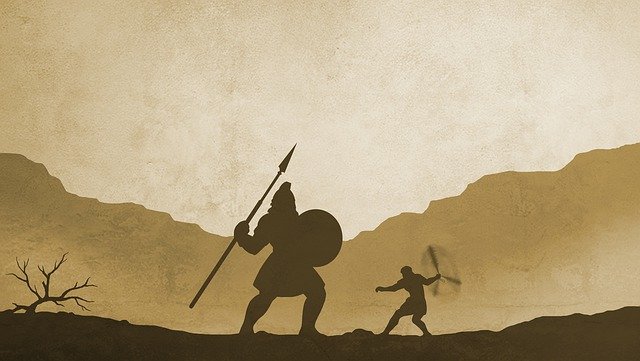
Again we have the wonderful example of David. We learn about a forty-day war between the Israelites and the Philistines, who were led by the giant Goliath. One day, Goliath challenged them to bring forth a soldier who could come up against him, but no one in the Israelite army was brave enough to challenge him. Hearing all Goliath’s bosting, hear came a little Shepherd boy David who told kind Saul that God had given him victory over all the animals who had threatened his sheep and he had faith in God that he would help him defeat this giant too. So going out to face the Philistines, Goliath saw this boy David who had nothing but a slingshot, and he laughed and mocked him. Then David replied to him saying, “Well, you come with your sword, spear, and all your armor but I come against you in the name of the Lord, God Almighty.” And with great strength, David drew his sling and sent it flying straight towards this giant’s forehead Goliath was defeated. David’s faith in God proved to be bigger than any giant.

According to William Barclay, “Faith is the greatest force in the world,” it moves us towards directions completely unknown and guides us towards belief in one God. Today’s Gospel tell us that all the followers of Jesus must have faith in Him, and we are to pray Christ to increase our faith. Faith is not for the good times only. Faith is that which sustains us in bad times. According to St. Augustine, “Faith is to believe what you do not see, the reward of this faith is to see what you believe.” It is not easy to live a righteous life when things are not going smoothly in your life, but do not forget that faith is patience. Trust that God will never leave you forsaken. Never give up on God.

Plant Using Your Tiny Seed of Faith

October 1, 2022

27th Sunday in Ordinary Time
By Fr. Victor Feltes

Today the apostles beg our Lord, “Increase our faith.” They feel apprehension at Jesus’ teachings. Christ asks extraordinary things of his disciples, and they fear their faith is insufficient. The Lord replies, “If you have faith the size of a mustard seed, you would say to this mulberry tree, ‘Be uprooted and planted in the sea,’ and it would obey you.” Realize that faith (like courage or love) is not necessarily a feeling. You can be courageous, even while feeling fear, by doing the right thing anyway. You can be loving, even while feeling strong dislike for your enemies, by willing their good anyway. And you can be faithful, even when you feel apprehensive like the apostles, by acting on your trust in God anyway.

Perhaps you feel nervous when you fly on an airplane, yet you buy your ticket and board the flight because you believe commercial jet is a very safe way to travel—and it is. If you were a business traveler, taking dozens of flights each year, your anxious feelings would calm and come to better resemble your sincere conviction about the safety of flying. Faith is like this, too. You may or may not have feelings of great faith, but when you choose to trust God and do the faithful thing you are acting in faith. Exercise your faith and your faith will strengthen, because you will see that God is faithful, and then your emotions touching on faith will naturally follow.

Jesus says, “If you have faith the size of a mustard seed,” you could miraculously transplant a tree with your command. When I was younger, the first time I read Jesus’ answer, I was discouraged by it—“I’ve never performed a miracle like that. How microscopic must my faith be!” But I had misunderstood him. Jesus’ reply is meant as an encouragement. Our Lord is saying, “Even if your faith is tiny, it is more than enough for you to fulfill my will.” What is God’s will for you? What does he want you to do? If you do not know this already ask him to reveal it to you. And “if today you hear his voice, harden not your hearts.”

On another occasion, Jesus said “the Kingdom of Heaven is like a mustard seed that a person took and sowed in a field. It is the smallest of all the seeds, yet when full-grown it is the largest of plants. It becomes a large bush, and the ‘birds of the sky come and dwell in its branches.’” So using your tiny seed of faith, plant in the field of your life as the Lord commands you. It may take awhile for the results to sprout but be patient. As the Lord said to Habakkuk, “The vision still has its time, presses on to fulfillment, and will not disappoint; if it delays, wait for it, it will surely come, it will not be late. The rash one has no integrity; but the just one, because of his faith, shall live.

Mustard bushes grow very large and the mustard it produces has a very potent taste. Given time, what you plant in faith will change the landscape and the flavor of our world. When you go on to see the incredible transforming results which faith allows you may become inflated and vulnerable to pride. People through whom God has accomplished great things may be tempted to think their serious sins are therefore no big deal, or may abandon serving the Lord before their days on earth are done. For this reason, Jesus follows his parable about faith and the mustard bush with another parable about a servant and his master.

Jesus asked his apostles, “Who among you would say to your servant who has just come in from plowing or tending sheep in the field, ‘Come here immediately and take your place at table’? Would he not rather say to him, ‘Prepare something for me to eat. Put on your apron and wait on me while I eat and drink. You may eat and drink when I am finished’? Is he grateful to that servant because he did what was commanded?” Jesus here is not describing how the world ought to be, but describing how their familiar, ancient world actually operated; where the stronger dominated the weaker. It is like when Jesus told them, “You know that the rulers of the Gentiles lord it over them, and their great ones make their authority over them felt. But it shall not be so among you. Rather, whoever wishes to be great among you shall be your servant.”

The apostles would not expect a slave’s master to be much grateful to his slave, and they would judge a slave to be most prudent in his position to remain humble and obey his master. “So should it be with you,” Jesus says, “When you have done all you have been commanded, say, ‘We are unprofitable servants; we have done what we were obliged to do.’” Indeed, apart from God we can do nothing, and keeping a humble servant’s attitude protects us from dangerous pride and presumption and helps us to fulfill what Christ commands. But the Master who is our Lord differs from other masters of the earth.

At the Last Supper, after he had washed his apostles’ feet, Jesus asked them, “Do you realize what I have done for you? You call me ‘teacher’ and ‘master,’ and rightly so, for indeed I am. If I, therefore, the master and teacher, have washed your feet, you ought to wash one another’s feet. I have given you a model to follow, so that as I have done for you, you should also do.” Although our Lord, being God, is rightfully entitled to all we have and are, he is grateful for our labors. If we do not let up our efforts, when our hard days on this earth are complete we can look forward to hearing him say: “Well done, my good and faithful servant… Come, share your master’s joy!

So while your faith may feel small, it is more than enough to do Christ’s will. If you do not know God’s will already, seek and ask to know it. Then plant your seed of faith in action and patiently watch it grow. And when you see the great things our Lord achieves through you do not let up your efforts slip, knowing that his reward for you is eternal joy in Heaven.