Archive for the ‘Generosity’ Category

We Keep Only What We Have Given

August 6, 2013

By St. Basil the Great (330-379 AD)

You are going to leave your money behind you here whether you wish to or not. On the other band, you will take with you to the Lord the honor that you have won through good works. In the presence of the universal judge, all the people will surround you, acclaim you as a public benefactor, and tell of your generosity and kindness.

Do you not see how people throw away their wealth on theatrical performances, boxing contests, mimes and fights between men and wild beasts, which are sickening to see, and all for the sake of fleeting honor and popular applause? If you are miserly with your money, how can you expect any similar honor? Your reward for the right use of the things of this world will be everlasting glory, a crown of righteousness, and the kingdom of heaven; God will welcome you, the angels will praise you, all men who have existed since the world began will call you blessed. Do you care nothing for these things, and spurn the hopes that lie in the future for the sake of your present enjoyment. Come, distribute your wealth freely, give generously to those who are in need. Earn for yourself the psalmist’s praise: He gave freely to the poor; his righteousness will endure forever.

How grateful you should be to your own benefactor; how you should beam with joy at the honor of having other people come to your door, instead of being obliged to go to theirs! But you are now ill-humoured and unapproachable; you avoid meeting people, in case you might be forced to loosen your purse-strings even a little. You can say only one thing: “I have nothing to give you. I am only a poor man.” A poor man you certainly are, and destitute of all real riches; you are poor in love, generosity, faith in God and hope of eternal happiness.

No Regrets — Tuesday, 2nd Week of Ordinary Time—Year I

January 21, 2011

When I was a kid, my Uncle Tom said to me, “I remember when I was young like you, when I felt invincible and thought that I’d live forever.” It struck me, because I have never felt that way. In fact, the idea that I would someday have to look back on my whole life was a consideration throughout my youth.

When I was about the age of most of you, I began to read the Gospels on my own and started to seriously consider Jesus’ teachings. What He said challenged me. Jesus said, “Give and gifts will be given to you; a good measure, packed together, shaken down, and overflowing, will be poured into your lap. For the measure with which you measure will in return be measured out to you.” I had always felt like whatever I gave away only made me that much more vulnerable to harm. But I thought to myself, “Do I want to have to look back from my deathbed and have to wonder how my life would have been blessed if I had been more generous?”

Jesus said, ‘Do not worry about your life, what you will eat or drink, or about your body, what you will wear.  If our heavenly Father feeds the birds and clothes the grass in flowers, will he not much more provide for you, O you of little faith? Are not you more important than they?’ Jesus was telling me not to worry when there seemed so much to worried about. But I thought to myself, “Do I want to have to look back at the end of an anxiety-filled life and wonder if I could have live in peace the whole time?”

When Jesus encountered the apostles and called them to follow Him, it seemed like He might be calling me, too, to serve Him as a priest. Though I had always respected our priests, priesthood had never been a personal dream of mine. But I knew that if I never went to seminary to seriously discern it, even if I went on to live an otherwise o.k. life, I would still wonder if I had missed out on God’s plan for me.

I wanted to live a regret-free life, so I tested whether God’s blesses a giver, I tried out what life was like when I trusted God to handle things, and I followed where I thought He was calling me. I’m glad I did.

There are two different views of religion reflected by the Pharisees and Jesus. For the Pharisees, religion is about keeping rules.  They say, “Look, why are [your disciples] doing what is unlawful on the sabbath?” Jesus answers, “The sabbath was made for man, not man for the sabbath.” For Jesus, religion is about freedom and fulfillment. So it is with Sundays, our Sabbath, the Lord’s Day.

When I was in college I wanted to try taking Jesus at His word by keeping the third commandment, so I resolved to make every Sunday a true day of rest. That meant no studying or homework, no matter what I had due on Monday. Now I had some pretty late Saturday nights, but I was faithful to my commitment. The funny thing I discovered was that when I gave my Sundays to God, He gave them back to me. Before, Sunday had been just another day; but after, I had a vacation day every week; to sleep, to have meals and fun with friends, to go to Mass and to pray.

Do you want to live a regret-free life, and not have to look back someday and wonder what your life would have been life if you had trusted Jesus more? Then take Jesus at His word, and put His words into practice.

Multiplying Our Gifts — Tuesday After Epiphany

January 5, 2011

When the crowd gets hungry, Jesus takes the five loaves and two fish that his disciples offer to Him and uses these to feed everybody. Now if Jesus had wanted to, He could have used just one loaf and one fish. Or, He could have transformed a single piece of bread into more loaves, more fish, or whatever He chose. In fact, Jesus could have forgone the bread and fish business entirely and created a meal from absolutely nothing (ex nihilo) if He had wished. Yet, Jesus takes everything that the disciples offer to Him, blesses it, and uses it to a greater effect than any of them could imagine. Let us remember this when we consider offering our gifts to God.

The Sound of Heaven — Monday, 34th Week in Ordinary Time—Year II

November 22, 2010

What do you think Heaven sounds like? In the first reading, St. John describes it for us. “I heard a sound from Heaven like the sound of rushing water or a loud peal of thunder. The sound I heard was like that of harpists playing their harps.”

The sound of Heaven that John describes is powerful and beautiful. It is like the onslaught of a tidal wave or a thunder burst, yet it has the harmony, clarity, proportion and perfection of supreme beauty. What John is hearing is the sound of worship in Heaven.

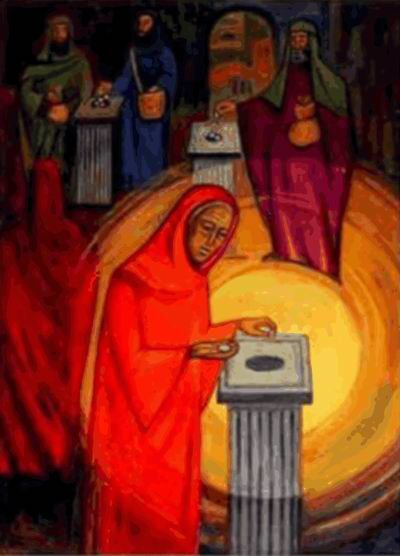
In the Gospel, we hear another sound, neither great nor gorgeous in itself: the quiet chinking of two small coins. Yet, this simple sound has echoed for two-thousand years and millions have been drawn to it. When Jesus Himself heard the sound of the faithful, poor widow’s generous gift, He was moved to speak words in praise. Despite its subtlety, it reminded Jesus of a sound He knew well; it reminded Him of the sound of Heaven.

In our own simple ways, with unending joy, let us echo on earth the song of the angels in Heaven as they praise God’s glory for ever.

Investments & Debts — 25th Sunday in Ordinary Time—Year C

September 19, 2010

Last week we heard Jesus’ parable of the Prodigal (or squandering) Son. Today He tells us about a debt-canceling steward. These stories offer similar lessons: the first lesson is about how to use our wealth profitably.

The prodigal son wastes his wealth on himself, on a life of self-indulgence, and he finds himself poor and alone. But hisgood father uses his wealth to generously cloth and feed him, and he thereby restores their relationship. Today’s steward gets reported for squandering the master’s property and is soon to be sent away destitute. But the prudent steward finds a way to always have a place to stay. He forgives others’ their debts and thereby wins their friendship. The first lesson is that we will lose whatever we hoard for ourselves, but whatever we invest in love will have an everlasting return.

The reason we exist, the reason we were created, is for personal relationships with God and each other. And when we die, we will take nothing with us, except these relationships. Our computers, cars and credit cards will be left behind, but personal love remains with us. A $100 bottle of wine can be enjoyed for an evening, but then it is lost forever. A donation to Catholic Relief Services can save a life, and a donation to Relevant Radio can save a soul, and someday, when all of our investments in love for family, neighbors and strangers are revealed, they will give us everlasting joy forever. So “I tell you, make friends for yourselves with dishonest wealth, so that when it fails, you will be welcomed into eternal dwellings.”
 
The second lesson of these parables is the importance of forgiveness. The good father wins back his dead and lost son, because he is willing to forgive him. The older son, however, is unwilling to forgive. He refuses to enter the house of his father and will not join the feast until his heart is changed. The good father symbolizes God, and the house is Heaven, and unless we forgive everyone one from the heart, we will refuse to join the feast. The second parable is also symbolic. God is the rich man and we are the squandering steward. Consider how much He has given you and how fruitlessly you have used it. At the end of our lives we will be called to give an account of our stewardship, and who can stand that judgment? This is what we must do: we must forgive our debtors their debts by forgiving their sins against us.

A sin forms a debt because it takes away from others what is owed to them by right. Every sin makes a debt, first and foremost to God, but also to the people trespassed against. It is speculated that the steward in the parable was forgiving his master’s debtors the part which was his own commission. If we are prudent like him, we will quickly take the opportunity to forgive our debtors the debt owed to us by forgiving the sins they have sinned against us. For we have it on Jesus’ word, “If you forgive others their transgressions, your heavenly Father will forgive you. But if you do not forgive others, neither will your Father forgive your transgressions.”
 
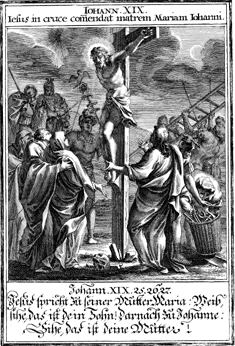
Now a lot of people refuse to forgive, or think that they can’t, because they think forgiveness means something its not. To forgive another’s sin is not to say that what they did wasn’t wrong—that would be a lie. And forgiveness doesn’t mean convincing yourself that the wrong doesn’t hurt—Jesus forgave his enemies amid excruciating pain. To forgive, all you need to do is to will the good of your trespasser. If you can pray for them, you are forgiving them. On the other hand, if there is anyone that you find that you are unable to pray for, then you have not forgiven them. That is the person whom you must pray for, for your own sake as well as theirs. So let your “supplications, prayers, petitions, and thanksgivings be offered for everyone… This is good and pleasing to God our savior, who wills everyone to be saved and to come to knowledge of the truth.”

Jesus’ parables teach us this: to use our wealth for lasting profit, and to forgive our debtors their debts. Let us be prudent to obtain true riches on earth and a everlasting home in Heaven.

The Rich Fool — 18th Sunday in Ordinary Time—Year C

August 12, 2010

I regret to inform you that you are going to die. Perhaps not today, but someday, and it could be very soon. We should ask ourselves, “Am I ready? How can I prepare?”

The Gospel relates the story of a man who was not ready, a man God calls a “fool.” Jesus offers Him as an anti-role model; a person whose example we should learn from, but not imitate. Yes, he is a fool for hoarding his possessions. The old saying is true, “You can’t take it with you.” But there are more subtle lessons we can learn from his bad example. This morning I would like to present three things this rich man has to teach us:

The first lesson comes from what he does when his land produces a bountiful harvest. He asks himself, “What shall I do?” There is nothing wrong with this question in itself, but he is a fool in the way he asks it. The rich man asks himself, and only himself, “What shall I do?” He does not consult with God, in either his conscience or in prayer, to learn what His will is.

What is the lesson here for us?  Let us remember to listen to the Lord as He speaks in our conscience, through prayer, the Scriptures, and the people He has placed in our lives. We should listen for God’s direction every day, and throughout each day.

A second cautionary lesson is found in the rich man’s plan for solving his storage problem. He says, “This is what I shall do: I shall tear down my barns and build larger ones.” What was wrong with the older barns? They were not large enough to hold everything, but why tear them down? The rich man has plenty of land. Why did he want to replace his perfectly good barns?

Vanity of vanities, he wanted his storehouses to be the newest, the biggest, and the best. Though the rich man was not very concerned about other people, he was very concerned about their high opinion of him. Even in those days, people were tempted to consumerism.
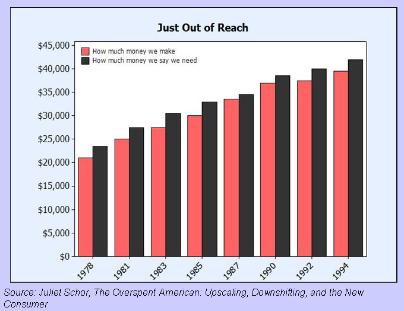
Consumerism seems to consist in two phantom promises: that having just a little more will truly give me lasting happiness, and that others will regard, accept, and love me when they notice the things that I have. These are phantom promises, for as soon as one reaches to grasp them they prove empty, illusory, receding further out of reach.

The fact is that the people who are happiest in life are not the wealthiest. (By that measure, pretty much every American should be among the happiest people in the world.) The happiest people tend to be those who share the most or give the most away. The person who recognizes they have enough, that life does not consist in possessions, is content and secure enough to share. Some people try to get the most out of life as possible, but what we appreciate most in our lives is the ways in which we have given of ourselves for others.

Our third cautionary lesson is heard in God’s rebuke of the man: “You fool, this night your life will be demanded of you; and the things you have prepared, to whom will they belong?” When we think of the things the rich man has prepared, we think of his harvest and goods.  One of the things he has ill-prepared… is his soul, which this night will be demanded of him. And now, to whom will it belong?

The lesson here for us?  As focused as we are upon our possessions, we must be more attentive to our souls. Someday, we are going to die. In the meantime, then, let us put to death, the parts of you that are earthly, as St. Paul said: immorality, impurity, passion, evil desire, and the greed that is idolatry.

What lessons does the rich man teach us? Reject the false promises of the consumer cult, for life does not consist in possessions. (Self-gift is the meaning of life) Turn your heart to your spiritual well-being, for your life and this world shall pass away.  And to frequently ask Jesus, everyday, “What shall I do?” Let us begin today, before it is too late for us to begin living wisely.
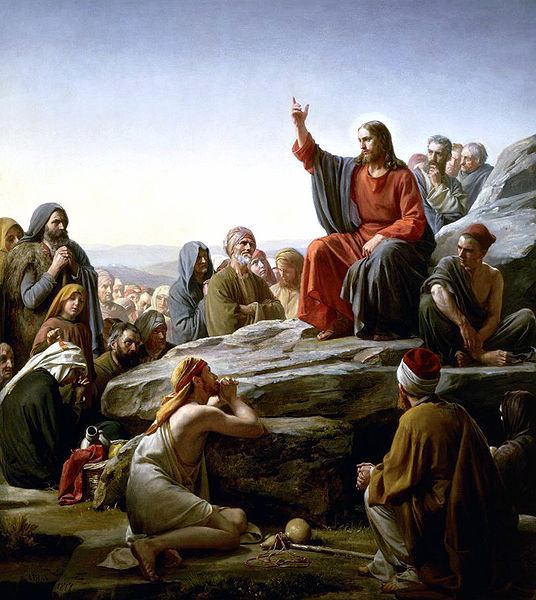
Not If, But When — Wednesday, 11th Week in Ordinary Time—Year II

June 16, 2010

Notice that in today’s gospel, Jesus does not teach saying, “If you give alms…” or “If you pray…” or “If you fast….”

Jesus says, “When you give alms… when you pray…. [and] when you fast….”

Prayer, fasting, and alms giving are assumed for the follower of Christ. If we do not have all three of these as a regular part of our lives, we need to put them there. And when we do, our Father, who sees all, will repay us.

Preparing for Tests — Friday, 8th Week of Easter

May 31, 2010

Today were heard from the first encyclical of the first pope. Today’s first reading came from the First Letter of St. Peter. And what he said applies to you: “The end of all things is at hand.” Originally, St. Peter meant that Christians should always be ready for the end of their lives or the end of the world (whichever comes first.) But this morning I think we can hear the Holy Spirit speaking to us about the coming end of this school year.

At Columbus, the end of all things is at hand: that means finals week, with all of its due dates, studying, and exams. Don’t be surprised that this trial by fire is occurring among you, as if something strange were happening to you. Finals week happens every year. I know that finals time is a challenge and that it takes some hard work, but why should this trial overwhelm us or make us behave ugly towards each other? If we have Jesus Christ in our lives we should face difficulties differently than the world does. The beauty of a soul at peace in Christ, is seen through the person’s  graceful actions.

So how should we face our finals? First of all, have faith in God, and remain at peace, confident that no matter what, everything is going to be ok.  Second, be serious and sober-minded. You’ve worked for the whole semester. Now keep going just one more week to maintain or even improve those grades you’ve worked for all semester. And third, above all and through it all, let your love for one another be intense, be hospitable to one another without complaining, and as each of you has received gifts. Use them to help one another.

At this Mass, prepare yourself. Ask Jesus for constant peace, for steady focus, and for generous love throughout finals week so that you may perform at your best in every respect. It’s nice to get good grades in school, but that’s not the most important thing. The most important thing is to be prepared for the final exam which awaits us all.

For One’s Friends — Tuesday, 3rd Week of Easter

April 20, 2010

Jesus said, “No one has greater love than this, [than] to lay down one’s life for one’s friends.” Have you ever wondered if that’s true? Is that really the greatest love? Wouldn’t it be greater for someone to lay down their life for their enemies? No, for I tell to you that no one can do this. It is impossible to lay down your life for an enemy. You can only lay down your life for people you love.

St. Stephen, like the Savior he followed, loved those who killed him. Stephen’s murders hated him, but he did not hate them in return. He was their enemy, but they were not his. Stephen loved them enough to challenge and correct them, but this made them very angry. Before dying, Stephen said, “Lord, do not hold this sin against them.” He was acting with mercy, generosity, and prayer in imitation of Jesus Christ, his role-model.

In this community, I do not feel that we are plagued with the disease of hatred: hatred for others, hatred for classmates, or hatred for God. But I do fear that we are infected by indifference: indifference towards each other, indifference towards those in need, and indifference towards God. I challenge you: in the past week what have you done to be more merciful, more generous, or more prayerful?

St. Stephen had mercy, generosity, and prayers for those who hated him. St. Augustine wrote that if it had not been for this, that young man named Saul who was guarding the cloaks, consenting to the execution, would not have later converted to become St. Paul, the great apostle. If St. Stephen overcame hatred and did this, imagine what overcoming our indifference could do?

We may not necessarily have to die as bloodied martyrs, like St. Stephen did, but Jesus asks each of us to lay down our lives for our friends.

‘Tis Better to Give — Tuesday After Epiphany

January 5, 2010

(The Micro Machines Aircraft Carrier – Not the Summum Bonum)

When I was a kid, in preparation for Christmas, I remember how my sisters and I would explore those big Sears and J.C. Pennies catalogues and circle the things we really wanted. I also remember the intensity of my excitement when I would open my presents to discover the toys that I had dreamed about. But over the years, I saw a pattern develop that maybe you’ve begun to start noticing for yourself.

Christmas after Christmas, I would play with all my toys, but I discovered that I would never get as much happiness from as I had imagined they would give me when they were still in their boxes. No Christmas toy ever delivered the supreme happiness I had hoped for from them. I was blessed through these experiences to learn a very valuable lesson. I learned that that getting stuff would not and could not complete me—it couldn’t make me truly happy.

Stuff won’t make you truly happy, but there are lots of people who don’t know this. Why do you think it is that TV and advertisers are always going after that “target demographic” of 18 to 34 year-olds, especially that younger segment of 18 to 24 year-olds? It’s because these consumers have significant amounts of disposable income, perhaps for the first time in their lives. And, since they do not have the wisdom of years, many of them can still be fooled into thinking that this or that product will really make them as happy as advertised.

Don’t let yourself be fooled into taking that bait. Keep in mind the words Jesus who said, “It is more blessed to give than to receive” (Acts 2:35). It’s really about giving that I want to speak to you today. There are many ways that we can give of ourselves, of our time, talent and treasure, but this morning I want to address the importance and blessedness of giving from our incredible wealth.

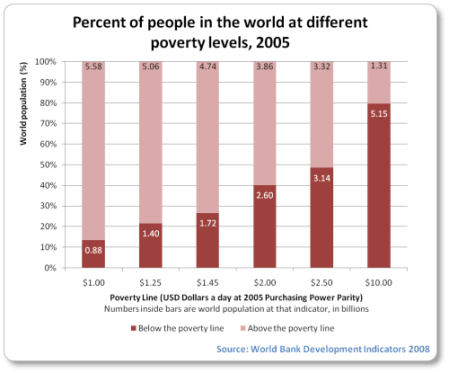
Now I doubt that you would describe yourself as a rich person. In terms of our society, you’re probably not. But realize, that when compared to the rest of the world, you are a very wealthy individual. Did you know that about half of the people in the world live on less than $2.50 a day?

From our great material blessedness comes the great responsibility to share. Yet, the fact that we are far richer than many other people is really beside the point. Even if we were poor compared to everyone else, Jesus would still ask us to share of what we have. For whenever we give out of love, and a desire to spread and advance God’s kingdom, we imitate Jesus Himself, who gave of Himself to us first.

Maybe you feel like you have nothing much to give. The disciples thought they had next to nothing to give too, and they were right. They had just five loaves of bread and two fishes, but Jesus said to them, ‘Give the crowd some food yourselves.’ The disciples wondered what good so little could do for so many, but in Jesus’ hands their small gifts multiplied.  Their deed first feed thousands, and then, through its retelling in the Gospel, it feed untold millions.

It would be hubris, or foolish pride, for us to think that if only we had a million dollars, a billion dollars, a trillion dollars, or any sum, that we by ourselves could save the world. Yet, when we place what little we have into Christ’s hands, giving where and when the Holy Spirit prompts us, Jesus blesses it and our deed does more good within His kingdom than we realize.

Though you never fully see all of the good your giving causes on earth, you can immediately feel some of its goodness inside yourself. Part of the blessedness of charitable giving is in the joy you feel in always knowing that you have done a good deed. When you consume something you may enjoy it for a moment, but when you give something away in love you can enjoy that act forever. If fact, when we get to heaven, we should find ourselves made the instant friends of many strangers when it is revealed to us how our lives were profoundly connected through the smallest gifts.

To help in put our faith into practice, to love our neighbors and advance the Kingdom, we are going to begin taking more regular collections at our weekly school Masses in support various causes. We will be starting by helping a number of area organizations suggested by the Student Senate. And, once our Liturgy & Campus Ministry Committee is up and running, about which Mr. Zimmerman will be speaking to you about at the end of Mass, the selection of worthy charitable causes will one of the important tasks that will fall to them.

Today our collection will be going, in its entirety, to support the Hope Lodge here in Marshfield. The Hope Lodge provides temporary accommodations for patients and their family members while they are receiving cancer treatments at the Marshfield Clinic. Please give as generously as the Holy Spirit may prompt you and know that you will certainly be blessed.