Archive for the ‘Humility’ Category

The Rich Fool — 18th Sunday in Ordinary Time—Year C

August 12, 2010

I regret to inform you that you are going to die. Perhaps not today, but someday, and it could be very soon. We should ask ourselves, “Am I ready? How can I prepare?”

The Gospel relates the story of a man who was not ready, a man God calls a “fool.” Jesus offers Him as an anti-role model; a person whose example we should learn from, but not imitate. Yes, he is a fool for hoarding his possessions. The old saying is true, “You can’t take it with you.” But there are more subtle lessons we can learn from his bad example. This morning I would like to present three things this rich man has to teach us:

The first lesson comes from what he does when his land produces a bountiful harvest. He asks himself, “What shall I do?” There is nothing wrong with this question in itself, but he is a fool in the way he asks it. The rich man asks himself, and only himself, “What shall I do?” He does not consult with God, in either his conscience or in prayer, to learn what His will is.

What is the lesson here for us?  Let us remember to listen to the Lord as He speaks in our conscience, through prayer, the Scriptures, and the people He has placed in our lives. We should listen for God’s direction every day, and throughout each day.

A second cautionary lesson is found in the rich man’s plan for solving his storage problem. He says, “This is what I shall do: I shall tear down my barns and build larger ones.” What was wrong with the older barns? They were not large enough to hold everything, but why tear them down? The rich man has plenty of land. Why did he want to replace his perfectly good barns?

Vanity of vanities, he wanted his storehouses to be the newest, the biggest, and the best. Though the rich man was not very concerned about other people, he was very concerned about their high opinion of him. Even in those days, people were tempted to consumerism.

Consumerism seems to consist in two phantom promises: that having just a little more will truly give me lasting happiness, and that others will regard, accept, and love me when they notice the things that I have. These are phantom promises, for as soon as one reaches to grasp them they prove empty, illusory, receding further out of reach.

The fact is that the people who are happiest in life are not the wealthiest. (By that measure, pretty much every American should be among the happiest people in the world.) The happiest people tend to be those who share the most or give the most away. The person who recognizes they have enough, that life does not consist in possessions, is content and secure enough to share. Some people try to get the most out of life as possible, but what we appreciate most in our lives is the ways in which we have given of ourselves for others.

Our third cautionary lesson is heard in God’s rebuke of the man: “You fool, this night your life will be demanded of you; and the things you have prepared, to whom will they belong?” When we think of the things the rich man has prepared, we think of his harvest and goods.  One of the things he has ill-prepared… is his soul, which this night will be demanded of him. And now, to whom will it belong?

The lesson here for us?  As focused as we are upon our possessions, we must be more attentive to our souls. Someday, we are going to die. In the meantime, then, let us put to death, the parts of you that are earthly, as St. Paul said: immorality, impurity, passion, evil desire, and the greed that is idolatry.

What lessons does the rich man teach us? Reject the false promises of the consumer cult, for life does not consist in possessions. (Self-gift is the meaning of life) Turn your heart to your spiritual well-being, for your life and this world shall pass away.  And to frequently ask Jesus, everyday, “What shall I do?” Let us begin today, before it is too late for us to begin living wisely.

Augustine on Humility — Thursday, 15th Week in Ordinary Time—Year II

July 18, 2010

A Thought on Humility from St. Augustine:

‘You are to “take my yoke upon you, and learn from me.” You are not learning from me how to refashion the fabric of the world, nor to create all things visible and invisible, nor to work miracles and raise the dead. Rather, you are simply learning of me: “that I am meek and lowly in heart.” If you wish to reach high, then begin at the lowest level. If you are trying to construct some mighty edifice in height, you will begin with the lowest foundation. This is humility. However great the mass of the building you may wish to design or erect, the taller the building is to be, the deeper you will dig the foundation. The building in the course of its erection rises up high, but he who digs its foundation must first go down very low. So then, you see even a building is low before it is high and the tower is raised only after humiliation.

Humbly Rising High — July 15 — St. Bonaventure

July 18, 2010

St. Bonaventure became the master-general of the Franciscans 31 years after St. Francis of Assisi himself. He was renowned for his learning and later named a Doctor (or great teacher) of the Church, yet he was also humble. When the pope sent his representatives to inform Bonaventure that he had been named a bishop and cardinal they found Bonaventure washing the dishes. The saint told them to hang the red hat on a tree and to wait in the garden until he had finished the task.

St. Bonaventure reassures us, that whatever our gifts, holiness is within our daily reach. “A constant fidelity in small things,” he once wrote, “is a great and heroic virtue.”

In today’s gospel, Jesus invites us to take his yoke. This burden is restful, easy and light, yet we must be humble; we cannot carry it without Christ by our side. Beatitude (true happiness) is within everyone’s reach, but we cannot possess it without God.

As St. Bonaventure says:

No one can be made happy unless he rise above himself, not by an assent of the body, but of the heart. But we cannot rise above ourselves unless a higher power lifts us up. And divine aid is available to those who seek it from their hearts, humbly and devoutly.

Getting Slapped — Monday, 11th Week in Ordinary Time—Year II

June 16, 2010

Jesus taught:

“…Offer no resistance to one who is evil. When someone strikes you on your right cheek, turn the other one to him as well. If anyone wants to go to law with you over your tunic, hand him your cloak as well. Should anyone press you into service for one mile, go with him for two miles.”

Should we always offer no resistance to those who would do evil against us?

Notice that each of the examples Jesus gives are of injustices that do no real lasting harm. If you are slapped on the cheek, it stings awhile, but in a few minutes you’re fine. Even Jesus’ disciples owned spare clothes–we know because He told them to leave their second tunics behind when He sent them two by two. There is no lasting harm until your last tunic or cloak is taken. (cf. Exodus 22:25-26) In those days, Roman soldiers could force Jews to carry their gear for up to a mile down a road. Jesus teaches that one should go the extra mile for these enemies and occupiers.

In each example Jesus gives of offering no resistance to evil-doers, the affliction is felt in one’s pride more than anywhere else. Jesus is teaching us to be humble when people wrong us in small ways, so that they will be struck by our magnanimous patience and strength and be converted.

But what if the evil someone would do to us would do us grave and lasting harm? Should we offer no resistance then? Two incidents for Jesus’ life come to mind. When the money changers and animal sellers were doing business in the temple’s court of the Gentiles, profaning it and impeding the nations’ worship of the One True God, Jesus resisted. He made a whip out of cords and drove out the people who were doing what was evil. On the other hand, in the Passion, Jesus offered no resistence. He let His enemies slap Him, strip Him, and force Him to carry a cross.

It seems that there are times when we are called to resist evils for the sake of the common good, and times when we are called to accept evils, even grave injustices against us, in the pattern Jesus Christ. Let us trust the Holy Spirit to guide us to know when is the time for which.

Christ in the Sacraments — 11th Sunday in Ordinary Time—Year C

June 15, 2010

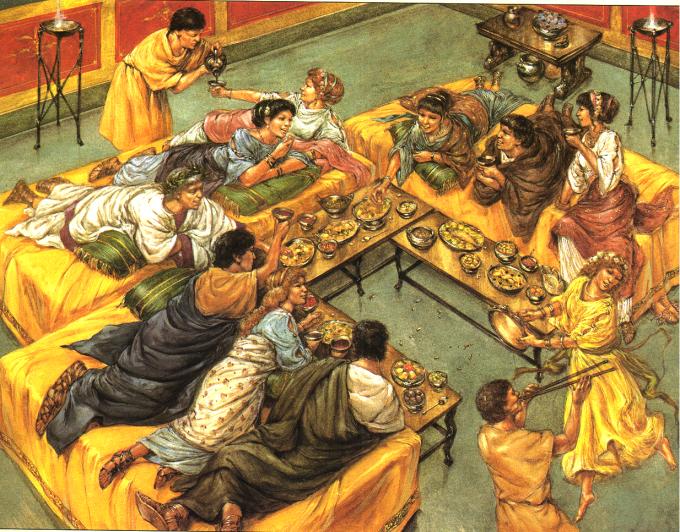
To understand today’s gospel, it helps to know a little about the Jewish culture of Jesus’ day.  For example, when the Jews would sit down to eat dinner they would not sit at all–they “reclined at table,” on beds that came up the edge of the table. You would have a cushion under your chest or under your side, as you ate with your free hand, with your legs laid out behind you. This clarifies how the beautiful, penitent woman was able to access to Jesus’ feet. This also explains how John was able to lay his head upon Jesus’ chest at the Last Supper to ask Him who would betray Him. The Beloved Disciple was not a contortionist–he was laying beside Jesus at table.

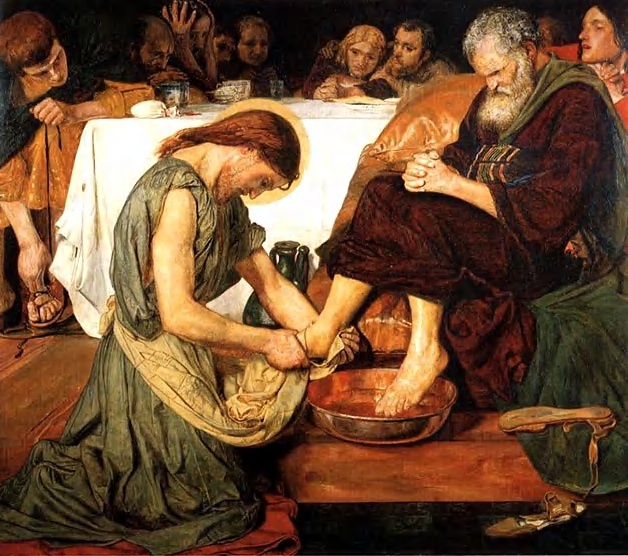
A second important thing to know about the Jewish culture of Jesus’ day to appreciate this gospel is to understand how they felt about feet. The Jews considered feet to be among the dirtiest, humblest, and lowliest parts of the human body. This is why our parish’s patron, St. John the Baptist, said, “[There is] one who is coming after me, whose sandal strap I am not worthy to untie.” In that Jewish culture, servants could not be commanded to wash the feet of others; it was considered even beneigth the dignity of a slave. Now we can understand the significance of the woman washing Jesus’ feet, and how much it means that Jesus later washed His disciples’ feet at the Last Supper.

But what was this woman thinking? Had she forgotten to bring a towel and a bowl of water at home? Was she so dumbstruck that her lips were unable to form the simple words, “I’m sorry and I want to return to God?” No, she knew what she was doing when she used her tears to cleanse, her hair to wipe, and her lips to kiss Jesus’ feet. When she heard that Jesus was going to be eating at the house of Simon the Pharisee I doubt she was holding that alabaster jar of ointment in her hands. No, she had to go and get it, and as she did she thought about exactly how she was going to approach Jesus.

What was Simon the Pharisee thinking? Had he forgotten about the customary curtesies in welcoming guests to one’s house in that culture: water for washing their own feet, oil for anointing one’s head against the harshness of the desert, a kiss in greeting at the door? Maybe he thought these were just optional, dispensible rituals. Regardless, Jesus put his finger on one major contributing factor: Simon the Pharisee loved Jesus little, while the beautiful penient woman loved Him greatly.

Simon gave Jesus an external gift, a meal in his home, but in addition to her ointment, the woman gave a gift of her very self; her tears, her hair, her kisses. As she had sinned with her body, she now sought to honor God though her body.

How does all of this apply to us? When we consider this beautiful, penitant woman and Simon the Pharisee relate to Jesus, we see two approaches the sacraments. For some, in the manner of Simon the Pharisee, the sacraments are just rituals, traditional customs, liturgical hoops the Church has us jump through. But for others, those with the heart of the woman who loved much, every sacrament is a personal encounter with Jesus Christ. If you onlt remember one thing from this homily, remember this: every sacrament is a personal encounter with Jesus Christ.

Consider the sacrament of marriage. Today, some people say, “As long as we love each other, what difference does a ceremony in a church and a piece of paper make?” But these people do not realize that the sacrament of marriage actually makes present the love between Christ and his Church. The love between husband and wife not only resembles the love between Christ and his Church–like all the sacraments, marriage actually makes present. If your marriage is sacramental, and you and your spouse do not put up obstacles in the way, you can experience firsthand to love with which Jesus loves His bride, the Church, and how the bride receives her Lord. You experience the intimacy between the two and you can tap and draw on their love and the power in your marriage. marriage is a personal encounter with Jesus Christ.

Today, some people say, “I don’t really have any sins, but if I did, why should I have to go tell my sins to a priest to have my sins forgiven? God can hears my prayers. Won’t he’ll forgive me anyway.” Imagine if the penitent woman had stayed away from Simon’s dinner party that night in the gospel and prayed to God at home. Would she have been forgiven? Perhaps, but she would not have had her life-transforming encounter with Jesus Christ. When you go to confession, you are personally encountering Jesus through the priest. If the priest does not put up obstacles in the way you will hear the words of Christ to you. And even if the priest does get in the way, you will hear that words that Jesus wants you to hear, just as He had said to the beautiful penitent woman: “Your sins are forgiven, go in peace.” The sacrament of reconciliation is a personal encounter with Jesus Christ.

These days some people say, “There’s a lot of Sundays in the summertime and a lot of things to enjoy on the weekend. Is it really that important that we come to Mass every Sunday?” To ask this about the most Blessed Sacrament is to be like Simon the Pharisee. Had Jesus not come as his guest that night, Simon would not have missed Him much; Simon would not have been that disappointed. And even after receiving Jesus under his roof, I can imagine Simon being left unchanged. But the beautiful penitent woman, who took Jesus’ flesh to her lips, was forgiven her sins and was filled with grace by the encounter.

In the celebration of this sacrament, and at every sacrament, let us appraoch Jesus with her humility, reverence, and love.

Tuesday, 34th Week in Ordinary Time—Year I

November 25, 2009

The prophets go beyond what is seen, to reveal what is hidden. Their purpose is to lead people to God.

In the first reading, Daniel reveals what was seen in the king’s dream. In the Gospel, Jesus reveals what will be seen in Jerusalem and at the end of this world as it no stands. In this homily, I will reveal to you three prayers hidden within the Mass which are always present there, but which you may have never heard before.

The first of these hidden prayers comes after the presentation of the gifts. A few of the faithful bring forth the bread and wine to the altar. It is no empty chore. This symbolizes the offering of all your gifts and of your whole lives to God.

I receive the gifts and then I say a prayer of praise to the God of all creation for this bread which we have to offer. Yet before I go on to a similar prayer with the cup of wine you may have noticed something unusual. The priest takes the water and pours a little into the cup of wine. It’s only a few drops, and the wine appears unchanged, but the water and wine have become inseparably one. As he pours, the priests silently prays this:

“By the mystery of this water and wine may we come to share in the divinity of Christ, who humbled himself to share in our humanity.”

You and I will always be God’s finite creatures, but, by the Incarnation, Jesus has made Himself inseparably one with our humanity. It is Jesus’ desire to make us more and more like His divine self through our personal union with Him.

What is the lesson for us here at Mass? We should come to each Mass with high expectations. Do you believe that your whole-hearted participation in this sacrament can make you a better, more beautiful, or more admirable person, and do powerful things for our world? Approach this sacrifice with high expectations. On this point St. John of the Cross and St. Therese of Lisieux agree: “We receive from God as much as we hope for.”

After these prayers for the bread and wine, you will see me bow at the altar. At this moment comes the second hidden prayer. The priest prays:

“Lord God, we ask you to receive us and be pleased with the sacrifice we offer you with humble and contrite hearts.”

What is the lesson for us here at Mass? We should strive to be fully-present at every Mass. Pray the Mass and sing the songs with your whole heart. Offer God this sacrifice with humility, contrition, gratitude and love.

After this comes the washing of the hands and a third silent prayer. The priest prays:

“Lord, wash me of my iniquity; cleanse me from my sin.”

I pray this prayer from particularly from the heart because I do not want my offering and partaking of this most holy sacrament to be the cause of my condemnation and death on account of my sins. (If you think of it, pray for your priest as he washes his hands, that He may offer this sacrifice well for you.) Approaching our all-holy God is serious stuff.

What is the lesson for us here at Mass? If you are aware of serious sins on your soul, come to  confession, the sacrament of reconciliation. Come and be cleansed. Lighten your burden. Do it today.

The prophets go beyond what is seen, to reveal what is hidden. Their purpose is to lead people to God. Through the revealing of these holy prayers I pray you be led to closer to our Lord Jesus Christ at this very Mass.

Thursday, 28th Week in Ordinary Time—Year I

October 15, 2009

Have you ever noticed how unpopular the  prophets are? That’s because it’s usually the prophet’s job to point out peoples’ sins to them and to tell them they have to change. Some people, particularly the arrogant and the wicked, respond very badly to this, like the scribes and Pharisees in today’s Gospel.  When Jesus left the home of the Pharisee, after having criticized them strongly but in private, they

“began to act with hostility toward him and to interrogate him about many things, for they were plotting to catch him at something he might say.”

These scribes and Pharisees, whose fathers had hated and killed the prophets of old, would go on to bring all that blood upon themselves by killing the Wisdom of the prophets Himself.

The question I would like you to consider today is how you respond to criticism or correction directed at you.

The book of Proverbs teaches,

“Reprove not an arrogant man, lest he hate you; [but] reprove a wise man, and he will love you.”

And a translation of Psalm 141 says,

“If a good man strikes or reproves me it is kindness.”

 A wise man does not respond to correction angrily. He knows that “all have sinned and are deprived of the glory of God,” so he is not threatened by the suggestion that he is not perfect yet, that he still has areas for improvement.

The wise man evaluates correction with detachment. If the criticism is valid, or at least well intended, he receives it as a loving act and is grateful for it. And when the criticism is nonsense, the wise man doesn’t let it get to him. Why should the ungrounded opinions of foolish, fickle people have power over us, to rile us up, or provoke us to the sin of personal hatred?

Let us ask Jesus for the grace to receive valid criticism with humility, and for the grace to be merciful with those who criticize us unjustly.

Tuesday, 19th Week in Ordinary Time—Year I

August 17, 2009

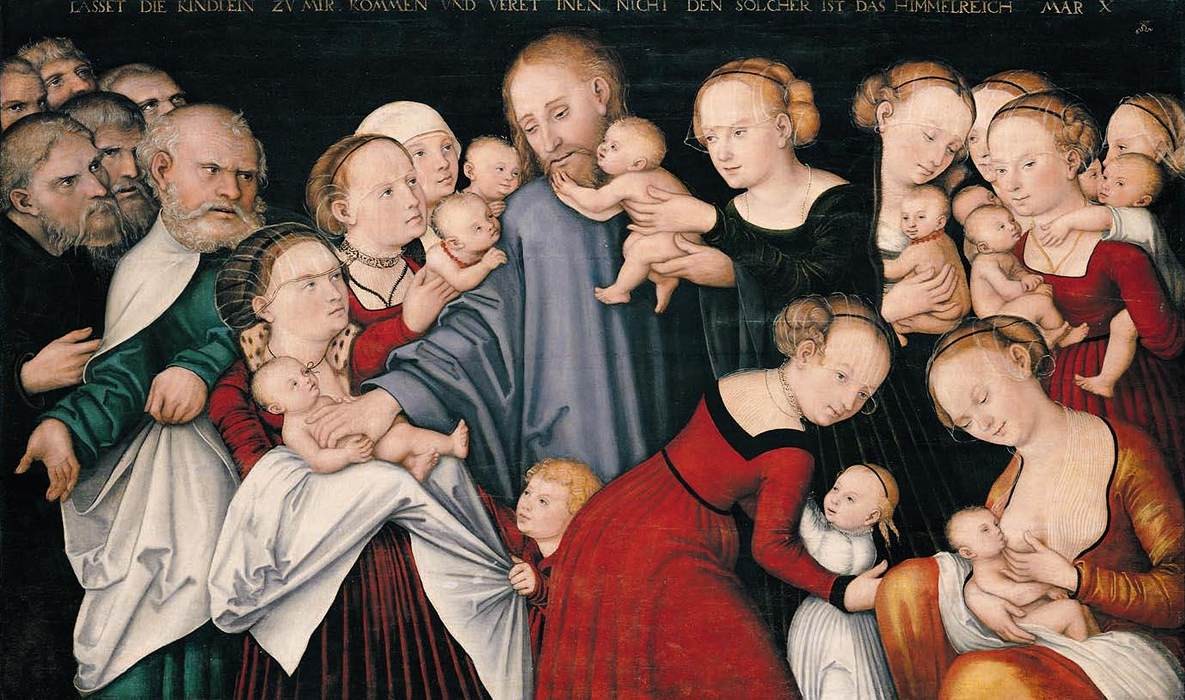
The disciples ask, “Who is the greatest in the kingdom of heaven?” Jesus says, “Whoever becomes humble like this child is the greatest in the Kingdom of heaven.” In fact, Jesus teaches us, becoming humble is essential to entering into His kingdom.

So what is humility?

“Now humility is nothing but truth,” says St. Vincent de Paul, “while pride is nothing but lying.” He says, “The reason why God is so great a lover of humility,  is because he is the great lover of truth.”

Now humility is not about believing we are garbage. It’s a lie to say we’re of little worth. Even the seemingly least person among us is attended to by angels and bears a likeness to the God whom those angels ceaselessly worship. We are of great worth, but to be humble we need to know where our true treasure is.

We must abandon over-confidence in our own faulty and limited powers and trust in our reliable Rock—“how faultless are his deeds, how right all his ways.” In Christ, our Rock, we are secure; and as G.K. Chesterton notes, “It is always the secure who are humble.”

To strip away our illusions and to know our true treasure let’s pray today for the two gifts which it is said God always promptly gives whenever we prayer for them: Humility and Faith.

We can be leery of praying for humility, because when you pray for humility, humility shows up. I myself cannot recall a time when my prayer for humility was not answered by the end of the next day. But let’s have courage, and not allow our entry into Christ’s Kingdom be delayed by our disordered self-love or timidity.

What Moses said before the Israelites on the edge of the Promised Land is just as true for us: “It is the Lord who marches before you; he will be with you and will never fail you.  So do not fear or be dismayed.”