Archive for the ‘Love’ Category

Our Crucified King

November 23, 2025

Solemnity of Christ the King
By Fr. Victor Feltes

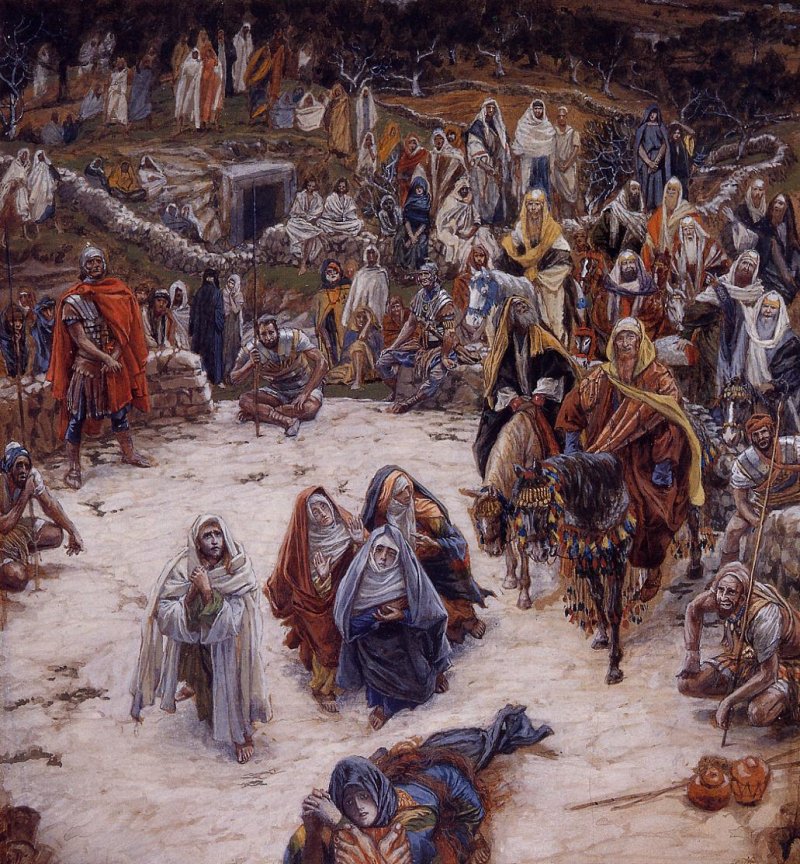
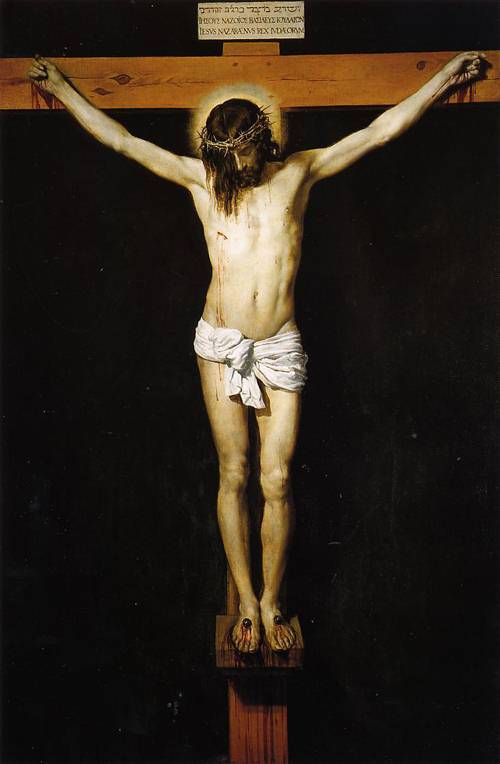
Our English word “Excruciating” comes from the Latin words for “Cross” and “Torment.” The Romans did not invent crucifixion, the Persians and the Greeks practiced it first, but the Romans more widely used the method. It was an easy way to execute people very visibly, horrifically, and slowly as a warning example to others. Typically, when the Romans crucified someone, they would place a sign above the condemned person’s head to indicate why they were being killed. St. John’s Gospel records that Governor Pilate put a sign on Jesus’ Cross written in Hebrew, Latin, and Greek. You sometimes see the initials “INRI” atop crucifixes. This represents the Latin phrase “Iesus Nazarenus Rex Iudaeorum,” the charge against our Lord. That is, “Jesus the Nazorean, the King of the Jews.” He was killed because of who he was and who he is: Jesus the Christ and the King of the universe.

Of course, the people who killed him did not believe this. They thought he was deluded or a fraud. Hence, the triple call for him to save himself and prove them wrong. The Jewish rulers sneered and said, “Let him save himself if he is the chosen one, the Christ of God.” The Roman soldiers jeered and called out, “If you are King of the Jews, save yourself.” And one of the criminals reviled him by saying, “Are you not the Christ? Save yourself and us.” Could Jesus have saved himself from his crucifixion?

St. John’s Gospel quotes Jesus before his Passion saying, “No one takes (my life) from me, but I lay it down on my own. I have power to lay it down, and power to take it up again. This command I have received from my Father.” And St. Matthew quotes Jesus later declaring in the Garden of Gethsemane, “Do you think that I cannot call upon my Father and he will not provide me at this moment with more than twelve legions of angels? But then how would the Scriptures be fulfilled which say that it must come to pass in this way?” So Jesus possessed the power to escape the Cross, but that was not the will or plan of God, which the Eternal Son was party to from the beginning. Jesus assumes “our bone and our flesh” to achieve our reconciliation as a descendant of David, “making peace by the blood of his Cross.” Perhaps the Holy Trinity could have inspired less painful prophecies to achieve our redemption and forgiveness of our sins, but Christ’s crucifixion is what they chose. They chose this path to win our love.

Matthew and Mark’s Gospels suggests that the Penitent Thief (traditionally known as St. Dismas) had derided Jesus, too, at first. But seeing the extraordinary way Jesus acted, hearing the things he said, all while crucified, won over that man’s mind and heart. ‘This man has done nothing criminal and this is how he dies? He truly knows my suffering and this is how he lives. This is the Christ I want to be allied with.’ St. And Luke quotes him saying, “Jesus, remember me when you come into your Kingdom.”

That movement saved the man’s soul, and we enjoy the benefit of understanding Jesus Christ even better than him. St. Paul writes that God “proves his love for us in that while we were still sinners Christ died for us.” Be moved by this manifestation of God’s great love. Submit to Jesus Christ as your King so that he may be your Savior and one day we may all be with him in Paradise.

Love & Eight — The Jacob Pake & Kayla Bowen Wedding

June 22, 2025

By Fr. Victor Feltes

We read in the Genesis Creation account that it was not good for mankind to live in solitude, so God made a suitable partner for the man. “That is why a man leaves his father and mother and clings to his wife, and the two become one body, one flesh.” Man and woman were made for each other. Psalm 128 notes how marriage, that first blessing from the original Garden, remains visible in the world even after the Fall: “Your wife like a fruitful vine in the heart of your house; your children like shoots of the olive around your table.” However, after the Fall, we are wounded by sin and drawn by temptation. Humanity commonly does not do as we should.

That is why St. Paul’s exhortation to the Corinthians reminds their divided and squabbling community what love is and what it is not. He lists eight things that love “is” or does alongside eight things love “is not.” Love is not jealous, not pompous, not inflated, not rude, not self-seeking, not quick-tempered, not brooding over injury, not rejoicing over wrongdoing. But love is patient, love is kind, it rejoices in the truth, bears all things, believes all things, hopes all things, endures all things, and love never fails. These groupings of eight are interesting because Jesus in his Sermon on the Mount lists eight beatitudes. (Some may count nine beatitudes, but the Greek indicates that the final “blessed” is an expansion on the eighth one.) These beatitudes describe Christian saints, but first and foremost they describe Christ himself.

So eight, eight, and eight — What does this have to do with how we are to love today? In Genesis, God begins creating on the first day of the week, which is Sunday. He works six days and then rests on the seventh day. That is why the Jewish Sabbath, their holy day of rest, was Saturday. Jesus Christ, who on Good Friday worked his perfect Sacrifice, whose lifeless body on Holy Saturday kept a day of perfect rest, rose again on Easter Sunday. Christians beginning in the 1st or 2nd century called that Sunday “the eighth day,” the eighth day of Creation on which Jesus Christ transforms humanity and our lives in this world. Now we have hope beyond this life, hope for blessed endless life with God. And the Passion, Death, and Resurrection of Jesus have opened access to grace, the help of God, enabling us to live and love like him.

How can we achieve and preserve true unity and harmony among us in our homes and community? This is not possible merely on our own. We must let God give us his grace which allows us to live and love like him. This is why daily prayer, weekly worship, and consistent devotion to the Lord must be top priorities for any Christian. Jacob and Kayla, draw near to him and remain with him, so that you both may live and love like him and be blessed together. Like the psalmist said, ‘Blessed are all who fear, who reverence, the Lord and walk in his ways. You will be blessed and prosper. May you see your children’s children. May the Lord bless you all the days of your life.’

Love Like Christ

May 19, 2025

5th Sunday of Easter
By Fr. Victor Feltes

The Lord is gracious and merciful, slow to anger and of great kindness. The Lord is good to all and compassionate toward all his works.” In times past, God spoke in partial and various ways through prophets (like in the previous psalm) validating his words with saving miracles. But at the beginning of this present age he spoke to us through his Son, through whom he has worked the greatest miracles of salvation.

We bow before the wonder of the Incarnation, that the Divine Person through whom all things were made would become man in the womb of the Virgin Mary and be born among his creatures. We are blessed that Jesus has revealed to us his way of Christian living, not only through the wisdom he preached but through his lived example. And greatest of all, we have access to peace, hope, and joy because of his willingness to suffer, die, and rise for us. Pause to consider where you would be if not for Christ’s love for you.

Now, Jesus gives us a new commandment: “Love one another. As I have loved you, so you also should love one another. This is how all will know that you are my disciples, if you have love for one another.” Now this love we are called to is not mere emotion. Oftentimes love is a warm, fuzzy, pleasure, but love will not always feel good. And this love we are called to is more than intellectual. The demons know that Jesus is Lord, but that does not save them, because they do not love him. We are called to love as Jesus has loved us.

This means we are called to love everyone like he does, the good and the wicked, our friends and foes. What this looks like will vary in life’s various circumstances, but we must will the good for everyone. And willing the good for others must lead to action. We are finite beings and cannot do everything for everyone all the time, but as St. James taught in his New Testament letter: “Faith by itself, if it does not have works, is dead.” And these loving works we are called to will not always feel good, but as Saints Paul and Barnabas preached: “It is necessary for us to undergo many hardships to enter the Kingdom of God.” Jesus entered his Kingdom’s glory through painful trials, and so must we.

For the sake of the joy that lay before him, [Jesus] endured the cross, despising its shame, and has taken his seat at the right of the throne of God.” Supreme happiness also awaits Christ’s faithful followers as well. In his Revelation, St. John sees a New Heaven and a New Earth and a New Jerusalem coming down out of Heaven from God. “Behold,” John writes, “God will dwell with the human race… and will always be with them as their God. He will wipe every tear from their eyes, and there shall be no more death or mourning, wailing or pain, for the old order has passed away.”

Jesus Christ loves us. He offers us his peace and joy and has placed his hope before us. And Christ calls us to love like him by loving him and remaining close to him, for apart from him we can do nothing. Our Christian life begins with Baptism, but must continue with daily prayer, Sunday Mass, regular Confession, a life of true discipleship. You must remain close to—or return to—his grace to enter the Kingdom of God. Remember Christ’s love for you, hold onto his hope, peace, and joy, and love everyone as he has loved you.

Jesus’ Love Succeeds

April 18, 2025

Good Friday
By Fr. Victor Feltes

The story of Christ’s Passion is a chronicle of human failures. Simon Peter, chief of his disciples, denies being his friend three times. Caiaphas and Annas, the highest Jewish leaders, reject, condemn, and hand over their Messiah. Pilate and Herod, representing the world’s political powers, tolerate injustice, persecute, and execute the Innocent One. The mob of humanity chooses the violent rebel, Barabbas (whose name means “Son of the Father”) instead of God’s Son, the peaceful Savior.

It is poignant and fitting how our liturgy has us speak the mob’s words, “Crucify him! Crucify him! …Take him away! Crucify him!” since it was our sins too which sent Jesus to the Cross. And yet, even as we are humbled and convicted at Jesus being crucified because of us, remember that Jesus accepted humiliation, pain, and death because of his love of us.

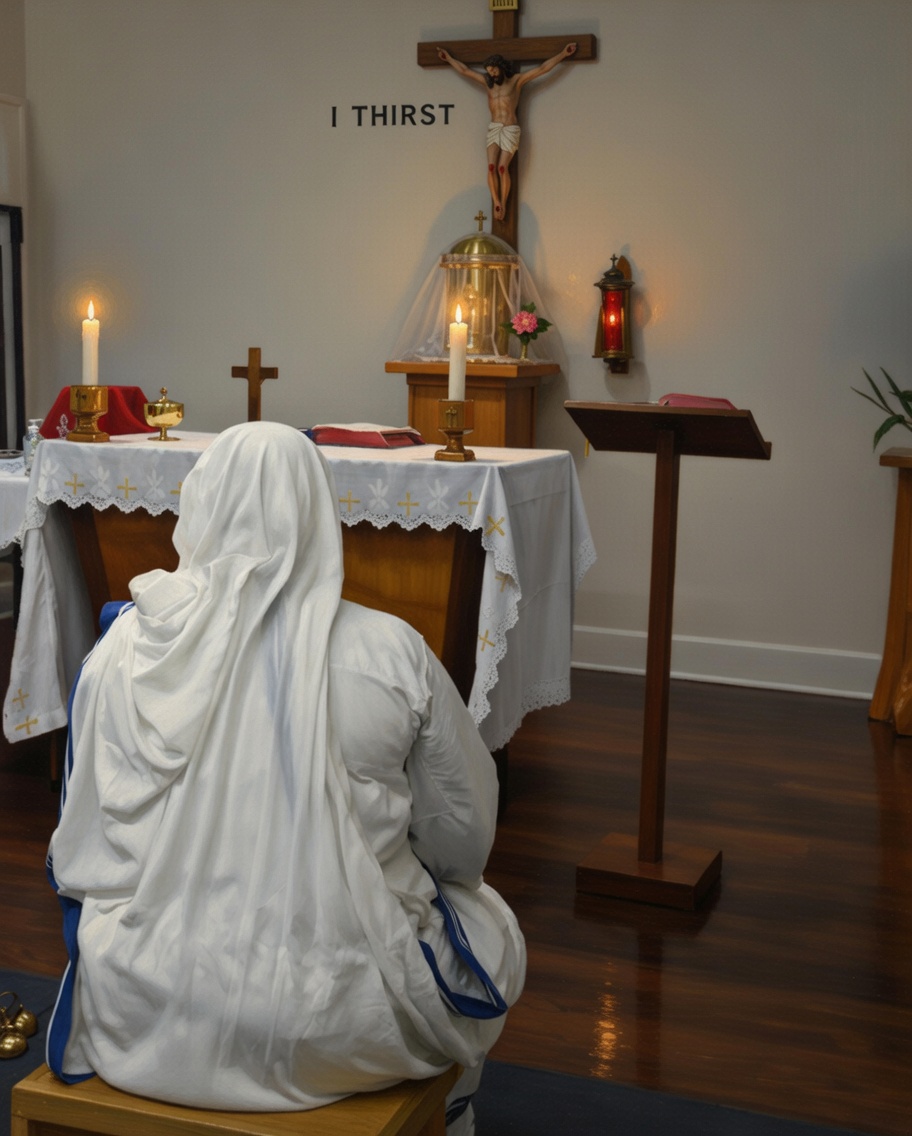
Though we may fail, Jesus’ love succeeds. He said, “When I am lifted up from the earth I will draw everyone to myself.” He stretches out his arms between heaven and earth as the everlasting sign of his New Covenant to invite and embrace us. And from the Cross, he says, “I thirst,” because his love thirsts for you and me.

Half-Measures Or Full Devotion?

April 18, 2025

Easter Sunday
By Fr. Victor Feltes

St. Peter the Apostle proclaimed: “We are witnesses of all that [Jesus] did… They put him to death by hanging him on a tree. This man God raised on the third day and granted that he be visible…to us, who ate and drank with him after he rose from the dead.” Jesus went to his Passion and Cross after the Last Supper, and from death and his tomb to the Resurrection. His apostles witnessed these events and were willing to die to testify to them, and nobody ever dies for what he knows to be a lie. The first Christians had full devotion because Christ did not go halfway in his saving mission.

But what if our Lord, instead of enduring pain and death, had chosen to spare and save himself? Jesus had told the apostles he “must suffer many things and be rejected by the elders, the chief priests and the teachers of the law, and that he must be killed and after three days rise again.” He said he had come “to give his life as a ransom for many,” shedding his blood “for the forgiveness of sins.” How could we ever find forgiveness of our sins in Christian faith and the sacraments, like Baptism and Confession, if Jesus never suffered and died?

Or imagine if Jesus had just gone halfway with the Last Supper, which was the first Holy Mass. What if he had taken the bread and given it to his disciples saying, “This is like my Body. Do this with a thought of me”? Jesus said, “Amen, amen, I say to you, unless you eat the flesh of the Son of Man and drink his blood, you do not have life within you. Whoever eats my flesh and drinks my blood has eternal life, and I will raise him on the last day. … Whoever eats my flesh and drinks my blood remains in me and I in him.” What would become of us if we could not receive Jesus in the Eucharist?

Or what if instead of Easter, Jesus Christ had merely suffered and died and never rose again? St. Paul’s answer is emphatic: “If Christ has not been raised, your faith is vain; you are still in your sins. Then those who have fallen asleep in Christ have perished. If for this life only we have hoped in Christ,” Paul says “we are the most pitiable people of all!” Therefore, if Jesus had stopped at half-measures in his mission, we would not be saved!

At the beginning of Easter Sunday Mass we sang “Jesus Christ is risen today!” We celebrate him risen not like some celebrate the Easter Bunny hiding eggs or Santa Claus bringing gifts for Christmas. A savior of merely “once upon a time” cannot save us. We celebrate Jesus Christ who was truly risen on Easter morning in 33 AD, but who is also risen, living and active, in our world today. And in the face of sin of death, he is our only hope.

This is the day the Lord has made; let us rejoice and be glad!” Embrace today’s good news, the joy of the Gospel, firmly resolved to go forward in such a way that you may be saved. Realize that you cannot safely clear a six-foot chasm by only taking three-foot hops. Half-measures are not enough.

In his suffering, in his sacraments, in his dying and his rising, Jesus shows us how far he goes in love to reach and save us. So in your daily prayers and weekly worship, in virtue and noble service, in Christian faith and fellowship, by your gratitude and love, walk with our Lord Jesus Christ with your full measure of devotion.

Loving Everyone, Our Enemies & Ourselves

February 23, 2025

7th Sunday in Ordinary Time
By Fr. Victor Feltes

Jesus never promised that we would not have enemies. Jesus says, “You will be hated by all nations because of my name. … No disciple is above his teacher, no slave above his master. … If they persecuted me, they will also persecute you. … Woe to you when all speak well of you,” for false prophets were treated in this way. But “blessed are you when they insult you and persecute you and utter every kind of evil against you falsely because of me. Rejoice and be glad, for your reward will be great in heaven.” Thus were true prophets and servants of God treated. The faithful will encounter enemies in this world, yet Christ commands us to love everyone.

He says to his disciples: “Love your enemies, do good to those who hate you, bless those who curse you, pray for those who mistreat you.” You will have enemies, but you must love them. Love sometimes has warm, fuzzy feelings, but not always. This is because love is choice, a choice to will the good of the other. You will not always like everyone, but you must always love everyone.

Jesus tells us, “To the person who strikes you on one cheek, offer the other one as well, and from the person who takes your cloak, do not withhold even your tunic.” Our love of enemies, however, does not mean we must permit grave harms to be done to ourselves or others. This is reflected in the examples Jesus cites. Losing one’s cloak and outer tunic would not leave someone naked, since people in those days also wore an inner tunic. And a slap on the cheek in those days—unlike a stab in the chest—wounds one’s dignity more than one’s long-term health.

We should oppose and resist grave evil, but we must not be undone by the sins and slights of life. Jesus wants us to be magnanimous, large-souled; merciful and forgiving others’ trespasses and debts, generous and giving to those who ask of us, patiently loving people and doing for them what we would have others do for us. Pray for those who mistreat you, bless those who curse you, and do good to those who hate you. Then you will be loving them like Jesus has loved us.

God proves his love for us in that while we were still sinners Christ died for us.” Be like God, who is generous and kind and merciful towards the ungrateful and the wicked. Then your reward will be great, packed together, shaken down, and overflowing, for you will be godlike, children of the Most High. St. Paul declares, “Just as we have borne the image of the earthly one, we shall also bear the image of the heavenly one.” Then, as St. John writes, “we shall be like [God], for we shall see him as he is.” “God is love,” and to become like God it is important that we love and forgive like him. We must also extend this love and forgiveness to ourselves.

A person who believes that God can love and forgive everyone but themselves is singling themselves out as somebody super-extra special. Remember that our Lord is much more concerned with your future than your past. To Christians who are too hard on themselves, I suggest this thought experiment: Imagine somebody just like you, with the same past, the same strengths and weaknesses, the same loves and desires. What would you think of that person? Could you be friends with that person? How would you treat that person? If kindly, then love yourself like your neighbor. If God loves you, you should also love yourself. If God has forgiven you, you should also forgive yourself. And since God loves everyone, you should love everyone too.

The Widow’s Gift Was Love

November 9, 2024

32nd Sunday in Ordinary Time
By Fr. Victor Feltes

Jesus sat down opposite the temple treasury and watched how people gave money at God’s house. There were thirteen donation trumpets attached to sturdy chests into which people were dropping their contributions. Many rich people were donating large sums, causing loud commotions. But one poor widow’s two small coins went in quietly; a little click-click. Why did Jesus highlight her gift above everyone else’s that day?

Our Father in heaven is rich. He created the universe out of nothing. All things belong to him. Being the Almighty, he does not strictly need anything from us. In the 50th Psalm, God tells his people that he does not rebuke them for their animal sacrifices—he had commanded them to make them—but he notes “every animal of the forest is mine, beasts by the thousands on my mountains. I know every bird in the heights; whatever moves in the wild is mine. Were I hungry, I would not tell you, for mine is the world and all that fills it.” And yet, God insists upon our sacrifices for him.

God places us in a material world in which what we do matters. Whether and how we work and pray, learn and teach, plant and harvest, build and repair, save and donate, visit and invite, feed and clothe and care and love, these things really matter—for good or evil—for ourselves and others. It is true Almighty God could do everything all by himself, entrusting us with no mission and zero responsibility. But then, how would we ever mature and grow as glorious saints? Instead, God chooses to work through us, and with us, and in us. Our holy gifts and sacrifices, inspired and empowered by grace, advance God’s Kingdom while transforming us in Christ. Though, strictly speaking, God has no need of our gifts or praises, he insists upon them for our own good.

When Jesus saw that poor widow give God’s house just two coins worth only a few cents, he called his disciples to himself and said, “Amen, I say to you, this poor widow put in more than all the other contributors to the treasury; for they have all contributed from their surplus wealth, but she, from her poverty, has contributed all she had, her whole livelihood.”

Jesus condemns those who “devour the houses of widows,” but he celebrates this woman’s evident trusting, love for God. Jesus says to beware the scribes who love the robes, the titles, the honored seats at synagogues and feasts, who recite lengthy prayers in order to be seen by men. “They will receive a very severe condemnation,” Jesus says, because their focus is not on love of God and neighbor. That poor, loving widow, however, receives the praise of God. “The last shall be first, and the first shall be last.

As I preached in a homily three weeks ago, hierarchies are normal and natural, though some are better than others. The secular world has hierarchies according to power, wealth, or status. Christ establishes a hierarchy for his Church on earth according to sacramental holy orders. But amongst the Church in heaven, a hierarchy exists according to love. In heaven, God reigns supreme and God is love pouring out for all. There is no money to be had there, the sacraments are no longer needed, and there is perfect, perpetual peace. Greatness above is according to one’s capacity to give and receive love. So whoever wishes to be great in God’s Kingdom must imitate the faithful, self-gifting love Jesus highlights in that widow and which we see modeled for us by Jesus Christ himself.

How you love and what you do matters. In the words of St. Paul, “Let us not become weary in doing good, for at the proper time we will reap a harvest if we do not give up.” “Whatever you do, do it with all your heart as for the Lord … knowing that you will receive an inheritance from the Lord as a reward.” For when Christ comes “he will bring to light what is hidden in darkness and will manifest the motives of our hearts, and then everyone will receive praise from God.”

Blessed are the Clean of Heart

November 3, 2024

31st Sunday in Ordinary Time
By Fr. Victor Feltes

On November 1st, Christ’s Church celebrated all the saints in Heaven. The Gospel reading for that solemnity was Jesus’ beatitudes from his Sermon on the Mount. The beatitudes describe God’s saints, and they describe Jesus Christ himself as well. We are made in God’s image and our Lord grows us into his likeness. This Sunday, I would like to highlight one of those beatitudes: “Blessed are the clean of heart…” Most Bible translations render this: “Blessed are the pure in heart…” What is purity of heart?

Our first thoughts perhaps may go to purity in regards to chastity. Obscene materials and obscene acts are commonly called the opposite of “clean.” Yet human sexuality can be a means of sanctity. The marital embrace is even a constitutive part of one of the seven sacraments Christ gave us. Rightly-ordered chastity is a source of joy and life and holiness. Chastity is part of being clean of heart, but it’s not the whole or deepest sense of this beatitude.

When one of the scribes came to Jesus and asked him, “Which is the first of all the commandments,” Jesus answered with words from Deuteronomy: “Hear, O Israel! The Lord our God is Lord alone! You shall love the Lord your God with all your heart, with all your soul, with all your mind, and with all your strength.” A pure heart does not contain the sludge of sin. It does not willfully coddle an affection for evil. A clean heart is receptive to receive and return holy love.

I believe the Venerable Bishop Fulton Sheen once noted that the Archangel Gabriel addressing and declaring the Virgin Mary “full of grace” points to her Immaculate Conception. For if there were sin present in Mary, like inches of mud in the bottom a bucket, she would not be full of grace. But she was clean of heart and full of grace and loved God with her whole self, because our loving God is good and the source of every good.

Now to prevent people from drawing the wrong conclusions, Jesus immediately follows up sharing the greatest commandment with another command from Leviticus. He declares the second greatest commandment is this: “You shall love your neighbor as yourself.” If Jesus had not cited this second commandment, some people would have misunderstood and thought loving God with all our heart, mind, soul, and strength prohibits the love of anyone else. (After all, Jesus said, “No man can serve two masters.”) Instead, we are to love our neighbor as ourselves (and by implication, love ourselves as our neighbors) even as we love God with our whole selves. When our loves are rightly ordered, in loving God fully we will love who and what he loves like he loves them. Contrary to what some might expect, we will love ourselves and other people best by first and fully loving God.

So renew your love for God, choose him first and fully, opposed to your sins or selfish lesser loves, like those saints who lived and died before us who are now in Heaven. Blessed are the clean of heart, for they will see God.

The Last Shall Be First

October 19, 2024

29th Sunday in Ordinary Time
By Fr. Victor Feltes

In today’s Gospel, James and John shoot their shot to move higher up in Christ’s Kingdom. They say, “Teacher, we want you to do for us whatever we ask of you. … Grant that in your glory we may sit, one at your right and the other at your left.” Jesus replies, “You do not know what you are asking.” The two brothers jump at the chance to drink from Jesus’ cup and be baptized in his baptism because they don’t realize these things mean sharing in Christ’s suffering. Jesus assures them, ‘You will drink of my cup and experience my baptism, but to sit at my right and my left is for those for whom it has been prepared.’ Where were the places at Christ’s sides at his glorious royal enthronement? St. Mark’s Gospel tells us: “With him they crucified two revolutionaries, one on his right and one on his left. … [And] the inscription of the charge against him read, ‘The King of the Jews.’”

James and John did not realize what they were asking. They sought places closer to Jesus in order to live earthly lives in a palace on Easy Street. They imagined reigning over a kingdom with Christ where they would be served like the rulers of the nations who made their dominance over other people felt. But Jesus gathered his disciples and said, “It shall not be so among you. Rather, whoever wishes to be great among you will be your servant; whoever wishes to be first among you will be the slave of all. For the Son of Man did not come to be served but to serve and to give his life as a ransom for many.”

Hierarchies are normal and natural, though some are better than others. The secular world has hierarchies according to power, wealth, or status. Christ establishes a hierarchy for his Church on earth according to sacramental holy orders. But amongst the Church in heaven, a hierarchy exists according to love. In heaven, God reigns supreme and God is love—pouring out for all. There is no money to be had, the sacraments are no longer needed, and there is perfect, perpetual peace. Greatness above is according to one’s capacity to give and receive love. So whoever wishes to be great in God’s Kingdom must practice the self-gifting, servant love modeled for us by Jesus Christ.

We can expect to see many surprises after this life. Reality will look very differently in the light of eternity. Some things which we once thought were valuable—even necessary—will be seen as nothing. And things once rejected as useless will be recognized for their true value—especially in people. Many unknown people will become recognized as great, while many rich, powerful, and popular people will be humbled. “Thus,” Jesus says, “the last shall be first, and the first shall be last.” So let us begin living life with more of that eternal vision now: by seeing with the eyes of Christ, by thinking with the mind of Christ, and by loving with the heart of Christ.

How Would We Treat Jesus?

July 6, 2024

14th Sunday in Ordinary Time
By Fr. Victor Feltes

Jesus commanded the wind and waves of a storm and proved himself more powerful than nature. He told a twelve-year-old girl to arise and proved himself stronger than death. But when Jesus returned to his hometown he was not able to perform many mighty deeds. He did no mighty deeds in Nazareth “apart from curing a few sick people by laying his hands on them.” St. Matthew writes that Jesus “did not work many mighty deeds there because of their lack of faith.” They had listened to Jesus teach in their synagogue. He declared to them during his homily on a messianic passage in Isaiah, “Today this scripture passage is fulfilled in your hearing.” And “many who heard him were astonished,” yet this astonishment became outpaced by outrage.

‘Where did this guy get all this,’ they wondered. ‘Isn’t he just a carpenter? Don’t we know his mom and relatives, who all live around here?’ And “they took offense at him.” St. Luke records “they rose up, drove him out of the town, and led him to the brow of the hill on which their town had been built, to hurl him down headlong. But he passed through the midst of them and went away.” St. Mark tells us that Jesus “was amazed at their lack of faith.” Jesus’ neighbors at Nazareth had more personal knowledge of him in those early days than nearly anybody else on earth, yet they treated him very poorly. They were familiar with him and he was doing good things yet they treated him with contempt. If the boy Jesus had grown up here, if that young man had lived in our community or household, how would we have treated him? Well, how do we treat the people who live around us now?

In his great novel The Brothers Karamazov, Dostoevsky has one of his characters remark, “The more I love humanity in general the less I love man in particular. In my dreams, I often make plans for the service of humanity…. Yet I am incapable of living in the same room with anyone….” Dostoevsky observes it can be very easy to love “humanity,” because “humanity” is an abstract idea. Escapist daydreams are easy and pleasant, but the actual human beings around us require things of us. Not only at Mass and prayer with God but also in daily life with them, we must exercise our love and grow it, in good times, in bad times, and in ordinary times.

St. John writes in his first New Testament letter, “If anyone says, ‘I love God,’ but hates his brother, he is a liar; for whoever does not love a brother whom he has seen cannot love God whom he has not seen. This is the commandment we have from him: whoever loves God must also love his brother.” How do we treat our brothers and sisters, our neighbors and family members, at work, at home, at church? That’s our best clue for how we would treat Christ, for he tells us, “whatever you did [or did not do] for one of these least brothers of mine, you did [or did not do] for me.” So ask for Jesus’ powerful help, for his transforming grace which changes people and relationships, and remember him in how you treat others.

Remain In My Love

May 4, 2024

6th Sunday of Easter
By Fr. Chinnappan Pelavendran

Since Easter, we have been reading and reflecting on the post-resurrection appearances of Jesus and the apostles’ proclamation of the Gospel. Last Sunday we heard how the apostle Barnabas spoke on behalf of Paul and encouraged the other disciples to accept Paul’s conversion as genuine and welcome him into their community despite his past reputation. (Acts 11:19-26)

In the first reading today, St. Peter teaches us that God shows no partiality in His love. God loves everyone, both the Jews and the Gentiles. He wants everyone to be saved through His son Jesus. When Peter preached, the Roman army officer, a devout and kind man named Cornelius was the first non–Jew to become a believer in Jesus. According to Acts of the Apostles, Cornelius who was at prayer at about mid-afternoon had a vision. The Angel said to him that God was very pleased with all his prayers and kindness to the poor, (10:4) for his faithfulness God revealed His salvation to him.

At the same time, Peter had a vision, with various creatures in it. A voice from heaven told Peter to get up and eat. But Peter refused because his religious beliefs told him some of the animals were unclean. (10:14) The voice said to him not to call anything unclean that God has made clean. (11:15) While Peter was pondering over what he had seen, Cornelius arrived at his home. The Spirit encouraged Peter to go with the visitors to see Cornelius. Whatever the vision meant, Peter believed that God had a purpose; he understood God was removing barriers that were previously set in stone by his culture and religion. Through the conversion of Cornelius, the church began to embrace people from every nation and race. God used Cornelius, his family, and his friends to break down the barrier between them and the Gentles. The change did not come from a human plan but from God’s will and guidance.

The joy of the disciples, however, will be complete only if they love one another as Christ has loved them and if they continue to circulate to each other the love of Jesus that they have received. The love of Jesus for his disciples is the love of a friend. Friendship is mutual and manifests in love. Jesus manifests his love by laying down his life for his disciples. He wants us also to love each other as friends, willing to lay down our lives for each other. This is the Church—the community of Jesus’ friends. Our love must not be mere words or thoughts. When Mother Theresa of Calcutta was asked by journalists: ‘How can we solve the world’s problems?’ Her reply was simple: ‘Go home and love one another.

We need to cultivate an abiding and loving friendship with Jesus. We need to express this love in our relationships with others by loving them and offering them trust, faithfulness, equality, forgiveness, joy, and sacrifice. We need to be persons for others: Jesus demonstrated the love of God, his Father, for us by living for us and dying for us. As Jesus’ disciples, we are to be persons for others, sacrificing our time, talents, and lives for others. The most effective way of communicating God’s love to others is by treating everyone as a friend.

God Loves You So Much

March 11, 2024

4th Sunday of Lent
by Fr. Chinnappan Pelavendran

The central theme of today’s readings is that our salvation is the gift of a merciful God, given to us through Jesus, His Son. The readings give importance to God’s mercy and compassion and remind us of His great love and kindness. As an act of love and gratitude to God, who is “rich in mercy,” and as an expression of our Faith, we are invited to share Jesus’ sufferings by doing penance during Lent so that we may inherit our eternal salvation and the glory of his Resurrection in Heaven.

In the first reading, we learn the compassion and patience of God. The reading shows us how the people’s infidelities also caused them to lose the Temple, their homeland, until they “came to their senses,” recognizing their sinfulness, and cried out to God for mercy. It was then God came to their rescue, choosing to work through the pagan king Cyrus. To return them to their homeland and to help them rebuild His Temple there. God chose Cyrus the Great, a pagan conqueror, to become the instrument of His mercy and salvation for His chosen people.

The second reading reminds us to focus on the mystery of salvation as a gift to sinners. St. Paul teaches us that, although we do not deserve anything from God on our own merits, God has chosen to love, save, and give life to us – both Jewish and Gentile Christians. St. Paul says that Divine grace does three things for us: a) brings us to life in Christ, b) raises us with Christ, and c) seats us in the Heavens. The sole purpose of these Divine deeds is to show the immeasurable riches of God’s grace.

Today’s Gospel provides Jesus, the Son of God, to become the agent of God’s salvation, not just for one sinful nation but also for the sinfulness of the whole world. Through John 3:16, the Gospel teaches us that God has expressed His love, mercy, and compassion for us by giving His Only Son for our salvation. Nicodemus, the wealthy Pharisee, and member of the Sanhedrin, meets Jesus by night and begins a long religious discussion. Jesus explains to him that he must believe Jesus’ words because Jesus is the Son of God. Then, by referring to the story of Moses and the bronze serpent (Num 21:1-9), Jesus further explains God’s plan of salvation. Just as God saved the victims of serpent bite from death through the bronze serpent, He is going to save humankind from its sins by permitting the crucifixion and death of His Son Jesus, because the love of God for humankind is that great.

We need to love the cross, the symbol of God’s forgiving and merciful love: it is not only of God’s love and mercy but also of the price of our salvation, It encourages us not only to feel deep sorrow for another’s suffering but also to try our best to remove that suffering. God’s love is unconditional, universal, forgiving, and merciful. Let us try to make an earnest attempt to include these qualities in sharing our love with others during Lent

Give Others The Royal Treatment

November 25, 2023

Solemnity of Christ the King
By Fr. Victor Feltes

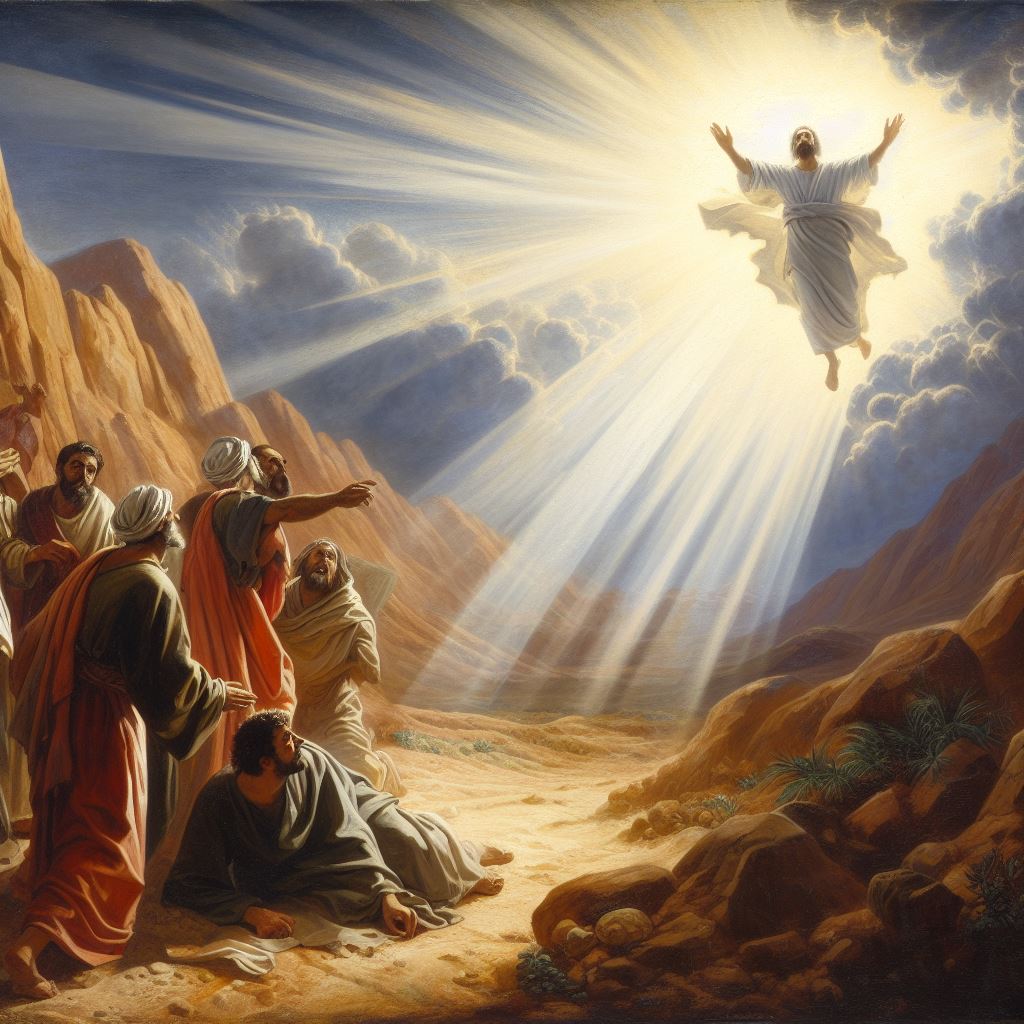
After having supported the murder of St. Stephen the Martyr, Saul of Tarsus was trying to destroy the early Church. He entered house after house, dragging out Christian men and women and handing them over for imprisonment. Still breathing murderous threats against the disciples of the Lord, Saul went to the high priest and obtained official authorization to arrest any Christians he might find in Damascus and bring them back to Jerusalem in chains. But on his way to Damascus, this future saint saw the light.

Light from the sky suddenly flashed around him. He fell to the ground and heard a voice ask him, “Saul, Saul, why are you persecuting me?” “Who are you, sir,” Saul replied. “I am Jesus, whom you are persecuting.” Notice how Jesus did not ask “why are you persecuting my people” or “why are you persecuting my Church,” though both of these descriptions would have been accurate. Jesus asks, “Why are you persecuting me? … I am…whom you are persecuting.”

Imagine if you and I are standing side-by-side in a buffet line and I willfully knock your hand out of the way as we both reach for the delicious deviled eggs. Will your feelings of offense be any less if I reply, “Oh, I didn’t hit you—I merely slapped away your hand”? No, every part of your body is one with you. If I mistreat one of your members, I am mistreating you.

St. Paul and the Holy Spirit teach us in the New Testament: “You are now Christ’s body, and individually parts of it… He is the head of the body, the Church, … [and] we, though many, are one body in Christ.” Jesus himself teaches, “Whoever eats my flesh and drinks my blood remains in me and I in him.” This is why he will declare at the Last Judgment “what you did not do for one of these least ones, you did not do for me” and “whatever you did for one of the least brothers of mine, you did for me.” Our mystical union with Jesus Christ is more intimate than we realize and this has important implications.

The 1st Letter of St. John tells us, “If anyone says, ‘I love God,’ but hates his brother, he is a liar; for whoever does not love a brother whom he has seen cannot love God whom he has not seen. This is the commandment we have from him: whoever loves God must also love his brother.” Now man does not live by bread alone, but we are called to practice Corporal (that is, bodily or material) Works of Mercy. St. James writes, “If a brother or sister has nothing to wear and has no food for the day, and one of you says to them, ‘Go in peace, keep warm, and eat well,’ but you do not give them the necessities of the body, what good is that?” Jesus is hungry and thirsty, ill-clothed and a stranger, sick and imprisoned in his brothers and sisters, and our love for him is reflected in our care for them.

Yet do not fall for the demons’ trap; their persistent accusations which sound like: “You could be doing more; you should always be doing more!” They seek to rob you of your peace and lead you to ultimately give up the good things you are doing because of discouragement. God our Maker knows that our time, talents, and treasure are finite; resources spent on one holy effort cannot be spent on another. Nevertheless, it is important for us to be self-reflective and truly generous with ourselves and what we have.

When you see others or interact with people, try to remember the One whom you mystically encounter. Give them the royal treatment. Notice how both the saved and the damned will someday ask our King, ‘When did we see you hungry or thirsty or a stranger or naked or ill or in prison?’ He will reply, ‘Indeed, whatever you did for one of the least of mine, you did for me.’ It is a truer reality than we realize and all too easily forgotten, yet valuable for us to remember always.

Love God & Neighbor

October 29, 2023

30th Sunday in Ordinary Time
By Fr. Chinnappan Pelavendran

Love is a universal as well as an eternal value. Without it, we will all cease to exist. In the words of Saint Paul, “If I speak in the tongues of men or of angels, but do not have love, I am only a resounding gong or a clanging cymbal. If I have the gift of prophecy and can move mountains, but do not have love, I am nothing.” (1 Corinthian 1:1–2) Love is not only a feeling, it is also an action. It must be seen by serving God and others with our time, talent, and treasure. In short, the proof of love is service.

The readings today clearly remind us how God expresses His love for us. Often, God shows His love for us through the people that enter our lives. Truly, we love God when we sincerely love our brothers and sisters. Our first reading, from the book of Exodus, explains the second greatest commandment: loving one’s neighbors as oneself, especially the underprivileged. The chosen people of Israel should remember that once they were aliens in the land of Egypt. Just as God loved them, protected them, and treated them kindly, it is now their turn to protect others and treat them with kindness. By doing these things they become human in a society rooted in the religious concept of loving God and in loving their neighbor.

In the second reading, St. Paul invites the Thessalonians to live the life of example. He tells them to imitate him as he imitates Jesus Christ. To live one’s Christian life, it is necessary to become imitators of God. Christ loved us and gave himself up for us as a sacrifice to God. St. Paul acknowledged that through persecution, the Thessalonians persisted in their living Faith by receiving the word of God with joy.

In the Gospel, a man asks the Lord: “Which is the greatest commandment?” This is a very good question, but the man is not actually interested in gaining new knowledge. He asked the question to test Jesus. Jesus responded with two answers: love God and love your neighbor. How do we love God with all our heart, soul, and mind? Loving God means making God our number one priority in our life. Our entire being must be directed towards God. This means that everything that we think and do must give honor to God.

Our love for God is meaningless unless we love our neighbor. The scripture explains, “Whoever claims to love God yet hates a brother or sister is a liar. For whoever does not love their brothers and sisters, whom they can see, cannot love God, whom they have not seen.” (1st John 4:20) Let us, therefore, pray that God who loved us first will continue to melt and mold our hearts so that we will really love Him back and love our neighbor.

Mother Theresa and Fr. Damien are examples for us to imitate in how we can love God and love our neighbor. She expressed her love for God by serving the poorest of the poor, and the most abandoned people in the society. Fr. Damien expressed his love for God by caring for the lepers of Molokai. Towards the end of his life, he even became a leper himself.

Jesus gave us a new commandment. “Love one another as I have loved you.” As Christians, we have to imitate Jesus in our love for one another. Thus will the world know we are Christians. “This is how all will know that you are my disciples if you have a love for one another.” (John 13:35)

Like Gentiles or Tax Collectors

September 9, 2023

23rd Sunday in Ordinary Time
By Fr. Victor Feltes

Jesus teaches us today about how to practice fraternal correction. In short, if a brother or sister in the Church sins against you, approach him or her privately. If that fails to persuade, come again with one or two others. If that does not work, bring the matter to the Church. And “if he refuses to listen even to the Church,” Jesus says, “then treat him as you would a Gentile or a tax collector.” Jesus says to treat an obstinately unrepentant Christian like “a Gentile or a tax collector.” What are we to make of this?

How would the Jewish crowds hearing Jesus’ preaching treat Gentiles or tax collectors? The Old Covenant kept Jews and Gentiles (that is, non-Jews) separate. For example, archeologists have found stone signs from the Jewish temple dating to the Gospel era which warned Gentiles or foreigners not to enter its inner courts. Those signs’ chiseled, red letters declared in Greek: “No foreigner is to enter within the stone railing [balustrade] around the sanctuary and the enclosure. Whoever is caught will himself be responsible for his ensuing death.” Without full conversion to Judaism, Gentiles in those days could not enjoy full communion with God’s people. Meanwhile, Jewish tax collectors were viewed as collaborators with Israel’s enemies, traitors harming their own people, and shunned. So how would the early Church respond in the case of a persistently unrepentant Christian?

In the First Letter to the Corinthians, St. Paul addresses a scandalous matter brought to him concerning the Church in Corinth. He writes, “It is widely reported that there is immorality among you, and immorality of a kind not found even among pagans — a man living with his father’s wife,” that is, his stepmother. I imagine if you had asked this romantic couple why they were together, they might have answered, with sincerity, “We love each other!” They might have said what they were doing made them happy. They might have even said, “All love is love.” How would St. Paul answer? In today’s second reading from God’s inspired word, he says, “Love does no evil to the neighbor; hence, love is the fulfillment of the law.” But not all things called “love” are loving in accord with Christ’s commands. Not all pleasures lead to true and lasting happiness. Not all paths lead to God.

In the case of that scandal at Corinth, St. Paul the Apostle declares to the Church:

“The one who did this deed should be expelled from your midst. I, for my part, although absent in body but present in spirit, have already, as if present, pronounced judgment on the one who has committed this deed, in the name of our Lord Jesus: when you have gathered together and I am with you in spirit with the power of the Lord Jesus, you are to deliver this man to Satan for the destruction of his flesh, so that his spirit may be saved on the day of the Lord.”

St. Paul excommunicates the man. It is a strong response because grave sin is serious business. (The man’s partner who goes unmentioned was apparently not a member of the Church.) The goal of an excommunication, beyond the spiritual welfare of the community, is the sinner’s conversion and salvation. St. Paul’s loving hope was that this offender’s sufferings would eventually lead to the salvation of his soul. For better or worse, formal excommunications are uncommon today. Nevertheless, just because one’s body remains inside the church building does not mean his or her soul remains with Christ. If we are living in grave sin, we need to repent and go to confession. And if someone else gravely sins, we could be called, with discernment and prayer, to share the truth in love.

When Jesus says to treat the unrepentant like “a Gentile or a tax collector,” recall how he himself treated Gentiles and tax collectors. Though not yet converted, he loved them. He cared about them and wanted to draw them to himself. He wished for them to change their ways and eventually come into full communion with him in his Church. If we are prayerful and loving, Jesus will enable us to correct the errant in a Christ-like way, and perhaps they will be saved.

Like our Lord appointed the Prophet Ezekiel in today’s first reading to be a watchman for the house of Israel, the Lord may call on you to invite sinners to change their way. As a watchman who loves God’s holy city and wishes the blessed number within her to grow, without abandoning your post on the walls of truth, encourage those who are spiritually outside of her walls to pass through the gate of mercy.