17th Sunday in Ordinary Time
By Fr. Victor Feltes
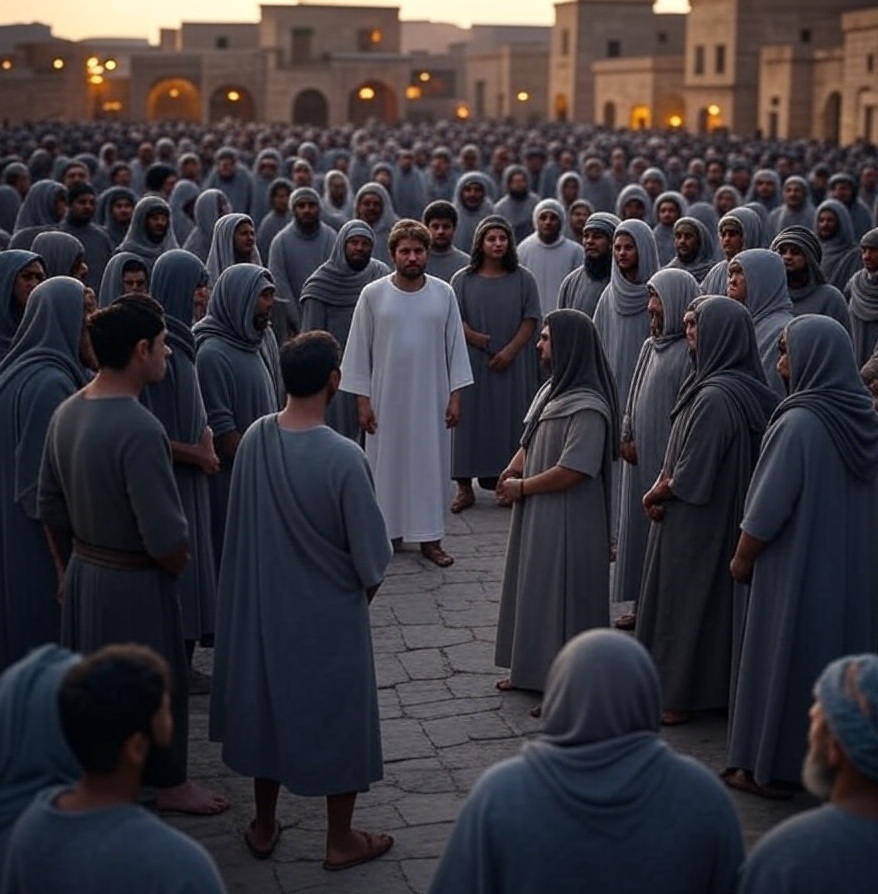
This morning, I believe I should preach to you about the City of Sodom and the City of God, about the importance of Christ and the importance of Confession. In today’s first reading, Abraham intercedes with the Lord concerning the possible destruction of Sodom. Abraham asks: ‘Will you sweep away the innocent with the guilty? Suppose there were fifty innocent people in the city; would you wipe out the place, rather than spare it for the sake of the fifty innocent people within it? What if there are five less than fifty innocent people? Will you destroy the whole city because of those five? What if only thirty are found there? What if there are no more than twenty? What if there are at least ten there?’ The Lord replies that if there are fifty, or forty-five, or thirty, or twenty, or even ten innocent people in the city of Sodom, for their sake “I will not destroy it.” But the city of Sodom was destroyed, and God does not lie, so we know that there was not ten innocent people in that city when it was destroyed. Abraham stopped at ten, but suppose if he had pressed on further? Imagine if Abraham had asked the Lord, ‘What if one innocent person is found there? Will you spare the city?’ Could one righteous man have saved the city?
In the fifth century A.D., St. Augustine wrote of two cities: the City of Man and the City of God. These cities exist side by side extending throughout the earth with every human person belonging to one city or the other. The City of Man embraces sin, with pride, ambition, greed, lust, hated and immorality reigning. But the City of God is led by the Lord, with Christian love and virtues lived in an alliance with Jesus Christ. To which city do we belong?
St. Paul told the Christians in Ephesus, “You are fellow citizens with the holy ones and members of the household of God.” This citizenship was bestowed to us through baptism, as St. Paul teaches in our second reading: “You were buried with [Christ] in baptism, in which you were also raised with him…. And even when you were dead in transgressions… he brought you to life along with him, having forgiven us all our transgressions….” In Jesus Christ, an innocent man is found among us at last. The Son of God became one of us so that on his account our city may be spared. Yet to benefit from his righteousness, we must continue living close to him.
Baptism forgave our past sins, but Jesus teaches us to seek that our new sins be forgiven. He told his disciples, “When you pray, say… Give us each day our daily bread and forgive us our sins…” Realize that all wrongdoing is sin but not all sin is mortal (or spiritually fatal) and know that forgiveness can require more than just a prayer. As St. John writes in his First Epistle: “If anyone sees his brother sinning, if the sin is not deadly, he should pray to God and he will give him life. This is only for those whose sin is not deadly. There is such a thing as deadly sin, about which I do not say that you should pray. All wrongdoing is sin, but there is sin that is not deadly.” If you have sinned, you should pray to God for mercy and grace. But if you have sinned gravely, you should also seek out Confession. This is a sacrament Jesus Christ has given us for the forgiveness of grave sins after baptism.
Your priests care deeply about this sacrament and we are at your service, at both announced times and upon request. Considering how many people are in our parishes, it concerns me that we are not busier with confessions than we are. You bathe every day. You probably take out garbage every week. The practice of monthly confession, even absent grave sins, is good spiritual hygiene for your soul and helps you live closer to Christ. If you wander away from the City of God into the City of Man, come to Confession for a rapid to return home. Please allow our Lord to show you his mercy.






 Parishable Items