Archive for the ‘Chrisitian Virtues’ Category

How They All Went Wrong

May 3, 2020

4th Sunday of Easter—Year A

Why did Satan rebel against God?
Why did Judas betray Jesus?
Why did Peter deny the Lord three times?
The underlying answer is important for our present lives.

Why did the Devil rebel? Though mysterious, it seems that this angel proudly desired a greater “glory” than was found in God’s hierarchy. To be God without God. This was his suggestion in tempting our first parents; “you will be like gods”. Satan, being the most powerful of the demons, rules a fallen kingdom apart from goodness, truth, and God.

Why did Judas Iscariot betray Jesus? It might have been for the money; thirty pieces of silver was about five weeks of wages and St. John the Apostle reports that Judas “was a thief and held the [apostles’] moneybag and used to steal the contributions.” Yet St. Matthew writes that when Judas saw Jesus condemned he deeply regretted what he had done and returned the money to the chief priests and elders saying, “I have sinned in betraying innocent blood.” Perhaps Judas never intended the Lord to die but had hoped that Jesus, with his back against the wall, would finally wield his mighty, miraculous powers to claim David’s earthly kingdom (and hand Judas himself a privileged place within it.) Yet Judas’ dishonest and disloyal scheming left him with nothing.

Why did Simon Peter deny the Lord three times during the Passion? St. John’s Gospel suggests he lied about having any connection to Jesus first to gain entry into the courtyard of the high priest, then to keep from being tossed out, and finally to avoid being physically assaulted by a relative of the man whose ear he had severed with a sword earlier that evening in the garden. St. Luke tells us that Peter, when he then heard a rooster crow, “went out and began to weep bitterly” over what he had done.

Satan, Judas, and Peter chose sin because they thought wrongdoing was the way to good things they would not otherwise have. But this is not Jesus’ way. In our second reading St. Peter writes of the Lord, “He committed no sin, and no deceit was found in his mouth.” He was “leaving you an example that you should follow in his footsteps.” In our Gospel, Jesus declares:

Amen, amen, I say to you, whoever does not enter a sheepfold through the gate but climbs over elsewhere is a thief and a robber. But whoever enters through the gate is the shepherd of the sheep. The gatekeeper opens it for him, and the sheep hear his voice, as the shepherd calls his own sheep by name and leads them out. When he has driven out all his own, he walks ahead of them, and the sheep follow him, because they recognize his voice. But they will not follow a stranger; they will run away from him, because they do not recognize the voice of strangers. … Amen, amen, I say to you, I am the gate for the sheep.

Jesus is our gate. He is “the way, the truth, and the life.” Always come and go through this narrow gate, for many prefer to bypass it like thieves and robbers. “How narrow the gate and constricted the road that leads to life. And those who find it are few.” Jesus’ sheep know his voice and are called to uncompromisingly follow it. Before Pontius Pilate, Jesus said, “Everyone who belongs to the truth listens to my voice.”

The words of a Jewish proverb pray to God:

Two things I ask of you,
do not deny them to me before I die:
Put falsehood and lying far from me,
give me neither poverty nor riches;
provide me only with the food I need;
Lest, being full, I deny you,
saying, “Who is the Lord?”
Or, being in want, I steal,
and profane the name of my God.

In our present season of trial, the complacency of riches has withdrawn but other temptations draw near. This is a time of testing. Will I tell lies? Will I steal? Will I sin to possess or enjoy good things I might not otherwise have? Do not give in, do not compromise, do not capitulate to evil. This is Christ’s will for you. Remember and be resolved: “The Lord is my shepherd; there is nothing I shall want.”

But what if you do go on to fall, or what if you have already sinned? What then should you do? Due to their nature, the demons will never adjust their wills towards repentance. Judas deeply regretted what he had done but he despaired of forgiveness and forfeited his life. St. Peter however returned, repented, and renewed his devotion to his Savior. (“Simon, son of John, do you love me?” He said to him, “Yes, Lord, you know that I love you.”) St. John assures us about Christ, “If we acknowledge our sins, he is faithful and just and will forgive our sins and cleanse us from every wrongdoing.”

The commandments of Christ flow from his own divine nature — total truth, pure goodness, perfect love — and these must not be spurned. Yet realize that the essence of Christianity is not rules or laws but a personal relationship: “If you love me, you will keep my commandments. … I will not reject anyone who comes to me.” Follow the Good Shepherd faithfully and goodness and kindness will follow all the days of your life and you shall dwell in the house of the Lord forever.

Divinely Merciful

April 18, 2020

Divine Mercy Sunday

The Cenacle, the Upper Room in Jerusalem,
site of the Last Supper and Pentecost

Imagine an event as it did not happen…

On Easter evening, when the disciples were gathered behind locked doors in the Upper Room, Jesus came and appeared in their midst and said to them, “I condemn you. Each of you. All of you abandoned me.” And when he had said this, he showed the wounds in his hands and feet and side and said, “I suffered these because of your sins.”

If Jesus would have declared such things to his apostles his charges would not have been untrue. But this is thankfully not what Jesus did. Instead, he came and stood in their midst and said to them, “Peace be with you,” a phrase he says three times in this Sunday’s gospel. Christ’s Passion, death, and Resurrection are not for our condemnation. Jesus comes in mercy for his apostles and for us. “Blessed be the God and Father of our Lord Jesus Christ,” St. Peter writes, “who in his great mercy gave us a new birth to a living hope through the resurrection of Jesus Christ from the dead.”

After assuring them of his friendship and the reality of his Resurrection, the next most important item on Jesus’ Easter list is to entrust his Church with his mission of mercy: “As the Father has sent me, so I send you.” And when he had said this, he breathed on them and said to them, “Receive the Holy Spirit. Whose sins you forgive are forgiven them, and whose sins you retain are retained.”

In this season of pandemic, public Masses are suspended; first Communions, Confirmations, and weddings are being postponed; but the Sacrament of Reconciliation continues to be offered. Did you get to Confession this Lent? Jesus has peace to give you in this great sacrament. So, where and when you can, make it a top item on your list to experience his Divine Mercy there.

The Questions & Answers of Easter Vigil

April 11, 2020

Easter Vigil

Tonight’s Easter Vigil Mass features many readings and accompanying psalms. The Church says the celebrant may chose to skip some of these readings, but tonight we are doing them all; seven from the Old Testament and two from the New, a journey from Genesis to the Gospel. But how does one preach about nine readings in one homily? As I pondered that question, I wondered, “What questions are asked in the readings themselves?

In the beginning in Genesis, when God created the heavens and the earth, there are no questions, only God’s declaring word. Thus the heavens and the earth and all their array were completed. God looked at everything he had made and they were very good. From the beginning, God knows his plan.

By the time of our next reading from Genesis, sin has entered our history. Humanity’s rejection of God, reflected in every sin, not only leads to death but creates injustices which must be rectified, hearts which must be converted, relationships which must be reconciled, and evils which must be undone, through sacrifice. “Father!” Isaac says, “Here are the fire and the wood, but where is the sheep for the holocaust?” “Son,” Abraham answers, “God himself will provide the sheep for the holocaust.

Isaac was spared but would God always provide? Generations later, Moses and the Hebrews are alarmed on the shores of the Red Sea when Pharaoh’s army threatens them. The Lord says to Moses, “Why are you crying out to me? Tell the Israelites to go forward. And you, lift up your staff and, with hand outstretched over the sea, split the sea in two, that the Israelites may pass through it on dry land.” God delivers his people, destroys their enemy, and leads them to his Promised Land.

How great is God’s love for his people? Isaiah proclaims that the Lord loves and desires Israel as a man does his bride: “The One who has become your husband is your Maker; his name is the Lord of hosts.” Yet Israel would often stray from him. Elsewhere Isaiah asks her, “Why spend your money for what is not bread, your wages for what fails to satisfy?” Later the Prophet Baruch asks, “How is it, Israel, that you are in the land of your foes, grown old in a foreign land, defiled with the dead, accounted with those destined for the netherworld? You have forsaken the fountain of wisdom!” Baruch asks “who has found the place of wisdom, who has entered into her treasuries? The One who knows all things knows her; he has probed her by his knowledge—the One who established the earth….

Through the Prophet Ezekiel, the Lord promises to bring his people to their true home, to wisdom, to holiness, to communion with himself: “I will take you away from among the nations, gather you from all the foreign lands, and bring you back to your own land. I will sprinkle clean water upon you to cleanse you from all your impurities, and from all your idols I will cleanse you. I will give you a new heart and place a new spirit within you, taking from your bodies your stony hearts and giving you natural hearts. I will put my spirit within you and make you live by my statutes, careful to observe my decrees. You shall live in the land I gave your fathers; you shall be my people, and I will be your God.”

How is all this to come about? Through Jesus Christ. St. Paul asks the Romans, “Are you unaware that we who were baptized into Christ Jesus were baptized into his death? We were indeed buried with him through baptism into death, so that, just as Christ was raised from the dead by the glory of the Father, we too might live in newness of life.

When Jesus Christ was so shockingly, so horrifically, so unjustly murdered, his heartbroken disciples were full of questions. Is there no reward for the just man? Is there no victory for righteousness? Is evil more powerful than goodness? Is God indifferent to our suffering? Does he not care? Is there no deliverance from sin? Do we have any reason to hope? God answers with Christ’s empty tomb.

Do not be afraid,” the angel says. “I know that you are seeking Jesus the crucified. He is not here, for he has been raised just as he said.” The women, fearful yet overjoyed, run to share this good news when they encounter Jesus on the way. They approach, embrace his feet, and do him homage. Then Jesus says to them, “Do not be afraid. Go tell my brothers to go to Galilee, and there they will see me.”

This was God’s plan from the beginning. That sin would be conquered through self-offering. That all would trust in God’s providence and love the perfect Bridegroom. Why spend yourself on what does not satisfy? Why live any longer away from the Lord in foolishness? You have access to a new and transforming Holy Spirit through your baptism, a baptism which has its power from the death and resurrection of Jesus. Jesus is God’s answer to our greatest questions. How will you respond to him? Answer with your faith and love.

Tips to be Better Prepared

March 31, 2020

Since February 20th, I have encouraged parishioners to be well-prepared for disaster in both body and soul. This post offers some advice on how to be better materially-ready to face this pandemic.

Statistical models from The University of Washington predict U.S. Coronavirus hospitalizations and deaths to peak nationally around April 15th and to peak in Wisconsin around April 27th. Our home state looks like it will fare better than most, but the worst of this crisis still remains ahead of us.

To prepare for this pandemic, the Department of Homeland Security recommends:

  • Storing-up additional supplies of food and water.
  • Periodically checking your prescription drugs to ensure a continuous supply in your home.
  • Having nonprescription drugs and other health supplies on hand (including pain relievers, stomach remedies, cough and cold medicines, fluids with electrolytes, and vitamins).
  • Obtaining copies and maintaining electronic versions of your health records from doctors, hospitals, pharmacies, and other sources and storing them for personal reference.
  • Talking with family members and loved ones about how they would be cared for if they get sick, or what will be needed to care for them in your home.

DHS also urges social distancing; washing your hands with soap or sanitizer; covering your coughs and sneezes; not touching your eyes, nose, or mouth; avoiding people who are sick; and practicing healthy habits.

I also personally recommend these steps (for the unlikely possibility of power or water outages):

  • Storing-up nonperishable food items.
  • Filling spare bathtubs or containers with water, or at least remembering that your water heater and toilet tops contain fresh water.
  • Keeping some extra cash money on hand.
  • And, if running low, filling-up your car’s gas tank. (Though be careful with your hands in touching the pump and nozzle.)

If you need to visit the pharmacy to fill a prescription, call ahead and they may be willing and able to bring out your order to your car and drop it through your passenger side window.

Since, according to the World Health Organization, temperatures of 140° to 150° Fahrenheit are enough to kill most viruses, your oven may be used to sanitize things like mail, documents, or money. (Note however, while paper famously burns at 451°F, some plastics melt at temperatures as low as 165°F.)

God bless and be well.

Why Jesus Wept

March 28, 2020

5th Sunday of Lent—Year A

When Mary came to where Jesus was and saw him, she fell at his feet and said to him, “Lord, if you had been here, my brother would not have died!” When Jesus saw her weeping and the Jews who had come with her weeping, he became perturbed and deeply troubled, and said, “Where have you laid him?” They said to him, “Sir, come and see.” And Jesus wept.

Why did Jesus weep on his way to Lazarus’ tomb? Was it because he had only just learned of his dear friend Lazarus’ death? No, for Jesus had known long before he reached the village. He had already told his disciples, “Lazarus has died. And I am glad for you that I was not there, that you may believe.” Did Jesus weep because he had not planned to immediately resurrect Lazarus until sorrow changed his mind? No, for when the news of Lazarus’ sickness first arrived he told his disciples, “This illness is not to end in death,” and two days later he added, “Our friend Lazarus is asleep, but I am going to awaken him.” Were Jesus’ tears in fact not shed for Lazarus at all?

Here’s a thought experiment. Imagine if I informed you of two facts (about which, let’s suppose, you would have zero doubts): first, that someone you love had recently died — but also, that twenty minutes from now, this same person would be completely alive and healthy, living among us again. How long and profoundly would you mourn for this person? I do not weep over my friends and family going to sleep at night because I believe they will be fully awake again in the morning. Why would Jesus cry for someone he was about to resurrect? But if Jesus was not grieving over the very-soon-to-be-resurrected Lazarus, then why did Jesus weep?

When Mary ran to Jesus and fell at his feet crying, was there a hurt reproach in her voice when she said, “Lord, if you had been here, my brother would not have died”? (‘We sent you a message days ago that our brother was very ill. Why didn’t you save him?‘) Some of the Jews who came to comfort Martha and Mary seemed to doubt Jesus’ care or power. “Could not the one who opened the eyes of the blind man have done something so that this man would not have died?” When Jesus saw Mary weeping and the Jews who had come with her weeping, he became perturbed and deeply troubled. Jesus beholds grave anguish, doubt, and despair amidst the faith-testing scandal of death. And because of this, Jesus wept.

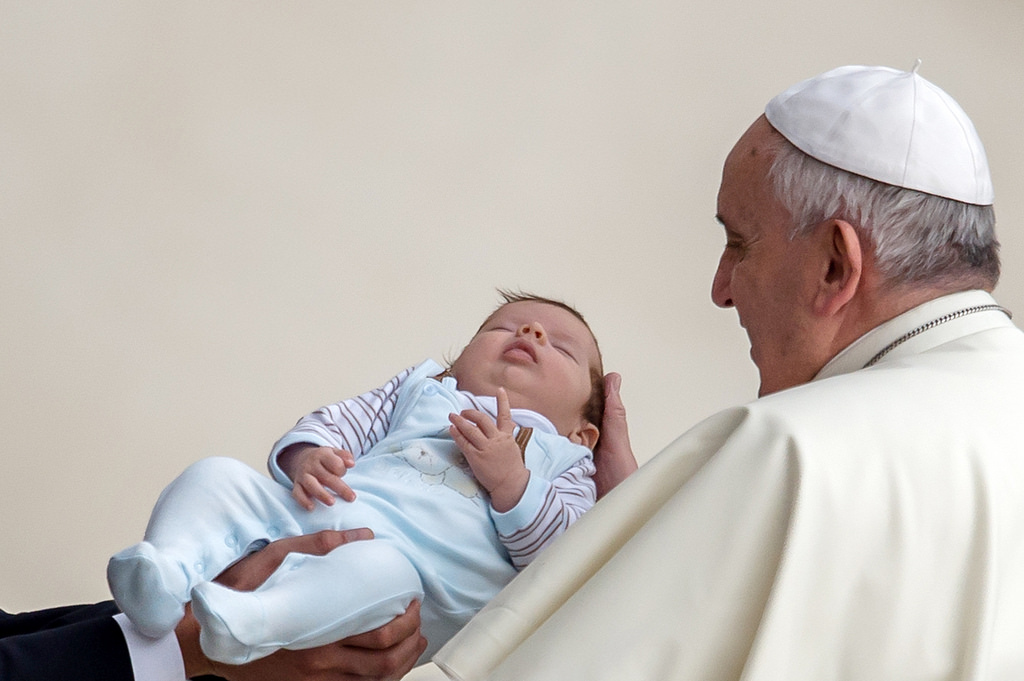
On Friday, in the midst of our worldwide pandemic, Pope Francis preached a message of hope in a rainy, dark, and empty St. Peter’s Square. He reflected on another gospel story where facing death challenged peoples’ faith in the love and power of the Lord: Jesus is asleep in the boat during a storm on the Sea of Galilee and his disciples wake him up and ask him, “Teacher, do you not care that we are perishing?!” In the words of Pope Francis:

It is easy to recognize ourselves in this story. What is harder to understand is Jesus’ attitude. While his disciples are quite naturally alarmed and desperate, he [is] in the stern, in the part of the boat that sinks first. And what does he do? In spite of the tempest, he sleeps on soundly, trusting in the Father; this is the only time in the Gospels we see Jesus sleeping. When he wakes up, after calming the wind and the waters, he turns to the disciples in a reproaching voice: “Why are you afraid? Have you no faith?

Let us try to understand. In what does the lack of the disciples’ faith consist, as contrasted with Jesus’ trust? They had not stopped believing in him; in fact, they called on him. But we see how they call on him: “Teacher, do you not care if we perish?” Do you not care: they think that Jesus is not interested in them, does not care about them. One of the things that hurts us and our families most when we hear it said is: “Do you not care about me?” It is a phrase that wounds and unleashes storms in our hearts. It would have shaken Jesus too. Because he, more than anyone, cares about us. (…)

Why are you afraid? Have you no faith?” Faith begins when we realize we are in need of salvation. We are not self-sufficient; by ourselves we founder: we need the Lord, like ancient navigators needed the stars. Let us invite Jesus into the boats of our lives. Let us hand over our fears to him so that he can conquer them. Like the disciples, we will experience that with him on board there will be no shipwreck. Because this is God’s strength: turning to the good everything that happens to us, even the bad things. He brings serenity into our storms, because with God life never dies.

What We Should Do Now

March 25, 2020

The Solemnity of the Annunciation

The angel Gabriel was sent from God to a town of Galilee called Nazareth, to a virgin betrothed to a man named Joseph, of the house of David, and the virgin’s name was Mary. And coming to her, he said, “Hail, full of grace! The Lord is with you.” But she was greatly troubled at what was said and pondered what sort of greeting this might be. Then the angel said to her, “Do not be afraid, Mary, for you have found favor with God. Behold, you will conceive in your womb and bear a son, and you shall name him Jesus. He will be great and will be called Son of the Most High, and the Lord God will give him the throne of David his father, and he will rule over the house of Jacob forever, and of his Kingdom there will be no end.”

But Mary said to the angel, “How can this be, since I have no relations with a man?” And the angel said to her in reply, “The Holy Spirit will come upon you, and the power of the Most High will overshadow you. Therefore the child to be born will be called holy, the Son of God. And behold, Elizabeth, your relative, has also conceived a son in her old age, and this is the sixth month for her who was called barren; for nothing will be impossible for God.” Mary said, “Behold, I am the handmaid of the Lord. May it be done to me according to your word.” Then the angel departed from her.


What would it be like to be visited by an angel? Scripture tells us “some [people] have unknowingly entertained angels,” like Gideon or Tobiah, because angels can appear on earth in human disguise. But if you ever saw an angel in unveiled glory this spiritual creature would not be a winged Precious Moments character like some people imagine. As C.S. Lewis writes in the preface of his book The Screwtape Letters:

In the plastic arts [the symbolic representations of angels] have steadily degenerated. Fra Angelico’s angels carry in their face and gesture the peace and authority of Heaven. Later come the chubby infantile nudes of Raphael; finally the soft, slim, girlish and consolatory angels of nineteenth-century art… They are a pernicious symbol. In Scripture the visitation of an angel is always alarming; it has to begin by saying “Fear not.” The Victorian angel looks as if it were going to say “There, there.

When the Archangel Gabriel came and greeted the Virgin Mary in Nazareth, “she was greatly troubled.” He must calm and reassure her, “Do not be afraid, Mary, for you have found favor with God.” His message from Heaven is a weighty and mysterious one: you shall conceive and bear the Messiah, the Christ, who is both the heir to David’s kingdom and the Son of Almighty God. Mary has apparently made a prior vow to remain a virgin within her current marriage to Joseph, for she questions how she would ever conceive apart from relations with a man. Gabriel explains this will be through the power of God, for whom all things are possible. Even this answer leaves a great deal unrevealed.

It’s natural for Mary to feel anxious. She has heard God’s promises but much remains uncertain for her near and distant future: Will Joseph believe her? How should she parent such a Holy Child? How will Jesus become king? What will happen to her? How long or difficult will her life be? God’s full plan is unknown to Mary, but she knows what to do for that moment. She says, “Behold, I am the handmaid of the Lord. May it be done to me according to your word.” Through this faithful, trusting response, Jesus Christ saves his Church, the Virgin Mary becomes the Most Blessed, and every generation is blessed.

It’s natural to feel anxious now. We have received God’s promises but much remains uncertain about our near and distant future. Follow Mary’s example and entrust your life to God’s will, so that you may be the most blessed and a great multitude may be blessed through you.

Beware of False Dilemmas

March 24, 2020

Tuesday, 4th Week of Lent

Now there is in Jerusalem at the Sheep Gate a pool called in Hebrew Bethesda, with five porticoes. In these lay a large number of ill, blind, lame, and crippled. One man was there who had been ill for thirty-eight years. When Jesus saw him lying there and knew that he had been ill for a long time, he said to him, “Do you want to be well?” The sick man answered him, “Sir, I have no one to put me into the pool when the water is stirred up; while I am on my way, someone else gets down there before me.” Jesus said to him, “Rise, take up your mat, and walk.” Immediately the man became well, took up his mat, and walked.


Jesus asks the infirm man lying near the pool, “Do you want to be well?” He answers, “Sir, I have no one to put me into the pool when the water is stirred up; while I am on my way, someone else gets down there before me.” The best early Greek manuscripts of John’s Gospel do not contain the verse (John 5:4) and many modern Bibles omit it, but this ancient passage explains what the surrounding verses imply: “From time to time an angel of the Lord would come down and stir up the waters. The first one into the pool after each such disturbance would be cured of whatever disease they had.

The afflicted man perceives only two possibilities, a dilemma; either be healed by being the fastest into the water or continue in his infirmity. The first path is impossible and the second leaves him miserable. The man is tempted toward despair yet he remains patiently near the pool. And there he encounters Jesus who reveals a new, third way he had not imagined, a better option he had not seen. Jesus says to him, “Rise, take up your mat, and walk,” and immediately the man arises cured.

Beware of accepting false dilemmas in life. They can take many forms. Should I keep on being late into the water or give up on ever being cured? Should I ignore the Church’s teaching or be unhappy for the rest of my life? Should I keep on sinning and confessing or give up on my fight against habitual temptation? Should we allow this pandemic to totally destroy our economy or just let everybody die? Realize that the Lord can deliver us through ways we are not perceiving. When facing a painful “either-or”, an intolerable Trolley Problem, ask Jesus to reveal a third track. What if Jesus can heal my legs? What if following the Church’s teaching will lead to both my holiness and my joyful peace? What if my necessary resolutions and humble appeals for Christ’s saving grace can lift me up from my struggle? What if, in the near future, more treatments, testing, and technologies will allow us to save both lives and livelihoods?

Do not despair of your deliverance. “Do not conform yourselves to this age but be transformed by the renewal of your mind, that you may discern what is the will of God, what is good and pleasing and perfect. … Now to him who is able to accomplish far more than all we ask or imagine, by the power at work within us, to him be glory in the Church and in Christ Jesus to all generations, forever and ever. Amen.” (Romans 12:2, Ephesians 3:20)

Prepared for this Time

March 18, 2020

Wednesday, 3rd Week of Lent

Moses spoke to the people and said:

“I teach you the statutes and decrees as the Lord, my God, has commanded me… Observe them carefully, for thus will you give evidence of your wisdom and intelligence to the nations, who will hear of all these statutes and say, ‘This great nation is truly a wise and intelligent people.’ … However, take care and be earnestly on your guard not to forget the things which your own eyes have seen, nor let them slip from your memory as long as you live, but teach them to your children and to your children’s children.”

We may not have expected circumstances to be as they are now, but these things come as no surprise to God from his vantage point outside of time. He permits such trials for the salvation of souls and for his saints to more greatly share in his likeness and glory. The Lord, in his providence, has been preparing you for this season.

In difficult times like these, virtue is tested, character is proven, and many souls will rise or fall. So take care and be earnestly on your guard. Do not to forget the things of faith your ears have heard and eyes have seen. Teach and practice what you have learned. For as Jesus said to his disciples, “whoever obeys and teaches these commandments will be called greatest in the Kingdom of Heaven.

Concerning Coronavirus

March 12, 2020

Coronavirus is a Serious Concern

The Wuhan Coronavirus is very contagious and estimated by Dr. Anthony S. Fauci, head of the National Institute of Allergy and Infectious Diseases, to be ten times deadlier than the seasonal flu. This new pandemic poses some small danger to the young but puts the elderly and those with underlying health issues at much graver risk. In Italy, where 6% of those confirmed to be infected with Coronavirus have died thus far, the Italian Catholic bishops have suspended all public Masses in their churches until at least April 3rd. And in Washington State, where 31 people have died, the Catholic Archdiocese of Seattle has suspended all public Masses indefinitely.

Due to current limitations in the United States’ ability to test for the Coronavius, it is unclear how pervasively the illness is spreading in this country. For some idea of how bad things could become, according to the Centers for Disease Control and Prevention’s (CDC) figures the less contagious and less lethal Influenza virus has infected between 3% to 14% of Americans per year since 2010, resulting in 12,000 to 61,000 deaths annually. If, hypothetically, 14% of Americans go on to catch this new Coronavirus and its mortality rate proves to be 1% (as Dr. Fauci predicted this Wednesday in his testimony before Congress) it will result in 458,000 U.S. deaths. The Wuhan Coronavirus is clearly a matter for our serious attention.

Signs of Illness & Means of Prevention

What are the symptoms of the Wuhan Caronavirus? The World Health Organization (WHO) reports that among confirmed cases about 90% of patients manifest a high fever and about 70% have a dry cough. Shortness of breath is another noted symptom. If someone believes they are infected, the CDC recommends calling ahead to their personal doctor or hospital for instructions rather than just walking into their local E.R. and possibly infecting others. The sick are urged to stay home and to wear a mask to prevent spreading the disease. There is currently no vaccine to protect against this Coronavirus and a safe vaccine is not expected for at least another year.

The CDC says the virus is thought to spread mainly person-to-person, between people in close contact with one another (6 feet or less,) especially from the coughs or sneezes of an infected person. They recommend frequently washing your entire hands with soap and water for at least 20 seconds or (if soap and water are not available) to use hand sanitizer with at least 60% alcohol content. They also urge no touching of your eyes, nose, or mouth with unwashed hands, disinfecting commonly touched surfaces, avoiding contact with those who are sick, and distancing yourself from other people in general.

Missing Mass & Spiritual Communion

Common, good, and prudent reasons for missing Sunday Mass include being ill, dangerous conditions, or needing to care for another person. Therefore, when someone is sick, or believes that venturing out would be dangerous, or believes that the risk of bringing a sickness back home to someone in their care is too great, they are excused from attending Sunday Mass. However, if someone is avoiding Sunday Mass as a too-risky activity then it seems that person also should not be attending parties, going to the movies, out shopping for non-essential items, and the like, but rather social distancing in a way consistent with one’s concern. And if you will be missing Mass for an extended time, to help ensure the continued health of your parish consider registering for automatic withdrawal (ACH) giving from your checking account. Additionally, even if one has a legitimate reason to skip Mass, our duty to worship God and rest on the Lord’s Day remains.

Jesus Christ’s Catholic Church encourages frequent (even daily) Holy Communion, but if we cannot attend Mass we can still unite ourselves to Our Lord by making a Spiritual Communion. St. Teresa of Ávila wrote, “When you do not receive Communion and you do not attend Mass, you can make a Spiritual Communion, which is a most beneficial practice; by it the love of God will be greatly impressed on you.” Once, in a vision, Jesus showed St. Catherine of Siena two chalices, one gold and one silver. He said her Sacramental Communions were preserved in the gold chalice and her Spiritual Communions in the silver one. A Spiritual Communion with Jesus is the next best thing to physically receiving Him in the Eucharist.

If public Masses are suspended in your diocese, remember that the Holy Mass can be seen on TV or online as a next best alternative. Know that the daily Mass readings can be found at the U.S. Conference of Catholic Bishops (USCCB) website. And realize that Catholic priests, even if standing alone in their churches, will still be offering the Holy Mass daily for the whole world and bringing Confession, Holy Anointing, and Viaticum to the sick for as long as they are able. The Wuhan Coronavirus pandemic is rightfully concerning, but whatever comes we need not fear, for “we know that all things work for good for those who love God,” and “whether we live or die, we are the Lord’s.” (Romans 8:28,14:8) As Jesus often said, “Be not afraid.

Satan’s Old Tricks — 1st Sunday of Lent—Year A

March 3, 2020

After his baptism in the Jordan, but before the start of his public ministry, Jesus was led by the Holy Spirit into the desert to be tempted by the devil. Did Satan realize at that time that Jesus was God? He says, “If you are the son of God… If you are the son of God.” But if Satan knew, it’s strange that he would attempt the impossible: to try tempting the all-holy God into sinning and doing evil. Old Testament prophesies allude to the promised Messiah, the awaited Anointed One, as being “Son of God.” God says in the 2nd Psalm:

“I myself have installed my king
on Zion, my holy mountain….
You are my son;
today I have begotten you.”

And in Psalm 89, God says:

“He shall cry to me, ‘You are my father,
my God, the Rock of my salvation!’
I myself make him the firstborn,
Most High over the kings of the earth.”

Old Testament Jews had been told their Messiah would at least figuratively be the Son of God; so, whether or not Satan knew Jesus was divine, he at very least suspected that this man from Nazareth was the Christ.

Jesus evidently went on to tell his apostles of the devil’s temptations in the desert—for how else would anyone know to write about them in the Gospels? There may have been additional temptations, but three are retold in Matthew and Luke’s Gospels. Jesus is on the verge of beginning his public ministry. What kind of Messiah will he be? The devil’s three temptations seek to corrupt his mission from the start. Satan seeks to lead the Christ off track so as to derail the plan of God. He did this first in the lush Garden of Eden, and here he seeks to do it again in the desert.

If you are the Son of God,” Satan says, “command that these stones become loaves of bread.” Jesus was hungry, but if he does this miracle the next question may be, “So you feed yourself, do you? How now can you refuse to give bread to everyone?” Satan wants Jesus to be a materialistic Messiah who must focus on nourishing bodies to the neglect of their souls. Jesus calls his disciples to practice material charity; today the Catholic Church is the largest charitable organization in the world; teaching, healing, clothing, housing, feeding, but this is all of secondary importance to its spiritual work. For what would it profit us to have all of our material needs fulfilled if our spiritual needs went unaddressed and we ultimately died separated from God? How do these things personally apply to us? Well, did the recent stock market drops ruin your week? Or are you too afraid or possessive to share, to tithe, to give to good causes? Or are you too busy working to pray? Jesus answers, “One does not live on bread alone, but on every word that comes forth from the mouth of God.

Next we hear how the devil takes Jesus to the roof edge atop the temple in Jerusalem and challenges him: “If you are the Son of God, throw yourself down. For it is written: ‘He will command his angels concerning you’ and ‘with their hands they will support you, lest you dash your foot against a stone.’” Satan is quoting Psalm 91. This goes to show—and serves as a warning—that not every Bible quote teaches what some people claim it does. True Scripture interpretation must be in union with the mind of Christ, and one with the Body of Christ, that is his Church.

God does not want Jesus to jump off buildings, but the devil wants the Messiah to demand that God protect him from all harm or hardship. Satan wants Jesus to be a Christ who is unwilling to suffer, who will refuse to drink any bitter chalice. The devil knows doing God’s will in this broken world will necessarily entail some sufferings for his faithful ones. If Jesus is unwilling to sacrifice then God’s people will never be saved. Are you trying to force your plans upon God? Are you pleased to serve God only so long as you experience no pain? Are you demanding that your salvation come without embracing your cross? Jesus answers, “You shall not put the Lord, your God, to the test.

Lastly, we hear the devil takes him up to a very high mountain, and shows him all the kingdoms of the world in their magnificence, and says, “All these I shall give to you, if you will prostrate yourself and worship me.” Satan wants Jesus to be a compromised Messiah who will pursue good things by doing, by serving, evil. The tempter says, “It’s only a little thing, just lay down, just say the words, just take a small bite, everything will be so much easier and better if you do.” Or else the tempter lies in the opposite extreme direction, “You have no choice – it’s a sin but there’s no other way – this must be done!” What sins do you still commit in hopes that good will result? Where do you bow down and side with Satan against the will of God? Jesus answers, “The Lord, your God, shall you worship and him alone shall you serve.

By God’s providence, the temptations of Jesus in the desert foreshadow Christ’s Passion to come. Jesus is not a materialist Messiah, changing stones to loaves of bread. But, beginning at the Last Supper, he feeds the world by changing bread into himself “for the life of the world.” Jesus is not a Christ who refuses to sacrifice. At the Temple he endures trail and condemnation by the Sanhedrin and accepts the bitter chalice of his Passion according to his Father’s saving will. And Jesus is not a compromised Messiah, committing sins for false and illusory gains. Christ becomes the magnificent, sinless king of all nations, atop Mount Calvary enthroned upon the Cross.

In this season of Lent, in these forty days of penance, we are in the desert with Jesus, learning from him, and being strengthened by him, so that we can stand straight and strong and not fall for the temptations and traps of the enemy, the same tricks he used against of Adam and Eve, that he attempted with Jesus Christ, and that he still uses in our day. This Lent, instead of falling for Satan’s same old tricks, let us grow closer to Jesus Christ in relationship and resemblance, closer in his friendship and closer to his holy likeness.

Conversion Within — 6th Sunday in Ordinary Time—Year A

March 3, 2020

Ash Wednesday, the beginning of our Lenten journey to Easter, is only a week and a half away. The season of Lent is for penance, conversion, and growing closer to our Lord. Jesus comes not only to forgive sinners but to transform us into saints. This year, would you like to become the best person in Christ that you have ever been? If so, then let’s begin to form a plan.

Lots of people give up something during Lent. Some people give up a particular food, like cookies, chocolate, ice cream, candy, potato chips, or pizza. Some people give up something they drink, like coffee, soda pop, or alcoholic beverages. Some people give up a habit, a thing small like spitting, chewing Gum, or biting their nails, or something grave, like smoking, chewing, or vaping. While other people give up desserts, snacks, junk food, fast food, or meals at restaurants. What do all these popular penances have in common? One’s mouth.

Fasting from a particular food or beverage is a fine Christian penance. Unless you’re exempted by age or health, abstaining from meat on Ash Wednesday and Lenten Fridays is already a part of our hared Church disciplines. But far more important than the things eat or drink with our mouths are the things that go on within our souls. Jesus once summoned the crowd and said to them, “Hear and understand. It is not what enters one’s mouth that defiles that person; but what comes out of the mouth is what defiles one.” When Peter and the disciples asked what he meant by this, Jesus explained: “The things that come out of the mouth come from the heart, and they defile. For from the heart come evil thoughts, murder, adultery, unchastity, theft, false witness, blasphemy. These are what defile a person.” The small and secret choices we make inside us lead to manifest effects around us.

First, an important point about the things that go on inside us. Thoughts, feelings, imaginings, and memories will often arise in our minds unexpectedly, unsought, and unreflectively. A temptation can be like this; an ugly thought or feeling, an idea or inclination to do something wrong, can come our way without our having willed it. Some people think they’re sinning when this happens. Not so. Remember that a saint is not someone who never experiences temptation, but someone who chooses what’s right and good and loving even when faced with temptation. We only do good or evil when we make a choice of the will; a choice to act or not act, to keep thinking about something or to try to think about something else. I mention all this because people commonly confess unwilled temptations they never consented to as if they we sins. Mere temptations are not sins or failures; they are a crossroads where we can choose the holy path, they are an occasion for us to do Christian battle, they are an opportunity for us to deepen our relationship with Christ.

In today’s Gospel from the Sermon on the Mount, Jesus calls us beyond merely external holiness that other people can see to holiness through and through: “Unless your righteousness surpasses that of the scribes and Pharisees, you will not enter the Kingdom of Heaven.” Jesus reminds his disciples, “You have heard that it was said to your ancestors, You shall not kill. You shall not commit adultery. Do not take a false oath.” But then Jesus goes even further, for instance: “I say to you, whoever is angry with his brother will be liable to judgment; and whoever says to his brother, ‘Raqa, [blockhead]’ will be answerable to the Sanhedrin; and whoever says, ‘You fool,’ will be liable to fiery Gehenna.” Murder doesn’t come out of nowhere. It comes from contempt and hatred of others. As a Christian, you are not allowed to hate people. Scripture insists: “If anyone says, ‘I love God,’ but hates his brother, he is a liar; for whoever does not love a brother whom he has seen cannot love God whom he has not seen. This is the commandment we have from him: whoever loves God must also love his brother.” True, you might enjoy some people more than others. The nose might not find it pleasant to be around the armpits in the Body of Christ even as each member serves the others’ good. If there is anyone you dislike, remember that likes and dislikes are natural, but love—to will the good of another—is a decision, a choice you can always make. If there is anyone you hate or strongly dislike, I urge you to pray for them, since it is impossible to pray for someone and hate them at the same time. Perhaps for this Lent, focus on giving up your criticism of others and choose to focus on the best in everyone.

Jesus continues, “You have heard that it was said, ‘You shall not commit adultery. But I say to you, everyone who looks at a woman with lust has already committed adultery with her in his heart.’” Why did Adam and Eve put on clothes after they ate of the Tree of Knowledge of Good and evil? It’s not because their bodies were shameful, but because each of them realized for the first time that they could be manipulated and exploited by the other, used as a thing rather than loved as a person. This is what lust is, using another person as a thing for my own pleasure without care, concern, or love for them. And to think that lusts entertained in secret have no impact on how we behave or treat others in public is naive. Sexual sins can cost you your soul. For this Lent, perhaps focus on giving up using others for your pleasure and choose to see and love each person, even strangers, as God-loved person they are.

And finally, Jesus observes: “You have heard that it was said to your ancestors, Do not take a false oath, but make good to the Lord all that you vow. But I say to you, do not swear at all; not by heaven, for it is God’s throne; nor by the earth, for it is his footstool; nor by Jerusalem, for it is the city of the great King.” Apparently, some of Jesus’ Jewish contemporaries tried to gain the credibility associated with solemn oaths while avoiding divine punishments for speaking falsely. Jesus corrects them noting that all things are God’s, so to swear falsely by Heaven, Earth, Jerusalem, or your own head is no less sinful. Instead, Jesus teaches: “Do not swear at all (in everyday life.) Let your ‘Yes’ mean ‘Yes,’ and your ‘No’ mean ‘No.’ Anything more is from the evil one.” Your reputation for speaking the truth should be such that no oaths are necessary. Now being honest doesn’t mean you have to share every your thought or answer every question. But Jesus never lies, and he wants you to be like him. And once you no longer have dishonesty to evade responsibility, your other behaviors will improve as well. Maybe for this Lent, focus on giving up lying. Let your ‘Yes’ mean ‘Yes,’ and your ‘No’ mean ‘No,’ to be closer to the Holy One.

Lent, a season for penance, conversion, and growing closer to our Lord is just around the corner. This year, would you like to become the best person in Christ that you have ever been? Then form a plan to welcome the grace of Jesus Christ to transform you from the inside out.

Strong Reactions — 5th Sunday in Ordinary Time—Year A

March 3, 2020

My childhood memories of summer include the Osseo City Pool. I remember having fun in the water with friends, the 80’s songs playing from the lifeguards’ boombox, and the big brown door with red letters, warning something like: “Danger, Deadly Chlorine Gas, Staff Only!” As you might imagine, I never ventured into that room. Another memorable experience from my youth involving chemicals happened some years later. My science teacher, Mr. Hall, placed a bucket of water into the snow outside of our high school. Then, using tongs, he carefully dropped into it a chunk of pure sodium, and quickly backed away. The water steamed and bubbled and exploded a couple of times. It was intimidating and awesome. Two potent chemicals: chlorine and sodium. What happens when you combine them? You get sodium chloride. Today, this compound is present in the environment and inside of our homes. It’s in the oceans, on our streets, and even in the food we eat. Sodium Chloride may sound dangerous, but you know this common compound by another name: it’s salt.

Sodium Chloride (a.k.a. Salt)

Salt preserves, salt disinfects, and salt also adds flavor. Salt can preserve food from spoiling. In the days of sailing ships, unrefridgerated salted-pork could safely feed a crew for three months at sea. Salt has been used as a disinfectant and cleaning product since ancient times. The Egyptians, Greeks, and Romans employed salt water to treat cuts, wounds, and mouth sores. Even in 2010, a study from the Mayo Clinic found that gargling warm salt water reduces cold symptoms, including sore throat pain and mucus. And you know firsthand from a lifetime of eating that the addition of salt can make an otherwise bland dish taste much better.

Today, Jesus tells his disciples: “You are the salt of the earth.” Like salt, Christianity is found all over the world, preserving its good, purifying its evil, and adding flavor to what would otherwise be bland, meaningless life. And yet, like Sodium Chloride, Christianity is irrationally feared. This is nothing new. Listen to this second century Letter to Diognetus describing how Christians are present throughout the world, both helpful and good, and yet feared and opposed:

“Christians are indistinguishable from other men either by nationality, language or customs. They do not inhabit separate cities of their own, or speak a strange dialect, or follow some outlandish way of life. … With regard to dress, food and manner of life in general, they follow the customs of whatever city they happen to be living in, whether it is Greek or foreign. And yet there is something extraordinary about their lives. They live in their own countries as though they were only passing through. They play their full role as citizens, but labor under all the disabilities of aliens. Any country can be their homeland, but for them their homeland, wherever it may be, is a foreign country. Like others, they marry and have children, but they do not expose [their children to death]. They share their meals, but not their wives. They live in the flesh, but they are not governed by the desires of the flesh.”

“They pass their days upon earth, but they are citizens of Heaven. Obedient to the laws, they yet live on a level that transcends the law. Christians love all men, but all men persecute them. Condemned because they are not understood, they are put to death, but raised to life again. They live in poverty, but enrich many; they are totally destitute, but possess an abundance of everything. They suffer dishonor, but that is their glory. They are defamed, but vindicated. A blessing is their answer to abuse, deference their response to insult. For the good they do they receive the punishment of malefactors, but even then they rejoice, as though receiving the gift of life. They are attacked by the Jews as aliens, they are persecuted by the Greeks, yet no one can explain the reason for this hatred.”

Why does the world oppose devout Christianity? One reason is they imagine believing Christians behave like sodium in water, boiling hot with hatred and intolerance and violent in their reactions. Yet Christians’ allegiance to Jesus and his teachings on mercy, love, and the value of every human person are the best antidotes to mankind’s natural hatred and indifference toward others. Who is more responsible for sharing bread with the hungry, sheltering the oppressed and the homeless, and clothing the naked in world history than Christians in general and the Catholic Church in particular?

Another reason why worldly people oppose Christianity is that they think our faith is lethal to life’s pleasures; they fear that embracing Christianity would asphyxiate their happiness, like breathing chlorine gas. This too is nothing new. In Roman times, Christians were charged with “hatred of humanity” because the Romans believed ‘a lover of man should love what men love.’ The Early Christians would not partake of common sins for passing pleasures while, at the same time, living joyful lives. Joyful even at their martyrdom. As Diognetus’ pen-pal observed in the second century: “The world hates the Christians, not because they have done it any wrong, but because [Christians] are opposed to its enjoyments.” And so it is today. When we tell the world some things it loves are false roads to happiness the world hates us for it.

Jesus said, “If the world hates you, realize that it hated me first. If you belonged to the world, the world would love its own; but because you do not belong to the world, and I have chosen you out of the world, the world hates you. If they persecuted me, they will also persecute you. … In the world you will have trouble, but take courage, I have conquered the world.” So what are we to do? First, realize that the modern animosity to Christianity is nothing new. Don’t wait for that cultural hostility to pass; it won’t pass in our lifetimes. Next, never accept or act like your faith is a shameful thing. Jesus declares: “You are the light of the world. Your light must shine before others, that they may see your good deeds and glorify your heavenly Father.” If you are a Christian, Jesus wants the people around you to see something different in you and wonder, “What’s your secret.” Be unafraid to tell them the truth, “It’s my personal relationship to Jesus Christ and his Holy Church.” Cooperating with Christ to live like this saves souls and transforms our world.

There is another, more literal translation of Jesus’ words in our gospel: “You are the salt of the earth… You are the light of the world”: “You are the salt of the ground… You are the light of the cosmos.” Through your life, and every Christian life however humble, Jesus would reveal his divine light to the world, the glory and love that sustain the cosmos.

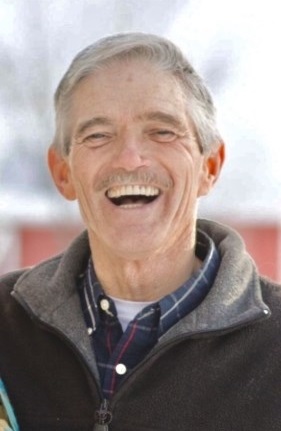
His Cause for Joy — Funeral for Michael “Mike” Rufledt, 67

February 28, 2020

If you had the chance to visit Mike over these past months of his final illness, might have come expecting to see a man anguished and crushed in the face of impending death. You might expect to find a quiet, somber, sad, inconsolable house. But if you visited, you encountered a house of joy; tears—but tears of love; and a joyful man, full of peace. How is this possible? It is the Lord. God had prepared him, God strengthened him, and God accompanied him through it all. And this began long ago.

When Mike was 31 years old, his father Ted died, and this event hit Mike really hard. Mike struggled with heavy grief, a grief he could not let go of or move beyond. He confided his pain to his mother and she gave him wise advice: “Pray to the Holy Spirit, Mike.” He took her advice and prayed. And that night or the next, he had a remarkable dream. He saw his father, standing before him, glowing with light, and smiling a large smile. His father did not say any words in the vision, but his presence and appearance were the message. Despite death, Mike’s father lived on, departed but not gone, still very much alive in God. Mike said that he was fine after that, so happy for his father that he was never stressed about his dad’s death again.

When Mike was 37, his mother Toni also died. Sometimes death’s approach is foreseen and we have time to prepare for it, but her death was sudden and unexpected. Mike was the first into her hospital room after she passed. He mournfully asked, not expecting a response, “What happened, Mom?” and kissed her on the forehead. And then, Mike reports, “I could feel her presence in the room.” Her spirit, her soul, was in his midst. And he heard her say, “It’s OK.” As you can imagine, that was incredibly consoling for Mike. About that time, his sister Mary called him on the phone. She was understandably distressed, like he had been just moments before. He told her, “It’s OK. It’s OK.” She said, “It’s not OK!” But he repeated the same words, “It’s OK.” He was too embarrassed, until recently, to share the story of the source of and reason for his peace that day.

Last year, Mike was up at his hunting cabin when he got the call from his doctor. He called with a grim diagnosis: it was cancer, serious cancer; and most likely, in the not very distant future, it would kill him. Imagine how it would be to receive such a diagnosis yourself. Mike felt like you might imagine. As he drove back home to break the news to Patti, he prayed, “I really need you now, Lord. You’re going to have to help me with this one. Let’s make the best out of this that we can.” To either miraculous recovery or death, they would take this journey together. In that hour Mike was not giving up, but surrendering himself, entrusting himself, to the Lord Jesus. And by the time he arrived back home to the farm, Mike felt peace, an incredible peace that remained with him through the months, weeks, and days that followed. Mike said towards the end of his illness. “[The Lord] really took the reigns on this one. And he stepped up immediately. He’s always there, but he went overboard on this one. I couldn’t thank him enough. He’s there for us all the time, all we have to do is ask. This has been a wonderful journey.

This Wednesday, we were marked with ashes for the beginning of Lent, for we are dust and to dust we shall return. Today we come to a Good Friday; not because death is good—death is not good—but because it is a more than OK thing to die with Jesus Christ. His life, passion, death, and resurrection—it’s all real, it’s true, and Mike’s great wish, then and now, is that you will believe in it, too. Jesus has given us the signs we need, so repent and believe in the Gospel.

Be Well-Prepared for Disaster

February 20, 2020

On October 9th, 1859, the first Marian apparition in the United States (since approved by the Catholic Church as “worthy of belief – although not obligatory”) occurred near Green Bay, Wisconsin. Adele Brise, a 28-year-old Belgian immigrant, was walking eleven miles home from Sunday Mass when she saw a beautiful lady with long, wavy, golden hair wearing a crown of stars and clothed in a dazzling white dress with a yellow sash around her waist.

Adele fell to her knees and asked, “In God’s name, who are you and what do you want of me?” The Blessed Virgin Mary replied, “I am the Queen of Heaven, who prays for the conversion of sinners, and I wish you to do the same. You received Holy Communion this morning, and that is well. But you must do more. Make a general confession, and offer Communion for the conversion of sinners. If they do not convert and do penance, my Son will be obliged to punish them. … Gather the children in this wild country and teach them what they should know for salvation…

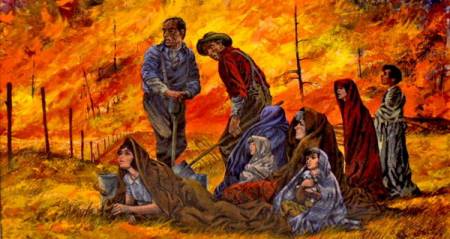
Adele was faithful to her mission, teaching the Catholic Faith to the young and praying for sinners’ souls. However, almost exactly twelve years to the day after Mary’s message, Eastern Wisconsin experienced the one of the largest and the most deadly forest fire in our nation’s history. Flames of the vast Pestigo Fire surrounded the shrine built upon the apparition site, but all who fled to this ground dedicated to Mary survived. Consider: is our present time and culture somehow less deserving of divine punishment than theirs?

Another disaster afflicted our land a century ago. From 1918 to 1920, a deadly flu plagued Europe and the U.S. but wartime censors suppressed news reports from many nations besides the World War One neutral country of Spain. The Spanish Flu, as it came to be called, would go on to kill an estimated 675,000 Americans and at least 50 million people worldwide. This largely-forgotten history has been on my mind as the Coronavirus pneumonia outbreak has spread forth from Wuhan, China. There are strong indications that the dictatorial Chinese government is under-reporting how many of their people are infected or have died from this highly-infectious disease, and new cases are being reported day-by-day around the world. Earlier this month, in a effort to contain the spread of the disease, the Hong Kong government asked its citizens to stay at home and the cardinal of their Catholic diocese has suspended public Masses. Could we experience a deadly pandemic here? The U.S. Centers for Disease Control saysthe potential public health threat posed by [Coronavirus] is high.” Therefore, it is wise to be prepared.

I urge prudent preparation on two fronts. First, materially speaking, if an emergency were declared and schools and businesses sent everyone home, could your family be able to shelter at your house away from others for two or three weeks until the crisis passed? What food and water would you have if your electric power went out? Building non-perishable food reserves is easy now while store shelves remain fully stocked. And if no disaster ever comes (as may well be the case) you can simply cycle through these pantry supplies over time; so nothing is lost. The second, more important front in your disaster preparedness is: are you spiritually ready?

If you knew this Lent might possibly be your last, how would that change your spiritual focus? What vices would you cut and which virtues would you grow? How would you commit to prayer and prepare your soul? For many, times of great crisis or the end of their lives arrive unexpectedly and people face them unprepared. As Jesus once observed, “In [the days of Noah] before the flood, people were eating and drinking, marrying and giving in marriage, up to the day that Noah entered the ark. They did not know until the flood came and carried them all away.” Mark’s Gospel recalls one occasion when the Pharisees came forward and began to argue with Jesus, seeking from him a sign from Heaven to test him. Jesus sighed from the depth of his spirit and said, “Why does this generation seek a sign?” The Pharisees had heard Jesus’ teachings and known his mighty works but they still obstinately refused to change. Why do we put off the Lord, refusing to listen and respond, postponing our conversion until it might be too late?

Once, after a tower collapse in Jerusalem ended eighteen lives, Jesus asked, “Do you think they were more guilty than everyone else who lived in Jerusalem? By no means! But I tell you, if you do not repent, you will all perish as they did!” Will the Coronavirus become a devastating American disaster like the Pestigo Fire or the Spanish Flu? Hopefully not. I pray to God it will not be so and ask that you do the same. Yet even if this crisis never comes to your community, why not prepare? Stocking-up your pantry, regularly washing your hands, instilling our Faith into your children, and deepening your own relationship with Jesus Christ are wise decisions you won’t regret.

Acknowledging our Unjustly Missing Children

January 24, 2020

It is said that those who do not learn from history are doomed to repeat it. The past offers us perspective on the present that can help preserve us from falling for the fashionable fallacies of our day.

Before the American Civil War (about 160 years or just two lifespans ago) slavery was legal in many U.S. states. You could buy a Black person as a slave and do whatever you wanted with him or her. You could beat or even kill your slave and there were no laws against it. If your slave had a child, you could sell that child away, at any time for whatever price, never to be seen again. Before the Civil War, the Supreme Court of the United States ruled in their Dred Scott decision that Black slaves were ‘not persons‘ under the U.S. Constitution. These human beings had zero rights. The Southerners said they were fighting the Civil War over “States’ Rights,” but the right to do what? First and foremost, the right to practice slavery. They might argue, “If you northerners don’t like slavery, fine, then don’t have slaves, but don’t come down here and tell us what to do in our states, with our laws, with our slaves, our own property. Unless you’re a southerner, you have no right to an opinion.” If you had lived in the South in those days, would you have pro or anti-slavery? If you think you would have opposed it, what makes you so certain?

Before the Second World War (about 80 years or just one lifetime ago) the Nazis in Germany began eradicating people they considered inferior. They began with the mentally and physically disabled, publicly arguing that their lives were not worth living and that they were burdens to society. Doctors and nurses would administer lethal injections to kill them. From there, the Nazis went on to kill millions more, not only on battlefields but in concentration camps; Jewish people, Polish people, people from any group the Nazis considered less than fully human. If you had lived in Nazi Germany you might not have fully realized what was going on (their news media wasn’t eager to report what was happening to the people being carried off in cattle cars) but if you had been there and known, what do you hope you would have done?

On January 22nd, 1973, the United States Supreme Court ruled in their Roe vs. Wade decision that unborn human beings are ‘not persons‘ under the U.S. Constitution and overturned laws prohibiting abortion across the nation. Since then, more than fifty million legal abortions have occurred in our country. In an abortion, a mother goes to a doctor to end the life of the baby girl or boy growing in her womb. Today some say that abortion is a woman’s personal right, that her unborn baby is not fully human, that the death of such little ones is best for society and that their lives would not be worth living anyways. As we’ve seen, such arguments have been made before.

In the United States ten years ago, for every 1,000 live births, 228 unborn babies were aborted. That means in a present day classroom of ten-year-old students, for every four children we see there is one child missing. In a class of sixteen, four are absent. In a classroom of twenty, five were never born. If three local youths were to die in a car accident this weekend, our community would be devastated by the tragic loss of three young lives cut short. But those who are not allowed to be born largely go unmourned; they are unnamed and unknown, yet they are known to God.

Will justice flourish in our time? Will we see the fullness of peace in our days? That depends in large part upon our choices and our prayers. We must repent of our sins against innocent life or we will experience the consequences of our sins. God is merciful but also just and He does not allow grave evils to continue unchecked forever. We did not live in Nazi Germany or the antebellum American South, but we likewise live in a time of important moral decision. Be resolved to hunger and thirst for the victory of a culture of life in our country and around the world. Pray and act for an end to abortion.