Archive for the ‘Chrisitian Virtues’ Category

The Risen Lord with the Most Beautiful Smile

April 23, 2023

3rd Sunday of Easter
By Fr. Chinnappan Pelavendran

A small boy was walking home after Sunday school. He was thinking about the lesson. When you give something to another person, you are really giving it to Jesus, and you will find the risen Jesus in everyone you meet. As he was walking, he noticed an old woman sitting on the roadside. She looked lonely and hungry. He sat down beside her and gave her chocolate. She accepted it with a beautiful smile. Then they sat together in silence, just smiling at each other. Finally, the small boy gave the woman a big hug and went home with a smile on his face. His mother saw a big smile on his face and asked, what made you so happy today? He said, I shared my chocolate with Jesus. Then, he added, you know, she has the most beautiful smile in the world. Meanwhile, the old woman returned to her home where she lived with her sister, and said to her you know, today I ate chocolate with Jesus. Today’s Gospel tells us that we will meet and experience the risen Jesus in unexpected places and persons.

In the Old Testament lot of people encountered God in an unexpected way. Abraham entertained three Angels when he was unaware. Jacob laid his head on a stone while he slept and saw a stairway to Heaven. While Moses was taking care of the sheep, he heard the voice of the Lord coming from the burning bush. Prophet Isaiah says, “In the year that King Uzziah died, I saw the Lord seated on a high and lofty temple, Seraphim singing Holy, Holy, Holy is the Lord of Hosts, the whole earth is full of His Glory,” before his own cleansing and consecration as a Prophet of the Lord. (Isaiah 6:1–6) Saul of Tarsus met Jesus on the road to Damascus, and Jesus got Saul’s attention by knocking him to the ground and making him blind.

Our readings today have one common and encouraging theme. No matter what happens in our lives, the risen Jesus is always with us. God is near to those who seek Him. The Emmaus incident is the story of a God who will not abandon us when we are disappointed.

God’s self–disclosure to the two disciples on the road to Emmaus was unexpected, but radically different from others. While they were walking with Jesus on the road to Emmaus, their eyes were closed from recognizing Him. When Jesus was at the table with them, He took the bread, blessed it, broke it, and gave the bread to them. At that moment, the eyes of the disciples were open and they recognized Jesus just before He vanished from their sight. Jesus will come to us in an unfamiliar way to support and strengthen us, when we least expect our risen Lord.

The Easter and the Emmaus journey tells us that God never forces Himself on us. He joins us in a walk in the garden, enjoying the beautiful scenery, visiting with a friend, sadness of death, or reading a letter from someone we love. God speaks to us in the voices of those who are hurt and sorrowful, in the faces of the poor and the needy.

We need to find Jesus in the Breaking of the Bread, as the Emmaus disciples understood. When we approach the altar to receive the Sacrament, we see and receive Christ Himself. The Eucharist is the true body and blood of Christ; it feeds us and fulfills our spiritual needs. When you receive the body of Christ let us recognize the risen Lord who is smiling at you.

From Fear to Peace: Celebrating Divine Mercy

April 15, 2023

Divine Mercy Sunday
By Fr. Victor Feltes

During the Exodus, before descending in fire and smoke upon a trembling Mount Sinai, God gave instructions to prepare the Hebrews for this encounter. The Lord said to Moses:

“Go to the people and have them sanctify themselves today and tomorrow. Have them wash their garments and be ready for the third day; for on the third day the Lord will come down on Mount Sinai in the sight of all the people. Set limits for the people all around, saying: ‘Take care not to go up the mountain, or even to touch its edge. All who touch the mountain must be put to death. No hand shall touch them, but they must be stoned to death or killed with arrows. Whether human being or beast, they must not be allowed to live.’ Only when the ram’s horn sounds may they go up on the mountain.”

Then Moses came down from the mountain to the people and had them sanctify themselves, and they washed their garments. He said to the people, “Be ready for the third day.

On the third day, as all the people witnessed the thunder and lightning, the blast of the ram’s horn and the mountain smoking, they became afraid and trembled. So they took up a position farther away and said to Moses, “You speak to us, and we will listen; but do not let God speak to us, or we shall die!” Moses answered the people, “Do not be afraid, for God has come only to test you and put the fear of him upon you so you do not sin.” So the people remained at a distance, while Moses approached the dark cloud where God was.

A pair of themes throughout the Old Testament are the holy otherness of God and the deadly sinfulness of man. Our Fall made it dangerous to approach God carelessly. And even Moses was mysteriously told, “You cannot see my face, for no one can see me and live.” Compare and contrast that with this Sunday’s Gospel.

On the third day, despite the doors being locked where the disciple were, the Risen Jesus came and stood in their midst and said to them, “Peace be with you.” When he had said this, he showed them his hands and his side. And he said again, “Peace be with you.” A week later when Thomas was there, Jesus appeared again and said, “Peace be with you.” He then invited Thomas, “Put your finger here and see my hands, and bring your hand and put it into my side, and do not be unbelieving, but believe.”

In former times, seeing the Lord or merely touching the mountain or ark of his holy presence could mean death. But disciples in the New Testament are invited to see his face and touch his wounds. In the New Covenant, we are called to receive Jesus Christ alive in the Eucharist. Today we celebrate Divine Mercy, mercy reflected in how — even after our sins led him to his Cross — Jesus returns and repeatedly wishes us “Peace.” In forgetting our past, we fail to appreciate what the Lord has done for us. And too few rejoice in his Divine Mercy because so many do not realize their need for it.

On Easter Sunday evening, Jesus breathed on his apostles saying, “Receive the Holy Spirit. Whose sins you forgive are forgiven them, and whose sins you retain are retained.” Why would Jesus give them this power to forgive sins if he did not intend them to use it? Why would he give his Church such a Sacrament if we did not need it? Jesus wishes you a peace beyond your fear. He desires to forgive your sins and personally give himself to you in the Eucharist. Will you trust him enough to regularly encounter his healing Divine Mercy in the confessional so that you may receive him all the more reverently, fittingly, lovingly and joyfully at his altar?

3 Mysteries Remembered

April 6, 2023

Holy Thursday
By Fr. Victor Feltes

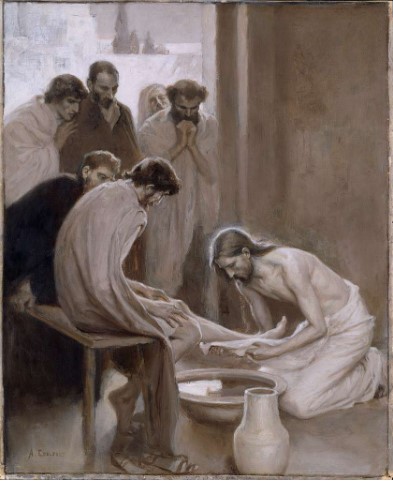
[Our] Lord Jesus, on the night he was handed over, took bread, and, after he had given thanks, broke it and said, ‘This is my body that is for you. Do this in remembrance of me.’” At this same Supper, Jesus washed his apostles’ feet, drying them with a towel. Then, when he reclined at the table again, Jesus told them, “If I, therefore, the master and teacher, have washed your feet, you ought to wash one another’s feet. I have given you a model to follow, so that as I have done for you, you should also do.”

For this Mass of Holy Thursday, the Church directs me to preach “a homily in which light is shed on the principal mysteries that are commemorated in this Mass, namely, the institution of the Holy Eucharist and of the priestly Order, and the commandment of the Lord concerning fraternal charity.” This no heavy burden. Jesus makes it easy by his actions that night. At the Last Supper, Christ gives us these precious gifts: his Holy Eucharist, his Holy Priesthood, and his holy model of loving service which he commands us all to follow.

Our Bishop William Callahan noted at this week’s Chrism Mass that without priests there would be no Eucharist, and without the Eucharist there would be no Church. The priesthood is essential to the Eucharist, and the priesthood and the Eucharist are essential to Christ’s Church. The Catechism of the Catholic Church echoes the words of the first century bishop and martyr St. Ignatius of Antioch in teaching “that without the bishop, presbyters, and deacons, one cannot speak of the Church.” (CCC #1593) And the Second Vatican Council famously teaches that the Eucharist is “the source and summit of the Christian life.” For in the Most Blessed Sacrament is contained the whole spiritual good of the Church, for it is Jesus himself. All the Church’s other sacraments, ministries, and good works flow from this one sacrifice, are united to it, and united to Christ.

Perhaps there are young men here tonight with a vocation to the priesthood. If you think you may have this divine calling, I urge you to actively pursue it. If you pursue this path and discover you are not called, you will be no worse off but blessed from the experience, and for the rest of your life you will never have to wonder or worry whether you might have had this calling. But if priesthood is your vocation, you will not find anywhere a greater life.

When Jesus commands at the Last Supper, “Do this in remembrance of me,” and declares, “I have given you a model to follow, so that as I have done for you, you should also do,” he was not only ordaining priests of the New Covenant and showing how them how to serve. Christ’s words are addressed to all disciples; not only that we should faithfully attend Holy Mass, but that we should live the way of love we see from him. The night before offering his Body and Blood on the Cross, Jesus gives these sacramentally in the Eucharist. Before offering up his death on the Cross, we see Jesus humbly provide loving service at table. Do you realize what he has done for you? Jesus has given us a model to follow, so that as he has done for us, we should also do. Do this in memory of him.

We are Worthy to be Saved in God’s Merciful Eyes

April 1, 2023

Palm Sunday (Year A)
By Fr. Chinnappan Pelavendran

The readings today remind us of the passion, crucifixion, and death of our Lord Jesus Christ, the Messiah, and the savior of the world. It reminds us of God’s love for us. Yet, our sinfulness makes us unworthy of that perfect love. So He sent His only begotten Son to redeem us by His passion, crucifixion, and death.

We have just said we are unworthy of God’s love because we have sinned, again and again, against Him, our loving Father. So why can’t He just leave us alone? This is the paradox of love. You and I are WORTHY TO BE SAVED in God’s merciful eyes!

So He sent His only Son Jesus to suffer and die so that we may be saved through Him. Yet, as we read and re-read the gospel passage on the passion, crucifixion, and death of Jesus, we see the same pattern of the response of the people then and the people now. Many people then denied, rejected, and brutally opposed the offer of salvation. Many people do the same things now. Let us pray and pray harder for the conversion of the people who continue to crucify Jesus, now by their frequent rejection of the Son of God.

Jesus has suffered and died but it was not the end. The last verse in the gospel reading today tells us that they “secured the tomb by fixing a seal to the stone and assigning a guard.” Jesus rose from the dead on the third day. This is the source of our hope. This is the reason why we keep on reading and reflecting on the passion, crucifixion, and death of our Lord. The forces of darkness may have sealed a tomb but the victory of the Light has been seen in the Resurrection.

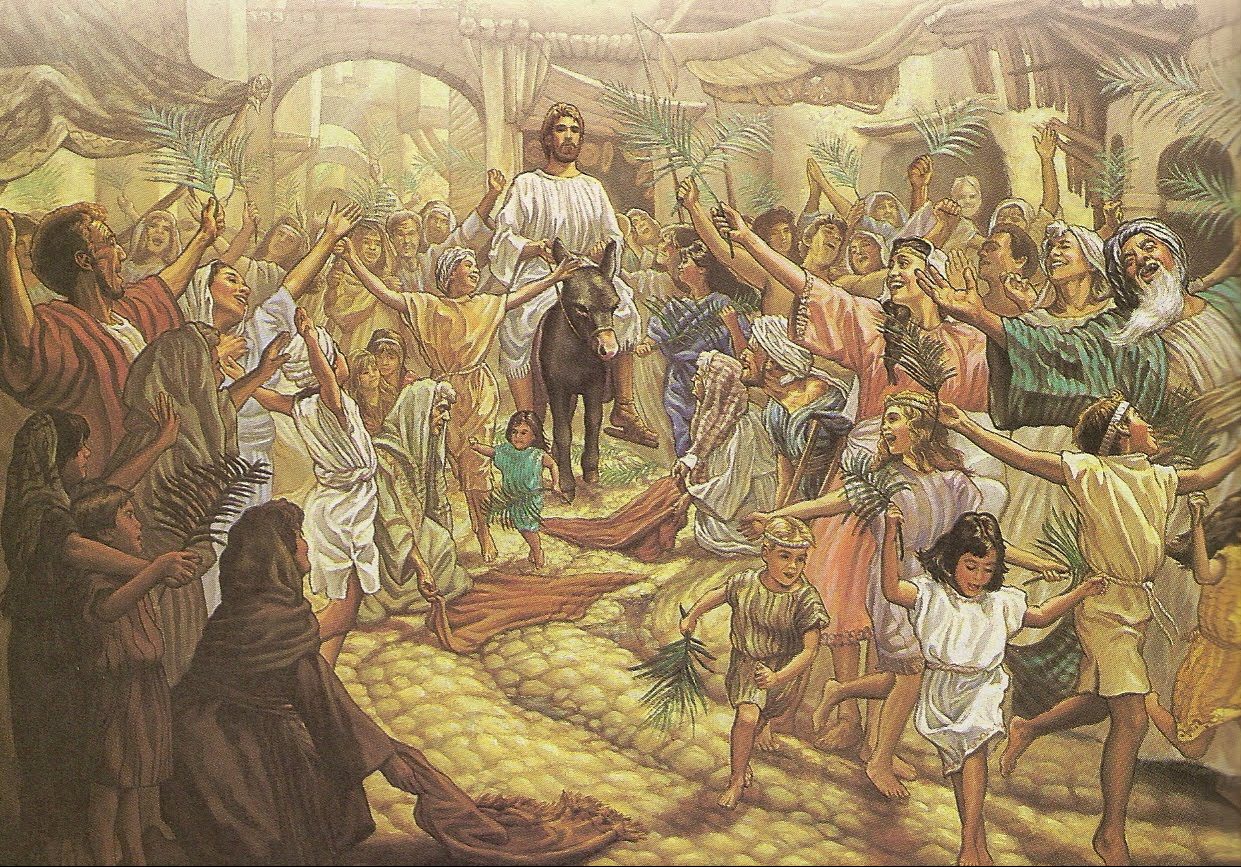
On the first day of the “Holy Week,” we commemorate the triumphant entry of Jesus into Jerusalem. The people removed their cloaks, waved palms, and sang hosannas while Jesus, riding on a donkey, passed by. Removing our clothes is a symbolic act of surrender to the Lord. It is a way of becoming open, confessing our sins, and accepting His offer of salvation. No more, disguise. No more resistance. On the other hand, the palm has been a traditional symbol of victory and rejoicing. (Leviticus 23:40) Thus by laying palms on the path of Jesus, the people acknowledged that in Jesus, there is victory. The donkey is an animal of peace. By riding on a donkey, Jesus showed that He is the prince of peace.

Let us pray that as we come in the name of the Lord, He may shower us with His blessings. May we continue to journey with Jesus, allowing Him to fill our hearts with hope, love, and peace so that we can become an instrument of hope and love to others and peace to all the earth.

Let us weep over our sins and remember that God will always forgive us. We need to welcome Jesus into our hearts in a special way during Holy Week. We can be like the prodigal son and God like his father. We need to love and ask God to strengthen our weaknesses. With God in our hearts, we can do anything.

Our Mountaintops & Valleys

March 4, 2023

2nd Sunday of Lent
By Fr. Victor Feltes

Jesus went up a mountain to preach his Sermon on the Mount. Later, after feeding more than five thousand people using five loaves and two fish, he withdrew up a mountain alone for prayerful solitude. Today, Jesus leads Peter, James, and John up a high mountain by themselves to witness his Transfiguration. So why mountains? What is it about mountain heights which make them the preferred setting for so many biblical events?

Three themes occur to me: First, mountains remove people from the ordinary. They are remote places removed from everyday life. Second, mountains offer a greater perspective. A mountaintop can allow someone to see for many miles. And third, mountains elevate us. Mountaintops are not only literally higher but symbolically closer to heaven as well. Jesus takes Peter, James, and John to the top of Mount Tabor to give them an extraordinary experience, to give them a deeper vision into himself, and to give them strength for their trials ahead.

The Mass prefaces celebrating Jesus’ Transfiguration say:

“After he had told the disciples of his coming Death, on the holy mountain he manifested to them his glory, to show, even by the testimony of the law and the prophets, that the Passion leads to the glory of the Resurrection.”

“He revealed his glory in the presence of chosen witnesses… that the scandal of the Cross might be removed from the hearts of his disciples.”

The disciples had not imagined that the Jewish Messiah, God’s Holy Anointed One, would be gruesomely murdered. The Transfiguration helped prepare them to understand that Christ’s suffering was a part of God’s salvific plan. They also came to realize that Jesus’ teaching, “If anyone would come after me, let him deny himself and take up his cross and follow me,” would involve sufferings of their own. The apostles’ memories of beholding Christ’s miracles and glory and their ongoing relationship with their Risen and Ascended Lord strengthened them through their trials.

You and I will face trials as well. As St. Paul tells Timothy in today’s second reading: “Beloved: Bear your share of hardship for the Gospel with the strength that comes from God.” What have been the spiritual mountaintop experiences of consolation in your life? Remembering these moments gives us spiritual strength in hard times, and Jesus Christ walks alongside us through all our dark valleys.

Yesterday, I encountered the story of a man about my age named Mike. Not long ago, Mike was diagnosed with a cancer so advanced that he had back operation which removed one of his vertebrae. Mike is married and has two sons around middle school age. Though previously a somewhat lukewarm Christian, he began “searching for the understanding of the LOVE of Jesus.” Here is the amazing thing: Mike writes, “This last several months, with a few nudges from God, I have been overwhelmed with Jesus’ love. It’s been so powerful that the pain and uncertainty of the cancer have taken a back seat to it.” If he continues to carry this cross with Christ, no matter what happens, Mike is going to be OK.

Our spiritual mountaintop moments are extraordinary experiences that give us a greater perspective and draw us closer to God. But also remember the great consolation that Jesus Christ, our good and loving Lord, remains with us in our dark valleys as well.

Forgiving Like The Lord

February 19, 2023

7th Sunday in Ordinary Time
By Fr. Chinnappan Pelavendran

The call to holiness began in the Old Testament. God invites us to be holy as Jesus was holy. Holiness can be identified with the closeness of God. He wants us to be merciful, kind, and loving. He tells us that His law must lead us to a life where we discover God in all people, not just our friends. It is easy to love those who love us but Jesus asks us to do much more. As we are about to begin Lent, we are invited to forgive our enemies. Jesus is a shining example of love and forgiveness.

Jesus himself is a model in forgiving those who have hurt us. We see this in Jesus’ life. When Jesus and the apostles were in Gethsemane, soldiers came to arrest Him. Peter cut off the ear of one of the soldiers. Jesus told Peter to put his sword away, and He touched the ear and healed it. Jesus forgave and physically healed the one who came to arrest Him. This is not the only healing incident that takes place during Jesus’ Passion; Pilate and Herod had been enemies but become friends on the day of Jesus’ trial.

During His trial before the high priest, one of the officers slapped Jesus. Jesus calmly asked what he had said wrong. When Jesus was being crucified, he prayed for those who were nailing Him to the cross. Even then, Jesus was able to forgive them.

After Jesus’ resurrection, when Peter and the others were fishing, Jesus appeared on the shore of the sea of Galilee cooking fish. After they ate, three times Jesus asked Peter if He loved Him. Each time Peter said yes and each time Jesus asked him to look after His flock. Peter had denied Jesus three times at the high priest’s house, but Jesus forgave him. But Jesus loved Peter and later made him the head of the church. This was the beginning of the Catholic Church, as we know it today. Peter was the first Pope of the Catholic Church. The foundation of Catholic Church was established through the love and forgiveness of Jesus Christ.

Everyone knows that forgiving is not easy. Forgiveness is freedom. Jesus gives his new law of love, grace, forgiveness, reconciliation, and no retaliation. Jesus never took revenge, even when it cost him His life.

To be Holy as God is Holy is to love the offender. We must turn the other cheek, freely giving, and walking the extra mile. Jesus tells us that what makes Christians different is the grace with which they treat others, offering them loving kindness and mercy as god does for us. We are commanded to love our enemies as Jesus Loves us, with agape’ love, not because our enemies deserve our love, but because Jesus loves them so much. He died for them as He did for us.

We not only need to love our neighbors but also forgive whole-heartedly those who have hurt us. We need to pray for the spiritual and physical welfare of all people, not just our neighbors. Today’s readings challenge us to become holy as our God is holy by loving forgiving and blessing all others. As we are about to start our Lenten journey, let us remember the love and forgiveness of Jesus Christ.

Loving & Devout, Inside & Out

February 11, 2023

6th Sunday in Ordinary Time
By Fr. Victor Feltes

Something Christians may not realize is that the Pharisees and scribes were admired in Israel. Many Jews looked up to them for their religiosity and learning in a culture which celebrated their shared religion. But Jesus criticized the scribes and Pharisees for caring more about outward appearances than the heart of true devotion. “All their works are performed to be seen,” Jesus said, “They preach but they do not practice. Woe to you, scribes and Pharisees, you hypocrites. Although you cleanse the outside of the cup and the dish, inside you are filled with plunder and evil.” That is why Jesus told his own disciples: “Unless your righteousness surpasses that of the scribes and Pharisees, you will not enter the Kingdom of Heaven.” Jesus wills us to be holy both outside and in.

He cites the ancient commandments: “You have heard that it was said… ‘Thou shall not kill,’ ‘Thou shall not commit adultery,’ ‘Thou shall not take the name of the Lord your God in vain.’’ But then, Jesus commands more. We may never have sworn a false oath, but do we secretly conceive lies? Jesus declares, “Let your ‘Yes’ mean ‘Yes,’ and your ‘No’ mean ‘No.’ Anything more is from the evil one.” We may never have had an affair, but do we entertain lust after others in our minds? Jesus declares, “Everyone who looks at a woman with lust has already committed adultery with her in his heart.” And we may never have murdered anyone, but do we hold contempt for others in our hearts? Jesus declares, “Whoever is angry with his brother will be liable to judgment.” Even the Ten Commandments themselves called for interior holiness. Acts of adultery or theft (forbidden by the 6th and 7th commandments) are usually preceded by coveting, by desiring what is not ours (which is against the 9th and 10th commandments).

Consider this: in Heaven, no one will be allowed to hate anyone, or to exploit anyone, or to lie to anyone. That is something beautiful for us to look forward to, but it is also a call to thorough conversion. Our secret sins matter and our hearts must be made pure. Jesus says that from within, from our “hearts, come evil thoughts, unchastity, theft, murder, adultery, greed, malice, deceit, licentiousness, envy, blasphemy, arrogance, [and] folly.” He teaches that “a good person produces good from the treasury of a good heart, and an evil person produces evil from the treasury of an evil heart.” What is going on in our hearts is very important. So when temptation comes, let us as St. Paul said, “take every thought captive in obedience to Christ.”

The season of Lent is near. It begins on Ash Wednesday, the week after next. Catholics often take on external sacrifices and penances during Lent, and that is a good thing. But I suggest that for this Lent you would aim to conquer a habitual sin or secret vice with Christ. Which fault should be your focus? If you do not know that already, the Seven Deadly Sins may suggest it to you; they are pride, greed, lust, envy, gluttony, anger, are sloth. You may respond to each of these Deadly Sins by embracing the corresponding Lively Virtue.

For pride, there is humility.
For greed, generosity.
For lust, chastity.
For envy, gratitude.
For gluttony, temperance.
For anger, patience.
And for sloth, diligence.

Forming a personal resolution is key. Rather than just passively hoping things change, actively renounce what is evil in your life. Your will must be engaged. However, your weak human nature needs God’s strengthening grace. And God, respecting your freedom, waits for your consenting “Yes.”

Connect more to Jesus Christ this year. Encounter him in his sacraments. Beyond Sunday Mass, there is thirty-minute weekday Mass. When I began attending weekday Mass in college it drew me closer to Jesus and improved my life. Beyond celebrating the Sacrament of Reconciliation only once or twice a year, gain new graces with forgiveness through more frequent Confession. This gives us accountability and a truer perspective on ourselves. I do not believe that even monthly confession is too frequent for someone serious about growing in holiness. And beyond praying at church on Sundays, or before meals, or during times of urgent need, commit to times of daily personal prayer. For instance, gift or consecrate your day to Jesus in the morning. Ask him, your angel, and your favorite saints to aid you throughout the day. And do an Examination of Conscience in the evening asking the Holy Spirit to show you both your victories and defeats.

In conclusion, do not let the perfect be the enemy of the good. Do not read all these ideas and think, “I can’t do all of that,” and wind up doing nothing. Between now and Easter, commit to good steps to conquer a habitual sin or a secret vice with Christ. Jesus wills to help you be more loving and devout, inside and out.

Three Imperfections in the Life of Saint Paul

February 4, 2023

5th Sunday of Ordinary Time
By Fr. Victor Feltes

 The oldest known depiction of St. Paul the Apostle, a fresco from the Catacomb of Saint Thekla in Rome dated to the 300’s A.D.

St. Paul is one of history’s greatest saints. Today I would like to talk about his vision, his preaching, and his early church communities. But what I would like show you (for your benefit) is that his vision, his preaching, and his early Church communities were not as perfect as you probably imagine.

First of all, St. Paul had vision problems. I do not mean anything was wrong with his inspired Christian insights, but that his physical ability to see was limited. When he beheld the glorified and risen Jesus on the road to Damascus, an intense light shone from the sky around him. Paul got up from the ground and opened his eyes but he could not see anything. After three days, our Lord sent a Christian named Ananias to prayerfully lay his hands upon him. “Immediately, things like scales fell from his eyes and he regained his sight.” Yet issues with Paul’s vision seem to have lingered or later reemerged. While writing to the Christians of Galatia more than a decade after his conversion, St. Paul recalls, “You know that it was because of a physical illness that I originally preached the gospel to you.” He does not directly identify his malady, but he observes, “Indeed, I can testify to you that, if it had been possible, you would have torn out your eyes and given them to me.” And in closing this letter to the Galatians, Paul writes, “See with what large letters I am writing to you in my own hand!” These clues suggest that swapping-out his eyes for another pair would have improved Paul’s poor and ailing eyesight.

Another historical detail few notice about St. Paul is that his letters were apparently more impressive than his public speaking abilities. In his second letter to Corinth, St. Paul addresses criticisms about himself, noting “someone will say, ‘his letters are severe and forceful, but his bodily presence is weak, and his speech is contemptible.’” Paul acknowledges in today’s second reading that he met the Corinthians and proclaimed the Gospel to them without “sublimity of words or of wisdom.” “I came to you,” he writes, “in weakness and fear and much trembling, and my message and my proclamation were not with persuasive words of wisdom…” By God’s grace, his preaching did bear fruit, but Paul’s writings came across as being more eloquent and powerful.

A third overlooked aspect of St. Paul’s life is that the Christian communities he led were far from perfect. People often think of the early Church as a golden age. We lament the Catholic Church’s present problems and idealize her past. Yet throughout his New Testament letters, St. Paul is constantly correcting the early Christians’ beliefs and behaviors. Consider the Church at Corinth. Paul admonishes those Corinthians for their pride, for their internal divisions, for their liturgical abuses, and for their toleration of “immorality of a kind not found even among pagans.” Early Christian communities had real issues, and St. Paul did not find it easy to pastor them.

So to recap, St. Paul’s health was not perfect, his human talents were not perfect, and his parishes were not perfect. And yet, neither his poor health, nor his uneven talents, nor the problems within the Church prevented St. Paul from faithfully bearing everlasting fruits. I wanted to highlight the weaknesses and imperfections of St. Paul and the early Christians to help us appreciate that our circumstances are not so different today. When Jesus Christ declares, “You are the salt of the earth,” and “You are the light of the world,” he really is talking about us too. Our Lord would do great and important things through you, and the good you are doing now does more good than you know. So carry your burdens, endure your trials, and keep the Faith like St. Paul did. As Jesus once said to console St. Paul in his struggles, “My grace is sufficient for you, for power is made perfect in weakness.”

“Jesus Loves Me” — Funeral Homily for Mabel Klingbeil, 93

January 23, 2023

By Fr. Victor Feltes

Great love is powerfully expressed through great trials. When Mabel was only eleven years old, she experienced a shocking personal loss. Her ten-year-old sister Betty passed away from an appendicitis. And for the rest of Mabel’s life it seems she wanted to help make sure others were safe and well. Mabel would live to be the last-surviving member of the family of her birth. She served as a caregiver to her parents and her adult siblings as they passed on before her.

She was married in this church to her husband George in 1958. They gave life to four sons together, including two, John and Tim, who passed away in infancy. After fourteen years of marriage, Mabel became a widow at age forty-three. She raised her two boys, Michael and George, on her own; doing her best to fill the role of two parents, for instance, taking them out to go fishing. Then, after her retirement, Mabel began raising children anew at age seventy-two. She cared for her grandkids, Katie and Sarah, concerned for both their bodies and souls, for instance often saying, “Remember to pray and brush your teeth!” How did Mabel say she liked raising children? “I had a ball.”

Kindly but firm, Mabel was not swayed by the increasingly straying views of popular culture. She has been a well-known St. Paul’s parishioner for many years volunteering at our school and singing in our church choir. She would take the girls with her up to the balcony for funerals. The other choir members and widowed school teachers were often recipients of Mabel’s care.

I remember Mabel telling me in her room at Dove nursing home, that she had been a teacher for a total of thirty-three years (seven years elsewhere and then twenty-six years here in Bloomer). She loved teaching her students and said she would still like to teach—if she were not ninety-three years old. I saw her Tuesday afternoons when I brought her our Lord Jesus in the Holy Eucharist and she always received him with devotion.

Because of circumstances of her upbringing, Mabel had a hard time accepting God’s amazing love for us. She once remarked, “When I [was growing] up, I never knew that God loved me.” At times, she wondered, “How could Christ die just for me?” Yet Jesus Christ has powerfully revealed his great love for us, especially through his trials.

Why else would God become man in Jesus Christ if not from great concern that we would be safe and well? Jesus comes to us as a teacher in a visible life on earth thought to have numbered thirty-three years. Kindly but firm, he possesses and imparts truth in an errant world. He formed young disciples in his charge; sometimes he even took them fishing. He comes as our Good Shepherd, laying down his life for his sheep, desiring none of us to be lost.

Jesus worshiped at his Father’s house and offered himself in sacrifice on the Cross. Now he calls us to worship in his Church and receive the great gift of himself offered in the Holy Eucharist. Jesus, now risen, is the first-surviving member of his family. Raised from the dead, he lives forever to help us through this life into the next. He is the faithful, loving caregiver of his spouse and his brothers and sisters; that is, of his Church as a whole and each of us individually.

So you see, Jesus Christ forms faithful Christians to be more and more like himself, and shepherds them to be with him in paradise. “What will separate us from the love of Christ? Will anguish or distress, or persecution or famine, or nakedness, or peril, or the sword?” Despite all these things, we can conquer overwhelmingly through him who loves us. Mabel, in her final recent trial, found comfort in this truth, as she often sang that sweet children’s song: “Jesus Loves Me, This I Know.” Let us be faithful to Christ, so that together with Mabel we may “behold our God, to whom we looked to save us!

Share the Gospel

January 15, 2023

2nd Sunday in Ordinary Time
Fr. Victor Feltes

The message of the Gospel is simple:

1. We are created by an all-good and loving God.
2. But sin separates us from him.
3. So God has sent his Son to be our Savior.
4. Therefore, believe & repent, that he may save you.

St. John the Baptist proclaimed this Good News to sinners. John preached that God’s judgement is at hand (indeed, each of us only lives once, and after this life comes the judgment). And as John warned, “Every tree which does not bear good fruit is cut down and thrown into the fire. … [So] flee from the wrath to come.” After our harvest time, the “chaff” will “burn with unquenchable fire,” he said, but the Savior will safely “gather his wheat into his barn.” The reason why John came baptizing with water was so that this Savior might be made known. Christ is the one of whom John said, “A man is coming after me who ranks ahead of me because he existed before me.” After baptizing Jesus, John proclaimed him the sacrificial “Lamb of God, who takes away the sin of the world,” saying, “Now I have seen and testified that he is the Son of God.” Repent and believe in Jesus Christ, so that his sacrifice may save you.

Who will be saved? How many professed atheists, or Hindus, or Muslims, or Jews, or Protestants, or Orthodox, or Catholics will go to Heaven? Thankfully, perfect, final, Divine Judgement is not my job. My mission and your mission is the Great Commission. After his Resurrection, Jesus said, “Go… and make disciples of all nations, baptizing them in the name of the Father, and of the Son, and of the Holy Spirit, teaching them to observe ALL that I have commanded you.”

Baptism and the other sacraments are the ordinary (that is, normal) means through which Christ offers the grace necessary for salvation. Jesus established his Catholic Church as both the ordinary minister of these seven sacraments and as the one, reliable guardian of Christ’s teachings on faith and morals in a hostile, sinful world through the centuries. Our Lord Jesus Christ and his one, holy, catholic, and apostolic Church are the ordinary means of salvation for the world. Your non-practicing or non-Catholic relatives, friends, and neighbors are called to more with Christ. Like St. John the Baptist, your witness can help others receive this gift.

Your non-Catholic or non-practicing family, friends, and close acquaintances know you, like you, and respect you. They rarely (if ever) see or hear me, but they frequently encounter you. So here are three ways you can draw them closer to Christ and his Church: by sharing your prayers, by sharing your stories, and by sharing your invitations.

Share your Prayers
It is important to pray for the conversion of others, but you can easily pray with them, too. Whenever someone asks you for your prayers, or even when someone entrusts their burdens to you, offer to pray with them then and there. The words of your prayer don’t need to be eloquent, just sincere. People are usually quite receptive to this and very grateful for it.

Share your Stories
Today’s Gospel reading is simply St. John the Baptist sharing the story of what he had experienced with the Lord. And through this testimony, more came to know and follow Jesus. What has the Lord done for you, how have you encountered him, what are your miracles and spirit stories? Don’t hide these highlight experiences of your life under bushel baskets; be humble enough to share them with others for their good.

Share your Invitations
Invite them to accompany you to Holy Mass, Eucharistic Adoration, or our community events. Invite them to share in the life of the Gospel. Even if they decline, you will have planted a seed that may bear fruit someday. You and they were made for the fullness of God in Jesus Christ, and our hearts are restless until they rest in him.

In conclusion, here is your homework for this week: share a prayer, or a story, or an invitation with someone it could help – you may well save a soul.

The Humility of Jesus

December 22, 2022

Advent Retreat Reflection
By Fr. Chinnappan Pelavendran

God loves the humble. St. Augustine once said, “The first virtue of Christianity, I will tell you that it is humility. If you ask me again, what is the second, I will say to you it is humility. Again, if you ask me a third time, I will say that it is humility, and as you ask me this question, I shall always give you the same answer.”

Humility enables us to accept others as God’s children, our brothers and sisters, redeemed by the blood of Christ. It encourages us to do loving and sacrificial services for them through acts of charity, mercy, and forgiveness. It enables us to accept ourselves as we are before God with all our defects.

You are all familiar with St. Mother Teresa of Calcutta and the good works she did. One time she was asking for donations for the poor in the city of Calcutta. She went to the rich man’s house and asked for help and he spit in her hand, she held that hand toward her and said this is enough for me. Do you have anything for the poor? He was humbled and now wanted to give her money to help the poor.

In the Second Book of Kings (5:1–19), we have the story of Naaman. He was no ordinary man, for he was an important figure during king Aram’s reign. He was wealthy and powerful. One day he developed the condition of leprosy. Being a leper was more than a person having a skin condition at that time. It signified that a person with leprosy was filthy and untouchable. So Naaman wanted to be cured as soon as possible because his condition was taking away everything he had. Power, wealth, and even people.

He needed and wanted help. A female slave told him to meet Elisha who was a well-known Hebrew prophet with a reputation for healing people. So he went to meet Elisha, but Elisha sent out his servant. This servant told Naaman to go into the River Jorden seven times and he will be cured. However, Naaman did not believe the servant and felt insulted. To him, he was suffering a severe disease, and to give such a simple and straightforward solution was insulting.

The servant was able to convince him to do as told. Finally, Naaman agreed, so he dipped his body into the Jordan River seven times. After doing so, he was completely healed and vowed to serve the Lord forever. It was not the Jordan River that healed him, it was the humility of receiving help from a servant. When Naaman humbled himself, he was able to witness the healing hand of God through the advice of the servant.

Solomon is good example of humility in the Bible. He was not an ordinary man. He was the king of one of the most powerful nations at the time, he was blessed with splendor, power, and vast riches. Wealth is usually accompanied by pride, boastfulness, and arrogance but, Solomon did not have any of that in his heart. One day, God appeared to Solomon in his dreams.

God asked Solomon what he wanted. Being the humble person that he was, he asked god for wisdom to rule and lead God’s people. God was very pleased to hear this and granted him wisdom, along with all the other things he already possessed. Solomon spent his life honoring the Lord. He built temples and prayed to God and he was humble until his death.

The humility of Solomon reveals the blessing received by those who are humble. He did not boast about his riches, he was powerful but knew it was only because of god’s blessing. Solomon is known to kneel in front of many people, which shows his humility. God blessed him with abundance and happiness. The world makes us think that we need many possessions to be important. However, Solomon knew that what he needed was wisdom and a relationship with God. These were the only things he really wanted. If we read about Solomon in the bible, he lived a great life. Solomon was humble.

In the Second Book of Chronicles, we read about Manasseh who became the king of Judah when he was only twelve years old. He offended God in many ways; he worshipped foreign gods and built altars to them in God’s holy temple. God spoke to Manasseh about his people’s sins but he did not listen. Because Manasseh did not listen, God brought the king of Assyria and his army to fight against Manasseh’s kingdom. It was a victory for the Assyrians who then captured the king and took him away.

During his imprisonment, Manasseh was able to see who god really is. He humbled himself before God and prayed wholeheartedly. God knew that Manasseh was genuinely sorry. He helped Manasseh by rescuing him, bringing him back to Jerusalem, and restoring his kingdom. Despite the many things Manasseh had done against God, the Lord blessed him the moment he decided to live under the influence of humility.

The Lord even gave Manasseh another chance to be king! Manasseh, honored God with all his heart. He changed his ways, and got rid of all the foreign gods and their altars. Then, he built the altar of God in which he gave praise and thanked the Lord. He used his voice to tell people, to serve God, and only God, just as the Lord wanted him to do. If you are feeling bad because you know you offended God, it is never too late to tell God you are sorry. You can humble yourself to God, like Manasseh.

In the New Testament, Jesus was often in the company of Pharisees, He noticed that many of them boasted of their good deeds and despised others. He told them this parable: “Two men went up into the Temple to pray. Once was a Pharisee, the other a publican. The Pharisee stood proudly and said this prayer to himself; O God, I thank you that I am not like the rest of men, greedy, dishonest, adulterous or even like this tax collector, and particularly that I am not like this publican. I fast twice a week, and pay tithes on all I receive.” This prayer was said with vanity and pride. The Pharisees did not come to ask god for his grace, but to praise himself, and to despise those who really were praying.

The publican, on the other hand, stood some distance away from the altar, not daring, even to raise his eyes to heaven. He struck his breast and said, “My God, have mercy on me, a sinner.” Jesus said, this man went home justified, the other did not. The publican had his sins forgiven; the Pharisee, with all his good deeds, went home, more in sin than when he left.

Although he was a sinner, the publican’s humility was more pleasing to God than all superficial good works of the proud Pharisee. Jesus Christ demonstrates with the example that everyone who exalts himself shall be humbled, and he who humbles himself shall be exalted.

When we hear about St. John the Baptist, we know that he was concerned about the work he was doing for our Lord. He was preparing the way for people to know about Jesus. The Gospel of Matthew tells us that John’s shirt was made of camel’s hair, and it must have been very itchy. His food was locusts and wild honey.

St. John the Baptist is like a road sign. A road sign gives direction but does not get attention for itself. The road sign is there to show us the way. Like a road sign, St. John pointed to Jesus, the way to the Father.

St. John the Baptist was with two of his disciple as he saw Jesus walk by, he said, “Behold the lamb of God the two disciples heard what he said and followed Jesus.” The next day Andrew introduced Simon to Jesus, who named him Peter (which means Rock). It then became a chain effect and many began to follow Jesus.

St. Luke tells us the people were filled with expectation, and all were asking whether John might be the Messiah. St. John the Baptist remains humble saying, “I am baptizing you with water, but one mightier than I is coming. I am not worthy to loosen the straps of his sandals.” (Luke 3:16)

St. John the Baptist humbled himself saying that he was only the prophet. He was there to prepare the way of the Lord. He pointed out to his disciple behold the Lamb of God and his disciple followed Jesus. He baptized with water and said, “He must increase, I must decrease.

We have been looking at the way God wants us to live. Jesus Christ by his example showed us how to live. He was humble. Jesus identified totally as a man. To be a man, He was not ashamed and He called us his brothers and sisters. Sometimes we feel superior to others. We feel more educated or better than other people. All of this pride is because Adam sinned. He came and became one of the lowest in the social level of His day. He came below everybody because he wanted to be a servant of everybody. St. Paul tells how Jesus humbles himself and became man:

Though he was in the form of God, did not regard equality with God something to be grasped. Rather, He emptied himself, taking the form of a slave, coming in human likeness; and human in appearance, he humbled himself, becoming obedient to death, even death on a cross. Because of this, God greatly exalted him and bestowed on him the name that is above every name, that at the name of Jesus every knee should bend, of those in heaven and on earth and under the earth, and every tongue confess that Jesus Christ is Lord, to the glory of God the Father. (Philippians 2: 6 – 11)

From the time he came to earth as a human being, he steadily went down in social status. He became a servant, then a slave, and finally like a criminal to die on the cross. Because it was His father’s will, He accepted and obeyed. He was humble during his entire time on earth. So God raised him up. That every knee shall bend at the name of Jesus, on the earth, above the earth, and below the earth. Every tongue shall confess that Jesus Christ is Lord.

You have heard about St. Mother Theresa, Naaman, Solomon, Manasseh, and the Publican. They were human like all of us, and during their lives had many difficulties and problems, but they were all faithful to God. They were humble. It does not matter if you are a king like Solomon and Manasseh, or poor like St. Mother Theresa and the Publican, if you are humble before God, He will raise you up.

The Openness, Obedience, & One Word of St. Joseph

December 18, 2022

4th Sunday of Advent
By Fr. Victor Feltes

Our Gospel this final Sunday of Advent centers on St. Joseph. It recounts how St. Joseph received the stunning revelation of Mary’s pregnancy. We can learn from the great saint’s response — from his openness, his obedience, and his one word.

Mary was already Joseph’s wife when she conceived her child. In their Jewish culture, a newlywed couple would live apart for the first year of marriage. Thereafter, the husband would bring his betrothed into his home to live with him. When Mary conceived a child (whom Joseph knew was not his) why did he decide to divorce her? Was Joseph heartbroken because he believed she had betrayed him? Or was Joseph frightened, because he believed her story of the Annunciation and thought himself unworthy of this holy woman and her holy child? Whatever the case, Joseph was a righteous man and unwilling to expose Mary to shame, so he intended to divorce her quietly.

Then an angel of the Lord appeared to him in a dream and said, “Joseph, son of David, do not be afraid to take Mary your wife into your home because it is through the Holy Spirit that this child has been conceived in her. She will bear a son and you are to name him Jesus, because he will save his people from their sins.” Once Joseph awoke, he did as the angel of the Lord had commanded him and took Mary into his home.

I used to fret very much about precisely discerning God’s will. “What if the Lord wants me to do a specific thing but I can’t figure it out?” During my college and seminary years, I thought I had a vocation to the priesthood but how could I be sure? I worried, “What if I get this discernment terribly, terribly wrong?” Then a holy friend gave me peace of mind by pointing to St. Joseph. When Joseph was about to make a terrible mistake by separating himself from Mary and Jesus, it only took one night’s dream to get him back on the right track because Joseph desired to do whatever God willed. God can easily redirect a willing heart.

People sometimes complain, “I wish God would just tell me what to do!” But unless we are open to doing God’s will, what good would his directions do us? Imitate St. Joseph in his openness. Like with the Blessed Virgin Mary, Joseph’s openness allowed God to do great things through him. So resolve your will and pray for the grace to always be open to God’s will like St. Joseph. Another St. Joseph trait of we can imitate and profit from is his simple obedience.

St. Matthew’s Gospel records, “When Joseph awoke, he did as the angel of the Lord had commanded him and took his wife into his home… and he named [the boy] Jesus.” On this occasion, like later when told to flee to Egypt or told to return to Israel, Joseph does point-by-point what God commands. Like Moses in the Old Testament, whenever God instructs Joseph to do (A) and (B) and (C), the author notes how Joseph then does (A) and (B) and (C).

Moses and Joseph’s duties were different from ours today. We will not construct an Ark of the Covenant, nor protect and provide for the Holy Family, but each of us has persons and tasks entrusted to us by God; people to care for and works to be done. You already know a great deal of what God has commanded you to do; your own (A) and (B) and (C) according to your state in life. You will not fulfill your missions perfectly—and that’s OK—but imitate St. Joseph in his simple obedience because your basic, God-given duties are more important than you realize.

A third and final feature of St. Joseph reflected in today’s Gospel is his single word. Did you ever hear that in all of Scripture there are no recorded quotes from St. Joseph? It’s true: Jesus has many, Mary has several, but Joseph has none. Now there is no evidence that St. Joseph lacked the ability to speak or ever took a vow of silence.  Joseph probably said many things that were simply not written down. Yet today’s Gospel contains the strongest evidence of his having said any one particular word. What was that word?

The angel in Joseph’s dream said of the unborn child: “You are to name him Jesus.” And when Joseph awoke, he did as the angel of the Lord had commanded him. Joseph named him Jesus. The name of Jesus was St. Joseph’s greatest and most important word. Ever after, the name of Jesus defined his life.

Learn from St. Joseph, the husband of Mary and foster-father of Jesus. Imitate his openness to doing God’s will whatever it may be. Benefit from practicing his obedience in your daily duties. “And whatever you do, in word or in deed, do everything in the name of the Lord Jesus,” like St. Joseph did.

Gaudete Sunday

December 11, 2022

3rd Sunday of Advent
By Fr. Chinnappan Pelavendran

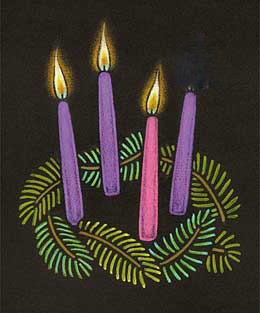
The third of Advent is called “Gaudete” Sunday and it means “Rejoice.” As we wait for the birth of our Savior, we need to rejoice. I am wearing rose-colored vestments to be joyous. It is a day of celebration as we look forward to the birth of our Savior. Our readings today invite us to be happy because the promised messiah is coming. We are thankful to god for the savior who has come, who is present, and who promises to return.

In our first reading this Sunday, the prophet Isaiah tells us to be joyful because God himself is coming to save his people. He says to us, “Courage! Do not be afraid, look your God is coming.” Our God is a generous God and has lots of good things for us. He can do all of the miraculous healing that we have read about in the Bible. There will be much rejoicing when our Savior comes, for whom we have waited so patiently. We cannot imagine the joy that will fill our hearts. Our sorrow and sadness will be gone and the future is bright with lots of prospects for us.

When we are children we get excited with anticipation before our birthdays, Christmas, and other special occasions. Waiting can be very difficult when something wonderful is going to happen. A good example is a farmer, he plants the crops and patiently waits for the time of harvest. In the second reading St. James reminds us of the promises of Christ and tells us that we need to be patient until the lord comes. As human beings, we know it is difficult to be patient when we are eagerly waiting for something. “Do not lose heart, because the Lord is coming soon.

In today’s Gospel, the prophecy of Isaiah is being fulfilled through Jesus Christ. John the Baptist who is in prison, his longing for Christ keeps him full of hope in the midst of suffering. He lives with the expectation that he will see the glory of the lord, the splendor of our God. John hears of the miraculous deeds that Jesus is performing and wonders if he is the Messiah. Is it possible that someone can make the blind see, the lame walk, and the deaf hear? He is even bringing the dead back to life. Is this the one he has been waiting for all of his life? We too have been waiting for him all of our life.

Therefore this season, God and the Holy mother church in their wisdom have arranged our journey in such a way that there is a brief moment of joy and refreshment on Gaudete Sunday, the middle point our Journey. Let us rejoice, enjoy, and be refreshed for the rest of the journey ahead of us.

We need to learn how to survive a faith crisis. John the Baptist even after having had a direct encounter with Jesus, the messiah, had his doubts about Jesus and his teachings, we can have our crisis of faith. It is up to us to learn our Faith and ask the Lord to remove our doubts.

Go and tell others what you see and hear. We rejoice at the thought that Jesus is going to be reborn in our lives, increasing in us his gifts of love, mercy, forgiveness, and service during this Christmas season. Share your gifts with others. We need to open our hearts and God will transform our lives if we are patient and place our trust in God. The message of Advent is that God is present among us, every day. We must prepare our hearts to welcome him.

Hope, Joy, & Salvation

December 11, 2022

3rd Sunday of Advent
By Fr. Victor Feltes

On Friday afternoon, while Fr. Chinnappan offered the funeral Mass for Dr. John Eberle, I drove to McDonnell high school in Chippewa Falls to hear sacramental Confessions with several other area priests. Before everyone else arrived, I was able to spend some time with Fr. Paul Hoffman, whom I had not seen for a while. He heard my Advent confession and afterwards I asked him about what he had been reading lately. Fr. Paul has previously told me that his senior priest status allows him read more theology books like he has desired, to learn more about God before he ultimately departs to go to him. One of the questions Fr. Paul has been pondering lately is, “What will bring them back?” That is, what will bring the younger generations back to church?

I am now almost 42 years old, and I am among the youngest people at most Sunday Masses. This is a troubling trend. Young adults today usually do not believe they need the Church. Many disbelieve they even need Jesus Christ’s salvation. What could change this outlook? What might bring them back? The answer which occurred to me was: “Real Hope.”

As the culture continues to abandon the wisdom it has inherited from Christianity, the consequences of foolishness and sin will become increasingly clear. It will be seen in the sickness of society and felt in the pain of peoples’ personal lives. A life without true meaning or purpose in a world “with no hell below us and above us only sky” is an emptiness full of suffering. Where can people discover real hope—hope in something within this world and yet beyond this world? This real hope is found in Jesus Christ and his Catholic Church.

After our first round of hearing confessions from students and staff in the gym, we priests got a bit of a break, so I walked over to see Fr. Bill Felix and Fr. Brandon Guenther. We chatted a bit about Bishop Callahan, who was hospitalized with an illness this week, Then I asked them a question: “What are you thinking about preaching this weekend? I’m still looking for ideas.” Fr. Felix said, “Well, there’s always the obvious: Joy.” (“Oh, of course,” I thought. This Third Sunday of Advent is Gaudete Sunday and in Latin, “Gaudete” means “Rejoice.”)

Fr. Felix said the great thing about joy is that we can have it even when many things in our lives are bad. Happiness depends upon what happens, but joy does not and so it endures. To press this idea, I asked them in so many words how someone can feel joy when things are crummy? The answer given by both priests was: “Hope.” Fr. Guenther added, “Joy without hope is just optimism.” This reminded him of an old, witty observation: “An optimist is a happy fool. A pessimist is an unhappy fool. But someone with hope (real hope) is not a fool and will one day be happy.

We then returned to our confessionals to hear the older students’ confessions. Some people come to Confession after many months and confess rather superficially, but I was edified by hearing these teenagers confessed. Unlike many young people of their generation, their earnestness, honestly, and striving after God and his holiness were evident. I expect Christ’s Church to struggle in the coming decades, but our Faith is far from dead. Christian hope produces joy and manifest joy shines out. It shines out in the darkness of this world, drawing others to Jesus Christ and his Church. Our Lord lives and we possess a real hope. So let your Christian hope generate joy in you, and your joy will help save souls.

The Allegory of the Jordan River

December 4, 2022

2nd Sunday of Advent
By Fr. Victor Feltes

Preceding Jesus’ public ministry, St. John the Baptist appeared preaching in the Judean wilderness. People from Jerusalem, all Judea, and the Jordan River region were going out to see him. John said, “Repent, for the kingdom of heaven is at hand!” The crowds regarded him as a prophet and were being baptized by him as they acknowledged their sins. Like a bath which cleanses one’s outer self of dirt and odor, John’s baptism was an appeal to God for an inner self cleansed from sin. John’s ministry prepared for Jesus Christ and foreshadowed Christian baptism. The Jordan River in which John baptized embodies an allegory whose symbolism remains important for us today.

The fresh waters of the Jordan River originate in the north from the living Sea of Galilee, a large lake full of fish and ringed by trees. The Jordan’s waters flow south and come to one of either two notable ends. Most of the river’s water just goes with the flow. It flows downhill (as all rivers naturally do) ultimately descending seven hundred vertical feet. These waters remain on the edge of the Promised Land without entering in. And at the end of their journey, they empty out into the Dead Sea. The Dead Sea is the lowest place on the face of the earth. After the river drains there, the water has nowhere else to go. As it evaporates to nothingness, the water leaves behind trace amounts of salt which over many, many millennia has made that sea ten times saltier than the oceans. In this oppressive saltiness, no plants nor fish can live. The Dead Sea is thoroughly dead.

Some of the Jordan River’s water, however, does not simply go with the flow downhill. This water escapes the fate of the Dead Sea, by giving itself to the Promised Land. This water enables life and generates fruit among many trees in an otherwise arid place. Jeremiah the Prophet writes of a tree planted beside the stream: “It does not fear heat when it comes; its leaves stay green. In the year of drought it shows no distress, but still produces fruit.” And the 1st Psalm likewise says: “a tree planted near streams of water… yields its fruit in due season; its leaves never wither.” These baptismal waters are willed by God to give life and bear fruit for the Promised Land.

Most of John the Baptist’s contemporaries were convinced he was a prophet, yet the Jewish religious leaders disbelieved. When John saw many Pharisees and Sadducees coming to his baptism, he admonished them: “Produce good fruit as evidence of your repentance! … Every tree that does not bear good fruit will be cut down and thrown into the fire!” It would not be enough (for them or us) to just say the right things and go through the motions. Our faith and repentance must be real, producing of good fruit.

As the life-giving Sea of Galilee is the River Jordan’s source, so God above is the source of every spiritual grace and good thing in creation here below. Having received Christian baptism, we can respond in one of two ways on this life’s journey. In this world, we can go with the natural flow of things, descending more and more, ending in the dead abyss without entering the Promised Land. But that is not Jesus’ will for us. As G.K. Chesterton once observed: “A dead thing can go with the stream, but only a living thing can go against it.” Jesus wills for us to cooperate with him, to be changed, and to change the world around us. So believe in the Lord, acknowledge your sins and repent, and bear good fruit with Christ. What is one area — just one thing — one habit or virtue, you can acknowledge today and grow in throughout this Advent season with the grace of God?