Archive for the ‘Chrisitian Virtues’ Category

Victory Over the Sirens’ Song

August 1, 2023

17th Sunday in Ordinary Time
By Fr. Victor Feltes

This morning, I wish to recount two tales from Greek mythology which shed light on how we can fully live the Gospel. I want to tell you the stories of how Odysseus and his ship’s crew and Jason with his sailors each survived encounters with the mythical Sirens. The Sirens were beautiful half-woman/half-bird creatures who would sing from their island to passing ships. Their song was so alluring and entrancing that sailors would jump overboard and drown in the sea or steer their vessels into deadly shipwrecks on the rocks.

In The Odyssey, the poet Homer tells how Odysseus on his epic voyage wished to hear the Sirens’ song but also wanted to survive with his men. So Odysseus instructed his crew to tie him to the ship’s mast telling them that, no matter how much he might beg them, they were not to untie him but bind him down all the more. Then Odysseus put wax into the ear canals of all his men so they could not hear the Sirens’ song. While rowing their ship past the Sirens, Odysseus pleaded to be released, but his crew faithfully followed his previous instructions until the Sirens were left far behind them and all of them survived.

In the Greek tale of Jason and the Argonauts, Jason and his crew survived the Sirens using a different approach. Aboard their ship was a great musician named Orpheus, a master of an ancient harp called the lyre. As they passed the Sirens’ island, Orpheus plucked the strings of his instrument. And though the Sirens’ sang their evil song, Jason and all his men were so engrossed in the beauty of their friend’s music that none of them were drawn to the Sirens’ temptation.

So we see three strategies reflected in these tales: Odysseus tying himself to the mast, his men keeping wax in their ears, and Jason and his crew being captivated by something more beautiful.

Some people approach certain sins like Odysseus, asking, “How far can I entertain this temptation without falling? How much can I enjoy this sin without suffering consequences?” But having such a divided heart makes it is very hard to restrain oneself. Others, with more success, approach such sins like Odysseus’ men by giving temptation no hearing. They are not seduced by temptation because they prudently avoid its near occasions. They know where they are weak and adjust their habits accordingly. This strategy should have some place in aspects of all our lives. However, the third strategy against the allure of sin is best of all: to be led by, delighting in, and loving the holy, good, and beautiful.

Jesus says, “The Kingdom of Heaven is like a treasure buried in a field, which a person finds and hides again, and out of joy goes and sells all that he has and buys that field.” The person in Christ’s parable sacrifices joyfully because he so values the treasure he has found. Jesus says, “The Kingdom of Heaven is like a merchant searching for fine pearls. When he finds a pearl of great price, he goes and sells all that he has and buys it.” A wise merchant can peacefully trade everything else for one most beautiful and desirable thing, to his great personal profit. Jesus, God, is the Pearl of Great Price. Christ’s Kingdom and life with his saints is the treasure we have found.

Let us pray: “Lord God, help me to love you more — your goodness and beauty and love — and to love all that you love as you love it.” Ask Jesus Christ to grow and deepen your love so that as you journey on your life’s voyage your faith may not be shipwrecked but be lived in fullest freedom with peaceful, loving joy.

“Take My Yoke Upon You & Learn From Me”

July 9, 2023

14th Sunday in Ordinary Time
By Fr. Chinnappan Pelavendran

When we are tested with trials and overburdened with pain and suffering, we ask, “God, Why me?” and we fail to count the innumerable blessing that we received. Arthur Robert Ashe was an American professional tennis player. He is considered the best African – American male tennis player of all time. He won three Grand Slam titles. Ashe was the first black player selected to the unites States David Cup team and the only black man ever to win the singles title at Wimbledon, the U.S. Open, and the Australian Open. At the end of his life, Ashe was dying of AIDS, which he got due to infected blood received during heart surgery in 1983. From the world over, he received letters from his fans. One of them asked, ‘Why does God have to select you for such a bad disease?’ To this Arthur Ashe replied, “The world over fifty million children start learning tennis, five million of them learn to play tennis, 50,000 come to the circuit, 5,000 reach the grand slam, fifty reach the Wimbledon, four to semi–finals, two to finals. When I was the one holding the cup, I never asked God why me. And today in pain, I should not be asking, ‘God, Why Me?’”

All of us have problems in life. Big or small, these problems burden us and make us sad, tired, and distressed. When these problems go unsolved for a long time, we feel disappointed and become depressed. One of the most comforting words of Jesus in the gospel is, “Take my yoke… and you will find rest.” Anyone who feels tired, disappointed, abandoned, or depressed can easily be uplifted by the comforting promise of Jesus that He will give rest.

Here is the Good News. To all those who are alone and in need of someone to talk to, those who have no one to ask for help, and those who feel lost, lonely, and hopeless, worry no more. There is someone to turn to, someone who can listen to our endless complaints, a shoulder to cry on. He is Jesus who says, “Come to me, all you who labor and are burdened, and I will give you rest. Take my yoke upon you and learn from me, for I am meek and humble of heart, and you will find rest for yourself. For my yoke is easy, and my burden light.”

Today’s readings give the same message in a more powerful way. In the first reading, the Prophet Zechariah consoles the Jews living in Palestine under Greek rule, promising them a meek Messianic King of peace riding on a donkey, who will give them rest and liberty. The Responsorial Psalm praises and thanks a kind and compassionate God who raises up those who are bowed down. In the second reading, St. Paul tells the Christian community in Rome about two yokes, namely, the flesh and the Spirit. He challenges them to reject the heavy yoke of flesh and to accept the light of the yoke of the Holy Spirit. In the gospel, Jesus offers rest to those “who labor and are burdened.”

We need to unload our burdens before the Lord. That may be our worries, anxieties, problems in the family, suffering, health, security, and a thousand other things. Give everything to Jesus. Our Lord will transform our lives. Try to count on your blessing, not your worries.

Fruitful Love Despite Our Flaws — The Justin Wachtendonk & Brenna Werner Wedding

July 8, 2023

By Fr. Victor Feltes

Justin and Brenna, you have chosen beautiful readings for your wedding Mass. Including your second reading, the most popular of all wedding reading options: St. Paul’s famous poetic hymn about love. In the 13th chapter of his 1st Letter to the Corinthians, St. Paul teaches what love does and does not do. These words contain blessed lessons for us all. Today, I wish to highlight the rarely-considered context of those passages to help married couples and people within Christ’s Church of our day.

When we think of the early Church, we tend to picture it as a golden age. The apostles were still alive on earth preaching the Gospel, performing miracles, and founding Christian communities. Divinely inspired books were still being written for what would become the New Testament of the Bible. The Church’s membership was growing widely and rapidly, while producing great saints and martyrs. But this does not mean that everything was perfect. Far from it!

You can see this in St. Paul’s 1st Letter to the Corinthians. He writes them to address the many things that were going wrong at the Church in Corinth. For instance, Paul corrects the Corinthian Christians’ bitter internal rivalries and factionalism. He notes the external scandal caused by them suing each other in secular courts. He critiques the Corinthians’ inflated pride. He excommunicates a certain man for his unrepentant sexual sins. He condemns the Church at Corinth’s liturgical abuses (against the Real Presence of Jesus and one another) at their celebrations of the Holy Eucharist. And St. Paul cites still more controversies than these. So things in the early Church were not so idyllic as we might imagine. And that can be a great encouragement for us today!

The early Church, despite the many flaws of her members, produced good, much good, world-transforming good and the salvation of many souls, in those days and thereafter. The Church today, despite the many flaws of her members, still produces much good, world-transforming good and the salvation of many souls. His Church build upon a rock is, as Jesus says in our Gospel, “a city set on a mountain which cannot be hidden.” She remains, “the salt of the earth” and “the light of the world” — purifying, enlightening, enhancing, and saving.

Whatever goodness is found in Christ’s Bride, the Church, is like the worthy wife the Book of Proverbs describes in our first reading. As the pearl of great price, “her value is far beyond pearls.” “Her husband, entrusting his heart to her, has an unfailing prize. She brings him good, and not evil, all the days of her life.” She labors alongside him, “reaches out her hands to the poor,” and he will “give her a reward of her labors, and let her works praise her.” This is a great encouragement for us in his Church, but also a great encouragement for all Christian married couples here.

Justin and Brenna, you are about to enter a new covenant with Christ. In your sacramental marriage, you will encounter each other’s flaws and experience trials, as every married couple will. Do not be surprised when not everything is perfect and do not be alarmed. Maintain your peace. With a love that is patient, a love that is kind, a love that most importantly has its origin and strength in Christ, you will ‘bear all things and endure all things.’ His “love never fails.” Like his Church, which despite the imperfections of her members produces much good fruit, your marriage — if united to Christ — will never fail.

Marriage & the Eucharist — The Jonathan Lynch & Abigail Butek Wedding

July 5, 2023

By Fr. Victor Feltes

Johnathan and Abigail, the three readings you chose for your wedding are each about divine love. The First Letter of St. John says “in this is love: not that we have loved God, but that he has loved us and sent his Son as expiation for our sins.” Jesus tells us in St. John’s Gospel, “As the Father loves me, so I love you. …Love one another as I love you.” And the third reading you chose (the first we heard today) comes from The Song of Songs. This Old Testament book is curious in the canon.

The Song of Songs is a collection of sometimes graphic love poetry. Though traditionally attributed to King Solomon, and so sometimes called The Song of Solomon, scholars’ estimates for the year it was written range between 1,000 and 100 BC. And most extraordinarily, the book contains no explicit references to God, or religion, or spirituality. So why is it in the Bible and a fitting source for a Catholic wedding reading?

For starters, The Song of Songs it is not an ode to fornication, for at the center of the book we find a royal wedding procession; the man and woman are husband and wife. And just as Jewish writers saw it as an allegory of God’s love, early Christian saints see it depicting Jesus Christ’s love for us, his Bride, the Church. All four Gospels, two Pauline epistles, and The Book of Revelation call Christ a bridegroom or husband, and Jesus describes himself as such. Therefore, the saints’ view of The Song of Songs is not an outrageous reading but a natural interpretation.

Johnathan and Abigail, you have fittingly chosen to enter marriage today in a wedding Mass. Though getting married in a simple Catholic ceremony is an option, being married at a Holy Mass is best. Like the titles “King of Kings” or “Lord of Lords,” the title of The Song of Songs proclaims it as the most excellent or greatest of songs. In the same way, the Holy Mass may be called the meal of meals, our prayer of prayers, the sacrifice of sacrifices, the covenant of covenants. “Blessed are those called to the supper of the Lamb.”

Today, I wish to highlight for you a few parallels found in the sacraments of marriage and the Eucharist. First, both sacraments establish covenants. The covenantal nature of the Eucharist is made clear at the Last Supper when Jesus offers us his Blood in the chalice. “Take this, all of you, and drink from it,” this is “the Blood of the new and eternal covenant, which will be poured out for you…” Marriage is likewise a covenantal union between bridegroom and bride.

Second, both marriage and the Eucharist are effected by words and action. With the priest’s words of consecration, you have the Real Presence of Jesus on the altar at Mass. With your exchange of vows, you will be married before God’s altar. But that is not the consummation of these sacraments. If neither priest nor people consumed Communion after the consecration, an aspect of the sacrament would remain unfulfilled. Both of these holy sacraments are effected by words and action.

Third, these covenantal unions are ongoingly renewed. Much is made of the day of First Communion and one’s wedding day. These firsts are worthy of celebration, but they are just the beginnings. Through the mutual gifting of one’s whole self to the other, these sacraments are renewed through repetition. Jesus tells us at every Mass, “Take this… this is my Body,” and we are called to offer our whole selves to him in return. Many Catholic couples have placed a crucifix above their headboard reflecting the sacrificial self-giving each spouse is called to. These two sacraments reflect and reveal each other; husband and wife, Christ and his Church. “Love one another as I love you… Do this in memory of me.”

Before receiving Jesus in the Eucharist, we proclaim: “Lord, I am not worthy that you should enter under my roof…” Jonathan, Abigail, and all married spouses, maintain your reverence towards each other. Like approaching Jesus in the Eucharist, do not take each other for granted.

Before receiving him in the Eucharist, we also declare to Jesus: “Only say the word and my soul shall be healed.” Jonathan and Abigail, realize the power of your words for each other. They can wound and they can heal; you too can strengthen and transform each other through the power of your words.

And finally, Jonathan and Abigail, always remain close to Jesus and do his will. He tells us, “If you keep my commandments, you will remain in my love, just as I have kept my Father’s commandments and remain in his love.” As the Song of Song tells us, “As stern as death is [his] love, relentless as the nether-world is [his] devotion; its flames are a blazing [divine] fire. Deep waters cannot quench [his] love, nor floods sweep it away.” Remain in his mighty love and your love will fruitfully endure.


Great Rewards From Small Deeds

July 2, 2023

13th Sunday in Ordinary Time
By Fr. Victor Feltes

The Old Testament Prophet Elisha was the immediate successor to the Prophet Elijah, ministering as a traveling prophet and wonderworker in the 800’s BC. One day, he came to a town of northern Israel called Shunem in which lived a “woman of influence.” Other Bible translations of this same text describe her as “prominent, influential, and wealthy”—“a great lady.” Curiously, she along with her husband go unnamed in the text. Perhaps, as with “the beloved disciple” in the Gospel of John, this is intended by providence to encourage us to envision ourselves in her place.

This great lady urges the prophet to dine with her. He accepts, and thereafter, whenever passing through that town, he would visit to eat there. So she says to her husband, “I know that Elisha is a holy man of God. Since he visits us often, let’s arrange a little room on the roof and furnish it for him with a bed, table, chair, and lamp, so that when he comes to us he can stay there.” Her husband apparently agreed, because sometime later Elisha lodges in that new room overnight. They may have been simple accommodations but Elisha really appreciated them.

While staying there, Elisha asks his servant to call the woman. Once she stands before him Elisha asks his servant to say to her (apparently in her own language): “You have troubled yourself greatly for us; what can we do for you? Can we say a good word for you to the king or to the commander of the army?’” She replies, “I am living among my own people.” By this response, she is expressing that she lives contently and secure, far removed from the royal court and its concerns. Her needs are satisfied. She has not shown Elisha hospitality to win favors from him. She receives him because he is a prophet. She receives him because he is a righteous man. She serves him because she knows he is a holy man of God.

Later Elisha asks, “Can something be done for her?” His servant, with great confidence in the prophet, replies, “Yes! She has no son, and her husband is getting on in years.” So Elisha has her called again and once she stands at the door, Elisha promises, “This time next year, you will be fondling a baby son.” She replies, “My lord, you are a man of God; do not deceive your servant.” Yet, the woman would conceive, and by that time the following year she had joyfully given birth to a son as promised. From God, she receives the prophet’s great reward.

Jesus says, “Whoever receives a prophet because he is a prophet will receive a prophet’s reward, and whoever receives a righteous man because he is a righteous man will receive a righteous man’s reward.” And what of goodness shown toward those of lesser stature? “Whoever gives but a cup of cold water to one of these little ones to drink because the little one is my disciple—amen, I say to you, he will surely not lose his reward.”

Sometimes, Catholics look at our great saints and imagine we must do extraordinary things to be holy and greatly blessed. Thinking that such great deeds are beyond them, they despair of ever becoming saints themselves. In the late 1800’s, young St. Therese of Lisieux felt that way too, but then she found her “Little Way” to holiness. Her little way to great holiness was to do many little things for the right reason, with the right heart, that is, with great love.

In her highly recommended autobiography “Story of a Soul”, she writes:

“Miss no single opportunity of making some small sacrifice, here by a smiling look, there by a kindly word; always doing the smallest right and doing it all for love.” “You know well enough that our Lord does not look so much at the greatness of our actions, nor even at their difficulty, but at the love with which we do them.” “Without love, deeds, even the most brilliant, count as nothing.” “To pick up a pin for love can convert a soul.”

Like the great lady of Shunem and St. Therese of Lisieux, realize and remember that doing many little things for the right reason, with the right heart, out of love, will surely not lose its reward.

A Mother’s Love — Memorial Mass Homily for Georgetta Thibeau, 94

May 15, 2023

By Fr. Victor Feltes

Georgetta was born here in Bloomer in 1928. She grew up in this parish, attending our St. Paul’s School. Her funeral Mass was offered in Racine after she passed away this January. And following this morning’s Mass, her remains will be laid to rest in our South Catholic Cemetery.

In the gospel for today, Jesus says, “Love one another as I love you. No one has greater love than this, to lay down one’s life for one’s friends.” So I asked Georgetta’s daughter, Sue, whether her mother had laid down her life for her friends. She replied, “No,” — her mother laid down her life for her family.

Georgetta raised her six children all by herself in Racine for most of their youth. Her two boys and four girls knew it was not easy for her and helped out as they could. In an era with much less government support, Georgetta worked night shifts to provide for her family. But she lovingly provided them more than just food and shelter. She also gave them the example of her Catholic Faith.

Georgetta, it is said, was never without a rosary in her hands, day or night. Whenever she came across a rosary she would pick it up and place it into her prayer rotation. But there was one rosary in particular about which she gave her children special instructions. On more than one occasion, she told them to take the rosary she kept on her headboard and place it into the urn (this urn) with her ashes when she died. Why? “Because that one glows in the dark.”

The Holy Rosary and our Blessed Mother Mary were always near to her heart. And the Blessed Mother she loved leads me to a final reflection. Jesus Christ perfected his mother in love to love like himself. Jesus said, “Love one another as I love you.” Who besides the Lord has loved with a greater love than her? Jesus said, “No one has greater love than this, to lay down one’s life for one’s friends.” Yet this presents a puzzle, since the Virgin Mary never died a martyr’s bloody death.

From Mother Mary we discover that a person can lay down one’s life with the greatest love as a loving offering for others even without dying a red martyrdom. And these others (these “friends” one loves and lays down one’s life for) can be one’s own sons and daughters, since Mary is our spiritual mother and we are her dearly beloved sons and daughters. Mother Mary learned how to love like Jesus loves us, and Georgetta learned how to love like Mary loves us. That is why, even in death, Georgetta remains in the light.

God Is With His People

May 13, 2023

6th Sunday of Easter
By Fr. Chinnappan Pelavendran

We are approaching the end of the Easter season. Next Sunday, we will celebrate the Ascension of the Lord into heaven. At today’s point in Easter time, Jesus is about to leave the world and return to His Father, as he promises to send the Holy Spirit to his disciples. He tells them that he will not leave them orphaned but his Spirit will be with the church and his people till the end of time.

Today’s first reading from the Acts of the Apostles was a historical event in the church. Deacon Philip was on a mission to Samaritans, who were non-Jewish. While he was preaching to them, they accepted Jesus as their promised Messiah and received the Holy Spirit in their lives through the laying of the hands of Peter and John. The laying of hands is used in the church even today at baptism, confirmation, and ordination.

Today’s Gospel is once again in the context of the Last Supper. Jesus is preparing His disciples for his coming suffering and death but also for his resurrection and Ascension. Jesus promises them that even after his ascension he will remain with them in a very different way from now. He tells them clearly that he is the way, truth, and life. Jesus promises His Holy Spirit, the “Advocate”. The Advocate will come upon the Apostles and continue the work of Jesus.

“Advocate” means an intercessor, defender, and witness for the accused, best friend, comforter in distress, counselor, and Helper. The Advocate is always by our side to instruct and correct us when we make mistakes. The Advocate encourages and motivates us when we fall down, and fights for our rights when judges are unfair.

God is with us neither judging us nor rejecting us but patiently waiting and calling us to change. God is with us in our suffering. When sickness and death surround us, God is with us affirming us and calling us to patience and to courage. There is a beautiful line in today’s second reading. It says, “Always be prepared to give your defense to anyone who wants an explanation of the hope that is within you.” Always be ready to explain why we are people of hope. We are people of hope because God is with us. God is with us now and always. God is with us forever. We are not alone. In good times and in bad, God’s presence will always be with us. No matter how hard life is, He will stay with us and will never leave us. God, the Holy Spirit, is always our Advocate.

Pay special attention to the Holy Spirit who is present in your thoughts, words, and deeds. Give thanks for all the gifts you have received. Ask the Holy Spirit to take over your life, and allow Him to fill you with His gifts of love, joy, peace, patience, kindness, generosity, faithfulness, gentleness, and self–control.

Finding Hope in Eternal Life — Funeral Homily for Glen Siverling, 104

May 7, 2023

By Fr. Chinnappan Pelavendran

On behalf of St. Paul’s Parish and myself, I would like to extend our sincere sympathy to Glen John Siverling’s family, His children, his grandchildren, and great-grandchildren. He was born on January 19, 1919, in Bloomer. He graduated from Brush Prairie School, and married Edna Rubenzer on May 30, 1939, at St. Peter’s Catholic Church in Tilden.

After his marriage, he worked on the farm for twenty years. He and His wife raised four children. After they moved to Bloomer he did carpentry work for UBC. After they retired, they enjoyed with his wife by traveling, fishing, hunting, playing cards, and visiting family and friends. He was ready to help anybody at any time. He also made his own sausage with his grandchildren. He liked to listen to music and watch Westerns on Tv until his eyesight went bad. After his wife’s death, he moved to Meadowbrook’s rest home.

We have gathered here to pray for him. We believe that our prayer can help him. We know that prayer is powerful and believe that we can help the departed by praying for them. The best gift you can give to Glen is to pray for him. Prayer has lasting value.

Our Gospel reading today is filled with many comforting words from Jesus. Anyone who feels tired, emotionally empty, disappointed, abandoned, or depressed can easily be uplifted up by the comforting promise of Jesus that He will give rest. The last part of the Gospel is, “Take my yoke upon you and learn from me, for I am meek and humble of heart, and you will find rest for yourselves. For my yoke is easy, and my burden light.” This has been a huge help and consolation to the people. Those who have lost someone in the family, a soul at rest can share the peace of God.

We live in the hope that when our earthly journey is done, we will be at home with God forever. Only God can satisfy the deepest longings of the human heart. St. Augustine’s understanding of this truth led him to write, “You have made us for Yourself, O Lord and our hearts are restless until they rest in you.”

When we die, life is changed not ended. We remember people when they die and pray for them. We can also ask them to pray for us. This keeps us close to them and we will think of them frequently. The people of the church are in three areas, the Saints in heaven, the souls in purgatory, and those of us still living here on earth. We believe that all are united around Jesus’ cross and resurrection.

In the Apostles’ Creed we profess our faith. “I believe in the Holy Spirit the Holy Catholic Church the communion of saints the forgiveness of sins the resurrection of the body, and life everlasting.” The living and the dead are united by praying for each other. This is the communion of saints that we profess we believe in during the Apostle Creed. I believe in the communion of saints. Believing in the communion of saints, believing that life is changed not ended, we pray for Glen John Siverling.

Eternal rest, grant unto him, O Lord,
and let perpetual light shine upon him
May he rest in peace!
Amen.

The Risen Lord with the Most Beautiful Smile

April 23, 2023

3rd Sunday of Easter
By Fr. Chinnappan Pelavendran

A small boy was walking home after Sunday school. He was thinking about the lesson. When you give something to another person, you are really giving it to Jesus, and you will find the risen Jesus in everyone you meet. As he was walking, he noticed an old woman sitting on the roadside. She looked lonely and hungry. He sat down beside her and gave her chocolate. She accepted it with a beautiful smile. Then they sat together in silence, just smiling at each other. Finally, the small boy gave the woman a big hug and went home with a smile on his face. His mother saw a big smile on his face and asked, what made you so happy today? He said, I shared my chocolate with Jesus. Then, he added, you know, she has the most beautiful smile in the world. Meanwhile, the old woman returned to her home where she lived with her sister, and said to her you know, today I ate chocolate with Jesus. Today’s Gospel tells us that we will meet and experience the risen Jesus in unexpected places and persons.

In the Old Testament lot of people encountered God in an unexpected way. Abraham entertained three Angels when he was unaware. Jacob laid his head on a stone while he slept and saw a stairway to Heaven. While Moses was taking care of the sheep, he heard the voice of the Lord coming from the burning bush. Prophet Isaiah says, “In the year that King Uzziah died, I saw the Lord seated on a high and lofty temple, Seraphim singing Holy, Holy, Holy is the Lord of Hosts, the whole earth is full of His Glory,” before his own cleansing and consecration as a Prophet of the Lord. (Isaiah 6:1–6) Saul of Tarsus met Jesus on the road to Damascus, and Jesus got Saul’s attention by knocking him to the ground and making him blind.

Our readings today have one common and encouraging theme. No matter what happens in our lives, the risen Jesus is always with us. God is near to those who seek Him. The Emmaus incident is the story of a God who will not abandon us when we are disappointed.

God’s self–disclosure to the two disciples on the road to Emmaus was unexpected, but radically different from others. While they were walking with Jesus on the road to Emmaus, their eyes were closed from recognizing Him. When Jesus was at the table with them, He took the bread, blessed it, broke it, and gave the bread to them. At that moment, the eyes of the disciples were open and they recognized Jesus just before He vanished from their sight. Jesus will come to us in an unfamiliar way to support and strengthen us, when we least expect our risen Lord.

The Easter and the Emmaus journey tells us that God never forces Himself on us. He joins us in a walk in the garden, enjoying the beautiful scenery, visiting with a friend, sadness of death, or reading a letter from someone we love. God speaks to us in the voices of those who are hurt and sorrowful, in the faces of the poor and the needy.

We need to find Jesus in the Breaking of the Bread, as the Emmaus disciples understood. When we approach the altar to receive the Sacrament, we see and receive Christ Himself. The Eucharist is the true body and blood of Christ; it feeds us and fulfills our spiritual needs. When you receive the body of Christ let us recognize the risen Lord who is smiling at you.

From Fear to Peace: Celebrating Divine Mercy

April 15, 2023

Divine Mercy Sunday
By Fr. Victor Feltes

During the Exodus, before descending in fire and smoke upon a trembling Mount Sinai, God gave instructions to prepare the Hebrews for this encounter. The Lord said to Moses:

“Go to the people and have them sanctify themselves today and tomorrow. Have them wash their garments and be ready for the third day; for on the third day the Lord will come down on Mount Sinai in the sight of all the people. Set limits for the people all around, saying: ‘Take care not to go up the mountain, or even to touch its edge. All who touch the mountain must be put to death. No hand shall touch them, but they must be stoned to death or killed with arrows. Whether human being or beast, they must not be allowed to live.’ Only when the ram’s horn sounds may they go up on the mountain.”

Then Moses came down from the mountain to the people and had them sanctify themselves, and they washed their garments. He said to the people, “Be ready for the third day.”

On the third day, as all the people witnessed the thunder and lightning, the blast of the ram’s horn and the mountain smoking, they became afraid and trembled. So they took up a position farther away and said to Moses, “You speak to us, and we will listen; but do not let God speak to us, or we shall die!” Moses answered the people, “Do not be afraid, for God has come only to test you and put the fear of him upon you so you do not sin.” So the people remained at a distance, while Moses approached the dark cloud where God was.

A pair of themes throughout the Old Testament are the holy otherness of God and the deadly sinfulness of man. Our Fall made it dangerous to approach God carelessly. And even Moses was mysteriously told, “You cannot see my face, for no one can see me and live.” Compare and contrast that with this Sunday’s Gospel.

On the third day, despite the doors being locked where the disciple were, the Risen Jesus came and stood in their midst and said to them, “Peace be with you.” When he had said this, he showed them his hands and his side. And he said again, “Peace be with you.” A week later when Thomas was there, Jesus appeared again and said, “Peace be with you.” He then invited Thomas, “Put your finger here and see my hands, and bring your hand and put it into my side, and do not be unbelieving, but believe.”

In former times, seeing the Lord or merely touching the mountain or ark of his holy presence could mean death. But disciples in the New Testament are invited to see his face and touch his wounds. In the New Covenant, we are called to receive Jesus Christ alive in the Eucharist. Today we celebrate Divine Mercy, mercy reflected in how — even after our sins led him to his Cross — Jesus returns and repeatedly wishes us “Peace.” In forgetting our past, we fail to appreciate what the Lord has done for us. And too few rejoice in his Divine Mercy because so many do not realize their need for it.

On Easter Sunday evening, Jesus breathed on his apostles saying, “Receive the Holy Spirit. Whose sins you forgive are forgiven them, and whose sins you retain are retained.” Why would Jesus give them this power to forgive sins if he did not intend them to use it? Why would he give his Church such a Sacrament if we did not need it? Jesus wishes you a peace beyond your fear. He desires to forgive your sins and personally give himself to you in the Eucharist. Will you trust him enough to regularly encounter his healing Divine Mercy in the confessional so that you may receive him all the more reverently, fittingly, lovingly and joyfully at his altar?

3 Mysteries Remembered

April 6, 2023

Holy Thursday
By Fr. Victor Feltes

“[Our] Lord Jesus, on the night he was handed over, took bread, and, after he had given thanks, broke it and said, ‘This is my body that is for you. Do this in remembrance of me.’” At this same Supper, Jesus washed his apostles’ feet, drying them with a towel. Then, when he reclined at the table again, Jesus told them, “If I, therefore, the master and teacher, have washed your feet, you ought to wash one another’s feet. I have given you a model to follow, so that as I have done for you, you should also do.”

For this Mass of Holy Thursday, the Church directs me to preach “a homily in which light is shed on the principal mysteries that are commemorated in this Mass, namely, the institution of the Holy Eucharist and of the priestly Order, and the commandment of the Lord concerning fraternal charity.” This no heavy burden. Jesus makes it easy by his actions that night. At the Last Supper, Christ gives us these precious gifts: his Holy Eucharist, his Holy Priesthood, and his holy model of loving service which he commands us all to follow.

Our Bishop William Callahan noted at this week’s Chrism Mass that without priests there would be no Eucharist, and without the Eucharist there would be no Church. The priesthood is essential to the Eucharist, and the priesthood and the Eucharist are essential to Christ’s Church. The Catechism of the Catholic Church echoes the words of the first century bishop and martyr St. Ignatius of Antioch in teaching “that without the bishop, presbyters, and deacons, one cannot speak of the Church.” (CCC #1593) And the Second Vatican Council famously teaches that the Eucharist is “the source and summit of the Christian life.” For in the Most Blessed Sacrament is contained the whole spiritual good of the Church, for it is Jesus himself. All the Church’s other sacraments, ministries, and good works flow from this one sacrifice, are united to it, and united to Christ.

Perhaps there are young men here tonight with a vocation to the priesthood. If you think you may have this divine calling, I urge you to actively pursue it. If you pursue this path and discover you are not called, you will be no worse off but blessed from the experience, and for the rest of your life you will never have to wonder or worry whether you might have had this calling. But if priesthood is your vocation, you will not find anywhere a greater life.

When Jesus commands at the Last Supper, “Do this in remembrance of me,” and declares, “I have given you a model to follow, so that as I have done for you, you should also do,” he was not only ordaining priests of the New Covenant and showing how them how to serve. Christ’s words are addressed to all disciples; not only that we should faithfully attend Holy Mass, but that we should live the way of love we see from him. The night before offering his Body and Blood on the Cross, Jesus gives these sacramentally in the Eucharist. Before offering up his death on the Cross, we see Jesus humbly provide loving service at table. Do you realize what he has done for you? Jesus has given us a model to follow, so that as he has done for us, we should also do. Do this in memory of him.

We are Worthy to be Saved in God’s Merciful Eyes

April 1, 2023

Palm Sunday (Year A)
By Fr. Chinnappan Pelavendran

The readings today remind us of the passion, crucifixion, and death of our Lord Jesus Christ, the Messiah, and the savior of the world. It reminds us of God’s love for us. Yet, our sinfulness makes us unworthy of that perfect love. So He sent His only begotten Son to redeem us by His passion, crucifixion, and death.

We have just said we are unworthy of God’s love because we have sinned, again and again, against Him, our loving Father. So why can’t He just leave us alone? This is the paradox of love. You and I are WORTHY TO BE SAVED in God’s merciful eyes!

So He sent His only Son Jesus to suffer and die so that we may be saved through Him. Yet, as we read and re-read the gospel passage on the passion, crucifixion, and death of Jesus, we see the same pattern of the response of the people then and the people now. Many people then denied, rejected, and brutally opposed the offer of salvation. Many people do the same things now. Let us pray and pray harder for the conversion of the people who continue to crucify Jesus, now by their frequent rejection of the Son of God.

Jesus has suffered and died but it was not the end. The last verse in the gospel reading today tells us that they “secured the tomb by fixing a seal to the stone and assigning a guard.” Jesus rose from the dead on the third day. This is the source of our hope. This is the reason why we keep on reading and reflecting on the passion, crucifixion, and death of our Lord. The forces of darkness may have sealed a tomb but the victory of the Light has been seen in the Resurrection.

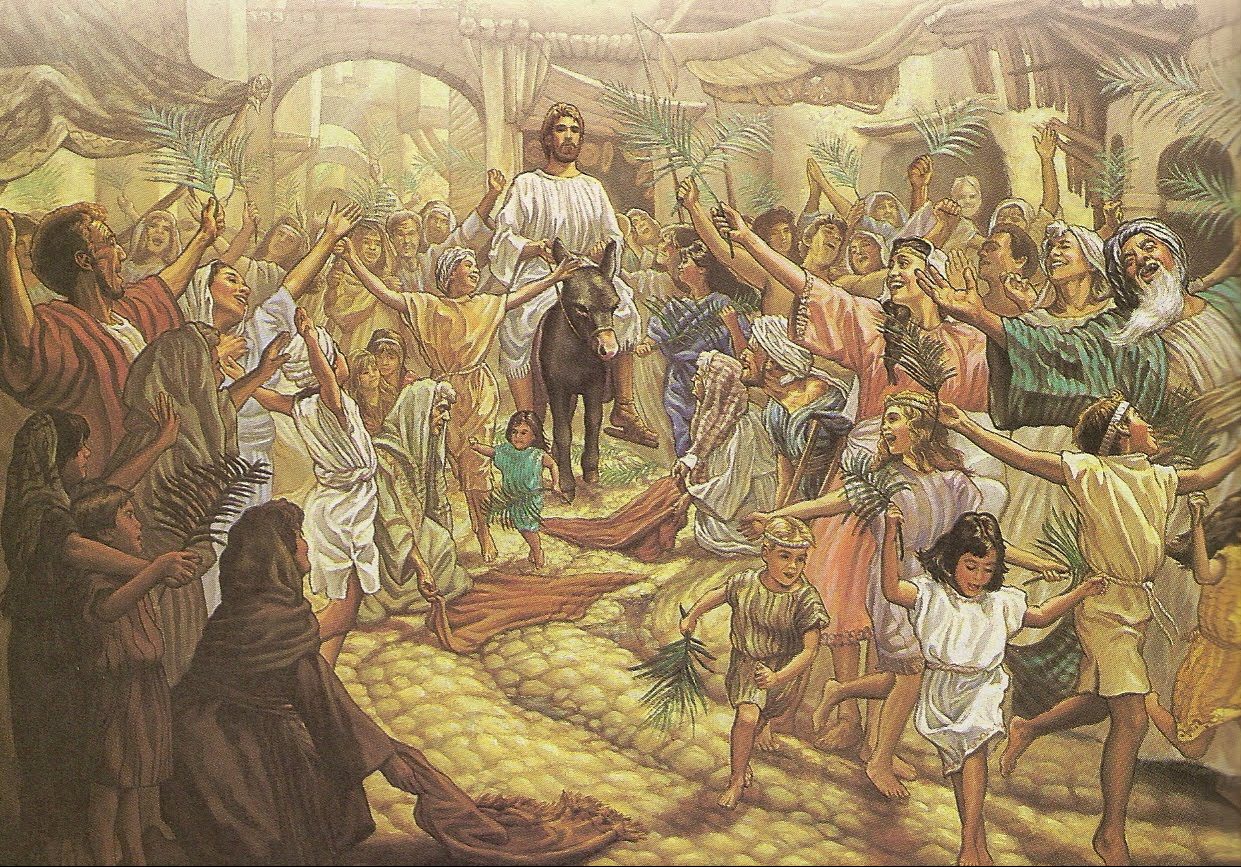
On the first day of the “Holy Week,” we commemorate the triumphant entry of Jesus into Jerusalem. The people removed their cloaks, waved palms, and sang hosannas while Jesus, riding on a donkey, passed by. Removing our clothes is a symbolic act of surrender to the Lord. It is a way of becoming open, confessing our sins, and accepting His offer of salvation. No more, disguise. No more resistance. On the other hand, the palm has been a traditional symbol of victory and rejoicing. (Leviticus 23:40) Thus by laying palms on the path of Jesus, the people acknowledged that in Jesus, there is victory. The donkey is an animal of peace. By riding on a donkey, Jesus showed that He is the prince of peace.

Let us pray that as we come in the name of the Lord, He may shower us with His blessings. May we continue to journey with Jesus, allowing Him to fill our hearts with hope, love, and peace so that we can become an instrument of hope and love to others and peace to all the earth.

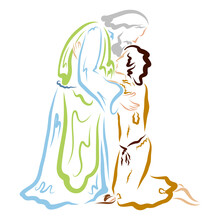
Let us weep over our sins and remember that God will always forgive us. We need to welcome Jesus into our hearts in a special way during Holy Week. We can be like the prodigal son and God like his father. We need to love and ask God to strengthen our weaknesses. With God in our hearts, we can do anything.

Our Mountaintops & Valleys

March 4, 2023

2nd Sunday of Lent
By Fr. Victor Feltes

Jesus went up a mountain to preach his Sermon on the Mount. Later, after feeding more than five thousand people using five loaves and two fish, he withdrew up a mountain alone for prayerful solitude. Today, Jesus leads Peter, James, and John up a high mountain by themselves to witness his Transfiguration. So why mountains? What is it about mountain heights which make them the preferred setting for so many biblical events?

Three themes occur to me: First, mountains remove people from the ordinary. They are remote places removed from everyday life. Second, mountains offer a greater perspective. A mountaintop can allow someone to see for many miles. And third, mountains elevate us. Mountaintops are not only literally higher but symbolically closer to heaven as well. Jesus takes Peter, James, and John to the top of Mount Tabor to give them an extraordinary experience, to give them a deeper vision into himself, and to give them strength for their trials ahead.

The Mass prefaces celebrating Jesus’ Transfiguration say:

“After he had told the disciples of his coming Death, on the holy mountain he manifested to them his glory, to show, even by the testimony of the law and the prophets, that the Passion leads to the glory of the Resurrection.”

“He revealed his glory in the presence of chosen witnesses… that the scandal of the Cross might be removed from the hearts of his disciples.”

The disciples had not imagined that the Jewish Messiah, God’s Holy Anointed One, would be gruesomely murdered. The Transfiguration helped prepare them to understand that Christ’s suffering was a part of God’s salvific plan. They also came to realize that Jesus’ teaching, “If anyone would come after me, let him deny himself and take up his cross and follow me,” would involve sufferings of their own. The apostles’ memories of beholding Christ’s miracles and glory and their ongoing relationship with their Risen and Ascended Lord strengthened them through their trials.

You and I will face trials as well. As St. Paul tells Timothy in today’s second reading: “Beloved: Bear your share of hardship for the Gospel with the strength that comes from God.” What have been the spiritual mountaintop experiences of consolation in your life? Remembering these moments gives us spiritual strength in hard times, and Jesus Christ walks alongside us through all our dark valleys.

Yesterday, I encountered the story of a man about my age named Mike. Not long ago, Mike was diagnosed with a cancer so advanced that he had back operation which removed one of his vertebrae. Mike is married and has two sons around middle school age. Though previously a somewhat lukewarm Christian, he began “searching for the understanding of the LOVE of Jesus.” Here is the amazing thing: Mike writes, “This last several months, with a few nudges from God, I have been overwhelmed with Jesus’ love. It’s been so powerful that the pain and uncertainty of the cancer have taken a back seat to it.” If he continues to carry this cross with Christ, no matter what happens, Mike is going to be OK.

Our spiritual mountaintop moments are extraordinary experiences that give us a greater perspective and draw us closer to God. But also remember the great consolation that Jesus Christ, our good and loving Lord, remains with us in our dark valleys as well.

Forgiving Like The Lord

February 19, 2023

7th Sunday in Ordinary Time
By Fr. Chinnappan Pelavendran

The call to holiness began in the Old Testament. God invites us to be holy as Jesus was holy. Holiness can be identified with the closeness of God. He wants us to be merciful, kind, and loving. He tells us that His law must lead us to a life where we discover God in all people, not just our friends. It is easy to love those who love us but Jesus asks us to do much more. As we are about to begin Lent, we are invited to forgive our enemies. Jesus is a shining example of love and forgiveness.

Jesus himself is a model in forgiving those who have hurt us. We see this in Jesus’ life. When Jesus and the apostles were in Gethsemane, soldiers came to arrest Him. Peter cut off the ear of one of the soldiers. Jesus told Peter to put his sword away, and He touched the ear and healed it. Jesus forgave and physically healed the one who came to arrest Him. This is not the only healing incident that takes place during Jesus’ Passion; Pilate and Herod had been enemies but become friends on the day of Jesus’ trial.

During His trial before the high priest, one of the officers slapped Jesus. Jesus calmly asked what he had said wrong. When Jesus was being crucified, he prayed for those who were nailing Him to the cross. Even then, Jesus was able to forgive them.

After Jesus’ resurrection, when Peter and the others were fishing, Jesus appeared on the shore of the sea of Galilee cooking fish. After they ate, three times Jesus asked Peter if He loved Him. Each time Peter said yes and each time Jesus asked him to look after His flock. Peter had denied Jesus three times at the high priest’s house, but Jesus forgave him. But Jesus loved Peter and later made him the head of the church. This was the beginning of the Catholic Church, as we know it today. Peter was the first Pope of the Catholic Church. The foundation of Catholic Church was established through the love and forgiveness of Jesus Christ.

Everyone knows that forgiving is not easy. Forgiveness is freedom. Jesus gives his new law of love, grace, forgiveness, reconciliation, and no retaliation. Jesus never took revenge, even when it cost him His life.

To be Holy as God is Holy is to love the offender. We must turn the other cheek, freely giving, and walking the extra mile. Jesus tells us that what makes Christians different is the grace with which they treat others, offering them loving kindness and mercy as god does for us. We are commanded to love our enemies as Jesus Loves us, with agape’ love, not because our enemies deserve our love, but because Jesus loves them so much. He died for them as He did for us.

We not only need to love our neighbors but also forgive whole-heartedly those who have hurt us. We need to pray for the spiritual and physical welfare of all people, not just our neighbors. Today’s readings challenge us to become holy as our God is holy by loving forgiving and blessing all others. As we are about to start our Lenten journey, let us remember the love and forgiveness of Jesus Christ.

Loving & Devout, Inside & Out

February 11, 2023

6th Sunday in Ordinary Time
By Fr. Victor Feltes

Something Christians may not realize is that the Pharisees and scribes were admired in Israel. Many Jews looked up to them for their religiosity and learning in a culture which celebrated their shared religion. But Jesus criticized the scribes and Pharisees for caring more about outward appearances than the heart of true devotion. “All their works are performed to be seen,” Jesus said, “They preach but they do not practice. Woe to you, scribes and Pharisees, you hypocrites. Although you cleanse the outside of the cup and the dish, inside you are filled with plunder and evil.” That is why Jesus told his own disciples: “Unless your righteousness surpasses that of the scribes and Pharisees, you will not enter the Kingdom of Heaven.” Jesus wills us to be holy both outside and in.

He cites the ancient commandments: “You have heard that it was said… ‘Thou shall not kill,’ ‘Thou shall not commit adultery,’ ‘Thou shall not take the name of the Lord your God in vain.’’ But then, Jesus commands more. We may never have sworn a false oath, but do we secretly conceive lies? Jesus declares, “Let your ‘Yes’ mean ‘Yes,’ and your ‘No’ mean ‘No.’ Anything more is from the evil one.” We may never have had an affair, but do we entertain lust after others in our minds? Jesus declares, “Everyone who looks at a woman with lust has already committed adultery with her in his heart.” And we may never have murdered anyone, but do we hold contempt for others in our hearts? Jesus declares, “Whoever is angry with his brother will be liable to judgment.” Even the Ten Commandments themselves called for interior holiness. Acts of adultery or theft (forbidden by the 6th and 7th commandments) are usually preceded by coveting, by desiring what is not ours (which is against the 9th and 10th commandments).

Consider this: in Heaven, no one will be allowed to hate anyone, or to exploit anyone, or to lie to anyone. That is something beautiful for us to look forward to, but it is also a call to thorough conversion. Our secret sins matter and our hearts must be made pure. Jesus says that from within, from our “hearts, come evil thoughts, unchastity, theft, murder, adultery, greed, malice, deceit, licentiousness, envy, blasphemy, arrogance, [and] folly.” He teaches that “a good person produces good from the treasury of a good heart, and an evil person produces evil from the treasury of an evil heart.” What is going on in our hearts is very important. So when temptation comes, let us as St. Paul said, “take every thought captive in obedience to Christ.”

The season of Lent is near. It begins on Ash Wednesday, the week after next. Catholics often take on external sacrifices and penances during Lent, and that is a good thing. But I suggest that for this Lent you would aim to conquer a habitual sin or secret vice with Christ. Which fault should be your focus? If you do not know that already, the Seven Deadly Sins may suggest it to you; they are pride, greed, lust, envy, gluttony, anger, are sloth. You may respond to each of these Deadly Sins by embracing the corresponding Lively Virtue.

For pride, there is humility.
For greed, generosity.
For lust, chastity.
For envy, gratitude.
For gluttony, temperance.
For anger, patience.
And for sloth, diligence.

Forming a personal resolution is key. Rather than just passively hoping things change, actively renounce what is evil in your life. Your will must be engaged. However, your weak human nature needs God’s strengthening grace. And God, respecting your freedom, waits for your consenting “Yes.”

Connect more to Jesus Christ this year. Encounter him in his sacraments. Beyond Sunday Mass, there is thirty-minute weekday Mass. When I began attending weekday Mass in college it drew me closer to Jesus and improved my life. Beyond celebrating the Sacrament of Reconciliation only once or twice a year, gain new graces with forgiveness through more frequent Confession. This gives us accountability and a truer perspective on ourselves. I do not believe that even monthly confession is too frequent for someone serious about growing in holiness. And beyond praying at church on Sundays, or before meals, or during times of urgent need, commit to times of daily personal prayer. For instance, gift or consecrate your day to Jesus in the morning. Ask him, your angel, and your favorite saints to aid you throughout the day. And do an Examination of Conscience in the evening asking the Holy Spirit to show you both your victories and defeats.

In conclusion, do not let the perfect be the enemy of the good. Do not read all these ideas and think, “I can’t do all of that,” and wind up doing nothing. Between now and Easter, commit to good steps to conquer a habitual sin or a secret vice with Christ. Jesus wills to help you be more loving and devout, inside and out.