Archive for the ‘Christian Perfection’ Category

Beware of False Dilemmas

March 24, 2020

Tuesday, 4th Week of Lent

Now there is in Jerusalem at the Sheep Gate a pool called in Hebrew Bethesda, with five porticoes. In these lay a large number of ill, blind, lame, and crippled. One man was there who had been ill for thirty-eight years. When Jesus saw him lying there and knew that he had been ill for a long time, he said to him, “Do you want to be well?” The sick man answered him, “Sir, I have no one to put me into the pool when the water is stirred up; while I am on my way, someone else gets down there before me.” Jesus said to him, “Rise, take up your mat, and walk.” Immediately the man became well, took up his mat, and walked.


Jesus asks the infirm man lying near the pool, “Do you want to be well?” He answers, “Sir, I have no one to put me into the pool when the water is stirred up; while I am on my way, someone else gets down there before me.” The best early Greek manuscripts of John’s Gospel do not contain the verse (John 5:4) and many modern Bibles omit it, but this ancient passage explains what the surrounding verses imply: “From time to time an angel of the Lord would come down and stir up the waters. The first one into the pool after each such disturbance would be cured of whatever disease they had.

The afflicted man perceives only two possibilities, a dilemma; either be healed by being the fastest into the water or continue in his infirmity. The first path is impossible and the second leaves him miserable. The man is tempted toward despair yet he remains patiently near the pool. And there he encounters Jesus who reveals a new, third way he had not imagined, a better option he had not seen. Jesus says to him, “Rise, take up your mat, and walk,” and immediately the man arises cured.

Beware of accepting false dilemmas in life. They can take many forms. Should I keep on being late into the water or give up on ever being cured? Should I ignore the Church’s teaching or be unhappy for the rest of my life? Should I keep on sinning and confessing or give up on my fight against habitual temptation? Should we allow this pandemic to totally destroy our economy or just let everybody die? Realize that the Lord can deliver us through ways we are not perceiving. When facing a painful “either-or”, an intolerable Trolley Problem, ask Jesus to reveal a third track. What if Jesus can heal my legs? What if following the Church’s teaching will lead to both my holiness and my joyful peace? What if my necessary resolutions and humble appeals for Christ’s saving grace can lift me up from my struggle? What if, in the near future, more treatments, testing, and technologies will allow us to save both lives and livelihoods?

Do not despair of your deliverance. “Do not conform yourselves to this age but be transformed by the renewal of your mind, that you may discern what is the will of God, what is good and pleasing and perfect. … Now to him who is able to accomplish far more than all we ask or imagine, by the power at work within us, to him be glory in the Church and in Christ Jesus to all generations, forever and ever. Amen.” (Romans 12:2, Ephesians 3:20)

This is His Body Given up to Save Many

March 21, 2020

Laetare Sunday — 4th Sunday of Lent—Year A

This past Wednesday evening, I saw this image online with the caption: “Darkness has fallen: every single U.S. diocese has suspended public celebrations of the Mass.”

Our Laetare Sunday rejoicing is more subdued this Lent. The sad but necessary suspension of public Masses by our nation’s bishops is a painful loss. And for many of the faithful, the greater their love for the Lord the greater the pain they feel. They are like the woman at Simon the Pharisee’s house who could bathe Jesus’ feet with dripping tears ‘because she loved much.’ (Luke 7:47) However, darkness has not overcome us.

Brothers and sisters,” today’s second reading tells us, “you were once darkness, but now you are light in the Lord.” God is still God, Christ is still Lord, and we are still His. Though public liturgies have ended the Holy Mass continues to be privately offered in most every Catholic church. The graces of Jesus’ sacrifice pour forth from these altars into Christian souls throughout the world, for our good and the good of all his holy Church. Priests are celebrating these Masses in obedience to the command of Christ recalled at every Consecration, “Do this in memory of me.” Yet each of us, ordained and lay people alike, is called to keep this commandment of Christ in a deeper way; by personally imitating Jesus in his loving self-sacrifice for others.

Today, and in the critical weeks and months ahead, all of us are called to sacrifice in ways that will seriously limit our activities and impact our finances. Why are we doing this? To stop the spread of a deadly disease not merely to ourselves but to our many neighbors around us. From my research into this grave topic, it appears that hundreds of thousands—potentially millions—of American lives depend upon the extent of our collective and individual actions now. So please respond with a firm resolve from a Christian love for others.

When you ache today because you can neither gather for Mass nor physically receive our Lord, take heart in the reason for your sacrifice. This is his Body given up to save many; we do this in memory of Him. And soon, when you are asked to help people in the community meet their material needs, sacrifice for them knowing whom you are also serving. For whatever you do for the least of your brethren, you do it for Him. Invite Jesus now to enter into your heart and be with you, to console and strengthen you, today and in the trials ahead of us.

A Future Pope on Fasting from the Eucharist

March 18, 2020

In the Latin Rite of the Catholic Church (of which 98.6% of the world’s Catholics are members) there is only one day each year when no Masses are to be celebrated – that is, Good Friday. That day’s liturgy contains a Communion service in which presanctified (previously consecrated) Hosts are received and eaten by the faithful. However, in the early Church, there was no consumption of Holy Communion on Good Fridays by the faithful at all. This tradition was noted by the esteemed theologian Joseph Cardinal Ratzinger (the future Pope Benedict XVI) in his 1986 book “Behold the Pierced One” and again (reprinted) in the 2002 book “Pilgrim Fellowship of Faith: The Church as Communion.”

In passages relevant to our present-day, Lenten reality, Cardinal Ratzinger reflects upon the spiritual value that could be found in the practice of Catholics in full communion with the Church abstaining for a time from consuming Jesus Christ in the Holy Eucharist:

“When Augustine felt his death approaching, he ‘excommunicated’ himself and took upon himself ecclesiastical penitence. In his last days, he set himself alongside, in solidarity, with the public sinners who seek forgiveness and grace through the pain of not receiving the Communion. He wanted to meet his Lord in humility of those who hunger and thirst for righteousness, for Him, the righteous and gracious One. Against the background of his sermons and writings, which describe the mystery of the Church as a communion with the Body of Christ and as the Body of Christ, on the basis of the Eucharist, in a really marvelous way, this gesture is quite shocking. It seems to me more profound and fitting, the more often I ponder it. Do we not often take things too lightly today when we receive the most Holy Sacrament? Could such a spiritual fasting not sometimes be useful, or even necessary, to renew and establish more deeply our relation to the Body of Christ?

In the early Church there was a most expressive exercise of this kind: probably since the time of the apostles, Eucharistic fasting on Good Friday was part of the Church’s spirituality of Communion. Not receiving Communion on one of the most holy days of the Church’s year, which was celebrated with no Mass and without any Communion of the faithful, was a particularly profound way of sharing in the Passion of the Lord: the sorrowing of the bride from whom the bridegroom has been taken away (see Mark 2:20). I think that a Eucharistic fast of this kind, if it were deliberate and experienced as a deprivation, could even today be properly significant, on certain occasions that would have to be carefully considered—such as days of penitence (and why not, for instance, on Good Friday once more?), or also perhaps especially at great public Masses when there are so many people that a dignified distribution of the Sacrament is often not possible, so that by not receiving the Sacrament people could truly show more reverence and love than by doing so in a way that contradicts the sublime nature of this event.

Such fasting—which could not be allowed to become arbitrary, of course, but would have to be consonant with the spiritual guidance of the Church—could help people toward a deepening of their personal relation to the Lord in the Sacrament; it could be an act of solidarity with all those who have a yearning for the Sacrament but cannot receive it. It seems to me that the problem of people who have been divorced and remarried, yet equally the problem of intercommunion (in mixed marriages, for example), would be less of a burden if voluntary spiritual fasting was at the same time undertaken in visible recognition and expression of the fact that we are all dependent upon that ‘healing of love’ which the Lord effected in the ultimate solitude of the Cross. I would not of course wish to suggest by this a return to some kind of Jansenism: in biological life, as in spiritual life, fasting presumes that eating is the normal thing to do. Yet from time to time we need a cure for falling into mere habit and its dullness. Sometimes we need to be hungry—need bodily and spiritual hunger—so as once more to comprehend the Lord’s gifts and to understand the suffering of our brethren who are hungry. Spiritual hunger, like bodily hunger, can be a vehicle of love.”

Prepared for this Time

March 18, 2020

Wednesday, 3rd Week of Lent

Moses spoke to the people and said:

“I teach you the statutes and decrees as the Lord, my God, has commanded me… Observe them carefully, for thus will you give evidence of your wisdom and intelligence to the nations, who will hear of all these statutes and say, ‘This great nation is truly a wise and intelligent people.’ … However, take care and be earnestly on your guard not to forget the things which your own eyes have seen, nor let them slip from your memory as long as you live, but teach them to your children and to your children’s children.”

We may not have expected circumstances to be as they are now, but these things come as no surprise to God from his vantage point outside of time. He permits such trials for the salvation of souls and for his saints to more greatly share in his likeness and glory. The Lord, in his providence, has been preparing you for this season.

In difficult times like these, virtue is tested, character is proven, and many souls will rise or fall. So take care and be earnestly on your guard. Do not to forget the things of faith your ears have heard and eyes have seen. Teach and practice what you have learned. For as Jesus said to his disciples, “whoever obeys and teaches these commandments will be called greatest in the Kingdom of Heaven.

Saint Patrick’s Growth

March 17, 2020

Did you know that St. Patrick wasn’t born Irish? He was born in Scotland to Roman parents in the late 300’s AD. When he was 16 years old, Patrick was captured by raiders and sold into slavery in Ireland. For six years he shepherded sheep for a cruel master. But this unexpected, unchosen, difficult separation from his family and previous life was the occasion for a religious awakening in Patrick. He recalls in his autobiography:

“The love of God and His fear increased in me more and more, and the faith grew in me, and the spirit was roused, so that, in a single day, I have said as many as a hundred prayers, and in the night nearly the same, so that while in the woods and on the mountain, even before the dawn, I was roused to prayer and felt no hurt from it, whether there was snow or ice or rain; nor was there any slothfulness in me, such as I see now, because the spirit was then fervent within me.”

After these six hard but fruitful years, Patrick heard a voice tell him that he would soon go home and that his ship was ready. He walked two hundred miles to the coast, found a ship, and eventually persuaded the crew to take him along. He left Ireland a better man. Later, in an inspired dream, he heard people of Ireland call out to him, “We appeal to you, holy servant boy, to come and walk among us.” Patrick returned to his former land of slavery as a missionary priest, won converts to Christianity, and is called today the “Apostle of Ireland.” How can you make the most of the recent unexpected, unchosen, disruptions in your life to be changed for the better?

Here is a famous and inspiring prayer attributed to him, “Saint Patrick’s Breastplate” also known as “The Deer Cry”:

I bind to myself today
The strong virtue of the Invocation of the Trinity:
I believe the Trinity in the Unity
The Creator of the Universe.

I bind to myself today
The virtue of the Incarnation of Christ with His Baptism,
The virtue of His crucifixion with His burial,
The virtue of His Resurrection with His Ascension,
The virtue of His coming on the Judgement Day.

I bind to myself today
The virtue of the love of seraphim,
In the obedience of angels,
In the hope of resurrection unto reward,
In prayers of Patriarchs,
In predictions of Prophets,
In preaching of Apostles,
In faith of Confessors,
In purity of holy Virgins,
In deeds of righteous men.

I bind to myself today
The power of Heaven,
The light of the sun,
The brightness of the moon,
The splendour of fire,
The flashing of lightning,
The swiftness of wind,
The depth of sea,
The stability of earth,
The compactness of rocks.

I bind to myself today
God’s Power to guide me,
God’s Might to uphold me,
God’s Wisdom to teach me,
God’s Eye to watch over me,
God’s Ear to hear me,
God’s Word to give me speech,
God’s Hand to guide me,
God’s Way to lie before me,
God’s Shield to shelter me,
God’s Host to secure me,
Against the snares of demons,
Against the seductions of vices,
Against the lusts of nature,
Against everyone who meditates injury to me,
Whether far or near,
Whether few or with many.
I invoke today all these virtues
Against every hostile merciless power
Which may assail my body and my soul,
Against the incantations of false prophets,
Against the black laws of heathenism,
Against the false laws of heresy,
Against the deceits of idolatry,
Against the spells of women, and smiths, and druids,
Against every knowledge that binds the soul of man.

Christ, protect me today
Against every poison, against burning,
Against drowning, against death-wound,
That I may receive abundant reward.
Christ with me, Christ before me,
Christ behind me, Christ within me,
Christ beneath me, Christ above me,
Christ at my right, Christ at my left,
Christ in the fort,
Christ in the chariot seat,
Christ in the poop deck,
Christ in the heart of everyone who thinks of me,
Christ in the mouth of everyone who speaks to me,
Christ in every eye that sees me,
Christ in every ear that hears me.

I bind to myself today
The strong virtue of an invocation of the Trinity,
I believe the Trinity in the Unity
The Creator of the Universe.

We can always call upon Jesus, who is near at hand for us. As he told his disciples at The Great Commission, “Behold, I am with you always, until the end of the age.

Finding Jesus in our Isolation — 3rd Sunday of Lent—Year A

March 16, 2020

Today’s Gospel story contains a valuable lesson for us in our present situation.

Jesus, tired from his journey, sat down there
at [Jacob’s] well. It was about noon.
A woman of Samaria came to draw water.
Jesus said to her, “Give me a drink.”

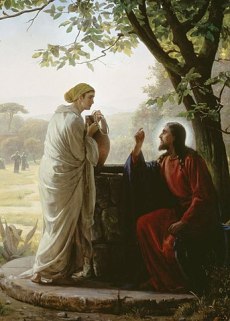
There is a weird detail contained in these passages: the woman is going to the well to draw water at noon. It’s hot at noon in the Middle East, so Jesus and the woman are the only ones there. Why didn’t she come in the morning or the evening when the heavy job of hauling water would not have the added burden of the midday sun and heat? It’s because she didn’t want to be there when the other women would be around. Jesus reveals that the woman has no true husband and that she has had five different mates through the years. Jesus knows this supernaturally but her neighbors know something of these facts naturally, through local gossip. This woman has a reputation and if she were to go to that well at the same time as the other women they would make her feel unwelcome, through their words or their silence, with their eyes and their body language. They have quarantined themselves from her and she has socially distanced her heart from them.

In the middle of her day,
in the uncertainties of her life,
amid the stress of her tasks,
in her personal isolation,
she is surprised to encounter Jesus there.

He says to her:

“If you knew the gift of God and who is saying to you, ‘Give me a drink,’ you would have asked him and he would have given you living water. … Whoever drinks the water I shall give will never thirst; the water I shall give will become in him a spring of water welling up to eternal life.”

Jesus wins over the woman’s soul, she leaves her water jar behind and joyfully proclaims her great discovery. Meanwhile, the returned disciples urge Jesus, ‘Rabbi, Teacher, eat something!’ But he says to them, “I have food to eat of which you do not know. … My food is to do the will of the one who sent me and to finish his work.” Of course Jesus is hungry—physical realities are real—but he has nourishment in his soul, from his relationship with God his Father and his deepening relationship with those he has come to save, like this woman at the well.

Now in likening the woman at the well to one quarantined from others, I am not advising you to take unnecessary or imprudent risks amidst this current Coronavirus pandemic. In these months ahead, some of us will be called to acts of particular courage; nurses and doctors come first to mind. But we should not blithely, unnecessarily place ourselves in foreseeable natural dangers expecting God to perform miracles to protect us. Recall how Satan tempted, “If you are the Son of God, throw yourself down from here. For it is written: ‘He will command his angels concerning you’ and ‘with their hands they will support you, lest you dash your foot against a stone.” Jesus answers, “You shall not put the Lord, your God, to the test.” We must not act presumptuously.

The reason I mention the woman finding Jesus in her isolation is because, whatever our health may be, we need to encounter him there as well. Public Masses continue in our diocese, but it is very probable that these will be suspended in the future, just as Catholic Churches suspended public Masses a century ago during the Spanish Flu pandemic. I will personally be very surprised if we are having Mass here together two weeks from today. [Post-Script: On the evening of March 17th, Bishop William Callahan directed his priests to abide by Wisconsin’s statewide ban on all gatherings of more than 10 people announced earlier in the day. As a result, we are cancelling all remaining public Masses at my parishes.] Yet even in times when public Masses are readily available, most hours of our week and not spent inside of a church.

In the middle of your day,
in the uncertainties of your life,
amid the stress of your tasks,
in your personal isolation,
you can encounter Jesus there.

He is with you and within you, so you are never really alone.
Jesus says:

“Let anyone who thirsts come to me and drink.
Whoever believes in me, as scripture says:
‘Rivers of living water will flow from within him.’”

Wherever you are, find him there, and draw on his graces.

I seem to recall a story about St. Faustina Kowaska, the Polish nun and visionary most closely associated with the Divine Mercy devotion. When she was confined to her convent infirmary, suffering from the tuberculosis which would eventually take her life, she lamented that for one or more days in a row she had been unable to receive Holy Communion. In a vision, Jesus reassured her, saying, ‘Whenever you receive me in the Eucharist, I remain within you until you receive me again, unless you cast me out through mortal sin.’ Similarly, in the sixth chapter of John, Jesus famously declares:

“I am the bread of life; whoever comes to me will never hunger, and whoever believes in me will never thirst. … Whoever eats my flesh and drinks my blood remains in me and I in him.”

Christ’s Church encourages frequent, even daily, reception of Holy Communion as a helpful devotion toward holiness, but whether your next communion is one week or three months from now, know that Jesus is with you to provide his sufficient graces for your life. If public Masses are suspended in our diocese, realize that I and other Catholic priests, even if standing alone in our churches, will still be offering the Holy Mass daily for you and the whole world. And we will be bringing Confession, Holy Anointing, and Viaticum to the sick, as is our calling and duty, for as long as we are able. This Wuhan Coronavirus pandemic is rightfully concerning. (I urge you to read my bulletin article this weekend.) But whatever comes we need not fear, for “we know that all things work for good for those who love God,” and “whether we live or die, we are the Lord’s.” As Jesus would very often say, “Be not afraid.

Moses & the Rock — 2nd Sunday of Lent—Year A

March 8, 2020

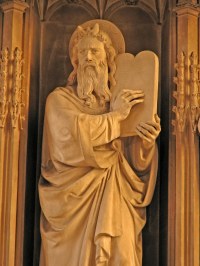
You’re familiar with the story of Moses: his being saved from the waters of the Nile as a baby, his growing up in the household of Pharaoh, his flight as a fugitive after killing an Egyptian taskmaster, his years shepherding in the Sinai Desert until God called him from the Burning Bush, how God used Moses to free the Hebrews from Egyptian slavery with great plagues and awesome miracles, how God through Moses gave his people the Law of the Old Covenant. Moses shared an incredible intimacy with God.

In the Book of Numbers, God said:

“If there are prophets among you,
in visions I reveal myself to them,
in dreams I speak to them;
Not so with my servant Moses!
Throughout my house he is worthy of trust:
face to face I speak to him,
plainly and not in riddles.
The likeness of the Lord he beholds.”

The Book of Deuteronomy declares: “Since [that time] no prophet has arisen in Israel like Moses, whom the Lord knew face to face.” So one would imagine, one would think, that Moses saw God’s face. The Book of Exodus says: “The Lord used to speak to Moses face to face, as a person speaks to a friend.” However, following soon after in that same chapter from Exodus, Moses asks the Lord, “Please let me see your glory!” And the Lord answers: “I will make all my goodness pass before you, and I will proclaim my name, ‘Lord,’ before you … But you cannot see my face, for no one can see me and live. Here is a place near me where you shall station yourself on the rock. When my glory passes I will set you in the cleft of the rock and will cover you with my hand until I have passed by. Then I will remove my hand, so that you may see my back; but my face may not be seen.” So Moses met with God in intimate conversation as one friend speaks to another, in his holy presence, yet it is not clear that Moses, during his lifetime, ever beheld God’s face. Similarly, God gave Moses the mission of leading his people from Egypt to the Promised Land, the land promised to Abraham and his descendants, yet Moses during his lifetime never entered the Promised Land himself.

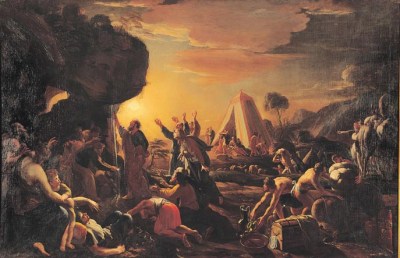
Why was that the case? Early in their desert wanderings, the Hebrews complained against Moses because of their lack of water. Moses cried out to the Lord, “What shall I do with this people? A little more and they will stone me!” And the Lord answered Moses: “Go on ahead of the people, and take along with you some of the elders of Israel, holding in your hand, as you go, the staff with which you struck the Nile. I will be standing there in front of you on the rock in Horeb. Strike the rock, and the water will flow from it for the people to drink.” Moses did this in the sight of the elders of Israel and the crisis was adverted.

However, on a later occasion, when the community again lacked water, they held an assembly against Moses and Aaron. The people quarreled with Moses, exclaiming, “Why have you brought us out of Egypt, only to bring us to this wretched place [to die]? It is not a place for grain nor figs nor vines nor pomegranates! And there is no water to drink!” The Lord said to Moses: “Take the staff and assemble the community, you and Aaron your brother, and in their presence command the rock to yield its waters. Thereby you will bring forth water from the rock for them, and supply the community and their livestock with water.

So Moses took the staff from its place before the Lord, as he was commanded. Then Moses and Aaron gathered the assembly in front of the rock, where he said to them, “Just listen, you rebels! Are we to produce water for you out of this rock?” Then, raising his hand, Moses struck the rock twice with his staff, and water came out in abundance, and the community and their livestock drank. But the Lord said to Moses and Aaron: “Because you did not have confidence in me, to acknowledge my holiness before the Israelites, therefore you shall not lead this assembly into the land I have given them.

Years later, at the edge of the Promised Land, the Lord told Moses: “Ascend this mountain [Mount Nebo] and view the land … which I am giving to the Israelites as a possession. Then you shall die on the mountain you are about to ascend, and shall be gathered to your people, [because] you broke faith with me among the Israelites at the waters of Meribath-kadesh in the wilderness of Zin: you did not manifest my holiness among the Israelites. You may indeed see the land from a distance, but you shall not enter that land which I am giving to the Israelites.” And there, Moses the servant of the Lord died as the Lord had foretold. Moses was one hundred and twenty years old when he died, yet his eyes were undimmed and his vigor unabated.

What was behind this punishment from God? Moses had been disobedient to the Lord, striking the rock twice instead of speaking to the rock as instructed; and this was more than just some desert rock—the rock carried spiritual, symbolic, prophetic significance. In his First Letter to the Corinthians, St. Paul saw the Church and her sacraments prefigured in the story of the Hebrews and the Exodus. St. Paul writes: “Our ancestors were all under the cloud and all passed through the sea, and all of them were baptized into Moses in the cloud and in the sea. All ate the same spiritual food, and all drank the same spiritual drink, for they drank from a spiritual rock that followed them, and the rock was the Christ.

So the rock in the desert symbolized Jesus Christ. The first time, God told Moses to strike the rock, and it poured forth from its side saving water for God’s people. But the second time, when God told Moses to speak to the rock, Moses disobeyed and struck it twice. Jesus Christ has already been struck, beaten, and suffered violence once, for you and me in his Passion. We are no longer to keep striking him, again and again, through our sinful disobedience. Rather than choosing sin, we are to speak to Christ, asking him to pour forth his saving gifts. Jesus says, “Let anyone who thirsts come to me and drink. … To the thirsty I will give a gift from the spring of life-giving water.

I fear that sometimes we might think, “I can keep on sinning, it’s no big deal, because if I keep on going to Confession and have my sins forgiven it’s like they never happened—they don’t really matter.” Yet every sin is a lost opportunity to do God’s will. Every sin refuses God’s “Plan A.” And sins, even after they are forgiven, can bear earthly consequences which remain for the rest of our lives. Moses sinned, and repented, and remained God’s friend, but he was refused entry into the earthly Holy Land to his own great disappointment. Even convicted murderers can be forgiven by God, but they still remain behind prison bars and their victims bodies remain buried underground. Let’s not be complacent about our sins, for every sin is a lost opportunity to follow God’s better plan and, even if forgiven, sins can have irreparable consequences in this world for the rest of our lives. But, thanks be to God, our Christian hopes are not for this lifetime alone. Moses died and was buried, but that is not the end of his story.

Jesus took Peter, James, and John his brother, and led them up a high mountain by themselves. And he was transfigured before them; his face shone like the sun and his clothes became white as light. And behold, Moses and Elijah appeared to them, conversing with him.” St. Luke’s telling of today’s Gospel story notes Moses and Elijah “appeared in glory and spoke of [Jesus’] exodus that he was going to accomplish in Jerusalem.

Sometimes people ask how the apostles knew it was Moses and Elijah. Most likely they either introduced themselves, or Jesus introduced them. Some people have the notion that the dead forget who they were, forget all their memories, and care nothing about the events on earth. But Moses can only introduce himself if he knows who he is. And if Jesus said, “This is the prophet Moses,” there’s no indication that Moses replied, “I am? Where am I? What is happening?” Moses and Elijah can converse with Jesus about the exodus he is going to accomplish in Jerusalem (that is, about his coming Passion, death, and resurrection) because they know who they are, remember their lives, and are concerned about events among the living.

At the Transfiguration, we see the not quite fully-satisfied aspects of Moses’ life reaching their fulfillment. Moses never entered the Promised Land in his lifetime, but here he stands in Israel upon Mount Tabor with Jesus. Moses seems to have never seen God’s face, but now he speaks face to face with Christ. Consider how privileged we are to stand in this holy place and have such intimacy with Jesus Christ in his Holy Eucharist. It is good that we are here.

God greatly desires that we not sin. And if we have sinned, the Lord desires that we promptly repent and sin no more. Now, this season of Lent is an excellent time for repentance—especially while we’re still healthy. This world is scarred by sins, some forgiven and many not; and these painful wounds grieve us and prevent our full satisfaction in life. Yet the full story of Moses shows that our hopes are not merely limited to this life. Our hope extends beyond death, and St. Paul says, “God works all things for the good of those who love him.” And in the end, as St. Julian of Norwich says, “all shall be well, and all shall be well, and all manner of thing shall be well.

Satan’s Old Tricks — 1st Sunday of Lent—Year A

March 3, 2020

After his baptism in the Jordan, but before the start of his public ministry, Jesus was led by the Holy Spirit into the desert to be tempted by the devil. Did Satan realize at that time that Jesus was God? He says, “If you are the son of God… If you are the son of God.” But if Satan knew, it’s strange that he would attempt the impossible: to try tempting the all-holy God into sinning and doing evil. Old Testament prophesies allude to the promised Messiah, the awaited Anointed One, as being “Son of God.” God says in the 2nd Psalm:

“I myself have installed my king
on Zion, my holy mountain….
You are my son;
today I have begotten you.”

And in Psalm 89, God says:

“He shall cry to me, ‘You are my father,
my God, the Rock of my salvation!’
I myself make him the firstborn,
Most High over the kings of the earth.”

Old Testament Jews had been told their Messiah would at least figuratively be the Son of God; so, whether or not Satan knew Jesus was divine, he at very least suspected that this man from Nazareth was the Christ.

Jesus evidently went on to tell his apostles of the devil’s temptations in the desert—for how else would anyone know to write about them in the Gospels? There may have been additional temptations, but three are retold in Matthew and Luke’s Gospels. Jesus is on the verge of beginning his public ministry. What kind of Messiah will he be? The devil’s three temptations seek to corrupt his mission from the start. Satan seeks to lead the Christ off track so as to derail the plan of God. He did this first in the lush Garden of Eden, and here he seeks to do it again in the desert.

If you are the Son of God,” Satan says, “command that these stones become loaves of bread.” Jesus was hungry, but if he does this miracle the next question may be, “So you feed yourself, do you? How now can you refuse to give bread to everyone?” Satan wants Jesus to be a materialistic Messiah who must focus on nourishing bodies to the neglect of their souls. Jesus calls his disciples to practice material charity; today the Catholic Church is the largest charitable organization in the world; teaching, healing, clothing, housing, feeding, but this is all of secondary importance to its spiritual work. For what would it profit us to have all of our material needs fulfilled if our spiritual needs went unaddressed and we ultimately died separated from God? How do these things personally apply to us? Well, did the recent stock market drops ruin your week? Or are you too afraid or possessive to share, to tithe, to give to good causes? Or are you too busy working to pray? Jesus answers, “One does not live on bread alone, but on every word that comes forth from the mouth of God.

Next we hear how the devil takes Jesus to the roof edge atop the temple in Jerusalem and challenges him: “If you are the Son of God, throw yourself down. For it is written: ‘He will command his angels concerning you’ and ‘with their hands they will support you, lest you dash your foot against a stone.’” Satan is quoting Psalm 91. This goes to show—and serves as a warning—that not every Bible quote teaches what some people claim it does. True Scripture interpretation must be in union with the mind of Christ, and one with the Body of Christ, that is his Church.

God does not want Jesus to jump off buildings, but the devil wants the Messiah to demand that God protect him from all harm or hardship. Satan wants Jesus to be a Christ who is unwilling to suffer, who will refuse to drink any bitter chalice. The devil knows doing God’s will in this broken world will necessarily entail some sufferings for his faithful ones. If Jesus is unwilling to sacrifice then God’s people will never be saved. Are you trying to force your plans upon God? Are you pleased to serve God only so long as you experience no pain? Are you demanding that your salvation come without embracing your cross? Jesus answers, “You shall not put the Lord, your God, to the test.

Lastly, we hear the devil takes him up to a very high mountain, and shows him all the kingdoms of the world in their magnificence, and says, “All these I shall give to you, if you will prostrate yourself and worship me.” Satan wants Jesus to be a compromised Messiah who will pursue good things by doing, by serving, evil. The tempter says, “It’s only a little thing, just lay down, just say the words, just take a small bite, everything will be so much easier and better if you do.” Or else the tempter lies in the opposite extreme direction, “You have no choice – it’s a sin but there’s no other way – this must be done!” What sins do you still commit in hopes that good will result? Where do you bow down and side with Satan against the will of God? Jesus answers, “The Lord, your God, shall you worship and him alone shall you serve.

By God’s providence, the temptations of Jesus in the desert foreshadow Christ’s Passion to come. Jesus is not a materialist Messiah, changing stones to loaves of bread. But, beginning at the Last Supper, he feeds the world by changing bread into himself “for the life of the world.” Jesus is not a Christ who refuses to sacrifice. At the Temple he endures trail and condemnation by the Sanhedrin and accepts the bitter chalice of his Passion according to his Father’s saving will. And Jesus is not a compromised Messiah, committing sins for false and illusory gains. Christ becomes the magnificent, sinless king of all nations, atop Mount Calvary enthroned upon the Cross.

In this season of Lent, in these forty days of penance, we are in the desert with Jesus, learning from him, and being strengthened by him, so that we can stand straight and strong and not fall for the temptations and traps of the enemy, the same tricks he used against of Adam and Eve, that he attempted with Jesus Christ, and that he still uses in our day. This Lent, instead of falling for Satan’s same old tricks, let us grow closer to Jesus Christ in relationship and resemblance, closer in his friendship and closer to his holy likeness.

Strong Reactions — 5th Sunday in Ordinary Time—Year A

March 3, 2020

My childhood memories of summer include the Osseo City Pool. I remember having fun in the water with friends, the 80’s songs playing from the lifeguards’ boombox, and the big brown door with red letters, warning something like: “Danger, Deadly Chlorine Gas, Staff Only!” As you might imagine, I never ventured into that room. Another memorable experience from my youth involving chemicals happened some years later. My science teacher, Mr. Hall, placed a bucket of water into the snow outside of our high school. Then, using tongs, he carefully dropped into it a chunk of pure sodium, and quickly backed away. The water steamed and bubbled and exploded a couple of times. It was intimidating and awesome. Two potent chemicals: chlorine and sodium. What happens when you combine them? You get sodium chloride. Today, this compound is present in the environment and inside of our homes. It’s in the oceans, on our streets, and even in the food we eat. Sodium Chloride may sound dangerous, but you know this common compound by another name: it’s salt.

Sodium Chloride (a.k.a. Salt)

Salt preserves, salt disinfects, and salt also adds flavor. Salt can preserve food from spoiling. In the days of sailing ships, unrefridgerated salted-pork could safely feed a crew for three months at sea. Salt has been used as a disinfectant and cleaning product since ancient times. The Egyptians, Greeks, and Romans employed salt water to treat cuts, wounds, and mouth sores. Even in 2010, a study from the Mayo Clinic found that gargling warm salt water reduces cold symptoms, including sore throat pain and mucus. And you know firsthand from a lifetime of eating that the addition of salt can make an otherwise bland dish taste much better.

Today, Jesus tells his disciples: “You are the salt of the earth.” Like salt, Christianity is found all over the world, preserving its good, purifying its evil, and adding flavor to what would otherwise be bland, meaningless life. And yet, like Sodium Chloride, Christianity is irrationally feared. This is nothing new. Listen to this second century Letter to Diognetus describing how Christians are present throughout the world, both helpful and good, and yet feared and opposed:

“Christians are indistinguishable from other men either by nationality, language or customs. They do not inhabit separate cities of their own, or speak a strange dialect, or follow some outlandish way of life. … With regard to dress, food and manner of life in general, they follow the customs of whatever city they happen to be living in, whether it is Greek or foreign. And yet there is something extraordinary about their lives. They live in their own countries as though they were only passing through. They play their full role as citizens, but labor under all the disabilities of aliens. Any country can be their homeland, but for them their homeland, wherever it may be, is a foreign country. Like others, they marry and have children, but they do not expose [their children to death]. They share their meals, but not their wives. They live in the flesh, but they are not governed by the desires of the flesh.”

“They pass their days upon earth, but they are citizens of Heaven. Obedient to the laws, they yet live on a level that transcends the law. Christians love all men, but all men persecute them. Condemned because they are not understood, they are put to death, but raised to life again. They live in poverty, but enrich many; they are totally destitute, but possess an abundance of everything. They suffer dishonor, but that is their glory. They are defamed, but vindicated. A blessing is their answer to abuse, deference their response to insult. For the good they do they receive the punishment of malefactors, but even then they rejoice, as though receiving the gift of life. They are attacked by the Jews as aliens, they are persecuted by the Greeks, yet no one can explain the reason for this hatred.”

Why does the world oppose devout Christianity? One reason is they imagine believing Christians behave like sodium in water, boiling hot with hatred and intolerance and violent in their reactions. Yet Christians’ allegiance to Jesus and his teachings on mercy, love, and the value of every human person are the best antidotes to mankind’s natural hatred and indifference toward others. Who is more responsible for sharing bread with the hungry, sheltering the oppressed and the homeless, and clothing the naked in world history than Christians in general and the Catholic Church in particular?

Another reason why worldly people oppose Christianity is that they think our faith is lethal to life’s pleasures; they fear that embracing Christianity would asphyxiate their happiness, like breathing chlorine gas. This too is nothing new. In Roman times, Christians were charged with “hatred of humanity” because the Romans believed ‘a lover of man should love what men love.’ The Early Christians would not partake of common sins for passing pleasures while, at the same time, living joyful lives. Joyful even at their martyrdom. As Diognetus’ pen-pal observed in the second century: “The world hates the Christians, not because they have done it any wrong, but because [Christians] are opposed to its enjoyments.” And so it is today. When we tell the world some things it loves are false roads to happiness the world hates us for it.

Jesus said, “If the world hates you, realize that it hated me first. If you belonged to the world, the world would love its own; but because you do not belong to the world, and I have chosen you out of the world, the world hates you. If they persecuted me, they will also persecute you. … In the world you will have trouble, but take courage, I have conquered the world.” So what are we to do? First, realize that the modern animosity to Christianity is nothing new. Don’t wait for that cultural hostility to pass; it won’t pass in our lifetimes. Next, never accept or act like your faith is a shameful thing. Jesus declares: “You are the light of the world. Your light must shine before others, that they may see your good deeds and glorify your heavenly Father.” If you are a Christian, Jesus wants the people around you to see something different in you and wonder, “What’s your secret.” Be unafraid to tell them the truth, “It’s my personal relationship to Jesus Christ and his Holy Church.” Cooperating with Christ to live like this saves souls and transforms our world.

There is another, more literal translation of Jesus’ words in our gospel: “You are the salt of the earth… You are the light of the world”: “You are the salt of the ground… You are the light of the cosmos.” Through your life, and every Christian life however humble, Jesus would reveal his divine light to the world, the glory and love that sustain the cosmos.

Shepherds & Fishermen — 3rd Sunday in Ordinary Time—Year A

March 3, 2020

What did the twelve apostles do for a living before Jesus called them to follow him? For six of the first apostles, that is half of the original twelve, we have no words from Scripture concerning their previous jobs. We are told that St. Matthew was a tax collector for the Roman government. We also hear of St. Simon the Zealot, who was either especially zealous in his personal religious devotion, or had ties to the Jewish Zealot movement is Israel. The Zealot movement sought, through politics and insurrection, to overthrow the Roman government in the Promised Land. If Matthew and Simon did indeed come from opposite sides of that era’s political spectrum, it suggests that every political party or faction has important things to learn from Jesus Christ.

In today’s Gospel, we learn the shared profession of four other apostles: Simon Peter, Andrew, James, and John; they were commercial fishermen. Now the Lord choosing men from the fishing industry was something new in salvation history. In the Old Testament, God often employs shepherds in his holy service. Among the patriarchs there is Abraham, Jacob-Israel, and his twelve sons – shepherds all. Later there’s the prophet Moses, King David, and Amos the prophet, each of whom tended flocks for some time before receiving their higher calling from God. As far as I can tell, there are no fishermen of particular note in the Bible before these four to whom Jesus says, “Come after me, and I will make you fishers of men.” Jesus, in calling fishermen, is doing something new. Now if the fishing background of these four apostles were irrelevant, I doubt the Holy Spirit would have inspired the inclusion of this fact into the Gospels. So what is the significance of this detail?

The work of a shepherd is different from that of fisherman. A shepherd tends his flock. He knows his sheep and his sheep know him. Some new lambs are born while other, older sheep go off to market or return to the earth, but the size of the sheepfold tends to remain rather stable. A fisherman, on the other hand, through his practiced skills and God’s providence, seeks and finds new fish every day. The fish are living in their own dark, watery world until the fisherman gathers them to himself. A shepherd maintains his numbers, but a fisherman goes out to seek more and more. Jesus chose his apostles not only to shepherd his people Israel, but to go forth to fish for people from all nations. Jesus made Peter not only a “fisher of men” but commanded him to ‘”feed my lambs… tend my sheep… feed my sheep.

Today we primarily think of water as a symbol of life, because nothing lives without water. Yet in the ancient world, water was often seen as a symbol of death. It’s possible even on a calm day to drown in a river, lake, or sea, but the volatile, deadly nature of large bodies of water is the subject of stories, poems, and songs even up to our day. For example:

The legend lives on from the Chippewa on down
Of the big lake they called Gitche Gumee
Superior, they said, never gives up her dead
When the gales of November come early

Fish live with this realm of death, a dark, watery world. The fisherman brings fish into the light, to a higher realm, a world they had previously ignored or never imagined. In our semi-post-Christian world today, is Jesus calling you and I to be shepherds or fishermen? Are we meant to maintain our flock, or to endeavor for more unnetted souls? There is need for both missions. In fact, we are called to do both. Many around us are baptized and still identify as Christians, yet how deep does their faithful devotion really go? Peter and Andrew left their careers for Jesus. James and John left their family for Jesus. Yet how few people today even come to church for him. True devotion and divine relationship is ignored or never imagined. Jesus calls you to be a missionary; not on the far side of the earth so much as in our own community. Be able to give witness to him. When I was a kid, when we were driving home from Sunday Mass, my family would often talk about what we heard in the homily. Today you your drive home from church I encourage you to ask each other: Why did you come to church today? What difference does it make for your life? We need to practice sharing why our faith is a gift with one another so that we can invite others to share this treasure.

In our first reading from St. Paul’s first letter to the Corinthians, we learn that the Christians in Corinth were choosing favorites and forming factions: ‘I belong to Paul. I belong to Apollos. I belong to Cephas.‘ St. Paul writes to remind them, you belong to Christ! Do not allow another person to get in way of Jesus for you. Pastors are important and Jesus has ordained it so, since without clear leadership how could St. Paul’s prayer and Christ’s desire, ‘that all of us agree in what we say, that there be no divisions among us, that we be united in the same mind and in the same purpose‘ ever be achieved? The need for human leadership of Jesus’ Church in this broken world, however, makes grave sin and scandal possible. This is a terrible thing, wherever and whenever it occurs. But please, please, do not separate from Peter on account of another apostle’s sin. You need Jesus, I need Jesus, and everyone else needs Jesus, too. Let us be good shepherds and fishers of men, caring for and seeking out everyone in our midst, as Jesus calls us to do.

His Cause for Joy — Funeral for Michael “Mike” Rufledt, 67

February 28, 2020

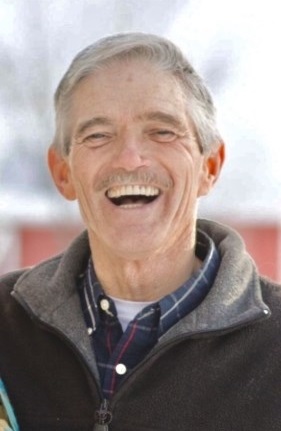
If you had the chance to visit Mike over these past months of his final illness, might have come expecting to see a man anguished and crushed in the face of impending death. You might expect to find a quiet, somber, sad, inconsolable house. But if you visited, you encountered a house of joy; tears—but tears of love; and a joyful man, full of peace. How is this possible? It is the Lord. God had prepared him, God strengthened him, and God accompanied him through it all. And this began long ago.

When Mike was 31 years old, his father Ted died, and this event hit Mike really hard. Mike struggled with heavy grief, a grief he could not let go of or move beyond. He confided his pain to his mother and she gave him wise advice: “Pray to the Holy Spirit, Mike.” He took her advice and prayed. And that night or the next, he had a remarkable dream. He saw his father, standing before him, glowing with light, and smiling a large smile. His father did not say any words in the vision, but his presence and appearance were the message. Despite death, Mike’s father lived on, departed but not gone, still very much alive in God. Mike said that he was fine after that, so happy for his father that he was never stressed about his dad’s death again.

When Mike was 37, his mother Toni also died. Sometimes death’s approach is foreseen and we have time to prepare for it, but her death was sudden and unexpected. Mike was the first into her hospital room after she passed. He mournfully asked, not expecting a response, “What happened, Mom?” and kissed her on the forehead. And then, Mike reports, “I could feel her presence in the room.” Her spirit, her soul, was in his midst. And he heard her say, “It’s OK.” As you can imagine, that was incredibly consoling for Mike. About that time, his sister Mary called him on the phone. She was understandably distressed, like he had been just moments before. He told her, “It’s OK. It’s OK.” She said, “It’s not OK!” But he repeated the same words, “It’s OK.” He was too embarrassed, until recently, to share the story of the source of and reason for his peace that day.

Last year, Mike was up at his hunting cabin when he got the call from his doctor. He called with a grim diagnosis: it was cancer, serious cancer; and most likely, in the not very distant future, it would kill him. Imagine how it would be to receive such a diagnosis yourself. Mike felt like you might imagine. As he drove back home to break the news to Patti, he prayed, “I really need you now, Lord. You’re going to have to help me with this one. Let’s make the best out of this that we can.” To either miraculous recovery or death, they would take this journey together. In that hour Mike was not giving up, but surrendering himself, entrusting himself, to the Lord Jesus. And by the time he arrived back home to the farm, Mike felt peace, an incredible peace that remained with him through the months, weeks, and days that followed. Mike said towards the end of his illness. “[The Lord] really took the reigns on this one. And he stepped up immediately. He’s always there, but he went overboard on this one. I couldn’t thank him enough. He’s there for us all the time, all we have to do is ask. This has been a wonderful journey.

This Wednesday, we were marked with ashes for the beginning of Lent, for we are dust and to dust we shall return. Today we come to a Good Friday; not because death is good—death is not good—but because it is a more than OK thing to die with Jesus Christ. His life, passion, death, and resurrection—it’s all real, it’s true, and Mike’s great wish, then and now, is that you will believe in it, too. Jesus has given us the signs we need, so repent and believe in the Gospel.

Be Well-Prepared for Disaster

February 20, 2020

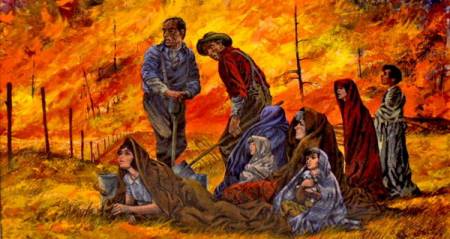
On October 9th, 1859, the first Marian apparition in the United States (since approved by the Catholic Church as “worthy of belief – although not obligatory”) occurred near Green Bay, Wisconsin. Adele Brise, a 28-year-old Belgian immigrant, was walking eleven miles home from Sunday Mass when she saw a beautiful lady with long, wavy, golden hair wearing a crown of stars and clothed in a dazzling white dress with a yellow sash around her waist.

Adele fell to her knees and asked, “In God’s name, who are you and what do you want of me?” The Blessed Virgin Mary replied, “I am the Queen of Heaven, who prays for the conversion of sinners, and I wish you to do the same. You received Holy Communion this morning, and that is well. But you must do more. Make a general confession, and offer Communion for the conversion of sinners. If they do not convert and do penance, my Son will be obliged to punish them. … Gather the children in this wild country and teach them what they should know for salvation…

Adele was faithful to her mission, teaching the Catholic Faith to the young and praying for sinners’ souls. However, almost exactly twelve years to the day after Mary’s message, Eastern Wisconsin experienced the one of the largest and the most deadly forest fire in our nation’s history. Flames of the vast Pestigo Fire surrounded the shrine built upon the apparition site, but all who fled to this ground dedicated to Mary survived. Consider: is our present time and culture somehow less deserving of divine punishment than theirs?

Another disaster afflicted our land a century ago. From 1918 to 1920, a deadly flu plagued Europe and the U.S. but wartime censors suppressed news reports from many nations besides the World War One neutral country of Spain. The Spanish Flu, as it came to be called, would go on to kill an estimated 675,000 Americans and at least 50 million people worldwide. This largely-forgotten history has been on my mind as the Coronavirus pneumonia outbreak has spread forth from Wuhan, China. There are strong indications that the dictatorial Chinese government is under-reporting how many of their people are infected or have died from this highly-infectious disease, and new cases are being reported day-by-day around the world. Earlier this month, in a effort to contain the spread of the disease, the Hong Kong government asked its citizens to stay at home and the cardinal of their Catholic diocese has suspended public Masses. Could we experience a deadly pandemic here? The U.S. Centers for Disease Control saysthe potential public health threat posed by [Coronavirus] is high.” Therefore, it is wise to be prepared.

I urge prudent preparation on two fronts. First, materially speaking, if an emergency were declared and schools and businesses sent everyone home, could your family be able to shelter at your house away from others for two or three weeks until the crisis passed? What food and water would you have if your electric power went out? Building non-perishable food reserves is easy now while store shelves remain fully stocked. And if no disaster ever comes (as may well be the case) you can simply cycle through these pantry supplies over time; so nothing is lost. The second, more important front in your disaster preparedness is: are you spiritually ready?

If you knew this Lent might possibly be your last, how would that change your spiritual focus? What vices would you cut and which virtues would you grow? How would you commit to prayer and prepare your soul? For many, times of great crisis or the end of their lives arrive unexpectedly and people face them unprepared. As Jesus once observed, “In [the days of Noah] before the flood, people were eating and drinking, marrying and giving in marriage, up to the day that Noah entered the ark. They did not know until the flood came and carried them all away.” Mark’s Gospel recalls one occasion when the Pharisees came forward and began to argue with Jesus, seeking from him a sign from Heaven to test him. Jesus sighed from the depth of his spirit and said, “Why does this generation seek a sign?” The Pharisees had heard Jesus’ teachings and known his mighty works but they still obstinately refused to change. Why do we put off the Lord, refusing to listen and respond, postponing our conversion until it might be too late?

Once, after a tower collapse in Jerusalem ended eighteen lives, Jesus asked, “Do you think they were more guilty than everyone else who lived in Jerusalem? By no means! But I tell you, if you do not repent, you will all perish as they did!” Will the Coronavirus become a devastating American disaster like the Pestigo Fire or the Spanish Flu? Hopefully not. I pray to God it will not be so and ask that you do the same. Yet even if this crisis never comes to your community, why not prepare? Stocking-up your pantry, regularly washing your hands, instilling our Faith into your children, and deepening your own relationship with Jesus Christ are wise decisions you won’t regret.

Sports Isn’t Everything

January 17, 2020

Human beings love sports. We also love to win. When we watch a team or athlete we identify with compete and prevail, we vicariously share in their victory. And this human trait is nothing new. The ancient Greeks celebrated their Olympians. The Romans had their famous gladiators and charioteers. In our day, almost one hundred million people watched the Super Bowl last year and more than one billion people around the world tune in to see the World Cup Final. Ironically, most Americans care very little about soccer—the most popular sport on earth, while most of the world has no interest in American football games. Sports, teams, and players, extremely important to some, can be completely disregarded by others.

Vince Lombardi was not the first coach to say it, but he did proclaim this maxim often: “Winning isn’t everything… it’s the only thing.” In his nine seasons coaching the Green Bay Packers, his teams won almost three out of every four games they played, including five NFL championships and two Super Bowls. And yet winning was not really the most important thing to Coach Lombardi. As sportswriter Jerry Izenberg recalls, “He told me one day, ‘I wish to h*** I’d never said that. (I.e., ‘Winning isn’t everything… it’s the only thing.’)” The sportswriter asked, “Well, don’t you believe it?” And Lombardi replied, “What I believe is, if you go out on a football field on Sunday, or any other endeavor in life, and you leave every fiber of what you have on that field when the game finally ends, then you’ve won. And to me that tells a lot more than the final score. And I never made that clear.’” However, I think his players had understood him, despite his imperfect and repeated maxim.

Former Packers reporter Ken Hartnett said of Vince Lombardi, “He was the first coach that I ever heard refer to love in the locker room. He really believed that there was a Christian love that he could incorporate into the team, the love that binds his players together, the love that comes out of sacrifice.” This flowed from Coach Lombardi’s faith. He was Catholic, attended the Sacrifice of the Mass every day, and was an adult altar server, too. “As far as myself is concerned,” he said, “I know my future happiness is, has to be, some other place. I want to try to do the things as well as I can here in order to attain someday maybe a greater happiness.” When Lombardi was dying from aggressive colon cancer fifty years ago this year, his past and present players came to his bedside out of grateful love for him. At his funeral Mass in St. Patrick’s Cathedral in New York City, Cardinal Terence Cooke preached, “Vince Lombardi fought the good fight. We believe in that last struggle with death this man won the final victory.

Unless it happens to be our own team, we rarely remember who won or lost state or national championships and titles, even just a few years afterward. Yet how many fans and parents forsake great amounts of time and money, their pleasant mood, or the Sunday worship our God is due on account of such games? There is a proper delight to found in sports, and virtues to be cultivated in their play, yet sports are not everything, nor the most important thing. In the words of St. Paul to the Colossians, “Whatever you do, in word or in deed, do everything in the name of the Lord Jesus, giving thanks to God the Father through him.

The Holy Stream — Baptism of the Lord—Year A

January 13, 2020

When you think of the River Jordan, maybe you imagine something broad, vast, and impressive, like the mighty Mississippi or even the Chippewa River. But the Jordan River is a lot more like Duncan Creek. Ever heard of Duncan Creek? It’s not far from here. Duncan Creek flows out of the south end of Lake Como in Bloomer. You know the bridge between Dairy Queen and the post office? That bridge crosses over Duncan Creek. In terms of size and color, the Jordan River is much like Duncan Creek; small and muddy with shrubs and trees growing along its banks. But unlike the rivers around here in Wisconsin, which are numerous and flow though green and lush countryside, the Jordan is among the few rivers passing through its region’s mostly arid lands. This is the body of water Jesus chose to be baptized in. A humble river of life flowing through a desert. Joshua led God’s Old Covenant people into the earthly Promised Land through this river. And Jesus, the new Joshua, leads God’s New Covenant people to the true Promised Land through holy baptism.

Jesus did not need John’s baptism for himself. John the Baptist sensed this and tried to prevent him, saying, “I need to be baptized by you, and yet you are coming to me?” Jesus insists, so John relents, but what is the purpose of his baptism? Jesus is baptized not to be made holy by the water, but to make the water holy, so that this most plentiful substance on the face of the earth could serve as the material for Christ’s gateway sacrament all throughout the world.

Jesus is baptized to allow us, through baptism, to be united to himself. His baptism foreshadows what comes in Christian baptism, what happened for you and me when we were baptized. The water, the decent of the Spirit, and the voice of the Father all signify effects of our first sacrament. Through baptism our souls were cleansed, the grace of the Holy Spirit was imparted to us, and we were acknowledged as a beloved children of God. We might take these things for granted: that sins can be forgiven, that the divine can dwell with us, that we can be more than mere servants, or slaves, or distant acquaintances to the transcendent God of the universe. That we can be treasured sons and daughters of God our Father. We need to remember and appreciate these things, for what goes unappreciated can be neglected to our loss.

The Jordan River flows about one hundred and fifty miles on the eastern border of Israel, south from the Sea of Galilee into the Dead Sea. These physical bodies of water contain a spiritual allegory. The Sea of Galilee is a large lake. Its fresh water, full of fish, pours out as the Jordan River. And this river, flowing through the arid desert, blesses its shores with life. But once these waters descent seven hundred vertical feet down into the Dead Sea, to the lowest place on earth, the water has no place else to go. So there the water sits, evaporating away in the heat, leaving its trace amounts of salt behind, causing the Dead Sea today to be an intensely salty sea in which no plants, nor fish, nor any other visible life lives.

The pure waters from above, received from the holy stream, bear no life in this recipient. Likewise, the sacraments offer grace from Heaven above, through Jesus Christ the stream of living water, but in the unrepentant soul they bear no life. Even a priest, baptized, confirmed, and ordained, saying the Mass every day, can be spiritually dead, causing spiritual harm to many, if he does not turn away from mortal sin. If you are in mortal sin, for God’s sake, for your sake, and for the sake of those around you, repent and be reconciled to God through his Sacrament of Confession. Jesus desires us to flow with his graces as a great blessing to others in this spiritually-arid world.

The words of Isaiah in our first reading point to Jesus, but because of your baptism you are in Christ. So Isaiah’s inspired words are spoken to every soul in a state of grace:

Thus says the Lord:
“You are my servant whom I uphold, my chosen one with whom I am pleased, upon whom I have put my spirit;
I, the LORD, have called you for the victory of justice, I have grasped you by the hand; I formed you… a light for the nations, to open the eyes of the blind, to bring out prisoners from confinement [and darkness.]”

You might not be called to cry out or shout, making your voice heard in the streets, breaking this and crushing that. But Jesus wants to use you as his powerful instrument to do transforming good in this world. Jesus is still quietly saving souls through his faithful ones, who receive his graces and pour them forth for others. Let this be you, for Him, and for many.

The Magi Sought Jesus — Epiphany of the Lord

January 7, 2020


The Magi from the east arrived in Jerusalem, saying, “Where is the newborn king of the Jews? We saw his star at its rising and have come to do him homage.” When King Herod heard this, he was greatly troubled, and all Jerusalem with him.

Why was King Herod greatly troubled? Because he saw this rumored, newborn king as a threat to his power and rule. No one ever mistook King Herod himself for being the Messiah or the Christ. Herod was not descended from David (as it was prophesied the great king of the Jews would be) and King Herod was not a godly ruler. The Roman Senate had installed him as king of Jerusalem and Judea, and he ruled as a brutal tyrant. Herod imposed harsh taxes, killed large numbers of his political opponents, and executed members of his family as well, including several of his wives and sons. The Magi, these wise astronomers from the east, had rightly interpreted the signs of heaven, but they badly misjudged Herod’s intentions. They had come, naturally enough, to Jerusalem to find the newborn King, but King Herod had no such son, so Herod hatched a wicked plan to murder any innocent child reputed to be the Christ.

Assembling all the chief priests and the scribes of the people, He inquired of them where the Christ was to be born. They said to him, “In Bethlehem of Judea, for thus it has been written through the prophet  [Micah]: And you, Bethlehem, land of Judah, are by no means least among the rulers of Judah; since from you shall come a ruler, who is to shepherd my people Israel.”

When King Herod was greatly troubled, all of Jerusalem was troubled with him because, knowing Herod, they knew the Magis’ message would likely lead to death and violence. Why did the Jewish religious leaders plainly-reveal to Herod where the Messiah might be born? They had reason to fear Herod, yet they could have demurred in Herod’s presence at responding to his inquiry. We must never tell lies, but we need not tell everything we know to everyone who asks us; for example, you don’t tell a killer where to find his next victim. The religious leaders could have replied to Herod, “Well, there are various disagreeing opinions about where the Christ will be born,” and that would have been true. The Jewish rabbis enjoyed theological debates about every question – and there was no need to let Herod know their best and most-accepted answer. Or, they could have replied, “Moses does not clearly tell us where the Christ will be born,” and that also could have been true – the prophet Micah provides that particular answer. Instead, the religious leaders tell Herod exactly where to look: “In Bethlehem of Judea,” they said to him. Without even realizing it, this was the Jewish religious leaders’ first betrayal, first denial, first rejection of Jesus Christ on earth.

Then King Herod called the magi secretly and ascertained from them the time of the star’s appearance. He sent them to Bethlehem and said, “Go and search diligently for the child. When you have found him, bring me word, that I too may go and do him homage.” After their audience with the king they set out [and found the fulfillment of their hearts’ hopes.]

If the Magi were “overjoyed at seeing the star,” imagine how they felt upon entering the house and finding Jesus with his mother. The Magi had traveled hundreds of miles to seek out the newborn king, to give him their precious gifts, and to show him their homage. But did any of Jerusalem’s priests or scribes travel the five miles to Bethlehem to do the same? Did any of them seek out the Magi or the Holy Family to privately warm them that they were in grave danger? Apparently not, for it required dreams from Heaven to warn the Holy Family and the Magi to flee from Herod. It is as if the religious leaders didn’t believe the Messiah, their Christ, would or could be born for them; like they did not believe that God was alive and active in their present day. Despite their vast religious knowledge, these men lacked faith. You and I profess to be Catholic Christians, and that is important. We have come to Mass today, and that is very well. But the Jewish leaders show us the danger of our faith being just a theory, an idea we hold without it prompting our full response to God.

The Magi sought out Jesus. Are we seeking a daily encounter with Christ? The Magi gave Jesus their precious gifts. Are we offering our Lord our time, talents, and treasures generously? The Magi prostrated themselves before Jesus and showed him their homage. Are we loving Jesus as merely an idea, or as the most important person in our lives? The beginning of this new year is a good time to take stock of ourselves and make resolutions to follow Christ better. Do not be afraid, for it will be the fulfillment of your heart’s hopes. If you are willing, he will lead and guide you on your journey.

Lord of wonder, Lord of light,
Lord with royal beauty bright,
Heaven leading, still proceeding,
guide us to thy perfect light.