Archive for the ‘Christian Perfection’ Category

Blessed are the Clean of Heart

November 3, 2024

31st Sunday in Ordinary Time
By Fr. Victor Feltes
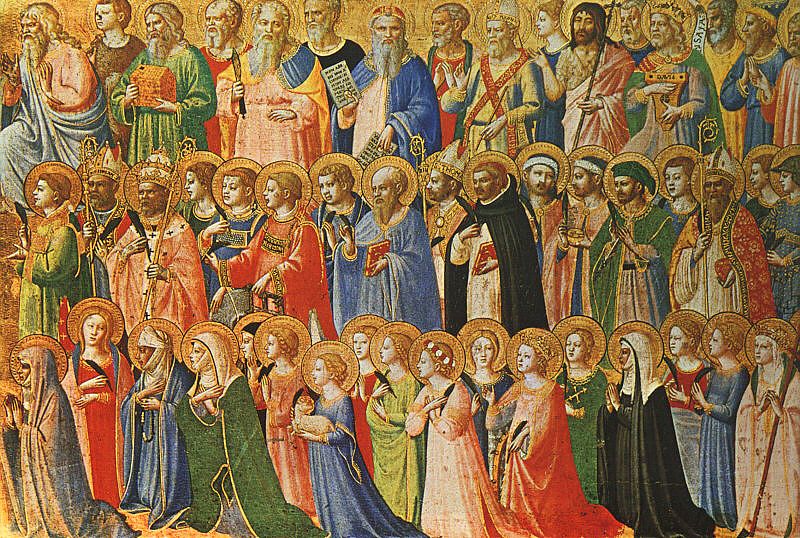
On November 1st, Christ’s Church celebrated all the saints in Heaven. The Gospel reading for that solemnity was Jesus’ beatitudes from his Sermon on the Mount. The beatitudes describe God’s saints, and they describe Jesus Christ himself as well. We are made in God’s image and our Lord grows us into his likeness. This Sunday, I would like to highlight one of those beatitudes: “Blessed are the clean of heart…” Most Bible translations render this: “Blessed are the pure in heart…” What is purity of heart?

Our first thoughts perhaps may go to purity in regards to chastity. Obscene materials and obscene acts are commonly called the opposite of “clean.” Yet human sexuality can be a means of sanctity. The marital embrace is even a constitutive part of one of the seven sacraments Christ gave us. Rightly-ordered chastity is a source of joy and life and holiness. Chastity is part of being clean of heart, but it’s not the whole or deepest sense of this beatitude.

When one of the scribes came to Jesus and asked him, “Which is the first of all the commandments,” Jesus answered with words from Deuteronomy: “Hear, O Israel! The Lord our God is Lord alone! You shall love the Lord your God with all your heart, with all your soul, with all your mind, and with all your strength.” A pure heart does not contain the sludge of sin. It does not willfully coddle an affection for evil. A clean heart is receptive to receive and return holy love.

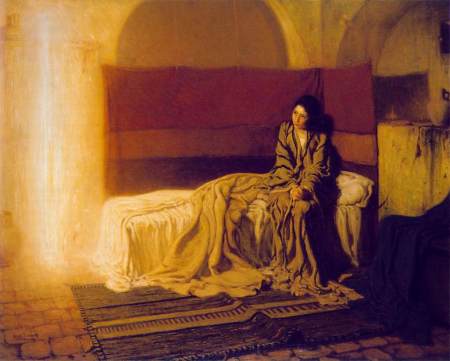
I believe the Venerable Bishop Fulton Sheen once noted that the Archangel Gabriel addressing and declaring the Virgin Mary “full of grace” points to her Immaculate Conception. For if there were sin present in Mary, like inches of mud in the bottom a bucket, she would not be full of grace. But she was clean of heart and full of grace and loved God with her whole self, because our loving God is good and the source of every good.

Now to prevent people from drawing the wrong conclusions, Jesus immediately follows up sharing the greatest commandment with another command from Leviticus. He declares the second greatest commandment is this: “You shall love your neighbor as yourself.” If Jesus had not cited this second commandment, some people would have misunderstood and thought loving God with all our heart, mind, soul, and strength prohibits the love of anyone else. (After all, Jesus said, “No man can serve two masters.”) Instead, we are to love our neighbor as ourselves (and by implication, love ourselves as our neighbors) even as we love God with our whole selves. When our loves are rightly ordered, in loving God fully we will love who and what he loves like he loves them. Contrary to what some might expect, we will love ourselves and other people best by first and fully loving God.

So renew your love for God, choose him first and fully, opposed to your sins or selfish lesser loves, like those saints who lived and died before us who are now in Heaven. Blessed are the clean of heart, for they will see God.

Called To See

October 27, 2024

30th Sunday in Ordinary Time
By Fr. Victor Feltes

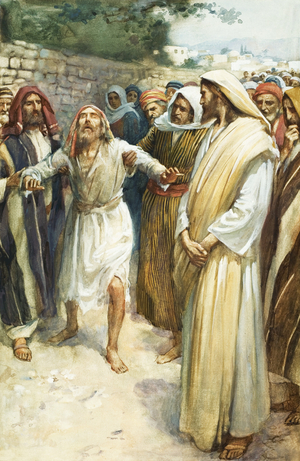
Jesus cured many people during his public ministry but very few of their names are recorded in the Gospels. Jesus raised Lazarus of Bethany from the tomb, cast out seven demons from Mary Magdalene, and restored the ear of Malchus in the Garden of Gethsemane. But beyond that, no recipients of Christ’s healings are named except for the blind man Bartimaeus, the son of Timaeus. The first three Gospels all recount this event, but the name of Bartimaeus the son of Timaeus appears only in today’s Gospel.

St. Mark wrote, “As Jesus was leaving Jericho with his disciples and a sizable crowd, Bartimaeus, a blind man, the son of Timaeus, sat by the roadside begging.” In Aramaic, the prefix Bar- means “Son of,” so Bartimaeus means “Son of Timaeus.” Why do St. Mark and the Holy Spirit doubly-emphasize the name of Bartimaeus the son of Timaeus, and what does Timaeus mean?

An Aramaic interpretation of the name Timaeus suggests “uncleanness,” but in Greek the name means “highly prized” or “honored.” This Bartimaeus sat begging on the ground alongside a road near Jericho—an extremely ancient city which symbolized the sinful world. He was blind, impoverished, ignored, despised, called a son of uncleanness, and he was unclean, yet our Lord considered him precious.

Bartimaeus had heard about Jesus’ healings and had faith in him. He shouts, “Jesus, son of David, have pity on me,” because he believes Jesus is the Christ (or the Messiah), the prophesized descendant of King David, and he believes Jesus possesses the power to heal him.

At first, many disciples rebuked the beggar, telling him to be silent, while he kept calling out all the more. Then Jesus stopped and said, “Call him.” So people in the crowd told the blind man, “Take courage; get up, Jesus is calling you!” The man sprang up from the dust and came closer to Christ, guided by Jesus’ disciples.

We are also journeying in a large crowd of Jesus’ disciples today, walking with him in his Church. Are we ignoring people who are not here with us, as the crowd at first ignored Bartimaeus? Jesus commands us to call them and help lead them to himself.

Before Bartimaeus could see, he had heard what other people were saying about Jesus. Are we sharing our stories, our cause for hope, with others? Are we mentioning the miracles that we have witnessed? Are we telling them the difference our Catholic Faith makes? Are we encouraging them to join us here?

Bartimaeus had faith due to what he heard and from God’s grace already active within him, for God is calling everyone. Bartimaeus called out to Jesus and, being called, threw aside his dirty, smelly cloak, lest it restrict his movement or cause offense. We, likewise, must cast off our sinful habits, lest they offend the Lord and impede our progress toward him.

When Bartimaeus reached Jesus, our Lord asked him: “What do you want me to do for you?” Christ could read the hearts of men, so why did he ask the blind man what he wanted? St. Augustine wrote that God wills us to ask him for things not because he doesn’t know (for he cannot fail to know) but “to exercise our desire through our prayers so that we may be able to receive what he is preparing to give us.” For “the deeper our faith, the stronger our hope, the greater our desire, the larger our capacity to receive will be…” Praying for our requests also helps us remember how much we need God and deepens our relationship. St. Teresa of Avila said, “You pay God a great compliment by asking great things of him.”

Jesus asks, “What do you want me to do for you?” How will we answer him? The blind man answered boldly, “Master, I want to see.” And Jesus told him, “Go your way; your faith has saved you.” Bartimaeus immediately received his sight and followed Jesus on the way. May this famous story of Blind Bartimaeus help us to see in new ways too.

The Last Shall Be First

October 19, 2024

29th Sunday in Ordinary Time
By Fr. Victor Feltes

In today’s Gospel, James and John shoot their shot to move higher up in Christ’s Kingdom. They say, “Teacher, we want you to do for us whatever we ask of you. … Grant that in your glory we may sit, one at your right and the other at your left.” Jesus replies, “You do not know what you are asking.” The two brothers jump at the chance to drink from Jesus’ cup and be baptized in his baptism because they don’t realize these things mean sharing in Christ’s suffering. Jesus assures them, ‘You will drink of my cup and experience my baptism, but to sit at my right and my left is for those for whom it has been prepared.’ Where were the places at Christ’s sides at his glorious royal enthronement? St. Mark’s Gospel tells us: “With him they crucified two revolutionaries, one on his right and one on his left. … [And] the inscription of the charge against him read, ‘The King of the Jews.’”

James and John did not realize what they were asking. They sought places closer to Jesus in order to live earthly lives in a palace on Easy Street. They imagined reigning over a kingdom with Christ where they would be served like the rulers of the nations who made their dominance over other people felt. But Jesus gathered his disciples and said, “It shall not be so among you. Rather, whoever wishes to be great among you will be your servant; whoever wishes to be first among you will be the slave of all. For the Son of Man did not come to be served but to serve and to give his life as a ransom for many.”

Hierarchies are normal and natural, though some are better than others. The secular world has hierarchies according to power, wealth, or status. Christ establishes a hierarchy for his Church on earth according to sacramental holy orders. But amongst the Church in heaven, a hierarchy exists according to love. In heaven, God reigns supreme and God is love—pouring out for all. There is no money to be had, the sacraments are no longer needed, and there is perfect, perpetual peace. Greatness above is according to one’s capacity to give and receive love. So whoever wishes to be great in God’s Kingdom must practice the self-gifting, servant love modeled for us by Jesus Christ.

We can expect to see many surprises after this life. Reality will look very differently in the light of eternity. Some things which we once thought were valuable—even necessary—will be seen as nothing. And things once rejected as useless will be recognized for their true value—especially in people. Many unknown people will become recognized as great, while many rich, powerful, and popular people will be humbled. “Thus,” Jesus says, “the last shall be first, and the first shall be last.” So let us begin living life with more of that eternal vision now: by seeing with the eyes of Christ, by thinking with the mind of Christ, and by loving with the heart of Christ.

What Must We Do?

October 13, 2024

28th Sunday in Ordinary Time
By Fr. Victor Feltes

A man runs up to Jesus, kneels down, and earnestly asks him, “What must I do to inherit eternal life?” Jesus quotes to him commandments about loving our neighbors: “You shall not kill; you shall not commit adultery; you shall not steal; you shall not bear false witness; you shall not defraud; honor your father and your mother.” Why did Jesus add “you shall not defraud” after saying “you shall not steal [and] you shall not bear false witness?” What distinction is being made? In the Greek, “steal” here denotes taking, while “defraud” suggests withholding or keeping back what belongs to another. Both the street mugger (by unjustly taking) and the business owner (by unjustly holding back) can deprive someone of what is rightfully theirs. It is possible to sin by clinging on to what we should give.

Upon hearing Jesus’ list of commandments, the man replies, “Teacher, all of these I have observed from my youth.” The man is seeking something more from Jesus. Jesus had just cited several of the Ten Commandments but notice which commandments Jesus left out. The first three commandments are conspicuously absent, the ones specifically about our relationship with God. Jesus, looking at the man and loving him, desires to reveal how he is to love the Lord. He tells him, “You are lacking in one thing. Go, sell what you have, and give to the poor and you will have treasure in heaven; then come, follow me.” But at hearing these words, the man’s face fell because he had many possessions, and he went away sad. Did that man ever go on to have a change of heart before the end? We don’t know. Matthew, Mark, and Luke all record this encounter in their Gospels but none of them mention his name. Perhaps (unlike with Jairus, Zacchaeus, or Bartimaeus) the early Christians were unfamiliar with this man because he never joined their community.

The Book of Acts describes Jerusalem’s earliest Christian community as being “of one heart and mind” and generous towards one another. “There was no needy person among them, for those who owned property or houses would sell them, bring the proceeds of the sale, and put them at the feet of the apostles, and they were distributed to each according to need.” However, that sharing was not obligatory. Christians still owned property, they were free to decide whether to sell it or not, and they were free to share the sale proceeds or not. So it is not necessarily wrong to own things, but wealth can be an obstacle to heaven.

Jesus remarked to his disciples, “How hard it is for those who have wealth to enter the Kingdom of God!” The disciples were amazed at his words, because they held the idea that having great wealth was a strong sign of God’s approval. So Jesus again said to them in reply, “Children, how hard it is to enter the Kingdom of God! It is easier for a camel to pass through the eye of a needle than for one who is rich to enter the Kingdom of God.” So who among us qualifies as rich?

Compared to our immediate neighbors, our wealth is probably pretty average. Or at least most of us have less money than the richest folks in town. But how materially wealthy are we compared to those in other countries? Compared to the world, everyone here is rich. For instance, a two person household with an annual after-tax income of $40,000 makes more than about nine-out-of-ten people on earth. Even someone who lives alone with a post-tax income of $10,000 a year makes more than eight-tenths of the world. We are rich. So what must we do?

Again, not all Christians must give away all of their wealth, but our Lord insisted upon it for that man who came to him because Jesus knew he loved his riches more than God. The things we own are not absolutely ours to do with however we please, for we and what we have belong to God. We are his trusted servants, the stewards of his goods. That is why Jesus says that anyone “who does not renounce all of his possessions cannot be my disciple.” Even when it is his will for us to have possessions, we must do so with a healthy detachment, by being frugal and generous and truly open to doing God’s will.

One of the most memorable scenes from the 1993’s Best Picture winning film “Schindler’s List” comes at the end. Oscar Schindler, a German industrialist, has protected the lives of more than 1,100 Jews during the Second World War by listing them as his “essential workers” while producing defective ammunition for the Nazis. He looks at the people he has saved and reflects: ‘If only I’d made more money. I threw away so much money, you have no idea. … I didn’t do enough. This car. Why did I keep the car? Ten people right there, ten more people. This gold pin… two more people. At least one. One more person, for this. I could have got one more person, and I didn’t.’ It is Ok to have what we need and it can be Ok to buy things we want, but someday we all will have to stand before the Lord “to whom we must render an account” of our Christian stewardship.

There is a world of needs around us, needs abroad and needs nearby, material needs and spiritual needs. Though they all have importance, our local spiritual mission has a special claim on our care. To aid the success of Christ’s mission for the salvation of souls among us, in the words of St. Paul, “Each person must give as he has decided in his heart, not reluctantly or under compulsion [but freely], for God loves a cheerful giver.” And our Lord promises rewards for our sacrifices for him. Jesus declares, “Amen, I say to you, there is no one who has given up house or brothers or sisters or mother or father or children or lands for my sake and for the sake of the Gospel who will not receive a hundred times more now in this present age… and eternal life in the age to come.” So let us be generous, for God will not be outdone in generosity.

The Journey to Sainthood

September 29, 2024

26th Sunday in Ordinary Time
By Deacon Dick Kostner

Our scripture readings today are telling us that we are not to focus on other peoples spiritual levels, for we all mature at different speeds and levels. God only asks that we try to develop and mature our level of listening to God’s commands that we obey his two great commandments of love of God and love of neighbor. There are different stages of spiritual development for we all learn at different speeds, and at different times. Catholic Doctors of the Faith have identified three stages of spiritual development and maturity. The First Stage is the Purgative Way: It is here that we realize that we have limited ability to fend for our self. We realize that we are sinful at times and that we need help to avoid that which will divorce us of God. We find that we want to form a relationship with God knowing that this will allow us to be happy and free of stress and worry. A conversion is happening within us to learn more about about our Creator. We cultivate virtue and humility realizing our limitations and looking for answers to questions that we encounter during our lives.

The Second Stage is the Illuminative Way: Our minds are gradually enlightened to the ways of God. The relationship with the Holy Spirit becomes stronger although there may be struggles. Sufferings may occur. When I encountered this Way while in Deacon Formation I felt sad because I thought the old Dick Kostner that I grew up with needed to leave. But I was wrong, I just needed to mature in my relationship with God and my personal priorities.

The Third Stage is the Unitive Way: Here we find a constant awareness of the presence of God in all that we do. We discover that he is constantly with us and welcomes conversations with Him in every aspect of human activities. God even responds to us before we even begin a conversation with him giving us direction and help before we even ask for it. At this stage we no longer ask the question, “What would Jesus do?” when encountering difficult situations in life for we already know what Jesus would do. This is the highest level of Spirituality one can develop. Some never reach this level during a human lifespan. It is important to realize that these Stages may not occur in order and because we are all unique we may alternate back and forth as our maturity develops.

The Three Stages of Spirituality is one of the things I believe Jesus is trying to teach his disciples and us. He desires a relationship with all baptized persons whether they are Catholic or other Christians. All Christians have access to the gifts of the Holy Spirit for we are all trying to build a relationship with Jesus, but because we are all unique, we need to realize that all of us are at different levels of Spiritual maturity and that makes us special in the eyes of God, and should not be criticized. As Jesus has told us “whoever does the will of My Father is my brother, sister and mother.”

Our Gospel today has Jesus telling us that “There is no one who performs a mighty deed in my name who can at the same time speak ill of me. For whoever is not against us is for us. Anyone who gives you a cup of water to drink because you belong to Christ…will surely not lose his reward.” I am happy to say that I feel I have lived out my life knowing and having many friends who are saints. One of them was a friend who I had while going to college. Larry was a quiet sort of person but there was something about him that was peaceful. He lived in our dorm and had about five friends he would associate with. Those friends never knew or heard from him after we graduated. A couple of years ago I received a call from another of my friends who called me with news about Larry. He had been surfing the net and he came across an article written about Larry. It announced the death of Larry and thanked him for his service. It seems that Larry had been employed by a half-way house for battered and abused women in Chicago for some twenty-plus years. This quiet mouse of a kind person had served others who were struggling to find life in a troubled world. Larry served many cups of water to people thirsting for some peace in this world.

I think the Church calls these types of persons “saints.” Wishing all of you a safe and enjoyable journey to sainthood.

Two Parables, a Poll, & a Purpose

September 15, 2024

24th Sunday in Ordinary Time
By Fr. Victor Feltes

Once upon a time, many years ago, a man who knew nothing about food production resettled to the countryside. He saw a farmer tilling a field and thought, “What a waste of effort! He’s just turning over dirt!” Then he saw the farmer planting seeds and wondered, “What’s he burying? Pebbles?” When the plants began to sprout and grow, he thought, “Ah, I see now! He’s growing a garden.” But the man was shocked at harvest time, “He’s cutting down everything he grew!” And when the farmer and his wife began hand-threshing, the man was baffled, “Why are they beating the plants?” The farmer’s wife ground flour and made loaves, placing them inside an oven, and the man was dumbfounded, “Now they’re burning it in a fire!” The farmer, of course, was growing grain and his wife was baking bread, but the onlooker did not understand all this until he was invited over to their house for supper.

Once upon a time in another tale, a little girl sat on the carpet of her living room while her mother sat in a nearby chair weaving embroidery stitches. The girl looked up and saw the chaotic, mishmashed underside of the embroidery and asked her good, and wise, and loving mother why she would create something so ugly. Her mother turned over the cloth, revealing what she was weaving and the little girl saw a beautiful, half-completed work of art.

Our God is all-good, and wise, and loving, and he is currently fashioning a beautiful, meaningful, lasting masterpiece for us on a scale the size of the universe. But until its completion we will see and experience ugly, painful things we will not understand, like the sufferings of Christ on Good Friday. His thoughts are not our thoughts, nor are his ways our ways, for we “are thinking not as God does but as human beings do.” Following Jesus will mean picking up the difficult crosses which come to us, denying ourselves, and acknowledging Christ before others.

Did Jesus care about what other people thought of him? Yes and no. Jesus asks, “Who do people say that I am?” and “Who do you say that I am?” That question is important, for Jesus declares, “I am the way and the truth and the life,” and “No one comes to the Father except through me.” Jesus gives his Church our Great Commission because all people are called to receive his baptism and to embrace all that he has taught for human thriving and salvation. But in another sense, he did not care what people thought of him.

Jesus did not allow what other people thought prevent him from doing what he should. Not even his friend Peter could change Jesus’ mind to do something against God’s will. Jesus knew that he would “suffer greatly and be rejected by the elders, the chief priests, and the scribes and be killed” but he went up to Jerusalem anyway and testified that he is the Christ. Christians today are called to courage too.

This week, I created an online survey to which 135 self-identified Christians responded. The poll’s question was: “Do you suffer for Christ?” 67% answered, “Yes, a little.” 12% replied, “Yes, significantly.” And 21% said, “No.” Do you suffer because you are a Christian? I asked a pastor-friend of mine how a Christian might discern if we’re suffering for Christ “significantly” or just “a little.” He thought that if we’re not sure, then it’s probably just “a little” — suffering greatly for Christ would be unmistakable.

So most Christians seem to suffer only a little for Christ, if at all, and yet we’re so afraid. You pray before meals, and that is good. Do you also pray before your meals in public? Do your coworkers or neighbors know you are a Catholic Christian? Have you invited anyone to our worship, to share this precious treasure? (Our classes for becoming Catholic begin two weeks from today.) As St. James says, ‘A faith without works is dead.’ We are called to be courageous, like the Prophet Isaiah, ‘to set our faces like flint, knowing that we shall not be put to shame, for the Lord God is our help.

I doubt the sufferings which flow from your Christian witness will be as severe as you might fear, but if sufferings do come your way know that you are not abandoned. When you suffer for Jesus and his Gospel, know that you are living out your faith with him. If you are faithfully carrying your Christian crosses, then you are following Christ.

What is Good for Us?

September 1, 2024

22nd Sunday in Ordinary Time
By Fr. Victor Feltes

Jesus said to the crowd, “Hear me, all of you, and understand. Nothing that enters one from outside can defile that person; but the things that come out from within are what defile.” Jesus speaks to the Old Covenant’s rules about the ritual purity of objects and foods. With the arrival of his New Covenant those ordinances passed away. “Thus,” St. Mark writes, “he declared all foods clean.” After carefully forming his Jewish people as a unique group set apart from the world, God lifts the burden of those purity laws to open the door to true religion for all the nations. That has led to gentiles like you and me worshipping him here together this Sunday.

So what substances should enter our bodies? Millions of Americans now use illegal drugs, abuse alcohol or prescription drugs. I can imagine someone asking: “If nothing from outside the body defiles, if God has created all things good, then how could any substance be forbidden?” Yes, all that God created is good, very good, but recall how one of his first commandments in the Garden of Eden was not to eat from a certain plant. The woman saw how that tree was good for food, pleasing to the eyes, and desirable for gaining wisdom, but it was not good for Adam and Eve to then eat of its fruit. Fire is another of God’s good creations, a blessing very useful for life, but misusing it can burn you or may entirely consume you.

Alcohol is a similar case; a good thing which can be harmful. Psalm 104 says God gives man “wine to gladden their hearts.” Jesus transformed water into wine at the Wedding Feast of Cana, and we know wine back then was more than just grape juice. No one put their new wine into old wineskins because the alcoholic fermentation would burst them. St. Paul even once counseled St. Timothy, “Stop drinking only water, but have a little wine for the sake of your stomach and your frequent illnesses.” So alcohol is a blessing, but Scripture also describes its dangers. Proverbs says, “Wine is arrogant, strong drink is riotous; none who are intoxicated by them are wise.” And St. Paul taught the Ephesians, “Do not get drunk on wine, in which lies debauchery.”

Intoxication or drunkenness carries both personal and communal consequences. Opposition alcohol’s harms was once so intense in our country that the 18th Amendment banned “the manufacture, sale, or transportation of intoxicating liquors” beginning in 1919. After almost 15 years, because of increased crime and corruption and the government’s desire for more tax revenue during the Great Depression, Prohibition was repealed in 1933. Of course, just because something is legalized doesn’t mean it’s safe, healthy, or helpful for me. For instance, smoking is highly-addictive and causes cancer but it’s legal in all fifty states. And now many places are legalizing or decriminalizing marijuana use despite its known health and social harms. Just because an activity is legal doesn’t mean we or those we love should do it.

True freedom is not unchecked license. It’s the ability to choose and do what’s right and best. Our addictions make us slaves. Consider your habits. Are their fruits good or bad? Jesus said the sins which come out of us are what defile us. Look at what comes from you because of this or that habit. What habits, then, should you moderate or abstain from entirely? St. James urges us in today’s second reading to “be doers of the word and not hearers only, deluding yourselves… Humbly welcome the word that has been planted in you and is able to save your souls.” Accept the pruning of correction and the nourishing support of others to bear better and more abundant fruit.

Why do we freely chose to sin – to do what we know is wrong? Because it feels like a shortcut to peace and happiness. But the holes in human hearts are meant to be filled by love instead of sins — divine and neighborly love, poured out and received. Jesus calls all sinners to change but he does not expect us to achieve this change alone. Ask for his help, his grace, his inspiration and strength, “for what great nation is there that has gods so close to it as the Lord, our God, is to us whenever we call upon him?” And through the support of fellow Christians, helping each other be better, embrace Christ’s ways which bring fruitful joys without any regrets.

Journeying With Jesus — Funeral Homily for James “Jim” Eder, 73

August 26, 2024

By Fr. Victor Feltes

Of all the Old Testament Psalms, the most famous is Psalm 23 by King David. King David writes, “The Lord is my shepherd,” and describes himself as a cared-for sheep in God’s flock. King David’s greatest descendant, Jesus Christ our Lord, goes on to declare, “I am the good shepherd.” However, St. John the Baptist proclaims on more than one occasion that Jesus is “the Lamb of God.” The presiding priest proclaims the same at every Mass. So Jesus Christ is both a sheep and our shepherd.

Amongst the New Testament Gospels, the most famous section may be Jesus teaching his Sermon on the Mount. And the most famous portion of the Sermon on the Mount is Jesus’ opening: the Beatitudes. “Blessed are the poor in spirit… those who mourn… [and] the meek… those who hunger and thirst for righteousness… the merciful… the clean of heart… the peacemakers… those who are persecuted for the sake of righteousness.” In these blessed statements, Jesus presents a portrait of people in this world who are well-aligned with the Kingdom of God. Christ’s Beatitudes describe his Christian saints, but they also describe Jesus Christ himself.

Jesus Christ is not only our teacher and Lord; he is also our Christian role-model. And Jesus is not only our shepherd, but also a lamb who understands us. So even as we walk through sad valleys in the shadow of death, like this passing of our brother Jim, we are not afraid. Jesus is at our side, guiding us and giving us courage; he has walked this path before us.

Jesus has become one of us; was born and lived among us. St. Paul notes “it is Christ Jesus who died, rather, was raised, who is also at the right hand of God and [now] indeed intercedes for us.” Jesus is that much on our side; so much in our favor. Such is his goodness and kindness. Such is “the love of God in Christ Jesus our Lord.”

He spreads a table before us. He anoints our heads with oil. His blessing cup overflows all the days of our lives. He invites us to dwell in this his house for years to come – until the day he calls each of us by name, just as he has called Jim before us. Let us pray for Jim and one another, that following our Lord we may be led to the place where we will journey no more and restful peace never ends.

The Importance of Obedience

August 24, 2024

21st Sunday in Ordinary Time
By Fr. Victor Feltes

Jesus agreed to come and cure the servant of a Roman centurion, but the centurion replied, “Lord, I am not worthy to have you enter under my roof; only say the word and my servant will be healed. For I too am a person subject to authority, with soldiers subject to me. And I say to one, ‘Go,’ and he goes; and to another, ‘Come here,’ and he comes; and to my slave, ‘Do this,’ and he does it.” This Roman centurion had commanding officers above him and soldiers and servants under his own command. He had carried out others’ orders and with authority he had given orders to others. This Roman centurion had faith that Jesus of Nazareth, this Jewish rabbi, was God’s servant and prophet — perhaps even the Christ — with authority over angels or the elements of creation. Jesus is under authority and possesses authority, through which God’s will is done. He told his Father, “Not my will but yours be done.” And he tells us, “You are my friends, if you do what I command.” We are called to obedience to legitimate authority and Jesus speaks to us in and through his Church.

During my ordination as a diocesan priest, I placed my wrapped hands inside the hands of my bishop in accordance with the rite. Bishop Listecki asked me, “Do you promise respect and obedience to me and my successors?” I responded, “I do.” I hold this obedience very seriously. In the areas of our bishop’s proper authority, what the bishop wants me to do is what Jesus wants me to do. Of course, I should share with the bishop my input and feedback because consultation helps him to make better decisions. And if the bishop were ever to command me to sin, that command would be unlawful and should be ignored. But I believe what the Church, or canon law, or our bishop commands me to do, that is what Jesus wants me to do.

The saints strongly advocate for holy obedience. Pope St. Gregory the Great taught, “Obedience is rightly placed before all other sacrifices, for in offering a victim as sacrifice one offers a life that is not one’s own; but when one obeys one is immolating one’s own will.” The Diary of St. Faustina Kowalska records Jesus telling her, “My daughter, know that you give me greater glory by a single act of obedience than by long prayers and mortifications.” And St. Francis de Sales said, “The Devil doesn’t fear austerity but holy obedience.” And there are many other quotes from the saints which commend holy obedience.

This brings us to our second reading from St. Paul’s Letter to the Ephesians. I have never been married, but as a priest and a pastor ‘I too am a person subject to authority, with persons subject to me,’ and I know that without obedience no house can function well. St. Paul writes, “Be subordinate to one another out of reverence for Christ. Wives should be subordinate to their husbands as to the Lord. For the husband is head of his wife just as Christ is head of the Church, he himself the Savior of the Body. As the Church is subordinate to Christ, so wives should be subordinate to their husbands in everything.” In other words, allow your husband to lead you and your family. Your input and feedback are very important in forming good decisions, and your husband has no authority to practice or command sin, but he does possess legitimate authority to lead. And “husbands, love your wives, even as Christ loved the Church and handed himself over for her to sanctify her… that she might be holy and without blemish.” In other words, you are commanded to love and serve, sacrificing for your wife and family, as Christ does for his Church.

Many of Jesus’ disciples listening in today’s Gospel said, “This saying is hard; who can accept it?” Jesus asked the Twelve, “Do you also want to leave?” And Simon Peter answered him, “Master, to whom shall we go? You have the words of eternal life.” And so it is for us. Sometimes what we are told may be difficult to hear, sometimes obedience or service will be hard, but to whom else shall we go if we are unwilling to trust and obey our Lord? He has the words of eternal life.

Sharing His Real Presence

August 12, 2024

19th Sunday & 20th Sunday in Ordinary Time
By Fr. Victor Feltes

All four Gospels recall the miracle of Jesus using five loaves and two fish to feed five thousand people. But only John’s Gospel records what Jesus taught the following day in Capernaum. The Gospels of Matthew, Mark, and Luke all quote Jesus’ Last Supper declaration “This is my Body.” But John’s Gospel, written after them all, clarifies what these words mean.

Today we hear from the sixth chapter of John, where Jesus says, “I am the bread that came down from heaven.” Some in the synagogue congregation murmur, “Is this not Jesus, the son of Joseph? Do we not know his father and mother? Then how can he say, ‘I have come down from heaven’?” Jesus of Nazareth was the son of Mary and the adopted son of Joseph, but Jesus also truly came down from God his Father in heaven. The people did not yet understand how what Jesus said was real.

Jesus then goes on to say, “I am the living bread … whoever eats this bread will live forever and the bread that I will give is my flesh….” The people quarrel among themselves about this, “How can this man give us [his] flesh to eat?” They envision something grotesque, but once again what Jesus said was real in a way his hearers did not yet understand.

In retelling Jesus’ response to this objection from the crowd, John’s Gospel repeatedly employs a Greek verb for eating which is more intense than before — a word which does not mean merely “to eat” but “to chew, or gnaw.” In other words, Jesus preaches:

Whoever [gnaws] my flesh and drinks my blood has eternal life, and I will raise him on the last day. … Whoever [chews] my flesh and drinks my blood remains in me and I in him. Just as the living Father sent me and I have life because of the Father, so also the one who [gnaws] on me will have life because of me. … Unlike your ancestors (during the Exodus) who ate (bread from heaven) and still died, whoever [chews] this bread will live forever.

Jesus does not intend to make his followers cannibals by feeding them a portion of his dead or detached flesh. Jesus would offer them his entire living self as food: his body and blood, soul and divinity. “Take this, all of you, and of eat it, for this is my body.” His Church has kept his commandment to do this in memory of him every Sunday throughout the centuries since.

Today, some Christians say, “This meal is only symbolic.” There is some symbolism present in the Eucharist: to separate a body from its blood and then reunite them is a symbol of death and resurrection. Jesus’ coming to us as food speaks to how essential receiving him in this sacrament is for our spiritual life. (“Amen, amen, I say to you, unless you eat the flesh of the Son of Man and drink his blood, you do not have life within you.”) And Jesus taking on the appearances of bread and wine reflects his wish to be one with us in both the ordinary and the exceptional. (“Whoever eats my flesh and drinks my blood remains in me and I in him.”) The Eucharist contains symbolism but the Eucharist is not just a symbol.

We are not idolaters. We do not worship bread. We worship Jesus Christ in the Eucharist. This is the teaching of the Sacred Scriptures. This is the faith of the early Church. This is a wonder confirmed by miracles. This is our Most Blessed Sacrament. This is Jesus, the joy of the saints.

At Capernaum, when Jesus’ disciples first hear him preach about this “Bread of Life” which is his flesh, many of them murmur, “This saying is hard; who can accept it?” Jesus replies, “Does this shock you?” They doubted if he really came down from heaven, so he asks, “What if you were to see the Son of Man ascending to where he was before? (Which is something Jesus went on to literally do.) … The words I have spoken to you are Spirit and life.” Jesus does not retract his teaching, and verse John 6:66 records that “as a result of this, many of his disciples returned to their former way of life and no longer accompanied him.” Jesus turns to his apostles and asks, “Do you also want to leave?” And St. Peter responds with trusting faith, “Master, to whom shall we go? You have the words of eternal life.

Notice how Christ did not immediately chase down those departing disciples. Like the father of the Prodigal Son who ran from home, Jesus’ great love was unable to keep them close to him that day. But Jesus hoped that time, God’s grace, and the welcoming witness of his disciples would bring them back to his Holy Communion someday. Does the disunity of Christians and waywardness of the world trouble you too? Jesus wants us to be his welcoming witnesses today.

Having encountered the goodness and love of Jesus, having received him in the Eucharist, invite others to his Church. Pray for souls and tell them the difference being a Catholic Christian makes in your life. Share good homilies, articles, videos, talks, your favorite prayer devotions and saintly heroes. Pray for and invite your family, friends, coworkers, neighbors to come to Mass with you, and when you see new faces here help to make them feel welcome. Our parish classes for becoming Catholic (for those above the age of reason who want to be baptized or confirmed and be received into the Church) begin next month. Now is the time to encourage people to consider registering, even if only to come, see, and learn more. You possess a great treasure it costs you nothing to share. So invite others, as our psalmist says, to “taste and see the goodness of the Lord.”

Controversies & A Sign

August 3, 2024

18th Sunday in Ordinary Time
By Fr. Victor Feltes

Some of the people who were present at the feeding of the 5,000 caught up with Jesus and his apostles at Capernaum. Jesus told them, “You are looking for me not because you saw signs but because you ate the loaves and were filled.” If Jesus’ sign had generated proper faith in them they would be seeking him for what he might reveal from God. Instead, they were led by their desire for more free bread. Jesus redirects them to himself: “Do not work for food that perishes but for the food that endures for eternal life, which the Son of Man will give you.” They said, “Sir, give us this bread always.” And Jesus replied, “I am the bread of life; whoever comes to me will never hunger, and whoever believes in me will never thirst.

Though I do not own a TV, I do follow news and entertainment through the internet, yet you may have noticed that I rarely preach on current events. Most of what fills the 24-hour news cycle today is forgotten by next week. And even when its reports are important it’s rare that they impact the lives of you or me very much. With continuous controversy, it’s easy to denounce what’s bad without actually doing any good. It keeps you focused on the affairs of others without growing in prayer or virtue. The spiritual enemies of your soul want you to be endlessly anxious, angry, distracted. The demons want you fixated on passing things instead of holding fast to the good things which ever endure. But today, I would like to highlight a recent event I take as a sign pointing to Christ.

The opening ceremony of the Summer Olympics featured a scandalous likeness of the Last Supper. The Catholic bishops of France called it “outrageous and provocative.… scenes of derision and mockery of Christianity, which we deeply deplore.” This Saturday, the Vatican issued a brief statement criticizing it as well. Why does God hate blasphemy and sacrilege? Because those sins are so harmful to us. Belittling God and holy things, treating our Lord’s name like excrement or a joke, creates obstacles to people knowing and loving God. Christian leaders were right to denounce that display being broadcast on a world stage. However, I would not be mentioning the Olympics’ sorry transgression — which reflects particular errors of our time — if not for a sign which occurred the following night.

Last Saturday, July 27th, shortly before midnight, four administrative districts in the city of Paris experienced a blackout. For up to ten minutes, French cultural landmarks in “the City of Lights,” including the Louvre Museum, the Paris Opera, parts of the Arc de Triomphe, and the Moulin Rouge cabaret, went dark. The French power company told reporters this brief power outage affected nearly 85,000 customers. What was most striking about this event was captured in images which quickly spread across social media. Shining on a hill as the tallest and most visible building in the city, The Basilica of the Sacred Heart remained lit amidst the darkness surrounding it. That beautiful church’s construction began and in 1891 as an act of reparation, as penance for sins of France which had led to national disasters.

That moment last Saturday night was a sign to the world for anyone with eyes to see it: that in the darkness of our times there is one Light for us to turn to. So do not obsess over bread and circuses which perish, and do not lose hope. Focus rather on the Light, the Bread of Life, Jesus Christ, who gives life to the world.

Faithful Efforts & Divine Increase

July 27, 2024

17th Sunday of Ordinary Time
By Fr. Victor Feltes

In our first reading from the 2nd Book of Kings, the Prophet Elisha uses twenty barley loaves to feed a hundred people. That suggests a miraculous multiplication of five times. In our Gospel reading, Jesus Christ uses five loaves to feed about 5,000 men – a multiplication of 1,000 times. So Jesus’ miracle was 200 hundred times greater than Elisha’s. That 200 figure is interesting because of something Philip the Apostle says.

When Jesus asked him, “Where can we buy enough food for them to eat,” to see what he would say, Philip remarked, “200 days’ wages worth of food would not be enough for each of them to have a little!” What good could 200 days of work do for so many? One might ask what good are any of our labors or efforts in the face of such great problems in our world today?

Many days passed between the events of the 2nd Book of Kings and the events of the Gospels. Why did the Old Testament people of God have to work and wait, suffer and endure, for days and years, for generations and centuries, before the coming of Christ? Because it was not yet the fullness of time; things were not yet fully prepared for those greater wonders. Our redemption in Christ is preeminently the work of God but God wills that the faithful efforts of faithful people help prepare the way.

While the disciples were still wondering what to do about the problem of the hungry crowd, Andrew the Apostle told Jesus, “There is a boy here who has five barley loaves and two fish, but what good are these for so many?” Jesus would take those loaves, give thanks to God the Father, and distribute the loaves and fishes to the reclining crowd as much as they wanted, and they all ate and had their fill.

Consider this: in the beginning, all things were created through God the Son out of nothing, ex nihilo. Yet Jesus did not conjure food to feed that crowd out of nothing. Like at the Wedding Feast of Cana, he received what was offered to him and transformed it for both our good and God’s glory.

That boy and those five loaves and two fish are remembered to this day, in our Gospel stories on earth and even more gloriously in heaven. Jesus used that entire gift, he multiplied all the loaves and fishes offered, just like how at Cana he transformed the contents of all six of the large stone water jars which the servants had filled for him. And Jesus directed his disciples to “gather the fragments left over, so that nothing will be wasted,” filling a dozen wicker baskets with fragments from the five barley loaves which had been more than they could eat.

Even as Christians we may get discouraged, feel overwhelmed and wonder, “What good are any of my labors or efforts? What good is this for few or many?” Today’s Gospel reading reminds us that Jesus will use everything which we offer him. He will bless it, transform it, multiply it, grow it. He will use it for both our good and God’s glory, and nothing will be wasted. Remember that Jesus promises “whoever gives but a cup of cold water… to drink… [for me] will surely not lose his reward.” (Matthew 10:42)

Lessons for our Mission’s Journey

July 14, 2024

15th Sunday in Ordinary Time
By Fr. Victor Feltes

Jesus sent his apostles on a journey with a mission for the Kingdom of God. He sent them out two-by-two, to preach repentance, liberate souls, and cure the sick. Jesus ordered the apostles not to carry sacks, nor food, nor money, nor second tunics. He did, however, instruct them to wear sandals and take a walking stick. We as Christians are also on a journey through this world and tasked to do important work for Christ’s Kingdom. So what lessons can we learn today’s gospel reading? Like the apostles, we are not meant to go it alone. We are expected to rely on God and others. And we are to take along only what will help and leave behind whatever will hinder our holy mission’s journey.

Jesus sent his apostles in pairs in part so that they would have one another for support. They gave each other companionship, encouragement, accountability, and the support of prayer. Married spouses are to be such helpmates to each other, but even the unmarried should have spiritual friendships in their lives. Help each other along the way to both holiness and to heaven. Encourage each other, lovingly summoning each other to go further in faith. Pray together, regularly entrusting your prayer intentions to each other. Prioritize Christian partnership in your life. Jesus’ apostles were not expected to journey nor fruitfully labor alone, and neither are you.

Why did Jesus command the apostles to carry “no food, no sack, no money in their belts”? Without these provisions the apostles had to depend on God and the people they would meet. Jesus teaches not to be anxious about material things; about what we will wear, what we will eat, or what we will drink. It is good for us to work to meet these needs, however, our worry is worthless. On their mission, Jesus put his apostles in a place where they needed to trust in God’s providence. One of the great goods from the practice of tithing today, besides the help it provides for Christ’s Kingdom, is that it exercises and deepens our trust in the Lord, giving him the opportunity to prove himself provident towards us. Today’s psalm declares, “The Lord himself will give his benefits; our land shall yield its increase.” Ask him and peacefully trust him to provide, what you need for your body—and more importantly—what you need for your soul.

Why were the apostles forbidden to take along a second tunic? Because traveling without that outer garment, prevented them from sleeping in the chilly outdoors. They needed to find nightly lodging and having sandals and walking sticks help them find it quicker amongst those whom they were sent to serve. Consider what things are helping you and which are hindering you in the holy work of your Christian journey. St. Ignatius of Loyola calls this his “First Principle and Foundation” in his Spiritual Exercises. He writes:

“God created human beings to praise, reverence, and serve God, and by doing this, to save their souls. God created all other things on the face of the earth to help fulfill this purpose. From this it follows that we are to use the things of this world only to the extent that they help us to this end [or goal], and we ought to rid ourselves of the things of this world to the extent that they get in the way of this end [or goal].”

St. Ignatius of Loyola calls us to discernment and holy detachment, If Jesus Christ would urge us to discard our own hand or eye if they were leading to our destruction, how much more should we pick up or put down habits or possessions based upon how they impact our holy mission’s journey!

In conclusion, to review the lessons of today’s gospel reading: seek Christian support from others, peacefully trust and rely on God, and seriously discern what will help you to better do what our loving Lord is calling you to do.

Prayers for Us in Heaven — Funeral Homily for Donna Mae Peterson, 88

June 26, 2024

By Fr. Victor Feltes

Jesus teaches that “there are many dwelling places” in his Father’s house. He says “I am going to prepare a place for you… [And] I will come back again and take you to myself, so that where I am you also may be.” The eternal dwelling place of our Father is heaven, and Jesus prepares a place for us and desires to take us there. But when can we arrive?

The Seventh-Day Adventists and Jehovah’s Witnesses believe in versions of “soul sleep” and think deceased Christian souls are not yet conscious in heaven; they both hold that experiencing heaven begins after the resurrection of the body. I have heard other Christians question whether we will still recognize or remember our loved ones in heaven. Some have wondered if we will be so overwhelmed experiencing God’s glory that we won’t think or care about anyone else. So are there saints in heaven now who are thinking about and caring about and praying about us?

In the Book of Revelation, St. John beholds visions of heaven where human souls are aware and active there even before Christ’s Second Coming, the General Resurrection, and the Last Judgment. In his sixth chapter, John recalls, “I saw underneath the altar the souls of those who had been slaughtered because of the witness they bore to the word of God. They cried out in a loud voice, ‘How long will it be, holy and true master, before you sit in judgment and avenge our blood on the inhabitants of the earth?’ Each of them was given a white robe and they were told to be patient a little while longer until the number was filled of their fellow servants and brothers who were going to be killed as they had been.” In the previous chapter, John saw people offering prayers in heaven: “Each of the elders held a harp and gold bowls filled with incense, which are the prayers of the holy ones.” So saints are now conscious and praying in heaven, but do they still remember and love those of us on earth?

How could a closer union with the All-Knowing One in heaven make us more ignorant? How could a closer relationship with the God who is Love make our love for all people colder? In one of Jesus’ parables, even a condemned rich man suffering in the netherworld remembered his five living brothers and prayed (or asked) for a messenger to be sent to warn them. The fact that miracles have followed from praying to saints in heaven asking for their intercession before God shows us that the holy dead continue to be aware of us, care about us, and pray for us.

Donna’s two sons, Tim and Ron, have shared a number of beautiful stories about her. They both mention her prayerful devotion and loving concern. Tim says the two core things in his parents’ lives were their devotion to Jesus and their dedication to family. Ron notes she was “always praying… always interested.” When Ron was experiencing hard times at chiropractic college far away in Iowa, his mom called every night to help him through it. Donna also spent hours on the phone with other relatives and friends, eventually becoming a texter and learning how to FaceTime on an iPod in order to stay in touch. She could always patiently listen and provide good counsel to help others with struggles but she would discern her advice with prayer and support those people with her prayers.

Pray for Donna’s soul, for “as gold in the furnace” God tries and purifies us in this world or in purgatory as needed, so “that we might no longer be in slavery to sin” and he may take us to himself in heaven as perfect offerings. But also remember that Donna does not forget you, she will continue to love you and continue to pray for you. Follow and cooperate with Jesus Christ, so her prayers for you shall not be in vain.

We Prove our Discipleship through Obedience & Faith

June 9, 2024

10th Sunday in Ordinary Time
By Fr. Chinnappan Pelavendran

God speaks to us in many ways, particularly through the Word of God. This Word is very active in our lives and helps us to grow in our closeness to God. On this Tenth Sunday of Ordinary Time, the Church reminds us that as humans, we all have to struggle against evil. However, the good news is that we are illuminated through the assurance of victory. It is Christ, who helps us to obtain this victory in our daily and earthly struggle against evil.

The first reading is from the story of the fall of Adam and Eve. Which reminds us of something that we inherited from them. That is Adam’s nature due to Original Sin. Also, it reminds us of the consequences of disobedience. Rather than accepting their fault, they tried to justify themselves by blaming each other. Adam blamed “the woman you (God) gave me.” Of course, he did not blame the woman alone; he also indirectly blamed God who generously and kindly gave him a partner. On the other hand, Eve blamed “the serpent that tempted me.” As it is for some of us, it was hard for them to accept their fault. Neither of them said, I am sorry, I was wrong; it was my fault, or even, please forgive me. What helps is humbly accepting one’s fault and asking for forgiveness.

Today’s gospel narrates Jesus’ encounter with his people and family. They thought he was out of his mind. They accused him of being possessed when he was liberating the possessed. They were ready to restrain him with false charges. They wished to tame his miraculous works and powerful preaching. Despite all this, He remained focused. Every true disciple of Christ is His brother, sister, mother, and a member of his victorious family. He came to save all who were ready to do the will of God. Of course, Mary his Mother is the greatest model of this for all of us. Hence, Christ did not disrespect his faithful mother. Rather, he teaches an important lesson today. That, through faith and obedience to God’s will, we all have the opportunity to become members of his victorious and happy family.

Also, Christ reminds us that it is not status but action in response to God’s call that determines who belongs to his victorious family. To become part of the victorious family of Christ is a dynamic process. It flows from a personal encounter with Christ. It also flows from faithfulness and obedience to God’s will. Hence, if we are Disciples of Christ, we must prove it through our faith and obedience to God’s will.

For us, all of this is a call to follow the Lord, no matter what our families or other religious people think about us. We are challenged to do the works of God and to recognize that the fight between good and evil is still going on in our own time. Adam and Eve enjoyed the status and comfort of God’s divine presence, but they lost it through disobedience. Through them, we equally lost our membership in the victorious family. But through obedience to God’s will, our membership of the victorious family has been restored. We must also recognize that it is God who is at work and so we can trust that we are being remade in the image of God.