Archive for the ‘Christian Perfection’ Category

The Voice & the Noise

August 13, 2023

19th Sunday of Ordinary Time
By Fr. Victor Feltes

When God visits the Prophet Elijah at Mt. Horeb the Divine Presence is preceded by powerful winds, quaking earth, and raging fire. Yet the Lord is not in the wind, nor the earthquake, nor the fire. Then there is a tiny whispering sound. Hearing this, Elijah goes forth to speak with God. In today’s gospel, Jesus calls Peter to “Come” forth to him out of the boat. Peter begins walking on the water, but seeing how strong the wind is he becomes frightened, begins sinking, and shouts “Lord, save me!” Jesus immediately stretches out his hand, lifts him up, and speaks to him. There is a common theme in these two episodes. In these encounters with God, Elijah and Peter must distinguish the Divine Voice from the noise. God is speaking to us, or he would like to. How can we listen without getting distracted or misled?

What do the demons want? They want the worst for us. They don’t want us listening to the Lord. They want us fully preoccupied with less important things. They want us too afraid or too discouraged to take good steps forward. How much time do we waste obsessing on things that don’t matter? How often do we worry about things that won’t happen? And how easily do we accept the lie that life cannot be better, that there’s nothing we can do? When our eyes and ears drift away from Jesus we sink. He chides us, ‘O you of little faith, of small trust in me, why do you doubt?’ Today I wish to share three great mens’ true discernment stories.

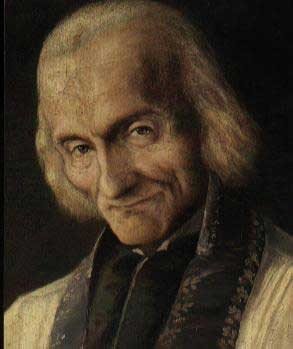
My first story is one about the 19th century saint, John Vianney, the patron saint of parish priests. His humble holiness and miraculous ability to read souls made crowds flock to his small French town for confessions, which he would hear for hours on end. His faithful fruitfulness made him a target of demonic harassment. Apparently, typical temptations were ineffective against him, so sometimes they would assault him as he tried to sleep at night, but Fr. John would take this as a good sign. It usually meant some “great sinner” was coming to town the next day to be reconciled to God in the confessional.

I have encountered people whose emotions very much did not want to go to confession or attend a spiritual retreat yet they could think of an actual good reason not to go. So they come, and experience God’s grace, and it’s more wonderful than they imagined! Who do you think was influencing their feelings in hopes they would not come encounter and listen to God? Emotions can be helpful and powerful fuel in your gas tank, but let your informed conscience and sound reason hold your steering wheel.

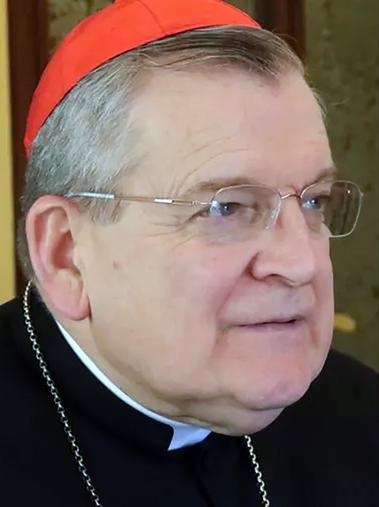
My second discernment story is about our former bishop, Cardinal Raymond Burke. He saw a need for a richer devotional culture in our diocese and felt peace and joy in the thought of establishing a pilgrimage shrine. He has a personal devotion to Our Lady of Fatima and initially pursued a shrine dedicated to her 1917 Portuguese apparitions, but nothing was coming together. So he revised the plan, opting to create a Marian shrine dedicated to Our Lady of Guadalupe and her Mexican apparitions in 1531. With that adjustment, everything began falling into place; a donation of beautiful land and financial contributions resulting in the shrine we know today. So not all obstacles come from the enemy. Some hindrances can be God’s providence to channel us into doing his will.

Midway through my time in seminary, I really believed for good reasons that priesthood was my calling, yet I still could easily question my vocation. (How could I be sure?) I would go in circles doubting myself with no greater clarity or benefit. So I decided to say to God, “Lord, this is my fair warning and my RSVP: I intend to continue towards ordination, but if that’s not what you want please make it obvious or impossible for me. If it’s not your will, I don’t want it to happen.” I left it to him, and after that I felt much more peace, and here I am now. Peace is a strong sign that you’re doing the will of God.

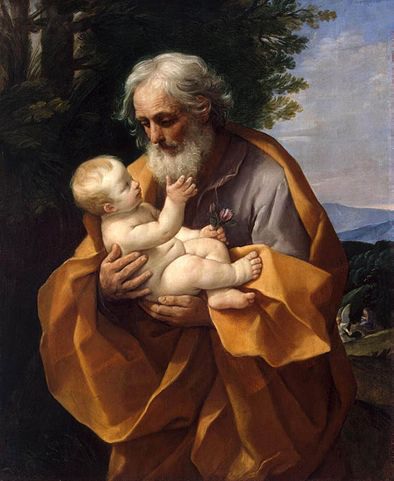
My third discernment story is about of St. Joseph. You will recall that when he learned that Mary was with child (either because he doubted her and thought her unworthy of him, or else because he believed her and thought himself unworthy or her and her holy child) Joseph concluded he should not be Mary’s husband. However, it only took an angel’s visit in one night’s dream to get Joseph back on the right track. This is because Joseph was a just man who wanted to do whatever God willed. God is supremely intelligent, powerful, and creative; so he can provide a clear sign if he needs to. However, having a heart and mind open to doing God’s will is a necessity.

You cannot see God’s signs with your eyes closed shut. You cannot hear him if you refuse to listen. God prefers to speak to us with a tiny whispering Voice, but if we ignore him he may allow some disruption in our lives. Those figurative winds, earthquakes, and fires are supposed to get our attention so that we will heed him and listen to his Voice. Our psalmist says, “I will hear what God proclaims; the Lord — for he proclaims peace. Near indeed is his salvation to those who fear him…” Fearing God is not about terror, but regarding and respecting him. Those who do, seek God’s will. They hear his Voice and listen, and thereby gain his blessings.

Jesus Saves Us From Sinking

August 12, 2023

19th Sunday in Ordinary Time
By Fr. Chinnappan Pelavendran

God’s presence is usually felt in tiny and small ways. He comes to us in gentle, little ways, and He will be with us when we need him the most. Jesus expects from us the openness to call on him for help and he will be there to support us and guide us. He wants us to be aware of his voice in our life, which often goes unnoticed. Jesus is always there with his guiding and supporting hands.

The background of the first reading is that, after the death of Solomon, the northern tribes broke away from the tribe of Judah and from its priests. They formed an independent country called Israel. As the years passed, many of the Jews in this country lost their Faith in Yahweh. Their seventh king, Ahab, married Jezebel, the daughter of a pagan king. He allowed her to build a temple for her god Baal and then she encouraged him to take part in idol worship and immorality. During this time, the prophet Elijah was sent by God to Israel to bring His people back to true worship. Having faith and confidence in Yahweh, he defeated and killed the 450 pagan priests of Baal on Mount Carmel.

For this reason, Queen Jezebel sent murderers to kill the prophet Elijah. However, God saved him from the dangers and gave him food through an angel. He fled for forty days and forty nights to Mount Horeb. Once there, he realized that the presence of God was not in the thunder, earthquake, or fire but in a tiny “whispering sound.” Elijah acknowledged God’s presence by covering his face and coming out of the cave where he had taken shelter. The first reading remains us that we have to experience God’s presence in our lives. We must listen carefully to everything going on around us because we encounter God in all the small events of our life. Failure, as well as success, offers us the opportunity to feel the presence of God, who saved the Prophet Elijah’s life.

In today’s Gospel, Jesus approaches his disciples walking on the water. The disciples are terrified by seeing someone walking on the water so they cried out in fear. Jesus reveals himself to them, saying “Courage, it is I. Do not be afraid.” Encouraged by the words of Jesus, Peter is the first to respond. At his invitation, he walks towards Jesus across the water, but his courage fails and begins to sink. Jesus reaches out his hand to him and saves him. The Gospel ends with Jesus calming the storm and being acknowledged as the Son of God by the disciples.

Courage! It is I Do not be afraid.” Jesus speaks these same words to us every day in our life. The gospel invites us to deepen our faith and maintain our focus on Jesus. We need to fix our eyes on Jesus.

We need to realize that the presence of Jesus is always with us. He gives us peace even in the storms of life. The storms of anxiety and worries about the future, storms of sorrow, storms of doubt, storms of tension, storms of anger and despair, storms of temptations, and storms in family relationships. So, try to feel the presence of God always in your life.

We need to imitate the short prayer of sinking Peter, “Lord, save me,” or the prayer of the mother of the possessed girl, “Lord, help me,” or the blind man’s prayer, “Son of David, have mercy on me,” or the repentant sinner’s prayer, “Lord have mercy on me a sinner.” We must begin every day by offering all our day’s activities to God and asking for His grace to do His will. Then we must conclude every day before we go to sleep by asking God’s pardon and forgiveness for our sins.

Being a True Disciple Requires Total Commitment

August 1, 2023

17th Sunday in Ordinary Time
By Fr. Chinnappan Pelavendran

A few months ago, I came across a student who was training himself to make the school’s football team. He got up every morning at 5:00 AM to train himself. He would run and lift weights for two hours. Then he would go back to shower, eat breakfast and go to school. After his classes, he would go back to the athletic facility and work for three more hours with his teammates. The next morning at 5:00 AM, he will start the same routine again. He had very little time for his parents, social life, and other work.

Today we have the pearl merchant who sacrificed everything to buy the pearl of great price. We hear of a treasure hunter who sold everything he owned to buy a field with treasure in it. So, what is the connection between a pearl merchant, a treasure hunter, and this young football player? What do they have in common? They have a total commitment to their dream. All of them are willing to sacrifice everything for the goal that they have set for themselves.

This is what Jesus points out in today’s gospel. To be a true follower of God requires total commitment on our part. Citizenship in God’s Kingdom requires us to give 100% all of the time, not just when we feel like it. God’s Kingdom must be the top priority of our life. We cannot be true followers of Jesus only part-time. Being a true disciple of Jesus is like being a pearl merchant. Being a true disciple of Jesus is like being a treasure hunter. Being a true disciple of Jesus is like being a football player. It involves total dedication and commitment.

There is a big difference between a true disciple of Jesus, and our pearl merchant, treasure hunter, and football player. Those three people are striving for earthly rewards, while followers of Jesus are striving for eternal and permanent rewards.

When the pearl merchant dies, his pearl will no longer be of any value to him. When the treasure hunter dies, his treasure will be just as useless to him. When the football player dies, his trophies will only be a keepsake for his family. However, when the true disciple of Jesus dies, the whole kingdom of God rejoices because it will now shine brighter and brighter. All of God’s people will be edified eternally.

Money is good when it is used to help others, not when it is only spent on ourselves. Influence and power can be great when used to lift up those who are down. Think about this. If our pearl merchant and treasure hunter and football player were willing to sacrifice so much for a prize that will never last, how much more should we be willing to sacrifice for a prize that will last forever? Earthly prizes can be good and even satisfying for a time, but eternal prizes are the best.

As true disciples of Jesus, we need to keep our greatest treasure safe, which is our personal relationship with Jesus. We do this by accepting him every day as our God and Savior. By allowing God to have total control over our lives through our loving obedience to His will, by asking for the guidance of the Holy Spirit, by talking to Him daily in prayer, and by listening to Him in our meditative reading of the Holy Scripture. By getting reconciled to Him and others, asking for pardon and forgiveness for our sins, by offering Him our lives on the altar during the Holy Mass, and by receiving Jesus in Holy Communion.

Victory Over the Sirens’ Song

August 1, 2023

17th Sunday in Ordinary Time
By Fr. Victor Feltes

This morning, I wish to recount two tales from Greek mythology which shed light on how we can fully live the Gospel. I want to tell you the stories of how Odysseus and his ship’s crew and Jason with his sailors each survived encounters with the mythical Sirens. The Sirens were beautiful half-woman/half-bird creatures who would sing from their island to passing ships. Their song was so alluring and entrancing that sailors would jump overboard and drown in the sea or steer their vessels into deadly shipwrecks on the rocks.

In The Odyssey, the poet Homer tells how Odysseus on his epic voyage wished to hear the Sirens’ song but also wanted to survive with his men. So Odysseus instructed his crew to tie him to the ship’s mast telling them that, no matter how much he might beg them, they were not to untie him but bind him down all the more. Then Odysseus put wax into the ear canals of all his men so they could not hear the Sirens’ song. While rowing their ship past the Sirens, Odysseus pleaded to be released, but his crew faithfully followed his previous instructions until the Sirens were left far behind them and all of them survived.

In the Greek tale of Jason and the Argonauts, Jason and his crew survived the Sirens using a different approach. Aboard their ship was a great musician named Orpheus, a master of an ancient harp called the lyre. As they passed the Sirens’ island, Orpheus plucked the strings of his instrument. And though the Sirens’ sang their evil song, Jason and all his men were so engrossed in the beauty of their friend’s music that none of them were drawn to the Sirens’ temptation.

So we see three strategies reflected in these tales: Odysseus tying himself to the mast, his men keeping wax in their ears, and Jason and his crew being captivated by something more beautiful.

Some people approach certain sins like Odysseus, asking, “How far can I entertain this temptation without falling? How much can I enjoy this sin without suffering consequences?” But having such a divided heart makes it is very hard to restrain oneself. Others, with more success, approach such sins like Odysseus’ men by giving temptation no hearing. They are not seduced by temptation because they prudently avoid its near occasions. They know where they are weak and adjust their habits accordingly. This strategy should have some place in aspects of all our lives. However, the third strategy against the allure of sin is best of all: to be led by, delighting in, and loving the holy, good, and beautiful.

Jesus says, “The Kingdom of Heaven is like a treasure buried in a field, which a person finds and hides again, and out of joy goes and sells all that he has and buys that field.” The person in Christ’s parable sacrifices joyfully because he so values the treasure he has found. Jesus says, “The Kingdom of Heaven is like a merchant searching for fine pearls. When he finds a pearl of great price, he goes and sells all that he has and buys it.” A wise merchant can peacefully trade everything else for one most beautiful and desirable thing, to his great personal profit. Jesus, God, is the Pearl of Great Price. Christ’s Kingdom and life with his saints is the treasure we have found.

Let us pray: “Lord God, help me to love you more your goodness and beauty and love and to love all that you love as you love it.” Ask Jesus Christ to grow and deepen your love so that as you journey on your life’s voyage your faith may not be shipwrecked but be lived in fullest freedom with peaceful, loving joy.

Fruitful Love Despite Our Flaws — The Justin Wachtendonk & Brenna Werner Wedding

July 8, 2023

By Fr. Victor Feltes

Justin and Brenna, you have chosen beautiful readings for your wedding Mass. Including your second reading, the most popular of all wedding reading options: St. Paul’s famous poetic hymn about love. In the 13th chapter of his 1st Letter to the Corinthians, St. Paul teaches what love does and does not do. These words contain blessed lessons for us all. Today, I wish to highlight the rarely-considered context of those passages to help married couples and people within Christ’s Church of our day.

When we think of the early Church, we tend to picture it as a golden age. The apostles were still alive on earth preaching the Gospel, performing miracles, and founding Christian communities. Divinely inspired books were still being written for what would become the New Testament of the Bible. The Church’s membership was growing widely and rapidly, while producing great saints and martyrs. But this does not mean that everything was perfect. Far from it!

You can see this in St. Paul’s 1st Letter to the Corinthians. He writes them to address the many things that were going wrong at the Church in Corinth. For instance, Paul corrects the Corinthian Christians’ bitter internal rivalries and factionalism. He notes the external scandal caused by them suing each other in secular courts. He critiques the Corinthians’ inflated pride. He excommunicates a certain man for his unrepentant sexual sins. He condemns the Church at Corinth’s liturgical abuses (against the Real Presence of Jesus and one another) at their celebrations of the Holy Eucharist. And St. Paul cites still more controversies than these. So things in the early Church were not so idyllic as we might imagine. And that can be a great encouragement for us today!

The early Church, despite the many flaws of her members, produced good, much good, world-transforming good and the salvation of many souls, in those days and thereafter. The Church today, despite the many flaws of her members, still produces much good, world-transforming good and the salvation of many souls. His Church build upon a rock is, as Jesus says in our Gospel, “a city set on a mountain which cannot be hidden.” She remains, “the salt of the earth” and “the light of the world” — purifying, enlightening, enhancing, and saving.

Whatever goodness is found in Christ’s Bride, the Church, is like the worthy wife the Book of Proverbs describes in our first reading. As the pearl of great price, “her value is far beyond pearls.” “Her husband, entrusting his heart to her, has an unfailing prize. She brings him good, and not evil, all the days of her life.” She labors alongside him, “reaches out her hands to the poor,” and he will “give her a reward of her labors, and let her works praise her.” This is a great encouragement for us in his Church, but also a great encouragement for all Christian married couples here.

Justin and Brenna, you are about to enter a new covenant with Christ. In your sacramental marriage, you will encounter each other’s flaws and experience trials, as every married couple will. Do not be surprised when not everything is perfect and do not be alarmed. Maintain your peace. With a love that is patient, a love that is kind, a love that most importantly has its origin and strength in Christ, you will ‘bear all things and endure all things.’ His “love never fails.” Like his Church, which despite the imperfections of her members produces much good fruit, your marriage — if united to Christ — will never fail.

Great Rewards From Small Deeds

July 2, 2023

13th Sunday in Ordinary Time
By Fr. Victor Feltes

The Old Testament Prophet Elisha was the immediate successor to the Prophet Elijah, ministering as a traveling prophet and wonderworker in the 800’s BC. One day, he came to a town of northern Israel called Shunem in which lived a “woman of influence.” Other Bible translations of this same text describe her as “prominent, influential, and wealthy”—“a great lady.” Curiously, she along with her husband go unnamed in the text. Perhaps, as with “the beloved disciple” in the Gospel of John, this is intended by providence to encourage us to envision ourselves in her place.

This great lady urges the prophet to dine with her. He accepts, and thereafter, whenever passing through that town, he would visit to eat there. So she says to her husband, “I know that Elisha is a holy man of God. Since he visits us often, let’s arrange a little room on the roof and furnish it for him with a bed, table, chair, and lamp, so that when he comes to us he can stay there.” Her husband apparently agreed, because sometime later Elisha lodges in that new room overnight. They may have been simple accommodations but Elisha really appreciated them.

While staying there, Elisha asks his servant to call the woman. Once she stands before him Elisha asks his servant to say to her (apparently in her own language): “You have troubled yourself greatly for us; what can we do for you? Can we say a good word for you to the king or to the commander of the army?’” She replies, “I am living among my own people.” By this response, she is expressing that she lives contently and secure, far removed from the royal court and its concerns. Her needs are satisfied. She has not shown Elisha hospitality to win favors from him. She receives him because he is a prophet. She receives him because he is a righteous man. She serves him because she knows he is a holy man of God.

Later Elisha asks, “Can something be done for her?” His servant, with great confidence in the prophet, replies, “Yes! She has no son, and her husband is getting on in years.” So Elisha has her called again and once she stands at the door, Elisha promises, “This time next year, you will be fondling a baby son.” She replies, “My lord, you are a man of God; do not deceive your servant.” Yet, the woman would conceive, and by that time the following year she had joyfully given birth to a son as promised. From God, she receives the prophet’s great reward.

Jesus says, “Whoever receives a prophet because he is a prophet will receive a prophet’s reward, and whoever receives a righteous man because he is a righteous man will receive a righteous man’s reward.” And what of goodness shown toward those of lesser stature? “Whoever gives but a cup of cold water to one of these little ones to drink because the little one is my disciple—amen, I say to you, he will surely not lose his reward.”

Sometimes, Catholics look at our great saints and imagine we must do extraordinary things to be holy and greatly blessed. Thinking that such great deeds are beyond them, they despair of ever becoming saints themselves. In the late 1800’s, young St. Therese of Lisieux felt that way too, but then she found her “Little Way” to holiness. Her little way to great holiness was to do many little things for the right reason, with the right heart, that is, with great love.

In her highly recommended autobiography “Story of a Soul”, she writes:

Miss no single opportunity of making some small sacrifice, here by a smiling look, there by a kindly word; always doing the smallest right and doing it all for love.” “You know well enough that our Lord does not look so much at the greatness of our actions, nor even at their difficulty, but at the love with which we do them.” “Without love, deeds, even the most brilliant, count as nothing.” “To pick up a pin for love can convert a soul.

Like the great lady of Shunem and St. Therese of Lisieux, realize and remember that doing many little things for the right reason, with the right heart, out of love, will surely not lose its reward.

The New Manna

June 11, 2023

Solemnity of Corpus Christi
By Fr. Victor Feltes

In the Old Testament, God freed his people with the Prophet Moses. The Hebrews in Egypt were slaves to Pharaoh since birth, but God’s mighty works through Moses liberated them. Though he had led them through the waters of the Red Sea their journey was not yet completed. They were still in the arid desert and God wished to lead them into his Promised Land, “a land of milk and honey” he had promised to their ancestors. God had already blessed his people, yet he wished to give them his even fuller blessings there.

How were the Hebrew people sustained for forty years in the desolate Sinai desert? What did they eat to survive? Every day, God made fine flakes appear on the ground around their camp. These flakes were “white, and tasted like wafers made with honey.” Upon seeing them the people asked, “What is this?” (in Hebrew, “Manna?”) Moses told them, “It is the bread which the Lord has given you to eat.” Without that manna they would have starved to death. God’s people ate this bread until they entered the Promised Land.

Here we see things and events of the Old Testament foreshadowing events and things of the New. In the New Testament, God liberates his people with Christ Jesus his Son. We all were slaves to sin, Satan, and hopeless death, but God’s mighty works through Jesus Christ freed us. He has led us through the waters of baptism; however, our journey is not yet completed. We possess renewed life in this fallen world but God wishes to lead us into his Promised Land of Heaven. God has already blessed us, yet he wishes to give us his even fuller blessings there.

So how are we to endure as we walk through the present desert of this world? Every day, in churches like this one, God offers us the Bread that has come down from Heaven. Jesus says, “I am the living bread that came down from heaven; whoever eats this bread will live forever; and the bread that I will give is my flesh for the life of the world.” He gives us himself in the Eucharist. People see the Blessed Sacrament and wonder, “What is this?” It is the New Manna; the Body and Blood, Soul and Divinity of Jesus Christ.

In addition to Sacred Scripture, the Early Church Fathers attest to this. These theologians living in the first centuries of the Church teach and document what the earliest Christians believed about Jesus Christ’s Real Presence in the Eucharist. For instance, shortly after 100 AD, St. Ignatius of Antioch said, “The Eucharist is the Flesh of our Savior Jesus Christ.” Around 150 AD, St. Justin Martyr taught, “The Eucharist… is both the Flesh and the Blood of that incarnated Jesus.” St. Augustine of Hippo wrote in the early 400’s that, “Christ was carried in his own hands when, referring to his own body, he said, ‘This is my body.’ For he carried that body in his hands.” And there are many other examples of such teaching from that era.

This is what Christ’s one, holy, catholic, and apostolic Church has always believed and taught, and God has affirmed its truth here and there by Eucharistic miracles throughout the centuries. In the Old Testament, God’s people ate the manna until they entered the Promised Land. Had they not regularly eaten of it, they would have died from starvation. This reflects how important faithfully receiving and promoting the Holy Eucharist must be for you and me.

Never neglect Sunday Mass. To skip Mass from Saturday evening through Sunday night (without a grave reason for doing so) is to prioritize something else above of Jesus, spurning the Lord who commands us to keep his day holy. Let Jesus Christ be first in your life through faithfully worshipping and receiving him at Mass. And opportunities to worship and receive our Lord at Mass are not limited to the weekends.

If your schedule permits, I welcome and invite you to try weekday Mass, celebrated at St. Paul’s on Monday through Friday at 7:15 AM and mornings at St. John’s on Mondays, Thursdays, and First Fridays. Weekday Mass is only a half-hour long, it features a homily, and is among the best devotions for drawing closer to Jesus.

Are any of your friends or relatives interested in our Catholic Faith? Invite them to come with you to Mass or bring them to that other great way to encounter our Eucharistic Lord: Eucharistic Adoration.

What greater treasure do we have than Jesus, truly present in the Eucharist? Let us treasure him as we ought and introduce this treasure to others. Strengthened by his food, our Lord would bring us all together into his Promised Land of Heaven.

The Holy Spirit Outpoured

May 28, 2023

Vigil of Pentecost
By Fr. Victor Feltes

All plants and animals depend upon water to live. Water comes down to us freely from the sky. Though its appearance may vary (as rain, or hail, or snow, or dew) once it rests upon the earth it produces many different effects throughout creation. Water, while ever remaining itself, adapts to the need of every creature that receives it, growing apples on an apple tree, creating sweet sap in a maple tree, or generating many-kernelled cobs on a cornstalk. In this way, water is similar to the Holy Spirit. The Holy Spirit descends as a free gift from heaven. He comes in different appearances (as fire, as a dove, as wind, or invisibly) while always remaining his same divine self. He is the Lord, the giver of life, and in each person who receives him through Christ he produces fruits through gifts which he imparts as he pleases.

On the last and greatest day of a Jewish feast, Jesus stood up and exclaimed, “Let anyone who thirsts come to me and drink. As Scripture says, rivers of living water will flow from within him who believes in me!” John’s Gospel tells us “he said this in reference to the Spirit that those who came to believe in him were to receive,” adding, “There was, of course, no Spirit yet, because Jesus had not yet been glorified.” How are we to understand this verse which says, ‘There was no Spirit yet’?

Is it teaching that the Holy Spirit did not yet exist? No, the third Person of the Trinity is co-eternal with the Father and the Son. There was never a time when he was not.

Is the passage saying the Holy Spirit was not yet present and active in the world? No, Luke’s Gospel describes several actions of the Holy Spirit on earth long before Easter or Pentecost. He overshadowed Mary at Jesus’ conception and inspired Elizabeth at the Visitation. He enlightened Simeon and Anna to recognize the Christ Child at the Presentation in the Temple, and our Nicene Creed proclaims that he has spoken through the Old Testament prophets.

Is Pentecost of note because that is when the apostles received the Holy Spirit for the first time? No, for John’s Gospel records how Jesus appeared in the Upper Room on Easter Sunday evening and breathed on them saying, “Receive the holy Spirit. Whose sins you forgive are forgiven them, and whose sins you retain are retained.” Seeing as how they had already received the Holy Spirit on Easter, what is special and new about the descent of the Holy Spirit fifty days later on Pentecost such that previous eras can be likened to there be “no Spirit yet“?

We remember and celebrate Pentecost because it is a broader and more manifest outpouring of the Holy Spirit than ever before. The Acts of the Apostles recounts how “there was a group of about 120 persons in the one place,” and “when the time for Pentecost was fulfilled, they were all in one place together. … Then there appeared to them tongues as of fire, which parted and came to rest on each one of them.

He does not descend and rest upon a few of them, but on all of them, and the power he manifests through them is not subtle nor secret. They fearlessly go into the streets proclaiming Jesus Christ in languages they do not even know. The Holy Spirit would no longer to be an occasional, temporary visitor for a special select few, but the enduring animating Spirit of the Body of Christ, the Church in the world.

Surely, the Holy Spirit would like to do more among us, but we must be open to receiving more from him. How can we receive more of his gifts and inspirations? First, we should desire them, and ask for them, and praise and thank him for all the graces we have already received. Next, we should resolve to be open to him, choose to be available for him, and decide to be generous with him, trusting that God is good and wills our greatest good. Finally, we should practice daily prayer, pursue silence and peace in this noisy and anxious world, and be attentive to the subtle movements in our minds and hearts which are the Holy Spirit’s quiet words and gentle nudges. If we ask, are open, and then listen to him, we will receive more of the Holy Spirit’s good gifts and inspirations.

Just as from the heavens the rain and snow come down and do not return there till they have watered the earth, making it fertile and fruitful, giving seed to the one who sows and bread to the one who eats,” as the Prophet Isaiah wrote, so the Holy Spirit would come to us like water from heaven anew, more powerfully fruitful throughout our world today.

Ascension: a Bittersweet Christian Mystery

May 21, 2023

Feast of the Ascension
By Fr. Victor Feltes

The bodily Ascension of Jesus into heaven feels like a bittersweet Christian mystery. Before ascending, Jesus said, “I am going to the one who sent me… But because I told you this, grief has filled your hearts. But I tell you the truth, it is better for you that I go. For if I do not go, the Advocate will not come to you. But if I go, I will send him to you.” Though Christ is no longer openly, visibly walking the earth today, he assures us, “Behold, I am with you always, until the end of the age.” At this time of year, during the Easter season, when celebrating Jesus going up and the Holy Spirit coming down, with so many young people graduating from one life into another, and I am reminded of the most difficult homily I ever preached.

I have heard it said that when a young person goes off to college or off into the world their experience is very different than their family’s. For the one who goes, the change begins an adventure. They learn and experience new, amazing things. They meet great people and make new friends, while still loving and caring about their family. They are happy and excited to be starting a new life, while their loved ones left behind understandably take this transition much harder.

For a daughter who goes off, her life becomes more full, but her family at home feels a new emptiness. She’s not in her room. She’s not in her seat at the table. Her voice and laughter are not heard like before. Of course, her family can still speak to her long-distance, and she’s still well-aware of what’s going on at home, but her departure creates a separation, and that’s difficult. Loving families could even wish their loves ones would never ever leave. But imagine how much those loved ones would miss out on if they never journeyed forth?

Bridget Achenbach, 1995-2015

I first shared these reflections in 2015, at the funeral of a nineteen-year-old, first-year college student I knew named Bridget. Eight years ago, following the Sunday Mass of Pentecost, Bridget was driving to a friend’s graduation party. Her car hydroplaned on an old, country highway and she died in a violent crash.

Some people today, when faced with this world’s temptations, despite their Christian upbringing choose to leave our Lord and go their own way. Bridget, with her beauty, smarts, and popularity was free to choose that too, but instead she grew from good to better. During her freshman year at the University of Wisconsin in La Crosse, through the campus’s Catholic Newman Center, she participated in Bible studies, attended a five-day Catholic youth conference in Tennessee, and pilgrimaged to the March for Life.

On the bus ride of that last trip she shared with friends how Jesus was transforming her life and said she felt closer to him than ever before. At times during that final year when she was home from college, I would not only see Bridget receive Our Lord in the Eucharist at Sunday Mass but sometimes at weekday morning Masses as well before she would leave for her job as a pool lifeguard. The Lord was calling her to be closer to him, just as Jesus calls us all.

At her funeral eight years ago, I noted that Jesus never does evil. He is goodness and love incarnate, “in him there is no darkness at all.” But we also know the Lord refrained from intervening even with some subtle miracle to prevent Bridget’s car accident and death. Why would God allow such a charismatic young woman to die on Pentecost?

Consider how the Blessed Virgin Mary was an invaluable presence among the first Christians. Yet, once she had completed the course of her earthly life and was taken up into Heaven, Mary could assist more powerfully than before. Now, in glory, Mary can hear and intercede on behalf of many, many millions of people while loving each of us uniquely. Like Mary, the spiritual mother of all Christians, I believe Bridget was ready to graduate from this life to the next.

A final exam awaits you. You do not know its exact day or its hour, but it awaits us all. Are you ready for it? None of us know if we will still be here next year. Jesus hopes that with his help you will graduate to where he has gone before us. In Christian maturity, St. Paul writes that “we would rather leave the body and go home to the Lord.” This present world is not our true home. May the bitterness and scandal of death and parting not cause you to overlook the sweetness of heaven. And may you always choose to follow Jesus closely in this life so that you may one day follow him above.

A Mother’s Love — Memorial Mass Homily for Georgetta Thibeau, 94

May 15, 2023

By Fr. Victor Feltes

Georgetta was born here in Bloomer in 1928. She grew up in this parish, attending our St. Paul’s School. Her funeral Mass was offered in Racine after she passed away this January. And following this morning’s Mass, her remains will be laid to rest in our South Catholic Cemetery.

In the gospel for today, Jesus says, “Love one another as I love you. No one has greater love than this, to lay down one’s life for one’s friends.” So I asked Georgetta’s daughter, Sue, whether her mother had laid down her life for her friends. She replied, “No,” — her mother laid down her life for her family.

Georgetta raised her six children all by herself in Racine for most of their youth. Her two boys and four girls knew it was not easy for her and helped out as they could. In an era with much less government support, Georgetta worked night shifts to provide for her family. But she lovingly provided them more than just food and shelter. She also gave them the example of her Catholic Faith.

Georgetta, it is said, was never without a rosary in her hands, day or night. Whenever she came across a rosary she would pick it up and place it into her prayer rotation. But there was one rosary in particular about which she gave her children special instructions. On more than one occasion, she told them to take the rosary she kept on her headboard and place it into the urn (this urn) with her ashes when she died. Why? “Because that one glows in the dark.”

The Holy Rosary and our Blessed Mother Mary were always near to her heart. And the Blessed Mother she loved leads me to a final reflection. Jesus Christ perfected his mother in love to love like himself. Jesus said, “Love one another as I love you.” Who besides the Lord has loved with a greater love than her? Jesus said, “No one has greater love than this, to lay down one’s life for one’s friends.” Yet this presents a puzzle, since the Virgin Mary never died a martyr’s bloody death.

From Mother Mary we discover that a person can lay down one’s life with the greatest love as a loving offering for others even without dying a red martyrdom. And these others (these “friends” one loves and lays down one’s life for) can be one’s own sons and daughters, since Mary is our spiritual mother and we are her dearly beloved sons and daughters. Mother Mary learned how to love like Jesus loves us, and Georgetta learned how to love like Mary loves us. That is why, even in death, Georgetta remains in the light.

God Is With His People

May 13, 2023

6th Sunday of Easter
By Fr. Chinnappan Pelavendran

We are approaching the end of the Easter season. Next Sunday, we will celebrate the Ascension of the Lord into heaven. At today’s point in Easter time, Jesus is about to leave the world and return to His Father, as he promises to send the Holy Spirit to his disciples. He tells them that he will not leave them orphaned but his Spirit will be with the church and his people till the end of time.

Today’s first reading from the Acts of the Apostles was a historical event in the church. Deacon Philip was on a mission to Samaritans, who were non-Jewish. While he was preaching to them, they accepted Jesus as their promised Messiah and received the Holy Spirit in their lives through the laying of the hands of Peter and John. The laying of hands is used in the church even today at baptism, confirmation, and ordination.

Today’s Gospel is once again in the context of the Last Supper. Jesus is preparing His disciples for his coming suffering and death but also for his resurrection and Ascension. Jesus promises them that even after his ascension he will remain with them in a very different way from now. He tells them clearly that he is the way, truth, and life. Jesus promises His Holy Spirit, the “Advocate”. The Advocate will come upon the Apostles and continue the work of Jesus.

Advocate” means an intercessor, defender, and witness for the accused, best friend, comforter in distress, counselor, and Helper. The Advocate is always by our side to instruct and correct us when we make mistakes. The Advocate encourages and motivates us when we fall down, and fights for our rights when judges are unfair.

God is with us neither judging us nor rejecting us but patiently waiting and calling us to change. God is with us in our suffering. When sickness and death surround us, God is with us affirming us and calling us to patience and to courage. There is a beautiful line in today’s second reading. It says, “Always be prepared to give your defense to anyone who wants an explanation of the hope that is within you.” Always be ready to explain why we are people of hope. We are people of hope because God is with us. God is with us now and always. God is with us forever. We are not alone. In good times and in bad, God’s presence will always be with us. No matter how hard life is, He will stay with us and will never leave us. God, the Holy Spirit, is always our Advocate.

Pay special attention to the Holy Spirit who is present in your thoughts, words, and deeds. Give thanks for all the gifts you have received. Ask the Holy Spirit to take over your life, and allow Him to fill you with His gifts of love, joy, peace, patience, kindness, generosity, faithfulness, gentleness, and self–control.

Proclaim What Christ Has Done For You

May 13, 2023

6th Sunday of Easter
By Fr. Victor Feltes

In today’s first reading from the Acts of the Apostles, we heard how Philip went to Samaria and proclaimed Christ to them. “With one accord, the crowds paid attention to what was said by Philip when they heard it and saw the signs he was doing.” Who was doing these signs? The natural sense of this scripture passage refers to Philip, whom the crowds saw and heard and believed. But in a supernatural sense it was the Christ being proclaimed to them who was performing these signs through and with Philip. In our gospel, Jesus tells us, “I am in my Father and you are in me and I in you.” Jesus would have others behold and hear of his great works in you and me.

The psalmist in today’s psalm says, “Hear now… while I declare what he (the Lord) has done for me. Blessed be God who refused me not my prayer or his kindness!” It is good to declare and share what God has done for you. St. Peter teaches all Christians in today’s second reading to “always be ready to give an explanation to anyone who asks you for a reason for your hope.” What are your life’s best God stories? What is the Lord doing with and for you recently? I have two personal examples to share, one old and one current.

When I was about thirteen years old, I remember being in the living room of my house thinking about life and death, when nature called. While heading to the bathroom on the other side of the house, I got stopped in my tracks at the architectural crossroads of our home. It would be a crossroads moment of my life. In my imagination, I stood before Jesus’ judgement seat. He sat upon a white throne atop a white stone cube and the background behind him was all blackness. Jesus did not look at me angrily, but he seemed frustrated and disappointed. And he asked me, “Why didn’t you live your life like I wanted you to live it?

I did not know whether these ideas were coming from God or my own imagination, but either way I knew that I would not be a man of integrity if I just kicked this question down the road for the rest of my life. While still needing to use the bathroom, I felt a sense of urgency to face this valid question. I stood there thinking, ‘How would I answer this question in my own defense?’ I replied, ‘Well Lord, I wasn’t even sure that you were really, really real. How could you expect me to dedicate my life to you while being so uncertain? I wouldn’t stand out on an extending cliff-ledge if I wasn’t sure that it could hold up my weight. And what if I were commit my entire life to you and die and you’re not real — what would I have?

Once I had presented my best case, Jesus immediately replied, “Did you ever really try to find out (if I was real)? Did you even read my book?” That last line made me laugh a bit even as it convicted me. I realized that if I were really looking for the truth I would be searching for answers more seriously than I was. After that I started reading the Bible and praying every night and began earnestly learning more about our Catholic Faith.

When I eventually read the Book of Revelation at the end of the Bible, I found there a description of the Last Judgment. St. John wrote: “I saw a large white throne and the one who was sitting on it. The earth and the sky fled from his presence and there was no place for them. I saw the dead, the great and the lowly, standing before the throne, and scrolls were opened. Then another scroll was opened, the Book of Life. The dead were judged according to their deeds, by what was written in the scrolls.” A large white throne shrouded in darkness while the dead stand before him to be judged according to their deeds matches what I saw in my vision – a vision that has led to me standing here to tell you this story today.

And our Lord is still actively doing things among us today. Currently, according to our latest figures, St. Paul’s has well-surpassed $500,000 in pledges for our capital campaign, and things throughout this renovation effort have been going so providentially that I have a peaceful confidence that the Lord is helping us succeed.

What great things has the Lord done in your life? How has he been working with you recently? He is in you and you are in him. Know your stories and have the minimal courage to share with others what the Lord has done for you. Praying for the conversion of souls is important, but bearing witness to them is important too. Sharing your stories, sharing the reasons for your Christian hope, will be more effective than nagging or silence. Do not hide what God has done for you under bushel baskets. Instead, share your highlights with others.

Jesus: Our Way, Truth, & Life

May 7, 2023

5th Sunday of Easter
By Fr. Chinnappan Pelavendran

Time and again we experience fears, worries, and anxieties. Since our faith is weak and we focus on our problems instead of God, the Holy Bible, many, many times, advises us not to worry. When God created man and woman, living forever was perfect and beautiful. Man was meant to have a family without the fear of sickness and disease. We know the story of how man disobeys God and sin comes to be. In that very moment, Man went another way, to go to another place rather than to God. Everything was turned upside down.

Now we face death, we face pain, we face loss, and we have to struggle every day to make a living and keep our lives going. We all, like sheep, have gone astray, each of us has turned to our own way, to walk away from God, but I have good news today. For those of you ready to come back to the Lord, there is a way. God has made a way for restoration, He has made a way for renewal, and His name is Jesus. Jesus is the way, the life, and the truth.

Our Lord Jesus is ready to open up our minds to receive the way, life, and truth. He is ready to bring us into a new life as the new creations that he has intended for each of us. How do we come back to the life that God has intended for each of us? The answer is found in today’s Gospel. Jesus was speaking to His disciples about a place He was going to prepare for them, where we are going to dwell with Jesus forever and live with God.

Jesus is the way because he is the only begotten Son of God. He is the safest and surest Way to God because he came from God and he can lead us to his heavenly Father. While he was still on earth, Jesus spoke much about his Father. He talked about his union with the Father, the goodness and compassion of the Father. He gathered the people, and he even ate with sinners with the aim to bring them back to the Father. Jesus’ sure Way to God is the narrow way of the cross. It is the least–traveled way to humble, loving, self–giving, and committed service to others, through which we can reach the Father.

Jesus is the truth. The words of Jesus are true, and this truth sets us free. Jesus is the truth because he is the only one who reveals to us the whole truth about God. He teaches us that God is a loving, merciful, providing, and forgiving Father.

Jesus is the life because he has Eternal life in himself. He is the one who gives us his life–giving Holy Spirit. In the Creed, we profess that we believe in life everlasting. This belief has its connection to our faith in Jesus who is life. If we chose life, then we need to remain in Jesus.

Jesus as the way, the truth, and the life has something to do with our day-to-day life. Just as Jesus is the way, we may also be the way or instrument for others to go to God. At the same time, we should also be bearers of truth and promoters of life.

God’s Glorious Temples

May 7, 2023

5th Sunday of Easter
By Fr. Victor Feltes

For the Jewish people, the temple in Israel was the one place where they could offer Old Covenant sacrifices to God. Jerusalem’s temple was at the center of their relationship with God. So it was very disturbing to Jesus’ hearers when he declared in its temple courts, “All that you see here—the days will come when there will not be left a stone upon another stone that will not be thrown down.” Jesus was proven right about forty years later when the Romans conquered Jerusalem and destroyed that temple in 70 AD.

On another occasion, Jesus said, “Destroy this temple and in three days I will raise it up.” Some Jews objected, “This temple has been under construction for forty-six years, and you will raise it up in three days?” But St. John’s Gospel tells us Jesus “was speaking about the temple of his body.” In the New Covenant, Jesus Christ himself supersedes that temple in Israel at the center of our relationship with God.

Here in this holy church building we encounter Jesus and his one sacrifice. In this church, this New Covenant temple, we draw near to the Body of Christ, in his tabernacle, upon his altar, in his Most Blessed Sacrament. And as if that were not enough, in this church through baptism and the Holy Eucharist we become the body of Christ.

After his Ascension, when Christ appeared to an early enemy of his Church on the road to Damascus, he said, “Saul, Saul, why are you persecuting me?” Saul asked, “Who are you, sir?” And the voice from heaven replied, “I am Jesus the Nazorean whom you are persecuting.” This Saul became better known after his conversion as St. Paul and his story affirms that Christ’s Church is more than just buildings but his holy people, and that Jesus is now mystically one with us.

In today’s second reading, we hear St. Peter—the Catholic Church’s first pope—tell us, “let yourselves be (like living stones) built into a spiritual house (that is, a temple) to offer spiritual sacrifices acceptable to God through Jesus Christ.” We are called to be holy, called to be more like Jesus, called to offer spiritual sacrifices to God not only at Mass but throughout our lives.

What good is a having beautiful church building if our souls do not become more beautiful too? Jesus says possessing pleasing outward appearances without internal conversion and holiness is like being a whitewashed tomb, beautiful on the outside yet full of dead bones and uncleanliness within. So having a very beautiful church building is not enough. Jesus Christ must be our way, our truth, and our life, for no one comes to the Father except through him. Yet, it is most fitting and right our churches should be supremely beautiful, reflecting the beauty of our faith and the beautiful glory of God, so that others may be transformed by encounters with Jesus Christ like St. Paul our patron was.

The Risen Lord with the Most Beautiful Smile

April 23, 2023

3rd Sunday of Easter
By Fr. Chinnappan Pelavendran

A small boy was walking home after Sunday school. He was thinking about the lesson. When you give something to another person, you are really giving it to Jesus, and you will find the risen Jesus in everyone you meet. As he was walking, he noticed an old woman sitting on the roadside. She looked lonely and hungry. He sat down beside her and gave her chocolate. She accepted it with a beautiful smile. Then they sat together in silence, just smiling at each other. Finally, the small boy gave the woman a big hug and went home with a smile on his face. His mother saw a big smile on his face and asked, what made you so happy today? He said, I shared my chocolate with Jesus. Then, he added, you know, she has the most beautiful smile in the world. Meanwhile, the old woman returned to her home where she lived with her sister, and said to her you know, today I ate chocolate with Jesus. Today’s Gospel tells us that we will meet and experience the risen Jesus in unexpected places and persons.

In the Old Testament lot of people encountered God in an unexpected way. Abraham entertained three Angels when he was unaware. Jacob laid his head on a stone while he slept and saw a stairway to Heaven. While Moses was taking care of the sheep, he heard the voice of the Lord coming from the burning bush. Prophet Isaiah says, “In the year that King Uzziah died, I saw the Lord seated on a high and lofty temple, Seraphim singing Holy, Holy, Holy is the Lord of Hosts, the whole earth is full of His Glory,” before his own cleansing and consecration as a Prophet of the Lord. (Isaiah 6:1–6) Saul of Tarsus met Jesus on the road to Damascus, and Jesus got Saul’s attention by knocking him to the ground and making him blind.

Our readings today have one common and encouraging theme. No matter what happens in our lives, the risen Jesus is always with us. God is near to those who seek Him. The Emmaus incident is the story of a God who will not abandon us when we are disappointed.

God’s self–disclosure to the two disciples on the road to Emmaus was unexpected, but radically different from others. While they were walking with Jesus on the road to Emmaus, their eyes were closed from recognizing Him. When Jesus was at the table with them, He took the bread, blessed it, broke it, and gave the bread to them. At that moment, the eyes of the disciples were open and they recognized Jesus just before He vanished from their sight. Jesus will come to us in an unfamiliar way to support and strengthen us, when we least expect our risen Lord.

The Easter and the Emmaus journey tells us that God never forces Himself on us. He joins us in a walk in the garden, enjoying the beautiful scenery, visiting with a friend, sadness of death, or reading a letter from someone we love. God speaks to us in the voices of those who are hurt and sorrowful, in the faces of the poor and the needy.

We need to find Jesus in the Breaking of the Bread, as the Emmaus disciples understood. When we approach the altar to receive the Sacrament, we see and receive Christ Himself. The Eucharist is the true body and blood of Christ; it feeds us and fulfills our spiritual needs. When you receive the body of Christ let us recognize the risen Lord who is smiling at you.