Archive for the ‘Redemptive Suffering’ Category

Our Crucified King

November 23, 2025

Solemnity of Christ the King
By Fr. Victor Feltes

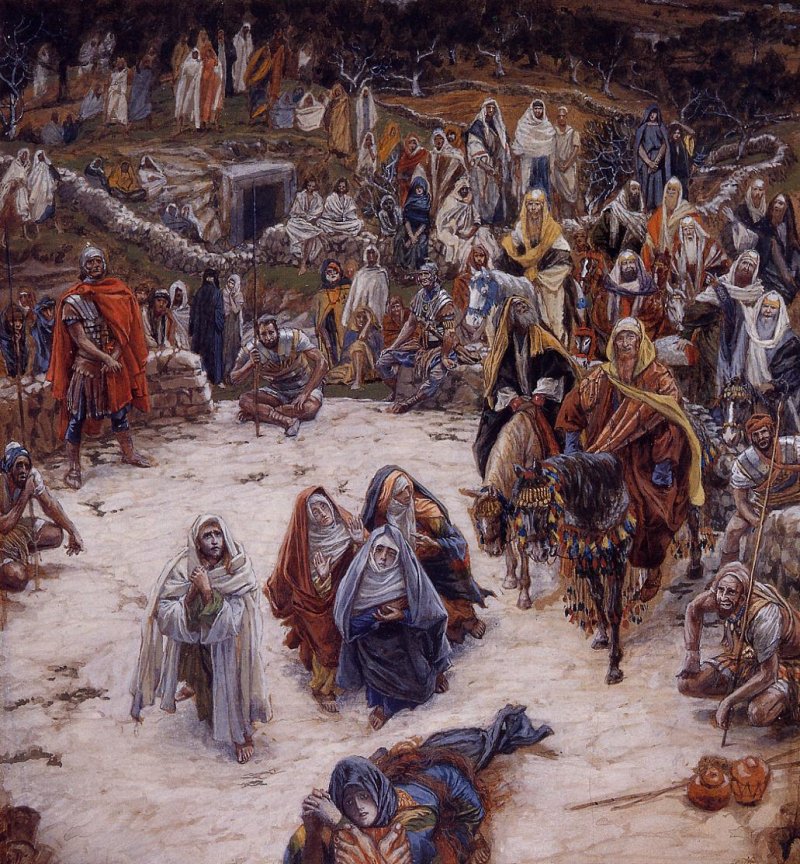
Our English word “Excruciating” comes from the Latin words for “Cross” and “Torment.” The Romans did not invent crucifixion, the Persians and the Greeks practiced it first, but the Romans more widely used the method. It was an easy way to execute people very visibly, horrifically, and slowly as a warning example to others. Typically, when the Romans crucified someone, they would place a sign above the condemned person’s head to indicate why they were being killed. St. John’s Gospel records that Governor Pilate put a sign on Jesus’ Cross written in Hebrew, Latin, and Greek. You sometimes see the initials “INRI” atop crucifixes. This represents the Latin phrase “Iesus Nazarenus Rex Iudaeorum,” the charge against our Lord. That is, “Jesus the Nazorean, the King of the Jews.” He was killed because of who he was and who he is: Jesus the Christ and the King of the universe.

Of course, the people who killed him did not believe this. They thought he was deluded or a fraud. Hence, the triple call for him to save himself and prove them wrong. The Jewish rulers sneered and said, “Let him save himself if he is the chosen one, the Christ of God.” The Roman soldiers jeered and called out, “If you are King of the Jews, save yourself.” And one of the criminals reviled him by saying, “Are you not the Christ? Save yourself and us.” Could Jesus have saved himself from his crucifixion?

St. John’s Gospel quotes Jesus before his Passion saying, “No one takes (my life) from me, but I lay it down on my own. I have power to lay it down, and power to take it up again. This command I have received from my Father.” And St. Matthew quotes Jesus later declaring in the Garden of Gethsemane, “Do you think that I cannot call upon my Father and he will not provide me at this moment with more than twelve legions of angels? But then how would the Scriptures be fulfilled which say that it must come to pass in this way?” So Jesus possessed the power to escape the Cross, but that was not the will or plan of God, which the Eternal Son was party to from the beginning. Jesus assumes “our bone and our flesh” to achieve our reconciliation as a descendant of David, “making peace by the blood of his Cross.” Perhaps the Holy Trinity could have inspired less painful prophecies to achieve our redemption and forgiveness of our sins, but Christ’s crucifixion is what they chose. They chose this path to win our love.

Matthew and Mark’s Gospels suggests that the Penitent Thief (traditionally known as St. Dismas) had derided Jesus, too, at first. But seeing the extraordinary way Jesus acted, hearing the things he said, all while crucified, won over that man’s mind and heart. ‘This man has done nothing criminal and this is how he dies? He truly knows my suffering and this is how he lives. This is the Christ I want to be allied with.’ St. And Luke quotes him saying, “Jesus, remember me when you come into your Kingdom.”

That movement saved the man’s soul, and we enjoy the benefit of understanding Jesus Christ even better than him. St. Paul writes that God “proves his love for us in that while we were still sinners Christ died for us.” Be moved by this manifestation of God’s great love. Submit to Jesus Christ as your King so that he may be your Savior and one day we may all be with him in Paradise.

Lifted Up & Exalted

September 13, 2025

Feast of the Exultation of the Holy Cross
By Fr. Victor Feltes

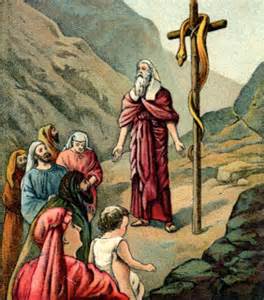
During their long Exodus journey, the Hebrews once again began rebelling, despising God and his servant Moses. They even sinfully complained about the Manna bread God was providing for their survival in the desert saying, “We are disgusted with this wretched food!” So God sent venomous serpents—or perhaps he merely lifted his shield of protection around their camp—resulting in many getting snakebitten and dying. So the people repented and pleaded with Moses, who prayed to the Lord. The Lord then commanded Moses to fashion a bronze serpent and affix it to a pole so that whoever looked at it would live. Moses and the Hebrews did not realize this at the time, but that bronze serpent on a wooden pole was a symbol pointing ahead to Jesus Christ who would die for our sins on his wooden Cross so that we may live.

In today’s Gospel, Jesus says: “Just as Moses lifted up the serpent in the desert, so must the Son of Man be lifted up, so that everyone who believes in him may have eternal life.” Later in John’s Gospel, Jesus uses the same Greek verb to declare, “When I am lifted up from the earth, I will draw everyone to myself.” And the inspired author notes, “[Jesus] said this indicating the kind of death he would die.” But this same Greek word for “lifted up” or “exulted” appears again later to recount Jesus’ Ascension and heavenly enthronement. The Book of Acts says, “God exulted/lifted up [Jesus] to his right hand as leader and savior to grant repentance to Israel and forgiveness of sins.” “Jesus, exulted/lifted up to God’s right hand, received the promise of the Holy Spirit from the Father and poured it forth….” This is what I want to highlight: how the first lifting up of Jesus leads to the second; his exultation on the Cross leads to his exultation in heaven.

Christ Jesus, though he was in the form of God, endured our human suffering and death, even death on a cross. And because of this, God greatly exalted him, and bestowed on him a heavenly glory above any other glory. The early Christians fully believed in Jesus’ death by crucifixion, but they did not depict Jesus on the Cross in sacred art for several centuries. This was partly due to persecution but also because crucifixion still remained so scandalous, horrific, and shameful in their culture. This Sunday, we celebrate the Exultation of the Holy Cross and I want you to behold Christ crucified. Too many are turned away from him—the God who suffered, died, and rose for them—and we see where their dark paths lead. But the message I feel moved to preach to you who have kept your eyes on Jesus and walked with him for years is to understand that our crosses lead to glory.

Each of us is going to suffer in this world and—unless Jesus Christ comes back first—each of us will taste death. But just because you suffer greatly does not necessarily mean you are being punished for doing something wrong like the Hebrews in the desert were. And suffering does not mean that you are not loved by God. (Jesus Christ was perfectly good yet God’s Beloved Son was murdered.) And when you suffer, no matter how incomprehensible or unjust the pain, realize where you are: on your Cross with Jesus Christ. Whatever you endure with him advances his mission of salvation in this world and increases your heavenly glory, for it conforms you to himself. St. Peter wrote, “Beloved, do not be surprised that a trial by fire is occurring among you, as if something strange were happening to you. But rejoice to the extent that you share in the sufferings of Christ, so that when his glory is revealed you may also rejoice exultantly.” Whatever may happen, let nothing deprive you of your Christian peace or purpose and never forget the incredible love that our God has for you and everyone.

God Was With Them

August 30, 2025

22nd Sunday in Ordinary Time
By Fr. Victor Feltes

Wednesday’s awful attack at Annunciation Catholic School in Minneapolis is terrible and heart-aching. Such an evil occurring in our region of the country, to a place of Catholic faith and learning like our own, hits extra close to home. And whatever prudent proposals should follow, we are moved to pray fervently for these victims and everyone impacted. This week we witnessed some combination of mental illness, demonic influence, and chosen evil at work. If demons had no role in this atrocity, then their bad fruits are indiscernible in this world. St. Paul wrote to the Ephesians that our true adversaries are not flesh and blood—fixation on the hatred of other humans is a snare for the soul. Our struggle is with “the evil spirits in the heavens” who prowl about the world seeking the ruin of souls.

The tactics of demons are various but perhaps their foremost temptation is a repetition of history’s first temptation. The lie behind Satan’s suggestion to Adam and Eve that they eat from the forbidden tree to become like gods was: “You can’t trust God because he doesn’t really love you.” This is the point I wish to speak to, for this week I saw reactions to the attack on these innocents like this one online: “They were literally praying when they got shot. Praying doesn’t work.” The shooting at the Annunciation School Mass reportedly began during the Responsorial Psalm, which (if they were reading the same psalm we were at our parish that morning) included these lines: “Where can I go from your spirit? From your presence where can I flee? If I go up to the heavens, you are there; if I sink to the nether world, you are present there.” Does their suffering such evil mean that the Lord was not with them and for them at that church?

On Wednesday, my thoughts went to chapter two of the Book of Wisdom. You might not be familiar with its passages, since this Old Testament book is found in Catholic and Orthodox canons of Scripture but not included in most Protestant bibles. I encourage you to read the entire second chapter yourself, but I will excerpt from the text here. It begins by observing how the Wicked, “not thinking rightly, said among themselves: ‘Brief and troubled is our lifetime; there is no remedy for our dying, nor is anyone known to have come back from the underworld. For by mere chance were we born, and hereafter we shall be as though we had not been…”

The Book of Wisdom says the Wicked who think life is pointlessness and hopeless resolve to enjoy pleasures to the fullest and to exploit whomever they wish. They say, “Come, therefore, let us enjoy the good things that are here, and make use of creation with youthful zest. Let us oppress the righteous poor; let us neither spare the widow nor revere the aged for hair grown white with time. But let our strength be our norm of righteousness; for weakness proves itself useless.” Then from here the text goes on, at much more length than I am sharing, describing the Wicked’s hatred towards a holy person:

“‘Let us lie in wait for the righteous one, because he is annoying to us; he opposes our actions, reproaches us for transgressions of the law… He professes to have knowledge of God and styles himself a child of God. Let us see whether his words be true… For if the righteous one is the son of God, God will help him and deliver him from the hand of his foes. With violence and torture let us put him to the test… Let us condemn him to a shameful death; for according to his own words, God will take care of him.’ These were their thoughts, but they erred; for their wickedness blinded them, and they did not know the hidden counsels of God;  neither did they count on a recompense for holiness nor discern the innocent souls’ reward.”

This Old Testament prophecy clearly applies to Jesus, but not merely to him but his martyrs as well. I cannot tell you what specific goods will come from Almighty God permitting particular evils to occur but we know, in the words of St. Paul to the Romans, “God works all things together for the good of those who love him.” On Good Friday, the murder of the Messiah was incomprehensible to his disciples and friends, but just forty hours later, with the resurrection of Jesus, they began to better understand that mystery at the center of our Christian Faith. Like in today’s Gospel parable, Jesus went to the lowest place, but the Lord of Hosts saw and said to him “My friend, move up to a higher position,” and now he enjoys a most-honored seat in heaven and the esteem of all his companions around the Eucharistic table.

Our waiting to behold God’s full reversal of this world’s evils will likely last much longer than just three days, but we will endure in faith, hope, and love, praying and working and worshipping and journeying with Jesus Christ. We approach God’s Kingdom and we will press on to join the countless angels in festal gathering; and God the judge of all; and the spirits of the Just, the saints made perfect; and Jesus, the mediator of our new covenant; and the sprinkled blood that speaks more eloquently than that of history’s first martyr, Abel. God was with them and he will be with us too.

Faithful Efforts & Divine Increase

July 27, 2024

17th Sunday of Ordinary Time
By Fr. Victor Feltes

In our first reading from the 2nd Book of Kings, the Prophet Elisha uses twenty barley loaves to feed a hundred people. That suggests a miraculous multiplication of five times. In our Gospel reading, Jesus Christ uses five loaves to feed about 5,000 men – a multiplication of 1,000 times. So Jesus’ miracle was 200 hundred times greater than Elisha’s. That 200 figure is interesting because of something Philip the Apostle says.

When Jesus asked him, “Where can we buy enough food for them to eat,” to see what he would say, Philip remarked, “200 days’ wages worth of food would not be enough for each of them to have a little!” What good could 200 days of work do for so many? One might ask what good are any of our labors or efforts in the face of such great problems in our world today?

Many days passed between the events of the 2nd Book of Kings and the events of the Gospels. Why did the Old Testament people of God have to work and wait, suffer and endure, for days and years, for generations and centuries, before the coming of Christ? Because it was not yet the fullness of time; things were not yet fully prepared for those greater wonders. Our redemption in Christ is preeminently the work of God but God wills that the faithful efforts of faithful people help prepare the way.

While the disciples were still wondering what to do about the problem of the hungry crowd, Andrew the Apostle told Jesus, “There is a boy here who has five barley loaves and two fish, but what good are these for so many?” Jesus would take those loaves, give thanks to God the Father, and distribute the loaves and fishes to the reclining crowd as much as they wanted, and they all ate and had their fill.

Consider this: in the beginning, all things were created through God the Son out of nothing, ex nihilo. Yet Jesus did not conjure food to feed that crowd out of nothing. Like at the Wedding Feast of Cana, he received what was offered to him and transformed it for both our good and God’s glory.

That boy and those five loaves and two fish are remembered to this day, in our Gospel stories on earth and even more gloriously in heaven. Jesus used that entire gift, he multiplied all the loaves and fishes offered, just like how at Cana he transformed the contents of all six of the large stone water jars which the servants had filled for him. And Jesus directed his disciples to “gather the fragments left over, so that nothing will be wasted,” filling a dozen wicker baskets with fragments from the five barley loaves which had been more than they could eat.

Even as Christians we may get discouraged, feel overwhelmed and wonder, “What good are any of my labors or efforts? What good is this for few or many?” Today’s Gospel reading reminds us that Jesus will use everything which we offer him. He will bless it, transform it, multiply it, grow it. He will use it for both our good and God’s glory, and nothing will be wasted. Remember that Jesus promises “whoever gives but a cup of cold water… to drink… [for me] will surely not lose his reward.” (Matthew 10:42)

Growing In Christ’s Likeness

February 4, 2024

5th Sunday in Ordinary Time
By Fr. Victor Feltes

This Sunday’s readings feature Job, Paul, and the mother-in-law of Simon Peter. What do these three people have in common? Let’s consider each in turn.

In our first reading we hear from Job who, like Jesus Christ and Mother Mary, suffers greatly despite his innocence. “I have been assigned months of misery,” he says, and troubled nights have been allotted to me. My days [swiftly] come to an end without hope.” At one point, Job’s wife even tells him to “curse God and die!” Yet, despite his painful, honest questions, Job never disobeys. He never renounces the Lord.

Next we hear the Apostle Paul telling the Corinthians how and why he preaches the gospel. Paul insists that preachers have a right to payment for their work, just like others who do valuable labor. He asks, “What then is my recompense?” What is his repayment or reward? “That, when I preach, I offer the gospel free of charge so as not to make full use of my right in the gospel.” What is Paul saying? How is he repaid by not getting paid? Paul says he makes himself “a slave to all so as to win over as many as possible… All this I do for the sake of the gospel, so that I too may have a share in it.”

Lastly, we hear the story from Mark’s Gospel about Simon Peter’s sick mother-in-law. She lays in bed in Capernaum enduring a severe fever. Having just cast out a demon at the synagogue, when Jesus enters the nearby house of Simon Peter and Andrew along with James and John, they immediately tell him about her condition. Jesus approaches her, grasps her hand, and helps her up. The fever leaves her immediately and she waits on them. It seems she had been eager to serve, only her illness had prevented her. Something which Job, and Paul, and Simon Peter’s mother-in-law have in common (besides all appearing in today’s readings) is sharing a likeness to Jesus.

We see Jesus in our gospel driving out demons and curing the sick. If he had been charging fees for his healings, Jesus might have soon become the richest man in Capernaum. If he had announced that he was the Messiah and called men in the region to take up arms with him, Jesus could have soon been seated upon a Jerusalem throne. Instead, though everyone is looking for him, Jesus withdraws alone to a deserted place to pray. Jesus Christ was not called to be great in worldly wealth and power (in the pattern of Herod, or Pilate, or Caesar) but to be a suffering servant. He had not come to be served but to serve, giving his life as a ransom for many.

This is the path to Christ’s glory, which he calls others to share. So the innocent victim Job undergoes a “dark night” when his physical and spiritual consolations are stripped away. Would he still love God and goodness when no longer tasting their rewards? Through Job’s trials his love is purified to become more like Christ’s in his Passion. And St. Paul, like Jesus, does not labor for earthly riches but takes the form of a slave. He ministers for the love of souls and to share in heaven’s reward which this world cannot equal. And Simon Peter’s mother-in-law is eager to serve as she is able, agreeing with Jesus that it more blessed to give than to receive.

It’s too late in time for your name or mine to be written in the Bible, but if in the end our names appear in heaven’s Book of Life, our Christian lives will have shared some likeness to the life of Jesus Christ.

His Stations of the Cross — Funeral Homily for Roger “Andy” Anderson, 91

January 14, 2024

By Deacon Dick Kostner

The Trailer of the Story of Human Life: Producer God- Actors- Andy, Jesus and Us. We lost a great member of the Holy Family on the Feast of the Holy Family. He was a quiet person in Spirit but a wonderful mentor for us in teaching us how to live a full life of happiness living out and experiencing the Stations of the Cross, of Life. Andy loved attending Mass with his faith family and loved attending our Stations of the Cross during our Lenten Season. He understood the directive from the Father that the doors to heaven are only unlocked for those who experience in their lives the Passion and Death of Life in our lives. So I thought he would like me to share with you what I saw as his personal Stations of the Cross:

The First Station: He is condemned to Die. We all know that at some point we must experience death of our body. Andy knew this but he never complained to anyone I know that this should stop us from enjoying life with our family, friends and God. He enjoyed every day that he was allowed to care for his family, friends, gardens, and lawn and never willingly failed to give thanks on Saturday Evenings and First Friday Liturgy with his Parish family.

The Second Station: He accepts and carries the Cross. Earthy life requires us to bear our crosses. Andy experienced many crosses in life from divorce to replaced knees, to bladder cancer, to death of friends, and yes family with the death of his wife Carol, and son Michael just prior to his passing. One of the greatest crosses one has to carry in living a long life is having to bury ones friends and family. I remember Father Hugh telling me at his 90th birthday party, when he had just been told he was dying, that one of the hardest things he had to experience in living so long was the fact that he lived so long that he had to be there to comfort and bury all of his dying friends.

The Third Station: The First Fall. As we grow older our bodies begin to fall apart. Andy was not a person who would ask for help. It was not in his nature to expect anyone to come to his aid he would just do the best he could to get along even when things were hurting. Most of us, like Andy, do not want anyone to know we are having problems. That’s why God gifts us with family, friends, and spouse. These special people know better then we do what is best for us. I remember Carol sneaking over to ask if I would mow his lawn for him while he was recuperating from his cancer treatments as she was suffering herself with her rheumatism, this I gladly did without his knowledge.

The Fourth Station: Meeting His Mother. I remember when I would get hurt the first person I would run to for help was my mom. Andy was a person of faith and knowing he was a prayerful person I would guess that the first person he would pray too for help and support when he found out that he was dying was our heavenly mother Mary. I witnessed many times Andy praying the rosary with his parish friends before Mass began. Mom’s don’t want their children to experience pain and suffering even when they are not the cause of the suffering and pain.

The Fifth Station: Simon helps Carry the Cross. Andy did not want to ask for help but friends and neighbors don’t need to be asked. Many times when Andy was not able to complete tasks his friends and neighbors knew that this would bother him. I witnessed his neighbors removing snow, fixing railings and painting things that needed attention, as well as raking and removing leaves when he was unable to do the same. He might not of been blood family to us but he was still thought of as being family.

The Sixth, Seventh, Eighth, Ninth and Tenth Stations: He falls two more time, is comforted by “Veronica’s”, Speaks to the Women and his friends, and is Stripped of his Garments. Andy continues to get worse and is cared for by Paul and Michelle at their home. He receives the Sacrament of the Sick by his Pastor, Holy Communion weekly by the Deacons and Deacon wives, and prayed for by his Parish Family. The illness progresses and he is now in need of 24 /7 care requiring him to be moved to the nursing home.

The Eleventh, Twelfth, Thirteenth, Fourteenth Stations: The Cross and his Body become one for him, on the Feast of the Holy Family he Dies, and he is taken down from the Cross and Duried. His journey has ended and his Spirit is now able to meet in person Jesus, Mary and Joseph along with Carol, and other saints and friends he spent his life with and who he will spend eternity with.

Andy and Carol were not only our neighbors but our friends. Barb and I were able to witness their marriage on Christmas Eve in 1989. Both of them wished to have that special day as their wedding anniversary day. Last year Barb and I with the assistance of Fr. Chinnappan, had a Mass said for the two of them as our Christmas present to them. The good news is that This Faith Family will be able to continue to experience the Anderson’s presence in spirit as members of God’s Holy Family at every celebration of the Holy Mass at St. Paul’s Catholic Church. So, On behalf of this assembly of Holy Family and friends I would like to wish Andy and Carol a Happy Easter Sunday and Anniversary! We all hope to see you in heaven after we complete our own “Stations of the Cross”!

From Creation to this Cradle

December 24, 2023

Christmas, the Nativity of the Lord
By Fr. Victor Feltes

Before all time’s beginning,
before creation’s making,
was our Lord, who is living.

Omnipotent, all-knowing,
unlimited, all-loving,
the self-existent Being.

This eternal deity
was not solely unity,
but divine community.

Father and Son, self-giving,
Spirit from both, proceeding,
Trinity, ever-living.

Though God could not be more great,
goodness loves to propagate,
so he opted to create.

The Lord said, “Let there be light,”
earth” and “sky” and “day” and “night,”
man” and “woman” in his sight
and in each did he delight.

Blessing us was his concern,
gifting gifts we did not earn,
minds to know and hearts to yearn
so we’d love him in return.

Like all things, he made us good,
yet, as God, he understood
human beings sadly would
freely choose to sin;
distaining the divine,
disturbing our domain.

Dissolution, desolation.
Division and dismay.
Despair and death.

Behold how in our world and lives,
sins stab and slice and scar like knives.
But our Lord lowers his lifeline,
a long thread throughout our timeline.

After the Flood and Babel’s tower,
God’s plan was launched with Abraham.
Summoned by the Higher-Power,
he journeyed to the Holy Land.

God vowed to him to give that earth,
to bless all peoples through his name,
and cause his barren wife to birth
a boy who would extend his fame.

Isaac was that wondrous son,
received back as from the dead.
His sacrifice was left undone;
as God supplied a ram instead.

(Note in Abraham’s descendants,
the Messianic lineage,
persons presenting precedents
repeated on the Gospel page.)

Next, from Isaac, Jacob came,
and suffered much from sinful deeds.
To “Israel” God changed his name,
and through twelve sons a kingdom seeds.

This tribe then west to Egypt fled
and grew up becoming many,
until from slavery God led
to “the land of milk and honey.”

For this nation, God appointed
from Bethlehem to kingly throne,
shepherd David, God’s anointed,
one with a heart after his own.

He was betrayed, mistreated,
but overcame each enemy.
God pledged there’d always be seated
a true son of his dynasty.

King Solomon, the peaceful one,
built with wisdom beyond compare
God’s temple in Jerusalem
for everyone from everywhere.

Isaiah’s prophesies foretold
and his consoling words record
how every nation would behold
salvation from our bridegroom Lord.

Then Babylon’s empire came
and took the Jews captive by sword.
But God removed his people’s shame
when to their homeland he restored.

These ups and downs had set the stage
for one night prepped thousands of years.
Between the old and current age,
the Son of God on earth appears.

It’s simple for our little ones,
the way in which our Savior comes.

A stable full of yellow hay?
Kids see a perfect place to stay.

Tiny Jesus is in his box,
asleep beside the sheep and ox.

His mom and dad on Christmas day,
as still as statues, kneel and pray.

That manger scene lit by a star
draws friends to Christ from near and far.

Our children lack experience
but maintain pure, sweet innocence.

They see with awe and gentle joy
our God become a baby boy.

Now that you and I are older,
we recognize complexity;
what Christ’s parents had to shoulder,
the burdens of humanity.

Joseph and Mary were displeased
when turned away from that hotel
and then unpleasant odors breathed
while giving birth where livestock dwell.

Stress-filled was that nativity,
mixed with their joys, feelings of dread,
as they combatted poverty
and unseen forces wished them dead.

The way of Christianity
is not promised to be easy,
but life with Christ, our deity,
has mercy, grace, and great beauty.

Our little ones are right in this,
though much in our world is amiss,
it’s right and wise to reminisce
on Christmas Day and feel great bliss.

Now to conclude, let us review:
God’s great goodness is real and true,
an ancient love that’s ever new
and through Christ’s birth comes into view.

So come to Mass — yes, please do!
His family’s less when lacking you.

Why Did Jesus Delay?

March 25, 2023

5th Sunday of Lent
By Fr. Victor Feltes
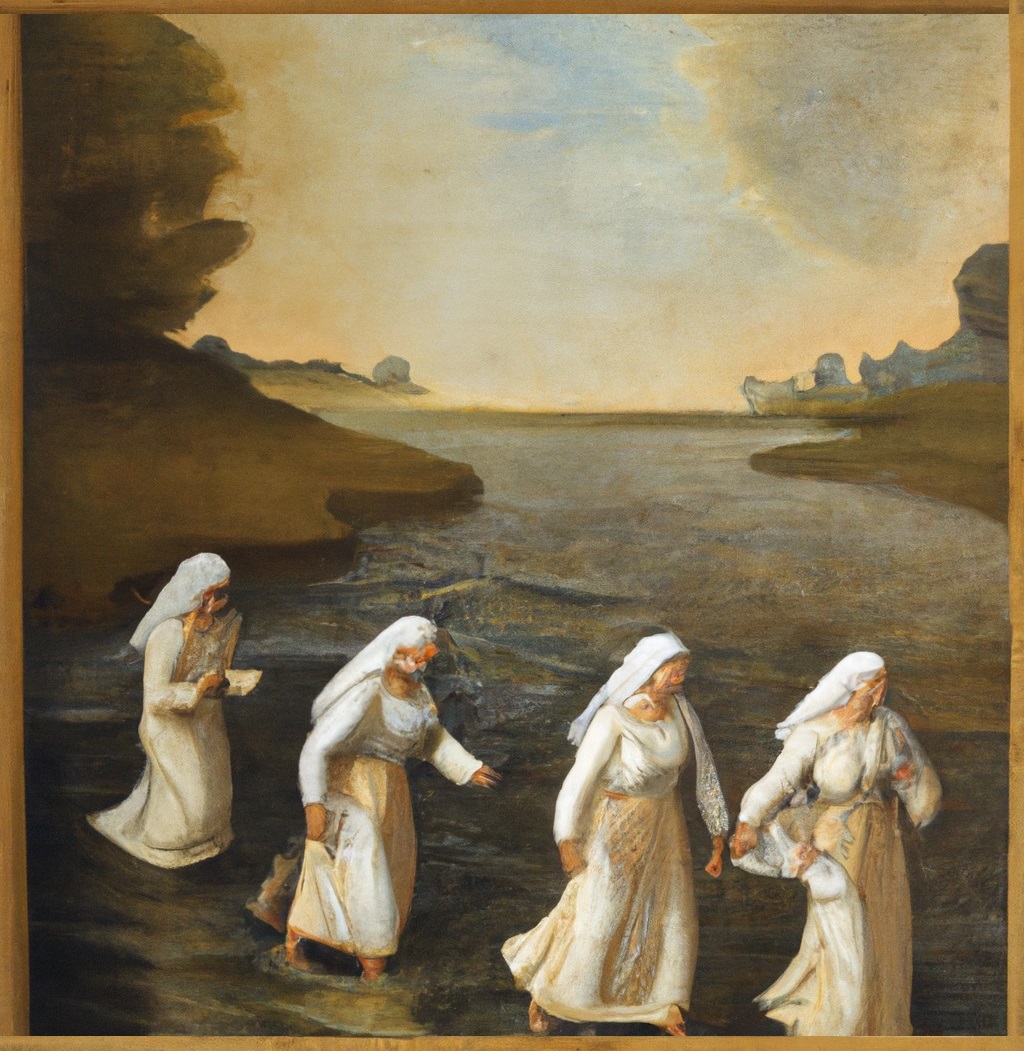
In 1582, St. Teresa of Ávila was journeying across Spain to establish new Carmelite convents. The rivers that season were so high that in some places the entire road was covered and obscured by water. It was clearly too dangerous to continue through those waters aboard the carriage, so Teresa and her companions advanced cautiously on foot, with Teresa leading the way. At one point, she lost her footing and fell down into the muddy water. Upon securing herself against the flowing current she exclaimed, “Oh, my Lord, when will you cease from scattering obstacles in our path?” Jesus replied to the mystical nun, “Do not complain, Daughter, for it is ever thus that I treat my friends.” And Teresa famously and dryly replied, “Ah, Lord, it is also on that account that you have so few!

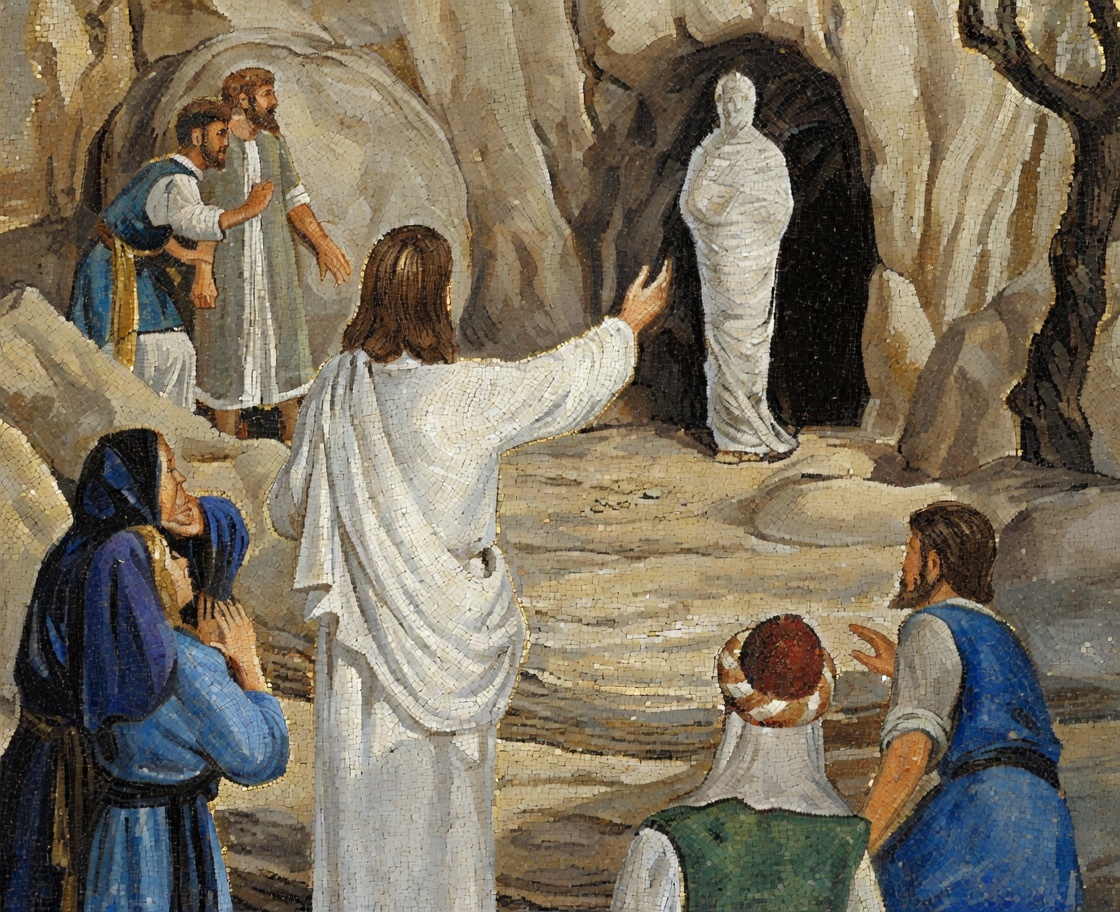
In today’s Gospel, Martha and Mary send word to Jesus about their ailing brother, Lazarus: “Master, the one you love is ill.” “Now,” St. John records in his Gospel, “Jesus loved Martha and her sister and Lazarus. So when he heard that he was ill, he remained for two days in the place where he was.” Is not this a surprising twist? Because Jesus loved Lazarus and his sisters he delayed departing for their village for two additional days. And by the time Jesus arrives in Bethany with his disciples, Lazarus has been four days dead in the tomb.

Martha and Mary each say to Jesus what they had likely already lamented to each other: “Lord, if you had been here, my brother would not have died!” You can imagine their unspoken, anguished question: ‘You’ve healed others, you’ve helped strangers, so why didn’t you come to help us, your dear friends, when we needed you?’ When Jesus saw Mary weeping and those with her weeping, he became perturbed and deeply troubled, and Jesus wept. So the Judeans remarked, “See how he loved him.” But some of them said, “Could not the one who opened the eyes of the blind man have done something so that this man would not have died?” And Jesus, perturbed again, went to Lazarus’ tomb to resurrect him.

Jesus had told his disciples days before, “Our friend Lazarus is asleep, but I am going to awaken him.” And when they mistook him as saying Lazarus was merely napping, Jesus clarified, “Lazarus has died.” So Jesus came to Bethany fully-intending to raise Lazarus from the dead. But what troubled Jesus and why did Jesus weep? Was he mourning for Lazarus? Imagine if you learned one of your friends had died this morning but you were also certain that you friend would be alive and well again just fifteen minutes from now. How much would you mourn? As much as Jesus was crying for Lazarus, I believe Jesus wept more so for Mary and Martha and those in the crowd. He weeps for them and for all humanity in all of history who mourn and struggle with fear, doubt, and pain because of the scandal of suffering and death in our world.

We naturally desire to live easy lives; to be untouched by hardship or losses. But Jesus desires far greater things for us than mere ease. Before they left for Bethany, Jesus told his disciples, “This illness is not to end in death, but is for the glory of God, that the Son of God may be glorified through it.” These events were divinely permitted and intended for the greater glory of Lazarus and his sisters, too. Imagine if Lazarus had never gotten sick and died and been raised by Jesus — would we even know his name today? Instead, his story with Christ, his life because of Christ, has blessed the world, including us. Martha and Mary, through enduring this trial, were also blessed. Imagine the intensity of their faith in Christ and their courage in facing death after this experience. Jesus made these sisters a blessing for every generation to come.

Because Jesus loved Lazarus, Martha, and Mary, and St. Teresa of Ávila, he allowed all of them to experience trials. It is ever thus that he treats his friends. So be open to walking, to accepting, to trusting, Christ’s providential path for your life. Even if this journey may be harder than we would choose for ourselves, his path leads to better blessings and greater glory with Christ.

Our Mountaintops & Valleys

March 4, 2023

2nd Sunday of Lent
By Fr. Victor Feltes

Jesus went up a mountain to preach his Sermon on the Mount. Later, after feeding more than five thousand people using five loaves and two fish, he withdrew up a mountain alone for prayerful solitude. Today, Jesus leads Peter, James, and John up a high mountain by themselves to witness his Transfiguration. So why mountains? What is it about mountain heights which make them the preferred setting for so many biblical events?

Three themes occur to me: First, mountains remove people from the ordinary. They are remote places removed from everyday life. Second, mountains offer a greater perspective. A mountaintop can allow someone to see for many miles. And third, mountains elevate us. Mountaintops are not only literally higher but symbolically closer to heaven as well. Jesus takes Peter, James, and John to the top of Mount Tabor to give them an extraordinary experience, to give them a deeper vision into himself, and to give them strength for their trials ahead.

The Mass prefaces celebrating Jesus’ Transfiguration say:

“After he had told the disciples of his coming Death, on the holy mountain he manifested to them his glory, to show, even by the testimony of the law and the prophets, that the Passion leads to the glory of the Resurrection.”

“He revealed his glory in the presence of chosen witnesses… that the scandal of the Cross might be removed from the hearts of his disciples.”

The disciples had not imagined that the Jewish Messiah, God’s Holy Anointed One, would be gruesomely murdered. The Transfiguration helped prepare them to understand that Christ’s suffering was a part of God’s salvific plan. They also came to realize that Jesus’ teaching, “If anyone would come after me, let him deny himself and take up his cross and follow me,” would involve sufferings of their own. The apostles’ memories of beholding Christ’s miracles and glory and their ongoing relationship with their Risen and Ascended Lord strengthened them through their trials.

You and I will face trials as well. As St. Paul tells Timothy in today’s second reading: “Beloved: Bear your share of hardship for the Gospel with the strength that comes from God.” What have been the spiritual mountaintop experiences of consolation in your life? Remembering these moments gives us spiritual strength in hard times, and Jesus Christ walks alongside us through all our dark valleys.

Yesterday, I encountered the story of a man about my age named Mike. Not long ago, Mike was diagnosed with a cancer so advanced that he had back operation which removed one of his vertebrae. Mike is married and has two sons around middle school age. Though previously a somewhat lukewarm Christian, he began “searching for the understanding of the LOVE of Jesus.” Here is the amazing thing: Mike writes, “This last several months, with a few nudges from God, I have been overwhelmed with Jesus’ love. It’s been so powerful that the pain and uncertainty of the cancer have taken a back seat to it.” If he continues to carry this cross with Christ, no matter what happens, Mike is going to be OK.

Our spiritual mountaintop moments are extraordinary experiences that give us a greater perspective and draw us closer to God. But also remember the great consolation that Jesus Christ, our good and loving Lord, remains with us in our dark valleys as well.

God’s Amazing Encouragements for Joseph and Mary

January 8, 2023

Feast of the Epiphany
By Fr. Victor Feltes

Unlike how some imagine the event, the magi were not in Bethlehem on Christmas night or even the following day. (You will notice that our magi statues did not reach our Nativity scene until this Feast of the Epiphany.) On Christmas night, the Holy Family was visited by local shepherds. The shepherds had seen a vision of angels proclaiming the birth of Christ. St. Luke records that Joseph and Mary “were amazed by what had been told them by the shepherds. And Mary kept all these things, reflecting on them in her heart.”

At least forty days later, Joseph and Mary presented Baby Jesus in the Temple to offer a sacrifice for him. When they carried Jesus in, an aged prophet and prophetess named Simeon and Anna came forward to proclaim great things about the child. And again, St. Luke writes that Jesus’ “father and mother were amazed at what was said about him.” Under Old Testament Law, a firstborn son required the sacrifice of a lamb, but if his parents could not afford this, two turtledoves or pigeons could be offered instead. Joseph and Mary sacrificed a pair of birds because they did not have enough money to purchase a lamb. The magi had not yet arrived with their gift of gold.

Sometime after the Presentation in the Temple, magi from the east came to Bethlehem. (Based upon whom wicked King Herod hunted afterwards, the magi may have arrived even two years after Christ’s birth.) The Holy Family, having moved out of the Christmas stable, was now living in a house. And “on entering the house [the magi] saw the child with Mary his mother. They prostrated themselves and did him homage. Then they opened their treasures and offered him gifts of gold, frankincense, and myrrh.” The magi explained how a certain rising star had informed them of this new king’s birth; how the star had preceded them and stopped over this place where the child was. Though St. Mathew’s Gospel does not explicitly say so, Joseph and Mary were surely amazed by this encounter as well.

The shepherds on Christmas, Simeon and Anna at the Temple, and the magi preceding the Holy Family’s escape into Egypt were amazing consolations for Joseph and Mary at challenging times in their lives. Imagine the stress of delivering a baby in a stable after being unable to find any place better. Imagine feeling embarrassment at being too poor to afford the best sacrifice for the Son of God at the Temple. Imagine the anxiety of having to flee to another land to save your family’s lives. One could imagine a person asking in such circumstances “Why is this happening? Have we done something wrong? Is God really with us in all this?” But in the midst of their difficult trials, God gave Joseph and Mary encouraging signs to reassure them that he was indeed with them and that their faithful struggles really mattered.

Our missions may not be as lofty as Joseph and Mary’s, but we can be helped by divine consolations too. In our trials, we can either choose to fall to the temptation of clinging to bitterness and settling for cynicism, or instead be receptive to signs and open to wonders. We can recall in our hearts (like Mary) the great things God has done. We can also pray to God for new gifts of consolation. We can ask to receive his strengthening reassurances, that he is with us and that our personal sacrifices truly matter. As St. Paul says, “God is faithful; he will not let you be tested beyond what you can bear. But when you are tested he will also provide a way [through] so that you can endure it.” God gives us his own Son at Christmas, on the Cross, and in the Holy Eucharist — how will he refuse to give us whatever else we truly need? As he did for Joseph and Mary before us, God will answer our prayers in times of burden with amazing and helpful encouragements.

Re-Presenting His Mysteries — Funeral Homily for Sara Caron, 59

November 19, 2022

By Fr. Victor Feltes

When Sara was first diagnosed with breast cancer, her two boys (Mick and Jake) were just twelve and seven years old. She thought of how hard it could be for them to have to grow up as children without her. She did not know how much time she had left, but one of her goals was to be around for them, to raise them throughout their high school years. Today, thirteen years later, her sons are twenty and twenty-five years old. She successfully brought them both to adulthood.

Her family tells me Sara has worked at fifteen different places over the course of her career, and even with cancer, she never stopped working. They say she went “above and beyond” at work and would never take time-off for herself, but she would take days away from work to care for her family; for instance, keeping vigil with Mick in the hospital. Sara also kept on working for another reason: to preserve her continued health insurance coverage. You can imagine how much out-of-pocket cancer treatments would have cost. Sara did not wish to burden her beloved husband, John, and their household with terrible medical debts.

To echo the words of St. Paul in his Letter to the Romans, only with difficulty does a person give their life for others, though a good person might have the courage to lay down their life for those they love. St. Paul speaks of how “God proves his love for us, in that while we were still sinners Christ died for us.” When we witness someone, despite their flaws, give their life not just once but year after year for those they love, it is that much easier to believe that our perfect, holy, loving Lord has lived, and died, and risen for us.

Recall Christ’s words from the Book of Revelation: “Behold, I make all things new.” Our Lord, to whom Sara prayed every day, dwells within his faithful Christians, re-presenting his mysteries in their lives. “Behold, God’s dwelling is with the human race. He will dwell with them and they will be his people and God himself will always be with them as their God.”

Jesus prays in St. John’s Gospel, “Father, those whom you gave me are your gift to me. I wish that where I am they also may be with me.” Christ’s longing within us makes the psalmist’s words resonate with us: “There is one thing I ask of the Lord; this I seek: To dwell in the house of the Lord all the days of my life. That I may gaze on the loveliness of the Lord and contemplate his temple.

Christ who has called us, who dwells in us, who re-presents his mysteries in our lives, who inspires eternal longings within us, desires us to be with him forever where “he will wipe every tear from [our] eyes, and there shall be no more death or mourning, wailing or pain, for the old order [will have] passed away.” This is our cause for our firm and happy hope, for Sara and for every Christian.

A Trimmer of Trees — Funeral Homily for Gordon “Gordy” Weyers, 90

October 27, 2022

By Fr. Victor Feltes

For several decades, Gordy has loved trimming trees. Of course, there is much more to the man as a Catholic, a husband, a father, and a friend, but this is one of his curious quirks. Whenever Gordy saw outside his house a tree branch which was not right, he was highly-motivated to intervene. He would pull out his ladder and tree-cutting tool to go take care of that errant branch. Dot (that is, Dorothy) his wife of sixty-seven years would tell him, “Don’t climb the ladder,” but he would do it anyway.

Gordy began saying he wanted a new ladder but his kids kept trying to talk him out of this desire, hoping he would stop climbing at his age entirely. Yet by all accounts, his old ladder was very rickety, so eventually Dot said, “Get him a new ladder, because he’ll fall off the old one.” Dot would periodically look out the window to check on Gordy tree trimming on his ladder. Years later, she told him, “Good thing you never fell off!” He replied, “Oh, I fell off a few times, I just didn’t tell you.”

But here’s the thing: after Gordy’s trimming—however daring or reckless it may have been—his trees looked really good. Dot reports that “he never did anything that made them look bad.” Those trees became more perfect, more healthy and strong, more handsome and beautiful, by having been cared for and pruned by Gordy.

We often recall “the Lord is my shepherd,” but we less often reflect on how our God is a gardener. In the beginning, God created a perfect garden. And when St. Mary Magdalene first encountered Christ resurrected on Easter Sunday she thought he was the gardener. Jesus teaches, “I am the vine, you are the branches… and my Father is the vine grower. He takes away every branch in me that does not bear fruit, and every one that does he prunes so that it bears more fruit.” And the Letter to the Galatians tells us that the fruits which the Holy Spirit grows in us include love, joy, peace, patience, kindness, generosity, faithfulness, gentleness, and self-control. We are like trees which God prunes to make us more perfect.

Now I imagine if gold were alive and aware it may not feel eager be purified in a furnace’s fire, and the pruning process might not be a lot fun for a tree. But the Book of Wisdom tells us, ‘as gold in the furnace, God proves us… before taking us to himself.’ And though parts of our trees (of ourselves) must die and some of our unsightly branches must be trimmed away, the Lord makes our souls more perfect, more healthy and strong, more handsome and beautiful, through his care and pruning.

Like Gordy with his trees, Jesus saw us outside of his Father’s house. He saw our branches were not right. And he was highly-motivated to intervene. Call it daring or reckless, but our Lord put his life on the line. Christ went up the tree of the Cross to trim our flaws and perfect us. And after death felled him, Jesus rose again.

He declares, “I am the way and the truth and the life. No one comes to the Father except through me.” To enter into heaven, we must be perfected in Christ’s love. So if any imperfections still remain in Gordy’s soul, we ask Jesus today to prune them away. And we welcome our Lord to continue trimming any errant branches within our souls as well.

Suffering & Joy — Funeral Homily for Rodger Falkenberg, 75

October 11, 2022

By Fr. Victor Feltes

Rodger has experienced years of suffering and years of joy. After being born into a large, poor family and serving in the Vietnam War, he returned home and joyfully joined a new household. Facing life’s struggles, what a man could do is be bitter and glum, but Rodger loved making people laugh; sometimes with his Donald Duck voice or an intentional stumble. Even after enduring four, painful back surgeries, he still would roll down a hill to amuse his nieces and nephews.

Rodger knew that just because something is broken doesn’t mean that it’s without value. At what he dubbed his “Polish Shopping Center” (or what others call the city dump) Rodger would take things which others had despised. He would tinker with them as necessary, restoring them and prizing them as treasures to keep for himself or to share with others.

One thing I learned about Rodger and his beloved Donna is that they share a great, personal love for ice cream. Giving up ice cream for Lent was a great personal sacrifice in their house because they could eat an entire pail of it for a meal. In recent years, with his memory declining, they would often go to a particular restaurant. When the friendly staff would ask him, “Is it your birthday?” He would sincerely reply, “I think so,” and be treated to ice cream.

September 2nd of this year marked the 50th anniversary of Rodger and Donna’s wedding day here at St. Paul’s Church, and the family celebrated this occasion simply and sweetly together. Their daughters were getting Dad and Mom an ice cream cake and the employee was making a mess of squeezing-out the inscription on top, but Kelly or Lisa said, ‘It’s fine, really, just put sprinkles on it.‘ The party was a happy, intimate family gathering at home. And despite what had seemed to go wrong the cake still tasted very delicious in the end.

In today’s psalm the psalmist speaks of his suffering, praying for deliverance: “Relieve the troubles of my heart and bring me out of my distress. Put an end to my affliction and my suffering and take away all my sins. To you, O Lord, I lift my soul.” It’s not wrong to pray for relief, like Jesus himself did in the Garden of Gethsemane, but in Christ we see that our sufferings play a role in our glory. Jesus says, “unless a grain of wheat falls to the ground and dies, it remains just a grain of wheat; but if it dies, it produces much fruit. …Whoever serves me must follow me… [to the Cross].

When Jesus suffered and died, “people saw and did not understand,” but in light of his resurrection Christians know death is not the end of the world. As St. Paul says, “We know that if our earthly dwelling, a tent, should be destroyed, we have a building from God, a dwelling not made with hands, eternal in heaven. [So] we are courageous, and we would rather leave the body and go home to the Lord. …We must all appear before the judgment seat of Christ, so that each may receive recompense, according to what he did in the body, whether good or evil.”

For the faithful and righteous the sufferings this world sees as worthless are taken up by Jesus to rework our souls. Our Lord will claim us from this junk yard, he will fully restore us and prize us as treasures for himself and to share with others. The messed-up cake of this world will be salvaged. Once God’s family is gathered together again, we will simply and sweetly agree that everything turned-out fine in the end. Can this day of Rodger’s funeral be his birthday to new life? I think so. In heaven, our Lord “will wipe every tear from their eyes,” and convert the sufferings of his people to joy. “Behold,” he says, “I make all things new.”

Invited Home ― Funeral Homily for Kathleen Zwiefelhofer, 82

August 12, 2022

By Fr. Victor Feltes

In my priesthood, I have visited many dying people and heard many stories told by family members about them. In this, I have found patterns among Christians dying. For instance, as I have spoken about before, the dying person may or may not know they are in their final week of life, yet he or she is often blessed to have “a last good day.” A happy day shared with loved ones or enjoying a dearly-loved activity is gifted to them by God, from whom all good things come.

Another providential pattern I often see when visiting the dying is how people come to for the Anointing of the Sick. Though wavering in consciousness when I call their names and they open their eyes and they realize a priest has come to share God’s grace. When I came Kathleen’s side in the emergency room to give her the sacrament for those in danger of death, I called her name and she opened her eyes, and knowingly received this consolation from God. Kathleen’s journey from this life features two more elements dying Christians commonly experience. The first was her desire “to go home.”

As we grow old, our bodies are beset with infirmities. This reminds us that all of us must “appear before the judgment seat of Christ, so that each may receive recompense, according to what [we] did in the body, whether good or evil.” Our physical frailty helps to detach us from this world so that we are open to something greater. Our weakness leads us pray like the psalm: “Put an end to my affliction and my suffering; and take all my sins away. … To you, O Lord, I lift my soul.”

Throughout this year, burdened in her mind and body, Kathleen has expressed a desire “to go home.” She said this while still living at home, in the house she grew up in, next-door to St. Paul’s Church. So what “home” did she mean? Kathleen, in faith, was expressing her longing for heaven. St. Paul writes, “We know that if our earthly dwelling, a tent, should be destroyed, we have a building from God, a dwelling not made with hands, eternal in heaven. [And so] we are courageous, and we would rather leave the body and go home to the Lord.

The second detail from Kathleen’s story which I have encountered before in others is visions of visitors. Kathleen’s parents, George and Catherine, and her husband, Leon, each died many years ago. Yet Kathleen reported being in dialogue with them. She said they discussed with her whether or not it was “time for her to go.” We are surrounded by a great cloud of witnesses, by saints and angels who desire us to dwell with them in God’s holy city, the new and heavenly Jerusalem. They pray for us and help us. On the morning before Kathleen was taken to the hospital, she had another vision. She extended her palm before her saying, “He’s right here. He’s right here,” though she did not clarify whom.

Jesus says, “I am the resurrection and the life; whoever believes in me, even if he dies, will live, and everyone who lives and believes in me will never die.” “Behold, I make all things new,” Jesus declares, “I am the Alpha and the Omega, the beginning and the end.” Jesus is the reason we are here. He is why Kathleen did not fear to die. And he is the cause we have for hope in unending life and a greater home. Let us pray for Kathleen’s soul, entrusting her to our loving Lord.

Patterns in Christian Dying — Funeral Homily for Ione Seibel, 84

June 6, 2022

By Fr. Victor Feltes

As a priest, I encounter many people in their dying days. And though every life is different, I have noticed often-repeated patterns. Three of these gracious elements are seen in Ione’s story.

Something I often find is the phenomenon of “a last good day.” The dying persons may or may not know they are in their final week of life, yet they are blessed to have a last good day. Sometimes they love being outside, and there’s a rare day in their final week when they feel well enough to go on a walk or do gardening. Sometimes it’s the day of a family reunion, where they delight to see their family and to say goodbye. Ione, despite her Alzheimer’s condition, had a last good day the Wednesday of her final week. Vernie, her husband of nearly 65 years, who was visiting her at her nursing home with a pair of their daughters, says Ione was “grinning, smiling, shining.” He and the staff described it as Ione’s “best day in two years.”

Jesus also had a good day before he died. When he took his place at table for the Last Supper he told his friends, the apostles, “I have eagerly desired to eat this Passover with you before I suffer, for, I tell you, I shall not eat it again until there is fulfillment in the Kingdom of God.” Such blessings are bestowed upon us in this life as signs to us of God’s goodness before we enter into the next life.

A second phenomenon I often see is an alertness for the anointing of the sick and last rites. Vernie let me know Ione was dying and I was soon able to visit her on Saturday. When I arrived, he and their children were gathered around her. Now the sacrament of anointing is like the sacrament of baptism in that a receptive person may receive this sacrament even in an unconscious state. Some babies, for instance, sleep through their baptism yet receive the graces of baptism nonetheless. Her family tells me Ione had been unresponsive, but when I greeted her, as I told her who I was and why I had come, she opened her eyes at me. Ione’s family was struck by this but it’s something I commonly see—a providential alertness to receive this sacrament. The Lord often wills for his beloved to consciously experience this gift.

Jesus himself was anointed upon his head with precious perfumed oil in his final days and said, “She has done a good thing for me. … She has anticipated anointing my body for burial.” He was consoled and strengthened by this gift of love, and Jesus desires to console and strengthen us as we enter into his Passion and death.

A third thing I commonly encounter in my ministry is the bittersweetness of a beautiful death. Suffering and death are painful signs of this world’s brokenness from sin. Yet the circumstances which accompany many Christians’ passings are poetic signs to us that death is not our end. As we heard in our gospel reading, on the first Good Friday, a darkness came over the whole land until three in the afternoon. Then our Lord breathed his last, near those who loved him most. The centurion who beheld how Jesus breathed his last said, “Truly this man was the Son of God!” And the curtain in the Temple, which veiled its holiest place, was torn in two from top to bottom, from heaven down to earth.

Ione died on a Sunday, Christ’s day of Resurrection. And she died during Easter, the season of Jesus’ victory over death. Like him, she breathed her last in the afternoon’s third hour. And Ione passed away from us on the Feast Day of Jesus’ Ascension, when he passed through the veil from this world into heaven.

A Christian is never truly alone because the Lord Jesus is always with us through life and death. He makes our life story a part of his story, and makes our story like his own. Today is a day of grieving and joy, because we can see this truth anew in the life and death of Jesus’ servant and sister and friend, Ione.