Archive for the ‘Sacrifice’ Category

The Glorious Mysteries, Meditations with the Saints

October 27, 2010

The 1st Glorious Mystery:
The Resurrection of Jesus from the Dead

St. John Bosco, an Italian priest, founded a famous school for boys in the mid-1800’s and is the patron saint of students. He is known to have worked many miracles, but one from 1849 stands out. Returning from a journey, he learned that Charles, a 15 year old student, had died. He went immediately to the teenager’s home where the family informed him that Charles had been dead for over 10 hours. The body was laid out in the living room, already dressed for burial.

Fr. Bosco asked everyone to leave except the mother and the aunt. After some time in silent prayer, he cried out: “Charles, rise!” Charles emitted a long sigh, stirred, opened his eyes, stared at his mother and asked, “Why did you dress me like this?” Then, realizing Fr. Bosco was present, he told him how he had cried out for him and how he had been waiting for him. He exclaimed, “Father, I should be in hell!” He told of how a few weeks before he had fallen into serious sin. Then he said he had a “dream” of being on the edge of a huge fiery furnace, and as he was about to be thrown into the flames, a beautiful lady appeared and prevented it. She said, “There is still hope for you, Charles. You have not yet been judged.” Then he heard the voice of Fr. Bosco calling him back.

Charles asked Fr. Bosco to hear his confession. After his confession, the mourners filled the room again, and Fr. Bosco said, “Charles, now that the gates of heaven lie wide open for you, would you rather go there or stay here with us?” A profound silence filled the room. Charles, with tears in his eyes said, “I’d rather go to heaven.” Then he leaned back on the pillows, closed his eyes and breathed his last.

Unless Jesus’ Second Coming happens first, each of us here will die, and rise. As we meditate on Jesus’ resurrection, let us consider how ready we are to meet Him.

The 2nd Glorious Mystery:
The Ascension of Jesus into Heaven.

St. Padre Pio is another Italian priest from not so long ago who also worked remarkable miracles. During WWII, Allied planes flew bombing raids over Italy. Almost all of the centers of the region were subjected to repeated bombardment, but no bombs ravaged the town of San Giovanni Rotondo. Every time the aviators approached that place, they saw a monk flying in the air who prevented them from dropping their bombs. Understandably, reports of this flying friar did not amuse the superior offices.

Bernardo Rosini, a general of the Italian Air Force, recounts this story: “One day, an American commander wanted to lead a squadron of bombers himself to destroy the German arms depository of war material that was located at San Giovanni Rotondo. The commander related that as he approached the target, he and his pilots saw rising in the sky the figure of a friar with his hands held outward. The bombs released of their own accord, falling in the woods, and the planes completely reversed course without any intervention by the pilots.”  

Someone told the commanding general that in a convent at this town, there lived a saintly man. At war’s end, the general wanted to go meet this person. “He was accompanied by several pilots… He went to the convent of the Capuchins. As soon as he crossed the threshold of the sacristy, he found himself in front of several friars, among whom he immediately recognized the one who had ‘stopped’ his planes. Padre Pio went forward to meet him, and putting his hand on his shoulder, he said, `So, you’re the one who wanted to get rid of us all!’”

As we meditate on the Ascension of Jesus, to the right hand of the Father in Heaven, let us pray that He would establish justice and peace, in this country and the whole world, in our time.

The 3rd Glorious Mystery:
The Descent of the Holy Spirit at Pentecost

We usually don’t associate India with Christianity, but that nation has over 24 million Christians.  That’s about as many people as live in Texas, our second largest state. If you were to ask them how the faith reached their land they would point to St. Thomas the Apostle.

What led St. Thomas, who at first refused to even believe in the Good News, to travel over 2,500 miles to bring them the Gospel? It was not merely seeing the risen Christ. Jesus knew His disciples would need more to strengthen them then merely their memories of Him. St. Thomas journeyed because the Lord had sent the Holy Spirit at Pentecost, to fill them with gifts, like wisdom, courage, and zeal.

If we are in the state of grace, God the Holy Spirit dwells in us too, and He wants to empower us with His gifts. As we meditate on the descent of the Holy Spirit at Pentecost, let us pray for whatever spiritual gift that we need the most.

The 4th Glorious Mystery:
The Assumption of the Virgin Mary.

No Church, in the East or the West, claims to contain the body of St. Mary. This is because “the Immaculate Mother of God, the ever Virgin Mary, having completed the course of her earthly life, was assumed body and soul into heavenly glory.” This is because Jesus would not suffer Mary, His sinless, faithful beloved, to undergo corruption.

Death is a consequence of human sin, and without human intervention, as in embalming or mummification, our dead bodies will ordinarily experience its corruption. But, sometimes, the Lord preserves the dead bodies of his saints, to give a sign of their holiness, and to show that death is not all that awaits us.

Among the numerous saints whose incorrupt bodies you can still see today are:  St. John Bosco, St. John Vianney, St. Catherine Laboure (the visionary of the Miraculous Medal), St. Bernadette Soubirous (the visionary of Lourdes), and St. Maria Goretti.

As we meditate on the Assumption of the Virgin Mary, let us pray for purity in our lives.

The 5th Glorious Mystery:
The Coronation of Mary as the Queen of Heaven and Earth

Once, when St. Maximillian Kolbe was a boy, his behavior began trying his mother’s patience. She said in exasperation, “Maximillian, what will become of you?” As St. Maximillian writes, “Later, that night, I asked the Mother of God what was to become of me. Then she came to me holding two crowns, one white, the other red. She asked me if I was willing to accept either of these crowns. The white one meant that I should persevere in purity, and the red that I should become a martyr. I said that I would accept them both.” St. Maximillian would receive both crowns, as a holy Franciscan brother, and as a victim of the Nazis at Auschwitz, were he took the place of another innocent man who was condemned to die.

Jesus crowns his holy ones. He wills that those who share in His sacrifice should also share in His glory. As we meditate on the Coronation of Mary, let us pray to accept whatever crowns of burden and glory the Lord wants to give to us.
A Great Quote about St. Issac Jogues

October 20, 2010

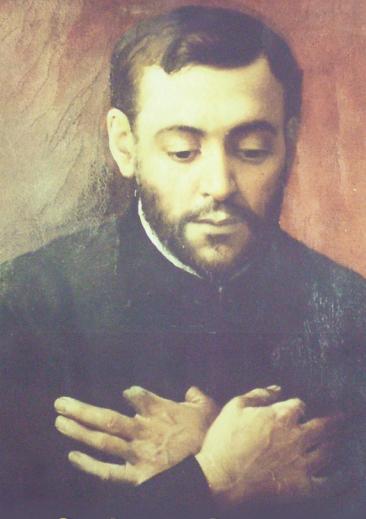
August, 1642 AD. The Jesuit missionary St. Issac Jogues is canoeing to the land of the Herons in New France when he is captured by Mohawk Iroquois. They torture him and cut off several of his fingers. He later escapes them and returns home to France, but he laments no longer being able to preside at the Mass.  (Canon law prohibits him from offering the sacrifice with his maimed hands.)

An appeal is made to Pope Urban VIII in Rome for an unprecedented dispensation. The pope  responds with this famous reply:

“Can one deny the right to say Mass to a martyr of Christ?”

St. Issac Jogues returns to Canada and sheds his blood a second, final time at the hands of those he came to save.

The Scandalous Cross — September 14 — Exultation of the Holy Cross

September 14, 2010

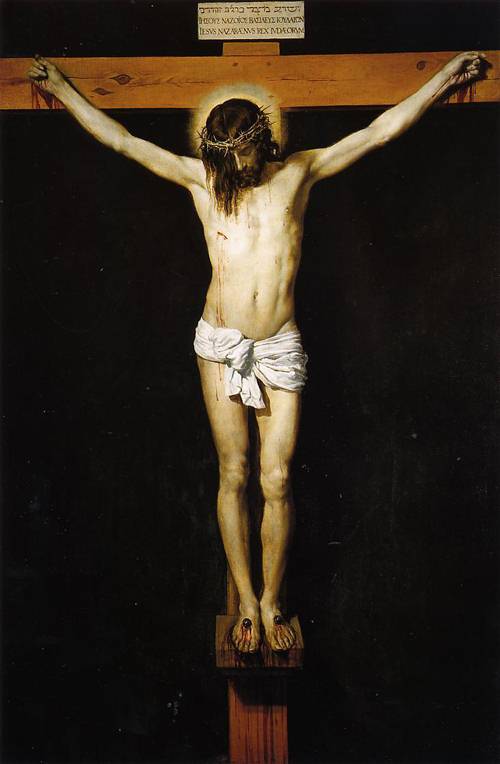
Jesus died on a cross. But what if Jesus had died differently? Then, instead of crosses, Christians might wear little nooses. Under different circumstances, we might be celebrating the Feast of the Holy Electric Chair, or the Exultation of the Lethal-Injection Syringe. These images unsettle us, but we are comfortable with the idea of Jesus’ cross. However, whenever we find ourselves complaining, we are feeling the scandal of the cross.

We will naturally dislike it when life is hard on us, but “do not forget the works of the Lord.” Jesus’ crucifixion, despite its pain, injustice, and seeming futility, was the means for His glory and for our salvation. With Christ we become invincible, because even our suffering profits us. So when unavoidable crosses come, patiently bear them and use them as a powerful offering to God.

Enduring Injustices — Tuesday, 23rd Week in Ordinary Time—Year II

September 7, 2010

St. Paul rebukes the Corinthians today, saying, “[It is] a failure on your part that you have lawsuits against one another.” Then he says something that rubs us the wrong way: Paul asks, “Why not rather put up with injustice? Why not rather let yourselves be cheated?” We resist, saying, “It’s just common sense that we shouldn’t let ourselves be cheated.” But sometimes common sense falls short. That’s why we need the teachings Jesus Christ revealed. Jesus said:

“When someone strikes you on your right cheek, turn the other one to him as well. If anyone wants to go to law with you over your tunic, hand him your cloak as well. Should anyone press you into service for one mile, go with him for two miles. Give to the one who asks of you, and do not turn your back on one who wants to borrow.”

Now this does not mean that we should be indifferent to injustices done to others, nor that we should seek out opportunities to be wronged by others ourselves. But when we are personally wronged, Paul suggests that we try imitating Jesus. St. Peter would agree, for he wrote:

“If you are patient when you suffer for doing what is good, this is a grace before God. For to this you have been called, because Christ also suffered for you, leaving you an example that you should follow in his footsteps. ‘He committed no sin, and no deceit was found in his mouth.’ When he was insulted, he returned no insult; when he suffered, he did not threaten; instead, he handed himself over to the one who judges justly. He himself bore our sins in his body upon the cross, so that, free from sin, we might live for righteousness. By his wounds you have been healed.”

The next time you find yourself wronged, try imitating Christ. Jesus trusted that the Father would provide for Him, and He was provided for. Jesus accepted His unjust suffering, and it changed the world. Jesus invites you to accept a cross and to follow Him into this mystery.

Outstreched Hands — Monday, 23rd Week in Ordinary Time—Year II

September 6, 2010

The Lord said to Moses in Egypt, “Stretch out your hand toward the sky, that hail may fall upon the entire land…” Moses stretched out his hand, and the Lord rained down hail upon their enemies.

Then the Lord said to Moses, “Stretch out your hand over the land of Egypt, that locusts may swarm over it and eat up all the vegetation and whatever the hail has left.” Moses stretched out his hand, and the Lord sent locusts upon their enemies.

Finally, the Lord said to Moses, “Stretch out your hand, over the sea, that the water may flow back upon the Egyptians, upon their chariots and their charioteers.” Moses stretched out his hand, and the Lord hurled their enemies into the sea.


Centuries later, the Lord Jesus Christ said to a man in the synagogue, “Stretch out your hand.” The man stretched out his withered hand and it was healed, but the scribes and the Pharisees were enraged and plotted against Jesus. This time, it was not the Lord’s enemies who were to bear the terrible onslaught, but the Lord Jesus Himself. Jesus realized this, and freely accepted it, for the sake of you and me.

Gift of Self — 5th Sunday in Easter—Year C

May 2, 2010

I would like to begin today by telling the beautiful story of a gorgeous young woman named Leah Darrow. Leah grew up in a strong Catholic family in Oklahoma, but when she was in high school she says that her Catholicism started to get “fuzzy.”  By the time she was in college Leah says she had become a “Catholic But.” She would say, “I’m Catholic, but I don’t agree with the Church’s teaching on cohabitation,” or, “I’m Catholic but I don’t see the problem with a couple who love each sleeping together before their marriage… I think the Church is behind the times.”

One evening at college she saw a reality TV show called “Americas’s Next Top Model,” with Tyra Banks and thought to herself, “I’m pretty cute, maybe I could be on that show.” She tried out and got on, but lost the competition, yet she was resolved not to let her TV elimination mean the end of her modeling career. And she was rather successful.  She still recalls her excitement at receiving her first paycheck with a comma (a comma!) in it.

Leah eventually found herself at a photo-shoot high above 5th Avenue in New York that would change her life forever. She came to pose for an international magazine which wanted to help her develop a more risque image. They brought out a number of itsy-bitzy outfits for her to wear.  She picked one out and shooting began. Now Leah says that every model knows not to look at the flash when the photos are being taken (and she insists that she didn’t look at the flash) yet while she was posing, a vision flashed in her mind, three images in the span of perhaps a second or two. This is what she saw:

She saw herself standing in a large white space in the immodest outfit she was wearing. In this scene she wasn’t in pain, but she had the sense that she had died. In the second image Leah was looking up, holding out her open hands at her waist, with the knowledge that she was in the presence of God. In the third and final image, another white flash hit her eyes and Leah saw herself holding her hands all the way up, offering to God all that she had, but in that moment she realized that she was offering Him nothing. For her entire life up to that point, with all of the blessings, talents, and gifts that God had given her, she had wasted them all on herself. If she had died at that moment, Leah knew that she would have nothing to offer Christ.

She came back to reality when the photographer said, “Leah, Leah, are you OK?” She shook her head and said, “No, I can’t.” He said, “Ok, we can go over here.” And she said, “No, I can’t .”  She ran back to the makeup counter, changed back into her own clothes, and ran down 5th Avenue, balling her eyes out, afraid that she might be losing her mind.

She called her dad and said, “Dad, if you don’t come get me I am going to lose my soul.” Dad drove across the country to New York, and when he arrived she wanted to leave town, but he said he couldn’t wait to see the sights; Central Park, the Empire State Building, the Carnegie Deli, “But first we go to confession.” She made a good, tearful confession spanning the ten commandments like she was ordering off the dollar menu: ‘Two number ones, four number twos…’ She came out like a new woman, healed.  Today she goes around telling her story and supporting an organization that promotes modesty in young lades’ dress.

Leah says she was living a very selfish life before her conversion. Perhaps she was confused, as many in our culture, about the nature of true love. In English we use the word love in a broad and ambiguous way.  We say, “I love that TV show. I love the Packers. I love my children. I love my wife. I love God. I love my dog.” But all of these loves are different in kind and degree. When we say, “I love pizza,” or, “I love wine,” it is not really pizza and wine that we love so much as  ourselves.  I love myself, and that’s why I consume pizza or wine. Yet, not all love is easy, warm, and fuzzy. True love is a sacrifice, and often feels that way.

As St. Paul tells us in the first reading, “It is necessary for us to undergo many hardships to enter the kingdom of God.” And Jesus says in the gospel, “I give you a new commandment: love one another.” Love how? “As I have loved you, so you also should love one another.” How did Jesus love us? Through a total gift of self.

Now we know from the Gospels that Jesus’ self-giving wasn’t always a ordeal. It was often joyful. Jesus enjoyed going to weddings, dinner parties, and spending time with His friends. But Jesus’ acts of love were the most powerful and manifest when they were hard, as when He was on the cross.

Self-gifting love powerfully good. Someone can live a life of great fame and wealth, but without self-gift their life will account for nothing.  This is the world of difference we see between George Bailey and Mr. Potter in It’s a Wonderful Life.

Difficult self-gifting love is also the most powerful witness. Some theologians have speculated that Jesus could have redeemed in other ways besides the cross. (Perhaps a single cry from the infant God-Man would have been enough if that had been the divine plan.) But Jesus dying for us on the cross communicates a powerful message about His love for us. Jesus said, “This is how all will know that you are my disciples, if you have love for one another.” The way we love should be a witness, it should make us stand out.

Earth is a training ground. Our life here on Earth is training for Heaven. In Heaven, self-gifting is the rule and the norm. If that’s not the sort of thing we are interested in, there will be no place for us to be at home in heaven–and there is only one other place for us to go forever. In today’s second reading, Heaven is seen “coming down out of heaven from God, prepared as a bride adorned for her husband.” It is a revealing description, for spousal relationship prepares us for the life of Heaven.

We are all called to marriage and parenthood, either natural or spiritual. Some are called to live single lives, to enter religious life, or be ordained, in a fruitful spousal relationship with Christ and/or His Church. Others are called to natural marriage and to fruitfulness seen in their spousal love and its natural or spirital children.

Self-gift is the life of marriage. What if there is a priest who does not pray, who does not serve, but who seeks only his own comfort? Such a priest will eventually leave his priesthood. So it is with a natural marriage. If one spouse seeks just their own pleasure, their marriage will seem empty. But if both spouses seek to make a self-gift to the other, they will both be satisfied. Jesus said, “Seek first the kingdom of God, and His righteousness, and all thing will be added on to you.” If we go for self-gratification, even that escapes us, but if we focus on self-gift, satisfaction comes as well. This is the reason for the Catholic tradition of a crucifix hanging over a husband and wife’s bed.

Jesus has given us a new commandment: love one another. As He has loved us we should love one another. Such love is powerful. It should make us stand out as disciples of Christ. And it prepares us for the life of Heaven, where self-gift is rule.

Leah Darrow Interview on the Drew Mariani Catholic radio show (4/30/10)

Leah Darrow Talk to a Boston Catholic Women’s Conference (2/27/10)

For One’s Friends — Tuesday, 3rd Week of Easter

April 20, 2010

Jesus said, “No one has greater love than this, [than] to lay down one’s life for one’s friends.” Have you ever wondered if that’s true? Is that really the greatest love? Wouldn’t it be greater for someone to lay down their life for their enemies? No, for I tell to you that no one can do this. It is impossible to lay down your life for an enemy. You can only lay down your life for people you love.

St. Stephen, like the Savior he followed, loved those who killed him. Stephen’s murders hated him, but he did not hate them in return. He was their enemy, but they were not his. Stephen loved them enough to challenge and correct them, but this made them very angry. Before dying, Stephen said, “Lord, do not hold this sin against them.” He was acting with mercy, generosity, and prayer in imitation of Jesus Christ, his role-model.

In this community, I do not feel that we are plagued with the disease of hatred: hatred for others, hatred for classmates, or hatred for God. But I do fear that we are infected by indifference: indifference towards each other, indifference towards those in need, and indifference towards God. I challenge you: in the past week what have you done to be more merciful, more generous, or more prayerful?

St. Stephen had mercy, generosity, and prayers for those who hated him. St. Augustine wrote that if it had not been for this, that young man named Saul who was guarding the cloaks, consenting to the execution, would not have later converted to become St. Paul, the great apostle. If St. Stephen overcame hatred and did this, imagine what overcoming our indifference could do?

We may not necessarily have to die as bloodied martyrs, like St. Stephen did, but Jesus asks each of us to lay down our lives for our friends.

The Savior’s Hands — Good Friday

April 7, 2010

This Good Friday, let us meditate on our Savior’s hands.

These hands held the scrolls of the Jewish Scriptures, from which He learned the Word of God. These hands held the hand of Joseph, and reassured him for his happy death. These hands fashioned the products of a carpenter to support His mother and Himself in their needs.

When the time came for His public ministry, these hands touched the ears and toungue of a deaf and mute man, allowing him to hear and speak. They smeared mud in the eyes of a blind man, who then washed and was able to see. They touched a leperous man and cured him of his affliction.

These hands formed a whip out of cords and drove out the moneychangers and salesmen out of the court of the Gentiles so that the temple could be a place for all peoples to worship the True God. These hands blessed and broke a few loaves of bread and multiplied them to feed thousands.

Today, these hands are nailed to the cross. Jesus’ crucified hands can do nothing, apart from perhaps twitching a couple fingers with excruciating pain. Yet of all the wonderful things that Jesus did with His hands, this was the greatest.

I offer two obeservations for us today.

First, that when Jesus could do nothing, He could still speak and pray. We can do the same we when faced with the things beyond our power (which is really nearly all things.)  We can bind our hands in prayer, a symbol and  acknowledgement of our own limitations, and pray.

Second, it was when Jesus was powerless he performed his greatest good. We worship a crucified God; who suffered, died, and rose from it triumphant. We should expect and understand that this mystery will be replayed within our own Christian lives. As St. Paul observed when he considered his own life, “when I am weak, it is then that I am strong.” The same applies for us.

Sometimes we suffer because of loved ones we cannot seem to help, or serious illnesses that befall ourselves or others. Our crosses take different forms, and can feel powerless with them. But we do more good through our crosses than we know.  Remember, that of all the things that Jesus did with His hands, the greatest was when He suffered them to be nailed to the cross for us today.

Romantic Christianity — Friday after Ash Wednesday

February 21, 2010

In the gospel disciples of John ask Jesus, “Why do we and the Pharisees fast much, but your disciples do not fast?” Jesus answered them, “Can the wedding guests mourn as long as the bridegroom is with them?” Of all the images in the Bible to depict the relationship between God and His people, perhaps the most common is that of bridegroom and bride.

As we begin this Lent we should understand that the saints became holy and made their great sacrifices not by relying upon their own “iron-wills,” but by falling passionately in love.

If we strive after holiness as a personal achievement our exertions will make us discouraged and resentful, like the people in the first reading who complain, “Why do we fast, and you do not see it? Afflict ourselves, and you take no note of it?”

But what sort of person can make incredible sacrifices for another, without counting the cost, and feel intoxicating happiness as they do so? A person who can do this is a person who’s in love.

What if Christianity is not supposed to be so hard as you’re making it out to be? What if it is supposed to be as easy as falling in love? Perhaps you are being called to a new approach.

The Two Ways — Thursday, 6th Week in Ordinary Time—Year II

February 21, 2010

In the first reading Moses sets before the people ‘the two ways’: life and prosperity, or death and doom. In the gospel Jesus tells us to deny ourselves, take up our cross and to follow Him. From this we might think that one could choose to bypass the cross, to never take it up, and to avoid the burden of the cross, but the cross is unavoidable.

Jesus was crucified along with two others, one on His left and one on His right; one who rejected Him, and one who accepted Him. These two people represent us. We are all crucified with Christ, and He is crucified with us. The question is how we will respond to Him.

In life there is no avoiding the cross, but in which way will we respond to it?  Will we rage and despair, or embrace it and follow Christ? Today I have set before you life and prosperity, death and doom. Let us follow the Lord, ‘for whoever wishes to save their life will lose it, but whoever loses their life for Christ’s sake will save it.’

Carrying Water — 2nd Sunday in Ordinary Time—Year C

January 20, 2010

Today’s Gospel, the miracle at the wedding fest of Cana, is a scene rich in symbolism and has many preachable parts. For example, the water of Old Covenant law is changed into New Covenant wine. It is the seventh day in John’s Gospel, according to the narration, pointing to a new Creation and rest. And the New Adam and the New Eve are at a wedding feast together, foreshadowing the marriage of Christ and His Church. But this morning, I would like to bring your attention to an extraordinary part of this Gospel which we disregard as being ordinary. I’m referring to the six stone water jars and the servers who carried them.

“Now there were six stone water jars there for Jewish ceremonial washings, each holding twenty to thirty gallons. Jesus told them, ‘Fill the jars with water.’ So they filled them to the brim.”

You’ve carried a gallon of milk before.   Imagine carrying 25 gallons of milk. I doubt you could do it all at once. Not only would they be too bulky, they would be awfully heavy too. Maybe you could put them on a pole and carry them with a partner. Maybe that’s what the servers in the Gospel had to do, or maybe they were doing laps between the well of Cana and the stone jars at the party. In either case, they we’re hauling an awful lot of water and weight.

Now a gallon of water weighs a little more than eight pounds. If each jar in the Gospel was at least 40 pounds of stone and held 20 to 30 gallons, then we are talking about six filled jars weighing 200 to 300 pounds apiece. And we know they were completely filled, for Mary had told them, “Do whatever he tells you,” and Jesus had told them, “Fill the jars with water.” “So they filled them to the brim.”

The saying “To carry water for (someone)” means to do a menial or difficult task for others.  That’s what these servers were doing and they definitely felt the burden.  Did they have any idea, as they carried those 1,500 pounds of stone and water, that they were a part of something remarkable? Did they know that they were playing an intimate role in one of Jesus’ most memorable miracles? No, they had no idea, not until later, and this reflects a encouraging truth for us to hold onto this week. We often don’t realize the extraordinary impact of our ordinary sacrifices.

You may feel burdened in your life, like your just scrapping or limping along; at work, at school, or at home; with your peers, your friends, or your family. But you do more good than you know. Sometimes we catch glimpses of this, like when someone takes your hand and says, “Thank you sooo much,” or when someone shares with you that they have always looked up to you, or when a child grows to realize and thank you for everything you did for them. After this life, one of our joys in heaven will be seeing how our ordinary sacrifices have touched and changed the lives of thousands, even millions, of people.

Like the servers with their six stone jars, we disregard our efforts as ordinary and do not realize their extraordinary impact. Maybe you don’t see it now, but your ordinary sacrifices do more good than you know. Let us be encouraged by recalling this truth in our daily lives, for if you’re carrying water for Jesus, you’re going to have a part in His miracles. So, “do whatever He tells you,” no matter how ordinary it may seem.

34th Sunday in Ordinary Time—Year B

November 23, 2009

Today we celebrate the Solemnity of Christ the King. Jesus Christ is our king, now and forever. Yet, the idea of monarchy doesn’t really resonate with us. And it’s not just because we don’t have an earthly king ruling our country. It’s that we’re not big fans of authority. We are wary of anyone having too much power. This is because power is often abused.

Those with any degree of power, be it over entire people or a single employee, can abuse that power. We can fall into thinking only of themselves and our own advantages and be blind and deaf to the legitimate concerns and genuine needs of others. Sometimes those with power hold on to it jealously and will stomp out any real or perceived threats to that power without regard to the truth. This is how the Roman Governor Pontius Pilate responds to Christ. When Pilate asks Jesus, “Are you the King of the Jews,” he is not searching for the Jewish messiah, or even the truth.  He is probing for a political threat to himself.

The true purpose of power and authority is for serving the good of others. This goes for the Church and for all government, for our workplaces and our homes. The reason that our all-powerful God shares some of His power and authority with us, His creatures, is not so that we may be self-serving. It is so that we may serve others, give them life and bless them, and in this way resemble God Himself. God has given of Himself, given us life, and blessed all creation.

As Jesus said to His apostles, “You know that the rulers of the Gentiles lord it over them, and the great ones make their authority over them felt. But it shall not be so among you. Rather, whoever wishes to be great among you shall be your servant; whoever wishes to be first among you shall be your slave.”

Jesus showed his perfect love for us by becoming a slave and dying for us on the cross. For this reason, we do not fear the idea of Him being the first among us, reigning as our king. The Church, His bride, welcomes its royal bridegroom. And as it is for the bride of Christ as a whole, so it is for every Christian soul in relationship with Christ.

Every bride yearns to be fought for, to be pursued and to be a priority to someone. Christ has made us His priority.  He came down from heaven in pursuit of us. He has fought for and died for us, and now in heaven He still fights for us.

Every bride also wants an adventure to share. She doesn’t want to be the adventure; she wants to be caught up in something greater than herself. When we are living for ourselves we are alone, without purpose, and empty. Each of us is meant to live a life about more than just ourselves.  A life in Christ. We each have a vocation, a calling from God, a unique part to play in an epic adventure, a significant part to play in His great story.

Every bride wants to have a beauty to unveil. And it’s not just an exterior beauty. It’s a deep desire to truly BE the beauty and to be delighted in by the bridegroom. Christ is the lover of our souls and all of us wish to have beautiful souls. Each person desires to be approved and uniquely enjoyed by Christ. For us males, this is a desire for his approval and regard.  To be one who He is unashamed to call us His brother, a member on his team; a man in His platoon

Why bring up how Christ our King is the perfect bridegroom for His bride, the Church? Gentlemen, take note. Imitate Christ for your brides with Christian chivalry, love your wives as Christ loves the Church, and you will be like our king for your queen. Fight battles on Christ’s side for your beautiful bride. Lay down your life for her each day. Be Christ the king’s shining knight for her—honor, serve, and defend your bride and lead her on an adventure. The power you have is for her and you family.

For any of us, with any power and authority comes responsibility. And the power each of us has gives us a great opportunity. For by serving Christ our King and by caring for those He has entrusted to our care, we win the only glory and happiness worth having, that of Christ our king—the glory and happiness with the power to last forever.

Tuesday, 33rd Week in Ordinary Time—Year I

November 17, 2009

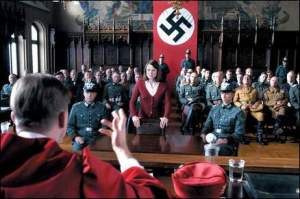
Imagine if the United States of America, with all its freedoms and rights, were not the United States of America, and on your way to school today, you were stopped along roadside by the secret police. They ask you for your name. You cooperate give it. Then they order you to put your hands on the hood of the squad car. They handcuff you and place you under arrest.

You ask them, “What’s going on? What have I done?” They reply, “You’re under arrest for the charge that you are a believing Catholic Christian.” You didn’t realize it, but the police have had you under intense surveillance for the past several weeks, wire-tapping your phone, monitoring your computer, searching your personal belongs, and watching all your movements and activities.

Imagine yourself in this situation. This is the question I pose to you: At your trial, when all of the evidence they have gathered is presented against you, will there be enough to convict you? Would there be sufficient evidence to find you guilty of being a believing Catholic Christian? What would they have on you?

Would they have testimony from informants that you observe every Friday as a day of penance, that you keep every Sunday as a special, day of rest, and faithfully go to Mass and frequent the sacrament of reconciliation? Could anyone testify against you that they heard you saying positive things about Jesus Christ, or that you spoke up for the Catholic faith when it was mocked or criticized in your presence? Could they put into evidence a rosary, or a Bible, or some other Catholic book, marked with fresh traces of DNA from your fingertips? Would they have hidden camera footage of you praying before meals at school or at restaurants? Would they have grainy night-vision footage of you praying before going to bed, or praying the first thing in the morning, making the tell-tale sign of the cross.

A few hours after your arrest you find yourself in a courtroom (because the “people’s” authoritarian government believes in speedy trials.) The intimidating judge looks down at you from the bench, “It says here that you were picked up on your way to the Columbus school. We have evidence of illegal Christian propaganda being taught there and we also have reliable reports that various Catholic rituals are done there, superstitions which are offensive to reason and the spirit of our times. Now I imagine that you went to that school because that’s where your parents sent you. And I’m sure that your parents would be shocked to discover that such repugnant activities as these are happening at your school.”

The judge continues, “The punishment for being found guilty of being a believing Catholic Christian is a grave one. But… if you were simply mixed-up in these activities, unthinkingly, by accident—if you were just doing them because that’s what everyone else around you was doing—well then that would be a different story. Spies and traders may come to our government rallies, but that doesn’t make them loyal citizens now does it? So just going through the motions doesn’t make you a believing Catholic at all, am I right?”

“So I can completely understand how this regretable misunderstanding has occurred. You didn’t really understand what you were doing did you? Now if you would simply formally renounce any and all belief in these silly superstitions, you may go on your way. Just sign your name here on this piece of paper testifying to that effect, and you’re free to go.”

What would you do? What do you wish you would have the courage to do? Would we have the courage to refuse to sign, just as Eleazar refused to eat? The eating of a little meat, like the movement of a pen, is a small act, but Eleazar refused and accepted an unjust death because to do otherwise would mean a rejection of the Lord, the one true God, the King of all other kings.

Now it is very unlikely that you or I will ever have to lay down our lives as red, or bloody martyrs for our faith in Christ. But, like Zacchaeus, there will be certainly times when we will have to go out on a limb for Christ. The crowd laughed to see the rich man Zacchaeus up in that tree, but what did Zacchaeus care about? His focus was totally fixed upon his connection with Jesus Christ.

Be like Eleazar, and don’t swallow whatever the world sets before you, because a lot of it is not good and can alienate you from God. Be like Zacchaeus, with the courage to go out on a limb regardless of what other people might think or say, for the sake of your relationship with Christ.

[The images for this post come from the movie Sophie Scholl–The Final Days. If you liked A Man for All Seasons, you’ll like this one too (but I’ll warn you up front that it ends the same way.)]

32nd Sunday in Ordinary Time—Year B

November 9, 2009

Widow's Mite

Imagine if you took two pennies and put them into a savings account, at 1.5 percent interest annually, and left it there for 2000 years. How much money would there be at the end? (2 cents, 2000 years, at 1.5% interest.) One hundred dollars?  No, higher.  A thousand dollars?  Still higher.  Ten thousand dollars?   Not even close. There would be one-hundred, seventy-one billion dollars.

[$0.02 * (1.015)^2000 = $171,046,619,000]

First of all, this reveals to us the power and the fury of compound interest.  But second, and relevant to today’s gospel, this shows us that small things can be more powerful and valuable than we would expect.

One day, almost two thousand years ago, a poor widow climbed the temple mount in Jerusalem and walked among the crowds in the temple courts to the treasury where she gave two small coins for the support of the temple.  Many rich people where there, were pouring much larger gifts into the treasury with great fanfare. Though her gift was tiny compared to theirs, that doesn’t mean that what she did was an easy thing to do. Being poor, it was hard for her, a real sacrifice.  She had to trust in the God of Israel; the God said to provide for the needs of orphans and widows like her. She could have dropped in just one coin, or given nothing at all, but she gave both coins, everything she had. She wasn’t trying to be seen, but the Lord was watching.

Jesus, sitting across from the treasury, called His disciples to Himself to draw their attention to her. “Look at what this poor widow has done.  Take this, all of you, as an image of myself.  Just as she has given everything as a gift of herself to God (even though it was hard and took great trust) so will I give myself up for you.”

The poor widow’s two coins, worth just a few cents, landed in the treasury with a quiet “tink, tink,” but her act has echoed through the centuries. Everywhere this gospel has been preached, the throughout the centuries and around the world, what she did has been remembered.  How many consciences have been pricked and how many hearts have been inspired to invest more completely into the kingdom of God? If the good her small deed has done throughout the ages could be quantified, it would far surpass one hundred, seventy-one billion dollars.

When we rise from the dead, at the general resurrection, I suspect that this poor widow will stand out.  She will be more glorious and enchantingly beautiful than most, and (even though the gospel does not give her name) everyone will know who see is and she will enjoy the love and gratitude of vast multitudes.

When we die, we will all die penniless, and when we rise we will all rise penniless, but some of us will be richer than others. The richest in heaven are those who receive and can give the greatest love, and this will depend upon how much we have invested ourselves into the kingdom of heaven.

You are already giving to your spouses and your children, your friends and your family, at home, at work, and at church, but we should ask ourselves from time to time how much we are giving from our surplus wealth and how much was are making a total gift of ourselves.  Such giving is hard, it takes trust in God, and it conforms us to Jesus Christ. When we give ourselves in this way, in the likeness of Jesus Christ, our gifts yields the greatest returns, here on earth and forever in heaven.

Now you have heard me put in my two cents.  I pray that it may result in great profit for your souls.

29th Sunday in Ordinary Time—Year B

October 18, 2009

The Three Crosses by Rembrandt. 1653

Today, the Apostles James and John make their big pitch in order to move up the ladder in Jesus’ organization. “[Jesus,] grant that in your glory we may sit, one at your right, and the other at your left.” Jesus says to them, “You do not know what you are asking.”

They jump at the chance to drink of Jesus’ cup and to be baptized in His baptism, whatever that means, because they have no idea that these are allusions to Christ’s suffering. Jesus tells them, ‘You will drink my cup and experience my baptism, but to sit at my right and my left is for those for whom it has been prepared.’ Where are the seats beside Christ in His glory?  The Gospel of Mark later tells us: “With [Jesus] they crucified two revolutionaries, one on his right and one on his left.” Indeed, James and John don’t know what they’re really asking.

They want spots beside Jesus’ throne because they think this will put their lives on Easy Street. They think that being enthroned at Christ’s side in glory means they will be served by everyone, and that they will never have to serve anyone else, ever again, besides Jesus of course. James and John want to live like as princes, like the billionaires, the bosses, and the big shots in the world. But true greatness is very different.

Whoever wishes to be great, Jesus says, must be a servant.  And whoever wishes to be the greatest of all, must be the servant to everyone. But we might ask why anyone would want this sort of greatness? Who wants to be a slave or to be crucified with Christ? And yet, Jesus offers such self-offering as the only greatness truly worth seeking? Why? Because true love equals self-gift, and in heaven love lasts forever.

In the world out there, there is a hierarchy according to wealth and power. For the Church on earth, Christ establishes a hierarchy according to orders. But for the Church in heaven, the hierarchy is established according to love. There is no money to be had in heaven. Greatness there is measured according to the love you can give and the love you receive from others.

Consider, who is more beloved on earth, Blessed Mother Teresa or the richest person in the world? And who is more likely to have a higher place in heaven? When Mother Teresa died a million people turned out for her funeral. She, like all the saints, is rich in love.

If you desire true and lasting greatness, imitate Christ on earth, who became a slave for us. Jesus did not come to be served but to serve. And through His trials and self-sacrifice, He offered his life as a ransom for us and won our hearts for Himself.

Though it is worthwhile, it isn’t easy to follow Christ. If we serve Him, we should expect temptations, trials and sufferings, too, just like Him.  Trials are normal for the Christian life and we should expect them.

As Saint Peter writes, “Beloved, do not be surprised that a trial by fire is occurring among you, as if something strange were happening to you. But rejoice to the extent that you share in the sufferings of Christ, so that when his glory is revealed you may also rejoice exultantly. If you are insulted for the name of Christ, blessed are you, for the Spirit of glory and of God rests upon you.”

Temptations are normal for the Christian life, too.  Jesus Himself was tempted in the desert and in the garden. As the second reading says, “…We do not have a high priest who is unable to sympathize with our weaknesses, but one who has similarly been tested in every way, yet without sin.” Understand and remember that human weakness and temptations are not the same thing as sin. It is not a sin to be tempted. Jesus was weak and tempted like us, but he never sinned. We only sin when we give in to temptation, when heart says “yes” to them.

Catherine of Siena by Giovanni[1]

Believe it or not, the saints know more about fierce temptation than unrepentant sinners do. The saints do battle against strong temptations, with the sacraments and prayer, with penance and self-disciple.  Many hardened sinners, on the other hand, don’t even know they are being tempted. One time, St. Catherine of Sienna, after she had made great progress in holiness, was subjected to the most violent temptations. Impure images filled her imagination and darkness attacked her heart. She called on God but He seemed to be absent. After these temptations had ceased, Jesus visited her, filling her with heavenly consolation. “Ah, my Divine Spouse,” she cried out, “where were you when I laid in such an abandoned and frightful condition?” “I was in your heart,” he replied, “fortifying you by grace.” “What, in the midst of the filthy abominations with which my soul was filled?” “Yes,” Jesus said, “for these temptations were most displeasing and painful to you. By fighting against them, you have gained immense merit, and the victory was because of my presence.”

When Jesus asked James and John if they could drink His cup and be baptized in His baptism, they eagerly responded, “We can!” Did they entirely know what this meant? No. Do we entirely know what it will mean for us to give our yes to Christ and to follow in His footsteps? No.  But with that little seed from James and John, Jesus was able to grow them into great saints.

Jesus Christ is the greatest person who has ever lived.  No one has been greater and no one has done greater things.  No one has loved better and no one is better loved. Let’s follow in his footsteps, even if that means the cross, for to be remade in His image means sharing in His greatness, His glory and His joy.