Archive for the ‘Salvation’ Category

Our Crucified King

November 23, 2025

Solemnity of Christ the King
By Fr. Victor Feltes

Our English word “Excruciating” comes from the Latin words for “Cross” and “Torment.” The Romans did not invent crucifixion, the Persians and the Greeks practiced it first, but the Romans more widely used the method. It was an easy way to execute people very visibly, horrifically, and slowly as a warning example to others. Typically, when the Romans crucified someone, they would place a sign above the condemned person’s head to indicate why they were being killed. St. John’s Gospel records that Governor Pilate put a sign on Jesus’ Cross written in Hebrew, Latin, and Greek. You sometimes see the initials “INRI” atop crucifixes. This represents the Latin phrase “Iesus Nazarenus Rex Iudaeorum,” the charge against our Lord. That is, “Jesus the Nazorean, the King of the Jews.” He was killed because of who he was and who he is: Jesus the Christ and the King of the universe.

Of course, the people who killed him did not believe this. They thought he was deluded or a fraud. Hence, the triple call for him to save himself and prove them wrong. The Jewish rulers sneered and said, “Let him save himself if he is the chosen one, the Christ of God.” The Roman soldiers jeered and called out, “If you are King of the Jews, save yourself.” And one of the criminals reviled him by saying, “Are you not the Christ? Save yourself and us.” Could Jesus have saved himself from his crucifixion?

St. John’s Gospel quotes Jesus before his Passion saying, “No one takes (my life) from me, but I lay it down on my own. I have power to lay it down, and power to take it up again. This command I have received from my Father.” And St. Matthew quotes Jesus later declaring in the Garden of Gethsemane, “Do you think that I cannot call upon my Father and he will not provide me at this moment with more than twelve legions of angels? But then how would the Scriptures be fulfilled which say that it must come to pass in this way?” So Jesus possessed the power to escape the Cross, but that was not the will or plan of God, which the Eternal Son was party to from the beginning. Jesus assumes “our bone and our flesh” to achieve our reconciliation as a descendant of David, “making peace by the blood of his Cross.” Perhaps the Holy Trinity could have inspired less painful prophecies to achieve our redemption and forgiveness of our sins, but Christ’s crucifixion is what they chose. They chose this path to win our love.

Matthew and Mark’s Gospels suggests that the Penitent Thief (traditionally known as St. Dismas) had derided Jesus, too, at first. But seeing the extraordinary way Jesus acted, hearing the things he said, all while crucified, won over that man’s mind and heart. ‘This man has done nothing criminal and this is how he dies? He truly knows my suffering and this is how he lives. This is the Christ I want to be allied with.’ St. And Luke quotes him saying, “Jesus, remember me when you come into your Kingdom.”

That movement saved the man’s soul, and we enjoy the benefit of understanding Jesus Christ even better than him. St. Paul writes that God “proves his love for us in that while we were still sinners Christ died for us.” Be moved by this manifestation of God’s great love. Submit to Jesus Christ as your King so that he may be your Savior and one day we may all be with him in Paradise.

The Great Gift of Baptism

January 11, 2025

Feast of the Baptism of the Lord
By Fr. Victor Feltes

As with the Jewish boys who received the rite of circumcision on their eighth day to enter the Old Covenant, the early Church gave the rite of baptism as a free gift for even newborns to enter the New Covenant. Unlike those of us who were baptized as babies, my friend Elena remembers her baptism from when she was nineteen years old.

She says, “Right up to the night (of that Easter Vigil in 2007), I was still partially afraid that God would strike me down when the baptismal waters touched me. I wanted so much to belong to him but half-thought that maybe he didn’t want me. I thought, ‘If he wanted me in the Church, why didn’t he have me born in a Catholic family?’” Full Christian initiation is accomplished through three sacraments: first, Baptism which is the beginning of new life; Confirmation which is its strengthening; and Holy Eucharist which nourishes the disciple with Jesus’ Body and Blood for transformation in Christ. Elena received all three sacraments that night, “and then after,” she says, “I could hear him in a whole new way (not like a voice but like thoughts that you know come from him). And I knew I was his and that he wanted me.

Through baptism, by being buried and rising again from the waters, we mystically enter the death and resurrection of Jesus. We are united with him as a member of his Church, members of his Body, members of his Bride. Through water and the Holy Spirit, we are “born from above” and “born again.” We become adopted children of God the Father and new temples of the Holy Spirit. Baptism forgives all our sins, indelibly changes our souls, bestows us graces enabling close relationship with God, and makes us sharers in the mission of his Church as priests, prophets, and kings in Christ. Jesus commands us to “go… and make disciples of all nations, baptizing them in the name of the Father and of the Son and of the Holy Spirit, teaching them to observe all that [he has] commanded [us].” Baptism opens the door to the other sacraments. It is the gateway into God’s Kingdom for salvation.

Jesus says, “Whoever believes and is baptized will be saved; whoever does not believe will be condemned.” Baptism is necessary for salvation for those to whom the Gospel has been proclaimed and who have had the opportunity to ask for this sacrament. God has bound salvation to his sacraments, yet he himself is not limited by his sacraments. His Church teaches that unbaptized martyrs, catechumens seeking baptism, and those who are ignorant of the Gospel of Christ and his Church but who seek the truth and do the will of God in accordance with their understanding of it can be saved through a baptism by blood or desire instead of water. How many are saved through these baptisms of desire? We don’t know. We do know that our clear salvific mission is the Great Commission Jesus gives us.

As St. Peter preached at Pentecost: “Repent and be baptized, every one of you, in the name of Jesus Christ for the forgiveness of your sins; and you shall receive the gift of the Holy Spirit!” Ordinarily, only deacons, priests, or bishops should baptize people by pouring, sprinkling, or immersion while invoking the Holy Trinity. However, in an emergency situation, anyone can baptize; simply intend to do what the Church does when it baptizes and pour water on the recipient’s head while saying “I baptize you in the name of the Father, and of the Son, and of the Holy Spirit.

This Sunday, we celebrate the Baptism of Jesus. Though sinless, he voluntarily submits himself to John’s baptism intended for sinners in order “to fulfill all righteousness.” By his own baptism, Christ connects himself with the baptized so the baptized can be united to Christ. Once Jesus was baptized, while he was praying, heaven opened and the Holy Spirit descended upon him in visible form like a dove. And the voice of God the Father came from heaven: “You are my beloved Son; with you I am well pleased.

My friend Elena recalls that after her baptism, “I had this almost euphoric joy for almost a whole year that nothing could touch. I remember some religious sisters I’d met just after my baptism warning me that would fade. I didn’t believe them, but they were right. Hard times came and it got more difficult to hold onto that joy. But I think that joy is what we’ll experience in heaven and I hold onto that hope now.” Our own baptisms may have been many years ago and perhaps we have no memories of that day at all. But the effects of baptism do not depend on our feelings. Remember who you are in Christ. The voice of the Father calls out from heaven for you to hear him: “You are my beloved one, my beloved child, and in you I delight.”

Invest Yourself in Heaven’s Reward

November 19, 2023

33rd Sunday in Ordinary Time
By Fr. Victor Feltes

As Jesus traveled from place to place he preached parables to different people. He told stories, for instance, featuring fields, fish, and flocks to teach farmers, fishermen, and shepherds about the Kingdom of God. It makes sense that Jesus would tell the same stories more than once, for different crowds to hear them for the first time and for his apostles to hear them repeatedly. But the gospels suggest Jesus sometimes changed his parables’ details to highlight different truths. What Jesus says in his Sermon on the Plain is similar but not identical to his Sermon on the Mount. As the Church journeys through our three-year cycle of Sunday readings we hear some parables retold by more than one gospel. And each fall, as we near the end of the Church year, our readings reflect upon the Four Last Things. Today, we have another such parable, about death and judgment, Heaven and Hell, Jesus Christ and us.

Christ is our Lord, our journeying master who shall return. We are his servants to whom he has entrusted our fortunes. And each of us one day will stand before him to give an account of our faithful or unfaithful service, with generous rewards or just punishments to follow. In Jesus’ telling through St. Matthew’s Gospel, the master entrusts weighty slabs of precious metal (called talents) in varying numbers to his servants, each according to their abilities. Upon his return, his faithful servants have doubled what they were given and receive the same words of praise: “Well done, my good and faithful servant! Since you were faithful in small matters, I will give you great responsibilities. Come, share your master’s joy!” One servant, however, who buried his talent and returned it ungrown, receives his master’s condemnation and is tossed into the darkness outside.

When Jesus retells his parable in St. Luke’s Gospel, the master is a nobleman who goes off to claim his kingdom, entrusting to ten servants one gold coin each. Upon his return, his faithful servants reveal their various positive returns on his investment. One has earned ten more gold coins and his king declares, “Well done, good servant! You have been faithful in this very small matter; take charge of ten cities.” Another servant has earned five more coins and the king decrees, “You, take charge of five cities.” One servant, however, hid his coin in a napkin and returned it unmultiplied. The king condemns that servant and orders all of his enemies who did not want him as their king to be slain.

The differences between these two parables highlight different truths about Heaven. In the first parable, the master speaks the same blessing to each faithful one: “Well done, good servant! … Come, share your master’s joy!” But in the other parable, the king gives his servant with ten additional coins ten cities and gives his servant with five additional coins five cities. So is Heaven’s reward the same for all the saints or can one’s reward be greater than another’s? One parable suggests their reward is the same, while the other suggests their rewards vary. On one hand, the reward of every saint is the same: they experience God’s unveiled glory forever in happy, loving communion with him and all who are in Christ. On the other hand, a great saint’s capacity for love and joy and glory may be greater than another’s.

Doctor of the Church St. Therese of Lisieux recounts in her great autobiography (“Story of a Soul”) how this idea once troubled her as a child: “One day, I expressed surprise that God does not give an equal amount of glory to all the elect in Heaven—I was afraid that they would not all be quite happy. [My older sister Pauline] sent me to fetch Papa’s big tumbler and put it beside my tiny thimble, then, filling both with water, she asked me which seemed the fuller. I replied that one was as full as the other—it was impossible to pour more water into either of them, for they could not hold it. In this way [she] made it clear to me that in Heaven the least of the Blessed does not envy the happiness of the greatest…

Notice how in both forms of Jesus’ parable all the faithful servants are entrusted with greater responsibilities. The saints in Heaven are likewise given higher roles as our intercessors now and in the family and household of God forever. Consider how many churches, religious communities, and cities around the world are dedicated to St. Paul. They are blessed to have him as a loving patron praying for them. And consider how the Blessed Virgin Mary shall always hold a privileged place in Heaven as the spiritual mother of every Christian.

St. Paul says, “Consider this: whoever sows sparingly will also reap sparingly, and whoever sows bountifully will also reap bountifully.” The generosity of our loving gifts to Christ, the additional sacrifices we make and good deeds we do, will surely not go unrewarded. Jesus tells us, “Give, and it will be given to you. Good measure, pressed down, shaken together, running over, will be put into your lap. For the measure with which you measure will be measured out to you.” Our individual hustle, cooperating with Christ’s grace, can win us greater glory, therefore “run so as to win!

We should not fear that we lack sufficient talents or gifts to produce good fruits for glory. In the first parable, every faithful servant was able to double his money and won his master’s praise. The issue with that unfruitful, condemned servant is that he never tried. His master calls him “wicked” and “lazy” because that servant did not make even the most minimal effort to grow his gift. “Should you not then have put my money in the bank so that I could have got it back with interest on my return?” That servant did not love his lord but rather resented his lordship over him. Which is easier: to digging a hole or visiting the bank? He did not want to be his master’s servant, he did not want him as his king, and so he finds himself condemned and cast out forever. But if we love our Lord we will produce fruit, just as “every good tree bears good fruit.” As Jesus declares, “Whoever remains in me and I in him will bear much fruit.”

What is something more that you will do with the talents and gifts our Lord has lent you? It could be something large or small, in private or with others. You could be a more-focused prayer warrior, or offer secret penances for the salvation of souls. You could start a Catholic book or movie club at your home, or organize a regular Bible study that discusses the upcoming Sunday readings. You could visit shut-ins as an extraordinary Eucharistic minister, or invite somebody new each week to come with you to Mass. There are many good things you could do and I urge you to consider and answer this call, for Jesus Christ will honor your faithful, loving efforts with glorious rewards.

Controversial Mercy in the Vineyard

September 23, 2023

25th Sunday in Ordinary Time
By Fr. Victor Feltes

The landowner in Jesus’ parable recruits workers throughout the day. He goes to the marketplace at dawn, at nine, at noon, at three, and at five, hiring laborers each time and sending them to work in his vineyard. At the end of the day, he pays his longest laborers one silver denarius coin (the wage to which they had previously agreed) but he surprisingly also pays even his briefest employees the same amount. When some grumble at this, the boss replies, “My friend, I am not cheating you. Did you not agree with me for the usual daily wage? …Am I not free to do as I wish with my own money? Are you envious because I am generous?” Why did the employer risk this HR controversy? Why did he wish to pay the later workers so generously? The Old Covenant gives us insight into his motivation.

God commanded in the Book of Leviticus, “Do not hold back the wages of a hired worker overnight.” Then the Book of Deuteronomy explains why: “On each day you shall pay the servant’s wages before the sun goes down, since the servant is poor and is counting on them.” Now, if this vineyard owner had promptly paid his one-hour workers proportionally less than his full-day workers, that’s equal pay for equal work. But he pays all of them the same full wage because he is acting mercifully. He understands that his servants are poor, that their families are poor, and that they depend upon this pay for their daily bread. Rather than letting them go hungry, he generously provides. We see expressed throughout the Scriptures God’s special care and concern for the poor and the vulnerable, and our God calls us to be like himself.

Still, we can feel the grumblers’ grievance when they complain: “These last ones worked only one hour, and you have made them equal to us, who bore the day’s burden and the heat!” And yet, those last-hired laborers were trying their best. They report that they were standing idle in the marketplace all day simply because nobody had hired them. Assuming they aren’t lying, these workers were not lazy, just unlucky. They came when they were called and received an equal reward.

In this parable, our Lord is the landowner, we are his laborers, and our payment is heaven. This parable presents hope for the unconverted. Though your days may have been wasted up to now, you can still heed our Lord’s calling and receive his merciful generosity as your reward. It may be your final hour, but do not despair and walk away forever. Answer Christ’s call. Believe, repent, and be saved.

For Christians who feel that they have labored hard and long for the Lord, I wish to address a bitter temptation you might be feeling: “If those who repent on their deathbeds get to go to heaven too, why shouldn’t I sin and just repent later?” For starters, this attitude is dangerously presumptuous. You do not know the final hour when the sun will set on your life. You may never get around to repenting before facing your eternal judgment. Furthermore, your repentance must be sincere, and God cannot be fooled.

And finally, do not imagine that the grass is greener away from Jesus. Yes, laborers in Christ’s vineyard must bear burdens and heat, yet those outside the vineyard are not at rest. They stand all day in the uncomfortable marketplace, spiritually impoverished, without true purpose, and anxious about their future. Remember that living a life apart from Christ is no paradise.

Jesus’ challenging parable about the generous landowner and his vineyard workers reminds us of God’s special concern for the poor and of our calling to practice the same. It reminds us of God’s incredible mercy and the need for all of us to answer his call to repentance. And it reminds us of God’s loving generosity, that he is all-good, and deserving of all our love.

Jesus Saves Us From Sinking

August 12, 2023

19th Sunday in Ordinary Time
By Fr. Chinnappan Pelavendran

God’s presence is usually felt in tiny and small ways. He comes to us in gentle, little ways, and He will be with us when we need him the most. Jesus expects from us the openness to call on him for help and he will be there to support us and guide us. He wants us to be aware of his voice in our life, which often goes unnoticed. Jesus is always there with his guiding and supporting hands.

The background of the first reading is that, after the death of Solomon, the northern tribes broke away from the tribe of Judah and from its priests. They formed an independent country called Israel. As the years passed, many of the Jews in this country lost their Faith in Yahweh. Their seventh king, Ahab, married Jezebel, the daughter of a pagan king. He allowed her to build a temple for her god Baal and then she encouraged him to take part in idol worship and immorality. During this time, the prophet Elijah was sent by God to Israel to bring His people back to true worship. Having faith and confidence in Yahweh, he defeated and killed the 450 pagan priests of Baal on Mount Carmel.

For this reason, Queen Jezebel sent murderers to kill the prophet Elijah. However, God saved him from the dangers and gave him food through an angel. He fled for forty days and forty nights to Mount Horeb. Once there, he realized that the presence of God was not in the thunder, earthquake, or fire but in a tiny “whispering sound.” Elijah acknowledged God’s presence by covering his face and coming out of the cave where he had taken shelter. The first reading remains us that we have to experience God’s presence in our lives. We must listen carefully to everything going on around us because we encounter God in all the small events of our life. Failure, as well as success, offers us the opportunity to feel the presence of God, who saved the Prophet Elijah’s life.

In today’s Gospel, Jesus approaches his disciples walking on the water. The disciples are terrified by seeing someone walking on the water so they cried out in fear. Jesus reveals himself to them, saying “Courage, it is I. Do not be afraid.” Encouraged by the words of Jesus, Peter is the first to respond. At his invitation, he walks towards Jesus across the water, but his courage fails and begins to sink. Jesus reaches out his hand to him and saves him. The Gospel ends with Jesus calming the storm and being acknowledged as the Son of God by the disciples.

Courage! It is I Do not be afraid.” Jesus speaks these same words to us every day in our life. The gospel invites us to deepen our faith and maintain our focus on Jesus. We need to fix our eyes on Jesus.

We need to realize that the presence of Jesus is always with us. He gives us peace even in the storms of life. The storms of anxiety and worries about the future, storms of sorrow, storms of doubt, storms of tension, storms of anger and despair, storms of temptations, and storms in family relationships. So, try to feel the presence of God always in your life.

We need to imitate the short prayer of sinking Peter, “Lord, save me,” or the prayer of the mother of the possessed girl, “Lord, help me,” or the blind man’s prayer, “Son of David, have mercy on me,” or the repentant sinner’s prayer, “Lord have mercy on me a sinner.” We must begin every day by offering all our day’s activities to God and asking for His grace to do His will. Then we must conclude every day before we go to sleep by asking God’s pardon and forgiveness for our sins.

Barbershop Theology

January 21, 2023

3rd Sunday of Ordinary Time
By Fr. Chinnappan Pelavendran

Today I have another story to share. A man went to a barbershop to have his haircut and his beard trimmed. They talked about many things, and then the barber said, “I do not believe that God exists. Look at all the sick people, suffering, and pain in the world. I can’t believe that a loving God Would allow this.” The customer thought about it, but did not say anything and left the shop. Once he was outside, he saw a man with long, dirty hair. He went back into the barbershop and said, “You know what? Barbers do not exist.” “How can you say that?” asked the barber. “I am here and I am a barber.” “No,” the customer answered, “Barbers do not exist because if they did, there would be no people with dirty long hair, like that man outside.” “However, barbers do exist, that is what happens when they do not come to me.” “Exactly,” said the customer, “That is the point! God also DOES exist! That is what happens when people do not go to Him and don’t ask Him for help.”

The first reading today tells us that the people of Israel were living in darkness. They were living under the control of Assyrians. Isaiah declares that God’s power is greater than the oppression they are living under. Jesus is the great light and will lead them into abundant joy. By His resurrection, He has assured us that darkness can never overcome us. The light that Isaiah is talking about is the light of God which scatters the darkness of ignorance and sin.

In the second reading, St. Paul tells the Corinthians that they must stop fighting among themselves, and to follow the humility and obedience of Jesus. They need to work together as followers of Christ. They need to keep their focus on Jesus Christ.

Our Gospel today tells us about the beginning of Jesus’ public life, after John the Baptist had been arrested. The good news that Jesus preaches is hope, peace, promise, truth, and salvation. Jesus is the messenger of good news. As Jesus began his public life, He gathered his disciples. He found Andrew, and his brother Simon (who is called Peter). Next, He found James and John, the sons of Zebedee. They left everything and followed Jesus to be His disciples. The story of the calling of the first disciples showed their unconditional response to Jesus. The calling of the disciples is the beginning of the church. These disciples were drawn to Jesus like a magnet. They left everything not knowing where all this would lead.

We need to appreciate our call to be Christ’s disciples. Christ came two thousand years ago to share the good news with all of his people. There are still many people who don’t know about Christ, we need to be Christ’s disciples now to preach and bring them to God. God sends us to proclaim the good news of the kingdom. Jesus traveled, teaching in the synagogues, proclaiming the good news of the kingdom, and curing his people. We are asked to follow the example of love given to us by Jesus. We need to become the light of the world as Jesus. We need to receive the light of Christ and share it with everyone as love, forgiveness, and respect for all. If we want to improve our looks, we go to the barber. If we want to save our souls, we need to go to God.

Share the Gospel

January 15, 2023

2nd Sunday in Ordinary Time
Fr. Victor Feltes

The message of the Gospel is simple:

1. We are created by an all-good and loving God.
2. But sin separates us from him.
3. So God has sent his Son to be our Savior.
4. Therefore, believe & repent, that he may save you.

St. John the Baptist proclaimed this Good News to sinners. John preached that God’s judgement is at hand (indeed, each of us only lives once, and after this life comes the judgment). And as John warned, “Every tree which does not bear good fruit is cut down and thrown into the fire. … [So] flee from the wrath to come.” After our harvest time, the “chaff” will “burn with unquenchable fire,” he said, but the Savior will safely “gather his wheat into his barn.” The reason why John came baptizing with water was so that this Savior might be made known. Christ is the one of whom John said, “A man is coming after me who ranks ahead of me because he existed before me.” After baptizing Jesus, John proclaimed him the sacrificial “Lamb of God, who takes away the sin of the world,” saying, “Now I have seen and testified that he is the Son of God.” Repent and believe in Jesus Christ, so that his sacrifice may save you.

Who will be saved? How many professed atheists, or Hindus, or Muslims, or Jews, or Protestants, or Orthodox, or Catholics will go to Heaven? Thankfully, perfect, final, Divine Judgement is not my job. My mission and your mission is the Great Commission. After his Resurrection, Jesus said, “Go… and make disciples of all nations, baptizing them in the name of the Father, and of the Son, and of the Holy Spirit, teaching them to observe ALL that I have commanded you.”

Baptism and the other sacraments are the ordinary (that is, normal) means through which Christ offers the grace necessary for salvation. Jesus established his Catholic Church as both the ordinary minister of these seven sacraments and as the one, reliable guardian of Christ’s teachings on faith and morals in a hostile, sinful world through the centuries. Our Lord Jesus Christ and his one, holy, catholic, and apostolic Church are the ordinary means of salvation for the world. Your non-practicing or non-Catholic relatives, friends, and neighbors are called to more with Christ. Like St. John the Baptist, your witness can help others receive this gift.

Your non-Catholic or non-practicing family, friends, and close acquaintances know you, like you, and respect you. They rarely (if ever) see or hear me, but they frequently encounter you. So here are three ways you can draw them closer to Christ and his Church: by sharing your prayers, by sharing your stories, and by sharing your invitations.

Share your Prayers
It is important to pray for the conversion of others, but you can easily pray with them, too. Whenever someone asks you for your prayers, or even when someone entrusts their burdens to you, offer to pray with them then and there. The words of your prayer don’t need to be eloquent, just sincere. People are usually quite receptive to this and very grateful for it.

Share your Stories
Today’s Gospel reading is simply St. John the Baptist sharing the story of what he had experienced with the Lord. And through this testimony, more came to know and follow Jesus. What has the Lord done for you, how have you encountered him, what are your miracles and spirit stories? Don’t hide these highlight experiences of your life under bushel baskets; be humble enough to share them with others for their good.

Share your Invitations
Invite them to accompany you to Holy Mass, Eucharistic Adoration, or our community events. Invite them to share in the life of the Gospel. Even if they decline, you will have planted a seed that may bear fruit someday. You and they were made for the fullness of God in Jesus Christ, and our hearts are restless until they rest in him.

In conclusion, here is your homework for this week: share a prayer, or a story, or an invitation with someone it could help – you may well save a soul.

Hope, Joy, & Salvation

December 11, 2022

3rd Sunday of Advent
By Fr. Victor Feltes

On Friday afternoon, while Fr. Chinnappan offered the funeral Mass for Dr. John Eberle, I drove to McDonnell high school in Chippewa Falls to hear sacramental Confessions with several other area priests. Before everyone else arrived, I was able to spend some time with Fr. Paul Hoffman, whom I had not seen for a while. He heard my Advent confession and afterwards I asked him about what he had been reading lately. Fr. Paul has previously told me that his senior priest status allows him read more theology books like he has desired, to learn more about God before he ultimately departs to go to him. One of the questions Fr. Paul has been pondering lately is, “What will bring them back?” That is, what will bring the younger generations back to church?

I am now almost 42 years old, and I am among the youngest people at most Sunday Masses. This is a troubling trend. Young adults today usually do not believe they need the Church. Many disbelieve they even need Jesus Christ’s salvation. What could change this outlook? What might bring them back? The answer which occurred to me was: “Real Hope.”

As the culture continues to abandon the wisdom it has inherited from Christianity, the consequences of foolishness and sin will become increasingly clear. It will be seen in the sickness of society and felt in the pain of peoples’ personal lives. A life without true meaning or purpose in a world “with no hell below us and above us only sky” is an emptiness full of suffering. Where can people discover real hope—hope in something within this world and yet beyond this world? This real hope is found in Jesus Christ and his Catholic Church.

After our first round of hearing confessions from students and staff in the gym, we priests got a bit of a break, so I walked over to see Fr. Bill Felix and Fr. Brandon Guenther. We chatted a bit about Bishop Callahan, who was hospitalized with an illness this week, Then I asked them a question: “What are you thinking about preaching this weekend? I’m still looking for ideas.” Fr. Felix said, “Well, there’s always the obvious: Joy.” (“Oh, of course,” I thought. This Third Sunday of Advent is Gaudete Sunday and in Latin, “Gaudete” means “Rejoice.”)

Fr. Felix said the great thing about joy is that we can have it even when many things in our lives are bad. Happiness depends upon what happens, but joy does not and so it endures. To press this idea, I asked them in so many words how someone can feel joy when things are crummy? The answer given by both priests was: “Hope.” Fr. Guenther added, “Joy without hope is just optimism.” This reminded him of an old, witty observation: “An optimist is a happy fool. A pessimist is an unhappy fool. But someone with hope (real hope) is not a fool and will one day be happy.

We then returned to our confessionals to hear the older students’ confessions. Some people come to Confession after many months and confess rather superficially, but I was edified by hearing these teenagers confessed. Unlike many young people of their generation, their earnestness, honestly, and striving after God and his holiness were evident. I expect Christ’s Church to struggle in the coming decades, but our Faith is far from dead. Christian hope produces joy and manifest joy shines out. It shines out in the darkness of this world, drawing others to Jesus Christ and his Church. Our Lord lives and we possess a real hope. So let your Christian hope generate joy in you, and your joy will help save souls.

Be Not Afraid, Be Well-Prepared

November 5, 2022

32nd Sunday in Ordinary Time
By Fr. Victor Feltes

Today we see the Sadducees come forward and put a question to Jesus, but who were the Sadducees? They were a Jewish religious group less popular than the Pharisees but in some ways more powerful. The Sadducees were the party of high priests, aristocratic families, and wealthy merchants, and they were well-represented among the members of the Jewish high council, the Sanhedrin. Theologically, unlike Pharisees, the Sadducees only accepted the first five books of the Bible as scripture: that is, Genesis, Exodus, Leviticus, Numbers, and Deuteronomy. These five books are called the Torah (the Law) or the Pentateuch. The Sadducees denied the inspiration of all the other Old Testament books and only accepted religious beliefs which they thought were contained in those first five books.

The Sadducees did not believe in life-after-death nor in eternal punishments or eternal rewards hereafter; and they saw no scriptural evidence for the idea of a resurrection of the dead. Therefore, to challenge Jesus, they pose a hypothetical question about the resurrection involving a woman who had multiple husbands, a question they think will lead him to a ridiculous conclusion. In response, Jesus explains that life and love in the coming age are far more mystical than they imagine. But today I want to highlight the end of Jesus’ answer.

The Sadducees were hobbled by having accepted a truncated faith less than the fulness of all God had revealed (as is the case with most Christians today). Jesus desired to show them that life-after-death is proclaimed by God, but he had to do so using evidence they would acknowledge. So Jesus cites an event from their own accepted Book of Exodus. Jesus says: “That the dead will rise even Moses made known in the passage about the bush, when he called the Lord ‘the God of Abraham, the God of Isaac, and the God of Jacob.’ and he is not God of the dead, but of the living, for to him all are alive.”

Jesus highlights how at the Burning Bush the Lord did not identify himself to Moses by saying, “I was the God of Abraham, I was the God of Isaac, and I was the God of Jacob.” The Lord declares, “I AM the God of your fathers,” because even though their bodies had perished long before their souls remained alive to God. Jesus teaches that those who have died still live and that the dead will rise again, just like the Christ rises from his tomb in both his soul and body.

This time of year, throughout November, we remember in a special way those who have died. On November 1st, we celebrate all saints now in heaven. On November 2nd, we pray for all those who have died and whose souls continue being purified in Purgatory so as to be made perfect for heaven’s glory. In this fall season, as our trees’ leaves fade and fall and our farmers’ fields are harvested, the Church is nearing the end of our liturgical year (which begins anew with Advent). And the focus of our readings at Mass in these final weeks turn toward the last things, including death.

Unless Jesus Christ returns in glory first, each of us will die one day. And if we die, our bodies will one day rise again. In light of these facts, how should we live and prepare to die? Many people avoid thinking about death because it makes them feel so uncomfortable. Like a child who closes their eyes in order to be invisible, some choose not to consider their own death all. However, this strategy does not change reality and creates a grave risk of dying ill-unprepared.

Do not be spiritually unready; you probably have less time left than you think. So believe in our Lord and be converted, do what is right and reject your sins. For instance, stop skipping Sunday Mass and Holy Days of Obligation. If we do not wish to worship and obey God he will honor that decision… forever. So repent and do his will.

Do not neglect or postpone receiving Christ’s sacraments, Confession, the Eucharist, and the Anointing of the Sick. Even if it is possible to reach heaven without the Last Rites (including the Apostolic Pardon, Viaticum, and Extreme Unction) why would you risk foregoing these graces? Be well-prepared to die.

Throughout this month of November pray for the souls of the dead, befriend and ask help of the saints above, and grow closer to our Lord Jesus Christ through his sacraments. Jesus says, “I came so that they might have life and have it more abundantly.” Christ has died, Christ is risen, and Christ will come again. So do not be afraid of death; instead, be well-prepared.

A Trimmer of Trees — Funeral Homily for Gordon “Gordy” Weyers, 90

October 27, 2022

By Fr. Victor Feltes

For several decades, Gordy has loved trimming trees. Of course, there is much more to the man as a Catholic, a husband, a father, and a friend, but this is one of his curious quirks. Whenever Gordy saw outside his house a tree branch which was not right, he was highly-motivated to intervene. He would pull out his ladder and tree-cutting tool to go take care of that errant branch. Dot (that is, Dorothy) his wife of sixty-seven years would tell him, “Don’t climb the ladder,” but he would do it anyway.

Gordy began saying he wanted a new ladder but his kids kept trying to talk him out of this desire, hoping he would stop climbing at his age entirely. Yet by all accounts, his old ladder was very rickety, so eventually Dot said, “Get him a new ladder, because he’ll fall off the old one.” Dot would periodically look out the window to check on Gordy tree trimming on his ladder. Years later, she told him, “Good thing you never fell off!” He replied, “Oh, I fell off a few times, I just didn’t tell you.”

But here’s the thing: after Gordy’s trimming—however daring or reckless it may have been—his trees looked really good. Dot reports that “he never did anything that made them look bad.” Those trees became more perfect, more healthy and strong, more handsome and beautiful, by having been cared for and pruned by Gordy.

We often recall “the Lord is my shepherd,” but we less often reflect on how our God is a gardener. In the beginning, God created a perfect garden. And when St. Mary Magdalene first encountered Christ resurrected on Easter Sunday she thought he was the gardener. Jesus teaches, “I am the vine, you are the branches… and my Father is the vine grower. He takes away every branch in me that does not bear fruit, and every one that does he prunes so that it bears more fruit.” And the Letter to the Galatians tells us that the fruits which the Holy Spirit grows in us include love, joy, peace, patience, kindness, generosity, faithfulness, gentleness, and self-control. We are like trees which God prunes to make us more perfect.

Now I imagine if gold were alive and aware it may not feel eager be purified in a furnace’s fire, and the pruning process might not be a lot fun for a tree. But the Book of Wisdom tells us, ‘as gold in the furnace, God proves us… before taking us to himself.’ And though parts of our trees (of ourselves) must die and some of our unsightly branches must be trimmed away, the Lord makes our souls more perfect, more healthy and strong, more handsome and beautiful, through his care and pruning.

Like Gordy with his trees, Jesus saw us outside of his Father’s house. He saw our branches were not right. And he was highly-motivated to intervene. Call it daring or reckless, but our Lord put his life on the line. Christ went up the tree of the Cross to trim our flaws and perfect us. And after death felled him, Jesus rose again.

He declares, “I am the way and the truth and the life. No one comes to the Father except through me.” To enter into heaven, we must be perfected in Christ’s love. So if any imperfections still remain in Gordy’s soul, we ask Jesus today to prune them away. And we welcome our Lord to continue trimming any errant branches within our souls as well.

Hidden Wealth — Wake Service Homily for Leonard Stewart, 80

July 17, 2021

Leonard Eugene StewartToday St. Paul’s Parish is pleased to open our church and offer our prayers at this wake service for Len, whom you know and love so well. No brief homily can capture the fullness of someone’s life. But I believe that aspects of a Christian’s life will contain images of Christian mysteries. Jesus preached about the Kingdom of God using images like captured fish, sprouting seeds, precious pearls, and other things as illustrations. Similarly, a particular part I learned about Len’s life—though surely not the most important aspect of his life—especially strikes me as an icon of important Christian truths.

After Len and Carolyn moved to Eau Claire to build their home and raise their children there, Len began a coin game machine business. He bought gaming machines and would service them for customers on his route. Len reasoned, “People will always have quarters.” But eventually, in 2008, Len started a similar but greater line of work. Len began managing ATM (automatic teller) machines. He was still working around many of his previous customers. Not being showy, he continued dressing like them, unassumingly; with frayed hems, holes at his knees, and a ratty hat atop his head. But now, instead of lugging heavy heaps of quarters, Len might be transporting many thousands of dollars. He was adept at hiding this great wealth. Len’s family tells me, “He could carry $30,000 and you’d never know it.” He looked like everybody else so people didn’t notice that he carried a treasure with him. As I said, this strikes me as an icon of important Christian truths.

Men and women are born into this world with heaps of blessings, many tokens of God’s goodness. But the Christian experiences a greater, richer life. The Christian might keep the same company as others; their dress and appearance might be unremarkable; but they carry with them a hidden wealth. “See what love the Father has bestowed on us,” St. John exclaims, “that we may be called the children of God. Yet so we are! …Beloved, we are God’s children now.” The world might not notice the great treasure concealed in us, but this figures; they didn’t notice the greatness of Jesus the Son of God, either.

Though, as the psalm says, “man’s days are like those of grass; like a flower of the field he blooms; the wind sweeps over him and he is gone, and his place knows him no more,” Jesus reassures us in the face of death. He tells us, “Do not let your hearts be troubled. You have faith in God; have faith also in me.” Jesus has died and has gloriously risen, and he promises the same for us, his brothers and sisters, his friends. Jesus tells us, “In my Father’s house there are many dwelling places….I am going to prepare a place for you… and take you to myself, so that where I am you also may be.” So, though it is natural to feel sadness on such a day as this, with the sadness we possess a joyful expectation, for Len and for ourselves: Jesus will always have quarters for us.

Jesus or Barabbas?

November 23, 2020

The Solemnity of Our Lord Jesus Christ, King of the Universe

For the feast of Passover, the Governor Pontius Pilate observed a tradition of releasing to the crowds any one prisoner they wished. On Good Friday, in addition to holding Jesus of Nazareth, the Romans in Jerusalem had a notorious prisoner named Barabbas. When the crowd came forward and began to ask Pilate to do for them as he was accustomed the governor dryly asked, “Do you want me to release to you the king of the Jews?” The chief priests stirred up the crowd to have him release Barabbas for them instead.

Pilate asked, “Which of the two do you want me to release to you? Barabbas, or Jesus who is called Christ?” They answered, “Barabbas!” Pilate said to them in reply, “Then what do you want me to do with the man you call the king of the Jews?” They shouted again, “Crucify him!” Pilate said to them, “Why? What evil has he done?” But they only shouted the louder, “Crucify him!” So Pilate, wishing to satisfy the crowd lest they riot, released Barabbas to them and, after he had Jesus scourged, handed him over to be crucified.

This episode with Jesus and Barabbas is recounted each Palm Sunday and Good Friday when the Passion narratives are read at church. However, the Gospels’ Passion accounts are so lengthy and rich with themes to consider that the crowds’ choice between these two figures is rarely ever preached on. Today, I would like to show you the deeper significance in this rejection of Christ the King.

The first interesting detail is in the meaning of these two men’s names. “Jesus” was the name given through angelic messages to Mary and Joseph, a name chosen in Heaven for the Son of God on earth. “Jesus” or “Yeshuah” in Hebrew means “God saves.” The name Barabbas breaks down into the Aramaic words “Bar” and “Abba”; “Bar” means “the son of,” while “Abba” means “father.” And thus, the name Barabbas means “the son of the father.” So Pilate is proposing a question to the crowd more profound than they realize: “Which son of the father do you choose? Do you desire God’s salvation?

The New Testament tells us that Barabbas was a Jewish revolutionary who, along with other captured rebels, had committed murder in a rebellion against Roman rule. The Jews commonly hated the Romans and resented the occupation of their Promised Land by a foreign, Gentile power. Jews expected that the Christ, the Messiah, if he were to come in Jesus’ day, would drive out the Romans and their puppets using the force of arms. Then they imagined that this man, God’s Anointed One, would take his seat upon his ancestor King David’s throne, establishing a renewed Israeli kingdom of worldly glory, with international power, military strength, and overflowing wealth. So when Jesus came among them they failed to recognize him as the Christ.

Unlike Barabbas, Jesus did not promote hatred for the Romans but a love for enemies. Jesus did not raise an army nor a sword, but preached “blessed are the peacemakers.” On Palm Sunday, Jesus does not enter Jerusalem riding on a warhorse, but on a donkey, as the Old Testament prophet Zechariah had foretold: “Shout for joy, O daughter Jerusalem! See, your king shall come to you; a just savior is he, meek, and riding on a donkey.” But when presented with Jesus and Barabbas, the people rejected their true King and Savior, the Christ. St. Peter would go on to preach to the people of Jerusalem on Pentecost, “You denied the Holy and Righteous One and asked that a murderer be released to you.” The choice between Barabbas and Jesus is a choice between two sorts of saviors, two very different kinds of revolutionaries and kings; one whom the earth thinks would be most effective and the one whom Heaven has sent us. The Christ and an anti-Christ.

It was within Jesus’ power to have forcibly imposed his rule over the whole world. At Jesus’ arrest in the Garden of Gethsemane, Peter is ready to fight—he draws a sword and cuts off the ear of the high priest’s servant. But Jesus intervenes, “Put your sword back into its sheath, for all who take the sword will perish by the sword. Do you think that I cannot call upon my Father and he will not provide me at this moment with more than twelve legions of angels? But then how would the scriptures be fulfilled which say that it must come to pass in this way? Put your sword into its scabbard. Shall I not drink the cup that the Father gave me?” Jesus then heals to slave’s ear before he is led away by the guards.

Like a gentle lamb silently led to slaughter, Jesus endures his Passion and death. And who would have thought any more of him? But God raised him from the dead and he appeared to his disciples, who then courageously proclaimed to everyone that Jesus is the Christ. The Jews and Romans persecuted the early Christians. Though peaceful and innocent, Christians suffered indignities, imprisonments, and martyrdoms, yet the number of those saved by the Church continued to grow. Then, in 313 A.D. the Emperor Constantine legalized Christianity and ten years later gave it the most favored religious status throughout the Roman Empire. “Blessed are the meek, for they will inherit the land … Blessed are those who are persecuted for the sake of righteousness, for they will be satisfied.” Indeed, Jesus Christ and his Church succeeded where Barabbas failed: they conquered the Roman Empire not by destroying it but by converting it.

Today we celebrate Jesus Christ, the King of the Universe. Jesus the Almighty now reigns over us and over the whole world. But this knowledge, upon reflection, can raise troubling questions in our hearts. When we see the horrors of this world, grave evils throughout history and evil happening in our time, we may ask, “Lord, why aren’t you doing more?” Every year in our country, hundreds of thousands of unborn children are being legally murdered. Right now, millions of people in Asia are being held in concentration camps. How many billions of grave sins are being committed every day which cause innocents to suffer? Lord, why don’t you end this evil? Why don’t you force the world to bow down to your will?

We may wish Jesus and others to go violently into full Barabbas-mode against all the world’s evil, but this is not his way. Christ’s goal is the salvation of souls, as many souls as possible. Jesus the Good Shepherd shepherds the world subtly but in every place, speaking to the souls of both his friends and sinners, drawing them freely toward his salvation. But what about the grievous sufferings and injustices along the way? Jesus is not at all indifferent to these. Our loving shepherd is the best of shepherds because he has been a sheep like us, a lamb who was slain. He endured such sufferings and injustices personally as the lamb of God, and he still mystically suffers in and with the innocent. “Amen, I say to you, what you did [or did] not do for one of these least ones, you did [or did] not do for me.

The evil of this world is a heart-breaking scandal. But sin and death do not have the final word. The last word will belong to Jesus Christ. Trust in the crucified One, our suffering God who died and rose for us, the Shepherd of souls, the victorious Lamb, Christ our King. May his Kingdom come and his will be more fully done, on earth as it is in Heaven, in each and every soul.
How Many Will Be Saved? — 21st Sunday of Ordinary Time—Year C

August 25, 2019

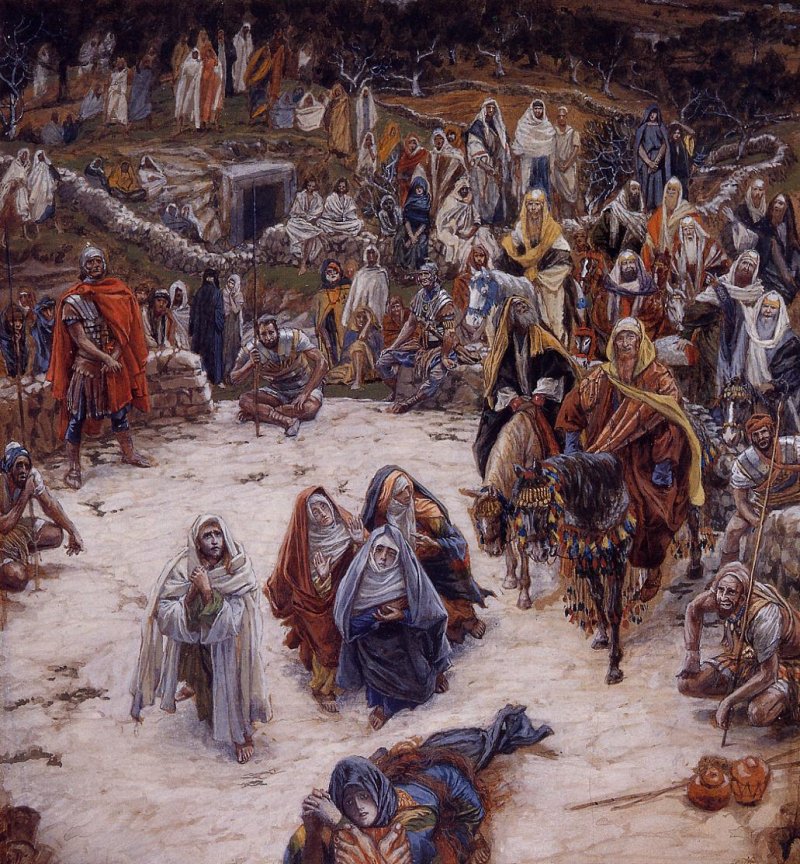
Someone asks Jesus from the crowd, “Lord, will only a few people be saved?” And Jesus replies, “Strive to enter through the narrow gate, for many, I tell you, will attempt to enter but will not be strong enough.” Instead of quoting some particular figure, like ten thousand or ten billion souls, Jesus says, “Strive to enter through the narrow gate…” Jesus dodges the question. So we are left wondering: in the end, will the number of people saved be small or large?

In the Book of Revelation, St. John witnesses a vast number of saints worshiping God in heaven. He beholds “a vision of a great multitude, which no one could count, from every nation, race, people, and tongue.” Note that this ‘countless multitude’ is different and much larger than the “144,000 marked from every tribe of the Israelites” that John observes several verses before. Jesus came to save people not only from the twelve tribes of Israel, but from the whole world. As the Lord declares through the Prophet Isaiah in our first reading, “I come to gather nations of every language; they shall come and see my glory.” Based on this, we can confidently say that a very large number will be saved.

On the other hand, in our gospel’s parallel passage from St. Matthew’s Gospel, Jesus says, “Enter through the narrow gate; for the gate is wide and the road broad that leads to destruction, and those who enter through it are many. How narrow the gate and constricted the road that leads to life. And those who find it are few.” The ‘few’ who enter the narrow gate to life sounds like less than the ‘many’ who do not. From this, it would seem that the number saved will be comparatively small.

However, the words “few” and “many” are relative terms which depend upon the context. For example, nearly 19,000 medals have been awarded in the modern Summer and Winter Olympic Games, and that is indeed many. But how many Olympic gold, silver, or bronze medalists have you personally met? If any at all, probably only a few. In a more tragic example, around 130,000 Americans die each year in accidents, and that’s awfully many. But at the same time, roughly 99.96% of Americans do not die in accidents each year, making the 0.04% who do relatively few. The word “many” sometimes refers to a majority of people, but not always.

Jesus suffered, died, and rose to redeem all of mankind. Even if there had been only one sinner on earth in all of human history, it seems that Jesus would have become man in order to offer himself to save him or her, me or you. Suppose that the number of human souls condemned to Hell on Judgment Day turns out to be only a dozen. Knowing how much our Lord loves each and every person, will not those lost twelve feel like many in the heart of Jesus and those saved billions feel like few? In any case, Jesus never tells us whether the majority of the human race will be saved or lost. Either outcome is possible.

Why isn’t Jesus more clear about exactly how many people will be saved? Because Jesus knows how such knowledge would be harmful for us. If we were told that most people will be saved in the end, we would fall into dangerous presumption. We’d say to ourselves, “I haven’t robbed any banks or murdered anybody; I sure I’m good enough.” And if we were told that most people will be lost in the end, we would fall into poisonous despair. We’d say to ourselves, “With my sins, what’s the use in me even trying?” St. John’s Gospel tells us that Jesus “did not need anyone to testify to him about human nature. He himself understood it well.” So, instead of giving us some precise statistic, some number or percentage about how many will be saved, Jesus gives us this much more beneficial advice: ‘Strive to enter through the narrow gate (for whether you are saved or not depends, in part, on you.)’

Almighty God “wills everyone to be saved and to come to knowledge of the truth,” in the words of St. Paul, but upon coming to know that truth, the Lord requires our personal response. He respects our freedom, and we are free to ignore him, to our own harm. As Jesus tells us, after the master of the house has arisen and locked the door, you may stand outside knocking and saying, “Lord, open the door for us.” He will say to you in reply, “I do not know where you are from.” (In other words, “You’re a stranger to me.”) And you will say, “We ate and drank in your company and you taught in our streets” (as happens at every Holy Mass.) Then he will say to you, “I do not know where you are from. Depart from me, all you evildoers!” In Matthew’s Gospel, Jesus declares, “Not everyone who says to me, ‘Lord, Lord,’ will enter the Kingdom of Heaven, but only the one who does the will of my Father in Heaven.

For adults like you and me, entering through Jesus’ narrow door requires more than merely wishing or have vague aspirations about going to Heaven someday. Striving to enter through the narrow gate entails sacrifices and discipline. As our second reading tells us, to those who are trained by it, discipline brings the peaceful fruit of righteousness. “So strengthen your drooping hands and your weak knees. Make straight paths for your feet.” Consider:

What sacrifice does Jesus ask of you?
What is Jesus asking you to remove from your life?
What is Jesus asking you to add to your life?
What sin does he want you to cease?
What gift does he want you to give?
Think about it. Pray about it.
Jesus has answers for you.

Let us intentionally cooperate with God and his grace. Let us accept the Lordship of Jesus Christ in our lives, so that we may be numbered among ‘the few‘ who are saved in the end.

How Many Will Be Saved?

August 19, 2016

In this Sunday’s gospel, someone asks Jesus from the crowd, “Lord, will only a few people be saved?” Jesus replies, “Strive to enter through the narrow gate, for many, I tell you, will attempt to enter but will not be strong enough.” (Luke 13:24) Instead of quoting some particular figure, like one million or ten billion souls, Jesus says, “Strive to enter through the narrow gate…” We are left to wonder: in the end, will the number saved be numerous or few?

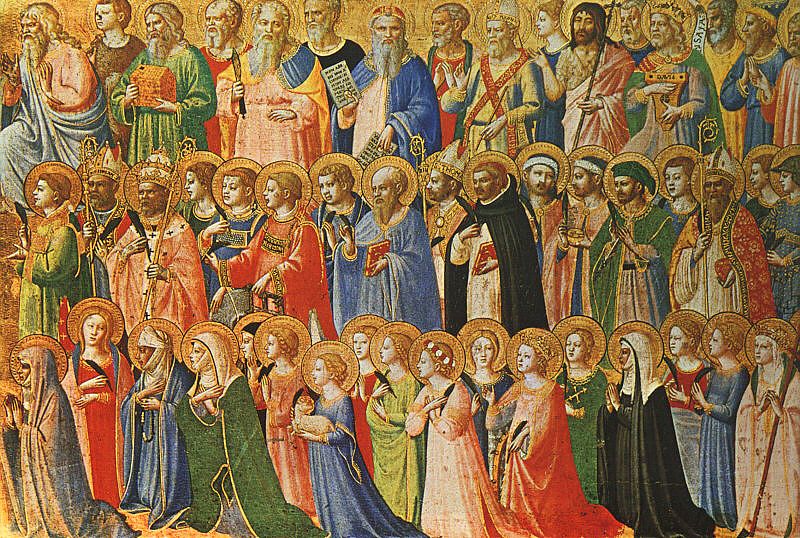
All-Saints by Fra Angelico, 1400's.In the Book of Revelation, St. John witnesses a vast number of saints worshiping God in heaven. He beholds “a vision of a great multitude, which no one could count, from every nation, race, people, and tongue.” (Revelation 7:9) Note that this ‘countless multitude’ is different and much larger than the “one hundred and forty-four thousand marked from every tribe of the Israelites” that St. John enumerates several verses before. Jesus came to save souls not only from the twelve tribes of Israel. As the Lord declares through the prophet in Sunday’s first reading, “I come to gather nations of every language; they shall come and see my glory.” (Isaiah 66:18) Based on this, we can confidently say that a great number will be saved.

On the other hand, in our gospel’s parallel passage from St. Matthew, Jesus says, “Enter through the narrow gate; for the gate is wide and the road broad that leads to destruction, and those who enter through it are many. How narrow the gate and constricted the road that leads to life. And those who find it are few.” (Matthew 7:13-14) The ‘few’ who enter the narrow gate to life sounds smaller than the ‘many’ who do not. Based on this, it would seem that the number saved will be comparatively small.

However, “few” and “many” are relative terms which depend upon the context. For example, more than 18,000 Olympic medals have been awarded in the modern Summer and Winter Games and that is indeed many. But how many Olympic medalists have you personally ever met? Probably, at most, only a few. In a more tragic example, around 130,000 Americans die annually in accidents and that is awfully many. But at the same time, roughly 99.96% of Americans do not perish in accidents each year, making the 0.04% who do a relative few. The word “many” sometimes refers to a majority of people, but not always.

Jesus Christ suffered and died on the cross to redeem all mankind. Even if there were only one sinner on earth in all of human history, it seems that Jesus would have become man in order to offer himself for just him, or her, or you. Suppose that the number of human souls condemned on the last day turns out to be only a dozen. Knowing how much our Lord loves each and every person, will not those twelve feel like many in the heart of Jesus and those billions he saves seem too few? In any case, Jesus never reveals to us whether most human beings will be saved or lost. Either outcome is possible.

Why was Jesus not more clear about exactly how many people would be saved? Because he knew how such knowledge would be harmful for us. He knew that if we were told that most people would be saved in the end, it would lead us into dangerous presumption. If we were told that most people would be lost, he knew it would lead us into poisonous despair. Jesus “did not need anyone to testify about human nature. He himself understood it well.” (John 2:25)

Instead of providing us with some number or percentage, Jesus gives us some much more valuable and beneficial advice: “Strive to enter through the narrow gate (for whether you are saved or not depends, in part, upon you.)” God “wills everyone to be saved and to come to knowledge of the truth.” (1st Timothy 2:4) And to “as many as did accept him, [Jesus] gave power to become children of God.” (John 1:12) Let us strive to cooperate with God, let us accept the Lordship of Jesus Christ in our lives, so that we may be numbered among “the few” who are saved and enter into life.

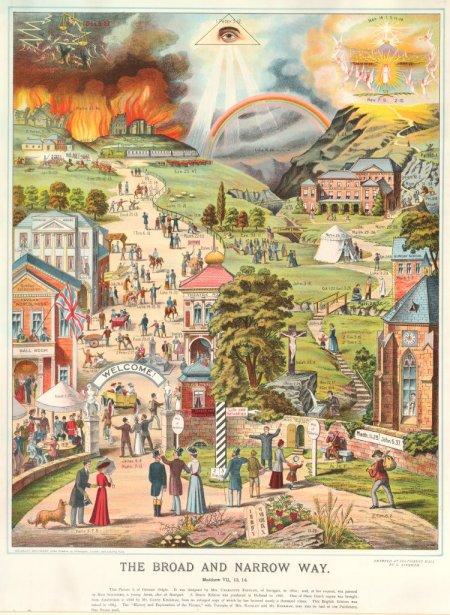
The Braod and Narrow Way, 1883.

A True Story of Pain, Transformation, & Hope

August 20, 2015

My hometown friend, pro-life speaker Katie Stelter, spoke at our parish’s youth group this evening. Her story was made into this powerful docudrama, Metamorphosis: